
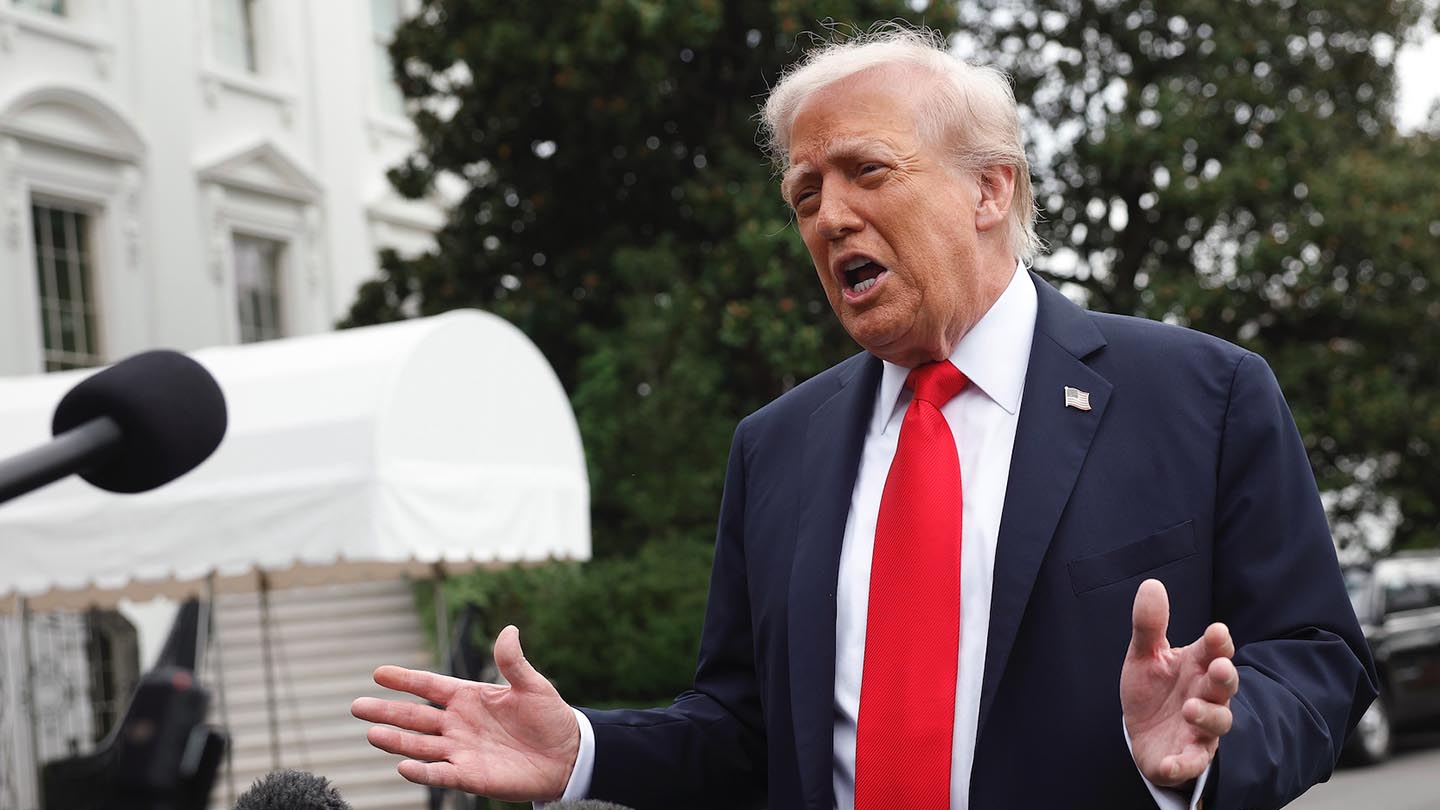
U.S. President Donald Trump issued a message to Venezuelan dictator Nicolas Maduro on Tuesday, which included an announcement that a third drug boat had been destroyed. These latest statements came as Trump, who has ordered a large amount of U.S. military assets to the Caribbean, continues to threaten the regime in Caracas.
“President Maduro in Venezuela says that you’re getting ready to invade his country. What is your message to him?” a reporter asked Trump, who was about to board Marine One ahead of a trip to London.
“I would say this right away, stop sending Tren de Aragua into the United States,” Trump responded, mentioning the Venezuelan cartel he has declared a narco-terror organization. “Stop sending drugs into the United States. We knocked off, actually three boats, not two, but you saw two…”
Unlike the previous two boat attacks, however, the president did not release any video showing the incident or say if anyone was killed. We have reached out to the White House and Pentagon for more details. The Pentagon referred us to the White House, and we will update this story with any pertinent information provided.
On Monday, Trump released a video showing what he said was an attack on a cartel boat that killed three smugglers. The video, seen below, shows the vessel at a standstill in the water before being attacked.
Earlier this month, the president released a video purporting to show 11 members of the Tren de Aragua cartel being killed in a strike against a suspected drug boat.
The two previously publicized boat attacks have been criticized for being extrajudicial killings ordered by the White House without Congressional consent that may have violated international and maritime law. At issue is whether the military can kill drug smugglers without a trial and whether the president needs a resolution from Congress to take military action. The White House has argued that the cartel and its smugglers are narco-terrorists threatening the U.S. with drugs, thus their deaths are justified.
In addition to ordering kinetic actions against cartel smugglers, Trump further laid out his case against Maduro.
“In Venezuela, the criminal regime of indicted drug trafficker Nicolás Maduro leads one of the largest cocaine trafficking networks in the world, and the United States will continue to seek to bring Maduro and other members of his complicit regime to justice for their crimes,” the administration announced late Monday in the annual presidential determination on drug trafficking. “We will also target Venezuelan foreign terrorist organizations such as Tren de Aragua and purge them from our country.”
The Venezuelan leader was indicted in a New York federal court in 2020, during the first Trump presidency. He and 14 others, including several close allies, were hit with federal charges of narco-terrorism and conspiracy with the Colombian FARC insurgent group to import cocaine. The U.S. has issued a $50 million reward for his capture.
The release of the document came after U.S. Secretary of State Marco Rubio said Maduro is operating a drug cartel and that Trump is going to “use the U.S. military and all the elements of American power to target cartels who are targeting America.” The traffickers, he added, “are a direct threat to the national security, the national interests of the United States.”
Though the Trump administration continues to ratchet up the rhetoric against Maduro, there has been no real movement by the growing array of U.S. military assets ordered to the region. A U.S. official on Tuesday told The War Zone that the location of ships deployed to the Caribbean remains “roughly the same” as it has over the past few weeks.
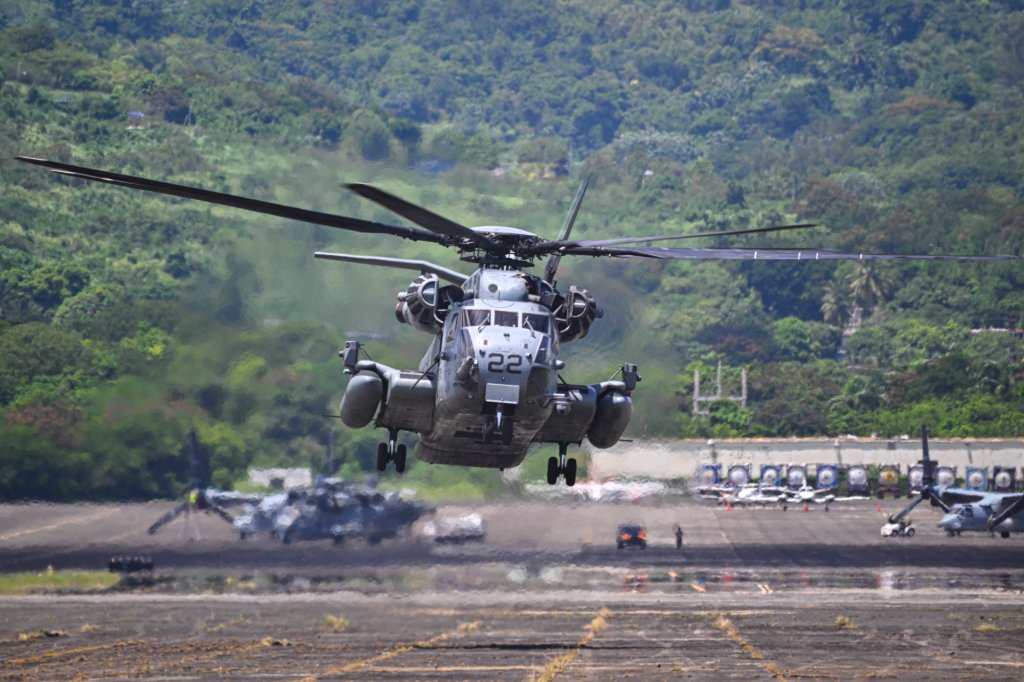
The three ships of the Iwo Jima Amphibious Readiness Group (ARG) and the 4,500 personnel from the 22nd Marine Expeditionary Unit (MEU) remain off the southern coast of Puerto Rico. As we noted yesterday, U.S. Marine Corps MV-22 Osprey tilt-rotor aircraft and CH-53K King Stallions from the MEU are among the many aviation assets using the former Roosevelt Roads Naval Station. They are in addition to the F-35Bs that arrived there over the weekend.
In addition, the Arleigh Burke class guided missile destroyers USS Gravely and USS Jason Dunham, as well as the Ticonderoga class guided missile cruiser USS Lake Erie and the Freedom class littoral combat ship Minneapolis-St. Paul remain stationed in the Caribbean. The Arleigh Burke class USS Sampson remains on the Pacific side of the Panama Canal. There have been no orders for additional Navy assets for this mission, the official told us.

Venezuela is not the Trump administration’s only target when it comes to drug smuggling. In its determination about which nations are cooperating in the anti-drug effort, Afghanistan, Bolivia, Burma, and Colombia were also singled out “as having failed demonstrably during the previous 12 months to both adhere to their obligations under international counternarcotics agreements.”
It was the first time since 1997 that Colombia was placed on this list. This has added to U.S. tensions with the government of Gustavo Petro, who has denied that his nation has seen record levels of cocaine production.
In response to the Trump administration’s decision, the Colombian government said it would stop buying weapons from the U.S. Washington “has approximately $71.6 million in active sales cases for U.S.-origin defense articles and services to Colombia under the Foreign Military Sales (FMS) program,” according to the State Department.
We will keep you up to speed as events continue to develop in the Caribbean.
Contact the author: howard@thewarzone.com
Loading comments…
Comments couldn’t be loaded. Please refresh the page.