
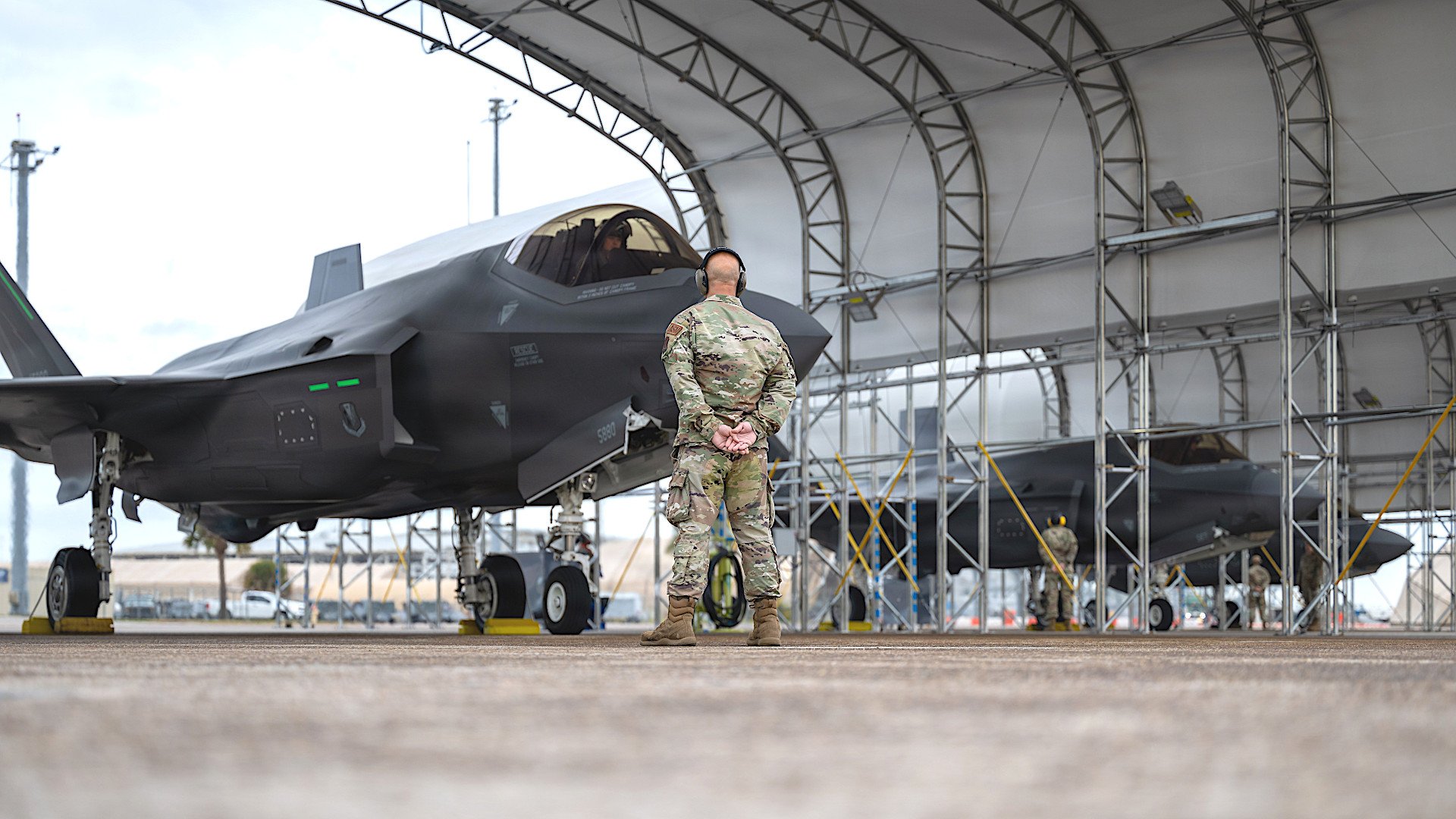
The U.S. Air Force is looking for contractors who could install netting at Tyndall Air Force Base in Florida to help protect F-35 Joint Strike Fighters from drone attacks. The netting plan, which has yet to be finalized, does reflect growing support for increased physical hardening of bases within the U.S. military, especially against uncrewed aerial threats. At the same time, it also calls attention to how the Air Force, in particular, has dragged its feet, if not actively pushed back, on such efforts.
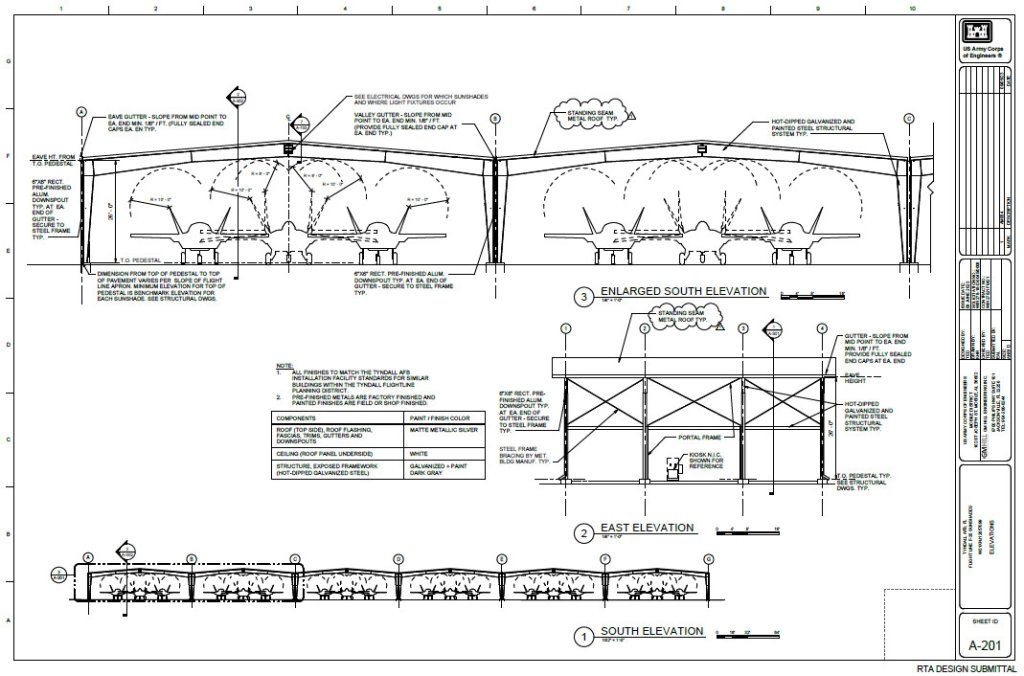
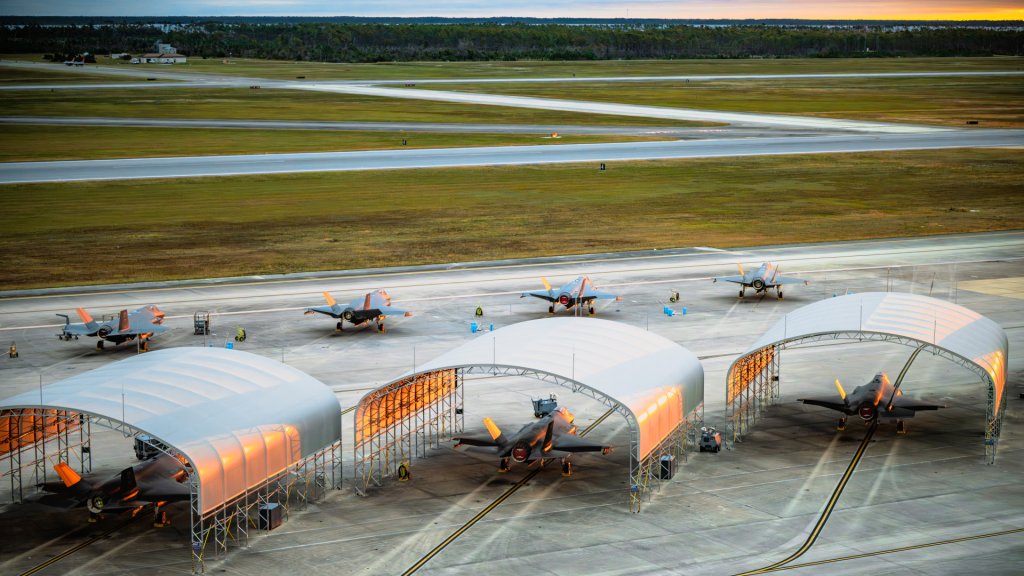
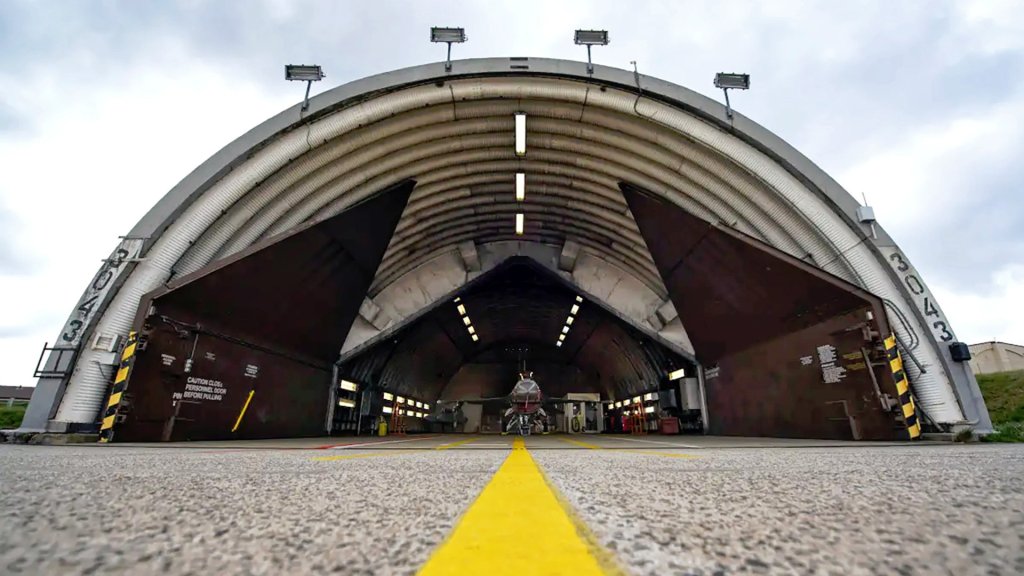
The Air Force’s 325th Contracting Squadron at Tyndall announced last Friday that it was conducting “market research to identify qualified sources capable of providing all design, materials, labor, and equipment necessary to furnish and install counter-Unmanned Aircraft System (UAS) netting” around six sunshade-type shelters at the base. Each one of these open-ended structures is 630 feet long, 65 feet wide, and 30 feet high. They are designed to accommodate up to six F-35As apiece at a time.
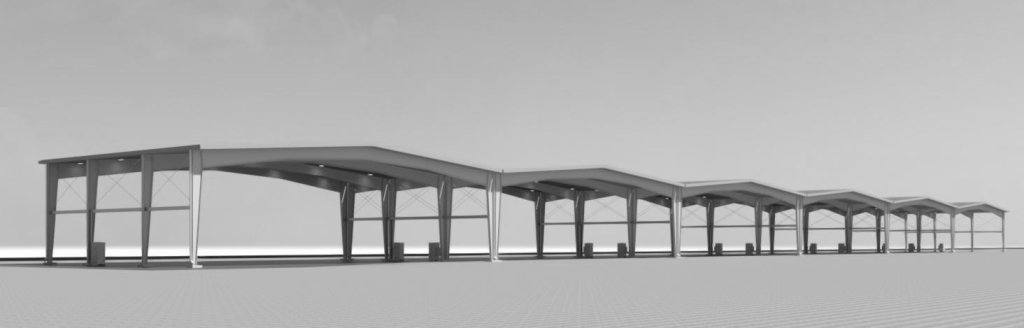
Today, Tyndall is a major hub for Air Force F-35 operations. Situated on the Florida Panhandle with ready access to extensive ranges in the Gulf, it is also an important facility for training and other activities. The base notably hosts the Checkered Flag large-force exercise series, which regularly includes participants from elsewhere across the U.S. military, as well as foreign allies and partners.
It is important to note here that the six structures mentioned in the notice only reflect a portion of the sunshade-type shelters at Tyndall. F-35s and other aircraft, including ones visiting for exercises and other training, also regularly park out in the open along the base’s flightline.
At this time, “the Government does not guarantee that a contract will result from this notice, and the Government will not reimburse any costs incurred by interested parties in preparing or submitting a response,” the contracting notice stresses. It does, however, lay out key parameters.
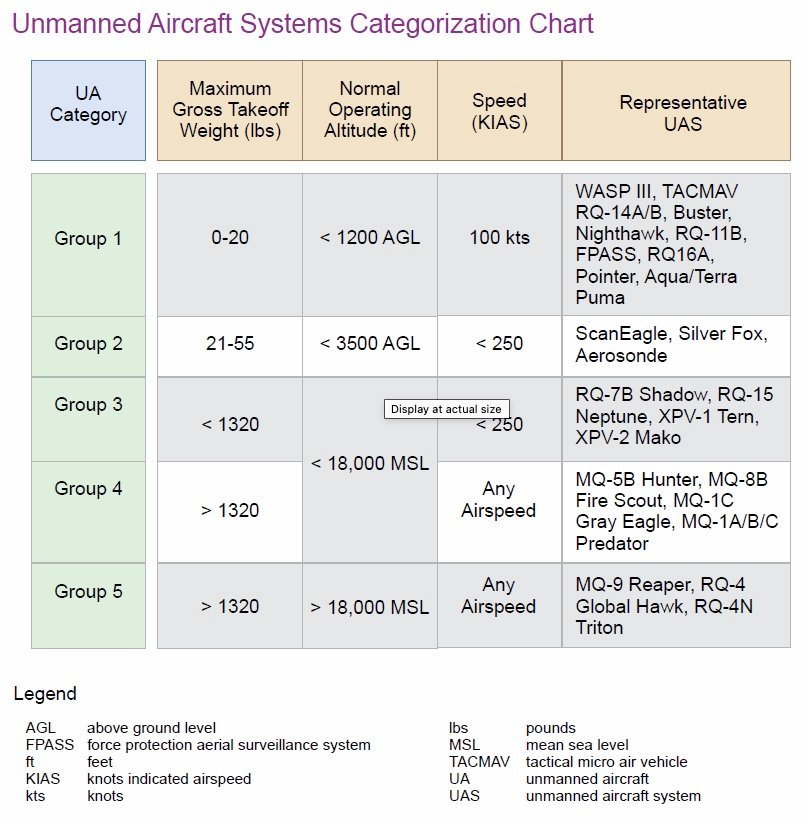
The 325th Contracting Squadron’s notice says the prospective counter-drone “netting installed on the north- and south-facing sides shall be quickly and easily retractable to allow normal aircraft entry and exit.” It has to have a tensile strength of at least 200 pounds and a mesh with squares no more than three inches across. Overall, the nets have to be “capable of stopping Group 1 small UAVs from penetrating the structure without compromising the netting.”
The U.S. military breaks drones down into five tiers, with Group 1 being the lowest. It covers designs with maximum takeoff weights of 20 pounds or less, that can’t fly above altitudes of 1,200 feet, and have maximum speeds of no more than 100 knots. Quadcopter-type drones, including weaponized commercial types, are a prime example of what falls into the Group 1 category. There are also fixed-wing uncrewed aerial systems that meet those parameters.
Beyond their counter-drone capabilities, the nets would have to be “UV-resistant, moisture-resistant, capable of withstanding temperatures up to 400°F,” and “polyester or nylon are preferred.” They also “must meet Miami-Dade County Wind Load rating requirements.” These requirements are in line with Tyndall’s location in the Florida Panhandle, where hurricanes and other extreme weather are also real concerns.
Drone threats to aircraft parked in the open are not new
TWZ has been sounding the alarm on threats posed by drones, small and large, to aircraft sitting out in the open for more than a decade now. Ukraine’s unprecedented Operation Spiderweb attack last year thrust these threats fully into the public consciousness. Spiderweb involved coordinated localized covert attacks on airbases across Russia using large waves of weaponized quadcopter drones. At least 10 Russian bombers, as well as a variety of other aircraft, all sitting on open flightlines, were destroyed.
Even before Operation Spiderweb, the U.S. Air Force had at least considered installing nets or other physical barriers to help blunt drone attacks on parked aircraft at Langley Air Force Base in Virginia and Seymour Johnson Air Force Base in North Carolina.
The potential plans to erect netting around sunshade-type shelters for F-22 Raptor fighters at Langley notably followed still largely unexplained drone incursions over that base in December 2023, which TWZ was the first to report. The Langley incursions reflected years of worrisome trends we had already been reporting on regarding the threat of drone attacks to key U.S. military bases and critical infrastructure within the U.S. homeland, as well as in waters just off America’s coastlines.
The scale and scope of potential drone threats on and off conventional battlefields has only continued to grow since. Just earlier this year, amid major combat operations against Iran, there were new reports of unauthorized drones flying over Barksdale Air Force Base in Louisiana, a major Air Force bomber hub, and other strategic military facilities in the United States. A similar surge in drone incidents at key bases hosting U.S. forces, as well as commercial airports, in Europe has also been documented.
In October, the Air Force made a sudden and unexpected decision to withdraw B-1 bombers from RAF Fairford, an airbase in the United Kingdom. Still, unconfirmed reports said that the move was driven by concerns about an Iranian-directed drone attack broadly akin to Operation Spiderweb.
Separate from any particular mode of attack, the vulnerability of aircraft parked out on open flightlines is well established at this point, in general. This point was driven home for the U.S. military more directly by an Iranian missile and drone barrage on Prince Sultan Air Base in Saudi Arabia in March, which destroyed a prized E-3 Sentry Airborne Warning and Control System (AWACS) radar plane and damaged several KC-135 tankers. F-15E Strike Eagles and A-10 Warthog ground attack jets were also reportedly damaged following Iran’s attack on Muwaffaq Salti Air Base in Jordan in September.
Counter-drone nets would not have stopped the attacks on Prince Sultan or Muwaffaq Salti, which both included ballistic missiles. Iran also launched long-range kamikaze drones much larger and more capable than any Group 1 design at Prince Sultan Air Base.
In March, Iranian-backed militias in Iraq also launched localized drone attacks on a U.S. Army Black Hawk helicopter and other American assets in that country, where nets could have offered additional protection.
A matter of urgency
Despite the years of concerning drone incursions, as well as observations from the conflict in Ukraine and now the experiences from the war with Iran, the Air Force has continued to, at best, downplay the value of physical hardening of infrastructure. A debate surrounding the pros and cons of building new hardened aircraft shelters has become a particular flashpoint. More recently, the service’s top leader has voiced support for nets and other lower-cost passive defenses, while still pushing back on shelters.
“There is value in some light protection against small, unmanned threats,” Air Force Chief of Staff Gen. Kenneth Wilsbach told Breaking Defense in July. “Some of them — just nets that are up that keep a small, few-$100 drone from getting next to a $2 billion aircraft. That actually works, [and is] really cheap.”
Otherwise, “I think that I don’t want to spend a lot of money on hardening shelters. Unless you’re going to send something 100 feet or more underground, we can blow it up, and so can they,” Wilsbach said in the same interview. “So, the economics of building a shelter that is impervious to a strike doesn’t work.”
“I think the economics favor defending your airspace, defending your ground space with systems that can defeat the incoming rounds, versus building a shelter,” he added. “Some people would argue, well, you should do both. Well, that’s even more expensive. And the other thing is, the shelter doesn’t go anywhere.”
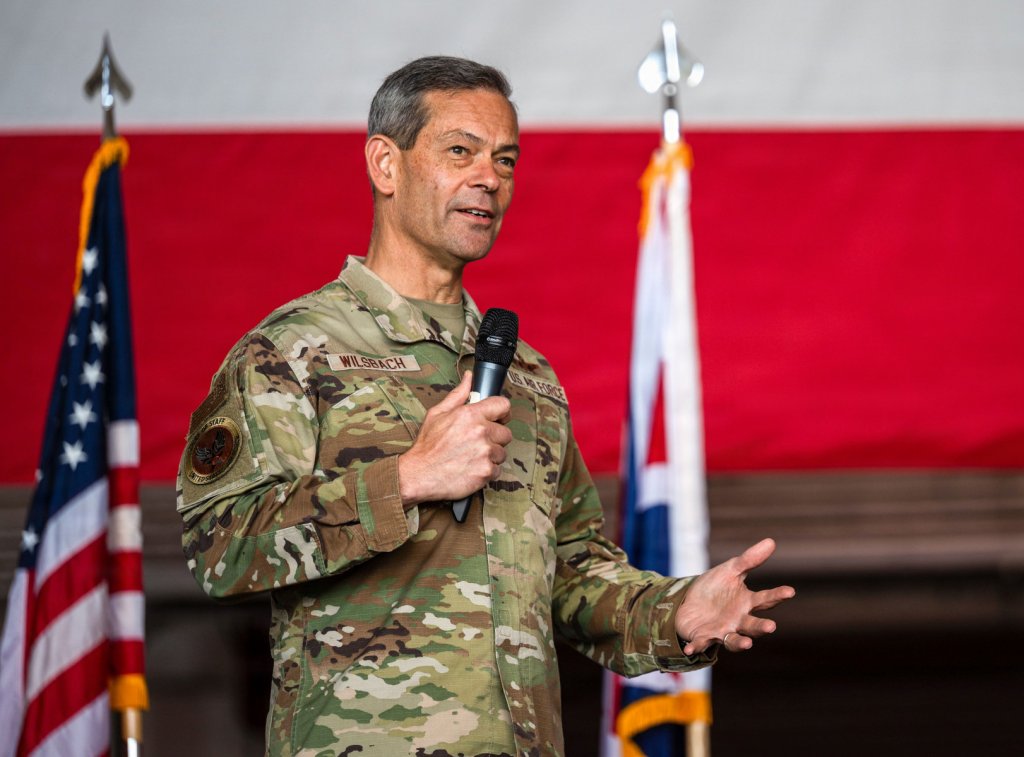
Wilsbach’s comments here came in response to a direct question about whether he still stood behind similar remarks he made back in 2023. At that time, he was head of Pacific Air Forces (PACAF), the Air Force’s top command in that region. In recent years, other Air Force officers have similarly downplayed calls for construction of new hardened aircraft shelters, in particular.
When it comes to base defense and reducing vulnerability of aircraft on the ground, the Air Force has focused more on active measures like traditional surface-to-air missile batteries and anti-aircraft guns, as well as directed energy weapons and electronic warfare systems. The service also continues to put heavy emphasis on dispersal and deception, as well as new and still-evolving distributed concepts of operations.
As TWZ has reported on several occasions now, the key counterpoint when it comes to shelters, at least, is that not all such structures have to be stereotypical Cold War-era concrete bunkers to be useful. Just like nets can provide a valuable additional lower-cost layer of counter-drone protection, less-well-protected shelters that are cheaper to build would still offer benefits.
As we have written in the past:
“A structure that shields against smaller blasts and shrapnel, also including from cluster munitions that can be readily scattered across wide areas, is one that then has to be addressed by more capable weapons. This could even include mobile or otherwise temporary shelters that offer sufficient concealment and protection.”
“Eliminating, or at least substantially mitigating, the lowest rung of threats creates a dilemma for opponents, who then have to decide whether it is even worthwhile to attempt certain types of attacks. There is clear value in narrowing the available options for the enemy and pushing them toward having to expend higher-end, more expensive munitions, that are available in smaller quantities, and that traditional active defenses may be better optimized to handle. As an example, it may be more viable to shoot down a small barrage of incoming cruise missiles than a swarm of dozens of drones.”
Fully enclosed shelters, even ones that aren’t hardened, can offer additional benefits beyond protecting against hostile attacks. As mentioned earlier, extreme weather is a real threat to aircraft parked out on open flightlines, too. Tyndall Air Force Base in Florida is an especially notable case study to consider in this regard.
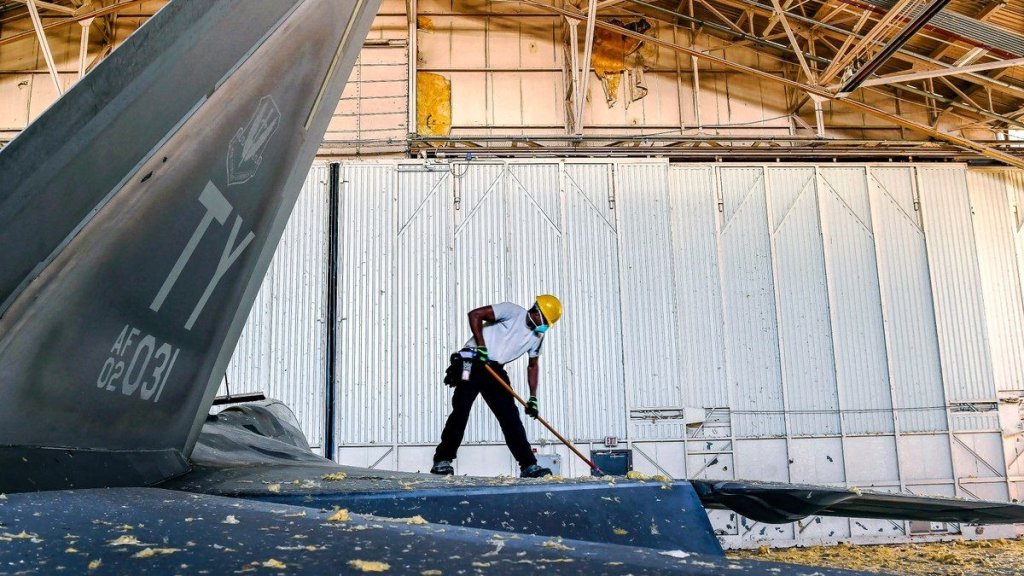
In 2018, Hurricane Michael ravaged Tyndall. At the time, the base was home to a significant portion of the Air Force’s highly prized F-22 fleet. Approximately 17 F-22s had to ride out the storm in existing hangars, and four sustained significant damage. As the scope of required repairs to Tyndall’s infrastructure became clear, F-22 operations there came to an end. Jets from the base were reassigned permanently to other units around the country. The Air Force only formalized plans to turn the Florida base into a new hub for the F-35 in 2021, and the first Joint Strike Fighters began arriving there in 2023.
Trends at home and abroad
TWZ has long highlighted how the Air Force’s position on the construction of new shelters bucks very visible trends elsewhere globally, including in China, Russia, North Korea, and Iran. Even before Operation Spiderweb, expanding Ukrainian drone and missile attacks had pushed Russia to begin building new and increasingly large hardened shelters at various bases, especially on the occupied Crimean Peninsula.
For years now, counter-drone netting, as well as cage-type armor, has also been increasingly in use in Ukraine and Russia for protecting static structures and fighting positions, as well as vehicles on land and ships at sea. These are other trends that have been expanding globally, as well.
As highlighted by Gen. Wilsbach’s comments to Breaking Defense in July, the U.S. military has clearly been taking notice of global developments when it comes to aspects of physical hardening. At the end of January, the Pentagon, by way of Joint Interagency Task Force 401 (JIATF-401), also notably issued new guidance for protecting critical infrastructure against drone attacks that explicitly called for increased use of netting, along with cables and other kinds of passive physical defenses. JIATF-401 was established in late 2025 to serve as a focal point for counter-drone efforts across the U.S. military, as well as other branches of government, and to help accelerate the fielding of new capabilities.
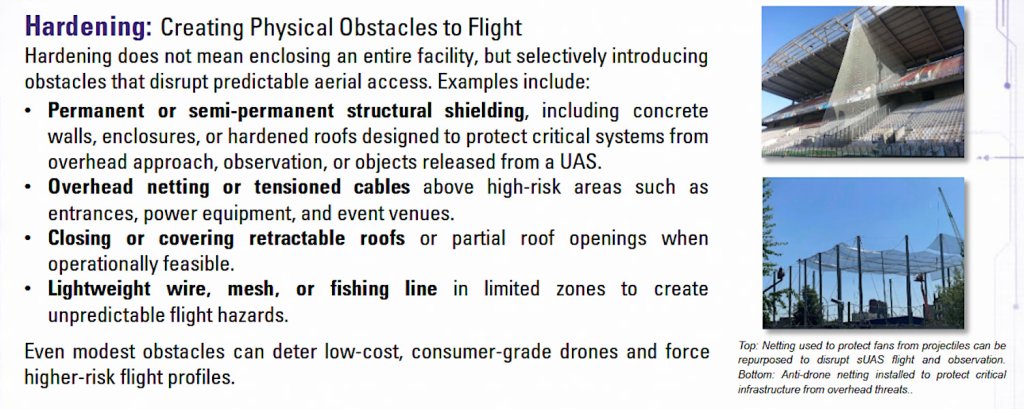
The counter-drone guidance the Pentagon promulgated earlier this year did also make clear that there is no one single solution to threats posed by uncrewed aerial attackers. Nets and other passive measures are complements, not substitutes for active defenses and other relevant tactics, techniques, and procedures. By the same token, however, they are valuable, if not increasingly critical, additions to a comprehensive layered defensive architecture.
“The technology is not going to solve this problem for us. We can’t field a system that will stop every drone,” U.S. Army Brig. Gen. Matt Ross, Director, head of JIATF-401, told TWZ and other outlets during a press call in December 2025 in response to a direct question about physical hardening from this author. “At the end of that would be protection, which would be netting or fencing or physical barriers that would prevent a [sic] unmanned system from having its intended effect.”
As it stands now, prospective contractors have until November 13 to submit details about how they would go about installing counter-drone netting at Tyndall if and when the Air Force decides to move ahead with that project. In the meantime, the contracting announcement only reinforces the continued and increasingly glaring lack of urgency with which the service is pursuing any kind of physical hardening.
Contact the author: joe@twz.com
Loading comments…
Comments couldn’t be loaded. Please refresh the page.