
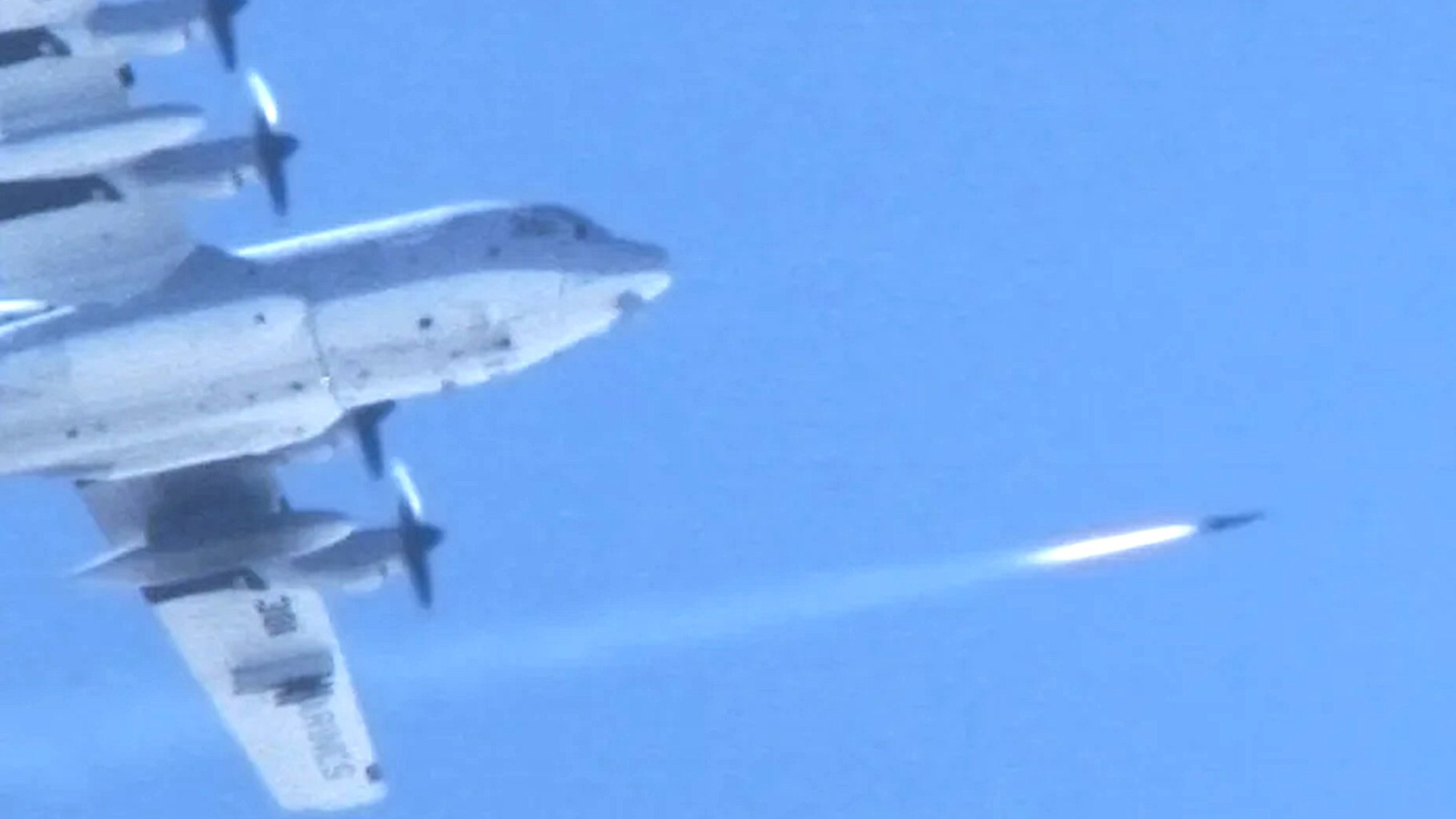
The U.S. Marine Corps has quietly axed the roll-on/roll-off Harvest Hawk armament kit for its KC-130J Hercules tanker/transport aircraft. The service says high costs and limited operational demand drove the decision. Once something of a star in the media when it came to adapting platforms to Global War on Terror realities, Harvest Hawk has shot its last Hellfire missile. Questions have also been raised in recent years about the future relevance of the U.S. Air Force’s AC-130J Ghostrider gunships as the U.S. military has shifted its focus away from counter-insurgency and other lower-intensity operations.
TWZ reached out to the Marine Corps for an update on Harvest Hawk after seeing no mention of the kit in the service’s most recent annual aviation plan, which was released earlier this month. Full operational capability with the latest version of the kit was only declared in 2021. At that time, 10 Marine KC-130Js had the necessary modifications to allow for the installation of Harvest Hawk, but there were only six complete kits in inventory. The 2026 Marine Aviation Plan says the Marines have received 82 percent of the 95 KC-130Js the service plans to acquire, or approximately 78 aircraft.
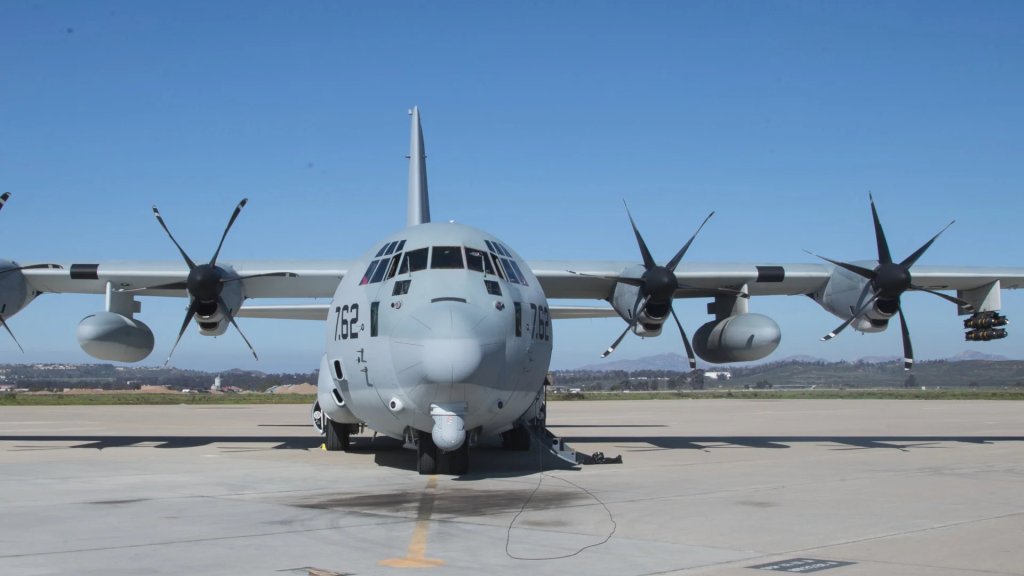
“Harvest HAWK is no longer a capability for use in Marine KC-130J aircraft. At the end of 2024, we determined that divesting this capability was in the Service’s best interest,” a Marine Corps spokesperson told TWZ. “This determination is based on limited utilization – last deployed operationally in 2014 – against the expense of extensive maintenance and costly aircrew training requirements.”
Exactly when Harvest Hawk (the latter half of the name actually being an acronym standing for Hercules Airborne Weapons Kit) was phased out completely is unclear. TWZ had also reached out after seeing mention of the kit was absent from the 2025 Marine Aviation Plan, but had not received a response. However, there had been hints that this decision was coming back in 2024.
“So I will say what I’m allowed to say on Harvest Hawk, which is it is currently still a program of record,” Marine Corps Lt. Col. Adam Foushee, then the Deputy Program Manager of the Tactical Airlift Program Office at Naval Air Systems Command (NAVAIR), had told TWZ and other attendees of the 2024 Modern Day Marine exposition. “But that hasn’t been decided yet … [in] terms of whether it’s going to continue to be sustained, which it currently is, or if it’s going to be discarded.”
The last version of Harvest Hawk, also known as Harvest Hawk Plus (HH+), enabled Marine KC-130Js to employ AGM-114 Hellfire and AGM-176 Griffin missiles. With the kit installed, the aircraft could carry Hellfires on standard four-rail launchers on pylons under the wings. AGM-176s were fired via Common Launch Tubes (CLT) through launchers in a modified rear paratroop door, which could be reloaded in flight.
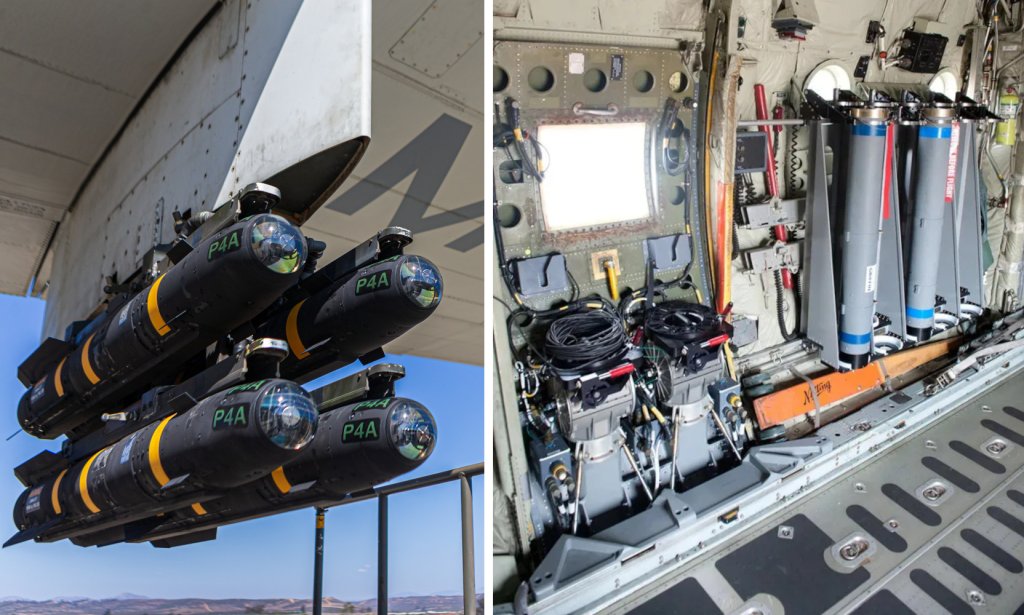

The original version of the Harvest Hawk kit included a launch system for AGM-176s, as well as GBU-44/B Viper Strike glide bombs, mounted on the KC-130J’s rear ramp. There had been talk in the past about integrating AGM-179 Joint Air-to-Ground Missiles (JAGM), GBU-39/B Small Diameter Bombs, and a 30mm automatic cannon into the Harvest Hawk package.
HH+ also included a sensor turret under the nose with electro-optical and infrared cameras, as well as a laser designator, coupled with a roll-on/roll-off operator station. The initial version of Harvest Hawk had the sensor turret in a pod carried under the left wing. The turreted sensors also gave Harvest Hawk-equipped KC-130Js a limited secondary intelligence, surveillance, and reconnaissance (ISR) capability.

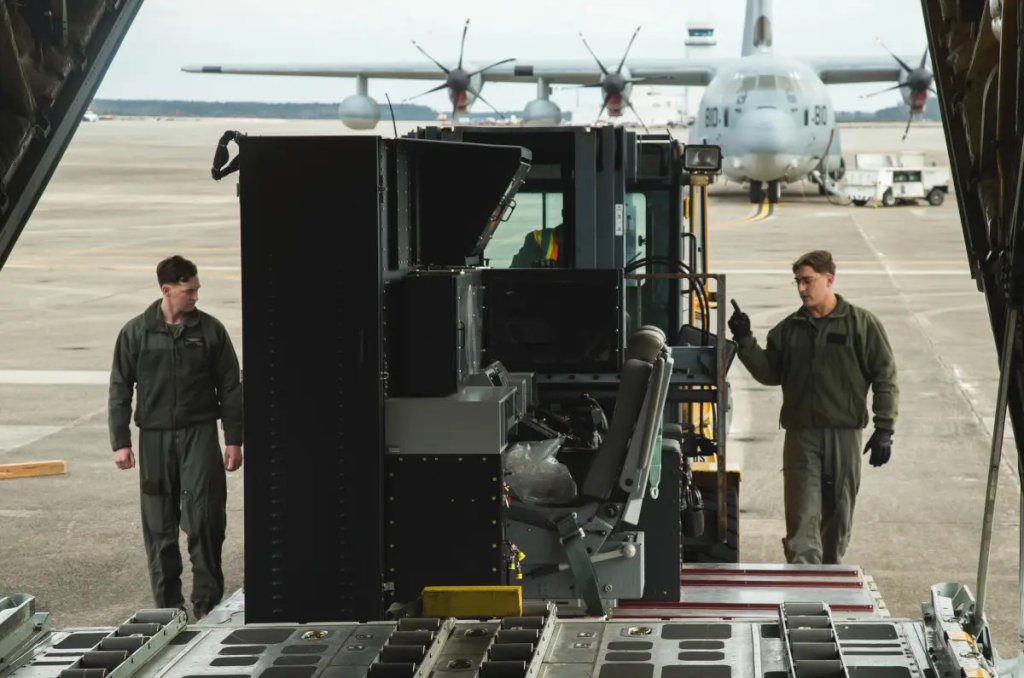
When Harvest Hawk was first developed in the late 2000s, there was a clear demand signal within the Marine Corps for this kind of capability, especially from units then deployed in Afghanistan. Counter-terrorism operations in Iraq were also still in full swing. At the same time, the kit was developed with operations in permissive environments against enemies with few, if any, air defense capabilities in mind. Even then, like the Air Force’s AC-130s, Harvest Hawk-equipped KC-130Js were generally expected to fly at night to further reduce vulnerability.

“There has [sic] been some talks about whether or not that [Harvest Hawk] is still relevant for tomorrow’s fight,” Lt. Col. Foushee had explained back in 2024. The disclosure now that Harvest Hawk has not been deployed operationally since 2014, coinciding with a major withdrawal of Marine units from Afghanistan, underscores how much the service’s requirements had already changed by that point.
In addition, since 2020, a fundamental reworking of the Marine Corps’ entire force structure centered on new expeditionary and distributed concepts of operations has been underway. Being prepared for island-hopping scenarios in the context of a high-end fight against China in the Pacific has been a major focus of what the service calls the Force Design 2030 initiative.
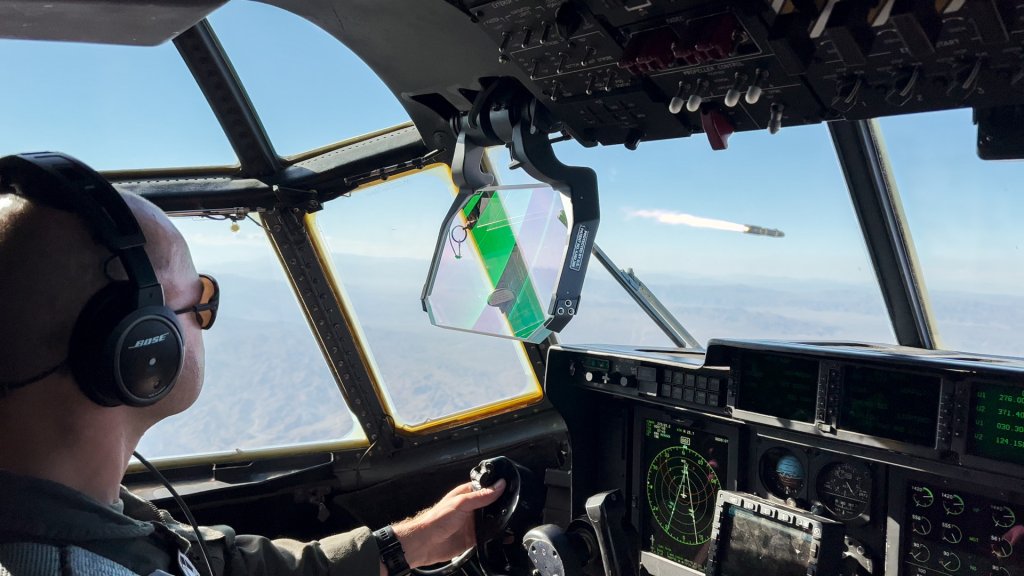
Though Harvest Hawk does not slot into those plans, the Marine Corps has been looking at other ways its KC-130J could play a role beyond just acting as aerial refuelers and airlifters. Integration of a version of the Intrepid Tiger II electronic warfare suite onto the aircraft remains a top priority for the Marines, according to the 2026 Aviation Plan. Intrepid Tiger II would give KC-130J valuable new self-protection capabilities, as well as the potential to serve as a larger electronic warfare and/or electronic intelligence platform in support of future operations.
The Marine Corps has also previously expressed interest in the U.S. Air Force’s Rapid Dragon palletized munition system. Rapid Dragon allows C-130-type aircraft, as well as other airlifters, to launch stand-off munitions like the AGM-158 Joint Air-to-Surface Standoff Missile (JASSM) cruise missile. This, in turn, could give the Marines valuable added long-range strike capacity. There are also questions about how viable this added capability might be, given the demands one would expect to see for Marine KC-130Js to perform their primary mission sets during any major conflict.
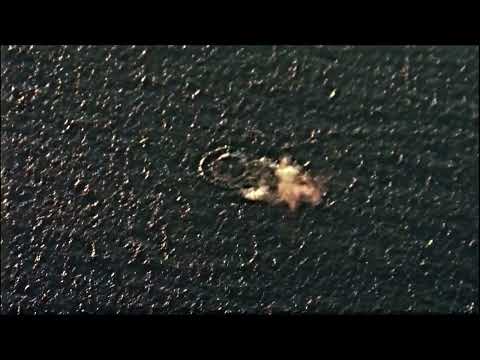
It is worth noting here that the Air Force has also been looking at stand-off strike capabilities as a way to help ensure the relevance of its AC-130Js in future high-end fights. Earlier this month, U.S. Special Operations Command (SOCOM) put out a contracting notice asking for information about potential options for a Small Cruise Missile (SCM) that can be employed by C-130-type aircraft. The notice says the desired capabilities outlined therein, including a range of at least 400 nautical miles, were directly based on what Leidos has already demonstrated in SOCOM-funded testing with its Black Arrow missile, as you can read more about here.

The Air Force and SOCOM have been exploring other stand-off munitions for the AC-130J, including the Harpoon anti-ship missile, as well as the integration of a new active electronically-scanned array (AESA) radar. The Ghostrider gunships have also been receiving new self-defense and communications capabilities in recent years, and more upgrades for the fleet are on the horizon. At the same time, other upgrade efforts for the AC-130Js that were envisioned more as supporting lower-intensity mission requirements have been curtailed or cancelled entirely, like the axing of plans for a laser-directed energy weapon.
While the AC-130 gunship’s future is still evolving, the story of the Marine Corps’ Havest Hawk armament kit for its KC-130Js has come to an end.
Contact the author: joe@twz.com
Loading comments…
Comments couldn’t be loaded. Please refresh the page.