
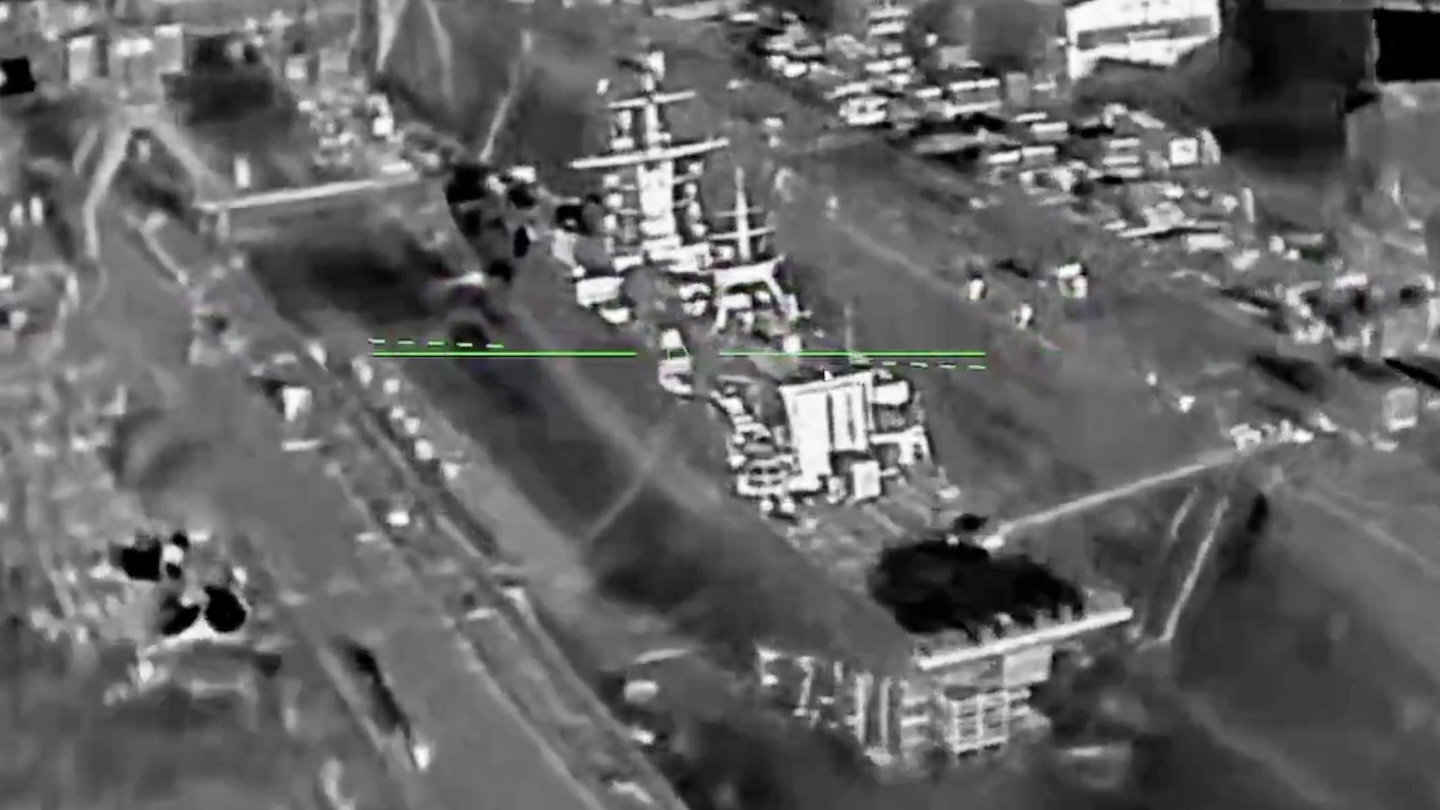
The prestigious Russian Navy base at Kronstadt, near St. Petersburg, came under Ukrainian drone attack overnight, in what may well be the first strike of its kind against the Baltic Fleet. Ukrainian drones targeted the naval base, including the Project 20380 Steregushchiy class corvette Boikiy, highlighting the fact that Russian warships are vulnerable even when hundreds of miles from Ukraine’s borders.
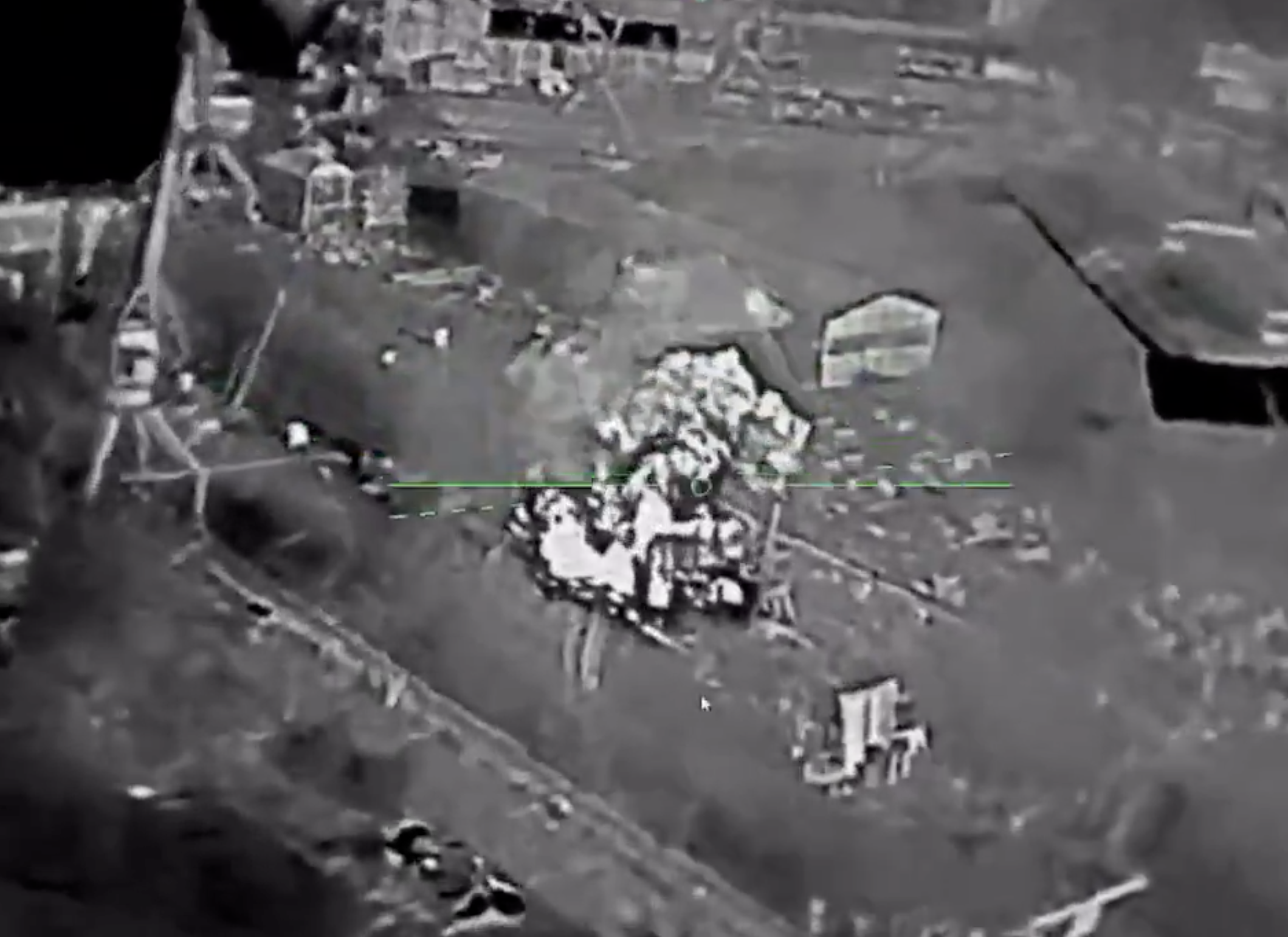
According to the official account of the Ukrainian 414th Separate Unmanned Strike Aviation System Brigade on X, the corvette was set ablaze while in the Veleshchynskyi dry dock in Kronstadt, where it is said to have entered scheduled maintenance in February of this year. The same account posted a video showing the attack. While we are used to kamikaze drone video feeds cutting out just before detonation, the fact that multiple drones were involved means we can see the burning vessel from several angles.
Reportedly, the drones that hit the corvette were from the 1st Separate Center of Ukraine’s Unmanned Systems Forces. Considering the long distance to the target, it is interesting to note that video from the seekers was available. This indicates that either a local operator on the ground was involved in targeting and recording the feed, or otherwise a satcom link was used to do the same. While it is conceivable that the drones used autonomous guidance, they would still have needed someone nearby or connected via satcom to record the seeker’s view. Another possibility is that shorter-range drones were used for the attack, something that Ukraine has done before for attacks deep in Russia, although this seems less likely here.
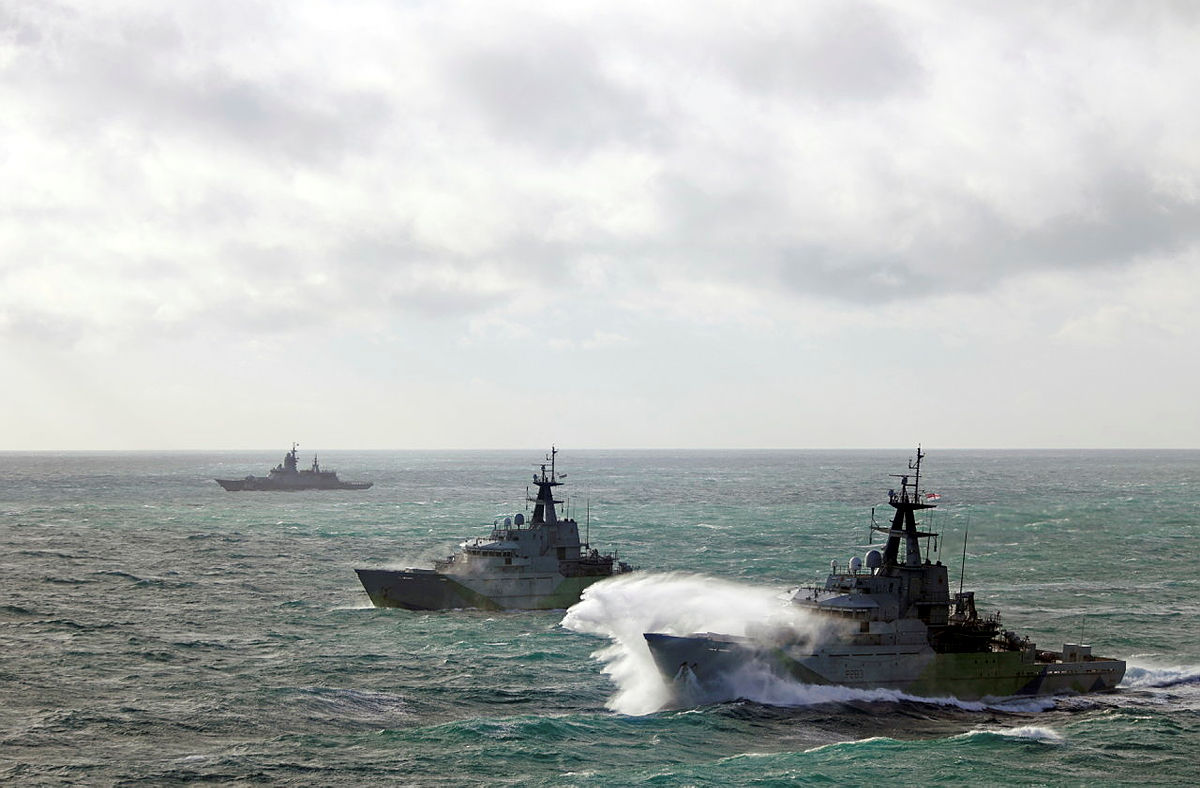
Ukraine’s Unmanned Systems Forces stated that the Boikiy was involved in escorting ships associated with Russia’s so-called shadow fleet, the collection of older tankers operating under foreign flags that Moscow relies on to export oil despite Western sanctions. According to Ukrainian officials, Russia has increasingly tasked Baltic Fleet vessels with escort, monitoring, and security missions for these tankers as they transit the Baltic Sea carrying sanctioned Russian oil to markets prepared to bypass Western restrictions.
The Steregushchiy class ships are among Russia’s more modern corvettes. With a standard displacement of 1,800 tons, a length of 343 feet, and a flight deck for a helicopter, the corvettes are closer to frigates, according to some classification systems. Their primary armament consists of two quadruple launchers for Uran anti-ship missiles, a 12-cell Redut vertical launch system for various air defense missiles, and two quadruple tubes for Paket-NK anti-torpedo/anti-submarine torpedoes.
The attack on the naval base was part of a wider Ukrainian drone barrage directed against other military and energy sites in and around St. Petersburg early on Wednesday. Footage of the attacks showed drones, reportedly FP-1/2 types, low over the Gulf of Finland and in the skies above the city.
The attacks occurred just hours before international guests gathered for the city’s flagship economic forum. “The Petersburg forum is opening with a nice plume of black smoke in the background after Ukrainian strikes,” posted Serhiy Sternenko, an adviser to the Ukrainian defence minister.
Several long-range drones also crashed into oil storage facilities in St. Petersburg after Russian air defenses reportedly tried unsuccessfully to shoot them down. Loud explosions were heard, and black smoke could be seen rising from the blazing oil terminal, one of the largest on Russia’s Baltic Sea coast.
Russian authorities confirmed that the attacks had taken place, with St. Petersburg’s governor, Alexander Beglov, saying that the Kirovsky and Krasnoselsky districts had been targeted.
Ukrainian President Volodymyr Zelensky, writing on social media, said that drones had hit “important facilities on Russian territory,” including the St. Petersburg oil terminal, the Kronstadt base, and a weapons factory in the Tambov region.
“I thank our warriors for their precision. Ukraine’s plan for long-range sanctions is being implemented exactly as needed to bring peace closer,” Zelensky said.
The significance of the strikes is manifold.
First off, the drone strikes have a highly symbolic value, and will be especially embarrassing for the Kremlin, since they come immediately in advance of the three-day annual summit being held in St. Petersburg, and billed as Russia’s answer to Davos.
Guests arrived for today’s opening ceremony under a pall of thick smoke, and Russian President Vladimir Putin is due to make a keynote speech at the event on Friday. There was further disruption for arriving guests as St. Petersburg’s airport was temporarily closed.
Secondly, the drone strikes underscore Ukraine’s ability to strike targets deep within Russia, using a growing array of long-range one-way attack drones and cruise missiles. The targets are around 680 miles from the nearest Ukrainian border.
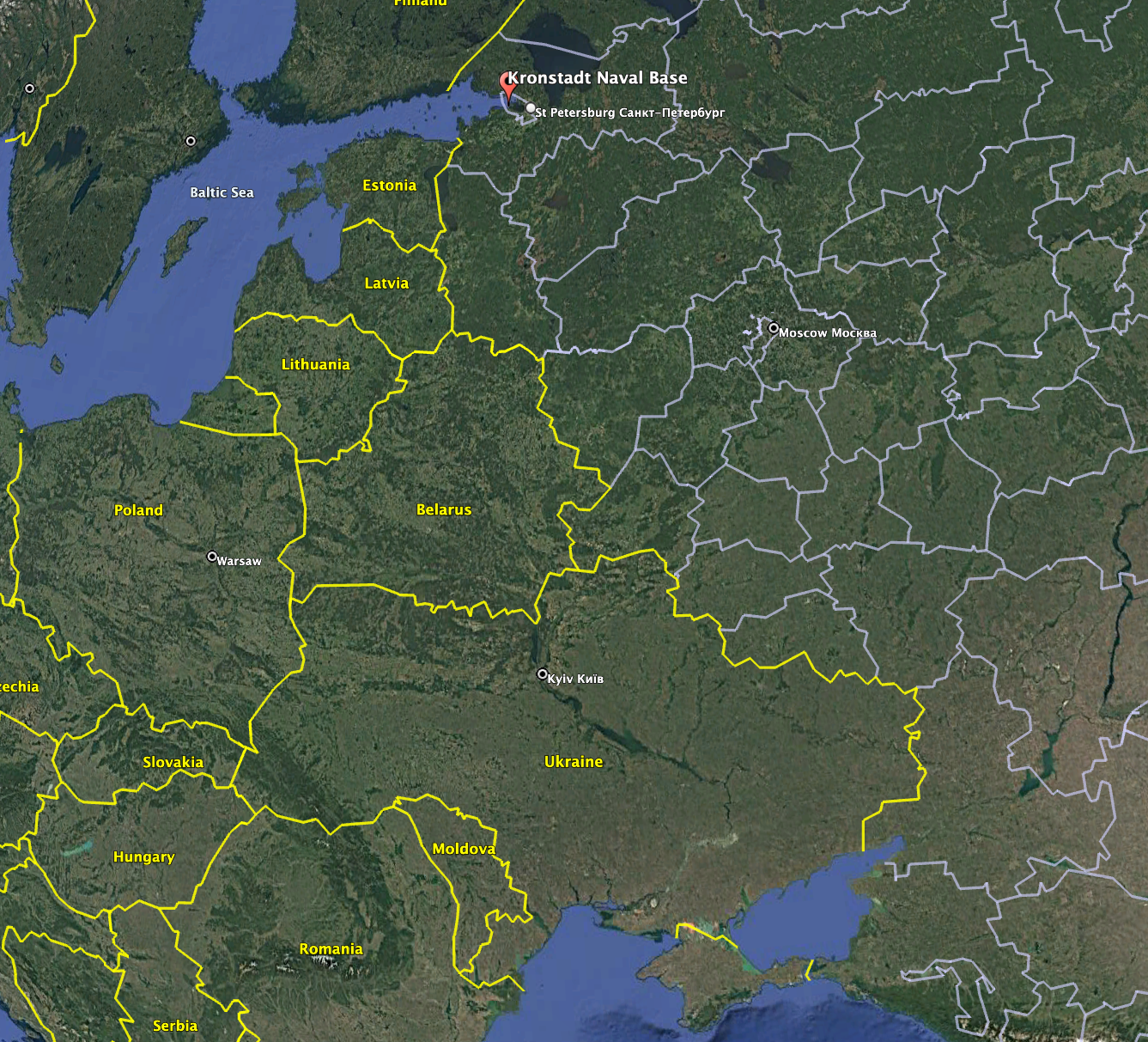
Finally, by targeting Kronstadt, the attacks also signify the opening up of a new front in the drone war, namely against the Baltic Fleet while it is in port.
Located on Kotlin Island in the Gulf of Finland, about 18 miles west of St. Petersburg, Kronstadt is one of the principal bases associated with the Baltic Fleet. Today, it primarily hosts corvettes and patrol vessels, naval support ships, training units, as well as repair and maintenance facilities. Since any naval threat approaching St. Petersburg from the Gulf of Finland must pass near Kronstadt, the base effectively acts as the maritime gateway to Russia’s second-largest city.
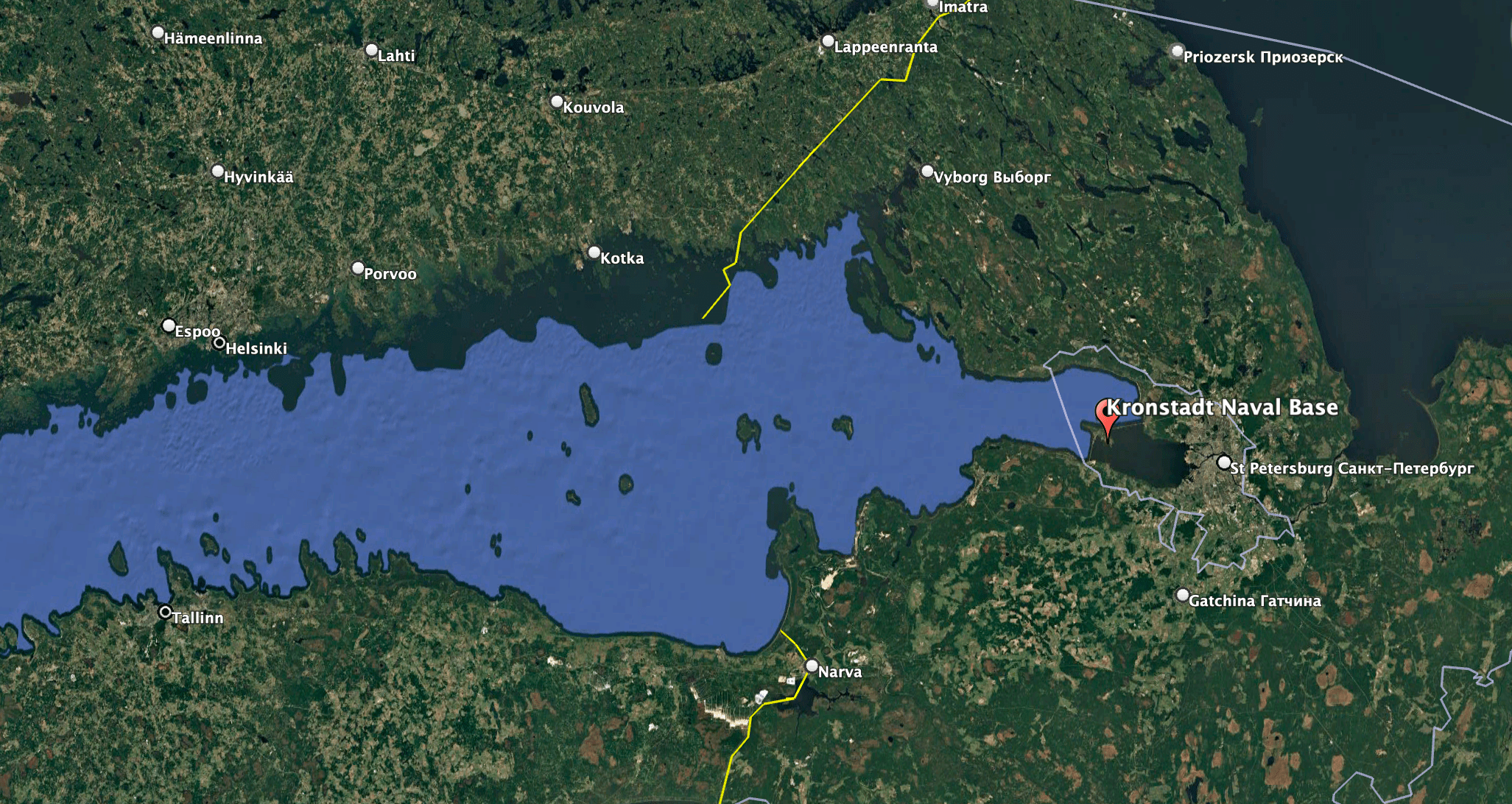
There have been very few confirmed Ukrainian attacks of any kind on the Baltic Fleet compared with the extensive campaign waged against Russia’s Black Sea Fleet.
In April 2024, there was a fire on a Russian warship at Baltiysk in Kaliningrad. The fire damaged communications and electronic systems aboard the Buyan class corvette Serpukhov. A Ukrainian military intelligence official subsequently claimed that this was the result of a covert joint operation conducted by his GUR agency and a pro-Kyiv Russian military group.
So far, of course, Ukraine’s naval campaign has focused overwhelmingly on the Russian Black Sea Fleet. Many successful attacks have been recorded against Black Sea Fleet vessels and facilities, forcing the general evacuation of Russian naval assets from occupied Crimea and to bases in Russia proper.
In recent months, Ukraine has waged an aerial campaign to disrupt Russia’s economy. Long-range drones have hit ports and oil storage facilities, military factories, and airbases. There has also been an uptick in attacks against tankers and trucks moving between occupied southern Ukraine and Crimea, leading to fuel shortages across the peninsula.
Meanwhile, the scale of Russian missile and drone attacks on Ukraine remains undiminished. On Monday, a barrage of Russian strikes killed 23 people across Ukraine and injured many more. This led Zelenskyy to renew his plea for the U.S. government to provide Kyiv with more Patriot missiles. Today, he said that “an agreement at the highest political level on the purchase of Patriot systems […] is awaiting implementation at the financial, legal, and technical levels.”
Whether or not the overnight strike caused significant damage, its strategic message was unmistakable. By reaching Kronstadt, one of Russia’s most historic naval bases, Ukraine demonstrated that even the Baltic Fleet is no longer beyond its reach. The attack highlights Kyiv’s growing long-range capabilities and signals that Russia’s efforts to protect both its regular fleet and its shadow oil-export network may face increasing pressure, even far from the front lines.
Contact the author: thomas@thewarzone.com
Loading comments…
Comments couldn’t be loaded. Please refresh the page.