
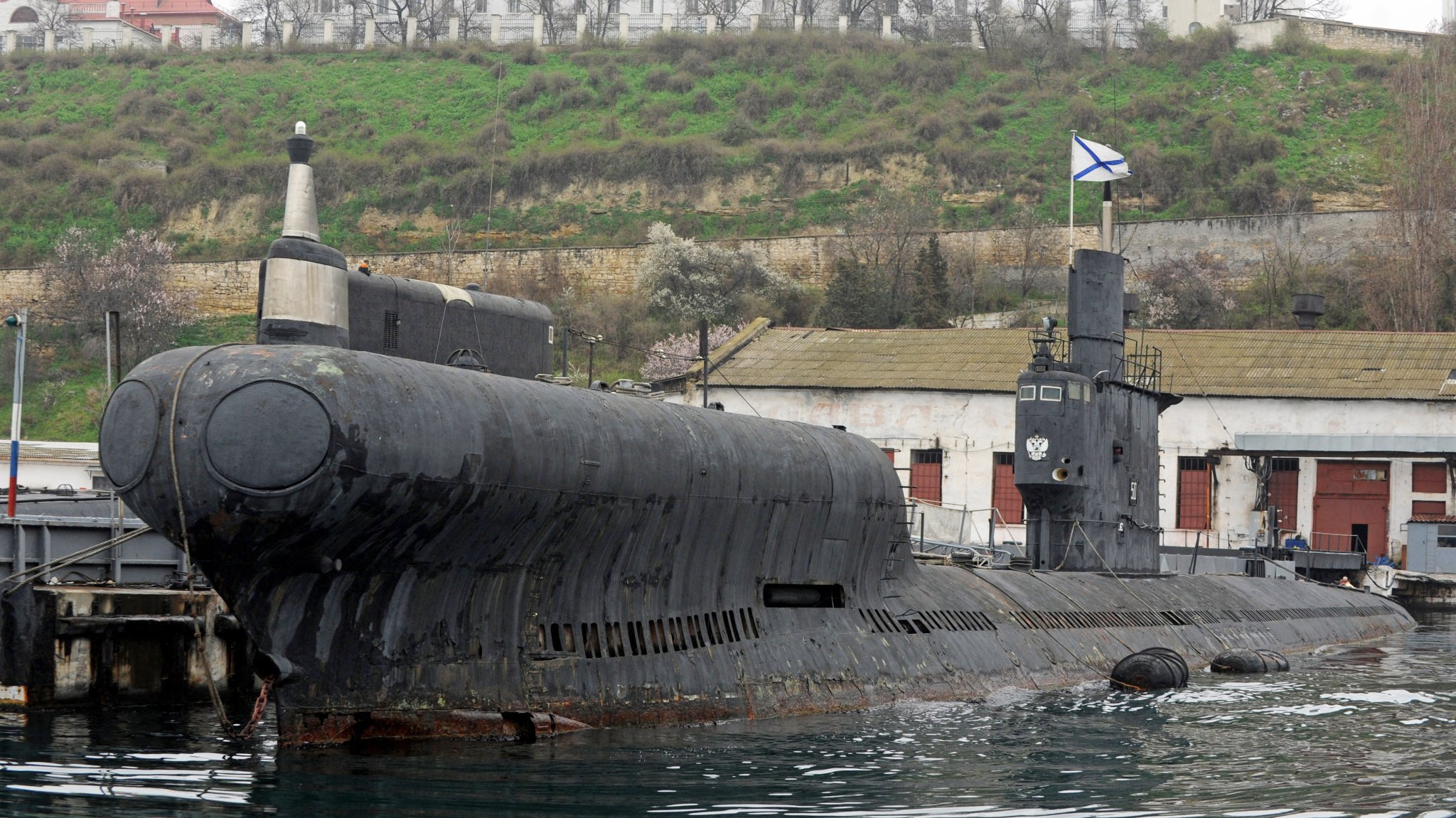
At first glance, the Soviet submarine S-49 looks like a design mistake. While its hull resembles a normal Cold War diesel-electric submarine, its bow appears to have been fitted with a strange pair of enormous “barrels” pointing forward. But the bizarre nose and bug-eyed look was the result of a highly specialized Soviet effort to create a submarine that could test a new generation of underwater weapons. At a time when extreme submarine modifications were in vogue, S-49 stood out for its pioneering work and long service.
S-49 began life as an ordinary Project 633 submarine, known to NATO as the Romeo class. The Project 633 submarines were diesel-electric attack submarines developed for the Soviet Navy in the 1950s and built in Gorky (modern-day Nizhny Novgorod). Since this was hundreds of miles from the sea, submarines built here were transported by river on special barges, then completed and tested at coastal shipyards before entering service.
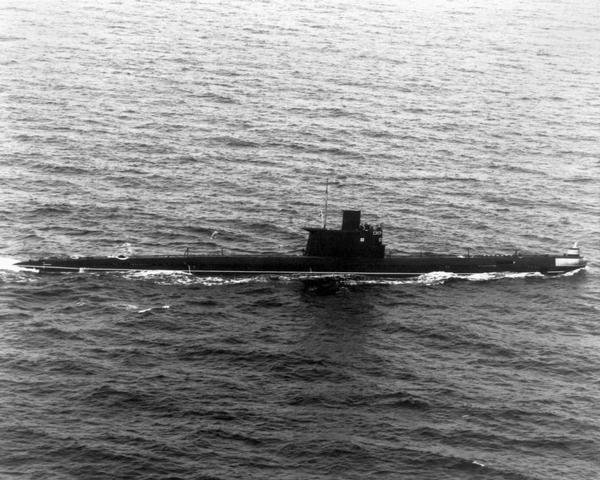
The early career of S-49 was completely conventional. Its keel was laid in March of 1961, it was launched in July, and commissioned into the Soviet Navy in December.
S-49 initially joined the Black Sea Fleet, was transferred to the Northern Fleet in 1962, and conducted routine submarine operations, including Mediterranean deployments.
In 1969, S-49 returned permanently to the Black Sea Fleet and continued in service as a normal Soviet attack submarine.
By the 1960s, however, faced by the growing threat of the U.S. Navy’s emerging nuclear-powered submarine fleet, Soviet naval engineers were developing a new class of faster, farther-reaching weapons: submarine-launched anti-submarine missiles. These were essentially long-range weapon delivery systems whose purpose was to allow one submarine to attack another far sooner and from much farther away than was practical with a conventional torpedo, allowing the shooter to remain at standoff distance. This was especially vital in a nuclear warfighting context.
A live test of a nuclear-armed U.S. Navy SUBROC submarine-launched rocket — broadly similar in concept to the Soviet submarine-launched anti-submarine missile — gives an idea of its destructive power:

The Soviet concept combined a torpedo or a depth charge with a missile; the weapon would be launched underwater from a submarine or fired from a surface combatant into the water. After a brief period of submerged travel through the water, it would break the surface, a rocket motor would ignite, and the weapon would fly rapidly — according to available sources at around Mach 0.8 — toward the target area. The weapon could deploy a homing torpedo or a nuclear depth-charge warhead.
In the early 1970s, the Soviet Navy was working on two next-generation anti-submarine missile systems: the RPK-6 Vodopad (Russian for waterfall) was designed around a 533mm torpedo-tube launch system, while the RPK-7 Veter (meaning wind) was a larger 650mm weapon with greater range and depth capability — it could only carry a nuclear depth charge.
In practice, while both Vodopad and Veter could be launched from submarines, surface combatants had only 533mm tubes, so they were limited to the Vodopad. The RPK-6 Vodopad had a range of about 20 nautical miles, while the RPK-7 Veter increased this to around 54 nautical miles.
A 2018 video showing the Kirov class nuclear battlecruiser Pyotr Velikiy firing multiple Soviet-era RPK-6 Vodopads during a drill:

There is some confusion about the NATO designations of these weapons. Some sources suggest both Vodopad and Veter were known as SS-N-16 Stallion, others that SS-N-16 Stallion applied to different generations of 650mm anti-submarine missiles, while SS-N-15 Starfish applied to different generations of 533mm weapons.
Needing a test submarine for the weapons, the Soviets chose two Romeo class boats, S-49 and S-11, both of which were converted into the experimental Project 633RV standard.
Between December 1971 and October 1972, S-49 underwent a major reconstruction at Sevmorzavod in Sevastopol, on the Crimean peninsula.
The modification completely transformed the submarine, the most visible change being the enormous forward superstructure containing two giant external 650mm tubes for the Veter, which were simply too large to fit inside the original Romeo class hull. At the same time, two internal 533mm launch tubes were modified for the Vodopad.
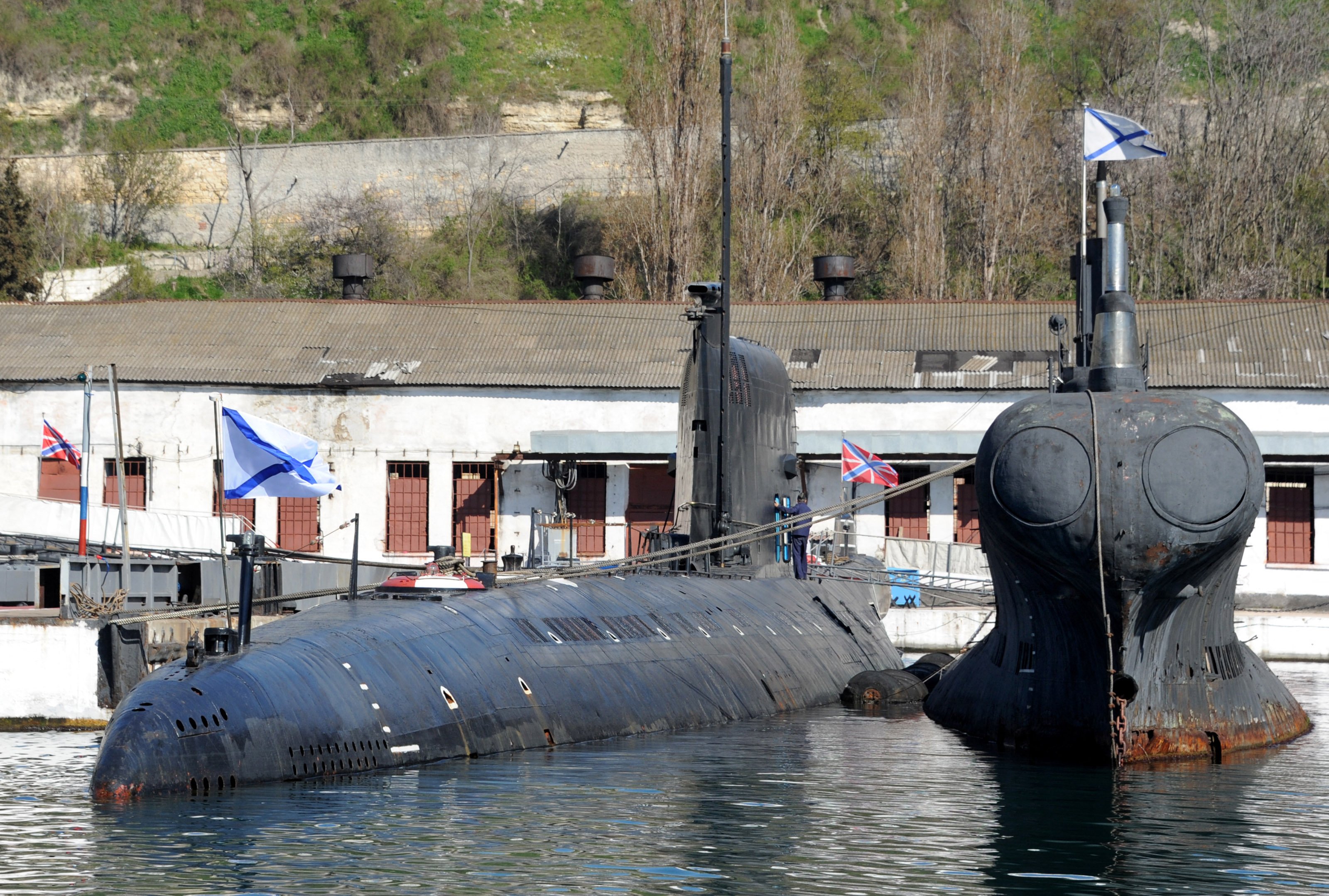
As well as the new launchers, specialized systems included weapon programming equipment, electrical connections for pre-launch testing, fire-control systems, special sealing arrangements, and guide tracks that prepared the weapon during launch.
Essentially a giant underwater weapons laboratory, the Project 633RV allowed engineers to test the entire firing process before the weapons entered service on operational submarines.
Inside the forward section, engineers removed normal submarine equipment and replaced it with test systems. Spare torpedo storage was taken out, and improved sonar equipment and upgraded navigation systems were added.
Overall, the systems were designed to replicate those of Soviet nuclear attack submarines, including those planned for the Project 671 (Victor class) nuclear attack boats.
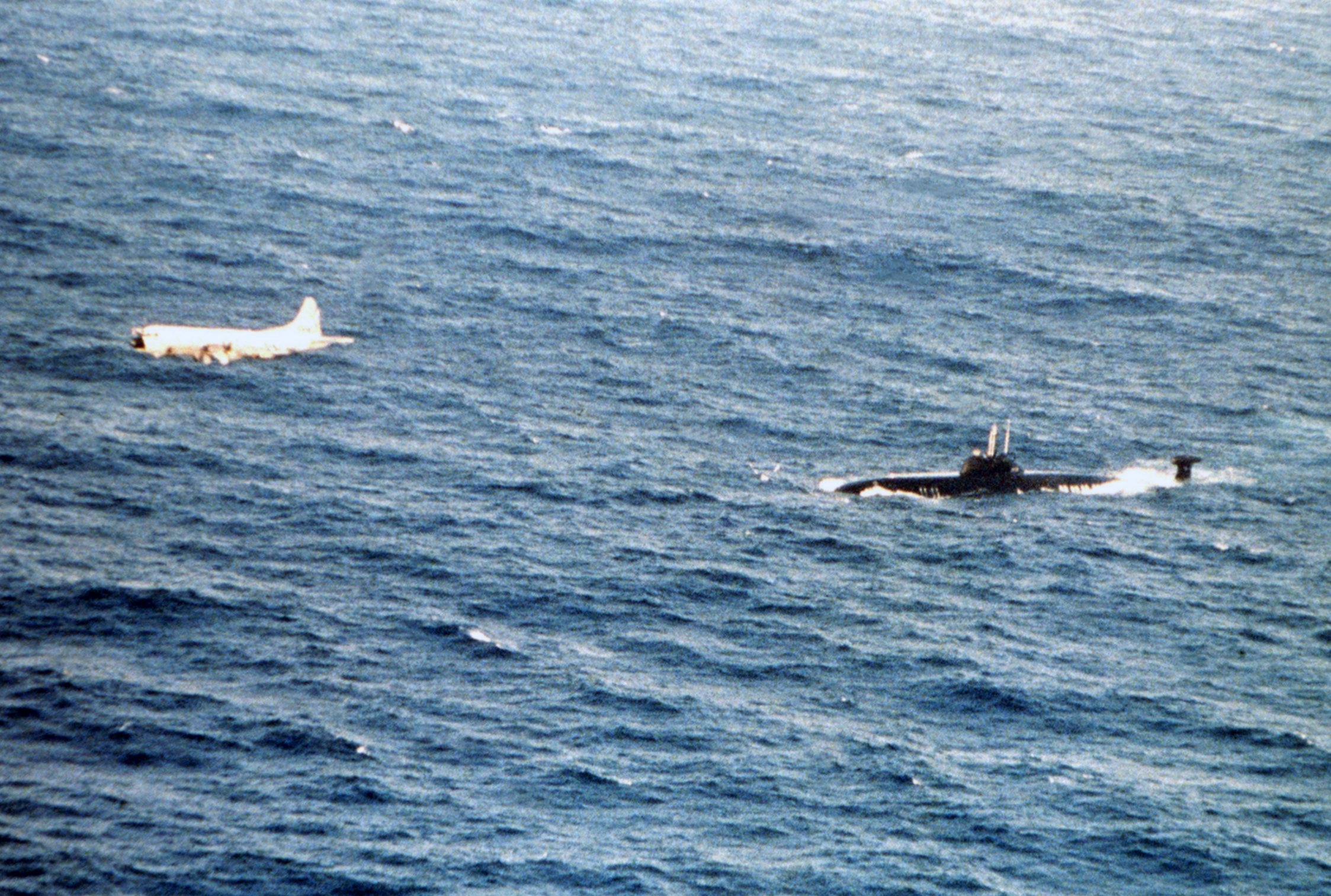
As well as firing missiles, the modified submarine was equipped to measure launch behavior, weapon performance, effects on the submarine, underwater pressures, guidance system operation, and reliability.
After conversion, S-49 became one of the most important weapons-testing submarines in the Soviet fleet.
In December 1972, S-49 conducted the first Soviet underwater launch of a Vodopad missile-torpedo, from a depth of 50 meters (164 feet).
During 1973 and 1974, 24 successful launches were completed from depths between 50 and 150 meters (164 and 492 feet) and under increasingly demanding conditions.
In 1975, S-49 received an improved deep-water launch system and successfully completed another 22 launches, including one from an unprecedented depth of 240 meters (787 feet).
For S-49, the mission expanded beyond Vodopad and Veter.
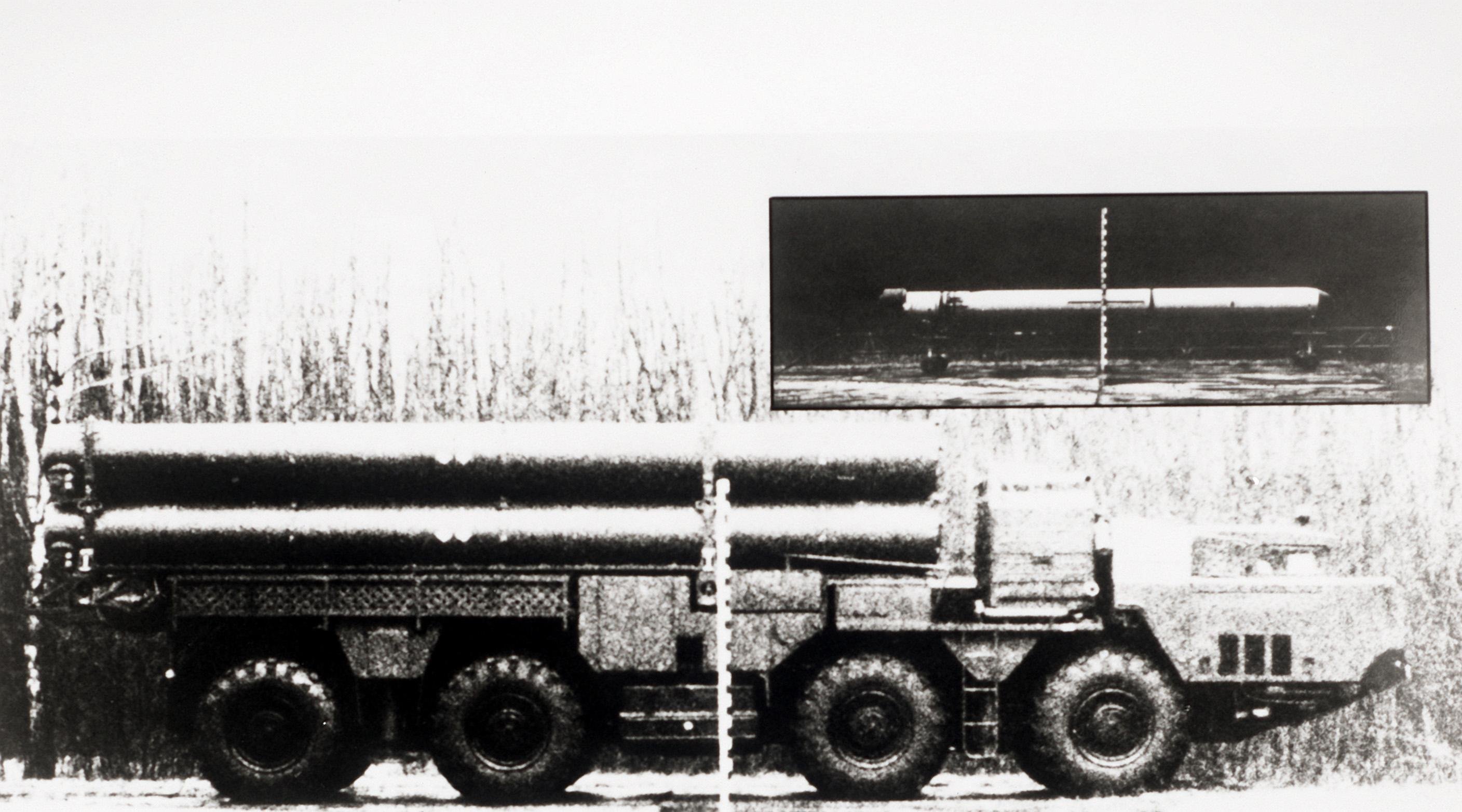
In 1977, the submarine participated in testing of the new 3M10 Granat (SS-N-21 Sampson) land-attack cruise missile, a turbofan-powered weapon that was deployed from a launch capsule via a 533mm launch tube. Analogous to the U.S.-made Tomahawk, this was the first missile of its class fielded on Soviet submarines.
From 1977 through 1985, S-49 continued to support Soviet missile-torpedo development.
After a major overhaul between 1986 and 1991, S-49 continued weapons-related duties until 1995, when it was removed from active naval service.
But even retirement did not end its unusual career.
In late 1995, S-49 was transformed again, emerging as PZS-50, a floating battery charging station. The submarine supported the Black Sea Fleet by charging batteries and assisting submarine training activities.
S-49 remained in service as a support vessel into the 2010s, finally retiring around 2019.
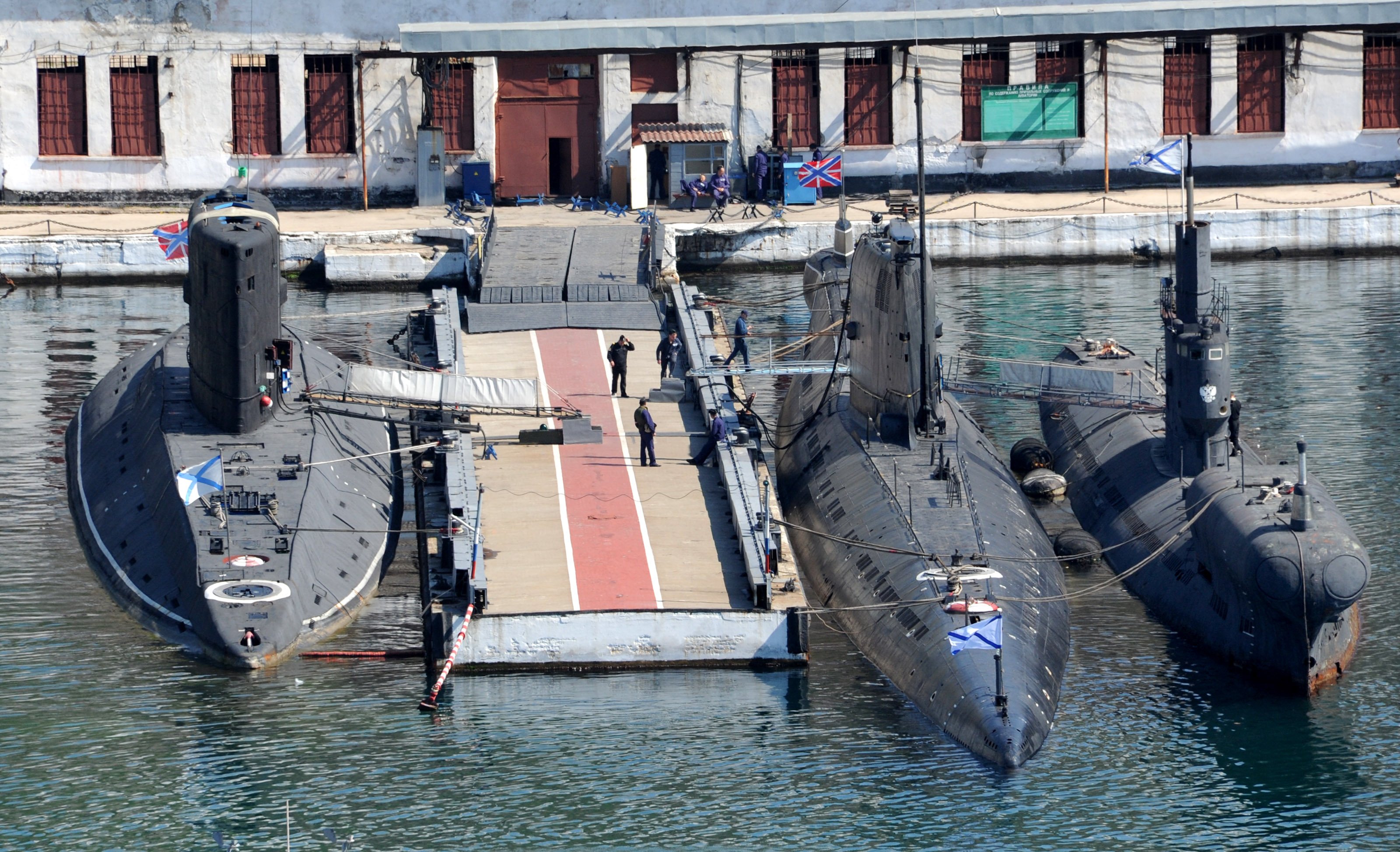
In May 2022, S-49 became part of the Balaklava Underground Museum Complex, preserving one of the most unusual submarines of the Cold War era in a former Soviet underground submarine base. With Russia occupying the peninsula and engaged in a war with Ukraine, during which Crimea has been repeatedly targeted, the ultimate fate of the boat is by no means certain.
S-49 never fired a missile in anger. But without it, some of the Soviet Navy’s most advanced underwater weapons might never have entered service.
Contact the author: thomas@thewarzone.com
Loading comments…
Comments couldn’t be loaded. Please refresh the page.