
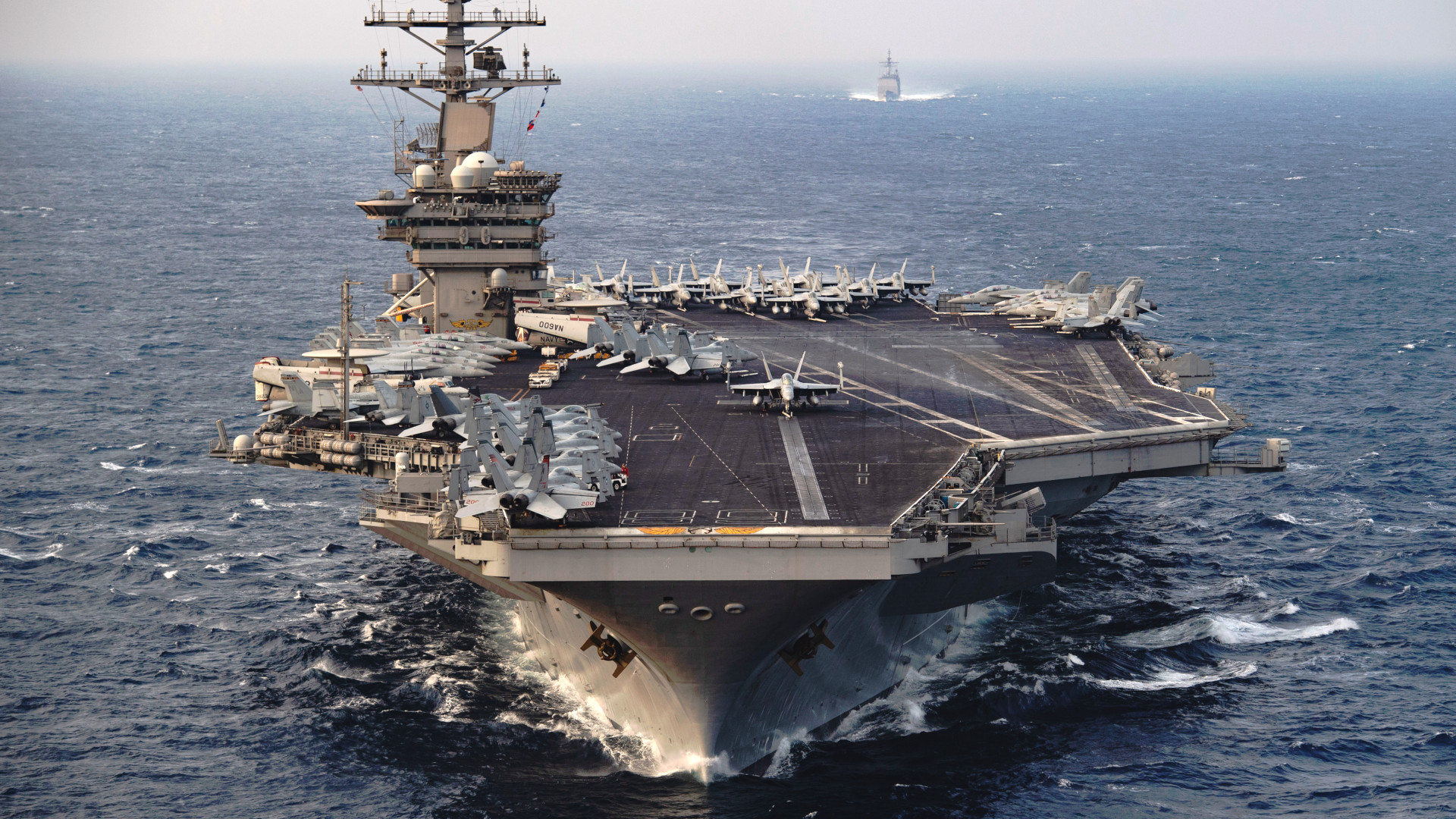
A perfect storm involving three U.S. Navy aircraft carriers highlights the strain on the fleet amid an ongoing war in the Middle East and tensions in Asia. One of the carriers was damaged by a fire, another just saw its service life extended for the second time, while a third had its delivery pushed back until 2027. Though a Navy official told The War Zone there is no connection between the fire and service life extension, taken in concert these events show how difficult it is to build, operate and maintain the huge and expensive nuclear warships, especially when their deployments or service lives are pushed past anticipated timelines.
On March 12, a fire broke out in the laundry area of the USS Gerald R. Ford while underway in the Middle East, injuring two sailors. Though officials initially said the damage was minor, the vessel is now heading to Souda Bay in Crete for repairs, according to USNI, taking it out of war against Iran. On Monday, The New York Times reported that the fire took more than 30 hours to extinguish and left more than 600 sailors “bunking down on floors and tables.”
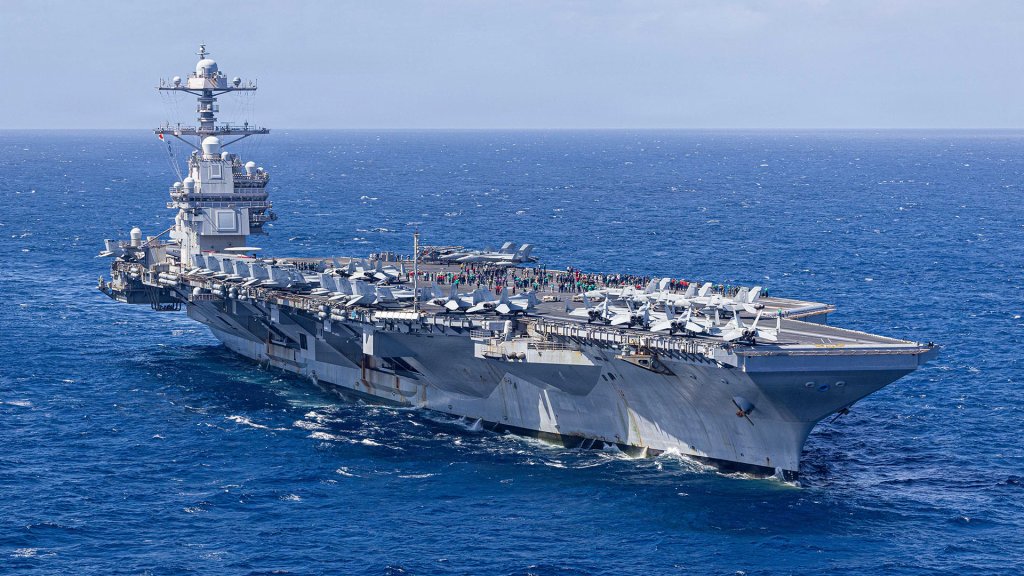
It is unclear how long the Ford’s repairs will take, but it leaves only one carrier, the USS Abraham Lincoln, on station as the war drags into its 18th day with no immediate end in sight.
The fire was the latest of the Ford’s woes during what has become a 10-month-long deployment that has twice been extended and would set a post-Vietnam War record by mid-April unless it is sent out of theater. The previous record, at 294 days, was set by the USS Abraham Lincoln in 2020. However, a military official told the Times that the Pentagon recognizes that the Ford is reaching the limits of its deployment length. He added that the USS George H.W. Bush is preparing to deploy to the Middle East and will probably relieve the Ford. CENTCOM declined to comment when we asked for additional details.
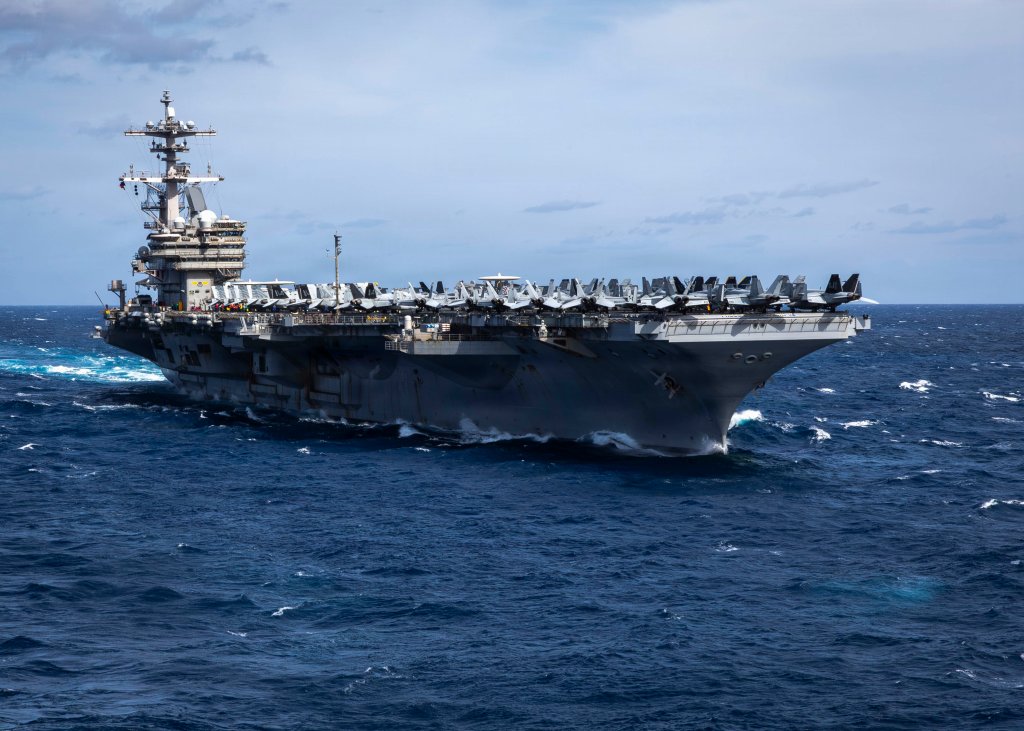
As we previously reported, the Ford experienced sewage issues prior to deploying to the Middle East from the Caribbean, the latter of which is where it played a big role in the capture of Venezuelan dictator Nicolas Maduro. Even before that, Adm. Daryl Caudle, the Chief of Naval Operations, was so concerned in January about the condition of the ship and its crew and the scheduled repairs it would miss that he said he would “push back” on any order to extend its deployment.
Typical carrier deployments last about six to eight months, a period designed to ensure the ships can maintain readiness and the crews do not get worn out. When that doesn’t happen, it creates a cascading series of problems that affect not just the ships and crews, but the facilities that have scheduled repairs and lined up workers to make them happen.
The USS Dwight D. Eisenhower, the last carrier to make an extended deployment, has seen its planned maintenance extended for a half year and counting as a result of the additional strain of being away from its home port for so long. The Navy’s Fiscal Year 2026 budget shows that work on the ship was supposed to have been completed last July, but it is still unfinished. The lack of availability reverberates across the rest of the fleet. That in turn limits the options commanders have when planning or preparing for contingencies and puts the overall carrier availability plan out of whack.
The Ford already was going to require an extended refurbishment before the fire, now that could be extended much longer. You can read much more about the problems created by deferred carrier maintenance via extended deployments in our deep dive into the issue here.
Meanwhile, the aircraft USS Nimitz, the Navy’s oldest operational carrier, has seen its service life extended for the second time.
“USS Nimitz‘ (CVN 68) service life has since been extended to March 2027,” the Navy said in a statement. “Accordingly, the U.S. Navy plans to inactivate the ship in 2027.”
On March 13, the Navy signed a $95.7 million contract with Huntington Ingalls Inc. “for advance planning and long-lead-time material procurement to prepare and make ready for the accomplishment of the inactivation and defueling of USS Nimitz (CVN 68). Work will be performed in Newport News, Virginia, and is expected to be completed by March 2027.”
The news of the extension broke after the carrier departed Naval Base Kitsap in Bremerton, Washington on March 7 to head to Naval Station Norfolk in Virginia as part of a scheduled homeport shift prior to decommissioning, according to Breaking Defense, the first to report the change in the Nimitz’s plans. The Nimitz was initially scheduled to be taken out of service in April of 2025, but that was extended to May of 2026.
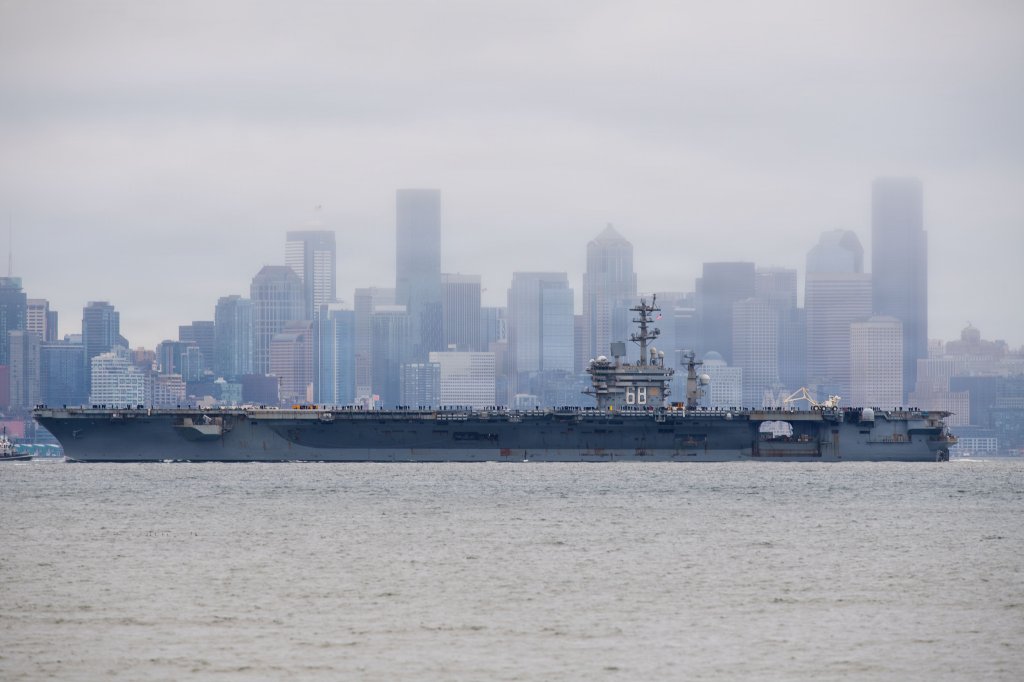
It is unclear if the Nimitz will deploy before it will be finally inactivated, but it is no longer assigned an air wing.
However, the decision to keep the ship in service until 2027 coincides with the delivery of the future USS John F. Kennedy, the second Ford class carrier, being pushed back until then.
The Kennedy’s “delivery date shifted from July 2025 to March 2027 (preliminary acceptance TBD) to support completion of Advanced Arresting Gear (AAG) certification and continued Advanced Weapons,” a Navy official told us in December.
Federal law requires the Navy to keep at least 11 carriers in the fleet. We’ve asked the Navy if there is a connection between the Nimitz extension and the Kennedy’s delivery delay and will update this story wtih any pertinent information provided.
The Navy announced that the Kennedy completed Builder’s Sea Trials (BST) at Newport News Shipbuilding (NNS), a division of HII, in Newport News, Virginia, Feb. 4. BSTs provide an opportunity to test ship systems and components at sea for the first time, and make required adjustments prior to additional underway testing.
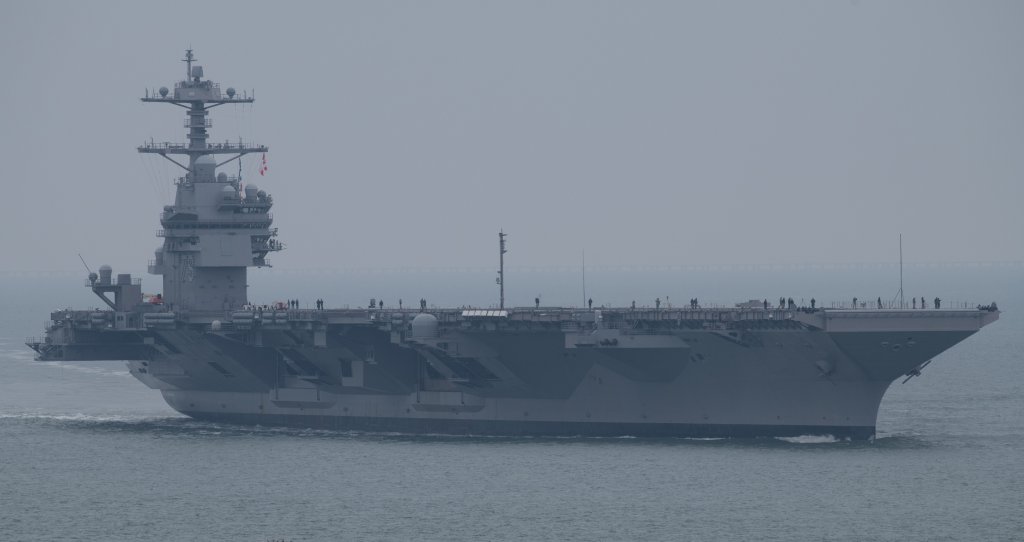
The current status of the Ford, Nimitz and Kennedy shows the jenga-like nature of trying to meet the needs of commanders while maintaining the condition of ships and crews and adhering to federal law. All of this, of course, is in flux. Given that America is in a new war with an uncertain future, there could be further shockwaves to the Navy’s plans for its carrier fleet.
Update: 6:40 PM EST March 18 –
This afternoon, the Navy provided answers to questions we asked about the carrier situation:
1) Why was the Nimitz extended?
Nimitz has been extended to maximize the aircraft carrier’s service life and allow the ship to continue contributing to Navy readiness through underways supporting exercises and carrier flight qualifications after arriving in Norfolk, Virginia.
2) When was the extension announced and when was it originally scheduled for deactivation?
This extension was announced on Friday, March 13, 2026. The fiscal year 2024 budget request extended Nimitz’s service life by 13 months, from April 2025 to May 2026. A service life extension was recently approved to further extend that to March 2027.
3) Will the ship be deployed? If not, what will it do?
Nimitz is currently underway supporting U.S. Naval Forces Southern Command/U.S. 4th Fleet’s Southern Seas 2026 deployment. After the conclusion of Southern Seas, and in line with the ship’s 50-year legacy as a pioneer in naval aviation, Nimitz and its crew will spend the last year of the ship’s service life supporting carrier qualifications for new pilots and air crews. Until its last day of service, Nimitz will remain relevant to our Navy and nation’s readiness.
4) Also, was the Nimitz extended because the Kennedy is delayed?
John F. Kennedy’s delivery date remains unchanged from the previously announced date of March 2027.
Contact the author: howard@thewarzone.com
Loading comments…
Comments couldn’t be loaded. Please refresh the page.