
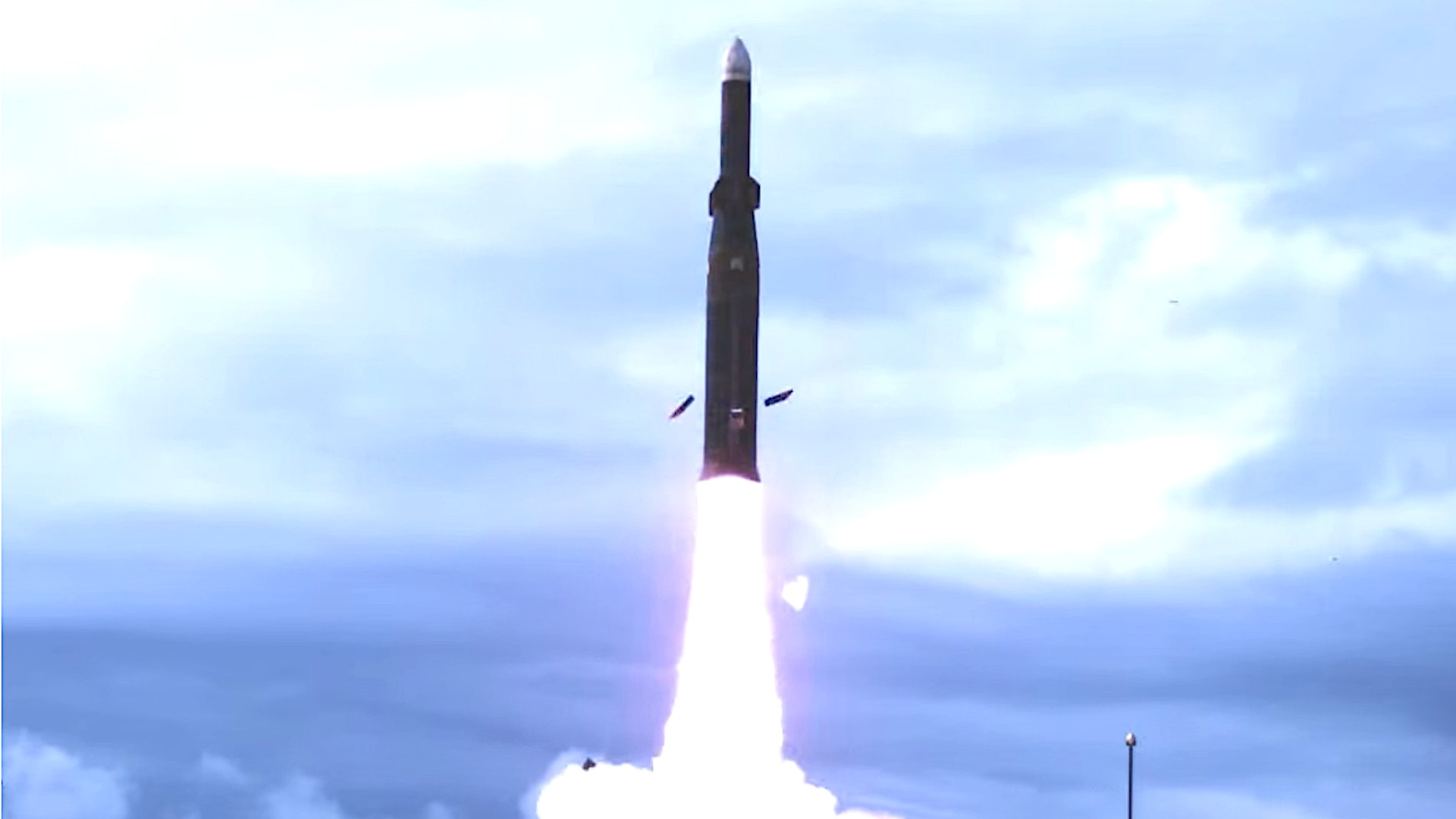
Taiwan has officially rolled out a new anti-ballistic missile system called Chiang Kung, or Strong Bow, which it says is now in production. The system features a two-stage interceptor and includes the first active electronically-scanned array (AESA) radar domestically produced on the island. Taiwanese armed forces would face huge barrages of ballistic missiles as part of any future invasion from the mainland.
Taiwan’s National Chung-Shan Institute of Science and Technology (NCSIST) shared new details about Chiang Kung (also sometimes transliterated Chiang Kong), as well as video clips showing the system being tested, with domestic news outlets earlier today.

Images of elements of the Chiang Kung system, or mockups thereof, including a four-cell trailer-based launcher, had already begun to emerge online earlier amid preparations for the biennial Taipei Aerospace & Defense Technology Exhibition, which opens tomorrow. Taiwanese authorities had disclosed the existence of this system at the previous iteration of this event in 2023, but did not display it in any form.
From what NCSIST has now disclosed, the two-stage Chiang Kung interceptor is first cued to its target via the system’s large trailer-mounted AESA radar. After launch, the second stage detaches and switches over to its own built-in millimeter wave radar seeker to prosecute the intercept. The second stage has a composite material construction and thrust-vectoring capability, according to a machine translation of a report from Taiwan’s Central News Agency (CNA). Whether it is designed to be a hit-to-kill system that destroys its target through the sheer force of impact or contains a high-explosive warhead is not entirely clear.
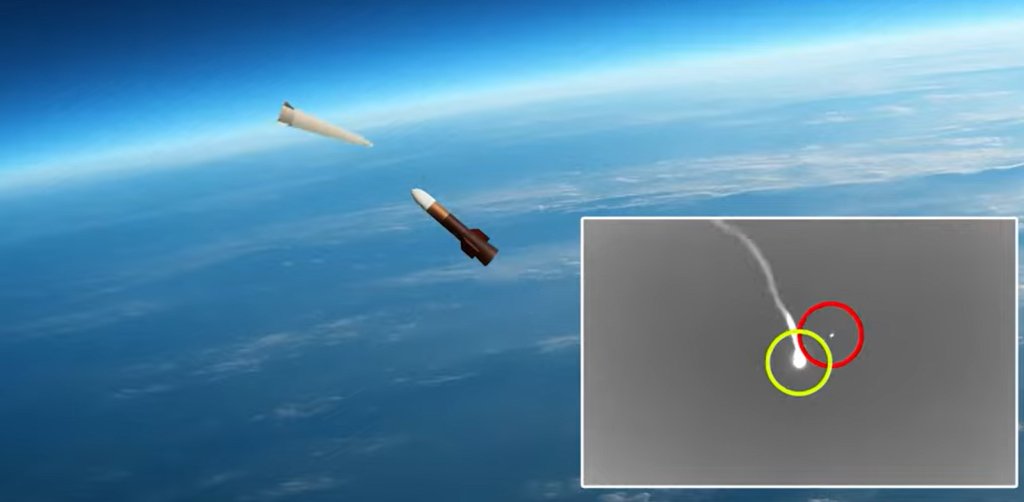
CNA‘s report says Chiang Kung is capable of “intercepting enemy tactical ballistic missiles at mid-level,” but the full extent of its ability to engage targets in the mid-course phase when they are outside of the Earth’s atmosphere is unclear. Li Shih Chang, NCSIST’s director, has said the interceptor can engage targets at altitudes up to at least 43 miles (70 kilometers), per CNA. For comparison, the U.S. Terminal High Altitude Area Defense (THAAD) system, which, as the name indicates, is focused on terminal phase intercepts within the atmosphere, is said to be able to engage targets at altitudes in excess of 31 miles (50 kilometers).
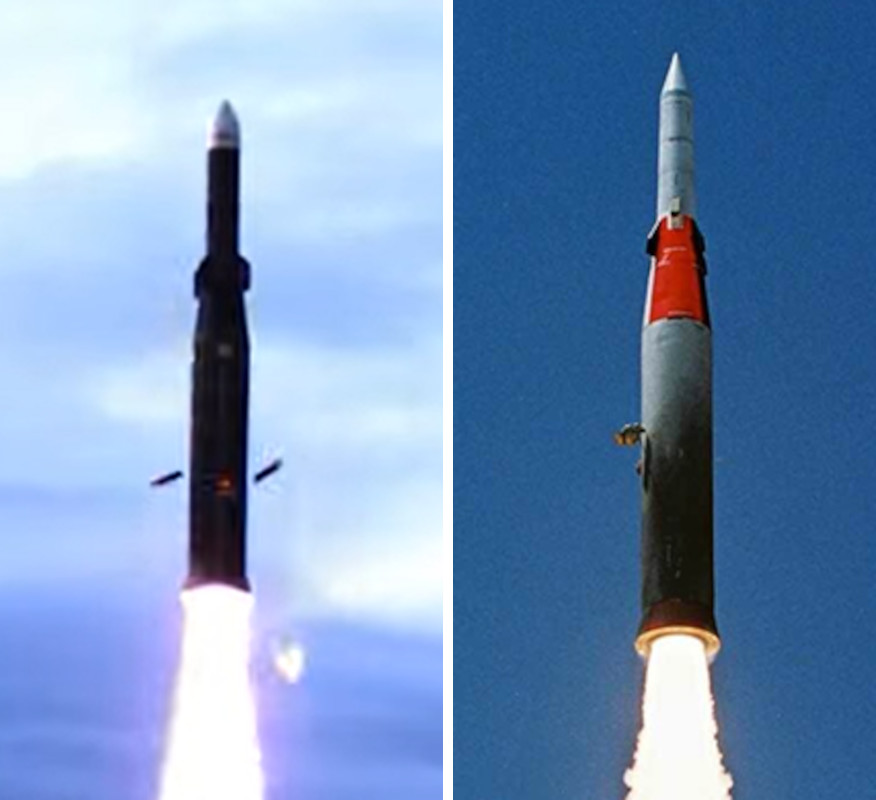
The stated engagement envelope for Chiang Kung is more directly comparable to Israel’s Arrow 2, which manufacturer IAI says does have an exo-atmospheric intercept capability. The two missiles are also very similar, at least externally, but whether there is any direct relationship between the designs is currently unknown. Taiwan has engaged with Israel on military development efforts in the past. This includes the Hsiung Feng I anti-ship missile, which was directly based on the Israeli Gabriel Mk I design.
With this in mind, the description of Chiang Kung’s radar as being domestically produced, but not necessarily domestically developed, raises additional questions about outside help with that component of the system.
Taiwanese officials have said Chiang Kung offers a valuable complement to existing domestically-developed Tien Kung III (Sky Bow III) and U.S.-made Patriot surface-to-air missile systems, which offer lower-end anti-ballistic missile capabilities. Tien Kung III has a stated maximum engagement altitude of just under 28 miles (45 kilometers).
![NCSIST - Tien Kung III Air Defense Missile & Hsiung Feng III Anti-Ship Missile Live Firing [480p] thumbnail](https://i.ytimg.com/vi/uPq4iC70U0Y/hqdefault.jpg)
NCSIST has said in the past that a Chiang Kung II with an engagement envelope extending up to 62 miles (100 kilometers) is also in development. In June, the Taipei Times reported that there are actually two variations of the Chiang Kung II missile, citing an unnamed source. Per that story, the Chiang Kung IIA is the improved anti-ballistic missile interceptor, while the Chiang Kung IIB is designed as a surface-to-surface strike weapon with a range of up to 621 miles (1,000 kilometers).
Regardless of Chiang Kung’s exact capabilities and origins, Taiwan’s interest in additional layers of anti-ballistic missile defense reflects very real and ever-growing threats from the mainland. China’s People’s Liberation Army (PLA) has an extensive array of multiple tiers of tactical ballistic missiles, and thousands of them in total, and continues to expand and modernize that arsenal. The PLA notably fired short-range ballistic missiles over and around Taiwan during drills simulating a blockade of the island back in 2022.
In general, the high speeds that ballistic missiles reach in the terminal phase of flight present distinct challenges for defenders, even before advanced maneuverability and other capabilities are factored in. That terminal speed also gives them an inherent ability to burrow deeper into hardened targets.
Chiang Kung is clearly intended to provide additional capability and capacity to challenge at least a portion of these threats as part of a layered defensive posture. At the same time, it remains to be seen how quickly Taiwan can get the system into real operational service and at what scale. Air and missile defense assets themselves would be top targets for Chinese planners in any invasion scenario. Chiang Kung is road mobile, but how quickly it can be brought into action after arriving at a particular site, or moved to a new one, is unclear.
For years now, the U.S. government has been heavily pressuring its Taiwanese counterparts to focus more on lower-cost capabilities, especially uncrewed aerial and maritime systems, which can be employed in large numbers and in a more distributed and survivable manner to help stymie an invasion. American officials have openly discussed a concept, which has been referred to in the past as “Hellscape,” that envisions flooding the air and waters around the island with kamikaze drones and other uncrewed platforms in the event of an intervention across the Taiwan Strait. U.S. and Taiwanese officials have warned that the PLA could be in a position where it would at least be confident of success in such an operation by 2027, if not earlier.
Now that it has been officially unveiled, more details about Chiang Kung’s capabilities and Taiwan’s plans for the system, as well as follow-on developments, may now begin to emerge.
Contact the author: joe@twz.com
Loading comments…
Comments couldn’t be loaded. Please refresh the page.