
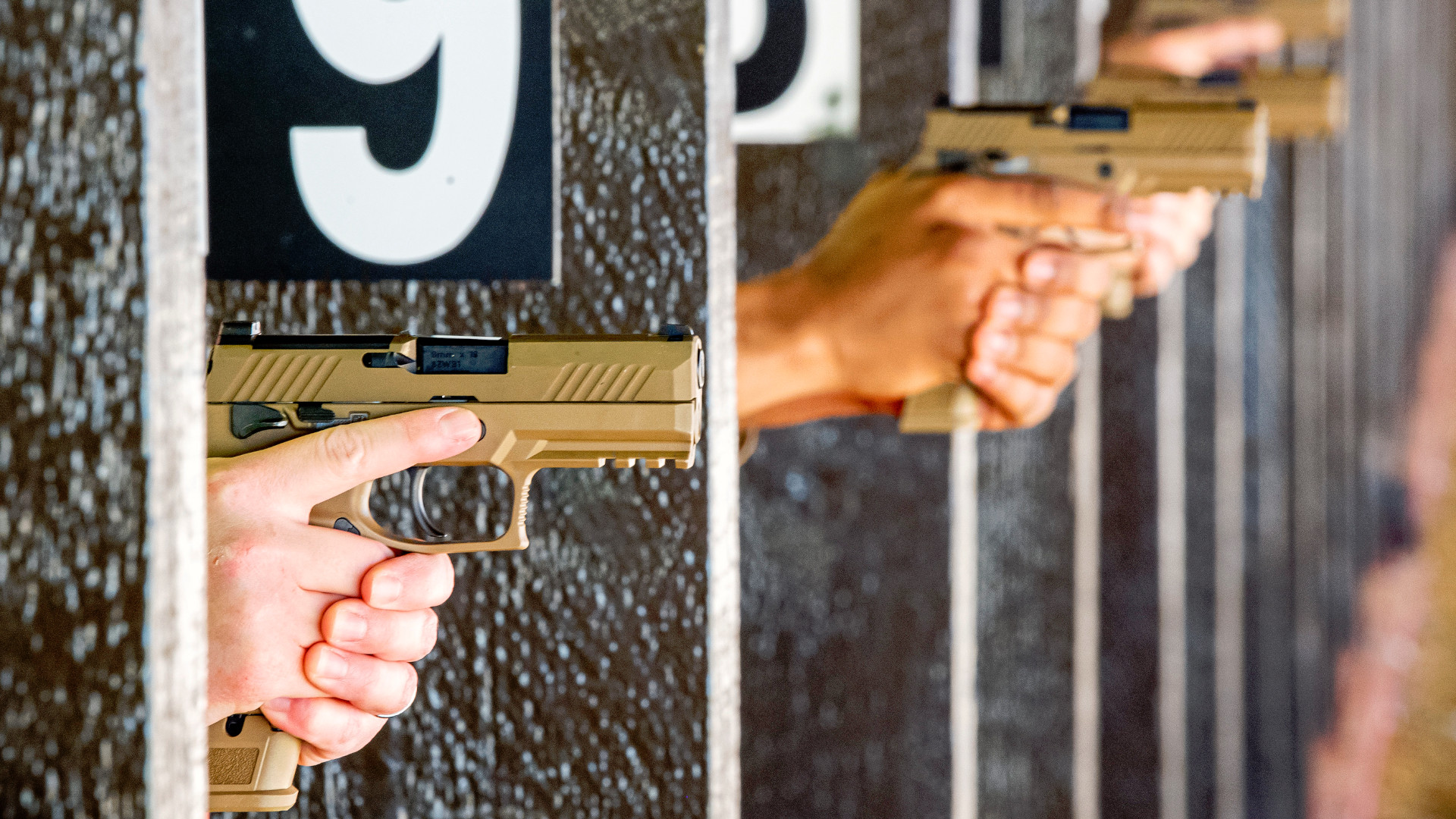
Some units within the U.S. Air Force’s Air Combat Command (ACC) have now restricted the use of Sig Sauer M18 in the wake of a recent fatal incident. This follows Air Force Global Strike Command’s (AFGSC) decision to implement an indefinite command-wide “pause” on M18 use after the death of an airman at F.E. Warren Air Force Base in Wyoming, which TWZ was first to report. Sig’s P320 pistol family, which includes the M18, has been hounded for years now by allegations that the pistols can fire without their triggers being pulled, something the company categorically insists is not possible.
“While Headquarters Air Combat Command has not directed a pause on the use of the M18 Modular Handgun System, some subordinate commanders have temporarily restricted use of the weapon out of an abundance of caution,” an ACC spokesperson told TWZ. “In those cases, it is feasible that alternative weapons could be substituted to accomplish the mission.”
“We aren’t [the] lead for the investigation [into the incident at F.E. Warren], but our leaders are following as closely as they can, and taking actions with the information as they learn more,” the spokesperson added.
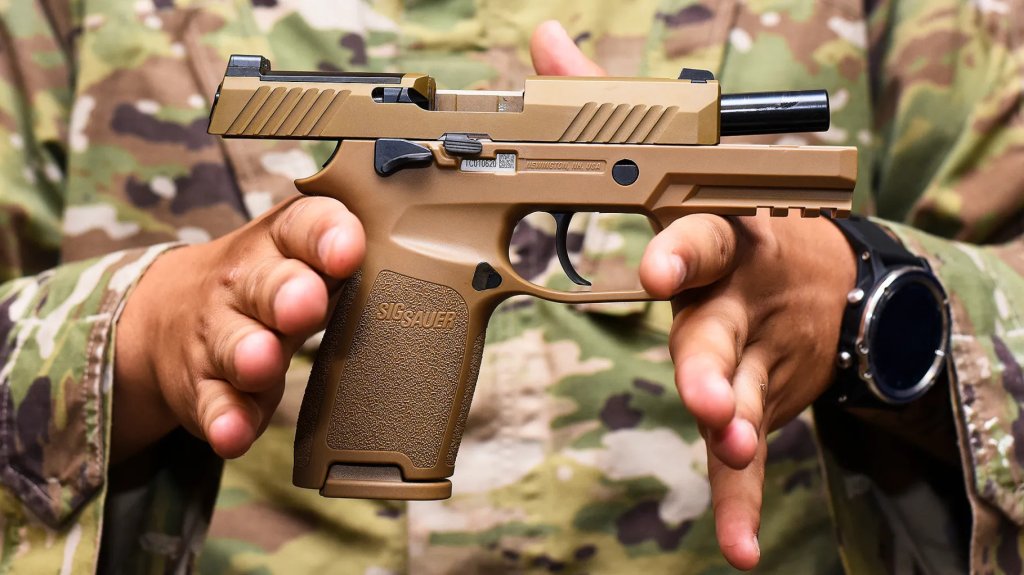
TWZ has reached back out to ACC for more information about the units within the command that have now restricted use of the M18. ACC oversees the bulk of the Air Force’s tactical jets, electronic warfare platforms, airborne early warning and control planes, crewed intelligence-gathering aircraft, and larger fixed-wing drones.
AFGSC implemented its “pause” on the use of M18s the day after the death of Airman Brayden Lovan, a member of the 90th Security Forces Squadron at F.E. Warren, on July 20. The Air Force has, so far, only confirmed that the incident, which remains under investigation, involved the “discharge” of an M18 for still unclear reasons. There are still unconfirmed reports that Lovan had removed the M18, still in its holster, from his person and placed it on a table before it went off.
This all came roughly two weeks after the public disclosure of an FBI report that raised new safety concerns about the P320 series based on the examination of a police variant of the M18 belonging to the Michigan State Police (MSP), which had experienced an apparent “uncommanded discharge” in an incident last year, as you can read about in detail here. Sig has unequivocally refuted the conclusions of that report, which had identified multiple potential faults and called for further investigation of the pistol’s core design. The company says the FBI was unable to reproduce its initial findings using a mutually agreed-upon testing protocol that was subsequently developed.
The compact M18 and full-size M17 are the core components of what the U.S. military calls the Modular Handgun System (MHS), which is a U.S. Army-managed program. The Army picked Sig as the winner of its MHS competition in 2017, and M17 and M18 pistols were subsequently adopted as standard sidearms across the rest of the Department of Defense. Sig also sells commercial variants of the MHS pistol, some of which differ significantly from the U.S. military configurations. The MSP gun at the heart of the recently disclosed FBI report was a PRO LE version that notably lacks the external safety that was a key Army requirement.
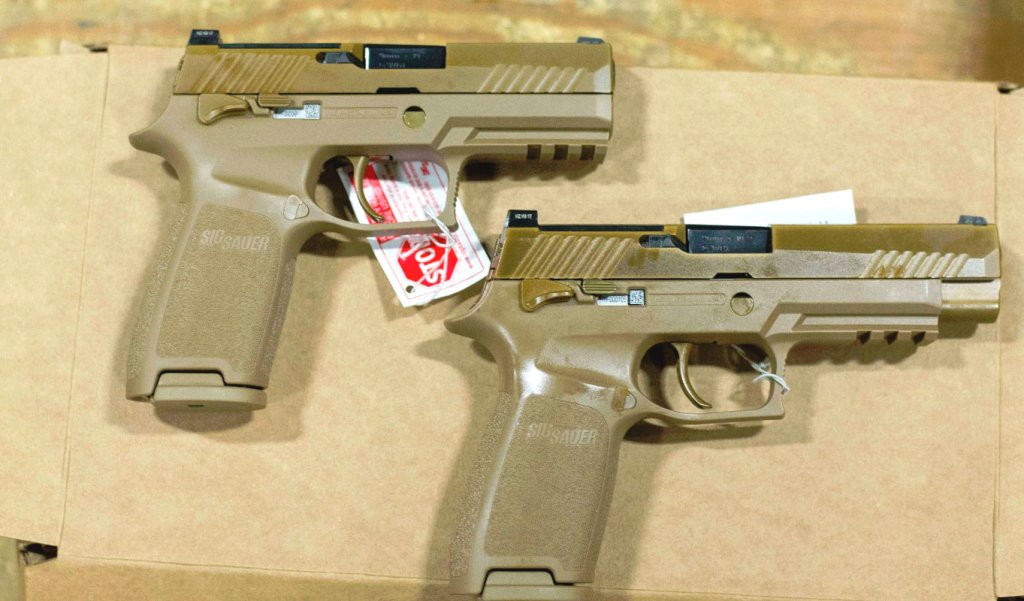
So far, actions to in any way limit the use of M18 pistols within the U.S. military in response to the incident at F.E. Warren still seem to be limited to the Air Force.
“The incident that occurred within the Air Force is a developing situation with details still unfolding. We cannot comment on how or if this will affect the Marine Corps at this time,” a spokesperson for Marine Corps Systems Command (MARCORSYSCOM) told TWZ last week. “The Marine Corps will maintain close coordination with the Air Force and the Army, as the Primary Inventory Control Activity (PICA) for the M18, as the incident details are evaluated.”
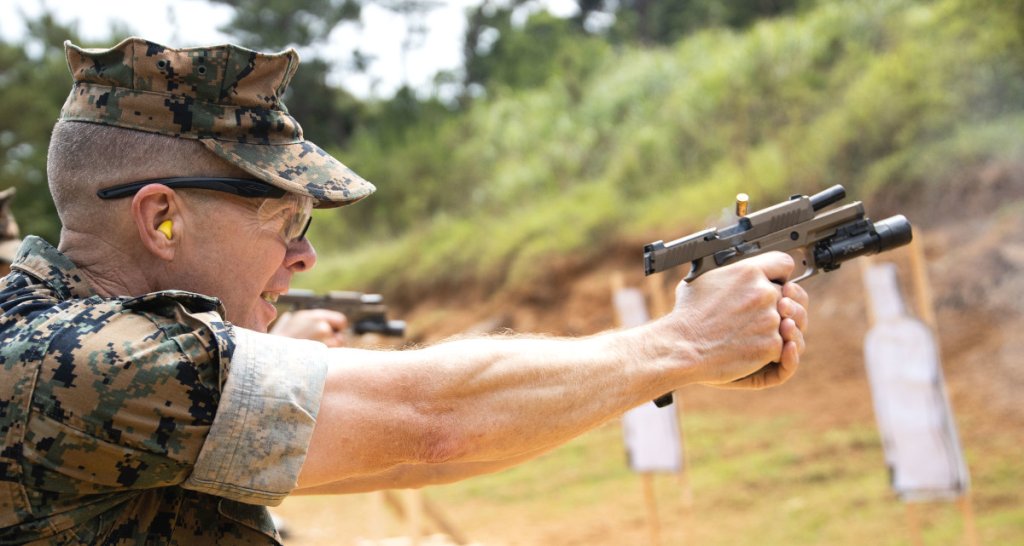
In addition, “currently, there is no intent to implement any changes (policy or training) regarding the continued use of the M18 [in response to the FBI report’s findings]. The MHS was rigorously tested to DoD standards before being selected for use by our Marines, and we have not seen any evidence that indicates design or manufacturing issues are present,” the MARCORSYSCOM spokesperson also said. “In addition to the initial testing, each lot of weapons produced for the U.S. Government is subject to extensive lot acceptance testing with oversight by the Defense Contract Management Agency (DCMA) and the Service from which the order was placed (Army/ Marine Corps). The Marine Corps will maintain close coordination [with] the Army, as the Primary Inventory Control Activity (PICA), for the M18.”
Furthermore, “we don’t have any plans to make modifications and will continue to work with the Army, who is the PICA (and has the contract with Sig Sauer),” they added.
TWZ has also reached out to the U.S. Navy and Army about any actions they are taking regarding their MHS pistols in response to the incident at F.E. Warren AFB. The Army previously told us that the recently disclosed FBI report had not prompted the service to make any changes to the guns or its relevant policies.
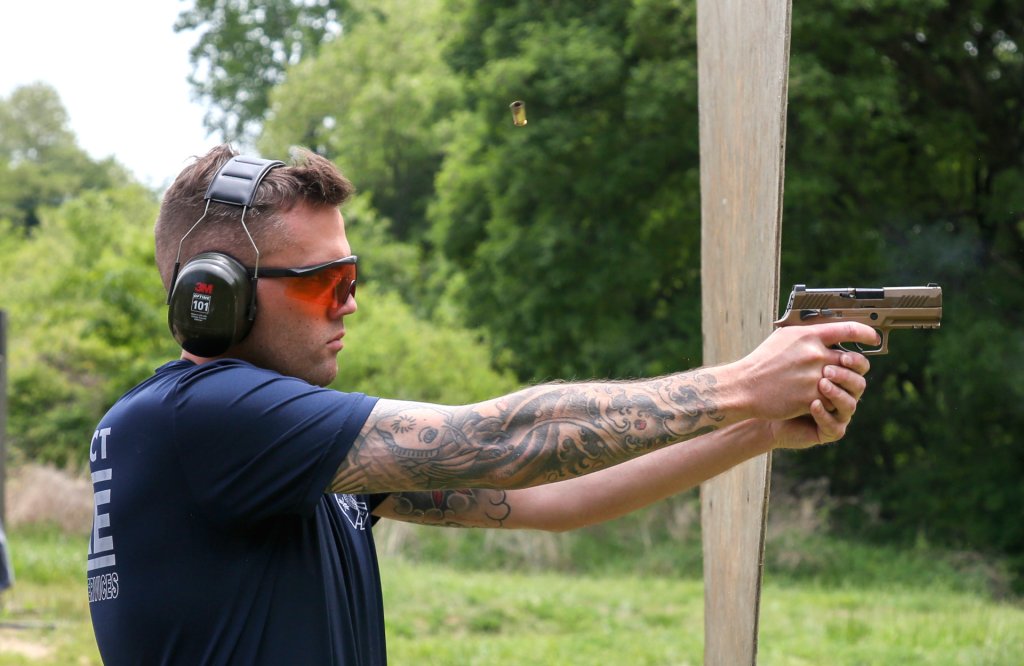
As noted, concerns about the potential for P320 pistols to fire without their triggers being pulled are not new, with dozens of other incidents having been reported over the years, including within the U.S. military. The Marines previously conducted their own technical evaluation of the M18 after one of the pistols, issued to a Japanese national employed as a security guard at Camp Foster on the island of Okinawa, discharged in 2023.
“The weapon in question was inspected locally and then returned to [the] Marine Corps program office for further investigation, where the weapon was again inspected for proper function, defects, and/or safety issues by professional armorers and engineers,” the MARCORSYSCOM spokesperson told TWZ. “These inspections revealed the weapon was complete, functional, included all safety equipment, and was operating properly. The weapon performed as designed, and the conclusion reached was the weapon will not fire unless the safety is off and the trigger is pulled.”
“The Marine Corps is committed to maintaining and providing the highest standard of product quality to Marines. The Department of Defense has a rigorous Product Quality Deficiency Reporting (PQDR) process in place to investigate any suspected or potential design or manufacturing flaws,” they added. “In the event of an incident, if the initial investigation indicates a materiel flaw, the incident report and all evidence are submitted to the program office for further investigation. As the Army is the Primary Inventory Control Activity for the system, we maintain a close working relationship with the Army program office and share all information.”
For years now, Sig has categorically insisted that it is impossible for P320-series pistols to fire without the trigger being pulled, including in its refutation of the recently disclosed FBI report. There were also drop safety issues in the past, which Sig says it has mitigated through changes to the gun’s design.
With regard to the FBI report, specifically, “the reason for this conclusion was a result of cutting a viewing window into the side of the slide and, thus, removing all support material to help hold the striker safety spring in place,” Phil Strader, vice president of Consumer Affairs at Sig Sauer, told TWZ in a statement last week. “Even without this much needed support, the spring only shifted on the post and was still functional after repeated striking with a hammer. These conclusions were made without this understanding.”
Furthermore, “the FBI was manually forcing the sear downward using a punch (similar to what was done by some less refined internet/YouTube testing),” Strader added. “The sear works in relationship to the trigger bar. The trigger bar is attached to the trigger. When the sear is pushed down, the trigger is being moved rearward…essentially, the trigger is being pulled, just by a different mechanism.”
“We could most likely agree that forcing a downward movement of the sear would replicate or be equivalent to a drop with the grip module down/muzzle parallel to the ground, right? In the last 7 years, we have recorded 1186 drops of various P320 models at 75-, 90-, and 105-degree angles (grip down orientations) at a height of 6 feet directly on concrete with zero failures,” he continued. “When the FBI re-tested this using a method that BOTH the FBI and SIG SAUER agreed to, they attempted 565 forced downward movements of the sear over 19 different striker assemblies with zero failures.”
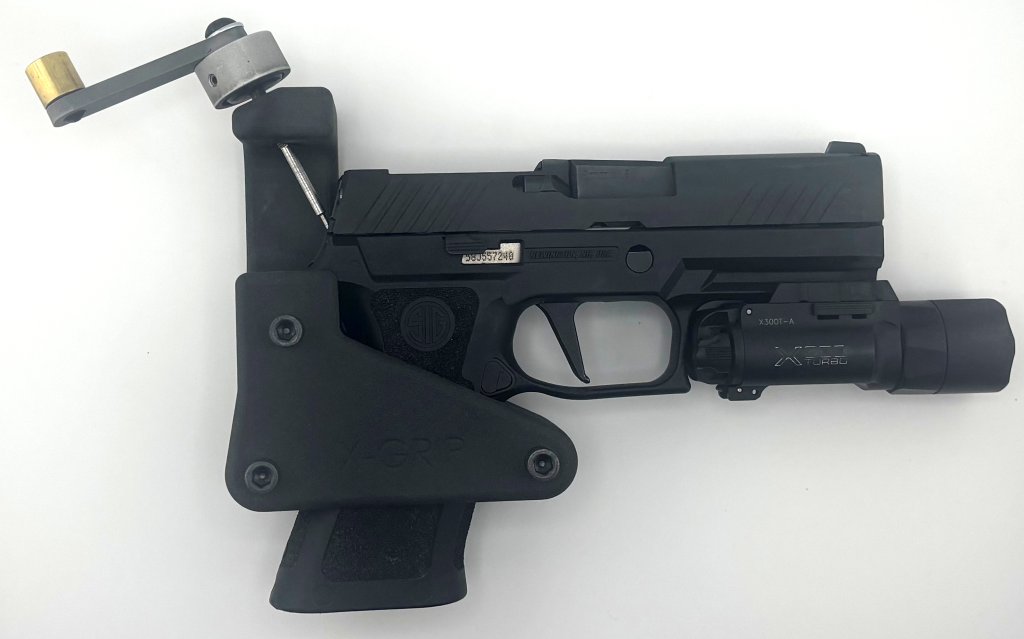
Strader also noted that the Michigan State Police (MSP) had decided to continue with their fielding of the M18 PRO LE after receiving the results of the FBI evaluation, and “only purchased new weapon lights and holsters that would help mitigate larger light bearing holster intrusions into the trigger guard.”
He pushed back on a leaked U.S. Immigration and Customs Enforcement (ICE) memo regarding a ban on the use of P320 pistols within the agency, which had been issued just days after the FBI’s report became public.
“There was a 2nd page of the memo that did not get publicized. This additional page explains in more detail DHS-ICE’s plan to replace their P320 since they were at the end of their 1yr contract extension [emphasis in the original],” Strader said. “However, the 10-day implementation to replace approximately 19,000 pistols, holsters, etc was obviously unrealistic and places all DHS-ICE officers armed with their issued firearm in violation as of July 19th.”
“DHS-ICE has recently reached out to SIG SAUER to discuss extension of their P320 contract for another year during their transition,” he added.
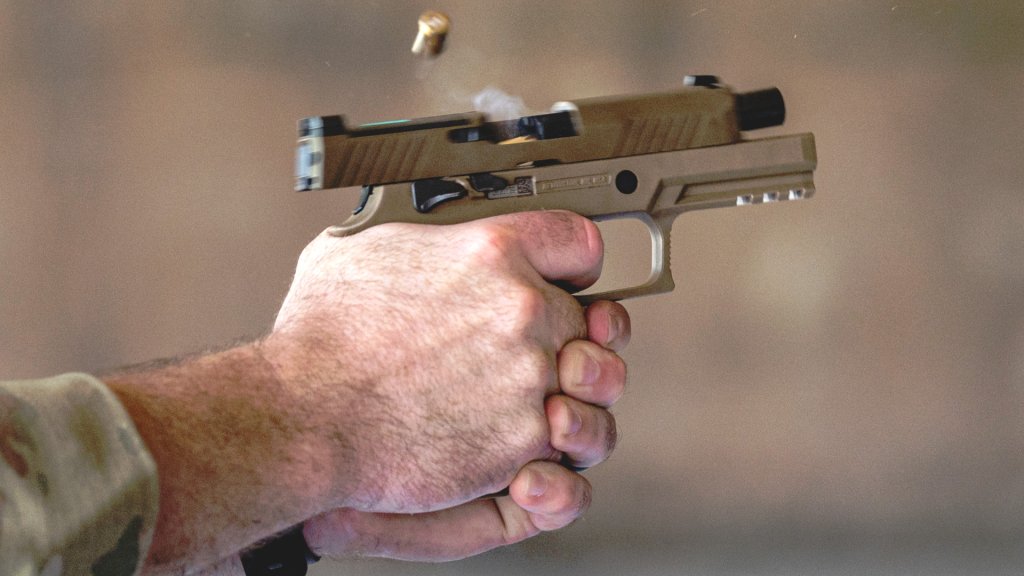
A number of U.S. law enforcement agencies, as well as police training academies, have explicitly banned P320s over safety concerns. Just last Friday, the Tampa Police Department in Tampa, Florida, which adopted the P320 in 2018, announced it had “begun evaluating alternative firearm platforms from various manufacturers, including Sig Sauer, focusing on those with the most updated safety features and proven reliability.”
That news came just days after Florida State Representative Danny Alvarez, a Republican, issued a call for a halt to the use of P320 pistols by law enforcement agencies across his state, which he said was prompted in large part by the recently disclosed FBI report.
“SIG SAUER is in direct contact with Representative Alvarez and will continue to maintain an open, respectful, and direct dialogue. While we respect Representative Alvarez as both an individual and an elected official, we reject his assertion that the P320 poses an undue risk to Florida’s law enforcement community,” Sig said in response in a letter sent to multiple Florida law enforcement agencies, according to Soldier Systems Daily. “We strongly disagree with his position, accusations, and inaccurate statements. His statements, while heartfelt, are misguided, misinformed and fueled by rhetoric as opposed to facts.”
Sig is also now suing the Washington State Criminal Justice Training Commission (WSCJTC) over its ban on the P320.
Further compounding all this is a video posted on YouTube over the weekend that claims to show the P320 can fire when the trigger moves even just slightly due to the pistol’s slide being jostled, as could happen inside a holster. This remains unconfirmed, and TWZ has reached out to Sig for comment.
The full extent of the fallout for the P320 and Sig in light of this string of recent developments, and the company’s refutations, still remains to be seen. The official results of the Air Force’s ongoing investigation into the incident at F.E. Warren are set to be a particularly important factor.
In the meantime, at least temporary restrictions on the use of M18 pistols within the Air Force have already begun expanding beyond AFGSC.
Howard Altman contributed to this story.
Contact the author: joe@twz.com
Loading comments…
Comments couldn’t be loaded. Please refresh the page.