
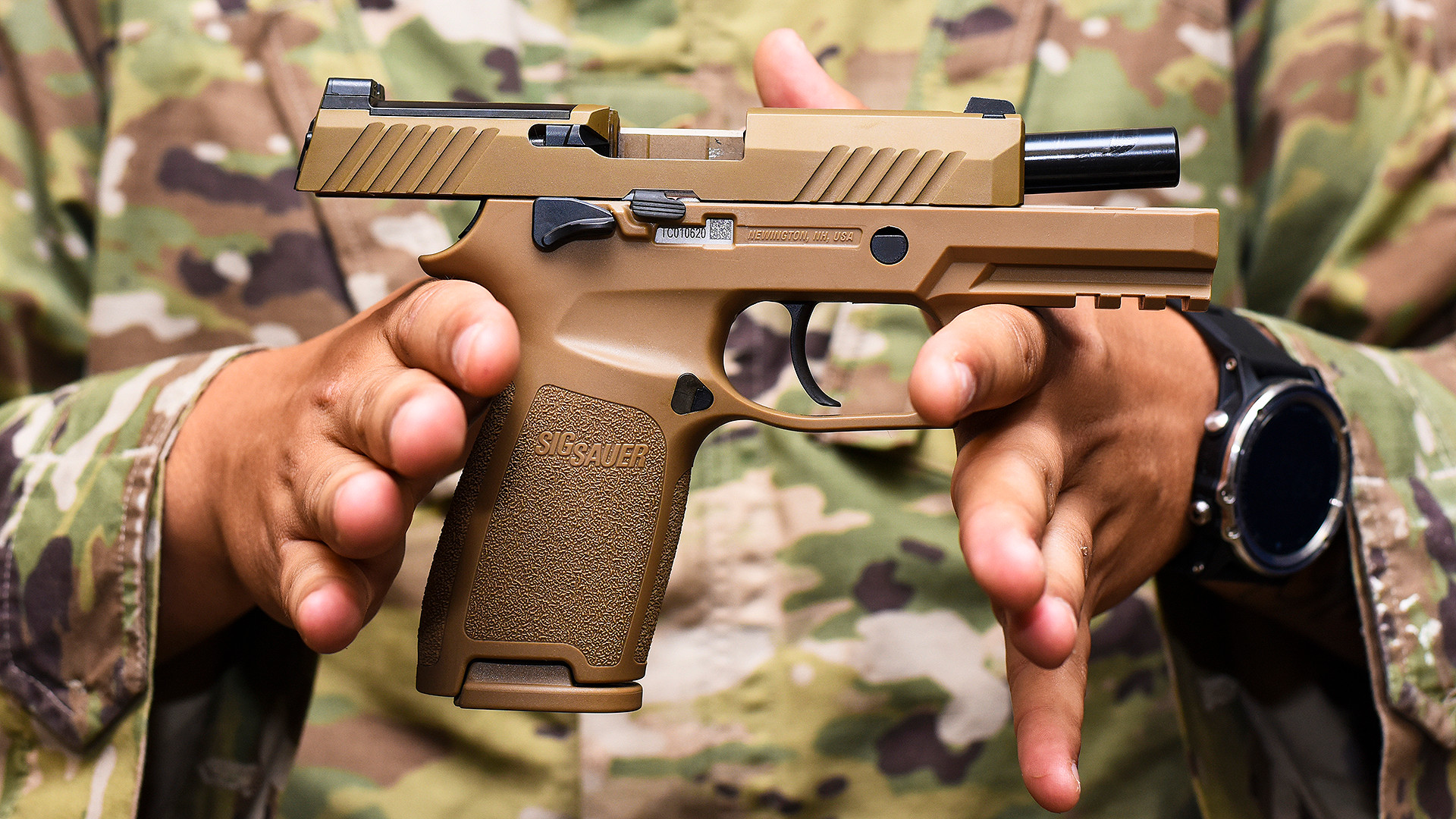
U.S. Air Force’s Global Strike Command (AFGSC) has ordered an indefinite “pause” in the use of M18 pistols following a recent fatal incident at F.E. Warren Air Force Base in Wyoming. This comes just two weeks after the disclosure of an FBI report that added to long-standing concerns about the ability of Sig Sauer P320-series pistols, a family that includes the M18, to fire without their triggers being pulled. Just days after that report became public, U.S. Immigration and Customs Enforcement (ICE) issued a permanent ban on the use of P320s. TWZ just recently published an in-depth story on the FBI report and the fallout from it, including Sig’s refutation of the testing results, which you can find here.
“Air Force Global Strike Command has paused use of the M18 Modular Handgun System, effective July 21, 2025, until further notice,” AFGSC spokesperson Charles “Moose” Hoffman has now confirmed to TWZ. “This decision was made following a tragic incident at F.E. Warren AFB, WY, on July 20, 2025, which resulted in the death of a Security Forces Airman.”
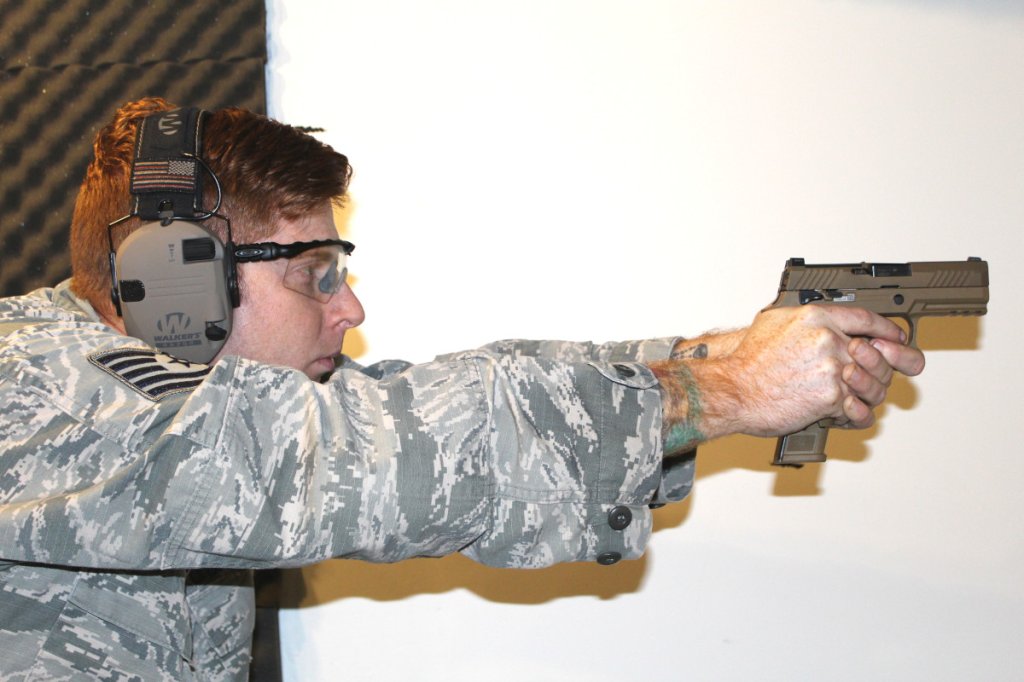
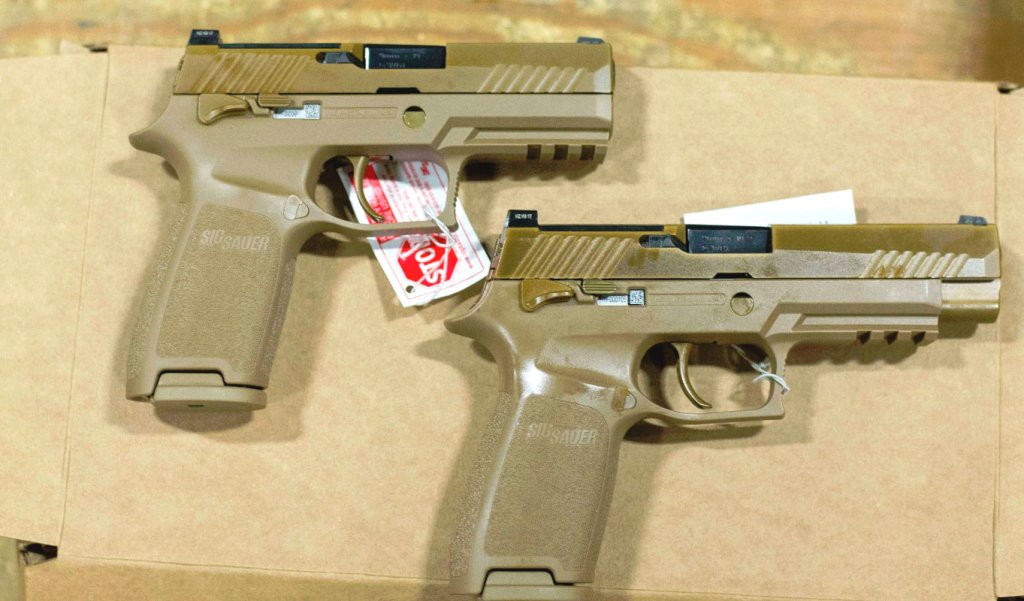
The Modular Handgun System (MHS), which is a U.S. Army-managed program, includes the full-size M17 pistol and the compact M18. Both are variants of the Sig P320, and you can read more about their specific features and the underlying design here. The Army picked Sig as the winner of its MHS competition in 2017, and all branches of the U.S. military within the Department of Defense subsequently adopted M17/M18 pistols as their standard sidearms.
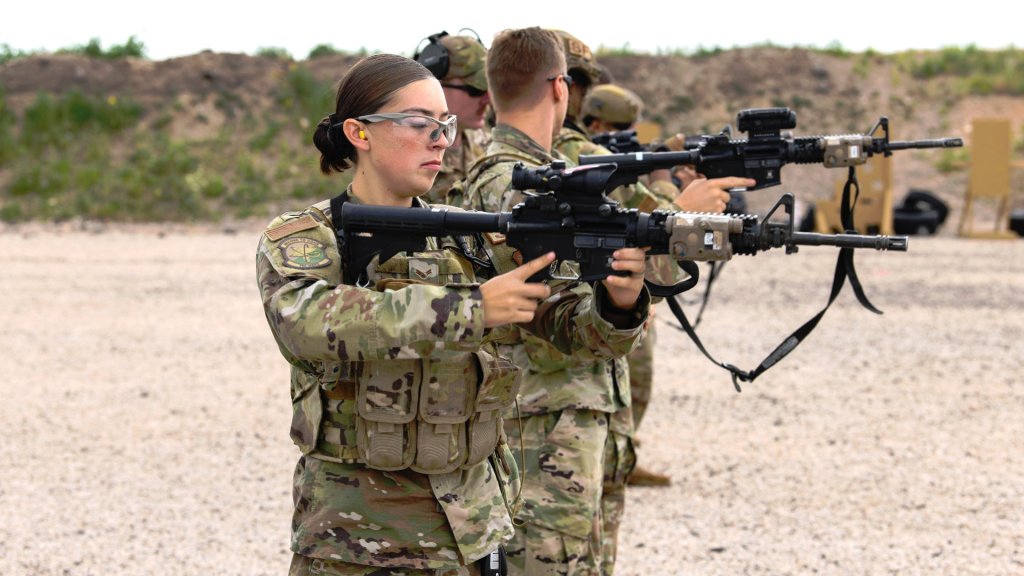
Now, “out of an abundance of caution and to ensure the safety and security of our personnel, the pause will remain in place pending the completion of comprehensive investigations by the Air Force Office of Special Investigations and the AFGSC Safety office,” AFGSC’s Hoffman added. “During this period, Security Forces Airmen will be equipped with the M4 rifle, ensuring no lapse in AFGSC’s security posture.”
“While the investigations are underway, AFGSC is collaborating with the Air Force Security Forces Center and Headquarters Air Force Security Forces to conduct a thorough review of the M18 and develop appropriate corrective measures,” he continued. “Furthermore, Security Forces Combat Arms Airmen at all AFGSC bases will conduct 100% inspections of the M18 handguns to identify any immediate safety concerns.”
The details above align with the contents of a leaked memo dated July 21 and signed by AFGSC Commander Gen. Thomas Bussiere about the M18 ban that is now circulating online.
Authorities at F.E. Warren had put out a press release on July 21 stating that an “active-duty Airman assigned to the 90th Security Forces Squadron, 90th Missile Wing, died on base while on duty in the early morning, July 20, 2025,” but that “no further details are being released at this time to protect the integrity of the ongoing investigation.”
A post on the unofficial Air Force amn/nco/snco Facebook group suggests that U.S. Air Forces in Europe (USAFE) may now be considering taking similar action based on the incident at F.E. Warren. TWZ has also reached out to USAFE.
There are additional as-yet unconfirmed claims circulating online that the airman assigned to the 90th Security Forces Squadron died after their M18 went off without the trigger being pulled. The individual in question is claimed to have removed the pistol, still in its holster, from their belt and put it on a table before it went off.
If true, this is eerily similar to an incident involving a Michigan State Police (MSP) M18 PRO LE, a commercial version of the pistol with notable differences from the U.S. military standard type, which occurred last July. The MSP pistol experienced an apparent “uncommanded discharge” while still in its holster, which was still attached to an officer’s belt at the time. Thankfully, no injuries resulted in that instance. This was the incident that led to the recently disclosed report from the FBI’s Ballistic Research Facility (BRF).
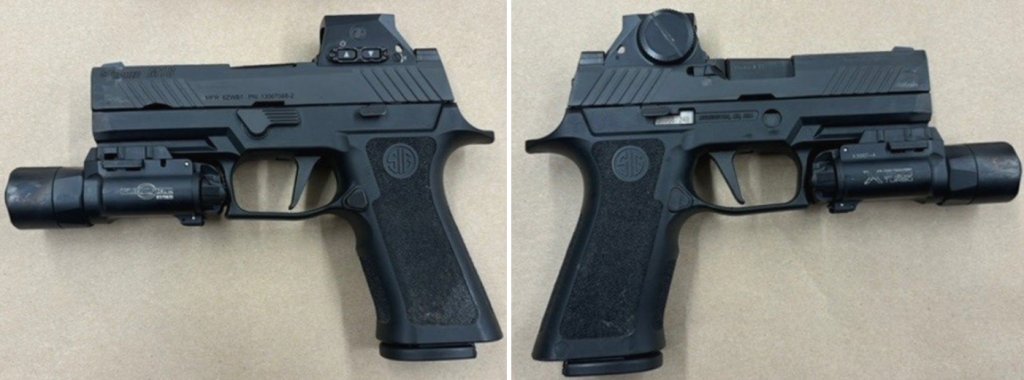
“A reliable test could not be developed at the time of this document to test the effectiveness of the secondary sear notch. However, testing did indicate with movements representing those common to a law enforcement officer it is possible to render the Striker Safety Lock inoperable and ineffective at preventing the striker from impacting a chambered round if complete sear engagement is lost,” the FBI’s report concluded. “It is important to note that the Striker Safety Lock, by design, is the last safety in line to prevent an unintended discharge as it is in place to protect against a secondary sear notch override.”
“While examination of the subject weapon did not independently provide evidence of an uncommanded discharge it does indicate that it may be possible if sear engagement is lost. The disabling of the striker safety lock through movement and friction creates a condition which merits further exploration to fully assess potential risk,” it continued. “BRF recommends that MSP weigh the content of this report with the outcome of the internal investigation in making its final determination related to the Sig Sauer M18 as an issued firearm within the department.”
Sig pushed back last week on the FBI report’s conclusions and criticized the bureau’s testing methods. The company told TWZ that the FBI could not reproduce its initial results using a mutually agreed-upon testing protocol that the two parties subsequently developed. For years, Sig has categorically insisted that it is impossible for P320-series pistols to fire without the trigger being pulled. We have reached back out to them for comment in light of the developments at AFGSC.
The video below, which is cited in the recently disclosed FBI BRF report, details the five separate mechanical actions Sig Sauer says are required for any P320 to fire.

The Army also told TWZ last week that it did not intend to take any actions regarding its MHS pistols in response to the FBI report. We had also reached out to the Air Force, as well as the Marine Corps and the Navy, but did not immediately receive responses.
It is also worth noting that there have been incidents involving possible uncommanded discharges of U.S. military M17/M18 pistols, including ones in Air Force service, in the past. This reflects broader allegations of the potential for P320-series pistols to go off without their triggers being pulled. There were also drop safety issues in the past, which Sig says it has mitigated through changes to the gun’s design.
Many law enforcement agencies and training academies across the United States have permanently prohibited the use of P320-series pistols over safety concerns. As mentioned, within days after the FBI’s report becoming public, ICE issued its new ban on the P320.
What the results of the Air Force’s investigation into the recent fatal incident at F.E. Warren will ultimately determine, and how that might impact future use of M17 and M18 pistols across the U.S. military, remains to be seen.
Update 7/23/2025:
“Our hearts are with the service members and families impacted by the recently reported event at the F.E. Warren Air Force Base,” Phil Strader, Vice President of Consumer Affairs at Sig Sauer, has now told TWZ in a statement. “We have offered assistance to the U.S. Military as they investigate the incident and remain willing to help in furtherance of their ongoing investigation.”
Strader also reiterated Sig’s objections to the conclusions regarding the striker safety lock in the recently disclosed FBI BRF report.
“As I mentioned, the reason for this conclusion was a result of cutting a viewing window into the side of the slide and, thus, removing all support material to help hold the striker safety spring in place,” he said. “Even without this much needed support, the spring only shifted on the post and was still functional after repeated striking with a hammer. These conclusions were made without this understanding.”
Furthermore, “the FBI was manually forcing the sear downward using a punch (similar to what was done by some less refined internet/YouTube testing),” Strader added. “The sear works in relationship to the trigger bar. The trigger bar is attached to the trigger. When the sear is pushed down, the trigger is being moved rearward…essentially, the trigger is being pulled, just by a different mechanism.”
“We could most likely agree that forcing a downward movement of the sear would replicate or be equivalent to a drop with the grip module down/muzzle parallel to the ground, right? In the last 7 years, we have recorded 1186 drops of various P320 models at 75-, 90-, and 105-degree angles (grip down orientations) at a height of 6 feet directly on concrete with zero failures,” he continued. “When the FBI re-tested this using a method that BOTH the FBI and SIG SAUER agreed to, they attempted 565 forced downward movements of the sear over 19 different striker assemblies with zero failures.”
“Furthermore, when Michigan State Police was presented with the FBI’s supplemental report, they continued to field their M18 pistols and only purchased new weapon lights and holsters that would help mitigate larger light bearing holster intrusions into the trigger guard,” Strader noted.
Strader also provided a response to U.S. Immigration and Customs Enforcement’s (ICE) decision regarding their issue of P320 pistols.
“There was a 2nd page of the memo that did not get publicized. This additional page explains in more detail DHS-ICE’s plan to replace their P320 since they were at the end of their 1yr contract extension [emphasis in the original],” he explained. “However, the 10-day implementation to replace approximately 19,000 pistols, holsters, etc was obviously unrealistic and places all DHS-ICE officers armed with their issued firearm in violation as of July 19th.”
“DHS-ICE has recently reached out to SIG SAUER to discuss extension of their P320 contract for another year during their transition,” he added.
“We will continue to test the P320 and investigate every claim. We are confident that the results will continue to be the same…the P320 can only fire with the trigger is pulled.”
Contact the author: joe@twz.com
Loading comments…
Comments couldn’t be loaded. Please refresh the page.