
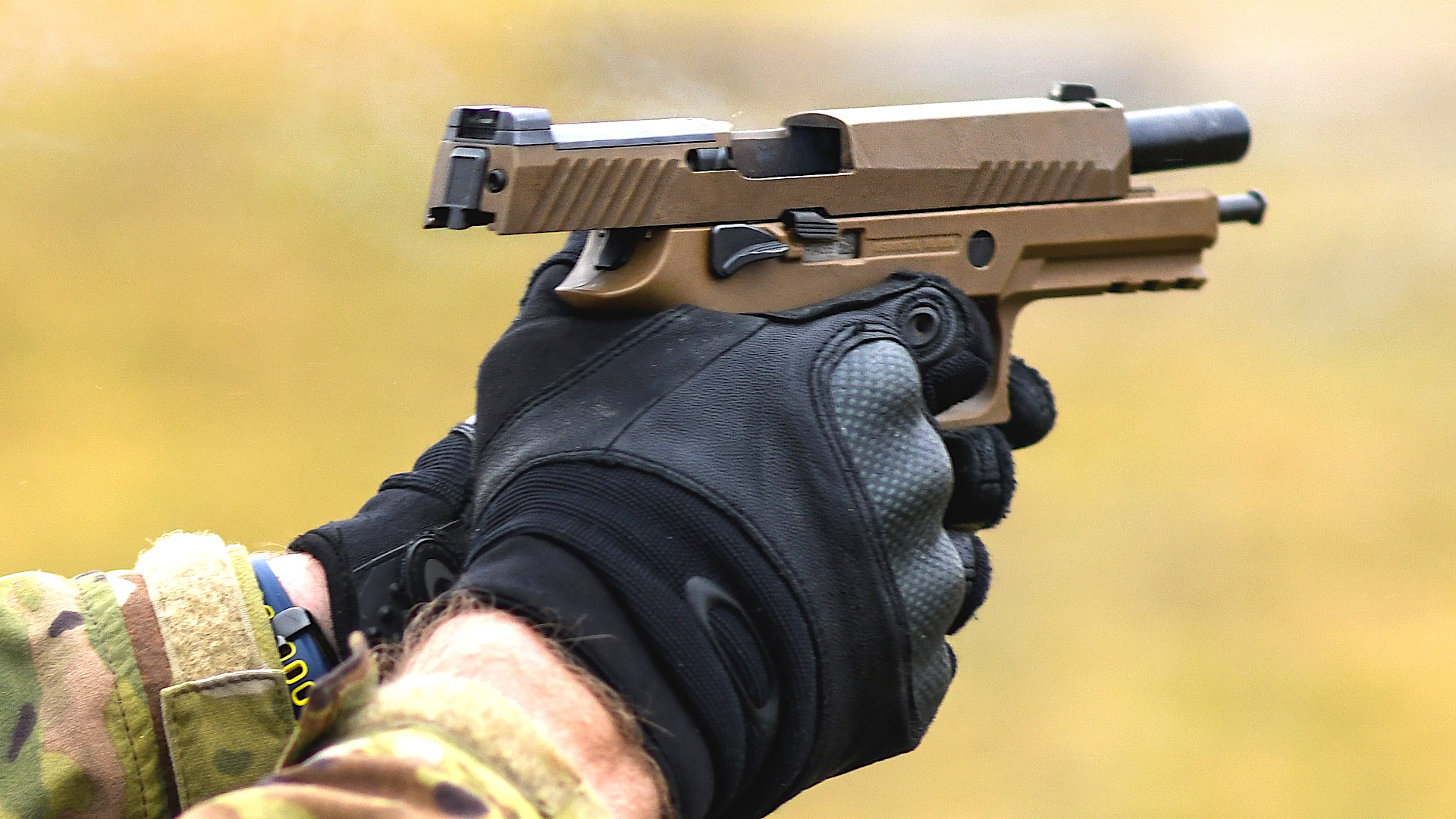
The U.S. Army is not taking any actions regarding its Sig Sauer M17 and M18 pistols based on the findings of a recently disclosed FBI report that has raised new concerns about the design’s ability to fire without the trigger being pulled. Sig has also refuted the results of the FBI’s initial evaluation, which it says the bureau was subsequently unable to reproduce using a mutually agreed-upon testing protocol. The new details from the FBI’s report have already sent a shockwave through the civilian firearms community in the United States, where confidence in P320-series pistols, a family that includes the M17 and M18, is already severely strained.
In August 2024, the Michigan State Police (MSP) requested that the FBI’s Ballistic Research Facility (BRF) evaluate a commercially-sourced version of the M18 pistol that had been involved in an apparent “uncommanded discharge” the month before. The BRF conducted a technical evaluation and produced a report, dated Aug. 30, 2024. The MSP released the report with minor redactions last week in response to a public records request, and a full copy can be found here. The BRF is currently collocated with the U.S. Army’s Redstone Arsenal in Huntsville, Alabama, and is responsible for research, development, testing, and evaluation of small arms, ammunition, and body armor for the bureau, as well as domestic and international partners.
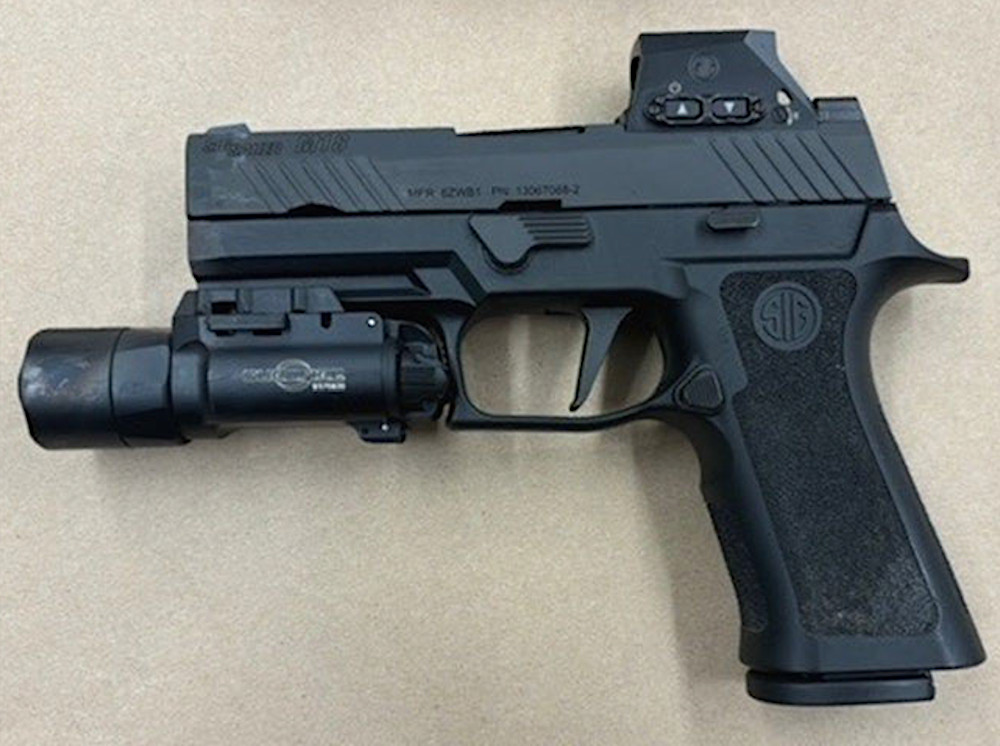
For years now, the P320 pistol series has been dogged by safety concerns. This includes drop safety issues that Sig says it has mitigated through changes to the design, which were made available to pre-existing customers through a Voluntary Upgrade Program starting in 2017. There have also been multiple reports of incidents in line with the one that MSP experienced last year, where guns in holsters are said to have fired without any engagement of the trigger. Claimed uncommanded discharges have resulted in serious injuries and at least one fatality. There have been dozens of lawsuits, including many that are still ongoing, and multiple law enforcement agencies have banned the use of the pistols over safety concerns. Last week, just days after the FBI’s report was made public, U.S. Immigration and Customs Enforcement (ICE) joined that group.
Meanwhile, the M17 and M18 continue to serve not just as the U.S. Army’s primary sidearm, but across the services. They can be found on the belts of everyone from military police to the chest rigs of pilots flying into combat.
What is the M18 pistol (and the P320 it’s based on)?
The M18 nomenclature traces to the Army Modular Handgun System (MHS) competition, which Sig won in 2017. The Army adopted two versions of the P320, a full-size type designated the M17 and the compact M18. All the other branches of the U.S. military with the Department of Defense subsequently adopted MHS pistols as their standard sidearms.
Sig Sauer now markets versions of the M17 and M18 commercially, including in configurations slightly different and some substantially different from the military variants. The MSP’s M18 that was involved in the incident last year was one of the latter, a PRO LE version, which prominently lacks the external safety found on examples in U.S. service and features a different grip module, among other changes. Various other P320-series handguns are also in service with many law enforcement organizations and have enjoyed massive sales on the civilian market.
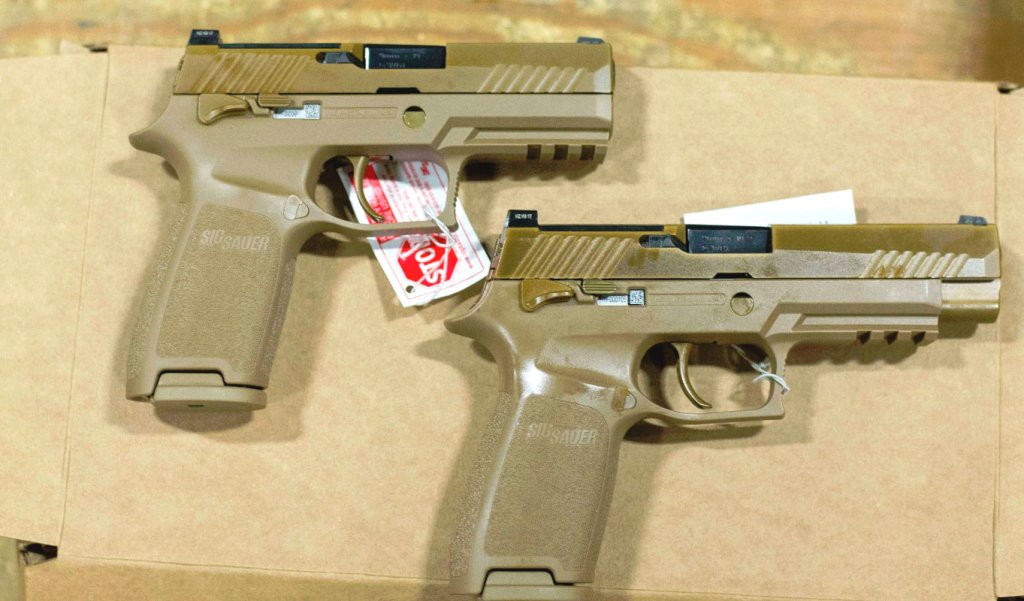
First introduced in 2014, the P320 is a highly modular design intended to be readily reconfigurable to meet specific customer requirements. On P320s, the innovative core ‘chassis,’ which can then be swapped between various grip frames and slides, is the serialized part of the firearm, not the grip frame.
The P320 is what is known as a striker-fired design. In guns that operate in this way, the firing pin (or striker) used to detonate the cartridge in the chamber is held back under spring tension until it is released through some combination of mechanical actions. In modern semi-automatic pistols, the typical alternative to this method of operation is to use some form of “hammer,” which, when released, physically hits the firing pin, sending it forward.
P320-series pistols are essentially cocked and otherwise ready to fire at rest, with the striker being pre-cocked in the course of chambering the first round. This is something the gun’s critics have drawn particular attention to in the past. Many other striker-fired designs use a similar concept, while others link the full cocking of the striker to pulling the trigger.
The video below, which is cited in the BRF report, details the five separate actions Sig Sauer says are required for any P320 to fire.

The FBI Ballistic Research Facility‘s Evaluation
The BRF’s report provides significant background on the July 31, 2024, incident that prompted its evaluation and the gun involved.
On that day, “a MSP motor officer was standing in a squad area with other members when his department issued Sig Sauer M18 fired uncommanded. The firearm was reportedly secured in the department issued Alien Gear Rapid Force Level 3 holster at the time of firing,” the report explains. “According to the MSP motor officer’s statement and the statements of others present, at no time was the trigger pressed intentionally or inadvertently. The MSP motor officer had objects in his hands at the time of the event, including keys.”
In addition, “several minutes prior to the uncommanded firing, the MSP motor officer conducted approximately three presentation drills from the holster to practice acquiring the red dot.”
“The subject firearm is a Sig Sauer M18 pistol, serial number [redacted], with X Flat Blade Trigger. The M18/P320 family of firearms uses a frame assembly group (fire control unit) compatible with multiple grip modules offered by Sig Sauer. The fire control unit is a traditional sear design which holds a ‘partially pre-tensioned striker,'” the report adds. “Additionally, the Sig Sauer Technical Manual highlights that ‘the P320 [M18] firing mechanism has designed safety features that prevent the pistol from firing unless the trigger is moved rearward resulting in the de-activation of these safety features. These features include:’ Striker Safety Lock; Captive Safety Lever; Striker Sear Engagement (Primary & Secondary Sear Notch).”
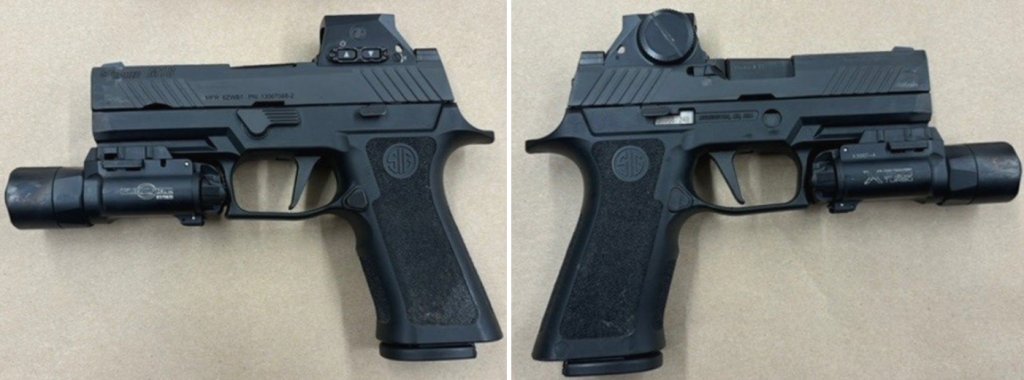
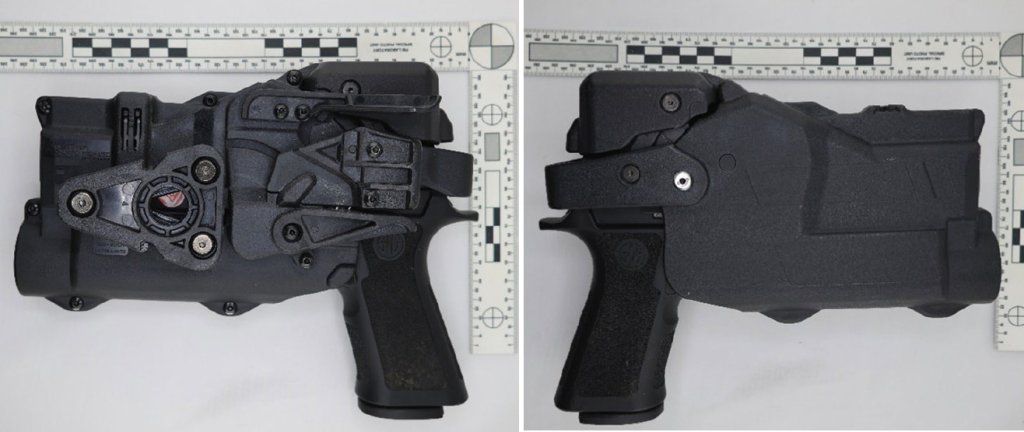
“In addition to the firearm and holster, MSP utilizes the Sig Sauer Romeo M17 pistol mounted optic and the Surefire X300 Turbo weapon mounted light,” it continues. “The only known modification to the subject weapon, and all MSP weapons, was to the trigger. When MSP took delivery of the weapons from Sig Sauer, MSP experienced ‘dead’ trigger issues. Sig Sauer determined the triggers were out of specification and ground off 0.020″.”
Initial observations
BRF received the pistol from MSP still in its holster and with the case from the fired round still in the chamber. The gun was examined in that condition first, including via x-ray, before being disassembled for a more detailed inspection “by two FBI Defensive Systems Unit (DSU) gunsmiths who were certified by Sig Sauer to work on the M18/P320 weapon.” Several items of note were subsequently discovered.
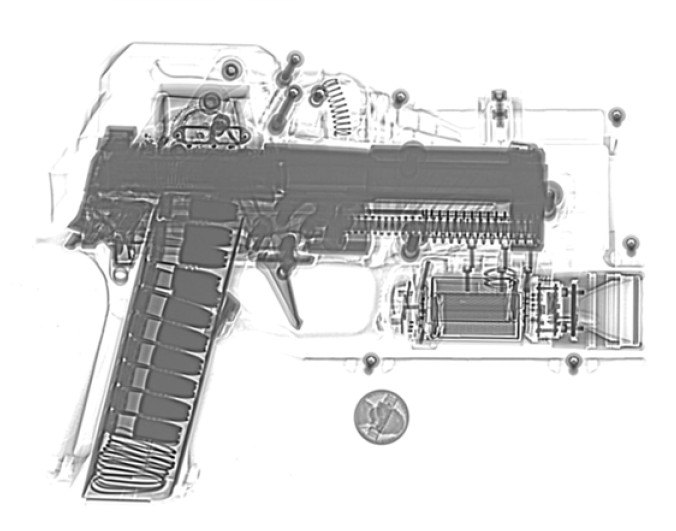
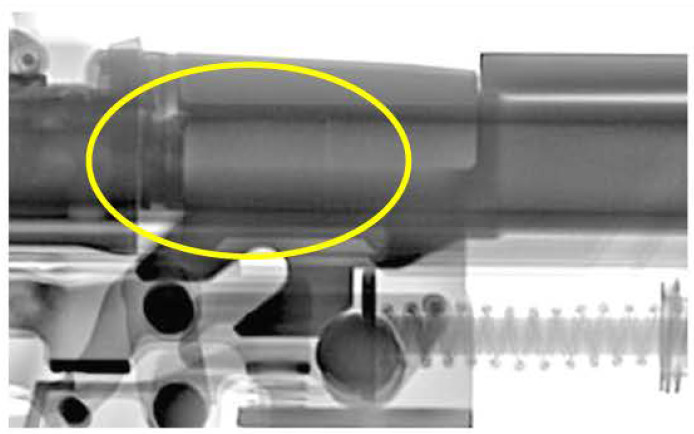
“The striker safety lock spring is used to hold the striker safety lock in a downward position until acted upon by the captive safety lever. The striker safety lock is intended to prevent the striker from moving forward in the event sear engagement (primary or secondary) is lost. It was observed that the spring was not fully seated on its post,” the report notes. “It was also observed that the striker safety lock spring was only captured at the top of the striker housing.”
“Additionally, during dry-fire manipulation it was observed the trigger could be partially pressed to the rear and the slide manipulated by hand causing the striker to fall completely,” the report adds. “This was then tested using a primed case and the striker did in fact fire the primed case, indicating the striker safety lock was disabled based on the partial trigger press.”
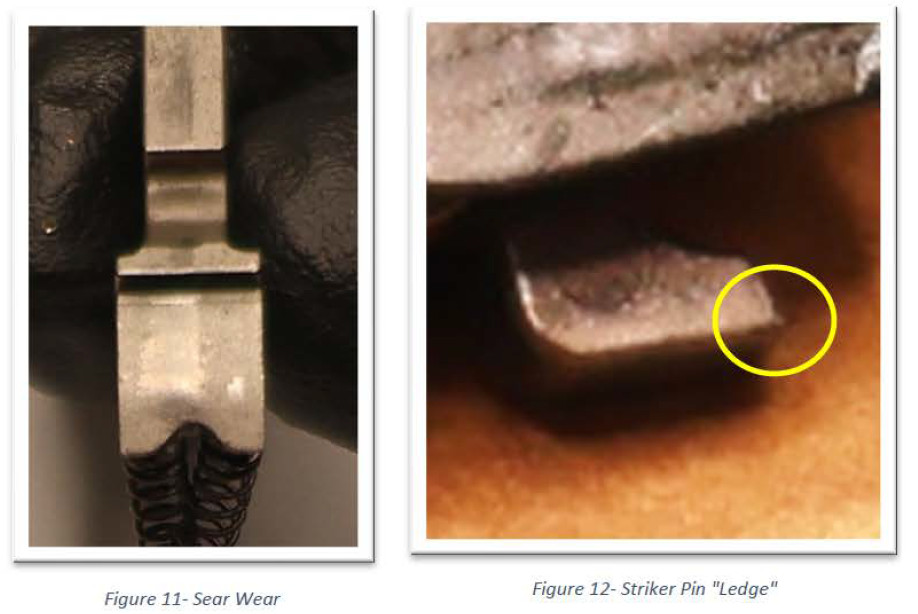
BRF’s gunsmiths also observed notable wear on the gun’s sear, as well as the primary and secondary sear notches. By design, the sear is supposed to stay locked in the primary notch until the gun is fired, with the secondary notch acting as a backup safety measure. The additional sear notch, along with other changes to the sear design, were introduced as part of the aforementioned Voluntary Upgrade Program.
“The primary and secondary sear notch edges exhibit wear aligned with the striker pin hook. The face edge of each sear notch has a ‘chipped’ appearance,” according to the report. “Additionally, there appears to be a manufacturing artifact on the primary sear ramp just in front of the primary sear notch.”
“The striker pin hook ‘ledge’ … reduces the engagement surface between the primary sear notch and the striker pin face to the ‘face’ of the ‘ledge’,” the report adds. “Additionally, the misshapen striker pin hook face may be contributing to excessive wear on the primary and secondary sear notches.”
The BRF also noted damage to the trigger guard, but the report says it is unclear if that is in any way related to the July incident. Given that the MSP officer had been holding keys in his hand at the time, the FBI’s evaluation included testing that showed that it was possible to have pulled the trigger on the pistol in the holster using the blade of a key.
“During this test it was observed that the keys caused an abrasion on the trigger guard near the area of the abrasion seen on the weapon when it arrived,” BRF’s report says, but does not draw any further conclusions from that. The FBI also determined that it was possible to make contact with the trigger with a finger while the pistol was in the holster, but that “due to the excessive force necessary, it is an improbable event.”
Focus on the striker safety lock
A central focus of the BRF’s further testing of the MSP M18 was on the striker safety lock. Limited live-firing of the pistol showed potentially worrisome striker safety lock spring movement.
“As previously stated, should the spring leg slip off the striker safety lock, it may leave the safety inoperable,” the report notes. However, “so long as the space between the striker channel wall and the striker safety lock does not exceed the width of the striker safety lock spring, it should remain in place despite not being captured by design.”
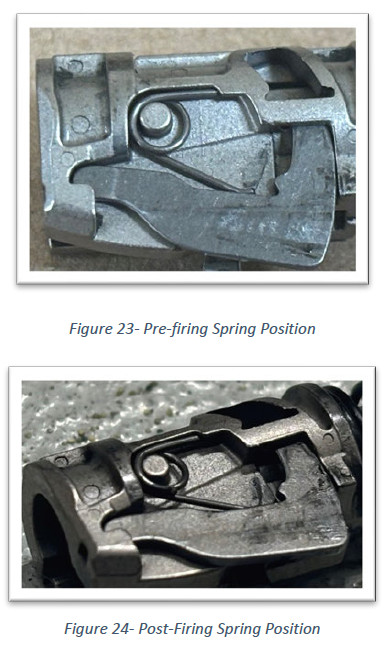
Further testing of the striker safety lock was subsequently conducted using protocols devised by BRF for this particular evaluation.
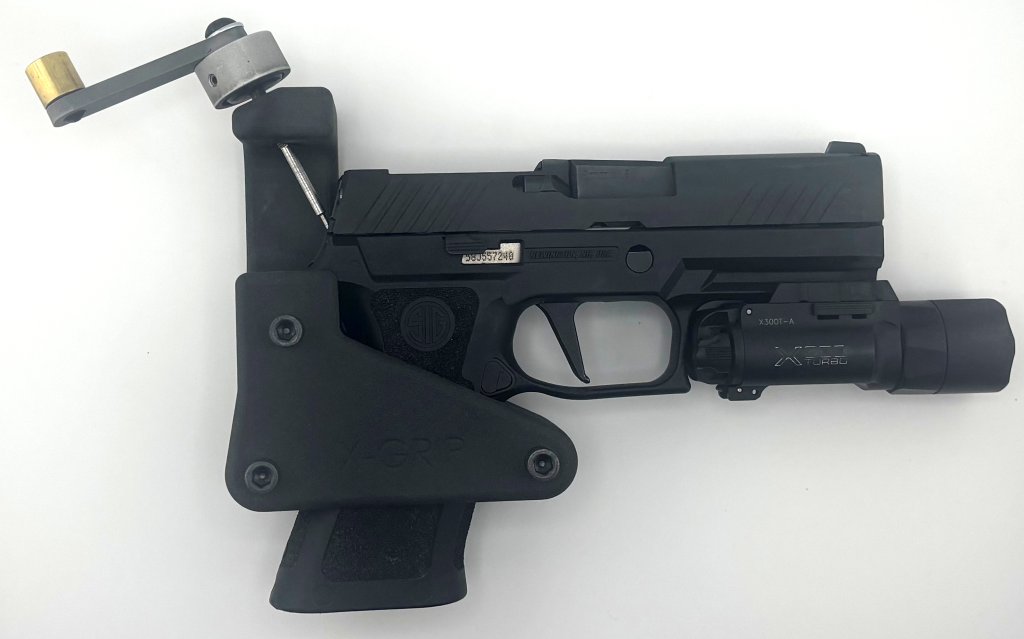
One round of testing was “was conducted using the subject weapon and trimmed rear slide cap. The weapon was placed into the subject holster and secured to a table. The holster’s optic and slide covers were left in the open position to access the sear,” according to the report. “A primed case was placed into the chamber and a magazine loaded with dummy rounds was inserted. Thereafter, a punch was used to manually disengage the primary sear notch from the striker pin hook32 to fire the primed case, thereby testing the function of the striker safety lock.”
The procedure was repeated 100 times with the sear locked in the primary and secondary notches. The BRF says the striker safety lock functioned as intended in every one of those instances.
In addition, “approximately 50 attempts were made to determine if the striker would impact the primed case after manipulating the weapon while holstered. The weapon was pressed together and pulled apart (at the slide and frame). Thereafter, pressure was applied to the frame and the sear manually released from the primary notch,” the report says. “The intent of the manipulation and pressure was to mimic what might occur to a holstered weapon during an officer’s duties, such as running, jumping, climbing, fighting, pressing a weapon against a wall or vehicle, or obtaining a master grip on the pistol prior to drawing, etc.”
“BRF staff observed the primed case fired on nine attempts with the primer indent measuring between 0.019”-0.026” with an average of 0.023”. While staging one attempt to allow another BRF staff member to observe the striker safety lock function as designed, the weapon was prepared and placed into the holster with no manipulation,” it adds. “A second staff member released the primary sear notch from the striker and the primed case fired indicating failure of the striker safety lock. The primer indention measured 0.018”.”
Furthermore, “BRF observed six instances where the primer did not fire but a small indentation was present indicating the striker had contacted the primer.”
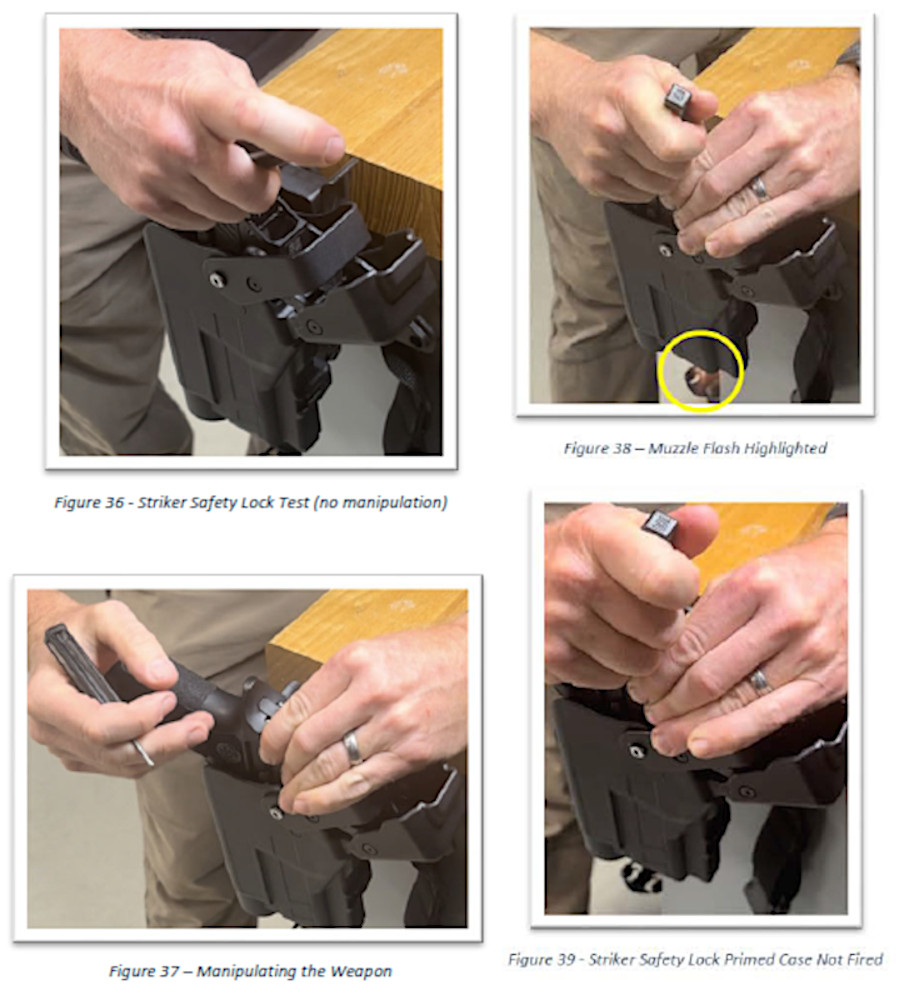
The FBI’s report also says it was able to use the same testing protocol to fire a primed case in a second “brand-new unfired Sig Sauer M18 pistol [that] was obtained from MSP.”
It is worth noting here that the FBI testing protocols did involve the cutting of a ‘window’ in the pistol’s slide to observe the spring movement. As the report itself says, the slide wall is used to ensure the spring remains in the proper position.
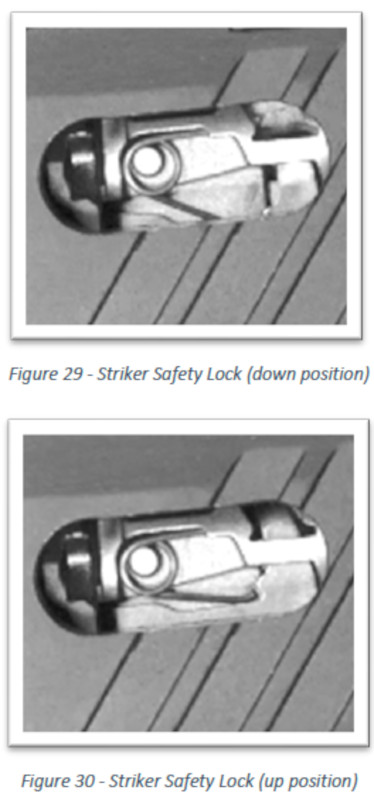
Separate limited BRF testing of the secondary sear notch showed that safety feature worked as intended.
During the initial live-firing, “both the sear and sear housing were observed to bounce during recoil. The sear bounced multiple times and impacted the striker pin and bottom of the slide several times during rearward slide travel,” the report also says. “It is likely a combination of the forward striker pin movement and striker impacts during recoil that cause wear on the sear surfaces including the ‘chipping’ of the sear face edges.”
The BRF’s conclusions and Sig’s response
Based on the result of the evaluation, the BRF’s report raises significant, but heavily caveated, safety concerns.
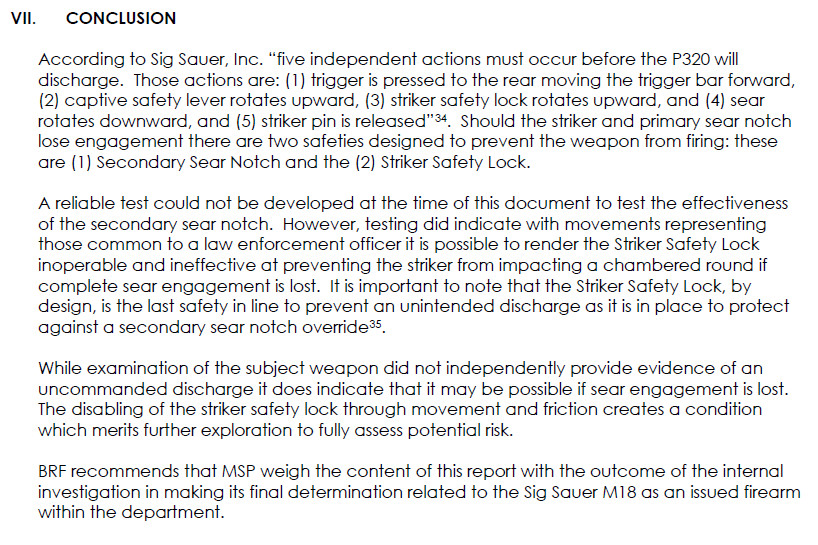
“A reliable test could not be developed at the time of this document to test the effectiveness of the secondary sear notch. However, testing did indicate with movements representing those common to a law enforcement officer it is possible to render the Striker Safety Lock inoperable and ineffective at preventing the striker from impacting a chambered round if complete sear engagement is lost,” the report concludes. “It is important to note that the Striker Safety Lock, by design, is the last safety in line to prevent an unintended discharge as it is in place to protect against a secondary sear notch override.”
“While examination of the subject weapon did not independently provide evidence of an uncommanded discharge it does indicate that it may be possible if sear engagement is lost. The disabling of the striker safety lock through movement and friction creates a condition which merits further exploration to fully assess potential risk,” it continues. “BRF recommends that MSP weigh the content of this report with the outcome of the internal investigation in making its final determination related to the Sig Sauer M18 as an issued firearm within the department.”
In addition, Sig Sauer claims that it engaged with the FBI in relation to the August 2024 report and its findings, and that subsequent testing was conducted that contradicts the initial results.
“The test conducted by the FBI-BRF was made aware to Sig Sauer when it was submitted to the Michigan State Police,” Jason St. John, senior director of strategic products for the company’s Defense Strategies Group, told TWZ. “Sig Sauer expressed concerns with the FBI’s initial report about how some of the tests were conducted.”
“Specifically, Sig explained that forcing the sear downward with a punch was moving the trigger bar forward and, as a result, the trigger to the rear since the sear is in constant contact with the trigger bar,” he continued. “Sig expressed that this was not a proper representation of the striker slipping off of the sear’s primary notch from a parallel/grip-down drop. Sig also noted that the FBI’s concern of the striker safety spring movement on the striker assembly post after getting hit with a hammer was unwarranted due to the viewing window that was cut into the slide that sacrificed the sidewall support of the striker safety spring.”
“After the initial report was submitted, Sig Sauer and its engineers worked in cooperation with the FBI and Michigan State Police to design a fixture that all agreed would create a more controlled testing protocol for striker/sear slippage,” St. John added. “Using that fixture, the FBI forced the sear off of the primary notch 565 times with 19EA different striker assemblies with zero indents on the primer (no fires).”
TWZ has reached out to the FBI for more details about the results of this additional testing.
Sig’s St. John also told us that the company has no plans to take further actions regarding the P320 based on the initial BRF report on the MSP incident last year.
“Sig Sauer continues to have full faith in the P320,” he said. “Due to the FBI manually manipulating the P320 sear improperly, Sig Sauer refutes the initial results.”
Reaction from the U.S. Army
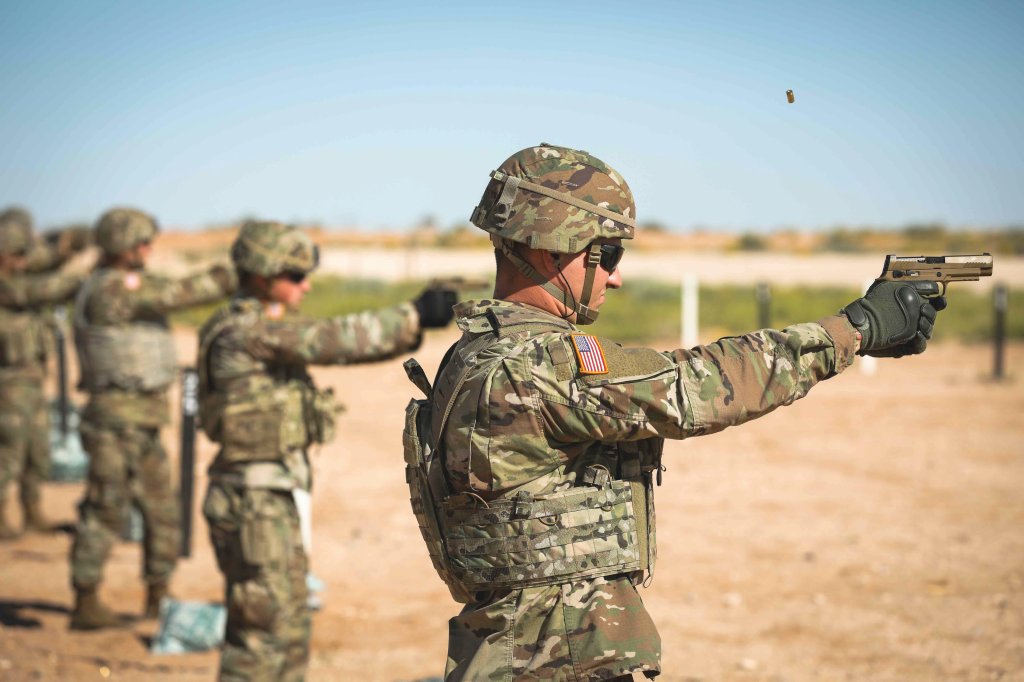
As noted at the beginning of this story, the U.S. Army is aware of the BRF report and its findings, but is not currently planning on taking any new actions regarding its M17 and M18 pistols in response.
“This handgun [MSP’s M18] was a modified P320 / M18 without an external safety, which can be purchased by anyone through Sig Sauer,” the Army’s Program Executive Office for Soldier systems (PEO Soldier), which manages the MHS program, told TWZ in a statement. “The M17 / M18 is a variant of the P320, but it is NOT exactly the same as the P320. The two are similar in many ways, but the M17 / M18 has a number of enhancements that the P320 does not have. For example, a trigger enhancement within the M17 / M18 further prevents it from firing unintentionally if dropped.”
“The M17 / M18 has been subjected to rigorous safety testing by the manufacturer and the Army, including multiple drop tests,” the statement added. “The M17 / M18 has multiple safety features, including a Takedown Safety Lever, an Internal Striker Safety, a Manual External Safety, a Disconnect Safety and a Loaded Chamber Indicator. Specific to preventing a discharge if the weapon is dropped, the M17 / M18 Manual External Safety prevents the trigger from moving unless the weapon is set to ‘Fire,’ and it has a design that prevents it from firing when dropped on either ‘Safe’ or ‘Fire.'”
This being said, the MSP incident last July was not drop safety-related and there is no indication that a manual safety, which on the P320 series of guns just stops the trigger from moving rearward, would have any effect on issues identified in the initial report. TWZ has reached back out to the Army for clarification.
We have also sent similar queries to the Marine Corps, Navy, and Air Force about their use of these pistols in light of the now-publicly released BRF report.
Last year, New Hampshire Public Radio reported that “the Army, Air Force, and Marine Corps acknowledge serious injuries or near misses caused by the Sig Sauer-made guns unexpectedly firing” after obtaining reports on multiple incidents that occurred between 2020 and 2023 via the Freedom of Information Act (FOIA). Sig Sauer’s U.S. headquarters is in Newington, New Hampshire.
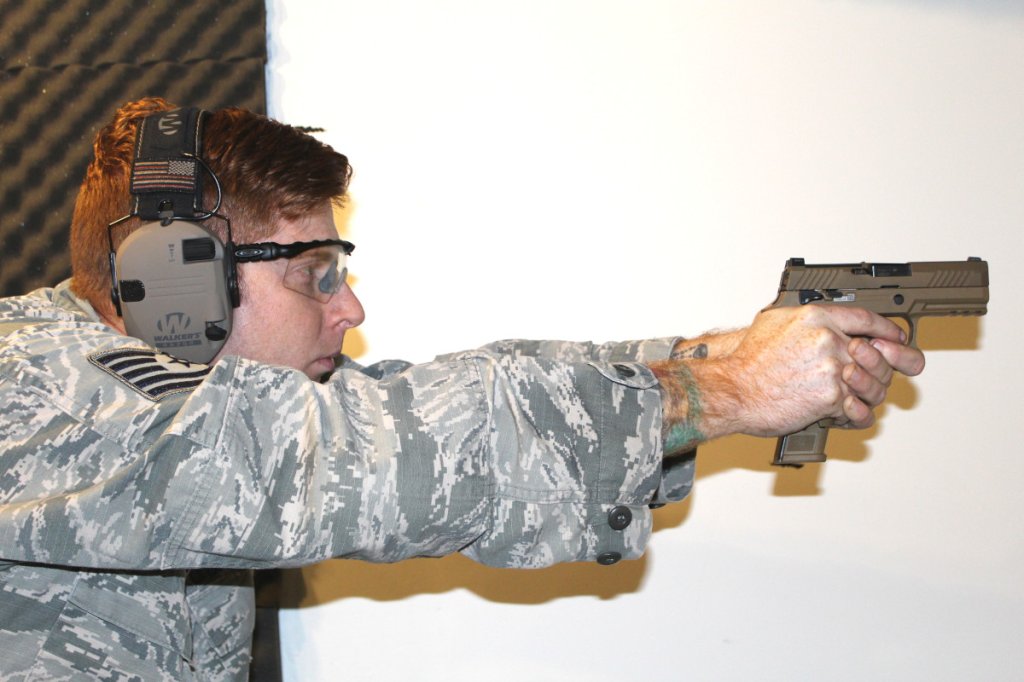
The incident reports included several cases that sound broadly similar to the one MSP experienced last year, in which individuals involved insisted that their pistols discharged without the fingers ever being on the triggers. In a number of those instances, investigations concluded that the individual handling the guns were at fault. New Hampshire Public Radio‘s 2024 report said that the Army, Air Force, and Marine Corps all pushed back to varying degrees on technical issues with individual pistols, or the underlying design of the guns, being a factor.
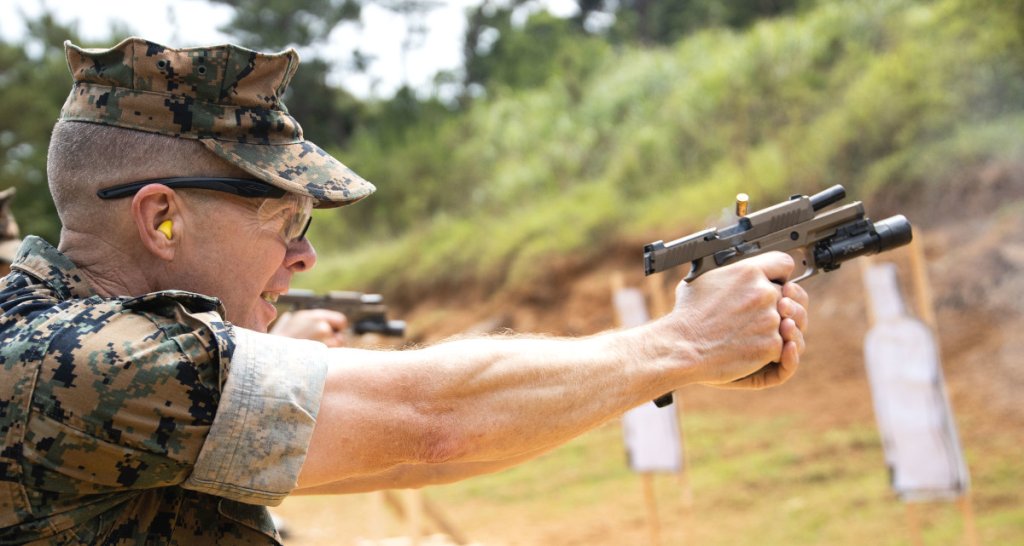
Following one incident in 2023, a Marine “investigator recommended that ‘an engineering review of the M18 be conducted,'” according to New Hampshire Public Radio. “The Marine Corps told NHPR that professional armorers and engineers did inspect the weapon involved in that incident, and found it was ‘complete, functional, included all safety equipment, and was operating properly.'”
The Soldier Systems blog followed up on this particular incident, which involved a pistol issued to a Japanese national employed as a security guard at Camp Foster on the island of Okinawa, just in May of this year.
“The M18 was rigorously tested to DoD standards before being selected for use by our Marines, and we have not seen any evidence that indicates design or manufacturing issues are present. In addition to the initial testing, each lot of weapons produced for the U.S. Government is subject to extensive lot acceptance testing with oversight by the Defense Contract Management Agency and the Service from which the order was placed (Army/Marine Corps),” Marine Corps Systems Command told Soldier Systems. “The Marine Corps has full confidence in the quality, performance, and safety of the M18 handgun. The MHS is designed, built, and tested to military standards to ensure safe and effective employment during training and combat.”
A 2023 Naval Safety Command Safety Awareness Dispatch specifically on M18 pistol mishaps also notably focuses entirely on issues that are a result of user error.
Concerns and controversy remain
Overall, safety concerns and controversy look set to continue to swirl around the P320 pistol, despite persistent pushback from Sig, as well as the U.S. military.
As noted earlier on in the story, just days after the BRF report was made public, Madison Sheahan, deputy director of ICE, put out a memo banning the use of any variant of the P320 by “authorized officers” and directing the purchase of Glock 19s as replacements. Glock was notably the losing party in the Army’s MHS competition. Glock pistols are also in U.S. military use, particularly with U.S. special operations forces, as well as many American law enforcement organizations.
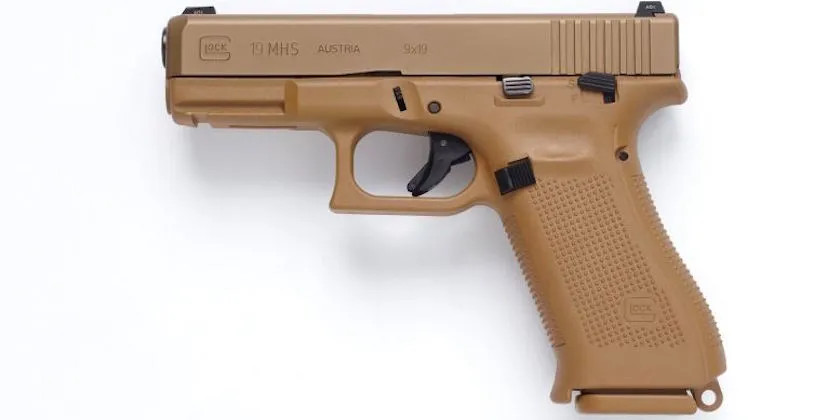
ICE is just the latest in a string of law enforcement agencies and training academies across the United States to take similar actions regarding the P320.
Sig Sauer’s St. John told TWZ that the MSP remains a user of the pistol after the incident last year and the BRF’s evaluation. They “only changed their lights to a narrower size and issued new holsters that would alleviate the chances of holster intrusions,” he added.
“At this point we have a pistol that’s been through rough handling and tested more than any other firearm in Sig Sauer’s history,” Sig Sauer’s Vice President of Consumer Affairs Phil Strader separately told Outdoor Life for a story on the BRF’s initial findings published last week. “Our testing concludes that the only way for the pistol to fire is when the trigger is moved to the rear — it leaves us to question, how else is a pistol supposed to work?”

In March, Sig had shared a new and definitive statement declaring that “the P320 CANNOT, under any circumstances, discharge without a trigger pull – that is a fact” on its social media accounts. The posts, especially the one on X that was also accompanied by a message further stating “It ends today,” prompted a major backlash on social media.
Sig has also pointed to its legal victories in more than a dozen lawsuits over claimed unintended discharges in the past. However, lawsuits continue to stack up. Last year, a Georgia man named Robert Lang won a suit against Sig over a P320 discharge, in which he was wounded, being awarded $2.35 million in damages. A federal judge upheld that verdict in February after Sig appealed.
In May, New Hampshire Governor Kelly Ayotte, a Republican, signed into law a bill that limits the liability of firearms manufacturers based in the state. State Representative David Meuse, a Democrat, explicitly accused the bill’s proponents of writing the legislation, which does not apply retroactively, to help shield Sig from further legal action.
The Army has certainly given its M17 and M18 pistols another vote of confidence following the public disclosure of the BRF report, but the saga of the P320 still looks to be far from over.
Contact the author: joe@twz.com
Loading comments…
Comments couldn’t be loaded. Please refresh the page.