
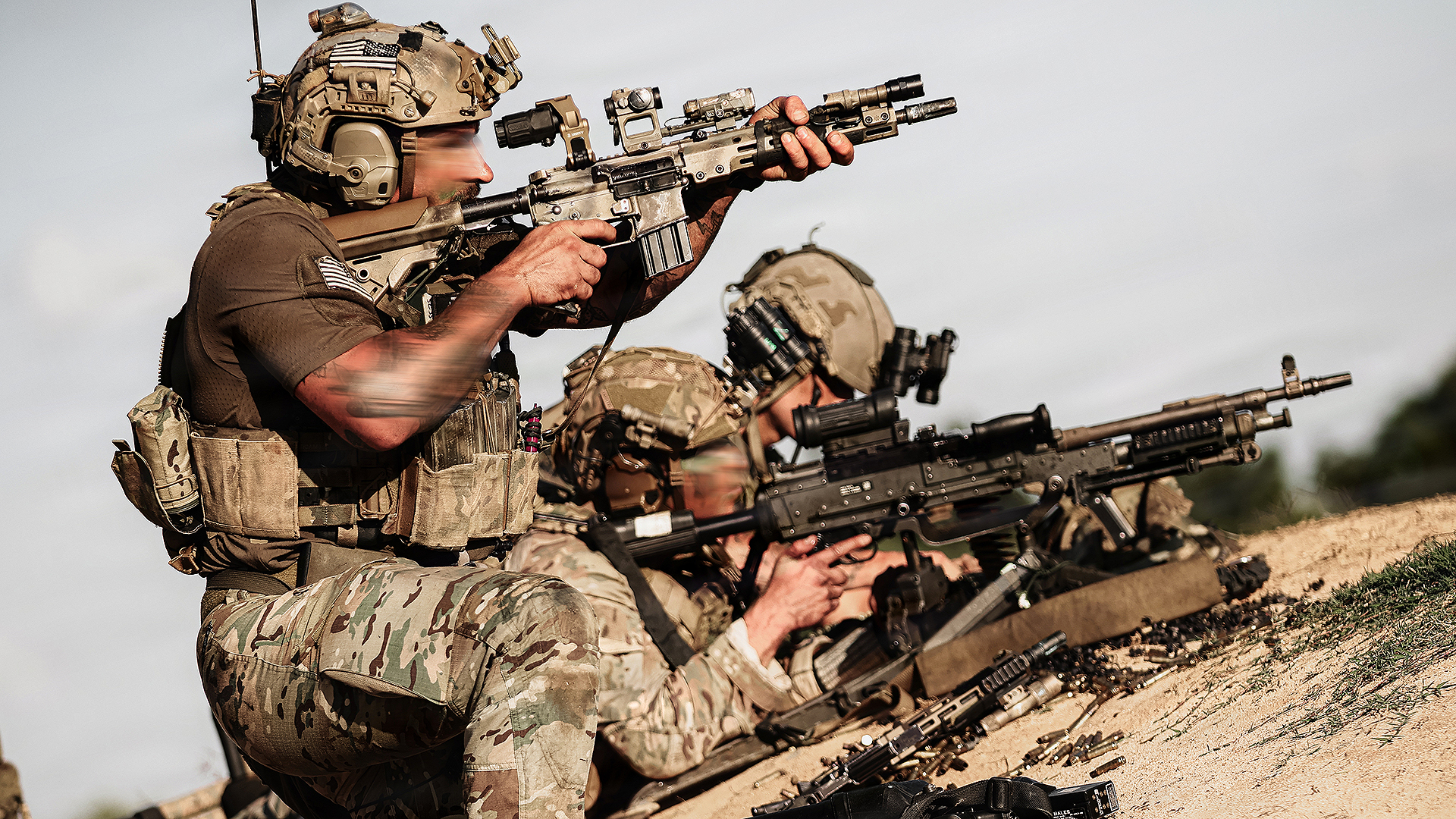
When it comes to machine guns and rifles, U.S. Special Operations Command (SOCOM) wants its operators to have deadlier weapons that shoot further with greater accuracy, are lighter to carry. The command also wants some to be able to chamber hypervelocity ammunition that is under development. To get more insights about what firearms commandos will be packing in the future, we spoke with Lt. Col. Alan Wood, SOCOM’s Program Manager for Special Operations Forces (SOF) Lethality. In an exclusive interview during the annual SOF Week conference in Tampa, Florida, Wood told us what’s working, what isn’t and what gets him, in his words, “pretty excited.”
Some of the questions and answers have been edited for clarity.
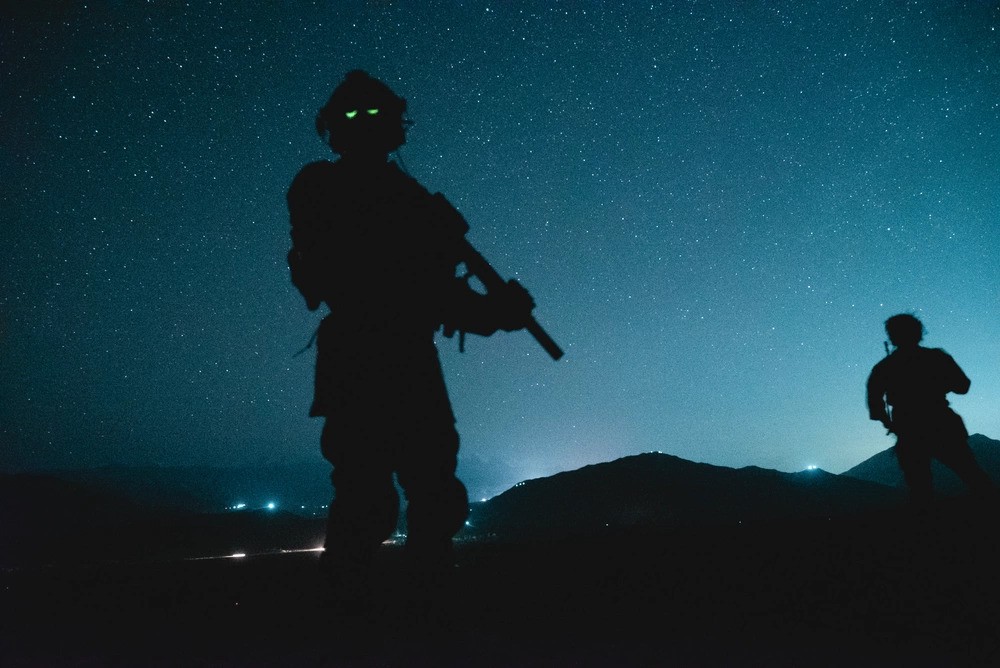
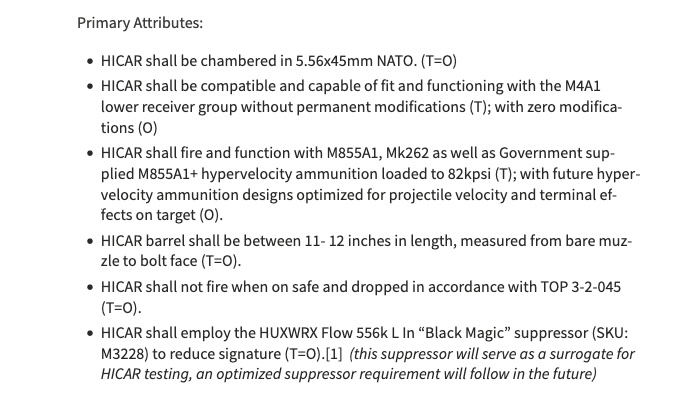
Q: SOCOM just put out an Area of Interest (AOI) request for what is being called the Hypervelocity Improved Carbine (HICAR) program, designed to “develop an improved carbine capable of operating with currently issued 5.56 NATO ammunition, while also incorporating design features to ensure reliability, durability, and longevity with the use of future hypervelocity 5.56x45mm ammunition.” What can you tell me about that?
A: So, HICAR’s got me excited. Back in the late teens, the Army went down this higher velocity [route], and I’m intentionally using the word velocity and not pressure in what they’ve done with the M7 and M8 rifles. They’ve been able to increase the velocity and therefore create a flatter shooting rifle as well as a rifle that has greater energy on target, and that does incredible things for barrier defeat in a lot of situations. Now we’ve had 10 years, almost, for that technology to mature, people have learned things, and the question then becomes, what could we do for special operators in calibers that are not new?
The advantage for SOF operators is I’ve got, say, the Green Berets who do a lot of partnering with foreign SOF operators, but there’s no [6.8mm] ammo running around central Africa, or you know, pick your favorite spot where we like to do partnering operations around the world. But there’s a lot of 5.56mm and other common cartridges of that nature, and so what we want to…achieve is maybe not the same effect as what the Army’s done with the M7 and the M8 and that high-velocity ammunition that they have, but where could we get close to that in 5.56 and potentially other calibers in the future.
It really goes back to the evolution in steel case ammo that Federal started several years ago, and there’s been more iterations of that coming out – new alloys for cases that far exceed performance of the standard brass that we’ve been using for the last 100 years. And the really amazing part is they can actually be cheaper than brass as well, so we get more performance at a lower cost. It’s a win-win.
Q: Can you provide any information about the hypervelocity rounds themselves?
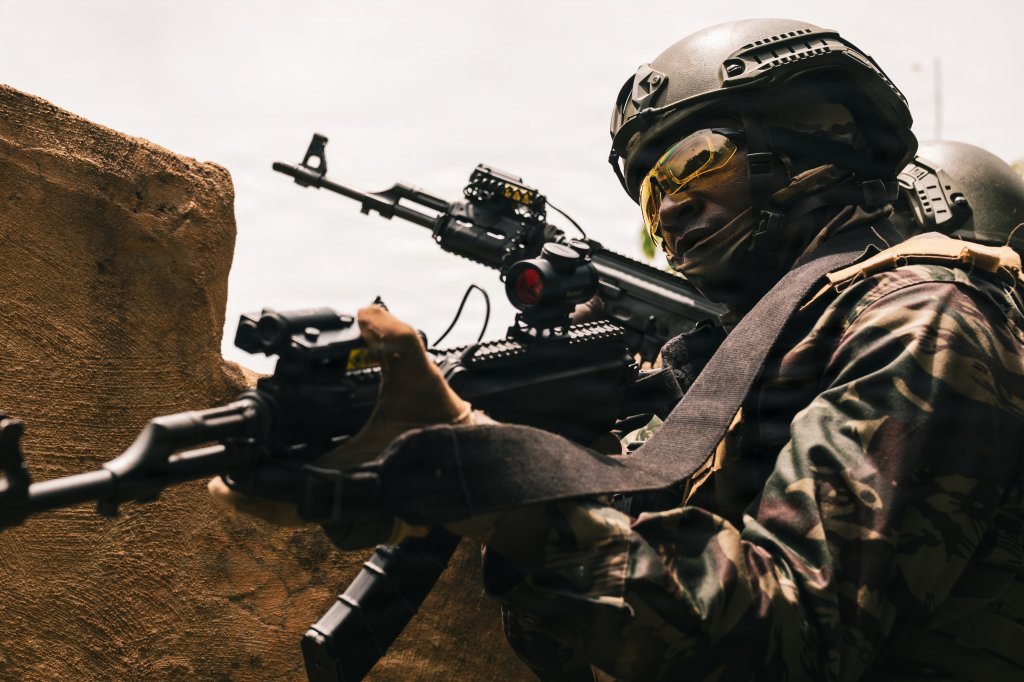
A: At this point, it’s still a significant science project, and so there are no specific high velocity rounds that are fielded at this point. It’s an R&D project, and we’re trying to see where we can take that technology.
Q: Can you give me a sense of what you’re looking for in those rounds, and any timelines?
A: You can see the round and what we’re going to do based on the HICAR document on Sam.gov, so that’s as much information as there is out there. What we’re really looking for is what does it [do] for the rifle? Because as you start getting into rifle development – there are a lot of things to consider, other than how much pressure can you put in the chamber. You’ve got to worry about the failure modes, and you know what happens if you get a projectile stuck in the chamber, things along those lines. There are a lot of other things that you have to worry about, because you want to make sure not only is the gun effective, but it’s got to be safe, and it’s also got to be suitable for the particular mission, and so that’s that broad spectrum that we’re trying to balance and trade off with everything that’s out there in between both the ammunition and the rifle that’s firing it.
Q: Can you provide an update on fielding of the Mid-Range Gas Gun, both assault and sniper configurations?
A: There is some sensitivity to that… We have been fielding the Mid-Range Gas Gun-Sniper variant since 2023, and we just recently started procurement of the assault variant, so we are pretty excited about getting kicked off of the assault variant from [Lewis Machine & Tool] LMT.
Q: When was the assault variant fielded?
A: We’re currently under a production contract with that. We have not begun to field it.
Q: Any timeline on that?
A: Actually, we are still having those discussions with the vendors. I don’t have an answer for that one.
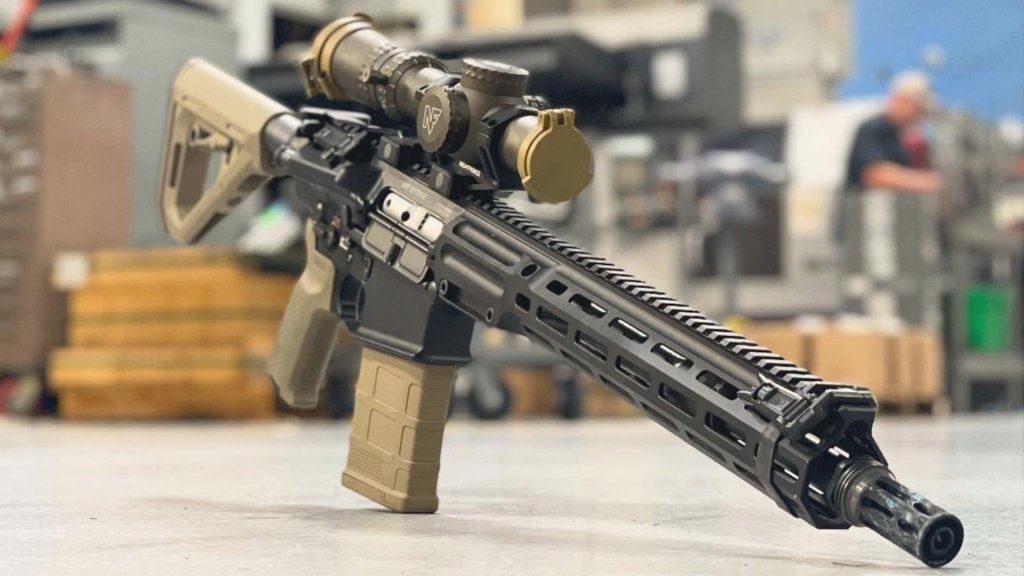
Q: Why are you excited about the new Mid-Range Gas Gun-Assault (MRGG-A) variant?
A: That one kind of solves the extended range for those mid-range calibers, both 7.62 NATO and the 6.5mm Creedmoor round. That weapon exceeds a 1,200-meter point target in 6.5mm Creedmoor. It’s just a phenomenal, accurate weapon system for our SOF operators. All the components are super excited about this one.
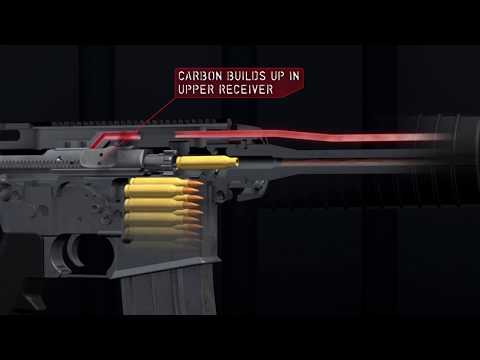
Q: Can you provide an update on the Light Machine Gun-Medium (LMG-M) that is supposed to be chambered in .338 Norma Magnum?
A: SOCOM has paused that program at this time as far as a significant fielding. However, we are fielding a small portion to one unit, not to be mentioned, and we’re going to see how that works out in that unit. We’re doing a small fielding combat evaluation with a unit to see how it’s functioning.
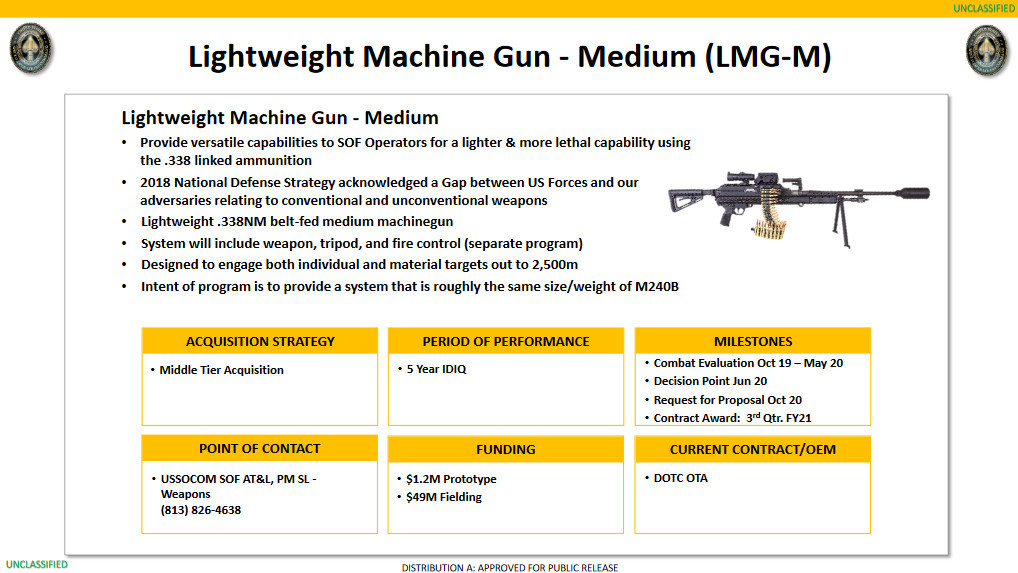
Q: What about SOCOM’s other lightweight machine gun programs?
A: We just got into an OTA [Other Transaction Authority contract] for the Lightweight Machine Gun- Assault (LMG-A), the 7.62 variant, and have a couple competitors there working designs there and expect to have that out to replace the MK 48 in the Fiscal Year 2028-2029 timeframe.
Q: Is the LMG-M being provided by Sig Sauer?
A: Yes.
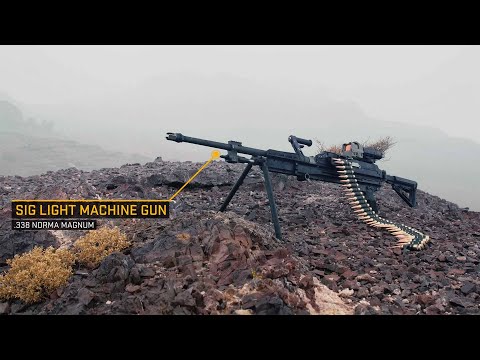
Q: Walk me through the advantages of a Norma .338 round.
A: So .338 has some significant range. The .338 has greater range than traditional .50 cal, and the particular round that we have is more effective on target than the .50 caliber at those greater ranges. However, if you compare it to 7.62 or some other lighter cartridges, it is still a heavier round. There are tradeoffs in the .338 machine gun world.
Q: What does the .338 bring to the table for operators?
A: You can replace a .50 caliber’s weighted system with a lighter system that is also dismountable. So, for instance, if you had a light vehicle that had trouble carrying a .50 cal plus a significant amount of ammunition, if you switch over to .338 you can save hundreds of pounds and keep that vehicle under its [gross vehicle weight rating] GVWR. Or especially if you’re doing things like jumping a vehicle that has to be able to hit the ground pretty hard – things along those lines. It allows you to reduce some of that weight, but be able to maintain the range and effectiveness.
![GDOTS - LightWeight Medium Machine Gun (LWMMG) [1080p] thumbnail](https://i.ytimg.com/vi/0vC9lqf_EtQ/hqdefault.jpg)
Q: One last question, what can you tell me about any counter drone rounds that you are either fielding or looking to field across all platforms?
A: We have definitely been looking at counter-drone rounds specifically in the current calibers and so what can I do to augment operators with the rifle that they’re currently carrying. We’ve also been experimenting with various other things, from shotguns to 40 millimeters [40mm grenade], and we’re still trying to sort through there. There’s a lot of things you have to think about when you’re looking at the effectiveness of a round like that. Unfortunately, I can’t go any deeper than that, because I’m really getting into more of an [operational security] OPSEC type of thing, I don’t want to go there.
Contact the author: howard@twz.com
Loading comments…
Comments couldn’t be loaded. Please refresh the page.