
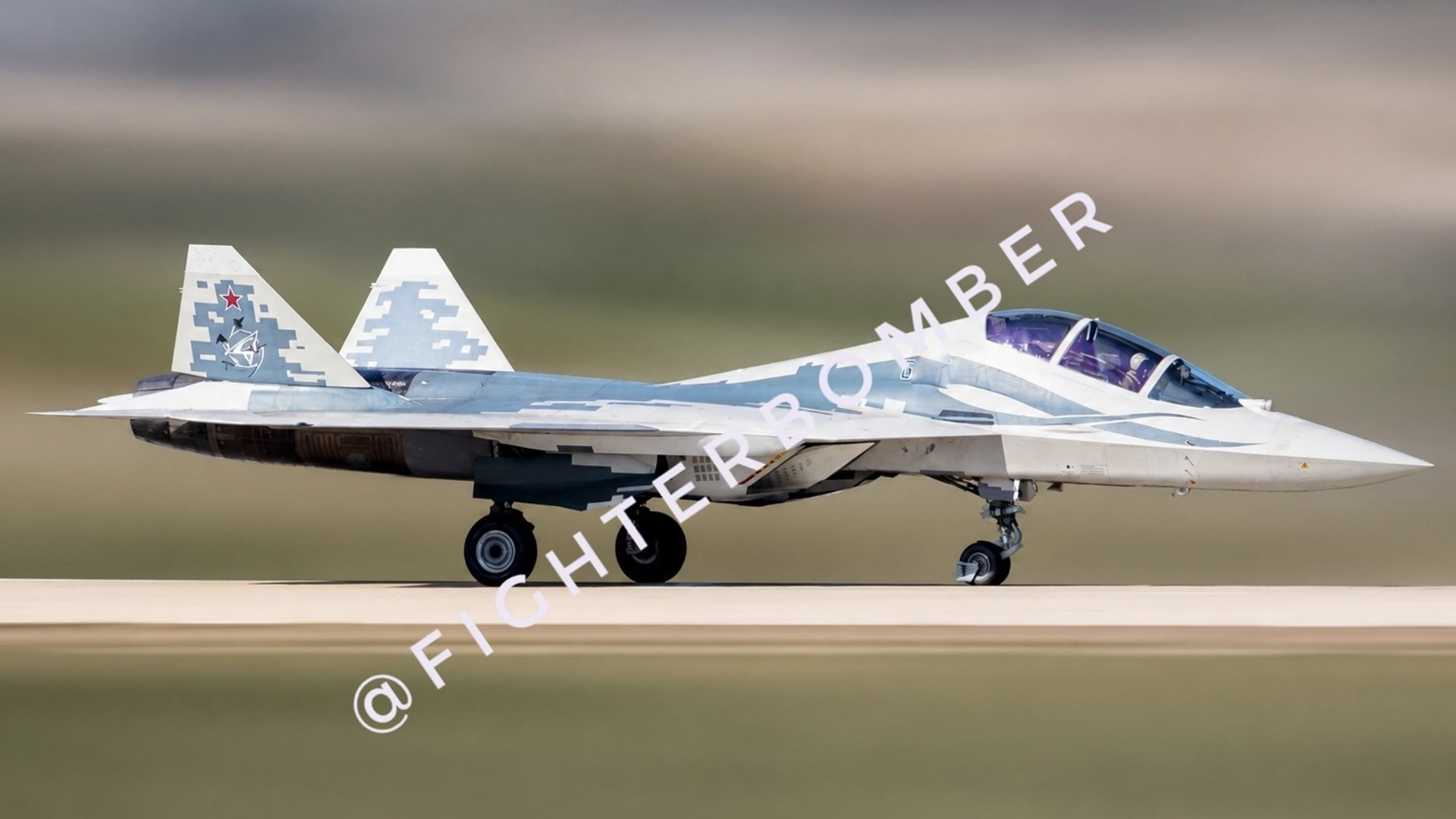
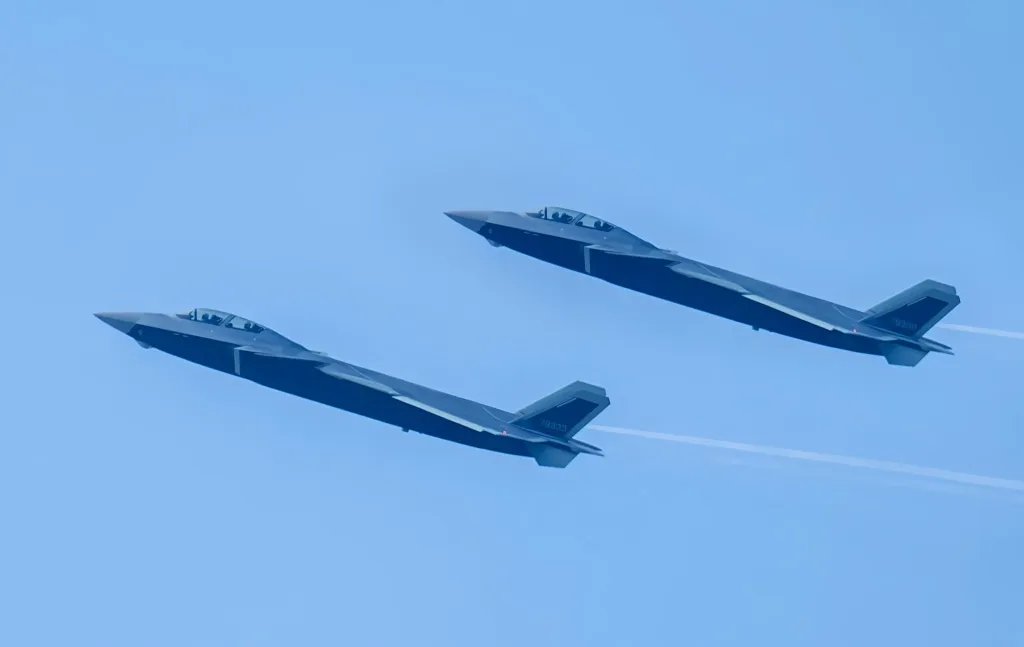
Imagery has emerged that appears to show a previously unknown two-seat version of the Sukhoi Su-57 Felon, Russia’s most modern and capable fighter. Provided the available photo is legitimate, and there is nothing obvious to suggest otherwise, at this point, the Russian development would parallel China’s work on a two-seat version of the stealthy J-20. While the exact role of China’s two-seat J-20S remains the subject of debate, it is noteworthy that Russia’s use of dual-seat tactical jets is well-established, as is China’s, and that Sukhoi had previously drafted a two-seat Felon specifically for an Indian requirement.
The apparent first publicly available photo of the two-seat Su-57 appeared on the Fighterbomber Telegram channel, which has close ties to the Russian Aerospace Forces. The same account claims that the aircraft is now undergoing taxi trials.
The most prominent modification to the aircraft is a redesigned forward fuselage, with a tandem two-seat cockpit that is broadly similar to that on the Su-30 Flanker family and on the two-seat Su-27UB Flanker-C. As on the Su-30, the rear seat is positioned significantly higher than the front one, providing a much better view forward from the rear cockpit.
The background of the photo has been blurred, so the location cannot be identified. Typically, tests of this kind would take place at Zhukovsky, near Moscow, the major hub for Russian experimental aerospace testing.
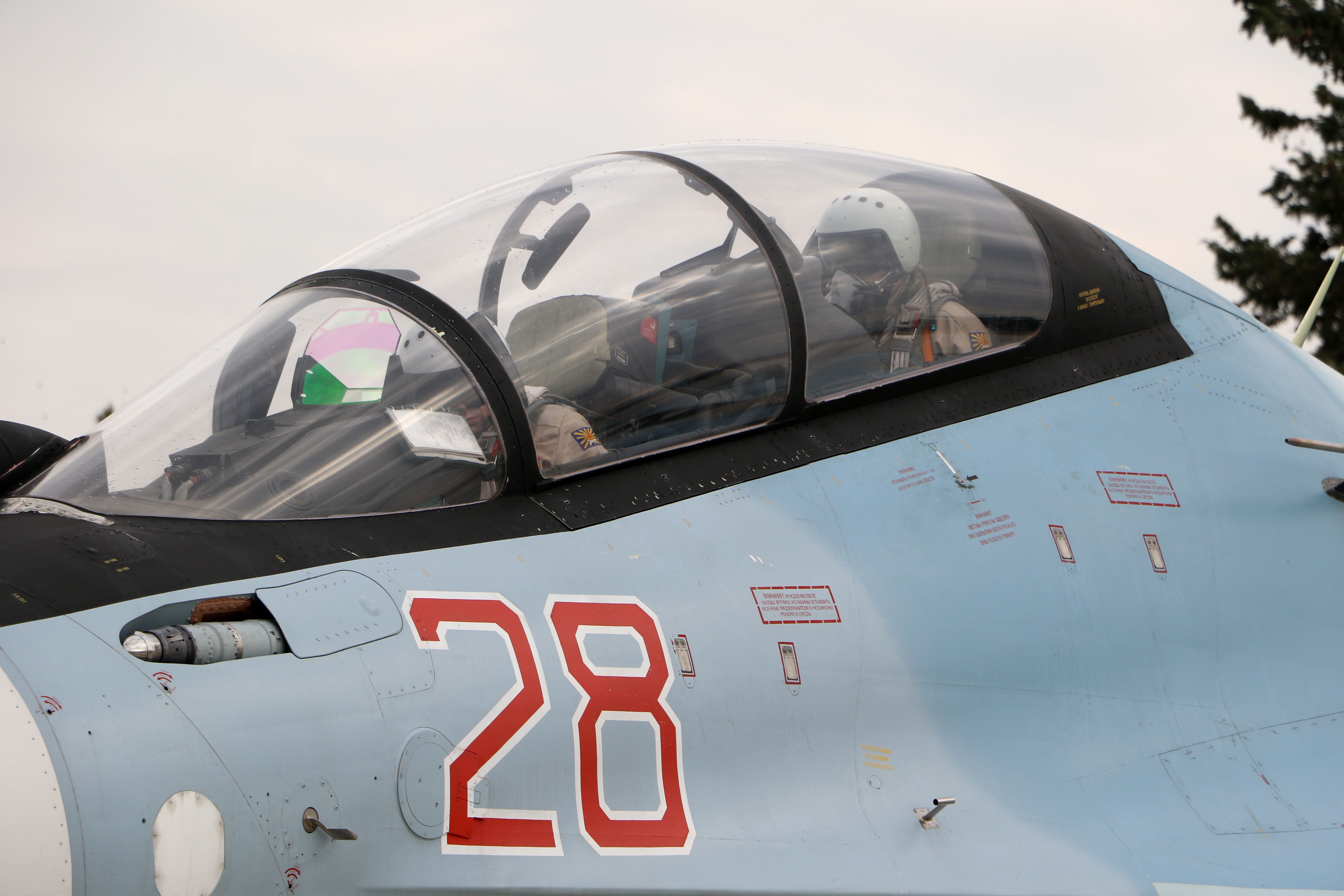
Some reports suggest that this new version of the Felon is designated Su-57D or Su-57UB, but this remains unconfirmed. In a Russian aerospace context, the suffix D would normally denote long range, while UB signifies a combat trainer.
There have been suggestions that the two-seat Su-57 might have been built using an existing single-seat Felon airframe, namely one of the prototypes, T-50-5R.
With no previous reports that Sukhoi was actively working on a two-seat version of the Su-57, the aircraft’s appearance now is all the more intriguing.
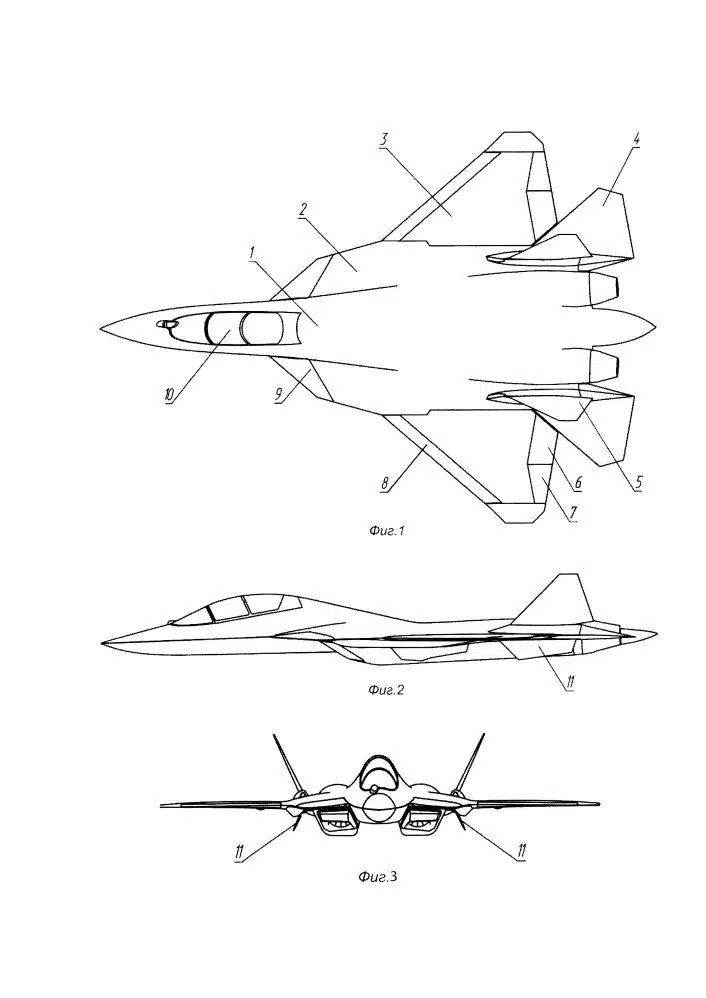
However, back in 2023, details of a patent emerged for a “multifunctional two-seat low-observable tactical aircraft,” with plans published showing a two-seat Su-57. According to Russian media reports, the planned two-seat aircraft is intended for “acting as an airborne command post for network-oriented operations of mixed groups of aircraft.” This is a concept that actually dates all the way back to when the Su-30 was first drafted at the end of the Soviet era. At the same time, the patent points to the utility of such an aircraft for crew training. Regardless, the accompanying illustration looks very similar to the two-seat Felon we see in the image from Fighterbomber.
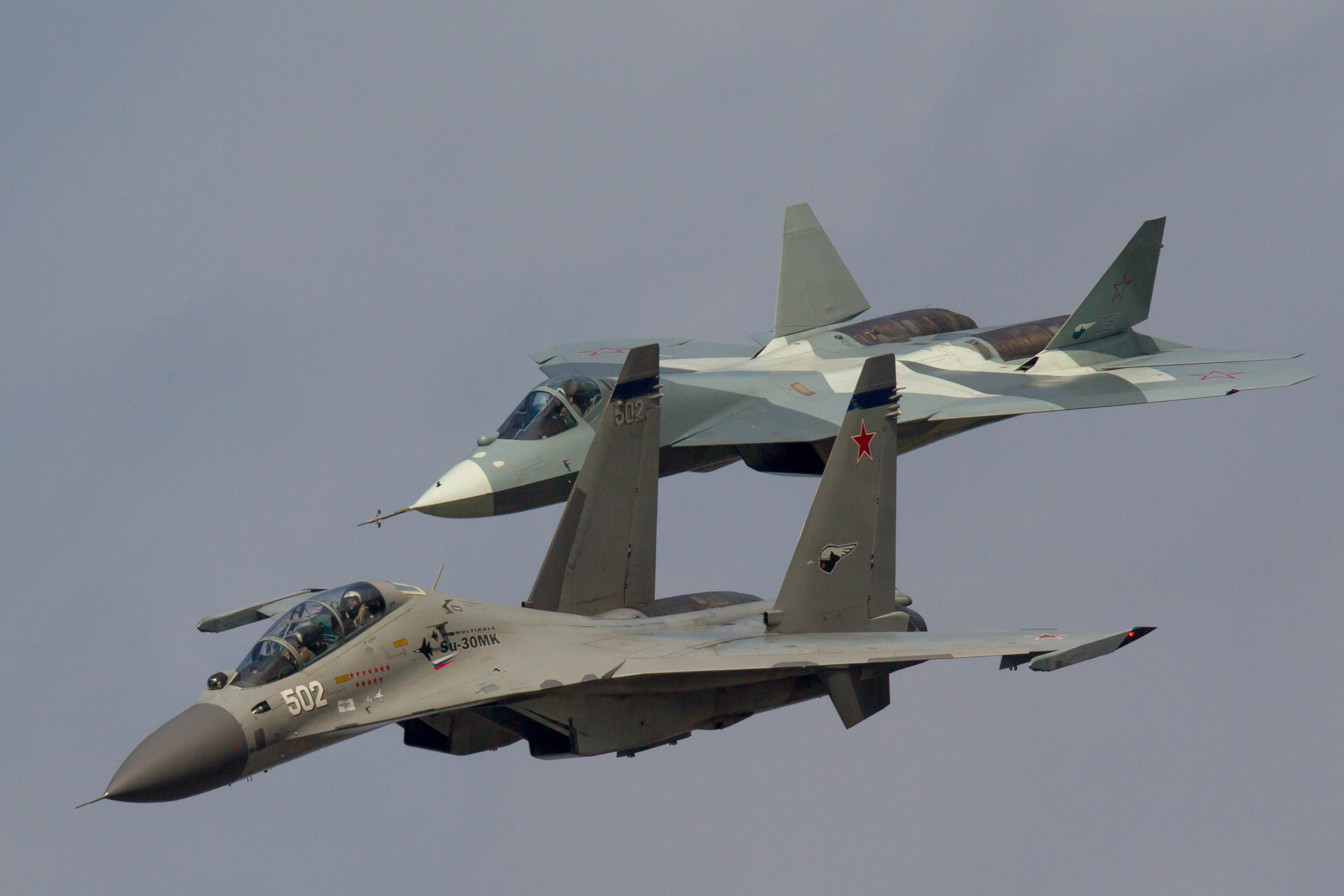
As far as the Russian Aerospace Forces are concerned, only 76 Su-57s (presumed to be single-seaters) are on order. This is a surprisingly low number, with Moscow instead having chosen to invest in the cheaper and well-proven Su-35S and Su-30SM/M2 families of tactical fighters. The Su-57 first appeared, then in T-50 pre-production form, a decade and a half ago.
The idea that Russia might be seeking a combat trainer to help convert pilots to the Su-57 seems very unlikely, especially considering the small number of frontline Felon fighters currently planned. Stealth fighters have dropped the two seat trainer companion concept from the Cold War era. The extreme focus of signature control, high cost of the aircraft, higher levels of automation, as well as enhancements in simulated training over the years, have spurred this.
It may be that Sukhoi is seeking to promote a two-seat combat version of the Su-57 as a direct successor to the twin-seat Su-30SM/M2. These aircraft are widely used by the Russian Aerospace Forces for both long-range air defense and ground attack/strike, two roles for which Russia has long prized having an extra crewmember on board.
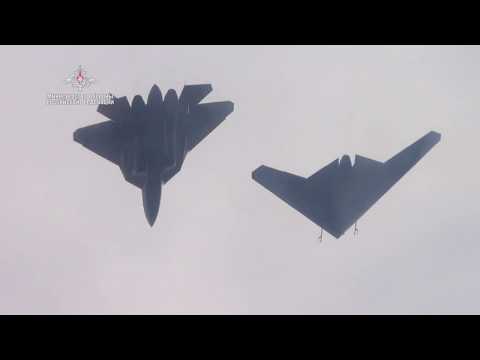
There is also the fact that the two-seat Su-57 is intended to operate alongside loyal wingman drones, specifically the Sukhoi S-70 Okhotnik-B (Hunter-B) flying-wing uncrewed combat air vehicle (UCAV).
The emergence of crewed-uncrewed teaming will be greatly enabled by a second person acting as a ‘mission commander’ of sorts. In this case, they would occupy the rear seat of the Su-57 and help control uncrewed systems, coordinating tactics with them near the forward edges of the fight. It is in this capacity that the two-seat version of China’s J-20 is widely expected to operate.
There have already been signs that the Su-57 and S-70 programs are directly linked, including ‘loyal wingmen’ cooperative testing. A two-seat Felon would offer a much more suitable platform for this kind of teaming to be taken further. It is perhaps no coincidence that one of the vertical fins of the two-seat Su-57 carries the silhouette of an apparent S-70.
As well as the S-70, the tail marking also appears to show the Sukhoi Su-75 Checkmate fighter, the S-71 stealthy air-launched missile, and some other kind of munition, perhaps generic.
This marking may well suggest that the two-seat fighter is intended to work in conjunction with all of these platforms, to various degrees, forming a new family of Russian air combat systems. This would be in line with a similar kind of tail markings we have seen on single-seat Felons, including the aircraft that was involved during previous cooperative testing with the Okhotnik-B.
Of course, a two-seat Su-57 would potentially be able to provide the Russian Aerospace Forces with a platform that can undertake all these roles: long-range air defense, ground attack/strike, drone controller, and combat trainer.
The two-seat Felon is very likely also being aimed at the export market. There would also be a precedent here, in the shape of India.
Back in 2003, Russia and India signed a letter of intent concerning the joint development of the Prospective Multirole Fighter (PMF), commonly referred to in India as the Fifth-Generation Fighter Aircraft (FGFA).
In 2010, a contract was signed covering the preliminary design of the PMF, to be jointly developed by Sukhoi and Hindustan Aeronautics Limited (HAL) of India on the basis of what was then known as the T-50 — the prototype of the Su-57 Felon.
Notably, the Indian Air Force wanted a two-seat PMF.
It’s not clear how far Sukhoi progressed on a two-seat PMF to meet the Indian requirement, but the result would have looked very much like the two-seat Felon now apparently under test.
This was all academic, however, since India walked away from the PMF in 2018. This followed an embarrassing incident, in which the fifth prototype T-50 caught fire on the runway at Zhukovsky, reportedly in full view of an Indian delegation.
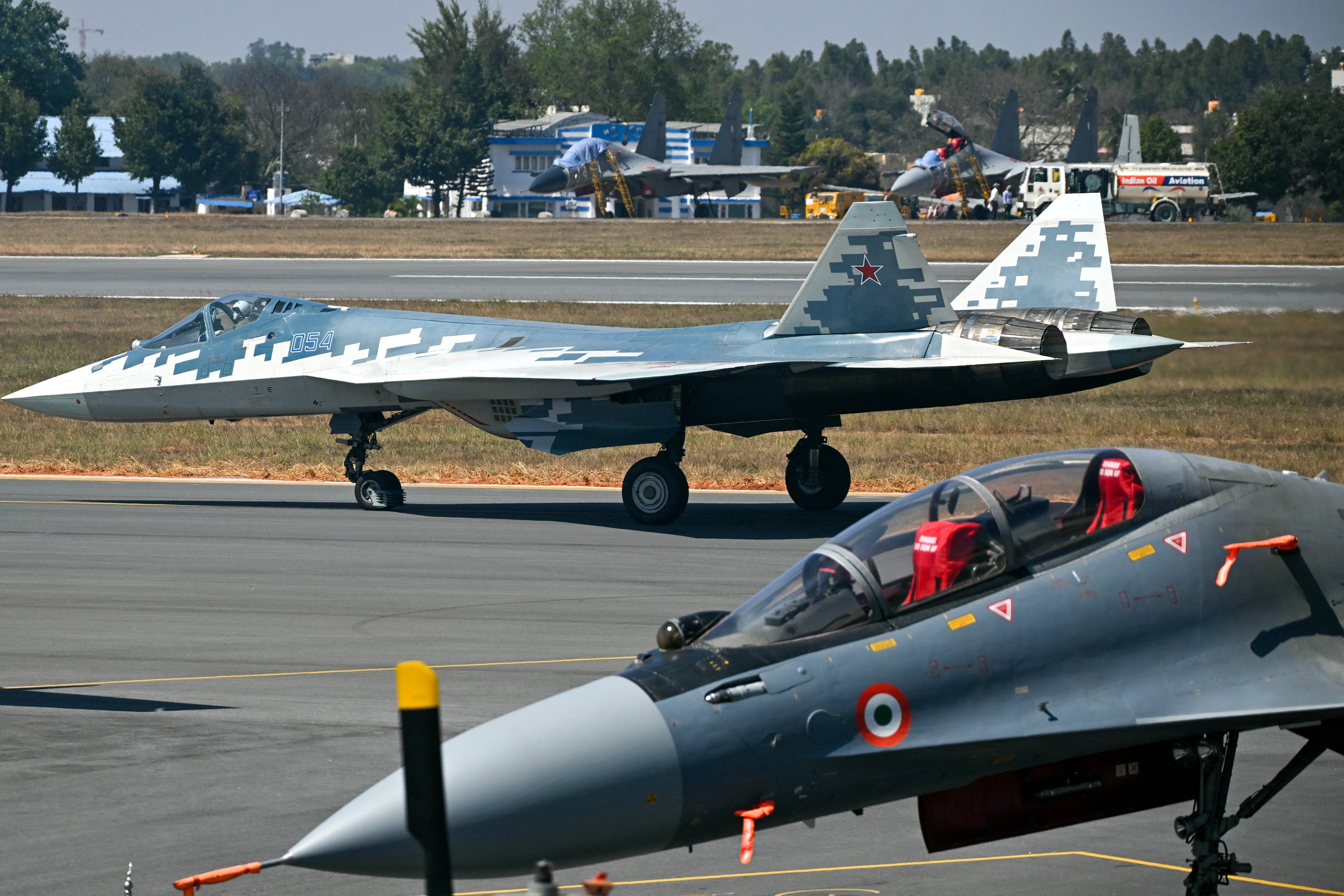
Nevertheless, Moscow has continued to push the Su-57 for India, as that country struggles with acquiring new advanced fighters and fielding them in the required numbers.
At the same time, Russia has sought to kickstart the Felon program by finding other export customers for the Su-57E version.
So far, only Algeria has confirmed, via its state-run media, that it has bought the Su-57E, as we discussed at the time. It appears that two aircraft have already been delivered to the North African nation, out of a possible total of 14.
Being able to offer a two-seat Felon could well attract more foreign interest, especially customers that might be looking to acquire members of the Su-30 family, or who might be looking to replace these same aircraft.
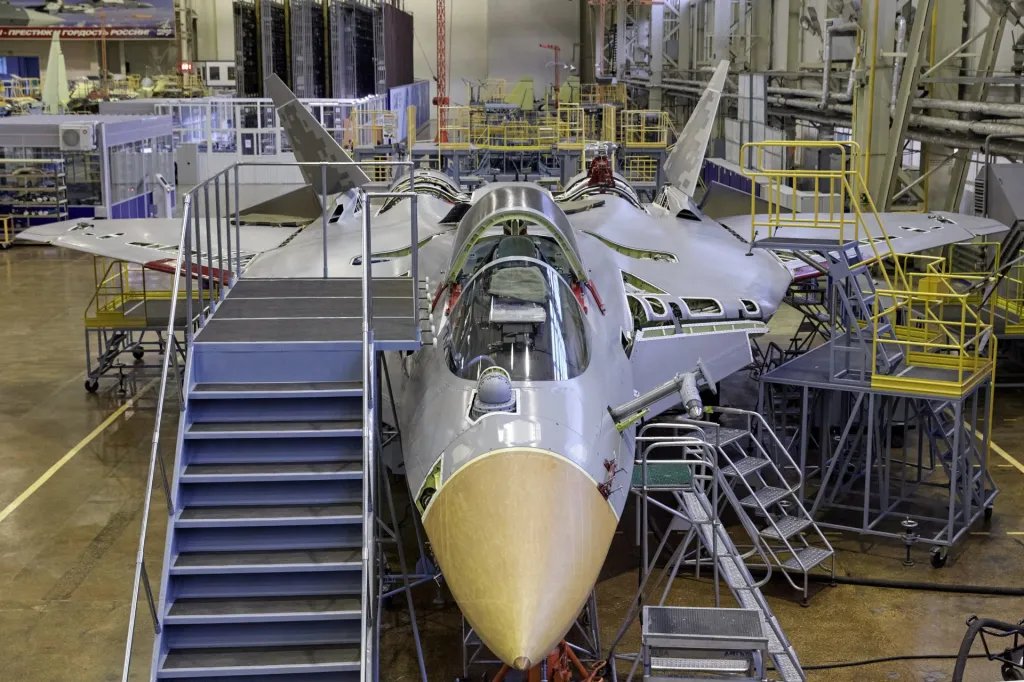
Potentially, Sukhoi might choose to combine the two-seat Felon with the improvements incorporated in the long-promised Su-57M. Also known as the ‘second stage’ Su-57, the Su-57M would be powered by the new AL-51F-1 (izdeliye 30) turbofan engine, replacing the current AL-41F-1, with increased thrust, lighter weight, and lower operating costs, as well as other advanced features. As you can read about here, Sukhoi has also unveiled a new type of thrust-vectoring engine nozzle for the aircraft, intended to improve the low-observable features of the Felon.
Still, adding another seat to the Su-57 will cause an impact on performance. Range could be decreased due to reduced internal fuel load, and the aircraft’s general performance, including speed and turning capabilities, could also suffer. Its radar signature, especially from the critical frontal aspect, will be affected as well. At the same time, the Su-57 is not a very low-observable aircraft, or even close to it. It was designed around a different philosophy than Western fifth-generation fighter aircraft, which took limitations in low-observable technologies and cost into heavy consideration. You can read more about this here.
The absence of Russian interest in buying more Felons has meant the Su-57M program has progressed only very slowly.
Getting more export customers would provide a huge boost to the Su-57 and would also help the Russian military.
Foreign investment is vital to speed the development of the Felon. The same was true in the late 1990s when India’s purchase of the Su-30MKI Flanker essentially secured the development of the multirole version of this fighter, which was only later acquired by Russia. On the other hand, any export customer would be taking a big risk due to the war with Ukraine and its impact on the Russian aerospace and defense industry, as well as its geopolitical standing.
While we await more imagery and details of the latest iteration of the Su-57 Felon, it is certainly noteworthy that a two-seat version of another fifth-generation fighter now appears to have broken cover.
Contact the author: thomas@thewarzone.com
Loading comments…
Comments couldn’t be loaded. Please refresh the page.