
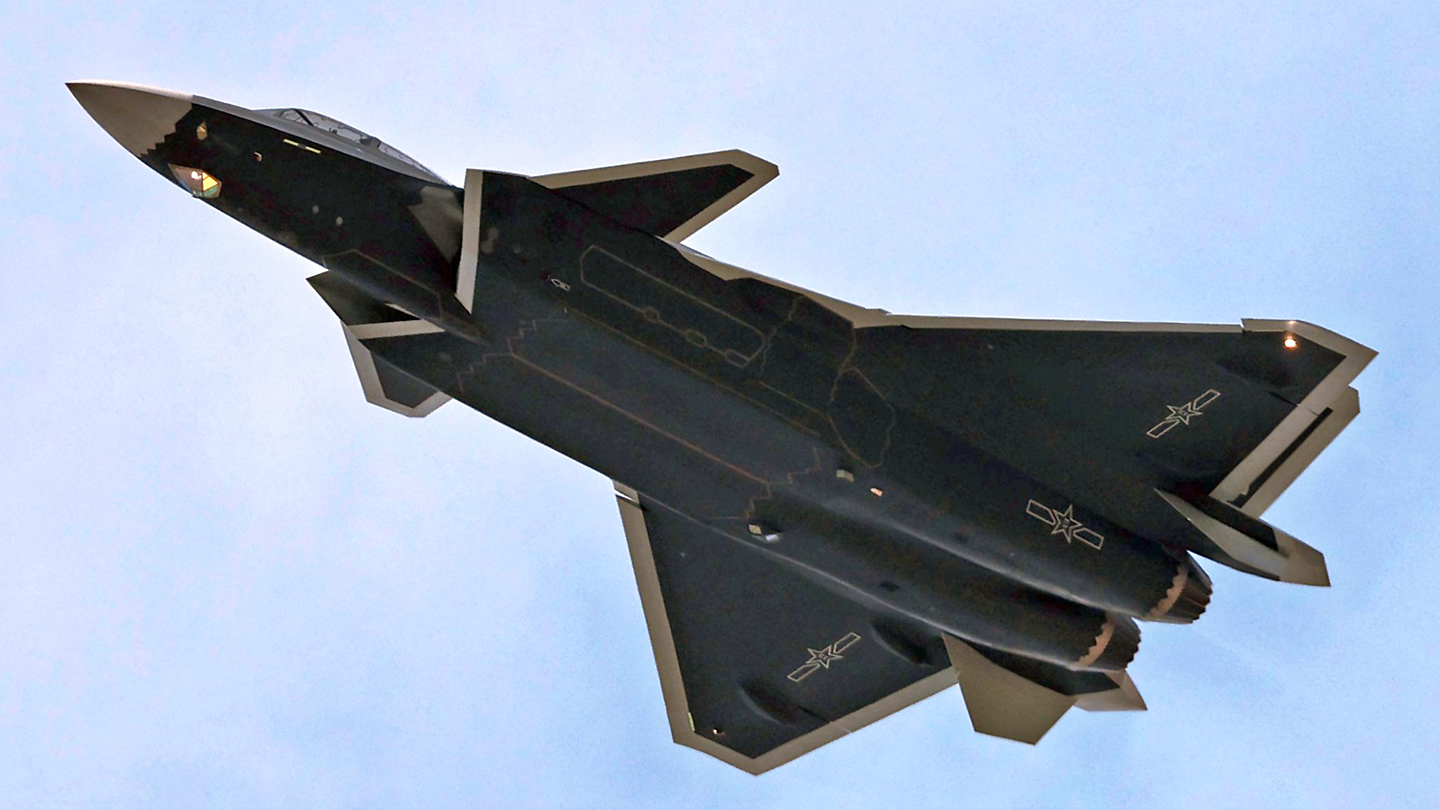
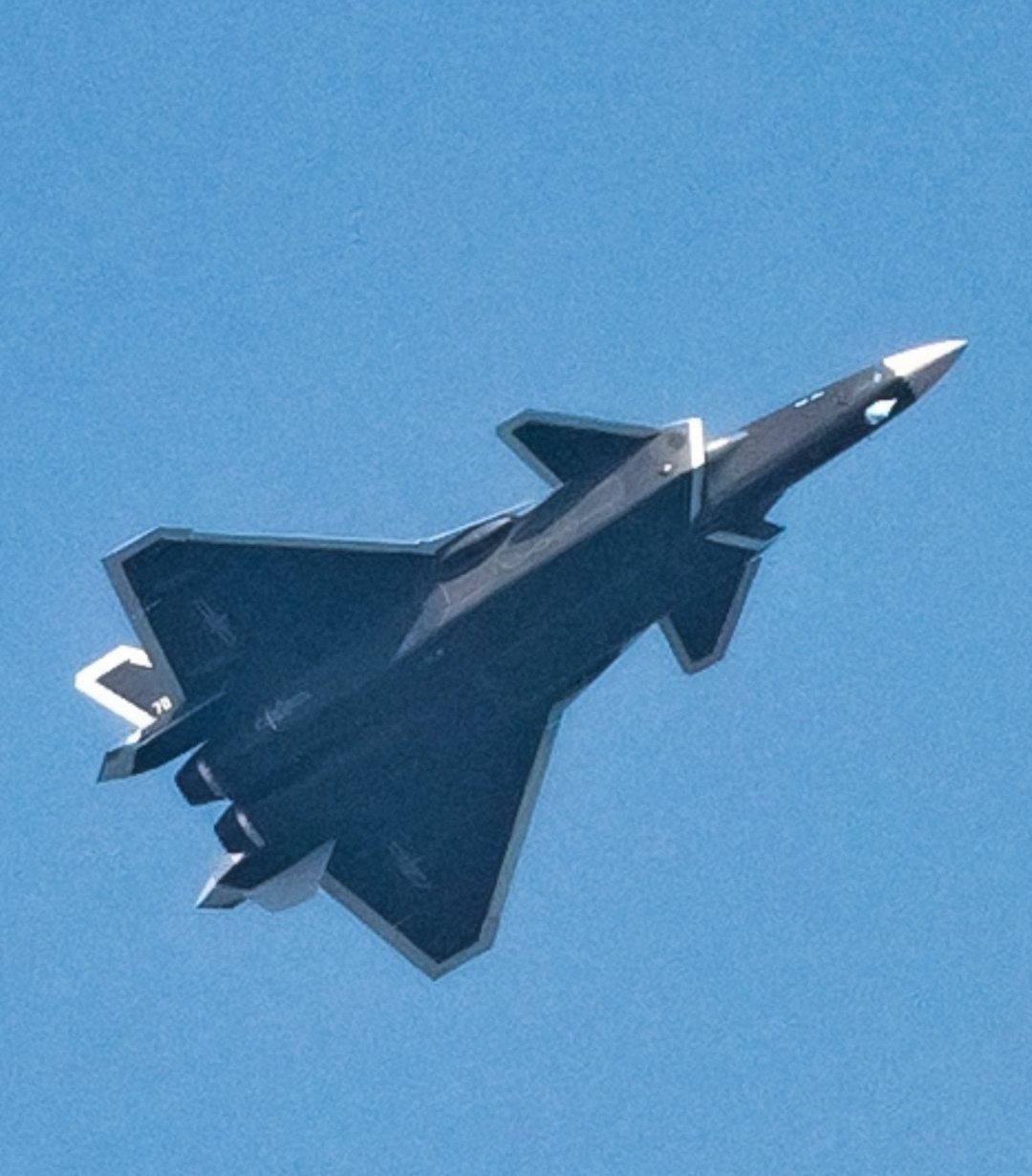
A flurry of new images showing the two-seat variant of China’s J-20 stealth fighter has emerged online. As well as providing new views of the two-seater, which also now wears a darker paint scheme, recent imagery published on Chinese social media reveals the progress being made in other fighter programs, including the J-35 family of carrier-based and land-based stealth fighters.
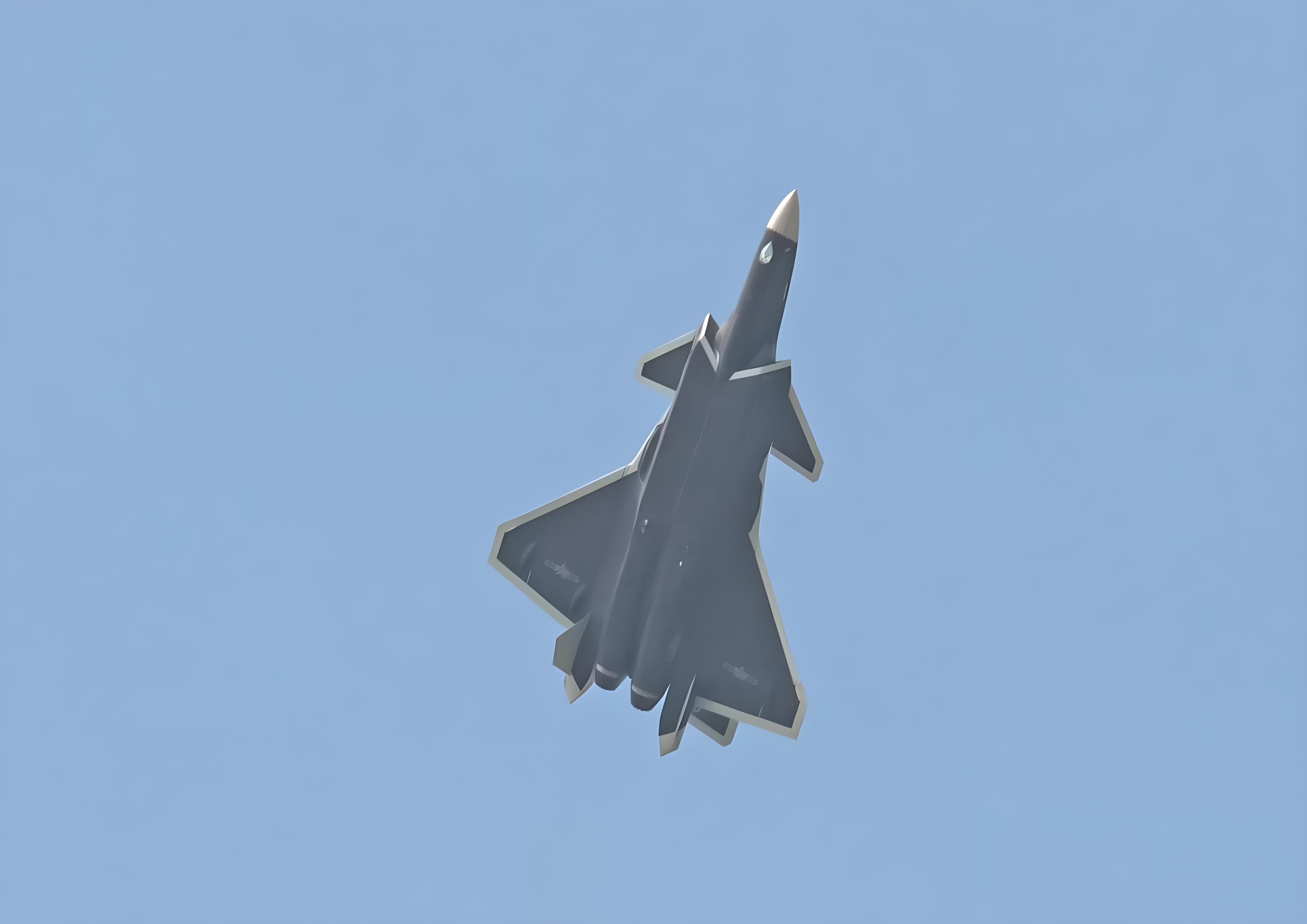
It has been widely assumed that the appearance of the latest imagery of the J-20S is related to this version of the stealth jet having recently entered operational service or being poised to do so.
At least one photo that emerged this month has been suggested as being an indication of operational service, with the J-20S aircraft in question wearing national insignia as well as five-digit serials associated with a frontline People’s Liberation Army Air Force (PLAAF) unit, specifically the 172nd Air Brigade.
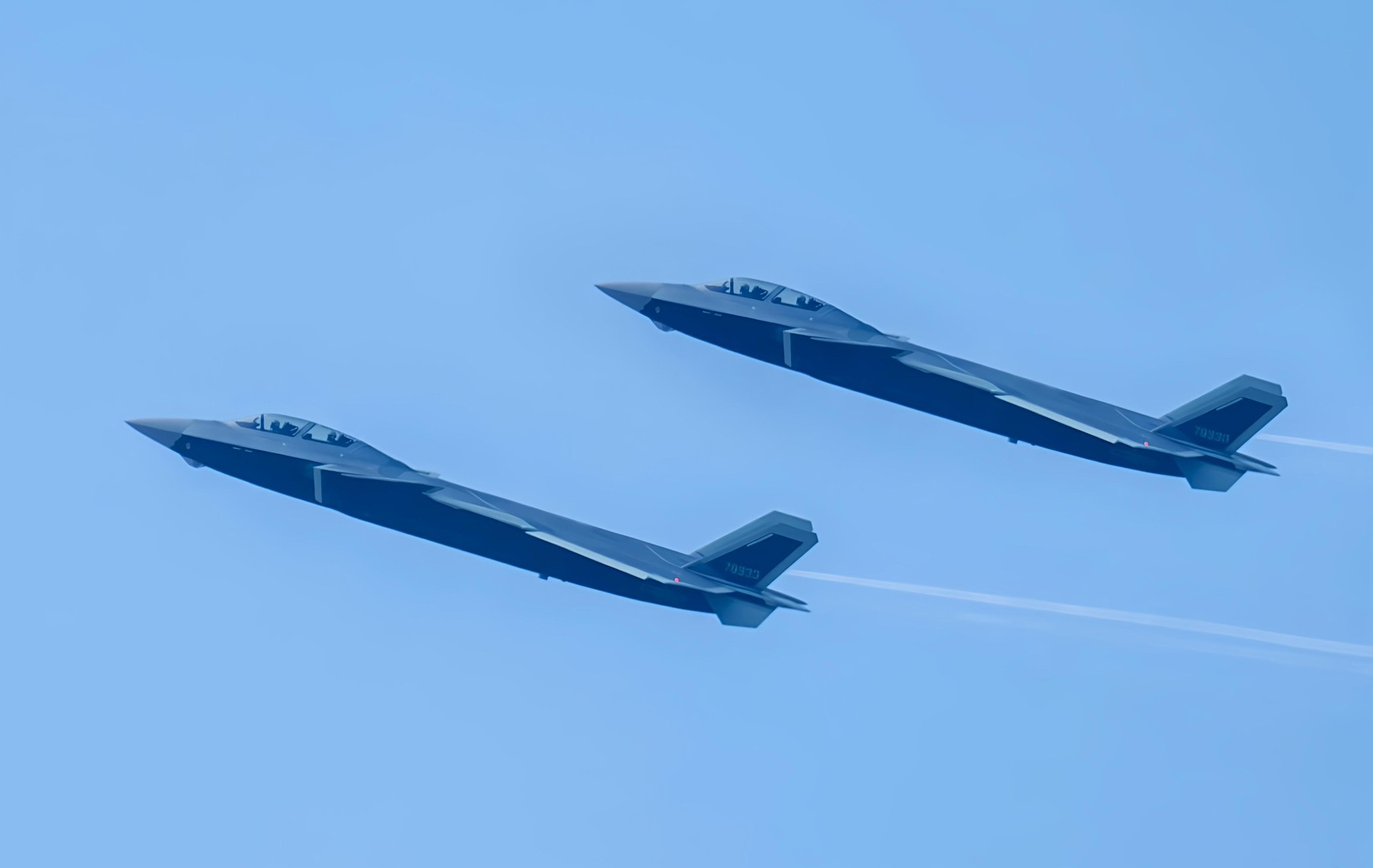
While the J-20S was officially unveiled at the Zhuhai Airshow last year, there are rumors that it might be publicly unveiled as an operational PLAAF asset in September of this year, when the service marks the 80th anniversary of Japan’s defeat in World War II.
Rumors that a two-seat version of the J-20 was under development first emerged in early 2018, and the existence of the aircraft was confirmed beyond doubt by October 2021, when a prototype was noted undertaking high-speed taxi tests, as we reported at the time.
To accommodate a second crewmember, the J-20’s forward fuselage was redesigned. The aircraft also has enlarged tailfins and was powered from the start by locally developed WS-10C turbofan engines.
With no equivalent two-seat stealth fighter in any Western inventory, the exact purpose of the J-20 has long been a source of debate. Some early assessments suggested it might be intended for electronic warfare, although this mission set is now very much the realm of the J-16D, a Chinese version of the Sukhoi Flanker multirole fighter. Of course, this could change in the future.
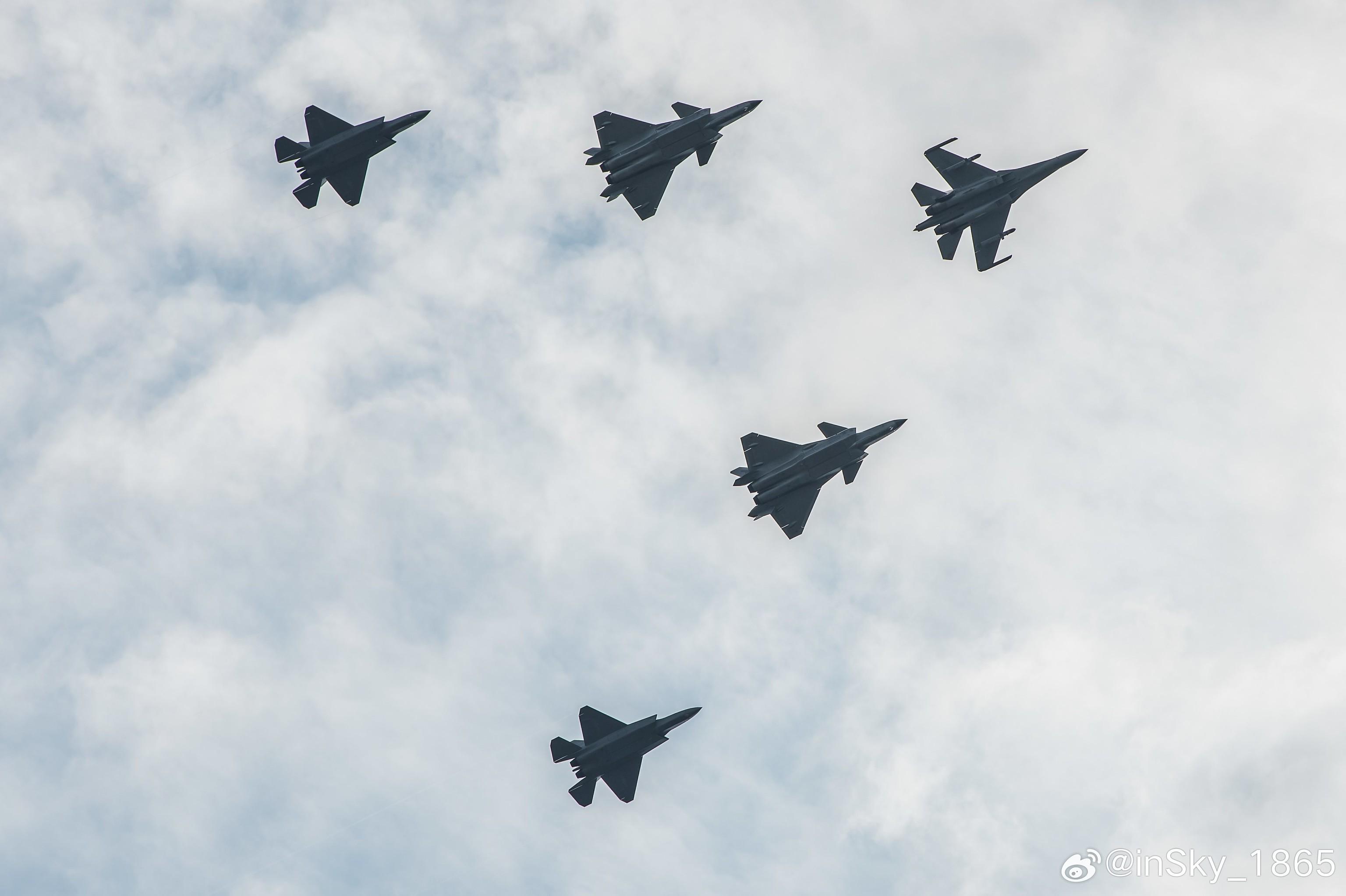
Some kind of ‘mini airborne command and control aircraft’ was also a suggestion for the two-seat J-20S.
More recent analysis suggests, which matches TWZ‘s original analysis, that at least a significant portion of the stealth jet’s mission might be in support of a growing fleet of PLAAF drones. This is a concept we have discussed in the past and which would essentially see the second crewmember control, to varying degrees, ‘loyal wingman’-type drones that would accompany crewed J-20s and other aircraft into battle. In this way, the drones could fly deeper into hostile airspace, clearing a way through air defenses, for example, or otherwise supporting the crewed assets. The same concept is apparently already being explored by the PLAAF using modified J-16 fighters. The U.S. is moving full steam ahead with its own Collaborative Combat Aircraft (CCA) loyal wingman drone plans, as well.
Since the first flight of the J-20S prototype in November 2021, at least five other prototypes have appeared, the most recent emerging in March of this year.
Presuming that the new J-20S imagery shows the jet in its definitive production form, then there are several features that are worthy of note.
First, the nosecone has been reprofiled compared with earlier J-20S aircraft. This suggests that it now accommodates the same radar found in the J-20A, the improved single-seat version of the stealth jet. While unconfirmed, there are rumors that the active electronically scanned array (AESA) radar in the J-20A could feature gallium nitride (GaN) semiconductors. Compared with previous technology, GaN generates less heat and has the capacity to operate at higher voltages, meaning that output power can be increased, while component size can be reduced.
A composite image that compares the two-seat J-20S with improved single-seat J-20A, and the original single-seat J-20:
As well as an apparent new radar, the latest J-20S is fitted with an improved type of electro-optical system below the nose. Very similar to the F-35’s Electro-Optical Targeting System (EOTS), this news system offers 360-degree coverage, and may also be of the same variety as fitted in the single-seat J-20A. The J-20’s original electro-optical system had a limited field of view and reduced capability set, which you can read about in this past piece of ours.
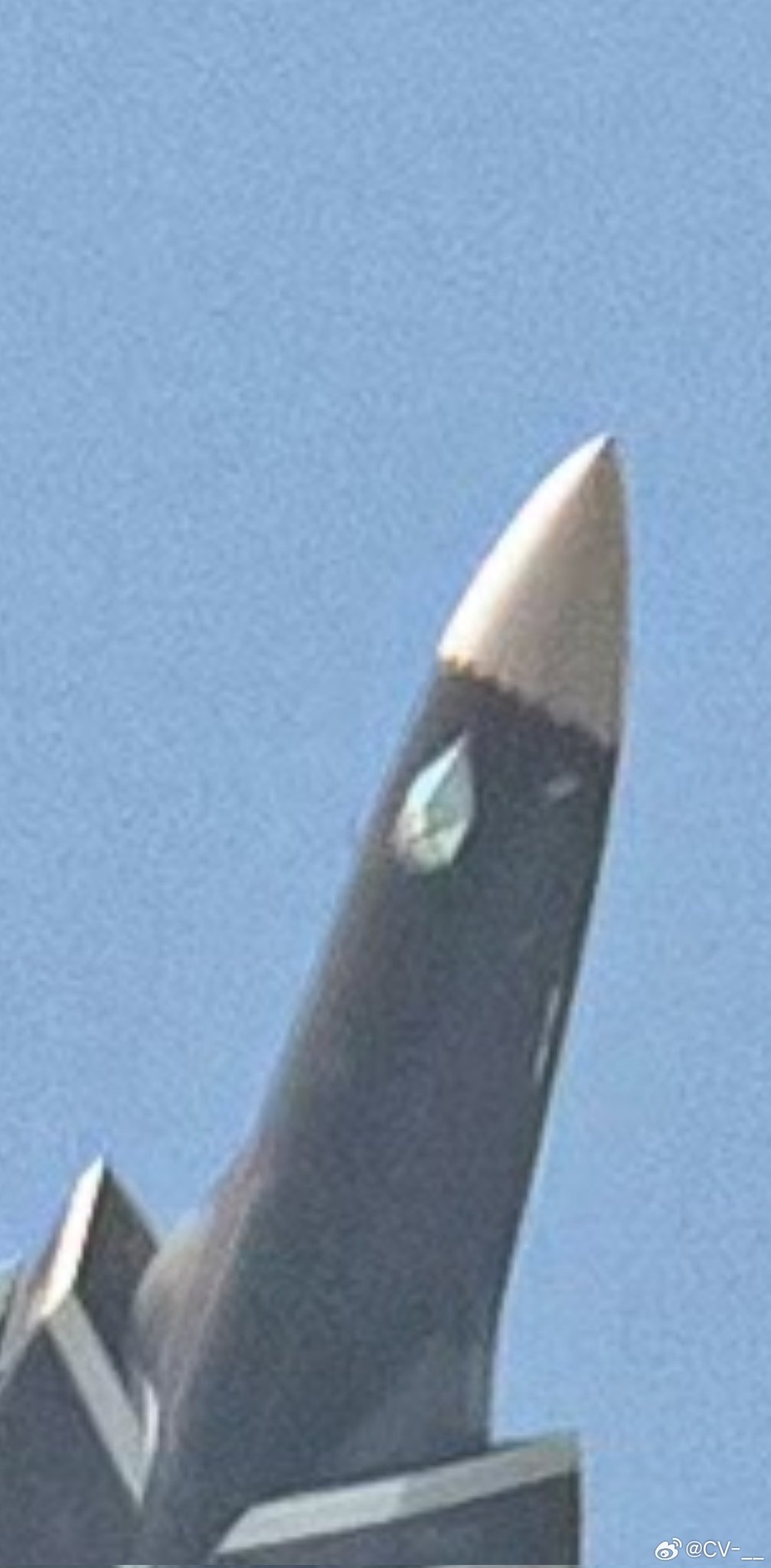
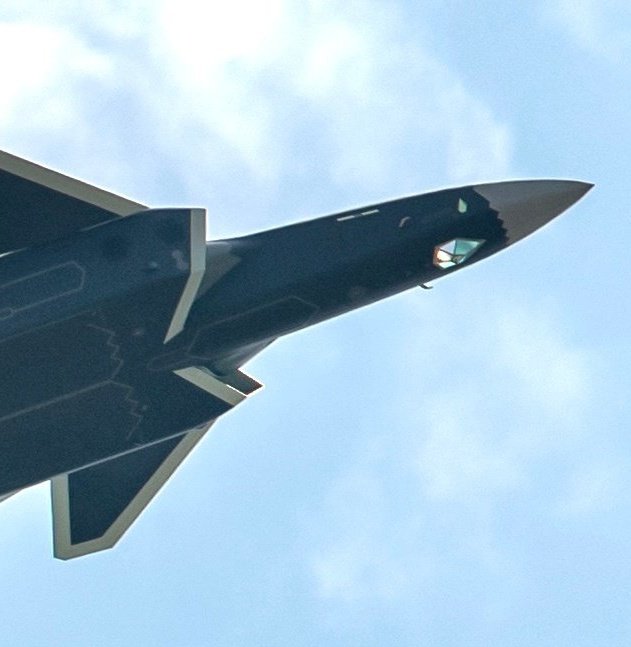
Finally, the J-20S now wears a paint camouflage scheme, with most of the airframe painted in a dark-gray finish, close to black. This is absent from the leading and trailing edges of the control surfaces, the intake ‘lips,’ and the radome. While unconfirmed, this might indicate a new type of radar-absorbent coating to enhance the aircraft’s low-observable characteristics.
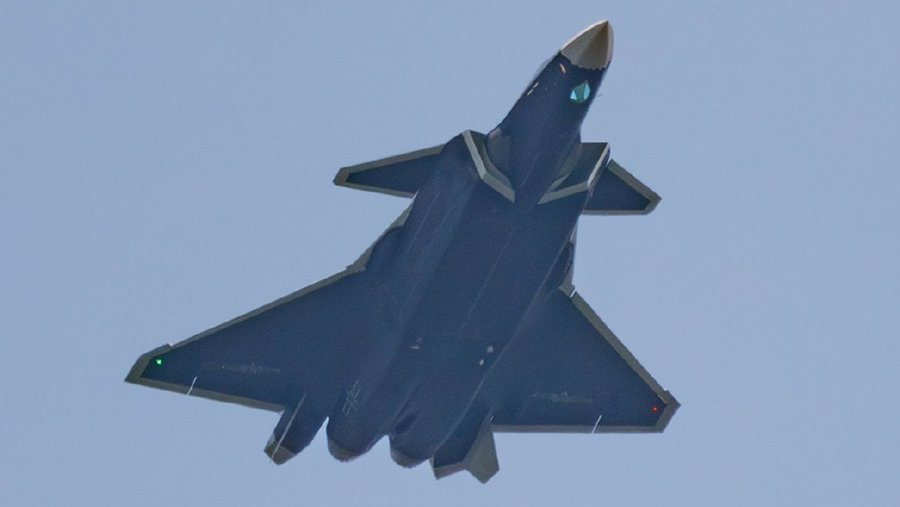
Taken together, these developments indicate that China has been refining the J-20S ahead of its operational service entry and before production ramps up, although it remains to be seen what kind of force mix is planned for the single- and two-seat J-20 versions, let alone the smaller J-35A.
As for the J-35, some new imagery has also emerged of the carrier-based version of the jet.
In particular, we now have a much better look at the arrester hook that’s fitted on the navalized J-35 version to allow it to make carrier landings.
In a recent Chinese TV report, a J-35 can be seen in the back of a construction hall, still wearing primer, with the black-and-white hook extended.
Meanwhile, recent imagery showing the J-35 in the air reveals the tidy low-observable housing for its arrester hook, which is entirely concealed between the engines when not deployed. This is a bit different arrangement to the F-35C’s hook that has a shroud attached to it.
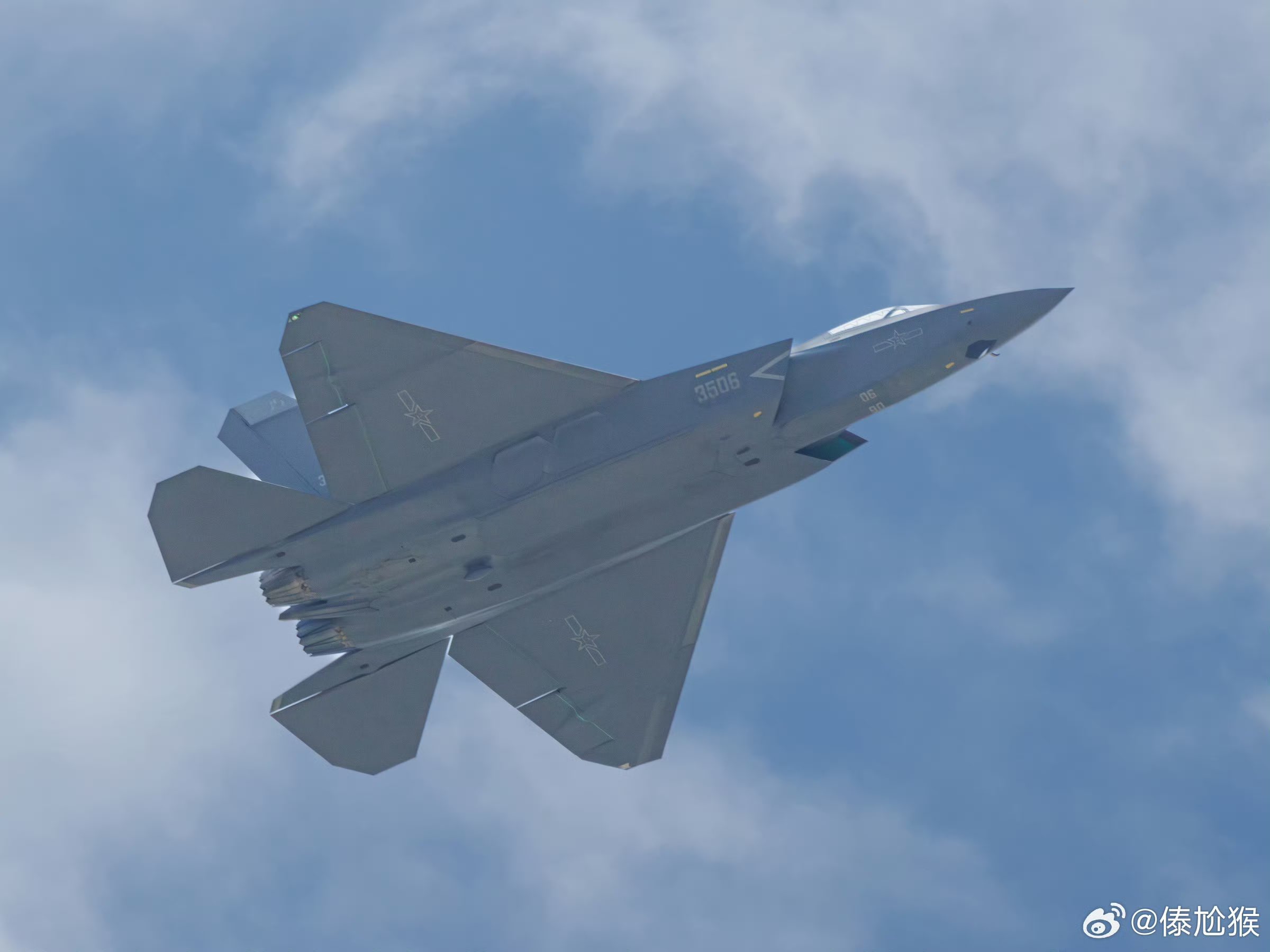
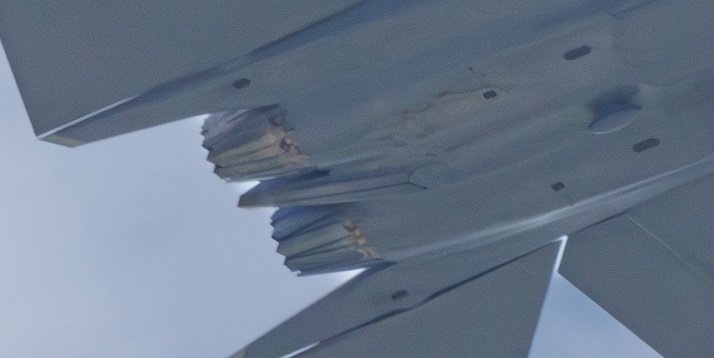
While much attention has rightfully been placed on China’s sixth-generation jets, two of which are now under test, for the PLAAF, the J-20 remains the most important tactical jet program, while the future of the J-35 is coming clearer into view. At the very least, these latest images reinforce just how central the J-20 remains when it comes to the service’s burgeoning ambitions.
Contact the author: thomas@thewarzone.com
Loading comments…
Comments couldn’t be loaded. Please refresh the page.