
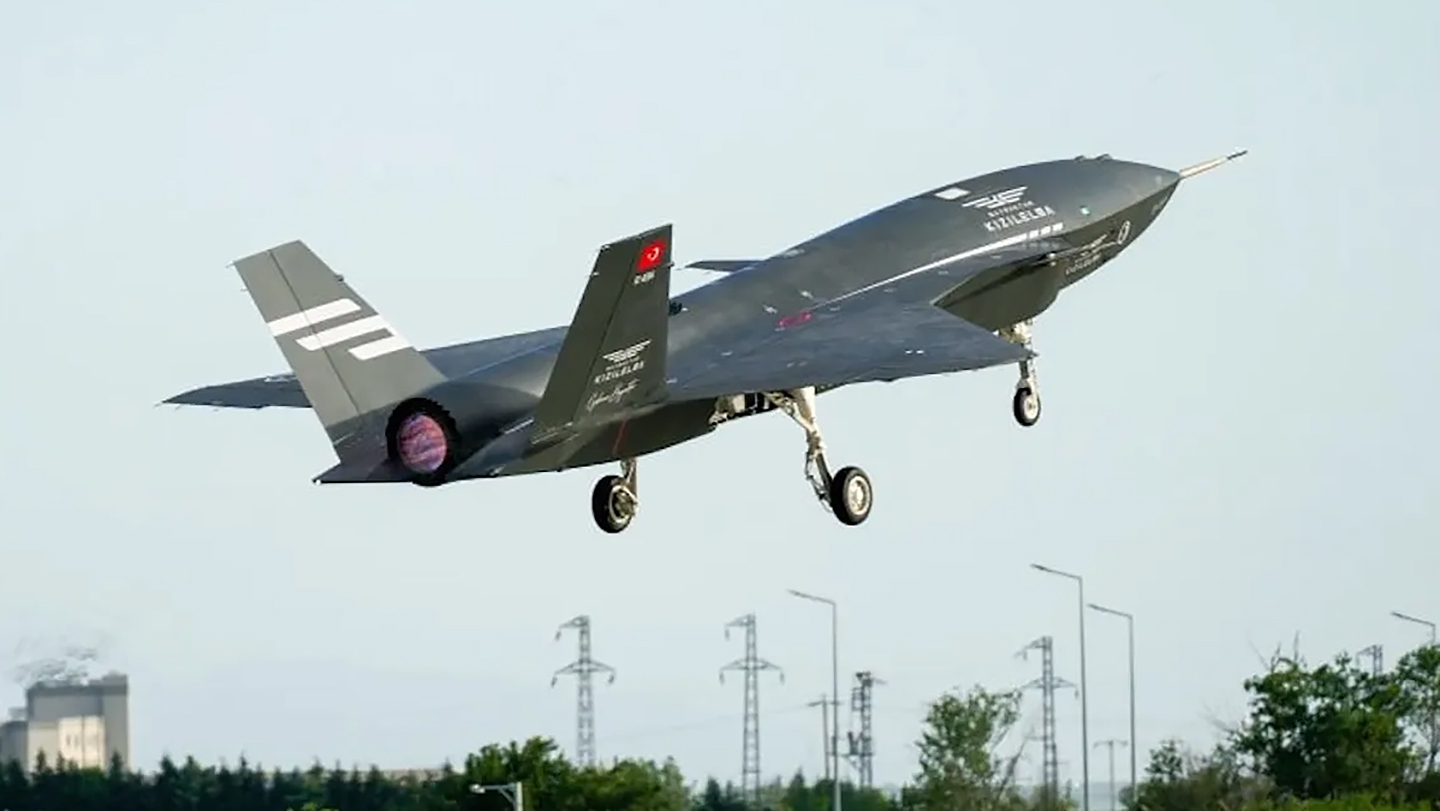
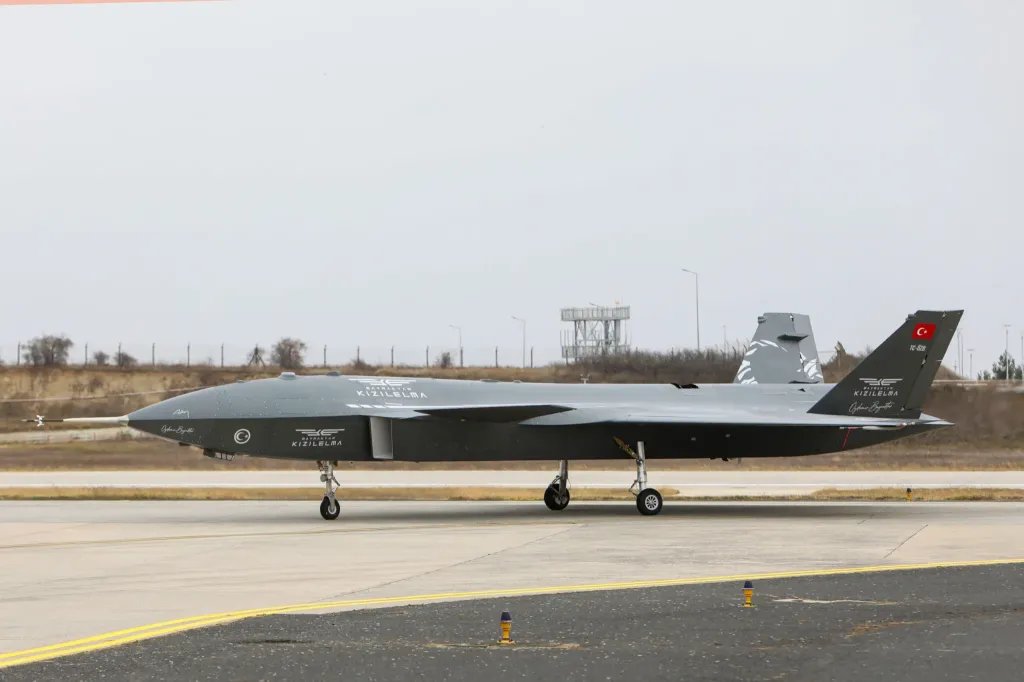
Turkey’s Baykar and Leonardo of Italy say they have successfully completed the first live trials of their K-SWARM concept, demonstrating collaborative operations between crewed and uncrewed aircraft as part of an effort to develop next-generation autonomous air combat capabilities. The trials, involving Baykar’s Kizilelma uncrewed combat air vehicle (UCAV) and Leonardo’s M-346 light fighter-trainer aircraft, are the latest to explore what is fast becoming a key element in the evolution of air combat.
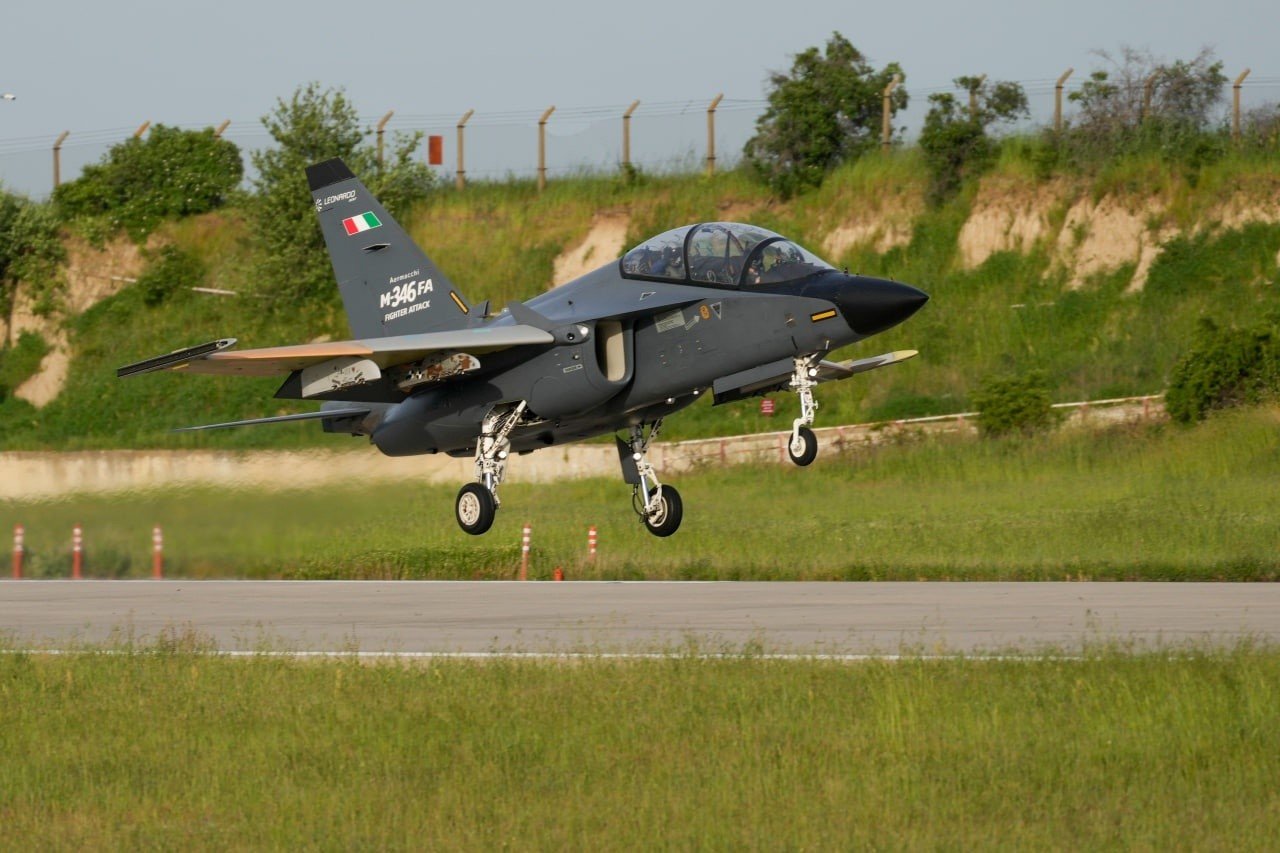
Leonardo and Baykar announced the development today. The trials took place last month at Baykar’s flight and test center in Çorlu, Turkey, and involved a Leonardo-owned M-346 Fighter Attack variant and a Kizilelma UCAV. An Italian Air Force T-346A, the trainer version of the M-346, was on hand as chase aircraft.
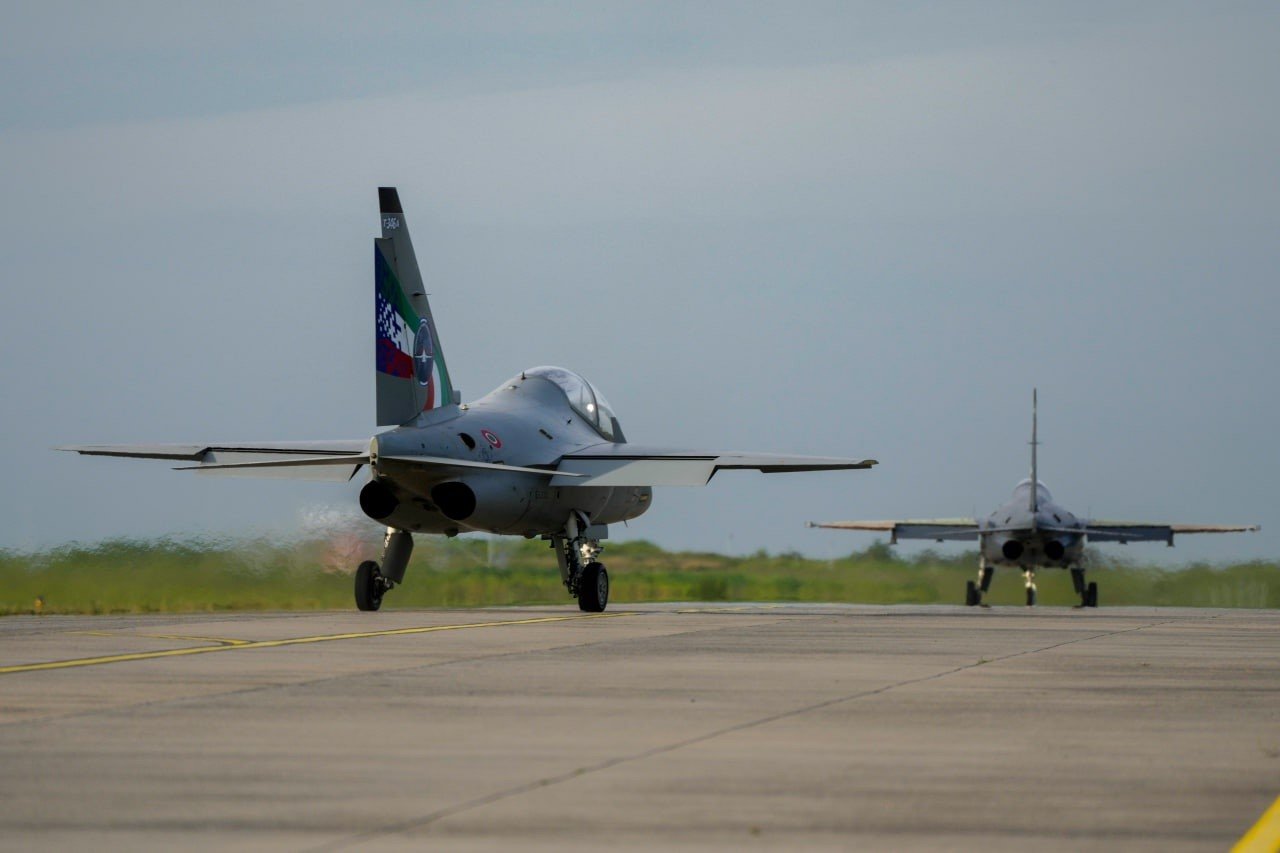
During the flight-test campaign, the Kizilelma completed its taxi and takeoff autonomously. It then autonomously joined the M-346 in formation. At this point, the two-person crew in the jet assumed full control of the Kizilelma.
The Kizilelma used so-called Smart Fleet Autonomy algorithms developed by Baykar’s Hardware-in-the-Loop (HIL) Laboratory for the trials.
Once ‘handed over’ to the M-346, the pilots in the jet made use of a newly developed and fully integrated avionics suite to command different formations. Via a crewed/uncrewed computing system, the Kizilelma performed different maneuvers and formations, including position changes, separations and rejoins. These were executed autonomously by the drone, with the M-346 pilots only responsible for providing the initial commands.
What was described as an advanced radio-frequency data exchange system was used to share all data between the platforms.
The Kizilelma/M-346 trials in Çorlu were the first live phase of Leonardo and Baykar’s K-SWARM program, which focuses on developing interoperability between crewed and uncrewed aircraft. The companies refer to this as crewed/uncrewed teaming (CUC-T), but it’s also referred to by other names, including manned-unmanned teaming (MUM-T), or collaborative combat teaming.
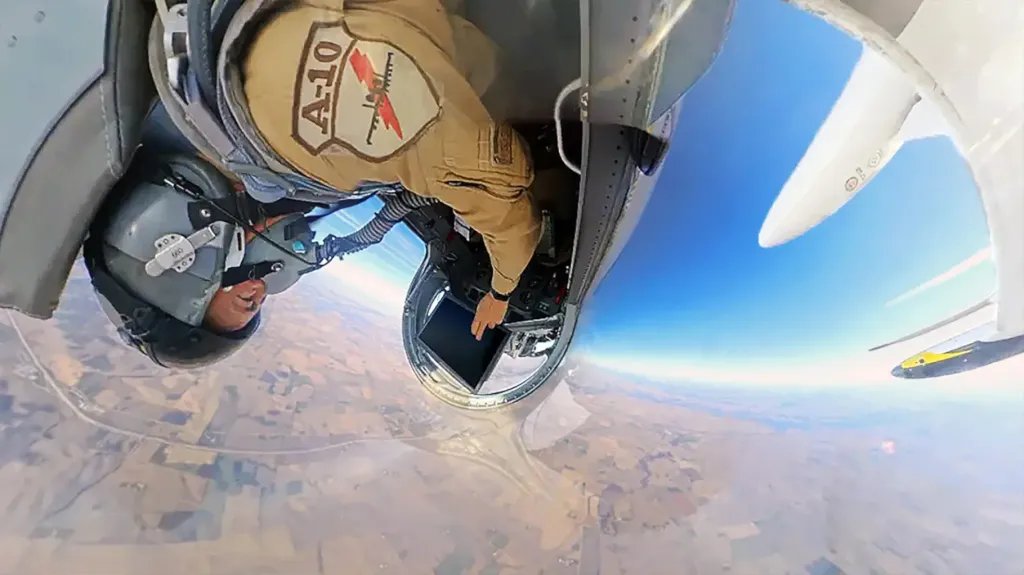
TWZ was provided the opportunity to experience the M-346FA firsthand during a visit and demonstration flight at the Beech Factory Airport in Wichita, Kansas:

Whatever the term, the ambition is similar: to have future fighter pilots go into battle accompanied by drones under their control, ready to fire weapons, gather intelligence, jam communications, or serve as decoys.
Baykar and Leonardo helped accelerate the start of these crewed/uncrewed teaming trials by first running simulated missions, including using an M-346 full-mission simulator in Venegono, Italy, and the Leonardo product capability and concept laboratory, or PC2LAB, in Turin. This meant that algorithms, as well as tactics and procedures, could be tested in the virtual realm first.
The Kizilelma’s rapid rise to prominence as a fighter-like UCAV has been notable, and there have been some impressive milestones along the way.

In general, the Kizilelma is one of only a few fighter-type air combat drone projects to have resulted in hardware. The development of the Kizilelma began as long ago as 2013, although the project was only revealed to the public in July 2021, when conceptual studies were presented.
Kizilelma was flown first — very briefly — in December 2022, as you can read about here. That milestone came only weeks after the Kizilelma’s emergence for ground testing.
The UCAV is claimed to be supersonic (at least in later versions), have a degree of reduced-observable characteristics, and be tailored for the kinds of air combat missions typically undertaken by crewed fighter jets. In particular, it is eyed as being a drone companion to Turkey’s next-generation TF Kaan crewed fighter. In its definitive form, the drone is powered by a single Ukrainian-made Ivchenko-Progress AI-322F turbofan delivering close to 10,000 pounds of thrust with afterburner.
Late last year, Turkey announced that the Kizilelma used a Turkish-made Gökdoğan air-to-air missile to destroy a target drone, marking the first occasion a UCAV had launched a radar-guided air-to-air missile. Days later, Boeing followed up the feat when its MQ-28A Ghost Bat drone launched an AIM-120 Advanced Medium-Range Air-to-Air Missile (AMRAAM) in southern Australia.

A next set of K-SWARM tests is planned for the coming months, with more complexity and additional functions. The companies say these will require greater levels of situational awareness and assets working together ‘as one’ toward mission objectives. Further details, including how enhanced situational awareness will be achieved, were not disclosed, but it should be noted that the Kizilelma has already been tested with a Toygun electro-optical sensor and targeting system, as well as an active electronically scanned array (AESA) radar.
Ultimately, however, the K-SWARM program aims to harness AI technology to enable uncrewed systems to incrementally shift from remote piloting to autonomy, suggesting that, in future trials, the Kizilelma will autonomously conduct more complex missions and maneuvers on the command of the M-346 pilots. At all times, those human pilots will maintain full control and decision-making, the companies say.
A UCAV operating under the control of a crewed tactical jet represents a major milestone for Turkey, placing it among a very small group of countries pursuing this advanced capability. Publicly, such crewed-uncrewed teaming has largely been confined to experimental efforts in the United States and China. We meanwhile know a lot about what the United States has been doing in the “white world” in this regard, and it is now only accelerating its CCA efforts, while it is clear that China has also prioritized it.
Russia has also reportedly flight-tested its S-70 Okhotnik UCAV with a crewed Su-57 Felon fighter, but there is no confirmation about the degree of collaboration achieved. Last year, meanwhile, the U.S. Air Force demonstrated an MQ-20 Avenger drone being controlled by a pilot in an F-22 Raptor, during a mock mission.
Given the current surge in interest in collaborative combat aircraft (CCAs), the joint trials by Baykar and Leonardo also appear especially well-timed.
To take just one European country, Germany currently has a stated requirement for an operational CCA to be fielded before the end of this decade. While the Kizilelma might not necessarily be in the running for that, the AI technology that it is now demonstrating could be of considerable interest to a variety of export customers.
Meanwhile, the Kizilelma, like other Turkish defense products, comes with the advantage of being free from the restrictions imposed by the U.S. International Traffic in Arms Regulations (ITAR) guidelines. ITAR serves to limit the transfer of defense and military technologies and services — especially the more sensitive ones — to certain countries. Already, Turkey has leveraged its drone developments to secure major arms sales to a variety of countries for which these kinds of capabilities would otherwise be out of reach — in both technological and political terms.
The opportunity for Turkey to offer for export the Kizilelma in concert with the high-end TF Kaan, or the lower-end Hürjet light combat aircraft, would put it in a unique position, at least in Europe. The same platforms could also be supplied with integrated weapons options, providing another significant advantage.
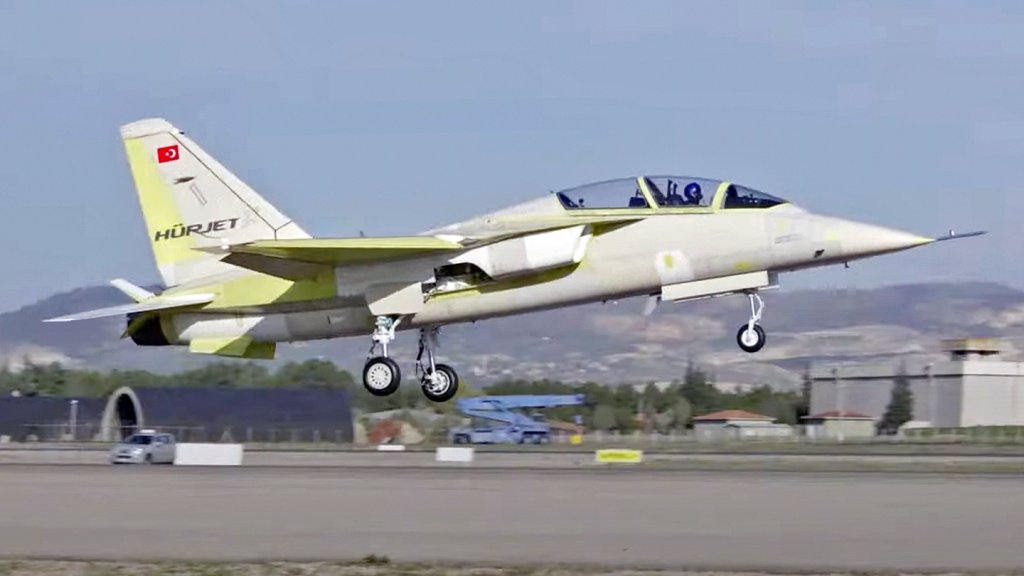
As for Leonardo, the M-346 has recorded some notable sales, with the combat-optimized Fighter Attack version also gaining increasing traction. Meanwhile, through its stake in Eurofighter, the Italian firm may well be looking forward to offering these ‘drone commander’ capabilities to the multirole fighter. As we have discussed only recently, the collapse of the pan-European Future Combat Air System (FCAS) effort means that CCA capabilities are even more in the spotlight, including efforts to team UCAVs with advanced fourth-generation platforms like the Eurofighter Typhoon.
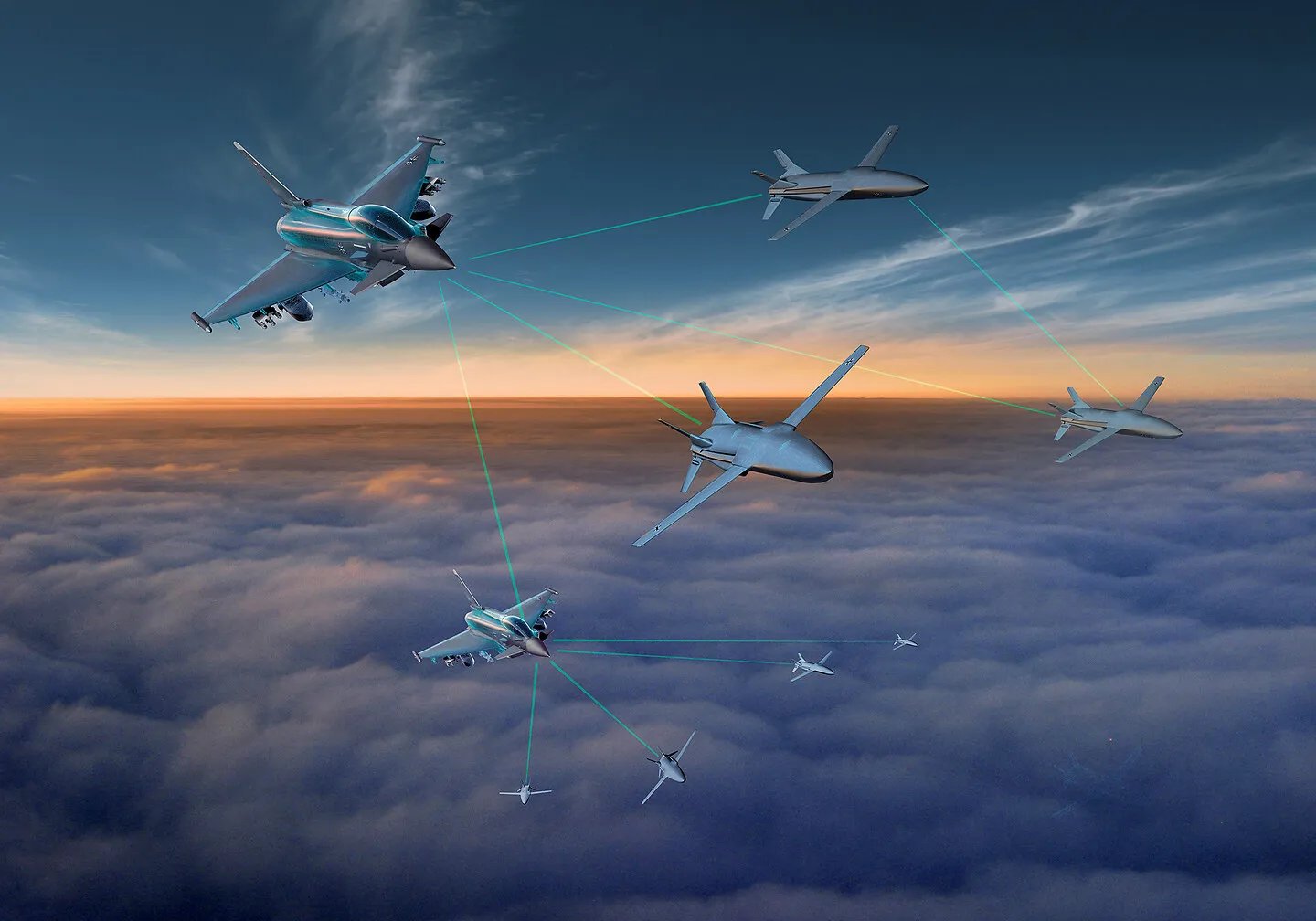
For Baykar and Leonardo, demonstrating that the Kizilelma can be commanded from an M-346 is an important achievement, but scaling that capability to different aircraft, larger formations, and increasingly autonomous mission execution will ultimately determine whether K-SWARM becomes an operational capability rather than simply a technology demonstrator. It should also be remembered that while the autonomy engine and AI agent are critical parts of an effective fighter-CCA teaming concept, it is unclear how developed these technologies are in the K-SWARM experiments. After all, just controlling the UCAV is one thing, but having the drone do much of the thinking while the pilot gives approvals and basic directions is the key. The companies have also proposed developing these technologies further to achieve ‘swarming,’ which presents an even greater challenge in this context.
However, with demand for affordable force multipliers continuing to grow and air forces looking for ways to increase combat mass without buying ever more expensive crewed fighters, a UCAV that can combine with a crewed combat aircraft further demonstrates the rapid pace of advances in Turkey’s burgeoning drone capabilities.
Contact the author: thomas@thewarzone.com
Loading comments…
Comments couldn’t be loaded. Please refresh the page.