
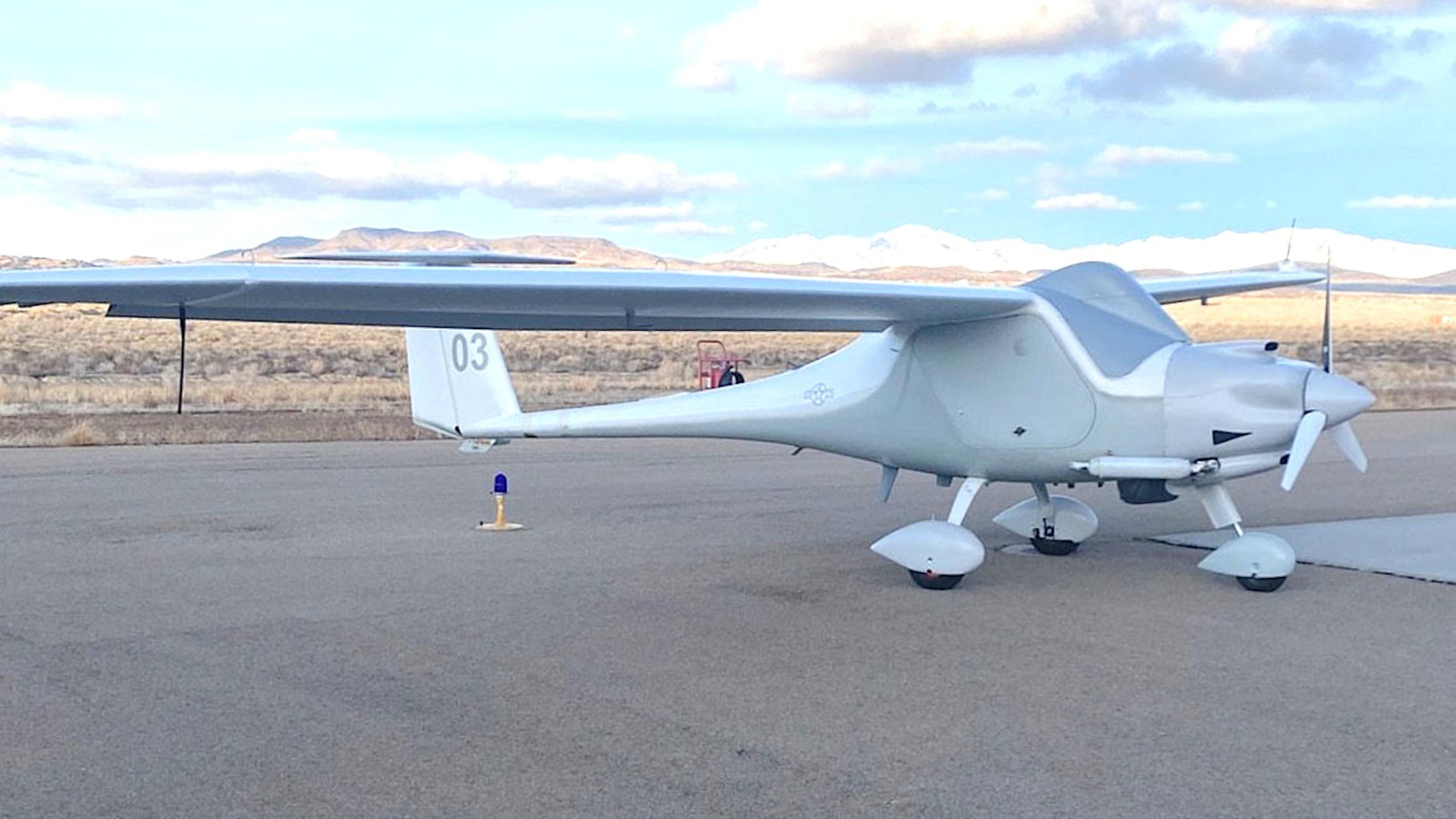
U.S. special operations Long Endurance Aircraft (LEA) surveillance drones, which are based on a popular civilian powered glider design, are set to gain the ability to launch smaller uncrewed aerial systems. An air-launched drone capability is a huge force multiplier for the ultra-quiet LEAs, with their innocuous outward appearance, that opens up the possibility of employing them in new ways, including using them to conduct kinetic strikes.
U.S. Special Operations Command’s (SOCOM) portion of the Pentagon’s recently released budget request for the 2026 Fiscal Year includes an update on plans for the LEA fleet. SOCOM is not asking for any additional money for the LEA program in the upcoming fiscal cycle and is also axing work on a successor LEA UAS Next Generation drone.

The plan now, instead, is to “realign previously requested FY 2025 funding from LEA UAS Next Generation aircraft development to Long Endurance Aircraft (LEA) UAS Payload Prototypes and Integration to procure and integrate Air Launched Effects (ALE) payloads and a communication system upgrade to the existing LEA platform,” according to the SOCOM budget documents.
SOCOM’s budget documents do not elaborate on what kinds of ALEs the LEAs will be able to launch. The U.S. military uses ALE as a catch-all for air-launched uncrewed aerial systems, which could be configured for intelligence, surveillance, and reconnaissance (ISR) missions, to conduct electronic warfare tasks, act as decoys, or even be employed as loitering munitions. The basic term “launched effects” now encompasses similar categories of drones that can also be launched from ground and maritime platforms.
Details about the current configuration of the LEAs, which are also now designated RQ-29s, are limited. It is unclear how many of the drones are in U.S. service today. TWZ was first to report in-depth on the government-owned but contractor-operated drones, which are derived from the Pipistrel Sinus powered glider, in 2021, after the loss of one in an accident in Iraq the preceding year. The LEA program dates back to at least 2013 and Technology Service Corporation (TSC) is the prime contractor.

“The LEA provides SOF [special operations forces] with relatively low-cost uncrewed aircraft family of systems to meet ISR requirements in austere and permissive environments for use in Irregular Warfare operations,” SOCOM’s 2026 Fiscal Year budget request offers as a basic description of the drones. Irregular warfare has historically included a number of lower-intensity mission sets, including counter-insurgency and counter-terrorism, as well as advising and assisting foreign forces, but which could also be applicable as components of a higher-end fight.
In a low-intensity context, ALEs could enhance the LEA’s existing capabilities by extending its sensor reach without having to directly fly over the target area, further reducing the chance of being detected and otherwise being vulnerable to enemy action. With their discreet appearance and very quiet nature, the LEAs are already ideal platforms for persistent surveillance in permissive environments, where they can help to establish the so-called “patterns of life” of specific individuals or small groups.
ALEs also open the door to more complex ISR operations, with a single LEA acting as a central communications relay node for smaller drones sent off into potentially multiple target areas along different vectors. An LEA could also dispatch ALEs to pursue targets departing the area where it is orbiting, allowing it to remain on station to monitor for additional developments. As an example, an LEA carrying ALEs while surveilling a house would offer valuable additional options if an individual of interest were to head off in a car or on a motorcycle. Without this added capability, a call would have to be made about whether to follow them or remain over the objective.
With ALEs configured for kinetic strikes, the LEAs would transform from purely ISR assets into discreet attackers, as well.
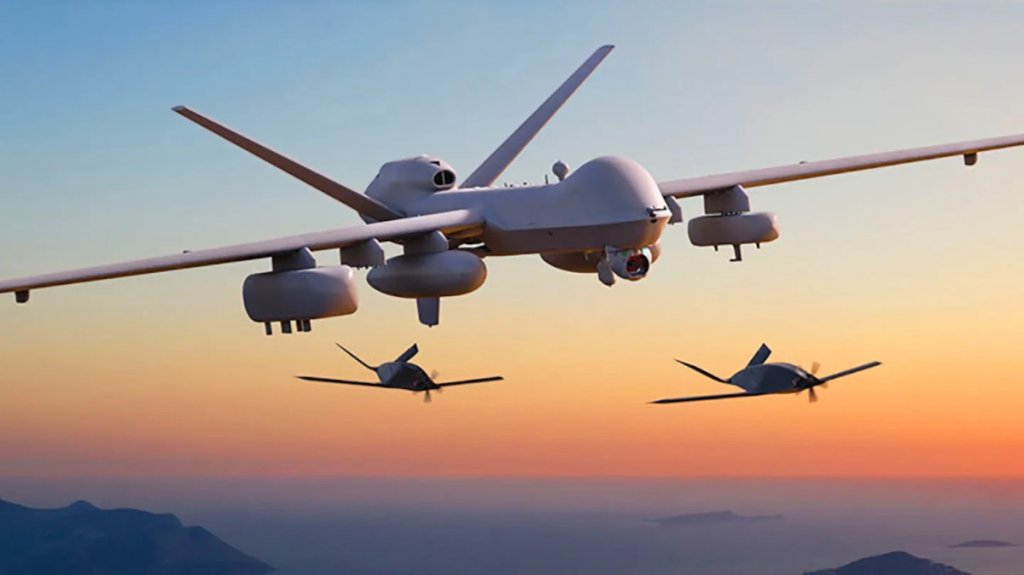
ALEs could open up further operational possibilities for the LEAs outside of low-intensity missions, as well. Air-launched drones have been very publicly pitched already as a way to help keep U.S. Army MQ-1C Gray Eagle and U.S. Air Force MQ-9 Reaper drones relevant at least on the sidelines of future higher-end operations. At the same time, those two services are both working to scale back their use of those drones, in part due to concerns about their limited survivability in larger-scale conflicts.
Last year, the potential emerged for a deployment of LEAs to support special operations forces in the Indo-Pacific region. The Pacific has been the focal point for a broad shift across the entire U.S. military away from counter-insurgency and other low-intensity operations toward preparing for potential high-end conflicts. However, TWZ noted at the time that the RQ-29s would still be most applicable for supporting ongoing counter-terrorism efforts and other missions in permissive airspace in this part of the world.
All of this comes amid larger questions that have emerged about the relevance of special operations aircraft, in general, including AC-130 gunships and SOCOM’s new OA-1K Skyraider II light attack aircraft, in a future centered on large-scale operations, such as a conflict with China. Special operations aviation assets, including crewed and uncrewed fixed-wing aircraft, as well as helicopters, had been heavily employed in largely permissive airspace over countries like Afghanistan and Iraq for decades during the Global War on Terror era. Those are the same environments that birthed the LEA program in the first place.

ALEs and other standoff capabilities are being pursued for the AC-130 and OA-1K to help them remain viable platforms going forward. In talking about the OA-1K, in particular, SOCOM and the Air Force have stressed that, while future high-end operations in the Pacific are now central to U.S. military planning, there will continue to be lower-intensity missions and a need for assets to support them. SOCOM has also been slowing its purchases of Skyraider IIs, though it insists the plan remains to buy a total of 75 of them eventually.
The video below shows a test of Leidos’ Black Arrow Small Cruise Missile (SCM), in development as a new standoff munition for the AC-130J Ghostrider gunship and potentially other platforms.

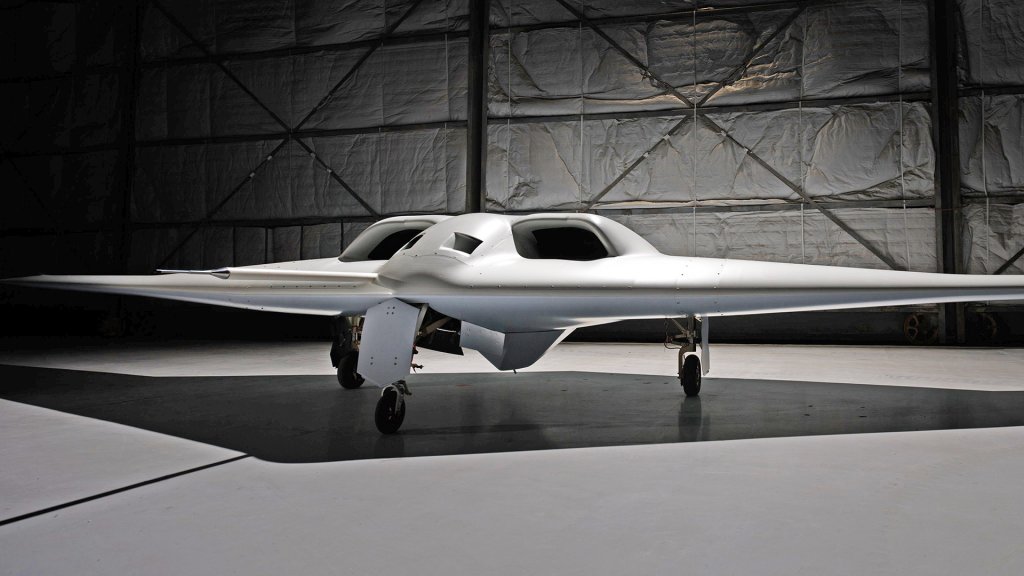
It’s also worth noting here that there have been a number of other ultra-quiet and long-endurance drone programs in recent years. This includes the Air Force’s Unmanned Long-endurance Tactical Reconnaissance Aircraft (ULTRA), a design very broadly similar to the LEA based on a commercial sport glider, and that has also been employed in operations in the Middle East and reportedly over Afghanistan. There are also efforts more tailored to operations in higher-threat environments, like the Defense Advanced Research Projects Agency’s (DARPA) XRQ-73A Series Hybrid Electric Propulsion AiRcraft Demonstration (SHEPARD) project and the Air Force’s GHOST program. The XRQ-73A design evolved directly from an earlier drone called the XRQ-72A Great Horned Owl that the U.S. Intelligence Community developed in cooperation with the Air Force. This is also just what we know about and doesn’t account for any additional relevant developments ongoing in the classified realm.
Regardless of how SOCOM moves to employ its LEA fleet going forward, the drones are now set to get a major boost in capability from being able to launch smaller uncrewed aerial systems.
Contact the author: joe@twz.com
Loading comments…
Comments couldn’t be loaded. Please refresh the page.