
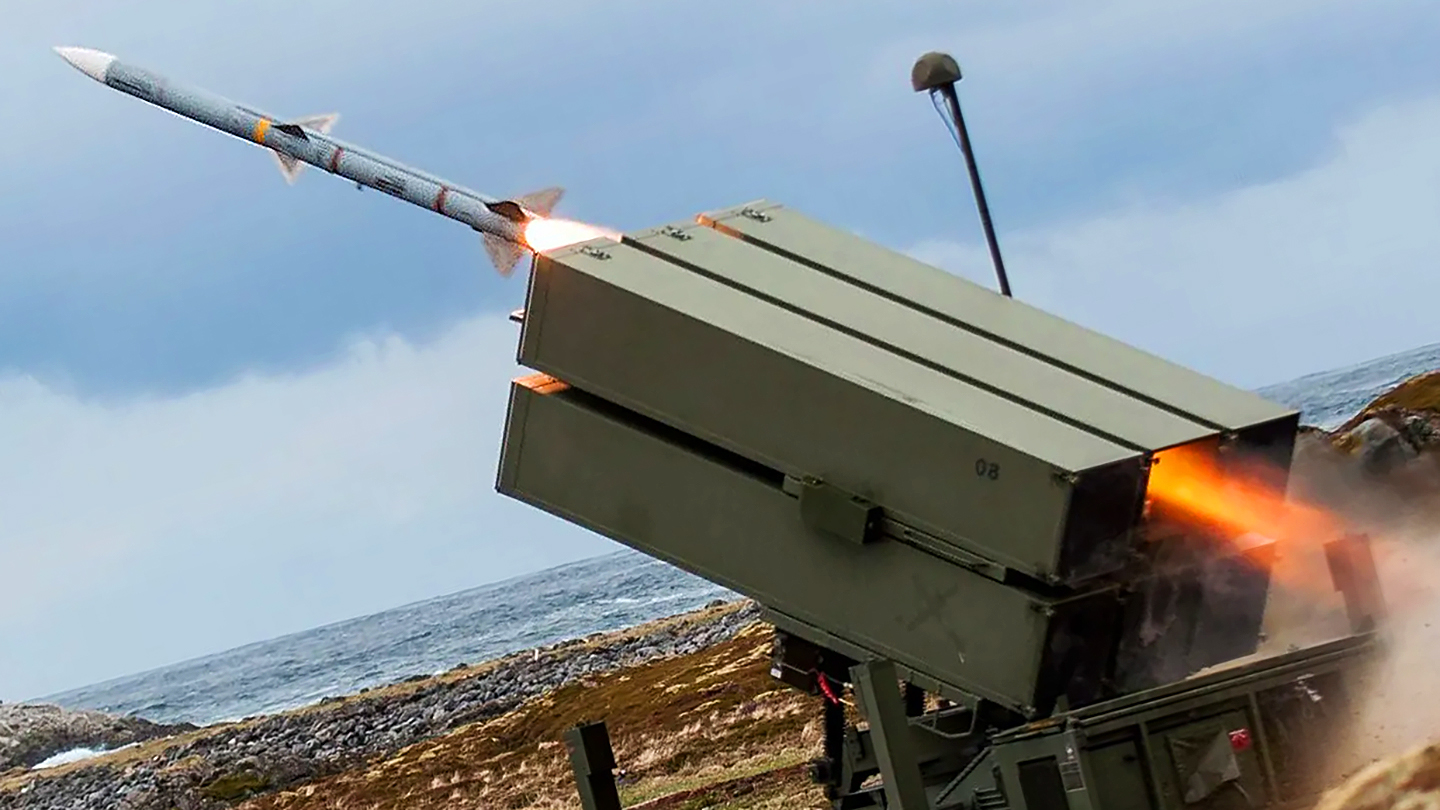
After decades in which Egypt was denied access to U.S.-made AIM-120 Advanced Medium-Range Air-to-Air Missiles (AMRAAM), Washington has finally cleared the way for the country to receive the weapons. The sale of the missiles to Cairo is part of a proposed package for National Advanced Surface-to-Air Missile Systems, or NASAMS, although it’s possible the AMRAAMs might also end up on Egyptian F-16s, which have so far relied upon less-capable missiles for air defense missions. NASAMS, a product of Norway’s Kongsberg Defense and Raytheon, currently protects the U.S. Capital Region, over a dozen countries around the globe, and Ukraine has fielded the system to great effect.
Yesterday, the U.S. Defense Security Cooperation Agency (DSCA) announced that the State Department had approved a possible Foreign Military Sale of NASAMS to Egypt. The total package could be worth as much as $4.67 billion. It includes 100 AMRAAM-ER (Extended Range) missiles, 100 AIM-120C-8 AMRAAMs, 600 AIM-9X Sidewinder Block II missiles, four AN/MPQ-64F1 Sentinel radar systems, among other equipment.
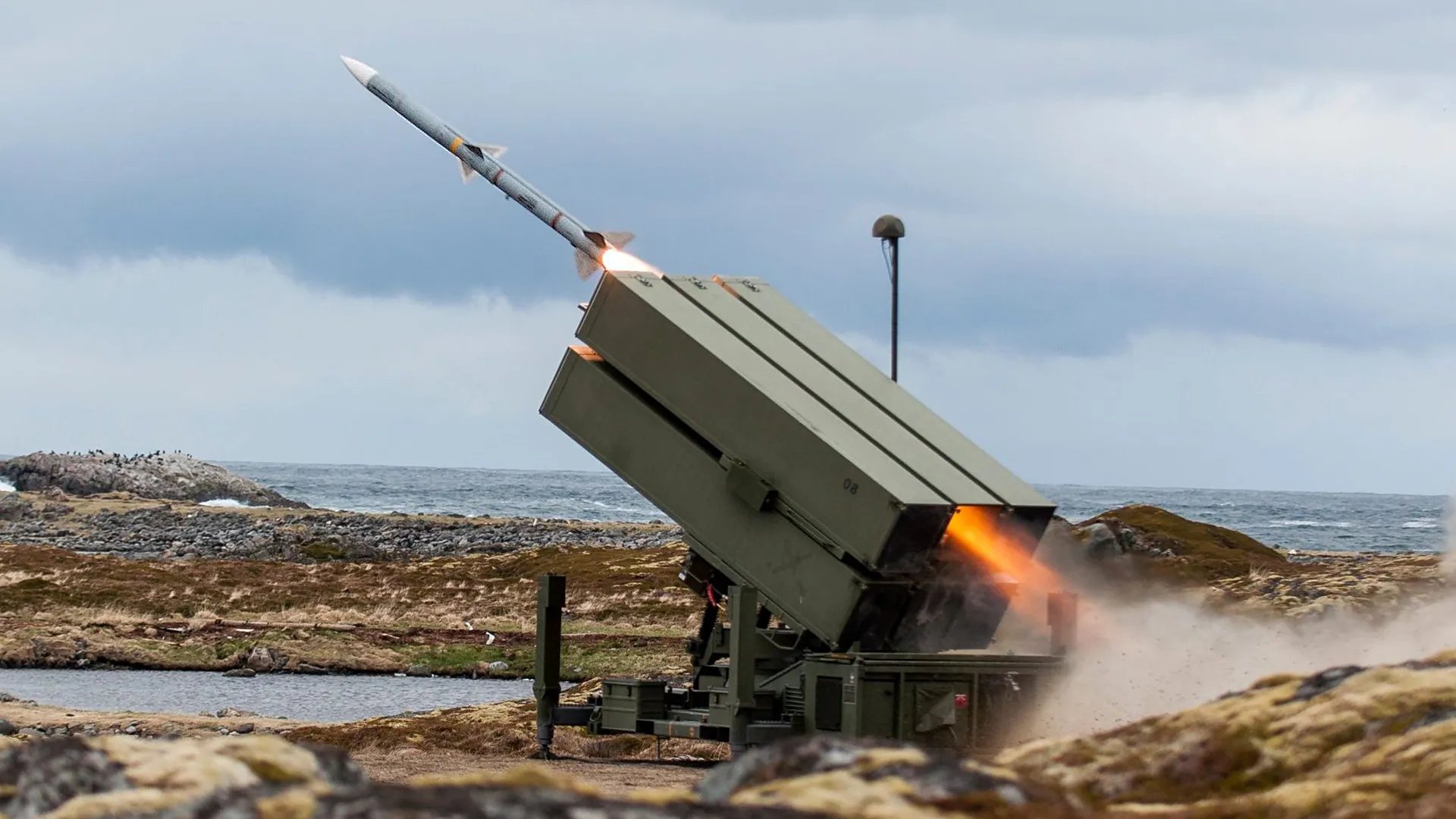
As evidenced by the proposed package, NASAMS is able to fire a range of missiles. The AMRAAM-ER was designed specifically for NASAMS, combining elements of the RIM-162 Evolved Sea Sparrow Missile (ESSM) and newer versions of the AIM-120 AMRAAM. The resulting missile offers a significant boost in maximum range and engagement altitude over a standard AIM-120 fired from a NASAMS launcher. You can read more about the AMRAAM-ER and its capabilities here. Overall, NASAMS would provide Egypt with a major overhaul of its ground-based air defenses, especially protecting against low-flying cruise missiles and drones, which are challenging targets to reliably intercept.
![Raytheon - AMRAAM-ER Missile Testing [720p] thumbnail](https://i.ytimg.com/vi/aj26G5uZ6Do/hqdefault.jpg)
NASAMS is also able to fire infrared-homing AIM-9X and IRIS-T missiles. Although only the former is included for Egypt, it should be noted that the country already operates the IRIS-T in its surface-launched form, which would allow both systems to draw from a common stock of effectors.
Then there is the AIM-120C-8, which is the exact same type of AIM-120 AMRAAM used around the world by fighter aircraft in air-to-air applications.
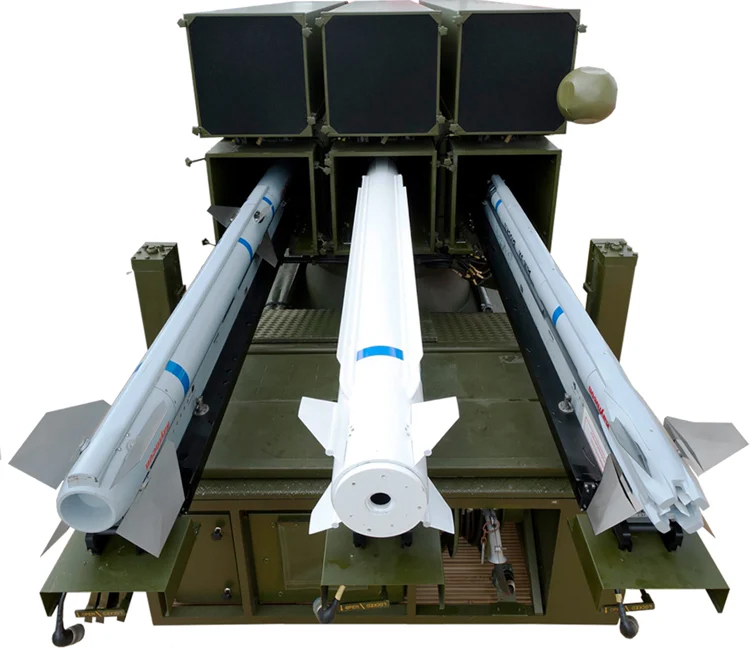
Notably, there is no requirement for a special AMRAAM variant or major modifications to existing missiles when used in NASAMS. For many operators, this brings the advantage of providing NASAMS with ‘effectors’ direct from the existing stocks of missiles used by fighters.
The case of Egypt is rather different, since it has never previously been provided with AIM-120 AMRAAMs for air-launched applications. Potentially, however, the AIM-120C-8 AMRAAMs, once procured, could find their way onto Egyptian Air Force F-16s.
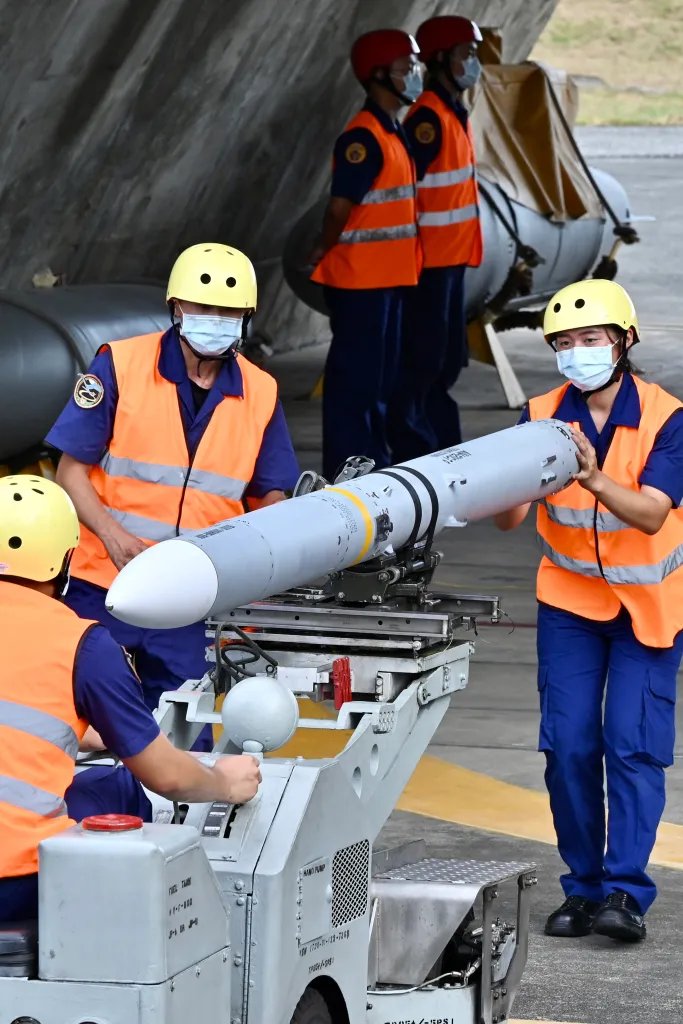
Unusually among F-16 operators, the Egyptian Air Force has always relied on the older AIM-7 Sparrow, with semi-active radar homing, for its medium-range air-to-air missiles needs, since the United States refused to deliver AMRAAM. Later on, a similar situation arose with Iraq, to which the United States sold (fairly advanced) F-16s with Sparrows instead of AMRAAMs.
The Egyptian Air Force is the fourth-largest Viper operator in the world, having received a total of 220 F-16s, although orders and deliveries have, at times, also been interrupted by political considerations. As the most numerically important fighter in the inventory, the lack of AMRAAMs makes a significant difference to the F-16’s capabilities.
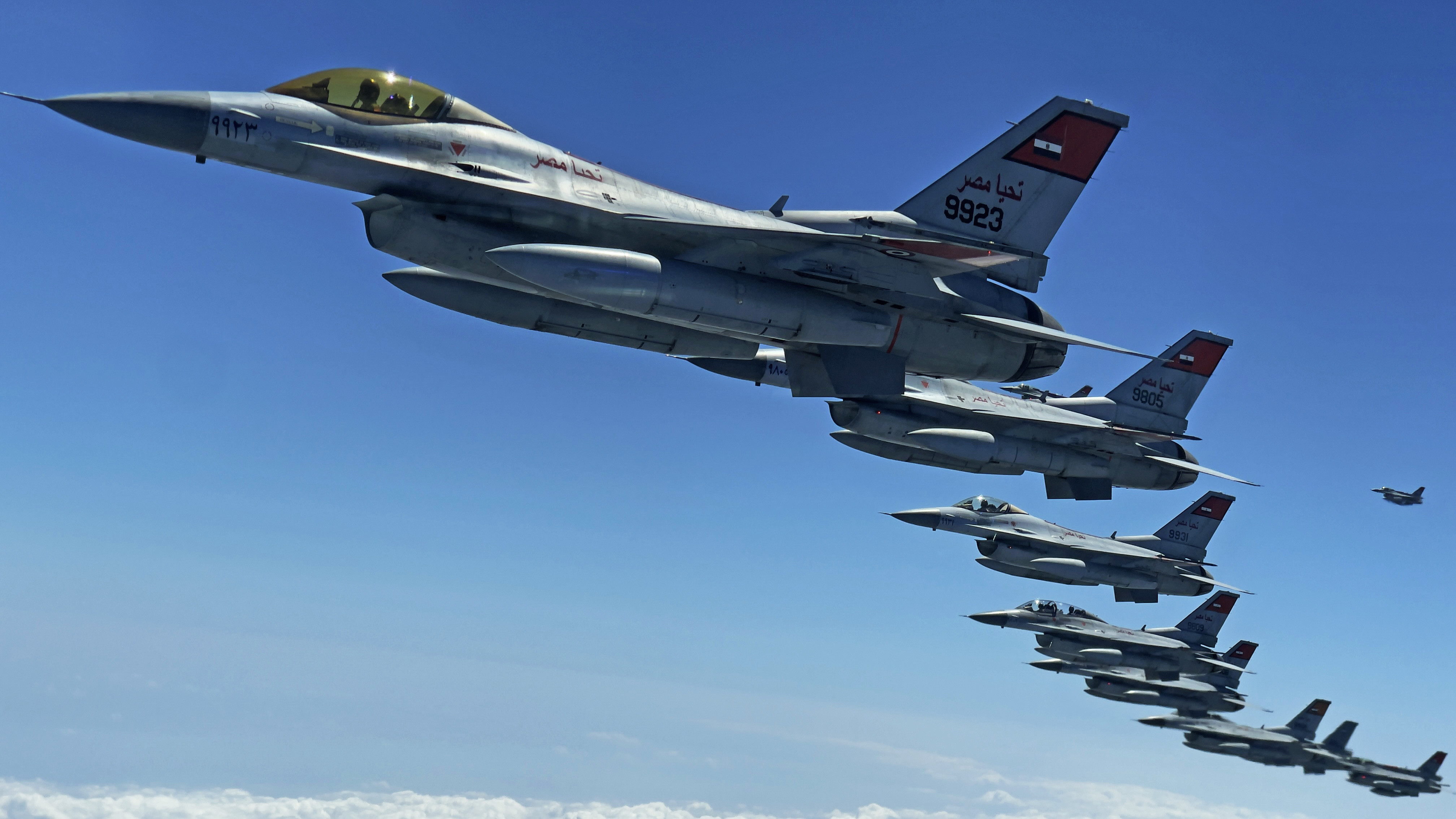
Egypt’s path to becoming an F-16 customer started with the signing of a peace agreement with Israel in 1979. This meant that the country was now able to procure advanced weapons systems from the United States.
It’s unclear which, if any, Egyptian F-16s are capable of using AMRAAM, but the capability is otherwise standard on F-16C/D models from Block 25 onward and has also been retrofitted to earlier jets once modernized, for example under the Mid-Life Update (MLU) program.
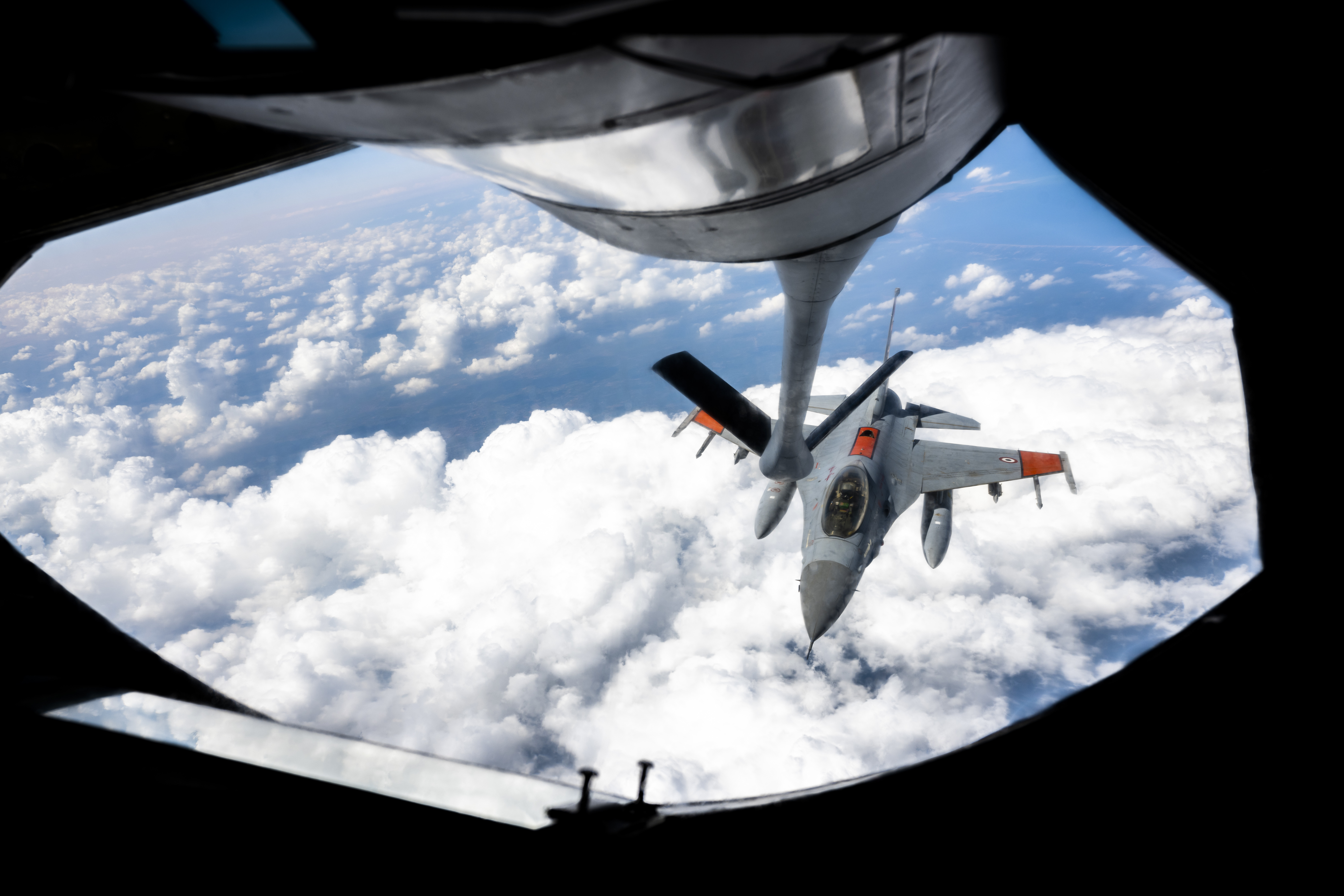
Potentially, the United States might not want Egypt to arm its F-16s with AMRAAM, but with the decision having been taken to lift previous restrictions on the missile, that seems less likely. At the same time, the AIM-9X missiles also included in the NASAMS package would potentially be compatible with Egyptian F-16s, too.
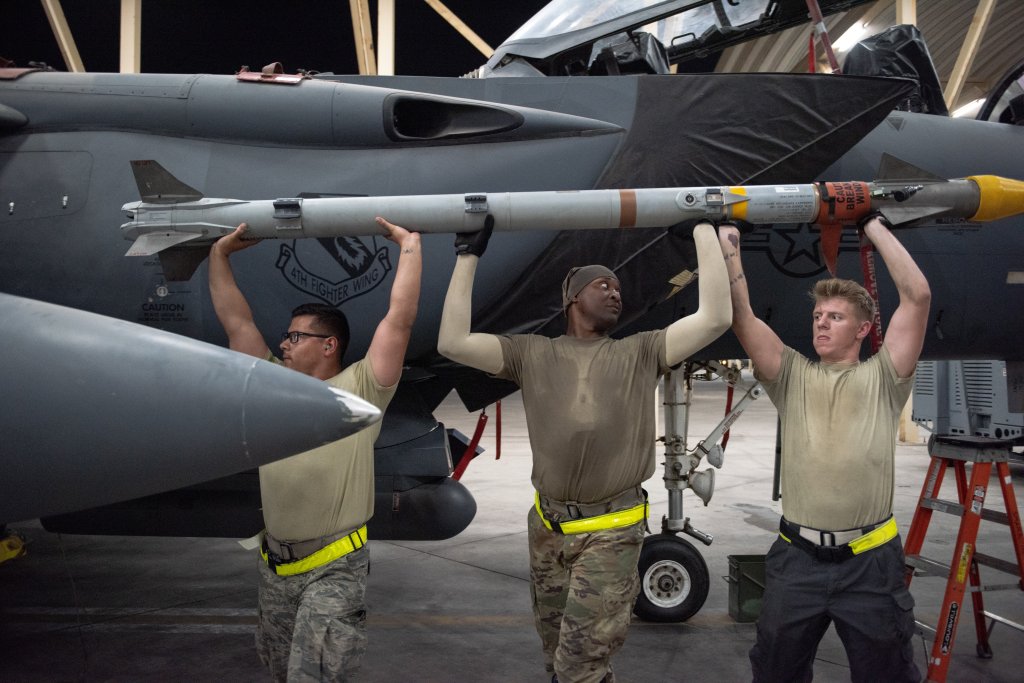
In its statement, the DSCA says that the weapons included in the NASAMS package “will support the foreign policy goals and national security objectives of the United States by improving the security of a major non-NATO ally that is a force for political stability and economic progress in the Middle East.”
“The proposed sale will improve Egypt’s capability to meet current and future threats by improving its ability to detect various air threats,” the DSCA adds. “The proposed sale of this equipment and support will not alter the basic military balance in the region.”
Should AMRAAM find its way onto Egyptian F-16s, it would end an unusual situation that was driven by politics.
Critically, U.S. law ensures that Israel must retain a military advantage over its neighbors, known as the qualitative military edge (QME). How the QME is preserved remains open to interpretation, although with a long history of past conflict between Egypt and Israel, it was a critical factor in barring the delivery of AMRAAM to Cairo.
Therefore, for decades now, the air-to-air weapons of Egypt’s F-16s have been stuck in the past. Their primary air defense armament of AIM-9L/M Sidewinders and AIM-7M Sparrows is essentially the same as found on a U.S. Air Force tactical fighter in the late 1980s. In particular, the jets are hamstrung by the Sparrow, which relies on semi-active radar homing and thus can’t be used in the kinds of ‘fire and forget’ engagements that AMRAAM is designed for.
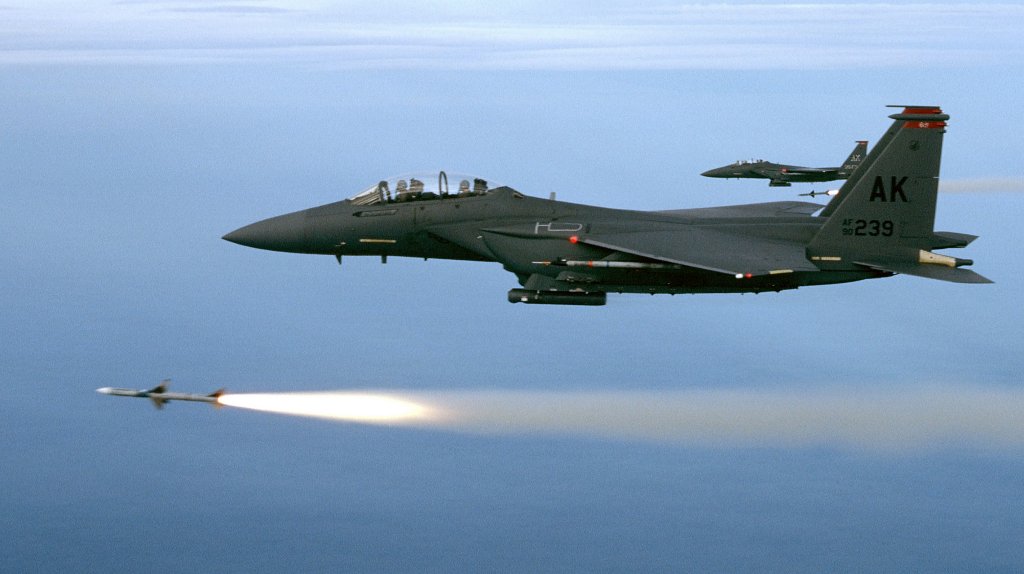
Relying on Sparrow makes the Egyptian F-16 far less capable of engaging multiple aerial targets simultaneously, and the missile also lacks the datalink found on its more advanced versions, starting with the AIM-120C-5.
In practice, the vintage air-to-air weaponry provided to the Egyptian F-16 fleet hasn’t prevented it from carrying out combat missions, which have mainly focused on counterinsurgency missions, notably against so-called Islamic State.
Providing the F-16s with AMRAAM (and AIM-9X) would greatly increase their ability to perform air defense missions against higher-end threats.
It’s also notable that, ahead of the NASAMS proposal, the United States had been making efforts to direct Cairo’s defense procurement, especially in relation to fighter jets.
Russia completed 24 Su-35 Flankers that were once destined for Egypt before the threat of U.S. sanctions and a teased offer of F-15s put an end to that sale. In particular, Washington had said it would put sanctions on Cairo under the Countering America’s Adversaries Through Sanctions Act (CAATSA). Despite this, production of the Su-35s continued at Komsomolsk-on-Amur. After many reports that the Flankers would be transferred to Iran, evidence emerged earlier this year of at least some having been delivered to Algeria.
Egypt has pressed ahead with the procurement of MiG-29M/M2 Fulcrums from Russia (at least one of which was lost on the ground and others damaged or captured during combat operations in Sudan) and Dassault Rafales from France.
More recently, there have also been reports that it might turn to China to buy Chengdu J-10 fighters, which some commentators have suggested would be used to replace older F-16s. With Russia now judged a less reliable (and politically acceptable) partner, China is very likely eyeing the possibility of replacing it as a major source of arms for Egypt.
Perhaps, Washington’s approval of NASAMS for Egypt heralds a broader change in stance. Certainly, it reflects a willingness to provide Cairo with high-end weapons that were previously off the table. Should Egypt seek to maximize the potential of its F-16s, then arming them with AMRAAMs (and AIM-9X) would be an obvious way of doing that, provided that the U.S. supports that goal. If not, the potential delivery of NASAMS already represents a major breakthrough in the provision of advanced U.S.-made weapons to Egypt, with the offer of one of the most capable air defense systems in its class.
Contact the author: thomas@thewarzone.com
Loading comments…
Comments couldn’t be loaded. Please refresh the page.