
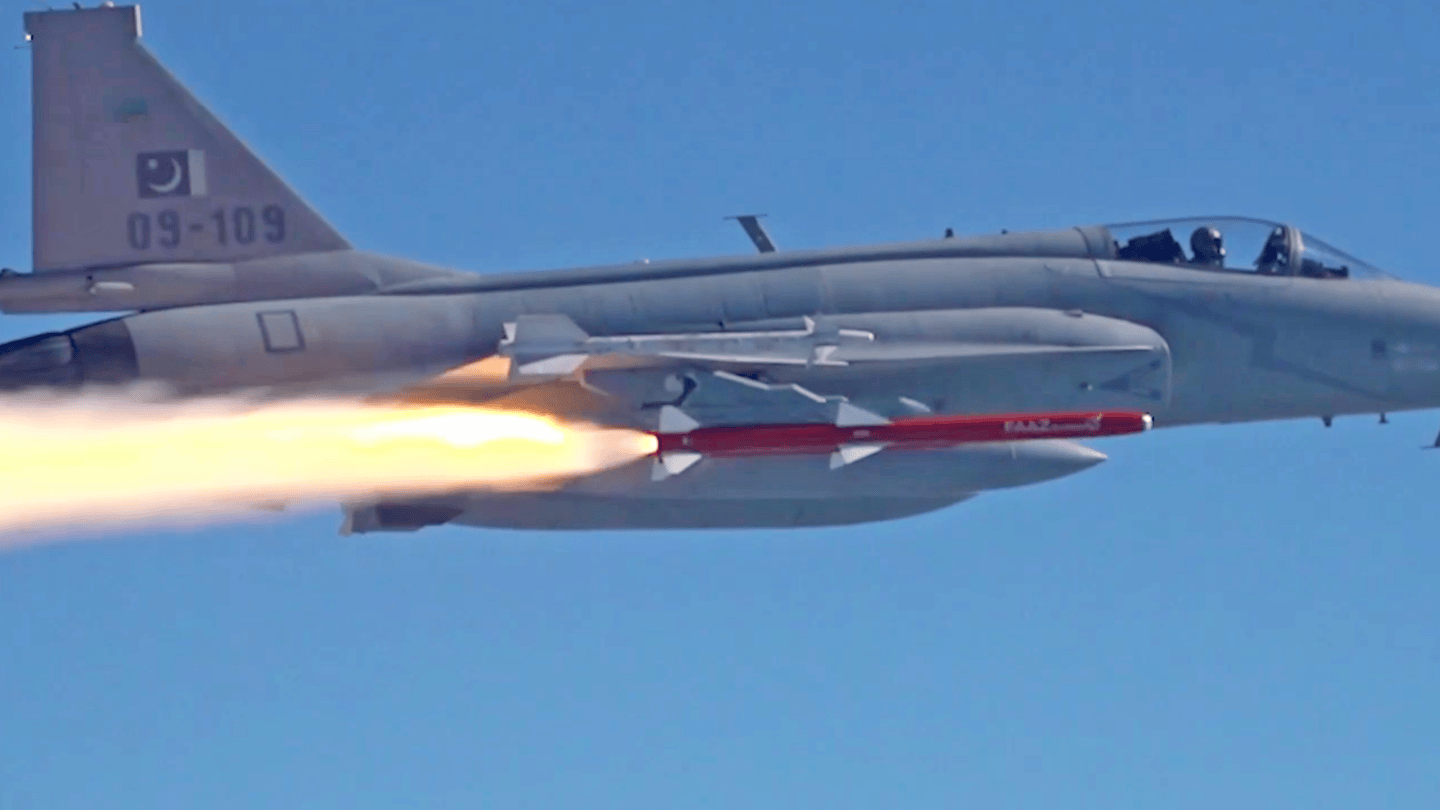
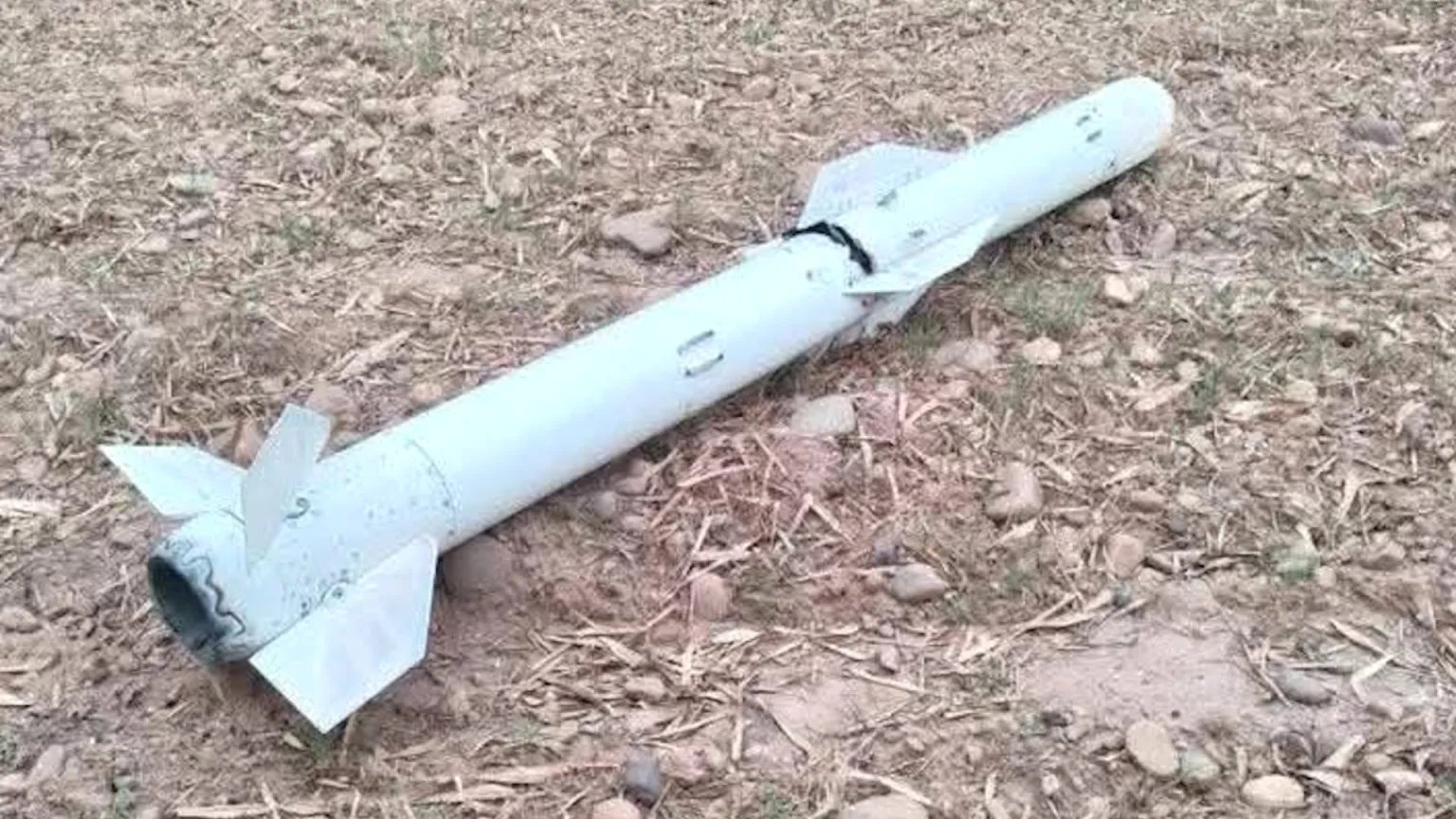
Pakistan has successfully flight-tested its first indigenously developed air-to-air missile, marking a significant milestone in the country’s efforts to establish its own advanced aerial weapons industry. The test of the Fa’az missile, announced by the Pakistani military alongside video footage of the event, puts the country among a relatively small group of nations developing their own air-to-air missile capabilities.
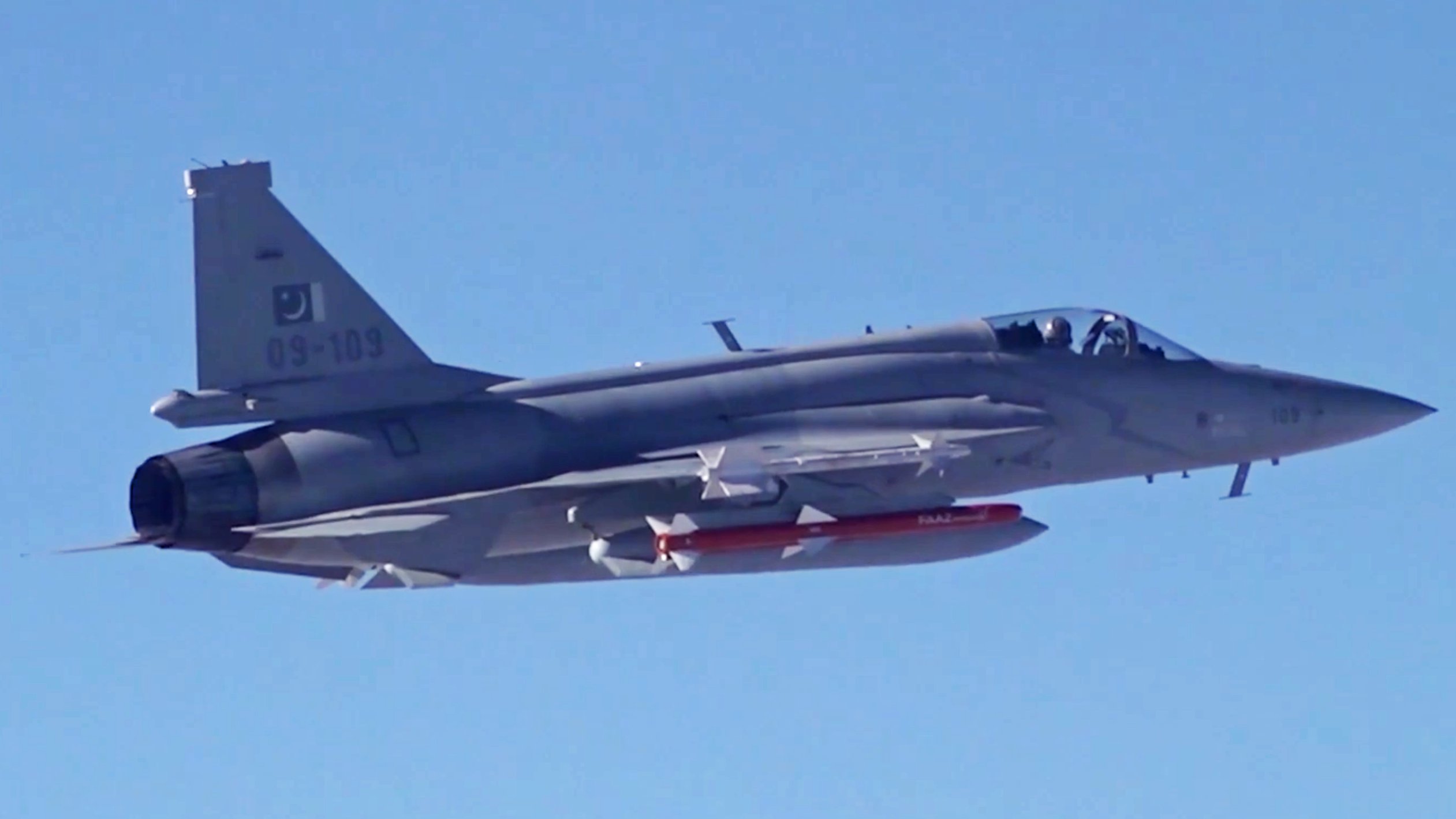
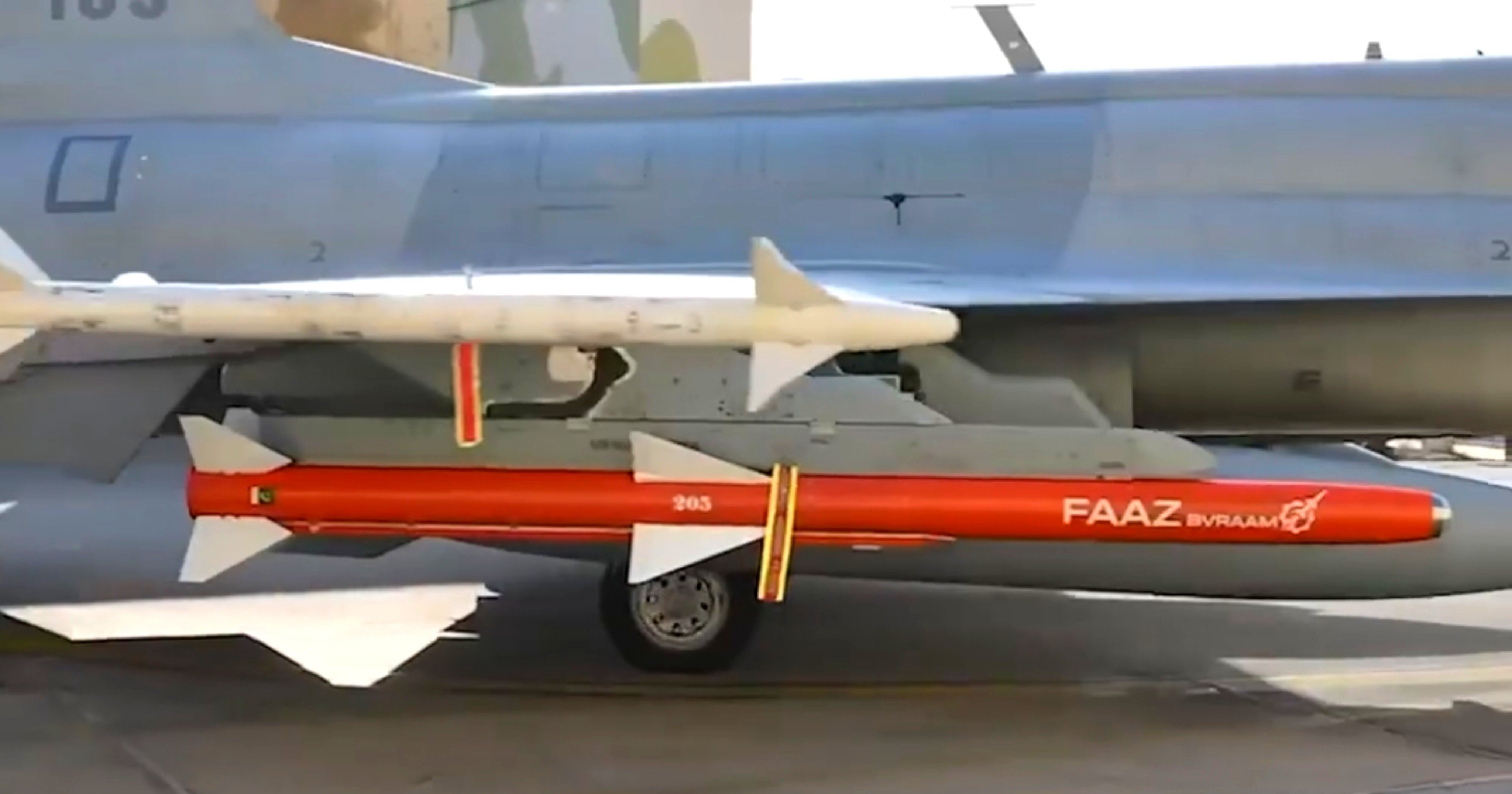
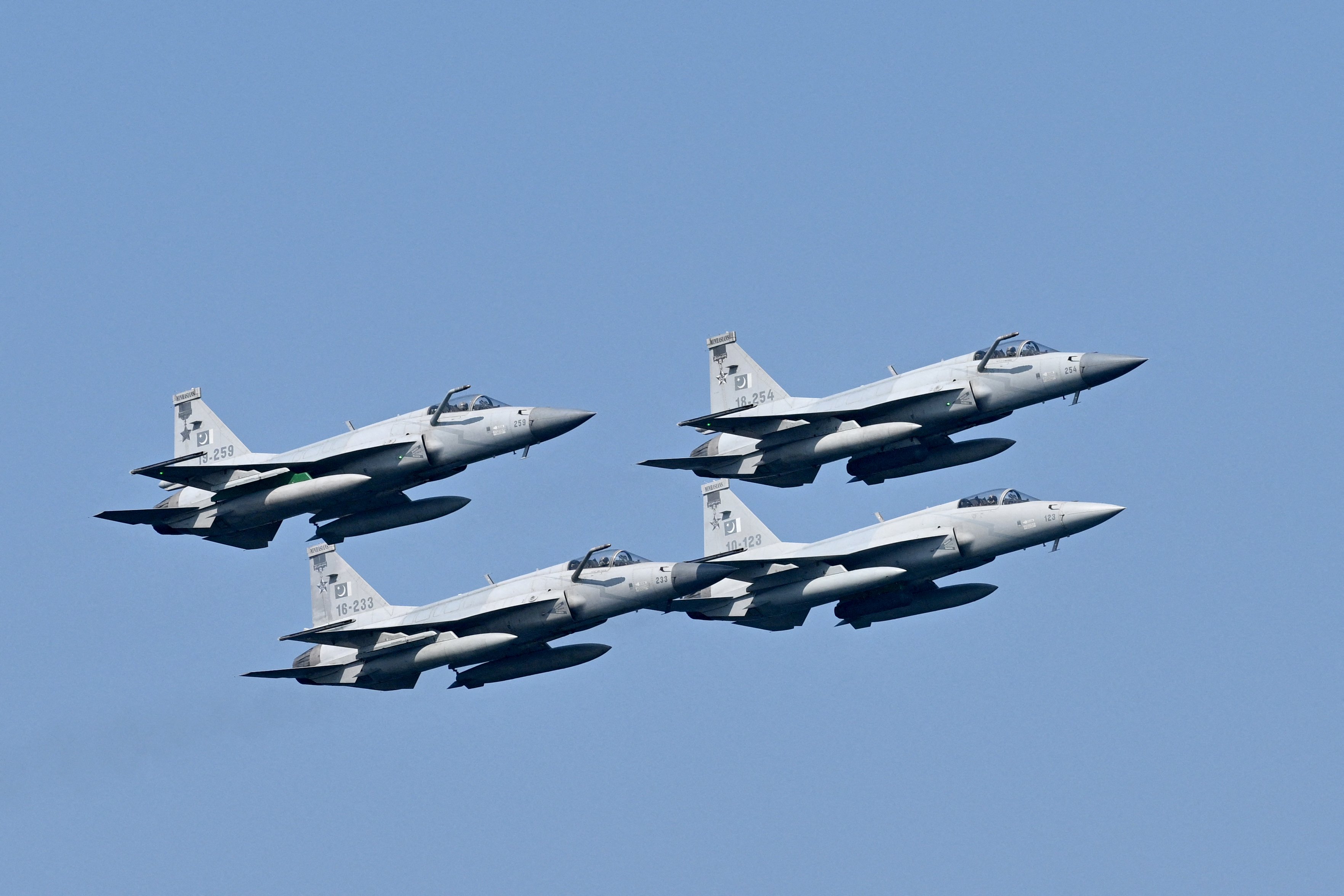
Pakistan’s military announced the successful test on November 3, describing Fa’az (Urdu for Victorious) as an indigenous weapon equipped with an advanced terminal guidance system capable of engaging aerial targets at longer ranges. The accompanying footage shows the missile being launched from a pylon under the wing of a JF-17 Thunder fighter. Importantly, the weapon visible in the video is the Fa’az-IIR, the imaging infrared (IIR) version of the missile, rather than the separately developed active radar-guided Fa’az-RF variant.
Senior Pakistani military officers, along with scientists and engineers involved in the program, witnessed the event. The country’s senior civilian and military leadership subsequently congratulated those involved.
The Fa’az program has been publicly known for several years. Pakistan’s state-owned Global Industrial & Defense Solutions (GIDS) displayed mockups of two variants of the missile at the International Defense Industry Fair (IDEF) in Turkey back in 2023.
These comprised the Fa’az-RF, an active radar-guided missile, and the Fa’az-IIR, which features an IIR seeker. At the time, GIDS described both as medium-range air-to-air missiles with advertised ranges exceeding 100 kilometers (62 miles) and maximum speeds of approximately Mach 3.5. The company also advertised seeker detection ranges of 25 kilometers for the radar-guided version and 40 kilometers for the infrared-guided variant. As always, such figures should be treated as manufacturer specifications, under optimum conditions at best, or inflated at worst. In an operational context, they will vary greatly depending on the type of engagement and the energy and altitude state of the launching aircraft.
Unlike an active radar-guided weapon, an imaging infrared missile relies on the target’s thermal signature for terminal guidance. To achieve engagements at distances of 100 kilometers or more would involve the launching aircraft providing initial targeting information, with the missile using inertial navigation and potentially datalink updates to travel toward a predicted intercept area before activating its infrared seeker for terminal acquisition. This is known as lock-on after launch (LOAL), an approach also used by other beyond-visual-range infrared missile designs.
Speaking to TWZ, Douglas Barrie, senior fellow for military aerospace at the International Institute for Strategic Studies (IISS) research institute in London, raised the possibility — so far unconfirmed — that the seekers used in the Fa’az missiles could well have been supplied by China.
“My assumption with the Chinese imaging infrared seeker is that this is good technology,” Barrie said. “If it’s like everything else China is now doing in the guided weapons world, it’s likely up there with the best. Even a detuned version is going to be a good sensor.”
The Fa’az design has previously been compared with China’s SD-10/PL-12 air-to-air missile, also used by Pakistan. GIDS has maintained that it developed its products locally and owns the associated intellectual property rights. The extent of any technological influence from existing foreign missile designs remains unclear, but China and Pakistan already have a very close military relationship.

With that in mind, the program also has important implications for the Sino-Pakistani JF-17 Thunder, which is central to Pakistan’s efforts to develop a more self-reliant combat aviation industry. An indigenous air-to-air missile could give the Pakistan Air Force greater flexibility in integrating, upgrading, and sustaining its fighter weapons inventory without depending entirely on foreign suppliers.
There is also an interesting parallel between Fa’az and the JF-17 itself. The fighter was developed through a partnership with China, giving Pakistan a pathway to build up its own aerospace design and production capabilities. Fa’az could represent a similar progression in the weapons arena, particularly if its development draws on earlier Chinese missile technology while establishing a domestic design and production capability.
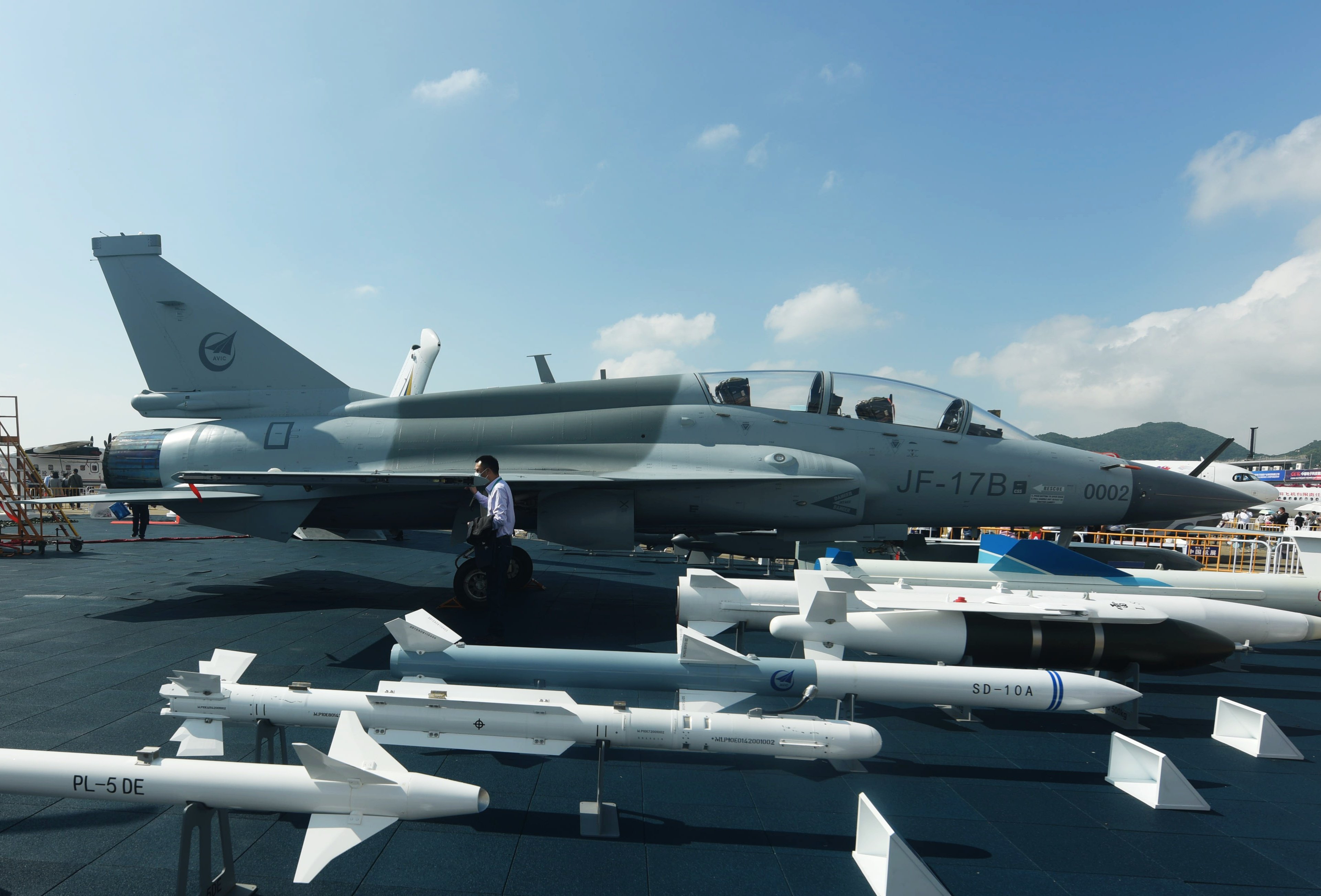
Pakistan is not starting from scratch when it comes to advanced air-to-air weapons. The Pakistan Air Force already operates a range of imported systems, including China’s very capable PL-15E, an export version of the PL-15 beyond-visual-range air-to-air missile. The weapon arms both its J-10C fighters and JF-17 Block III jets. Pakistan’s F-16s are meanwhile armed with the American-made AIM-120 Advanced Medium-Range Air-to-Air Missile (AMRAAM), although the use of these weapons is reportedly subject to U.S. restrictions.
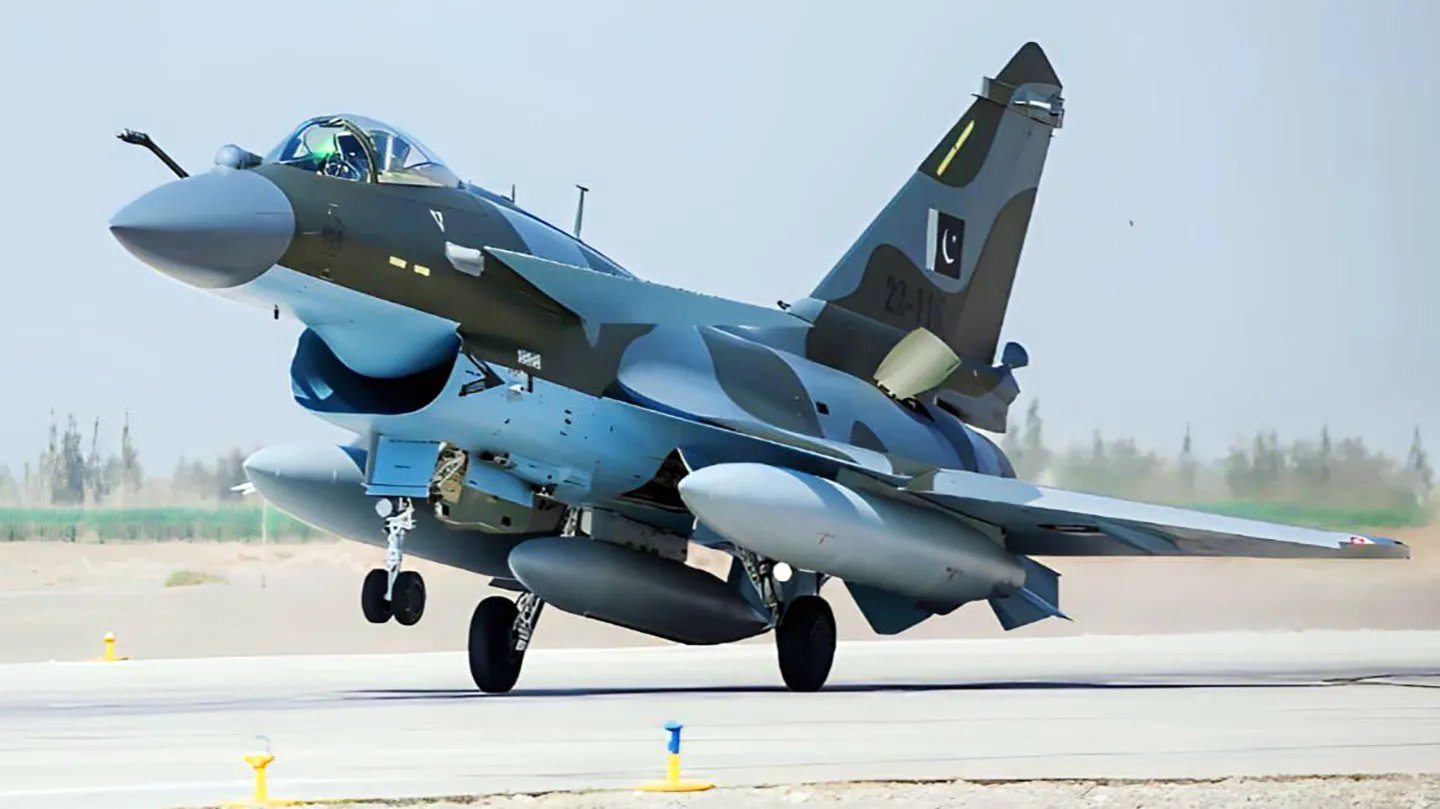
You can read all about the air-to-air missiles currently fielded by the Pakistan Air Force in this previous TWZ article.
As for the PL-15E, this weapon features an active electronically scanned array (AESA) radar seeker and a two-way datalink, with a published maximum range of around 145 kilometers (90 miles). Pakistan was the first export customer for the missile, which attracted considerable attention following its use during the May 2025 India-Pakistan air conflict. Although the precise outcomes of the reported engagements remain disputed, Beijing has sought to capitalize on the missile’s apparent battlefield performance as a showcase for its advanced weapons exports.
In an operational context, the Fa’az-IIR in particular could be a compelling complement to the PL-15E. In Soviet and Russian doctrine, the launch of a radar-guided air-to-air missile would typically be followed immediately by the pilot firing an infrared-guided missile against the same target, increasing the probability of a kill and complicating any countermeasures that might be employed. The same could apply in the context of the PL-15E and the Fa’az-IIR. Infrared guidance brings other advantages, too, including its capability against low-observable targets that might evade a radar lock-on. This is especially important now that stealthy targets are proliferating. Paired with an infrared search and track (IRST) system for targeting, and other networked data if available, a missile of this kind offers a deadly capability against stealth targets.
Just as importantly, the Fa’az program is about proving Pakistan’s ability to develop and eventually produce this critical class of weapon domestically. Possessing the industrial and technical expertise to design and manufacture an advanced air-to-air missile is significant, and would also provide Islamabad with a compelling export product.
The development comes as air-to-air missile capabilities become increasingly important to the regional military balance. India has its indigenous Astra beyond-visual-range air-to-air missile, while China has developed increasingly sophisticated weapons, including the PL-15. Establishing its own missile program gives Pakistan another avenue to sustain and develop its air combat capabilities.
Pakistan has not released detailed information about the test, including the engagement parameters or performance against an aerial target. Nor has it indicated when the Fa’az-IIR might enter operational service or provided an update on the development status of the radar-guided Fa’az-RF.
Nevertheless, the test marks an important step for Pakistan’s defense industry, taking an indigenous air-to-air missile program beyond exhibition mockups and into flight testing. It is a significant development in the country’s efforts to establish a domestic air-to-air weapons capability and join a relatively small group of countries with the expertise to develop such weapons.
Contact the author: thomas@thewarzone.com
Loading comments…
Comments couldn’t be loaded. Please refresh the page.