

Aurora Flight Sciences is now putting the wings on the X-65 experimental drone. This is an important step forward for the X-65, which is designed to maneuver with bursts of air rather than traditional control surfaces. This is technology that could have significant implications for future military and civilian aircraft developments, especially when it comes to stealthy designs.
The X-65 is being developed under the Defense Advanced Research Projects Agency’s (DARPA) Control of Revolutionary Aircraft with Novel Effectors (CRANE) program, which kicked off back in 2020. DARPA subsequently chose Aurora Flight Sciences, a subsidiary of Boeing, to proceed alone with the development of its design. Aurora moved into the latest phase of the program in 2024 and is now targeting a first flight next year. CRANE has suffered several delays and cost growth over the years, which we will come back to later on.
“The wings have arrived — the next big milestone for X‑65!” Aurora Flight Sciences wrote in a post on its official account on X today. “Built at our WV [West Virginia] facility, the triangular wings enable active flow control testing across multiple sweeps. Integration is underway in VA as we push toward first flight for the @DARPA CRANE program.”
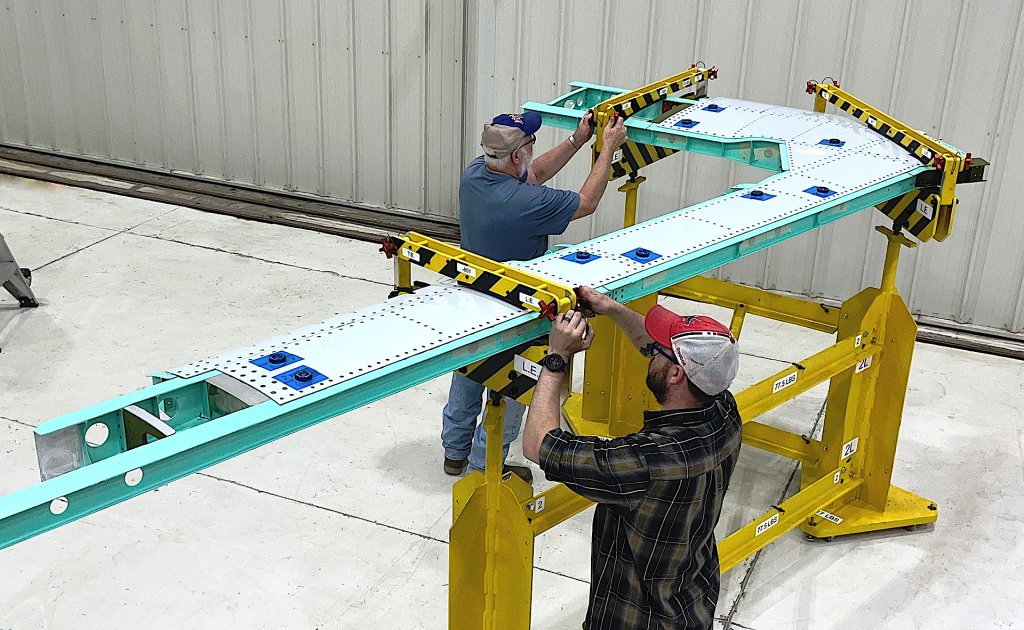
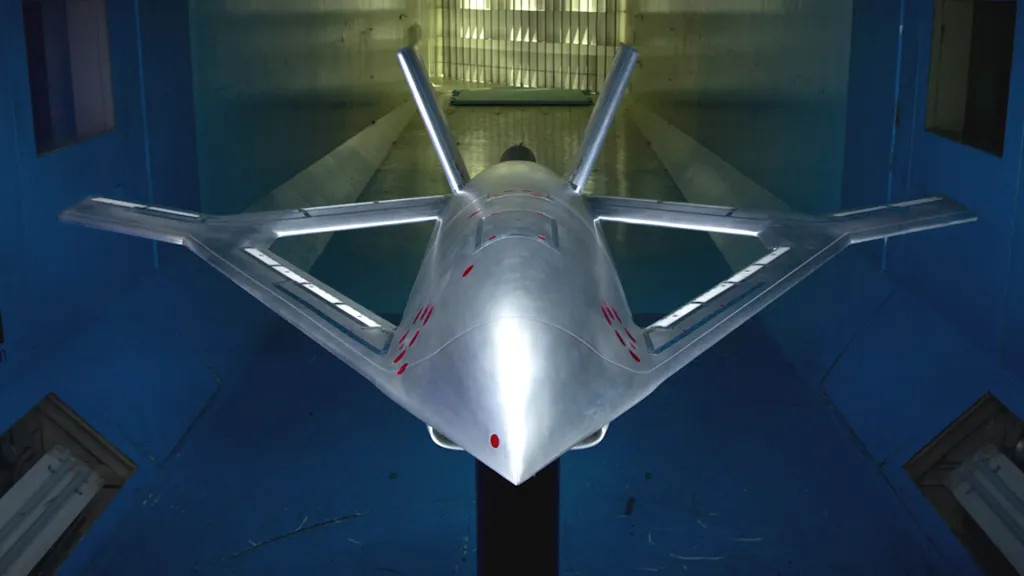
In November 2025, Aurora had also announced progress in construction of the central fuselage. The company has also done wind tunnel testing of subscale models, as well as digital modeling in past phases of CRANE.
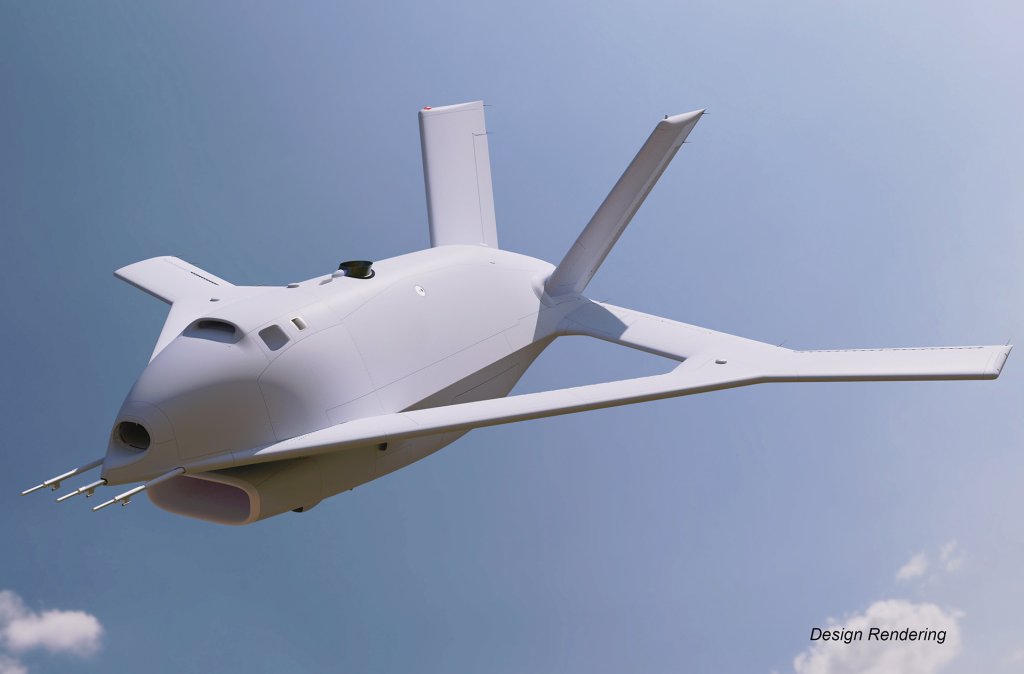
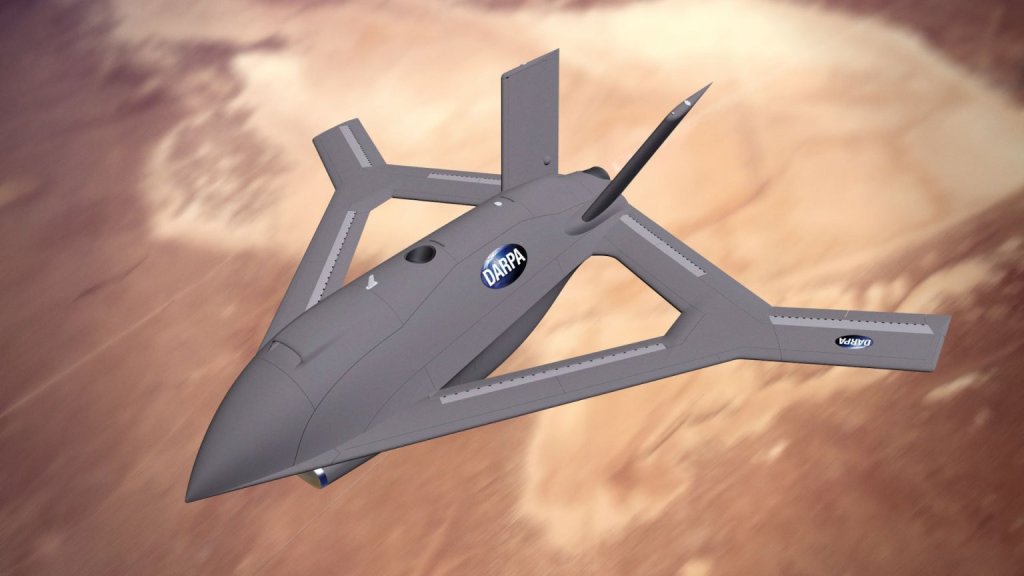
The X-65 has a so-called Co-Planar Joined Wing (CJW) planform that includes two sets of wings attached that merge together at the tips, creating the triangular shape on either side. They also have small extensions that extend from those tips, giving the drone a 30-foot wingspan. The design also has a twin vertical tail arrangement.
There is a chin air intake under the forward fuselage, as well as a single exhaust. Renderings have shown that the design will have on t op of the forward end of the fuselage. At the time of writing, neither Aurora nor DAPRA appear to have disclosed details about the drone’s main propulsion arrangement. The X-65 is said to have a gross weight of approximately 7,000 pounds.
As noted, the most intrigueing aspect of the X-65 is the banks of active flow control (AFC) “effectors” that use bursts of highly pressurized air to roll, pitch, and yaw. Traditionally, fixed-wing aircraft use a mixture of flaps, rudders, and other surfaces that physically move to maneuver in flight.
“The AFC system supplies pressurized air to fourteen AFC effectors embedded across all flying surfaces,” according to a press release Aurora put out last year. “The triangular wing design enables testing across multiple wing sweeps and is modular with replaceable outboard wings and swappable AFC effectors to allow for future testing of additional AFC designs.”
“The X-65 will be built with two sets of control actuators – traditional flaps and rudders as well as AFC effectors embedded across all the lifting surfaces,” a 2024 press release from DARPA also notes. “This will both minimize risk and maximize the program’s insight into control effectiveness. The plane’s performance with traditional control surfaces will serve as a baseline; successive tests will selectively lock down moving surfaces, using AFC effectors instead.”
“The X-65 conventional surfaces are like training wheels to help us understand how AFC can be used in place of traditional flaps and rudders,” Dr. Richard Wlezien, then the CRANE program manager at DARPA, also said at that time. “We’ll have sensors in place to monitor how the AFC effectors’ performance compares with traditional control mechanisms, and these data will help us better understand how AFC could revolutionize both military and commercial craft in the future.”
“We’re building the X-65 as a modular platform – wing sections and the AFC effectors can easily be swapped out – to allow it to live on as a test asset for DARPA and other agencies long after CRANE concludes,” Wlezien also noted.

Being able to eliminate traditional moving control surfaces presents a host of potential benefits, as TWZ has detailed in past reporting on the CRANE program:
“Getting rid of traditional control surfaces inherently allows for a design to be more aerodynamic, and therefore fly in a more efficient manner, especially at higher altitudes. An aircraft with an AFC system doesn’t need the various actuators and other components to move things like ailerons and rudders, offering new ways to reduce weight and bulk.”
“A lighter and more streamlined aircraft design using an AFC system might be capable of greater maneuverability. This could be particularly true for uncrewed types that also do not have to worry about the physical limitations of a pilot.”
“The elimination of so many moving parts also means fewer things that can break, improving safety and reliability. This would do away with various maintenance and logistics requirements, too. It might make a military design more resilient to battle damage and easier to fix, as well.”
All of this could be especially valuable for stealthy aircraft designs, as we previously wrote:
“While all of this could be beneficial for many aircraft type, AFC technology could be especially significant when applied to stealth designs. Designers of stealthy aircraft have to be mindful of any joints or other gaps between exposed surfaces, and try to generally keep them to a minimum, to ensure the radar cross-section remains as low as possible.“
“As such, traditional control surfaces, which by definition cannot always be flush with the rest of the aircraft’s external shape, are a major and currently inescapable issue. Fly-by-wire designs also keep these surfaces fluttering at all times to keep the stealthy aircraft stable in forward flight. AFC technology holds the promise of being able to change this reality and make it easier to optimize the radar-evading qualities of a stealthy design. Other technologies, like the ability to dynamically warp wing structures to provide flight control, could also help in future stealthy aircraft radar signature control.”
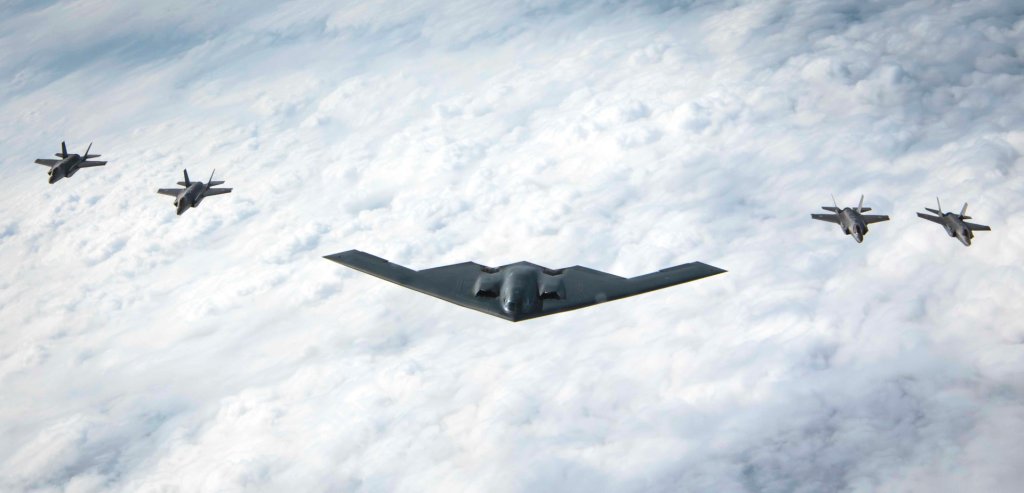
A design like the X-65 that has the option of using either traditional control surfaces or AFCs could offer further flexibility.
Deeper exploration of the potential of an AFC design is exactly the point of DARPA’s CRANE program, which is now aiming to kick off actual flight testing next year. As mentioned, there have been multiple delays in work on the X-65 over the years. The original goal was for the drone to fly for the first time in 2025.
“The costs to produce the prototype aircraft for test flights ended up being higher than expected” and “DARPA chose to ‘strategically pause’ the X-65’s development and reevaluate the program,” Defense News reported in November 2025. Aurora also “confirmed technical and supply chain challenges were a factor in the program delays, as well as the inherent riskiness involved in working on a DARPA project.”
It should be noted here that this is not the first time AFC technology has been experimented with. U.K.-headquartered BAE Systems, which also submitted a design for CRANE, tested a flying subscale AFC-equipped design called MAGMA in the 2010s, which you can learn more about here.

Pentagon budget documents show that DARPA has received nearly $63 million in funding for CRANE since Fiscal Year 2024, when the program entered its third phase. DARPA is not asking for any additional money for this effort in Fiscal Year 2027, which it says reflects the expectation that it will conclude by the end of next year. As DARPA has said in the past, future programs could further continued use of the X-65 drone, as well as the technology it demonstrates.
“We’re excited to continue our longstanding partnership with DARPA to complete the build of the X-65 aircraft and demonstrate the capabilities of active flow control in flight,” Larry Wirsing, Aurora’s Vice President VP of aircraft development, said in a statement last year. “The X-65 platform will be an enduring flight test asset, and we’re confident that future aircraft designs and research missions will be able to leverage the underlying technologies and flight test data.”
With its wings finally delivered, the X-65 continues to take shape as Aurora and DARPA push toward finally getting the drone and its novel control arrangement into the air.
Contact the author: joe@twz.com
Loading comments…
Comments couldn’t be loaded. Please refresh the page.