
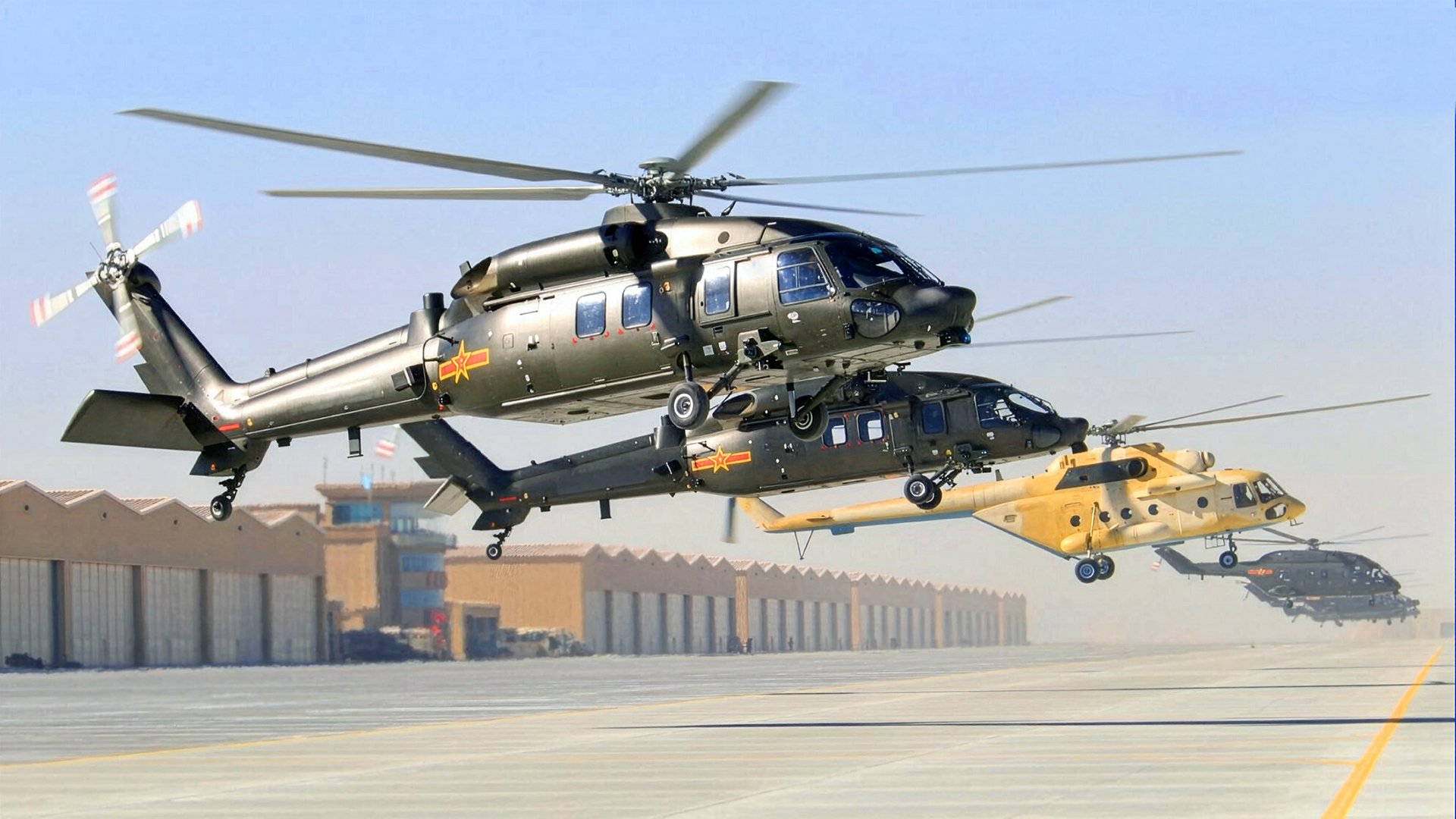
China’s People’s Liberation Army (PLA) operates an increasingly diverse fleet of helicopters spanning everything from basic pilot training and battlefield transport to airborne early warning, anti-submarine warfare, and dedicated attack missions.
The force reflects decades of development, often beginning with helicopters acquired from France and later produced under license, before transitioning to increasingly indigenous designs. The result is a mix of older aircraft that have undergone extensive modernization and newer platforms designed around the requirements of China’s expanding military, including its growing carrier and amphibious assault fleets.
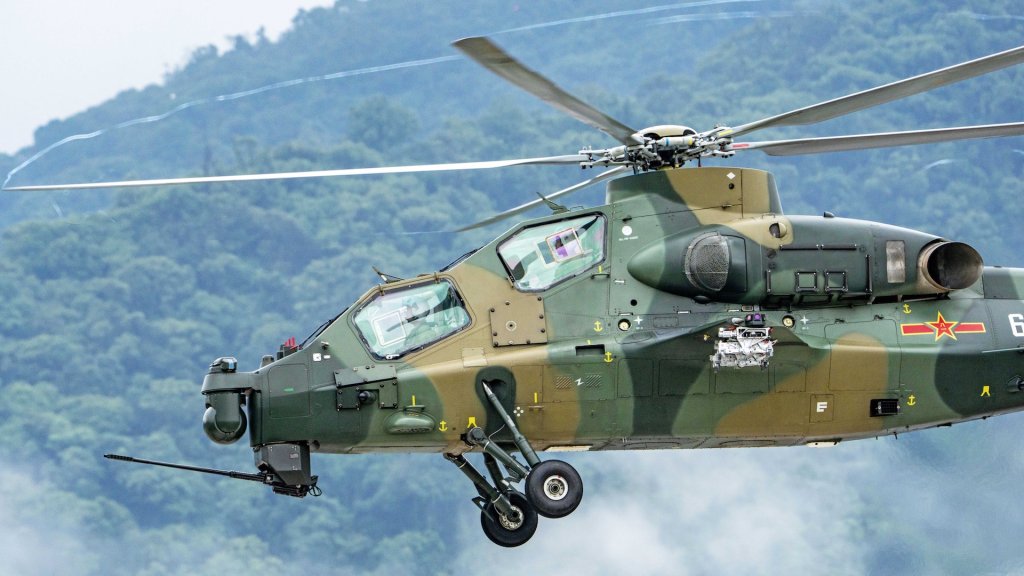
The Z-8 family, originally derived from the Cold War-era French Super Frelon, is a particularly good example of this evolution. It has spawned a wide range of specialized variants, including search and rescue, transport, electronic warfare, and airborne command post helicopters. Meanwhile, the Z-20 — frequently alluded to as a Sikorsky S-70/H-60 clone — has emerged as a modern medium-lift platform with land-based, naval, and assault variants, while the Z-10 and newer Z-21 represent China’s growing emphasis on dedicated attack helicopters.
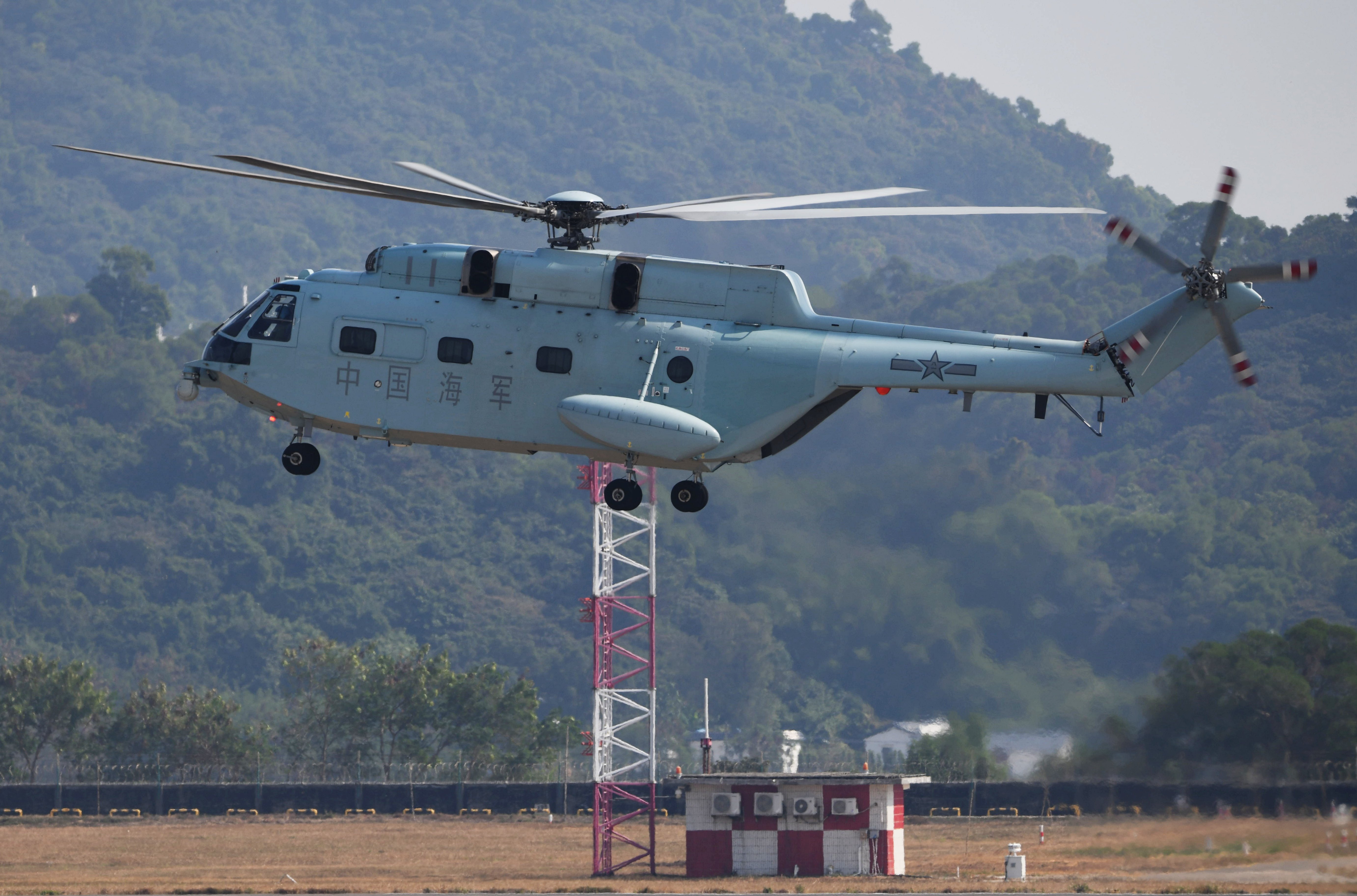
This guide examines the principal helicopter types operated by the PLA, their development, and the roles they are expected to perform.
At the same time, it should be noted that, as it now stands, the PLA remains heavily reliant on foreign-sourced helicopters for a wide variety of applications.
Russian-built helicopters give the PLA a mix of transport and specialized naval capabilities. The Mi-17/171 Hip family supports troop and cargo movement, search and rescue, special operations, and select high-altitude or mission-specific roles. At sea, the Ka-28 Helix provides anti-submarine warfare, while the Ka-31’s radar supports airborne fleet surveillance. These aircraft remain in service where their established capabilities continue to meet operational needs. However, they are increasingly supplemented by Chinese designs, including certain designs that have been tailored to provide direct replacements.
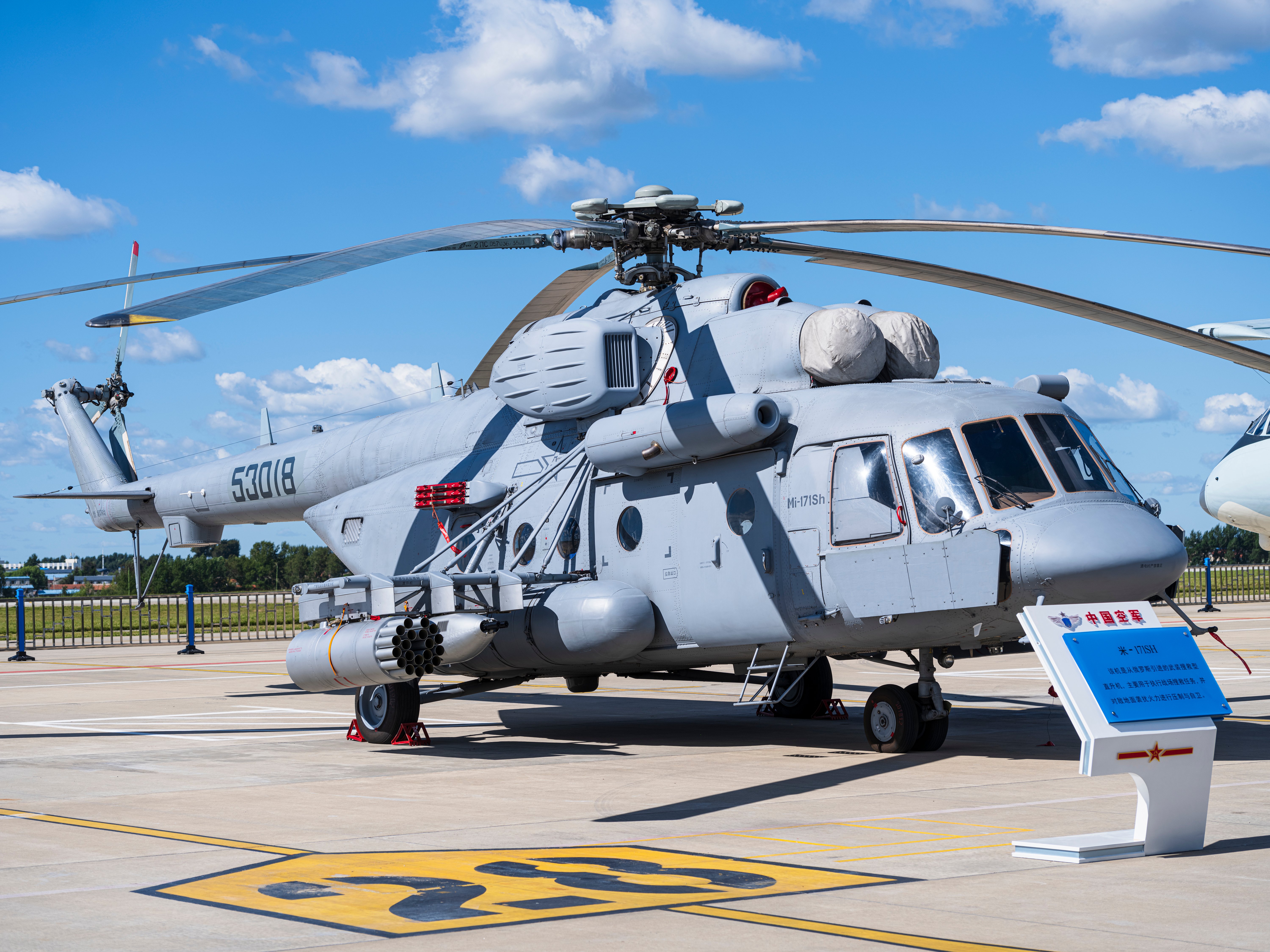
Utility, Training, and Light Helicopters
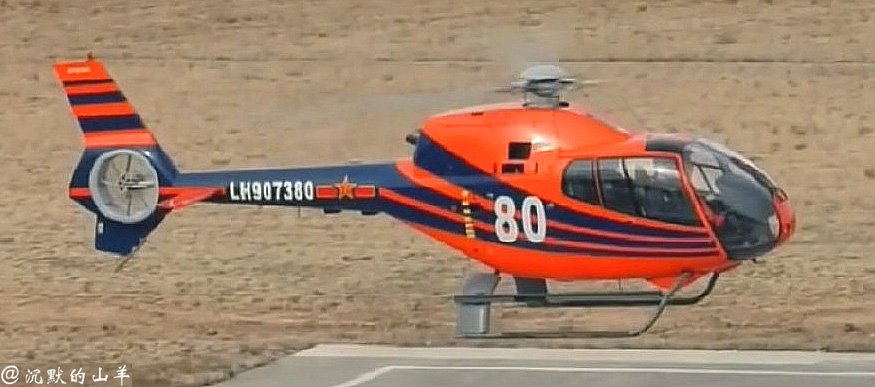
HC-120
The HC-120 is a light utility helicopter derived from the EC120, a design co-developed by China, France, and Singapore during the 1990s. The type entered service with PLA Army Aviation in 2005, providing a modern platform for primary helicopter training and replacing the aging SA316 Alouette III in that role.
The HC-120 is powered by a single Turbomeca Arrius 2F turboshaft engine. Its introduction represented an important step in modernizing the Army Aviation training fleet, giving pilots experience with a more contemporary helicopter before transitioning to larger operational types.
Z-11
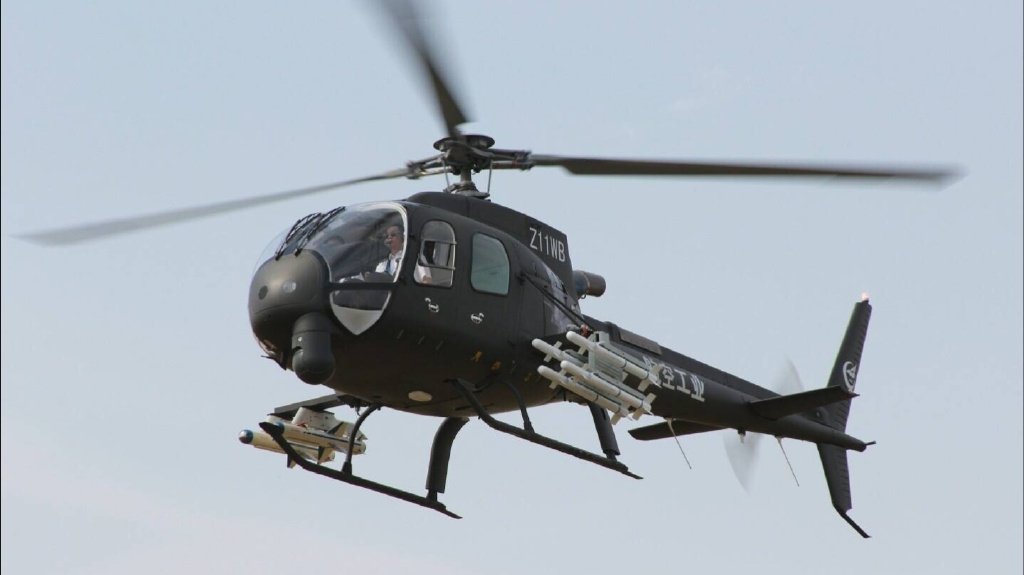
The Z-11 is a light utility helicopter developed by Changhe Aircraft Industries Corporation (CHAIC) and the 602 Research Institute. The design is based on the French AS350BA Écureuil, examples of which were acquired for Army Aviation.
Deliveries of the Z-11 to Army Aviation began in 1998. The helicopter is powered by a single WZ-8D turboshaft engine and is primarily used for training, liaison, and other light utility duties.
A scout and armed reconnaissance derivative, designated as the Z-11WB, was developed with a nose-mounted electro-optical (EO) turret and external weapon pylons capable of carrying rockets, missiles, and gun pods. Its operational status remains unclear, although it provided the basis for the unarmed Z-11A training helicopter used by the Army Aviation Academy.
The Z-8 Family: From French Origins To A Modern Helicopter Lineage
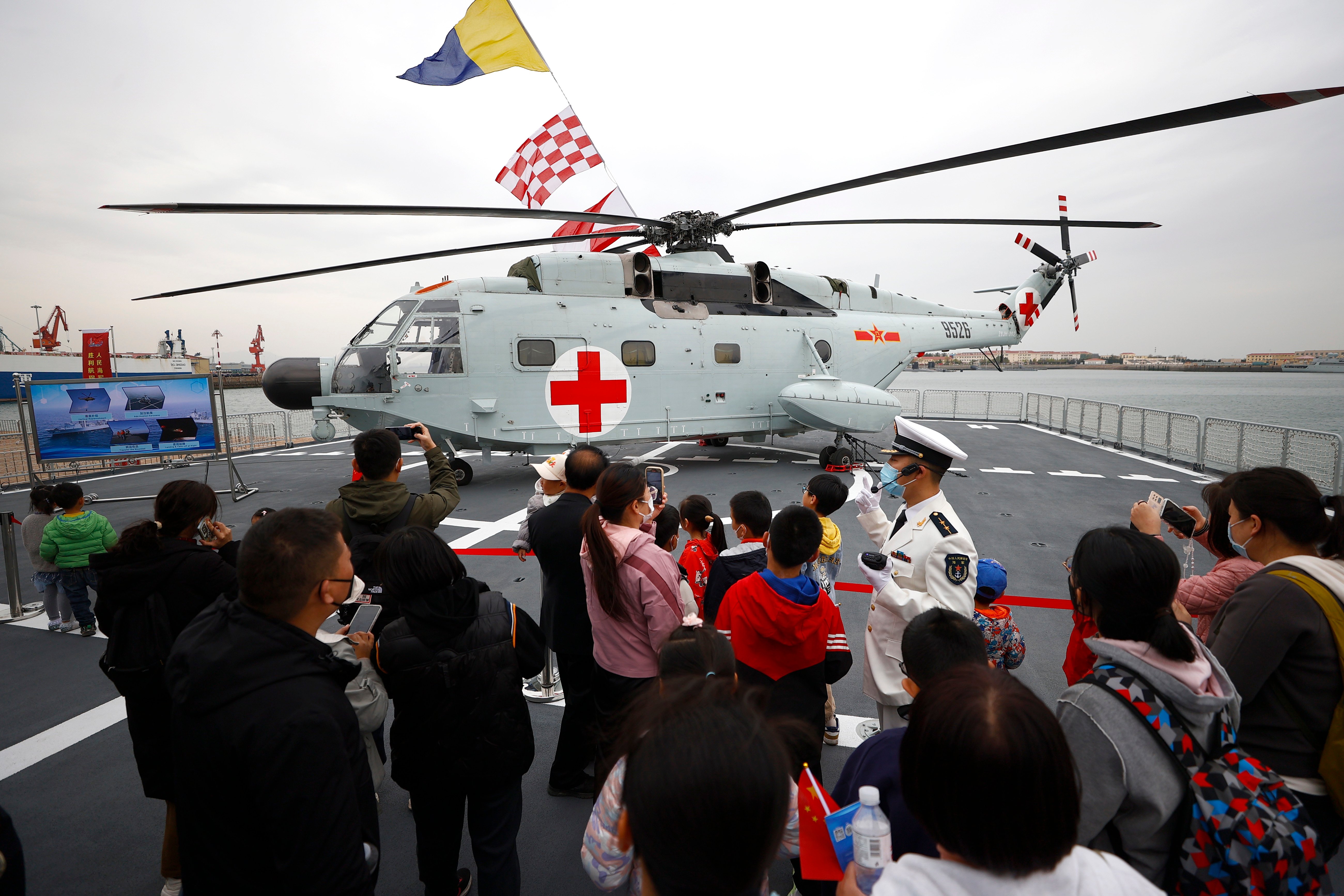
Z-8J
The Z-8 was developed from the French SA321Ja Super Frelon, 13 examples of which China purchased during the late 1970s. Changhe Aircraft Industries Corporation subsequently developed an indigenous version during the 1980s.
Powered by three WZ-6 turboshaft engines, the original Z-8 became the foundation for a broad family of helicopters serving the PLA Navy (PLAN), Army Aviation, and People’s Liberation Army Air Force (PLAAF).
The Z-8J is the naval transport variant, with a boat-like hull. For anti-submarine warfare (ASW) missions, the helicopter can be equipped with a surface-search radar, a French HS-12 dipping sonar, and Whitehead A244S or ET52 torpedoes.
Several specialized derivatives were developed from the Z-8J:
- Z-8S: A naval search and rescue (SAR) version with upgraded avionics, a searchlight, a forward-looking infrared (FLIR) turret, and a rescue hoist. Most Z-8Js have reportedly been upgraded to this configuration.
- Z-8JH: A medical evacuation and SAR variant.
The Z-8J and Z-8JH have both been used aboard Chinese aircraft carriers, providing transport and support capabilities for embarked naval forces.
Z-8C
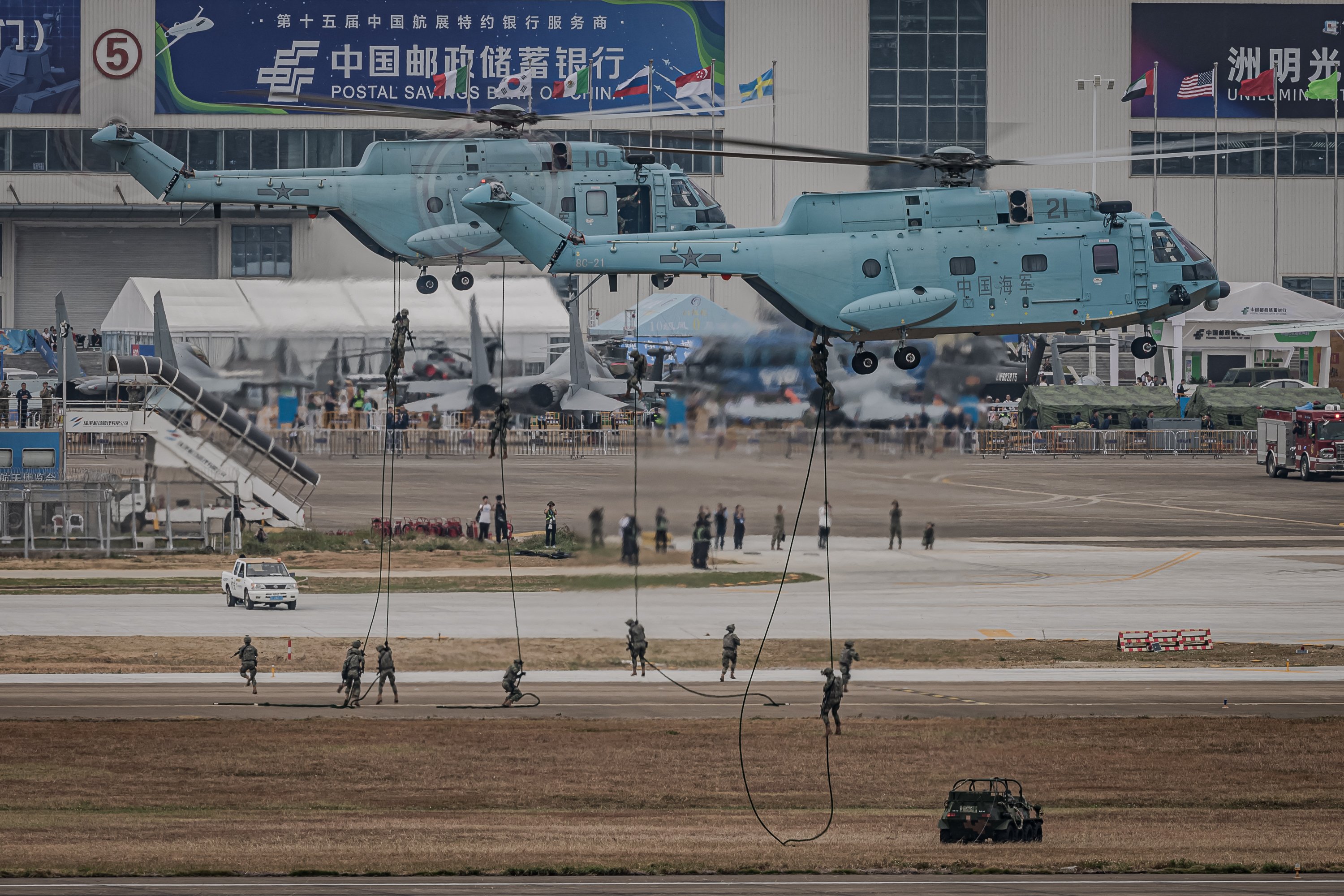
The Z-8C represents a substantially improved successor to the original naval Z-8J series. The helicopter was first reported in 2016 and incorporates a number of changes intended to improve its performance and operational versatility.
The most visible differences include a redesigned nose with a chin-mounted weather radar, a FLIR turret, and a pilot night-vision system (PNVS) mounted above the cockpit. A searchlight is also fitted, while the longer engine compartment accommodates the WZ-6C turboshaft engine.
The Z-8C is operated by the PLA Marine Corps, while the Z-8CJ serves as a training variant with the Naval Aviation University.
The helicopter has become a principal transport platform for the Type 075 amphibious assault ship, supporting the movement of troops and equipment between ships and shore.
Z-8K/KA
The PLAAF introduced the Z-8K in 2007 as a dedicated search-and-rescue helicopter. The related Z-8KA is configured for combat search and rescue (CSAR), including the recovery of personnel from hostile or contested environments.
Both versions feature a FLIR turret, searchlight, radar-warning receiver (RWR), chaff and flare dispensers, and a rescue hoist. Some aircraft are also equipped with small terrain-following radars beneath the nose to support low-level operations.
Selected helicopters have received satellite communications (SATCOM) antennas on top of the tail boom, improving their communications capabilities over longer distances.
A further derivative, the Z-8KH, was developed for the PLAAF garrison stationed in Hong Kong. This version is distinguished by chaff and flare dispensers integrated into its flotation equipment.
Z-8B
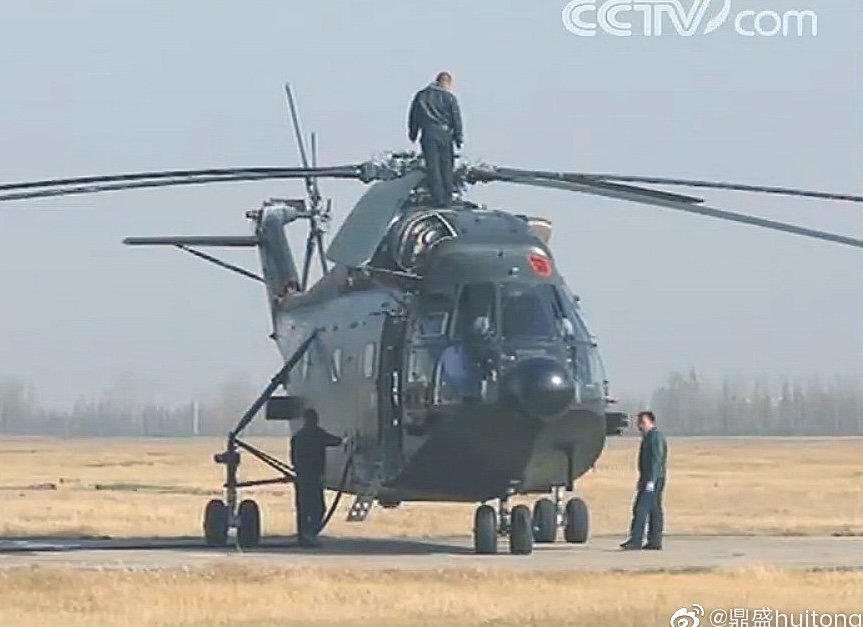
The Z-8B entered service with PLA Army Aviation in 2011 as an improved transport helicopter. It shares several characteristics with the Z-8KH but lacks the latter’s flotation equipment.
The Z-8B incorporates a glass cockpit and has become a major component of the Army Aviation transport fleet. Some aircraft have subsequently had flotation equipment reinstalled, reflecting the type’s continuing evolution.
An optional auxiliary fuel tank can be installed inside the cabin to extend its range. Other upgrades have included SATCOM antennas on the tail boom and, on some aircraft, WZ-6C engines, an EO turret, and a terrain-following radar beneath the nose.
A specialized operations variant has also been identified. These helicopters incorporate RWR, laser-warning receivers (LWR), and missile-approach warning system (MAWS) sensors, alongside flare dispensers and ceramic armor protection.
Z-8G
Lacking the boat-like hull of the Z-8B, the Z-8G is expected to replace that type in Army Aviation service. The helicopter was evaluated from 2014 and was specifically optimized for operations at high altitudes, including in Tibet.
Unlike earlier Z-8 variants, the initial Z-8G configuration uses imported Pratt & Whitney Canada PT6B-67A turboshaft engines. Its redesigned nose is longer and more aerodynamically efficient, while the glass cockpit and terrain-following radar support operations in demanding environments.
The helicopter also incorporates SATCOM and BeiDou/GPS antennas to improve communications and navigation during long-range missions.
Some Z-8Gs have been equipped for special operations, with combinations of MAWS, RWR, and LWR sensors mounted on the rear fuselage and sponsons, together with chaff and flare dispensers. Armor plates beneath the cockpit windows provide additional protection, and some aircraft carry a 12.7mm machine gun inside a cabin doorway.
Several specialized variants have also been identified:
- A battlefield electronic-warfare helicopter featuring large cylindrical antennas mounted on both sides of the mid-fuselage.
- Another electronic warfare configuration reportedly uses rectangular plate antenna arrays mounted on both sides of the rear fuselage.
- An airborne command-post variant featuring a retractable synthetic-aperture radar (SAR) surveillance system inside the rear fuselage, alongside additional electronic-support-measures (ESM) antennas.
Some Z-8Gs may also have adopted the indigenous WZ-6C engine.
Z-8L
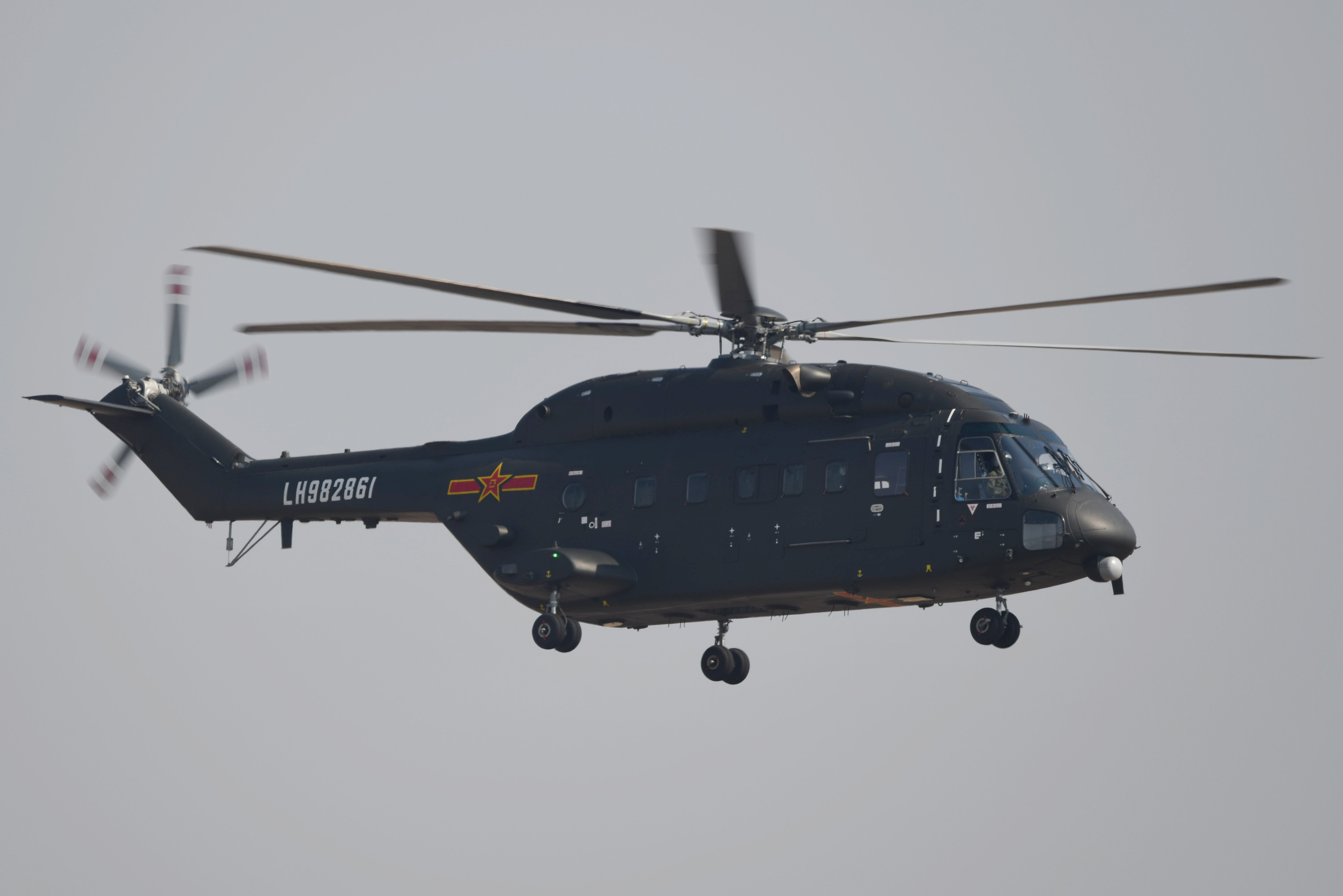
The Z-8L is a wide-body development of the Z-8G that first flew in 2017. Its most prominent feature is a pair of large sponsons mounted along the sides of the fuselage, providing additional space for fuel tanks and other equipment.
The wider fuselage also increases internal volume, allowing the helicopter to carry more cargo and equipment. Relocating the internal fuel tanks beneath the cabin floor has further increased usable cabin space.
Some aircraft have been observed with RWR and MAWS sensors on both sides of the forward fuselage, a roof-mounted FLIR turret, and a terrain-following radar beneath the nose. Additional defensive equipment, including LWR and RWR sensors and chaff/flare dispensers, can be installed on the sponsons.
A SATCOM antenna is mounted on top of the tail boom. The original PT6B-67A engines are reportedly being replaced by the more powerful indigenous WZ-7 turboshaft.
The Z-8L provides the Army with a larger and more capable transport helicopter suited to demanding operating environments and specialized missions.
Z-8D
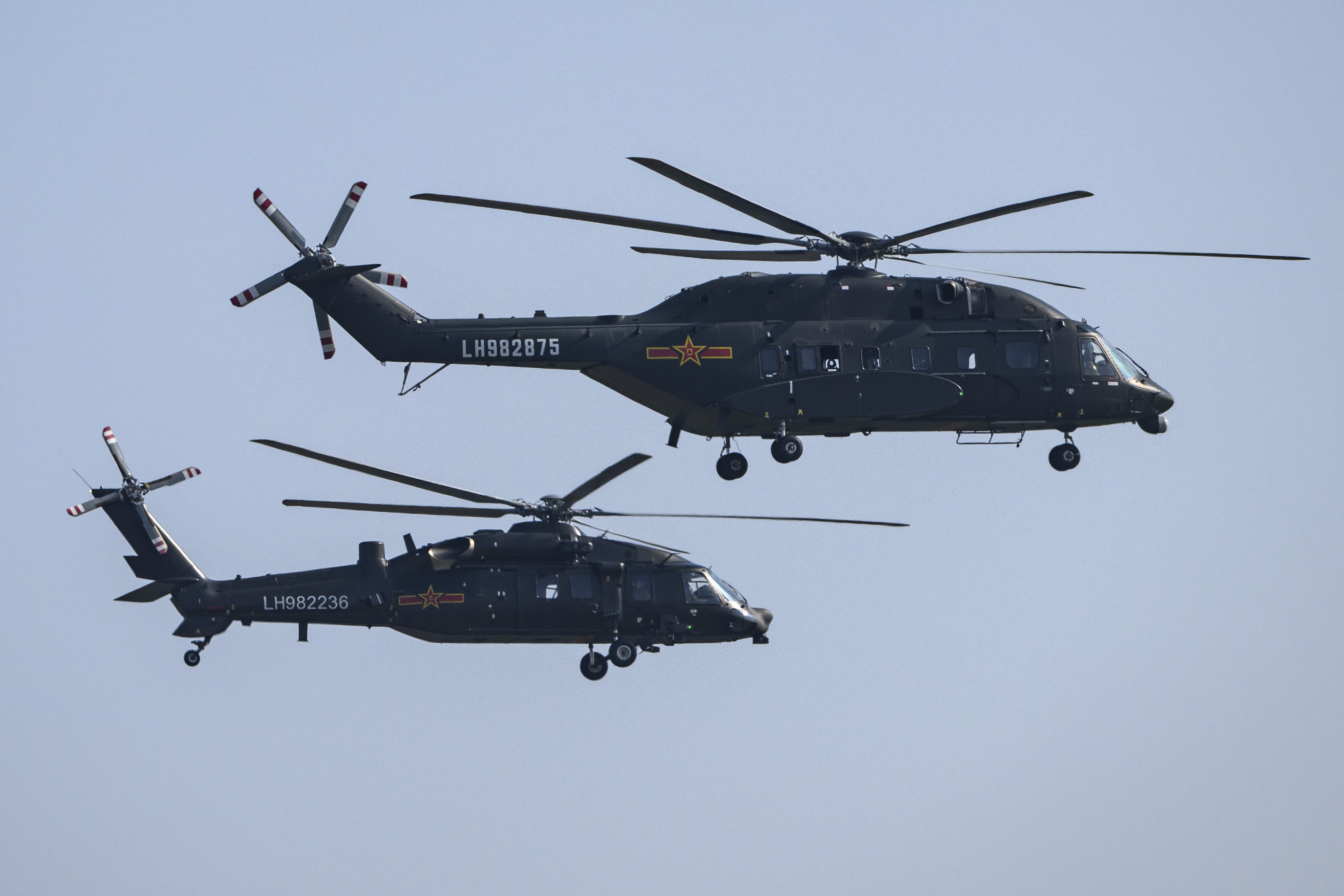
The Z-8D is a shipborne derivative of the Z-8L that first appeared in 2023. It combines the wide-body configuration with an extensive self-defense suite intended to improve survivability during operations over water.
The helicopter features RWR, LWR, and MAWS sensors, along with chaff and flare dispensers. Four inflatable flotation units provide emergency protection in the event of a forced landing at sea.
Power is supplied by either WZ-6C or the newer WZ-7 turboshaft engines. Engine air particle separators (EAPS) are installed ahead of the engine inlets to reduce the risk of damage from airborne debris.
The Z-8D is expected to operate from China’s Type 075 amphibious assault ships and the larger Type 076 amphibious assault ship.
The Z-18 Series: Naval Utility, Early Warning, and ASW Helicopters
Z-18Y
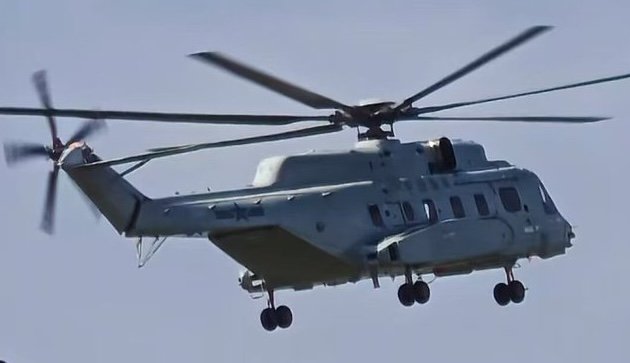
Named White Heron, the Z-18Y was developed by the 602 Research Institute and Changhe as a new medium-lift shipborne transport helicopter. It is derived from the AC313 but incorporates a redesigned fuselage and a number of changes intended to improve its naval suitability.
The helicopter uses imported PT6B-67A turboshaft engines and provides greater internal volume and payload capacity than the earlier Z-8. Improved performance in hot-and-high conditions is another important feature.
The Z-18Y incorporates a nose-mounted weather radar and an FLIR/TV turret, along with additional communication and navigation antennas beneath the fuselage. A SATCOM antenna is installed on top of the tail boom.
Folding main and tail rotor blades allow the helicopter to be stored more efficiently aboard ships. The Z-18Y is primarily used for carrier onboard delivery (COD) missions, transporting personnel and supplies between ships and shore.
It has also provided the basis for several specialized naval derivatives.
Z-18J
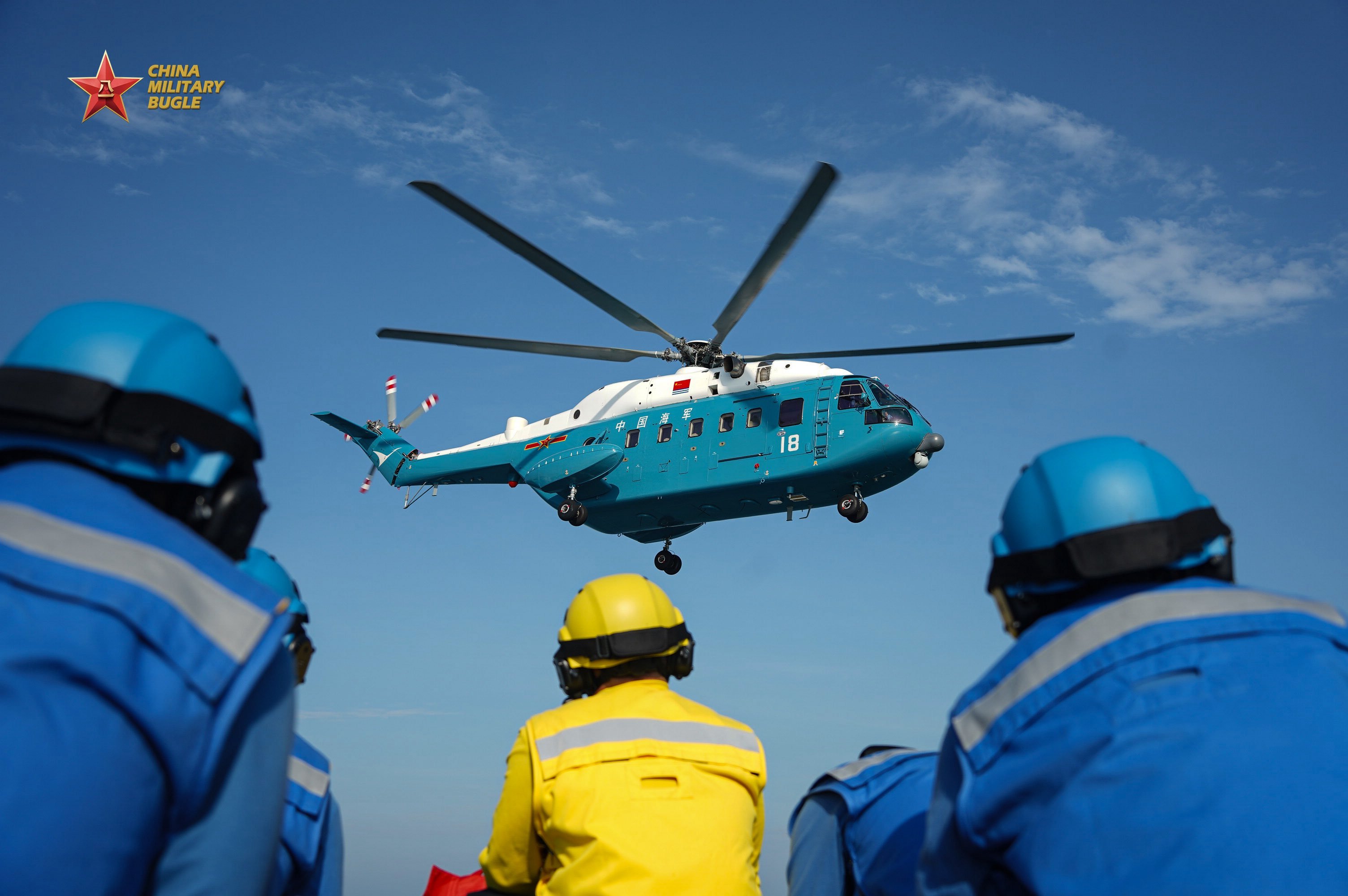
Named Bat, the Z-18J is an airborne early warning and control (AEW&C) helicopter developed from the Z-18Y.
Its principal feature is a retractable radar antenna housed within a redesigned rear fuselage. The long-range, multimode AESA radar is lowered vertically during operation, providing 360-degree coverage around the helicopter.
The Z-18J also incorporates a nose-mounted FLIR turret and additional MAWS and RWR antennas distributed around the nose and rear fuselage. Chaff and flare dispensers are installed in the flotation equipment.
The helicopter has been used aboard Chinese aircraft carriers as an interim airborne early-warning platform and has also been observed operating from Type 075 amphibious assault ships.
A rescue hoist is installed on the starboard side of the forward fuselage, allowing the aircraft to perform secondary SAR duties.
An improved Z-18A features a redesigned engine and gearbox compartment and three indigenous WZ-6C engines. Some Z-18Js and Z-18As have also received SATCOM antennas to improve long-range communications.
Z-18F
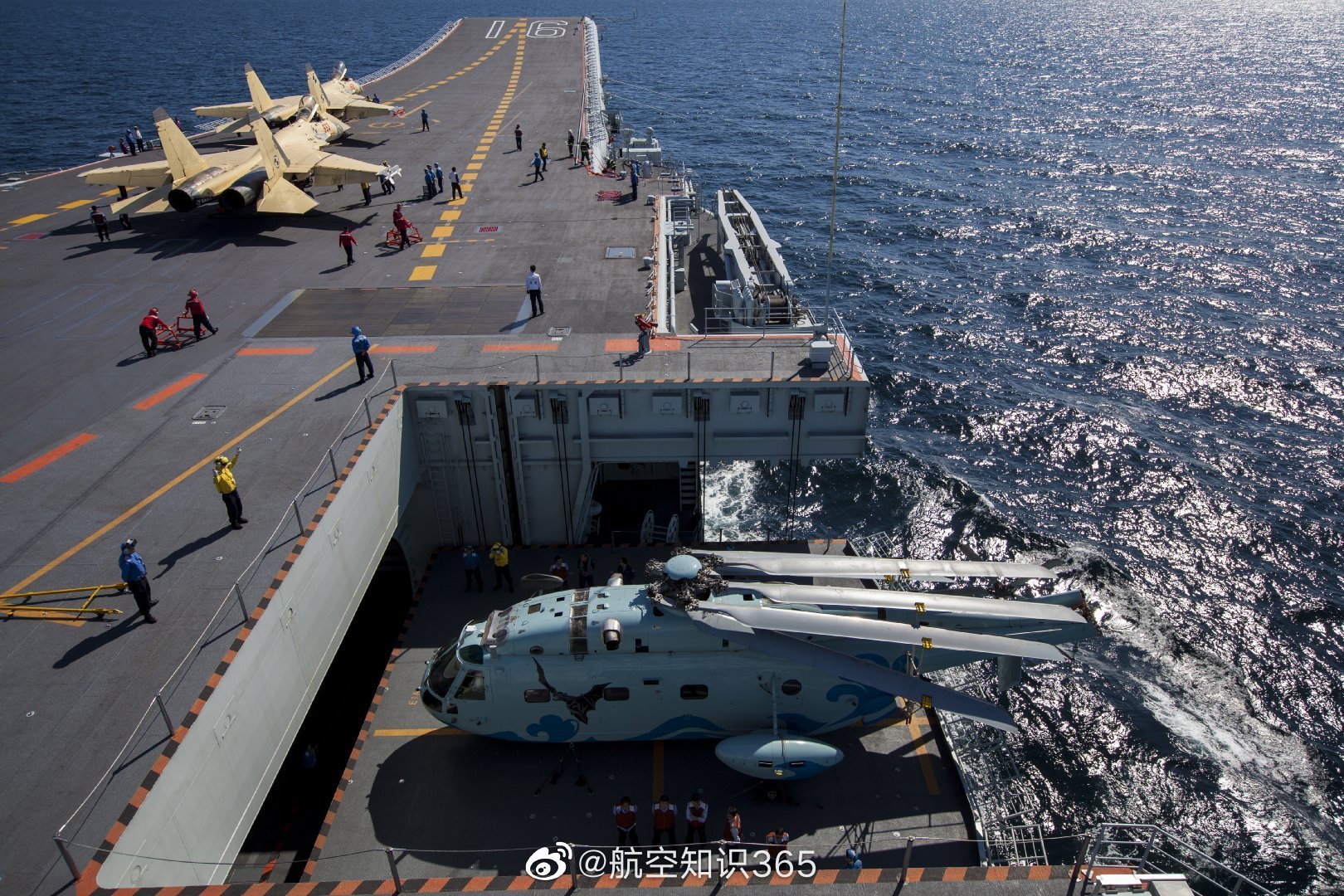
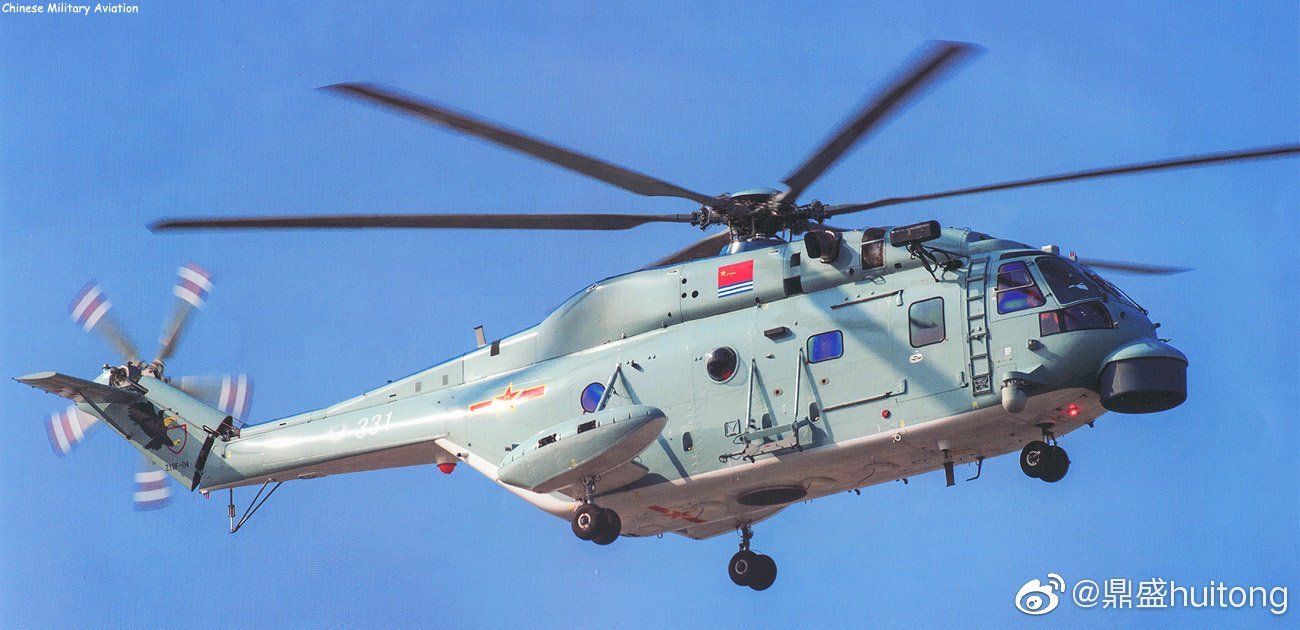
Named Sea Eagle, the Z-18F is an ASW and anti-ship warfare helicopter developed from the Z-18Y. It first appeared in 2014 and represents a substantial improvement over the earlier Z-8-based naval ASW helicopters.
The helicopter incorporates a large surface-search radar beneath the nose, while its FLIR/TV turret has been relocated to the starboard side of the fuselage. A dipping sonar provides an additional means of detecting submarines, while MAWS and RWR antennas are installed on the forward and rear fuselage.
Additional communications and navigation antennas are mounted beneath the fuselage. Four external pylons can carry torpedoes or anti-ship missiles (AShMs), including the YJ-9. A dispenser near the rear loading ramp allows the helicopter to deploy sonobuoys.
The Z-18F operates aboard Chinese aircraft carriers and the Type 075 amphibious assault ship.
Several improved derivatives have since appeared:
- Z-18FA: Incorporates a redesigned engine and gearbox compartment and three domestic WZ-6C turboshaft engines.
- Z-18FG: Features a new chin-mounted search radar and small side pylons for lightweight ASW torpedoes or AShMs.
- Z-18FB: A further improved version reportedly powered by three WZ-7 turboshaft engines, replacing the Canadian PT6B-67A.
These developments point to a continuing effort to improve the Z-18’s performance and extend the operational life of the broader family.
The Z-9 Family
Z-9A/B
The Z-9 originated from the French AS365 Dauphin family, with China acquiring aircraft and subsequently producing them under license through Harbin Aircraft Industry Group (HAIG) during the 1990s.
The Z-9A became a principal utility helicopter for Army Aviation and was also used for pilot training. The improved Z-9B incorporated a greater proportion of indigenous components, helping establish the foundation for China’s broader Z-9 development program, which also took it in a maritime direction.
The helicopter has since become one of China’s most widely used light utility platforms and has also been widely exported in the Z-9E series.
Z-9C
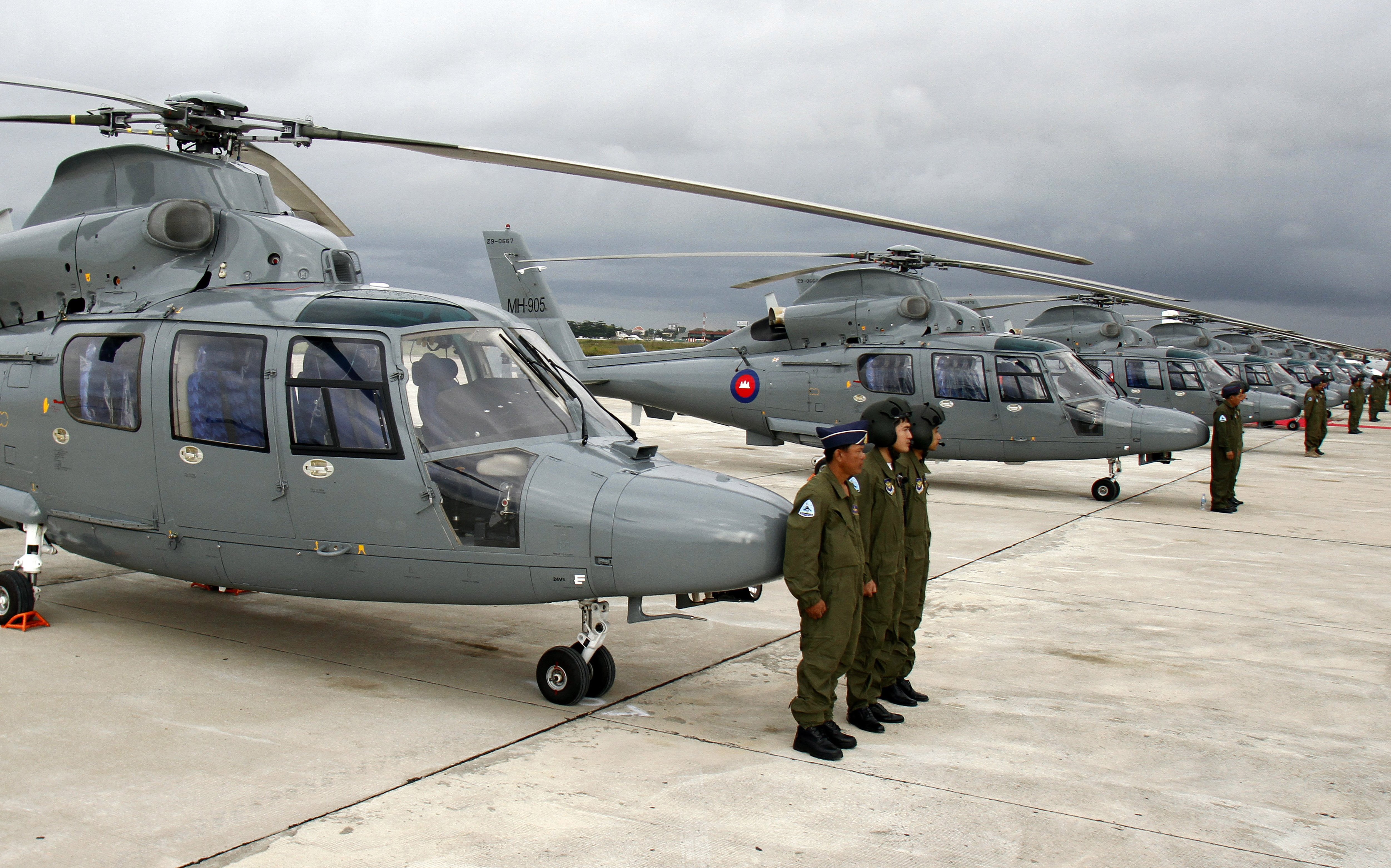
The Z-9C is China’s indigenous naval derivative of the French AS565 Panther, examples of which were imported during the late 1980s.
The helicopter incorporates a domestically developed surface-search radar and dipping sonar, allowing it to conduct ASW missions. It can carry up to two Yu-7K torpedoes and is equipped with inflatable flotation bags for emergency landings on water.
Some Z-9Cs have been converted to SAR duties, receiving a searchlight, an EO turret, and a rescue hoist.
The type has also been used for anti-piracy patrols off the Somali coast. In this role, some aircraft have carried a 12.7mm gun pod and a 57mm rocket launcher.
A downgraded training version was developed for the Naval Aviation Academy.
Z-9D
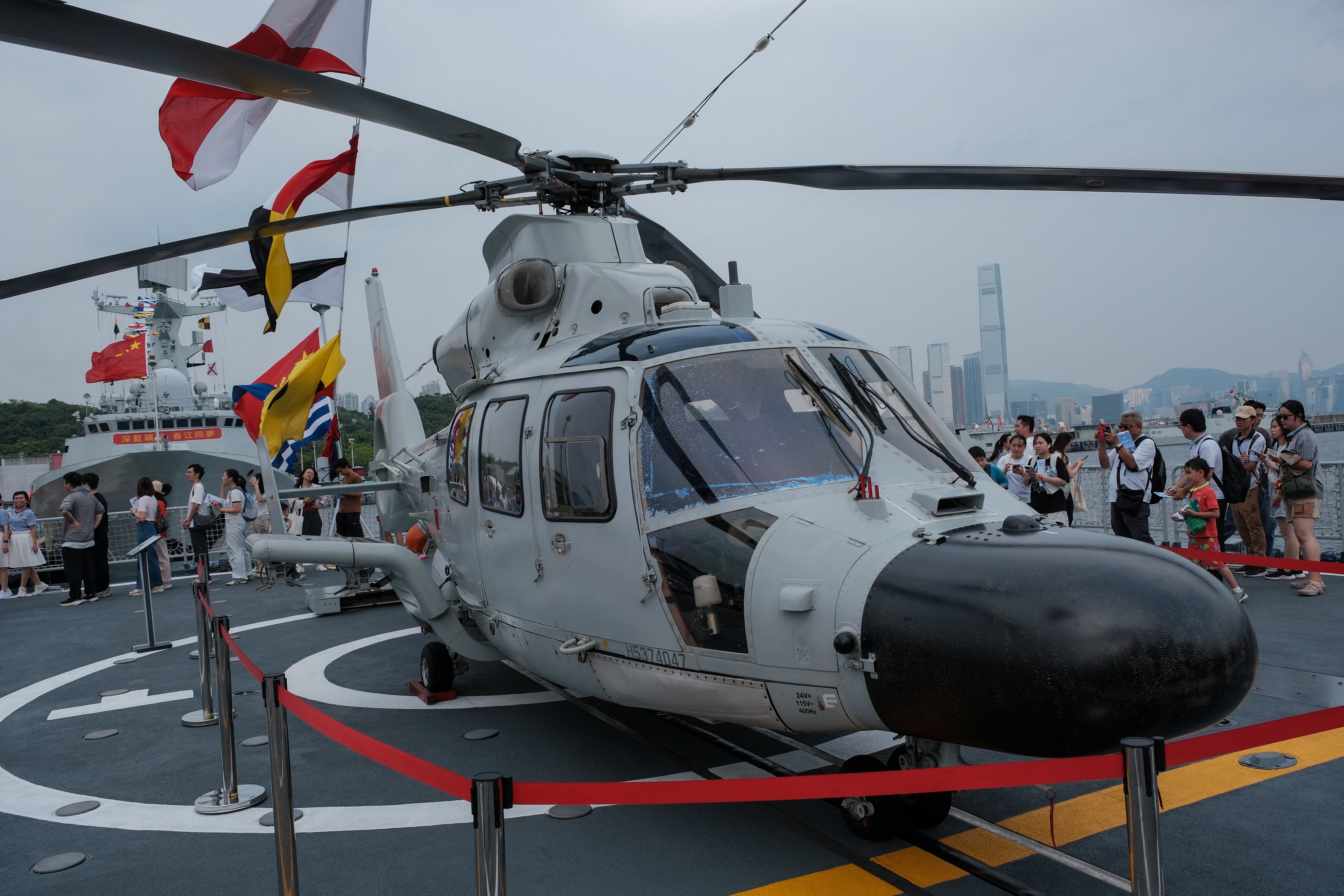
The Z-9D is an improved derivative of the Z-9C, incorporating a greater emphasis on anti-surface warfare.
The helicopter features stub wings capable of carrying up to four AShMs for use against smaller surface targets. A new fire-control radar is housed in a larger nose cone, while the weapon-control officer is positioned in the rear cabin.
RWR antennas are installed on both sides of the nose and near the tail rotor. The Z-9D has been observed operating from Type 056 and Type 056A frigates.
Some aircraft have also received an EO turret beneath the fuselage, expanding their surveillance and targeting capabilities.
Z-9F
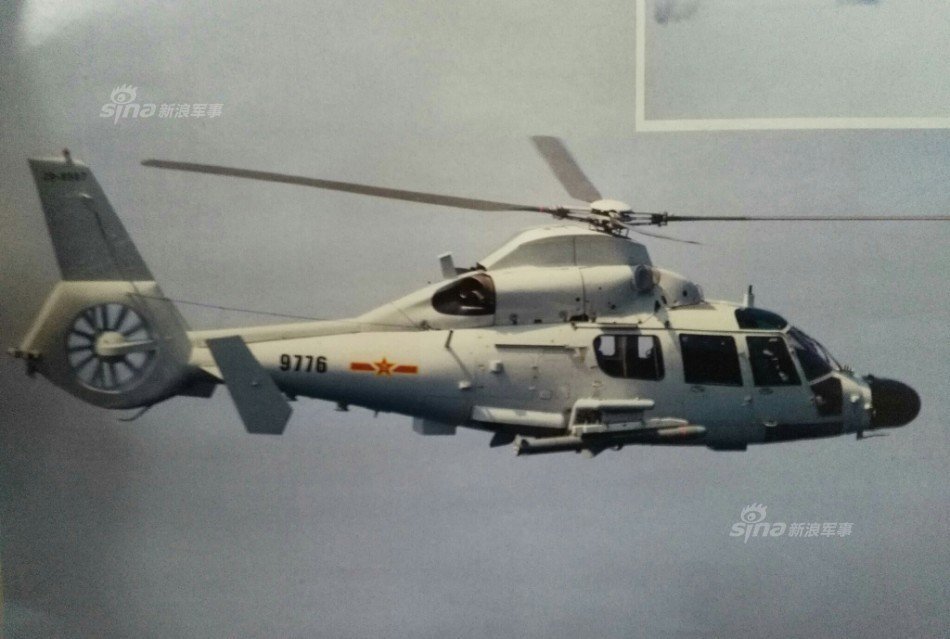
The Z-9F is an improved ASW helicopter based on the Z-9D. It was first observed in 2017 and is expected to replace the older Z-9C.
The helicopter incorporates a new dipping sonar, a glass cockpit, and an improved surface-search radar. A BeiDou antenna is mounted on top of the cabin.
The Z-9F retains the ability to carry up to two ASW torpedoes beneath its stub wings, providing a more modern platform for shipborne submarine-hunting missions.
Z-9S
The Z-9S is a naval search-and-rescue helicopter developed for operations aboard Chinese aircraft carriers.
It features a nose-mounted EO turret, a searchlight, and a rescue hoist installed on the starboard side. The helicopter is also used for training by the Naval Aviation University.
A small number of SAR-configured Z-9S helicopters are also operated by Army Aviation.
Z-9WA/WZ
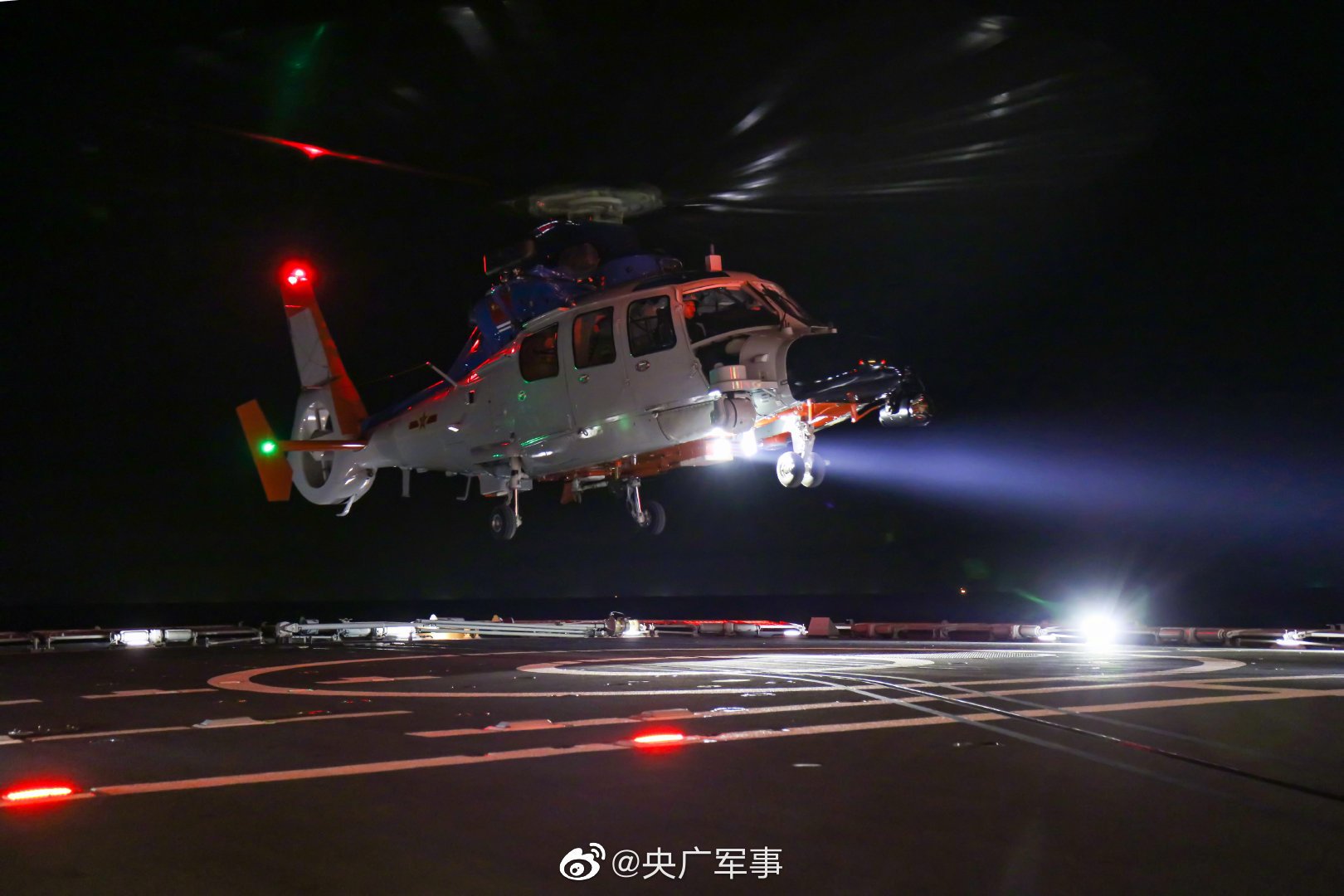
The Z-9WA is a night-attack development of the Z-9W, incorporating more powerful engines and improved avionics for operations in low-light conditions.
The helicopter features stub wings capable of carrying up to eight KD-8 anti-tank guided missiles (ATGMs) or PL-90 air-to-air missiles (AAMs). A nose-mounted low-light TV/IR turret supports night operations, while RWR antennas are installed on both sides of the fuselage.
Additional features include cockpit armor, flare dispensers, a datalink, and a redesigned cockpit compatible with night-vision goggles (NVGs).
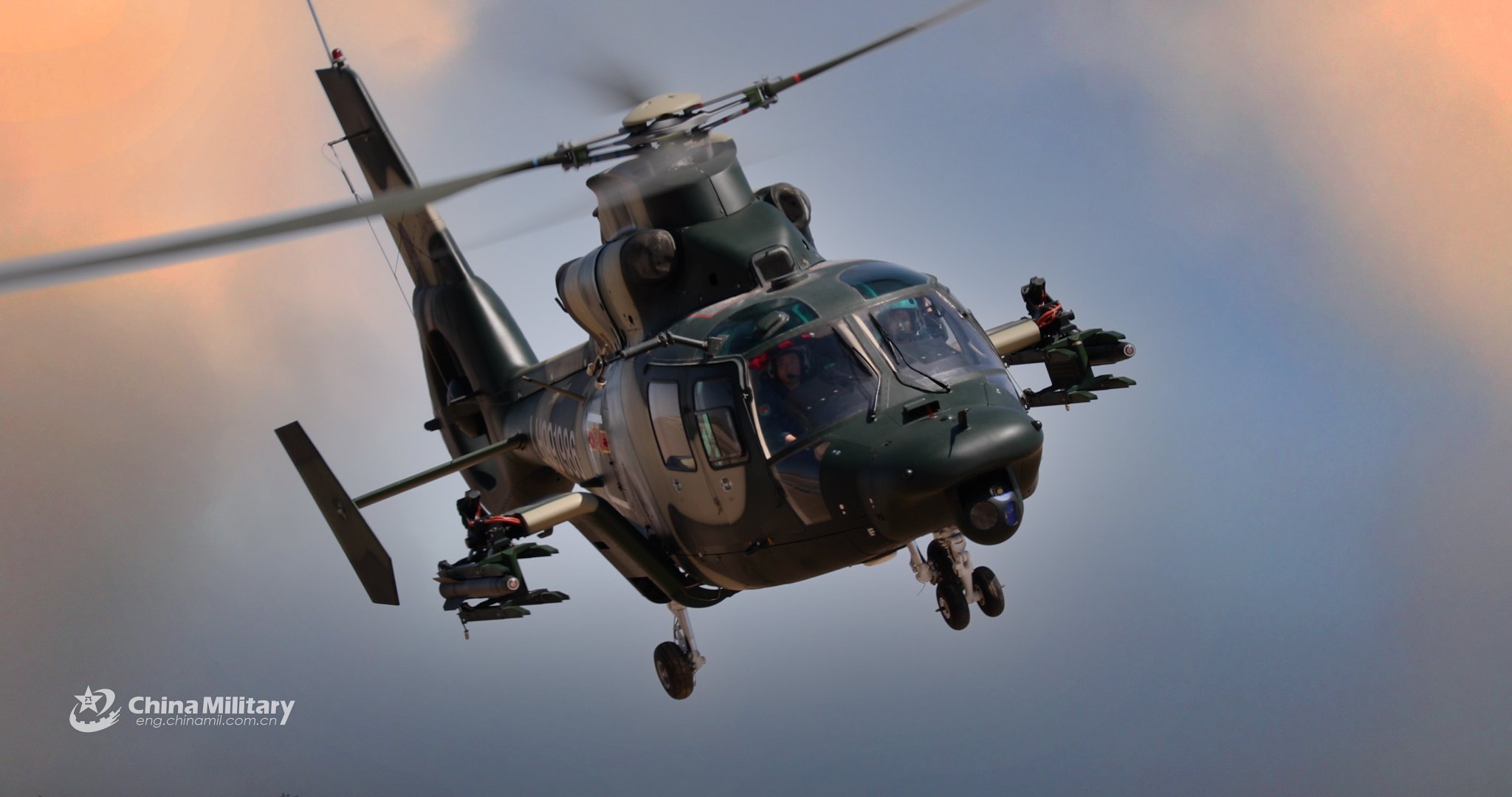
The improved Z-9WZ incorporates a laser designator, allowing it to employ the newer KD-9 ATGM, as well as FN-6 AAMs. It is also powered by WZ-8H engines.
Most Z-9WAs are believed to have been upgraded to the WZ standard.
The PLAAF operates some Z-9WA/WZ helicopters in the SAR role. A similar derivative, the Z-9ZH, is used by the PLAAF garrison stationed in Hong Kong.
Dedicated Attack and Scout Helicopters
Z-10
The Z-10 represents China’s first dedicated modern attack helicopter. Developed by the 602 Research Institute, CHAIC, and HAIG, the program also received early input from Russia’s Kamov design bureau.
The helicopter features a conventional tandem-seat gunship configuration, with the gunner seated in front and the pilot behind. A five-blade composite main rotor and distinctive scissor-type tail rotor distinguish the design.
The Z-10 is powered by WZ-9 turboshaft engines and entered service in 2010, following its first flight in 2003.
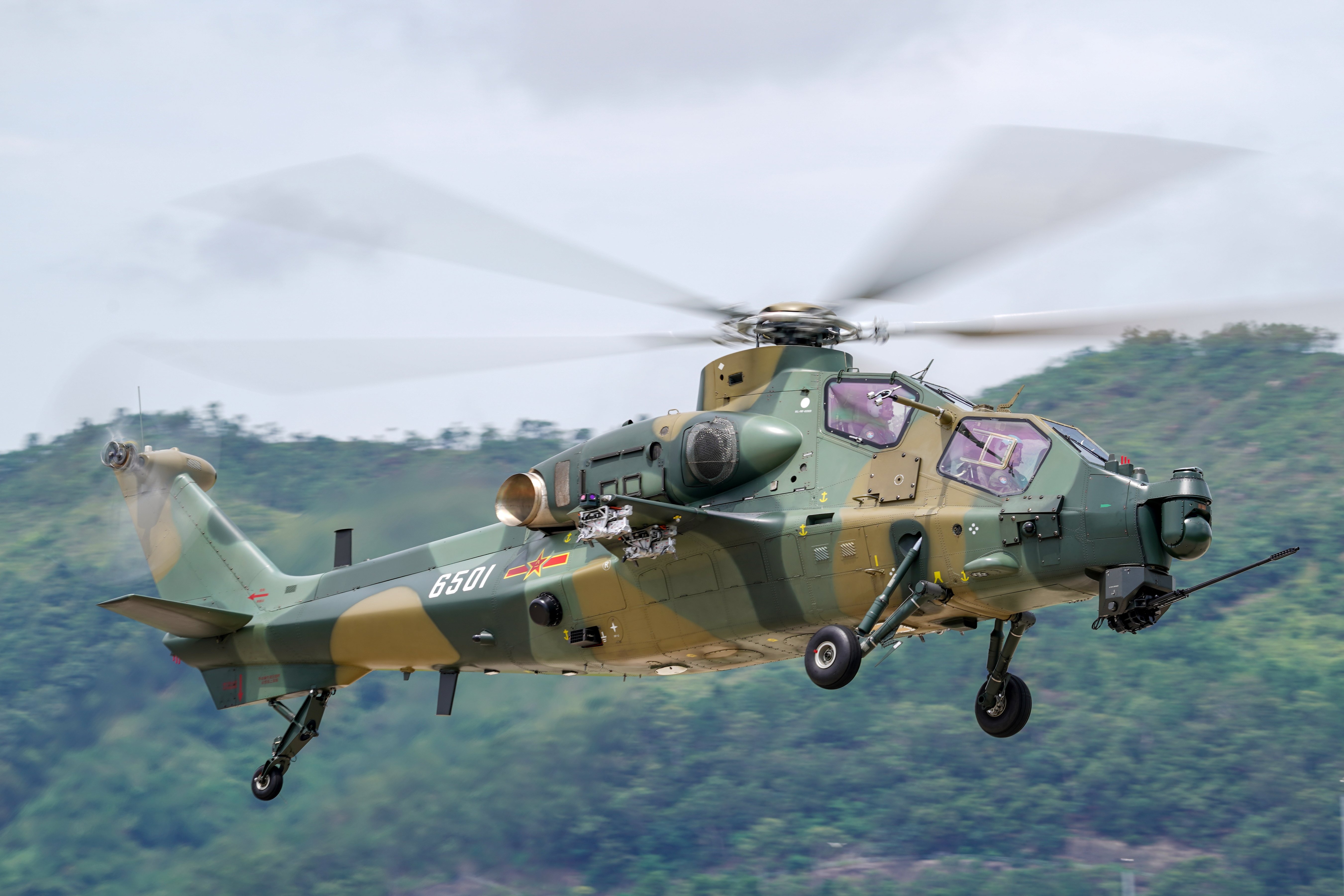
Its primary armament consists of up to eight KD-9 or KD-10 laser-guided ATGMs, supplemented by a chin-mounted 23mm chain gun. The helicopter can also carry up to eight PL-90 AAMs.
The nose-mounted PNVS and target acquisition and designation system (TADS)-equivalent housing incorporates FLIR, a TV camera, a laser rangefinder, and a laser designator. RWR antennas are installed on both sides of the forward and aft fuselage, while LWR sensors are mounted on the pylon tips.
The initial prototypes were powered by the Pratt & Whitney Canada PT6C-76C engine. Series-production aircraft instead adopted the less powerful WZ-9, resulting in reductions to armor protection, sensor size, and weapon load compared with the original configuration.
Several variants and upgrades have since emerged:
- Z-10H: Retains the original PNVS/TADS configuration while using WZ-9 engines.
- Z-10K: A dedicated version for PLAAF airborne units, featuring a new 23mm gun and 19-tube rocket launchers. Some aircraft have SATCOM antennas on top of the tail boom.
- Z-10A: The definitive production configuration, distinguished by upward-facing engine exhaust nozzles.
- Later upgrades: Some Z-10 and Z-10K aircraft have received additional ceramic armor, MAWS sensors on the nose, and SATCOM antennas for long-range communications.
The helicopter has also gained newer long-range, IIR/CCD-guided ATGMs. These weapons require an additional datalink antenna mounted in front of the PNVS.
Later developments include the introduction of millimeter-wave (MMW) radar-guided fire-and-forget missiles, potentially allowing the Z-10 to operate alongside the Z-19 in coordinated attack missions.
The export-oriented Z-10ME incorporates further improvements, including a mast-mounted MMW radar.
Z-19
The Z-19 is a scout and attack helicopter developed by HAIG using the H425 as its basis. It was intended to replace the Z-9WA while complementing the larger Z-10.
The helicopter features a narrow fuselage and tandem cockpit, with the pilot seated in front and the gunner behind. A nose-mounted EO turret incorporates FLIR, a TV camera, and a laser rangefinder, while RWR antennas provide warning of hostile radar emissions.
The Z-19 uses the same WZ-8C engines, transmission, and rotor systems as the H425, helping accelerate its development.
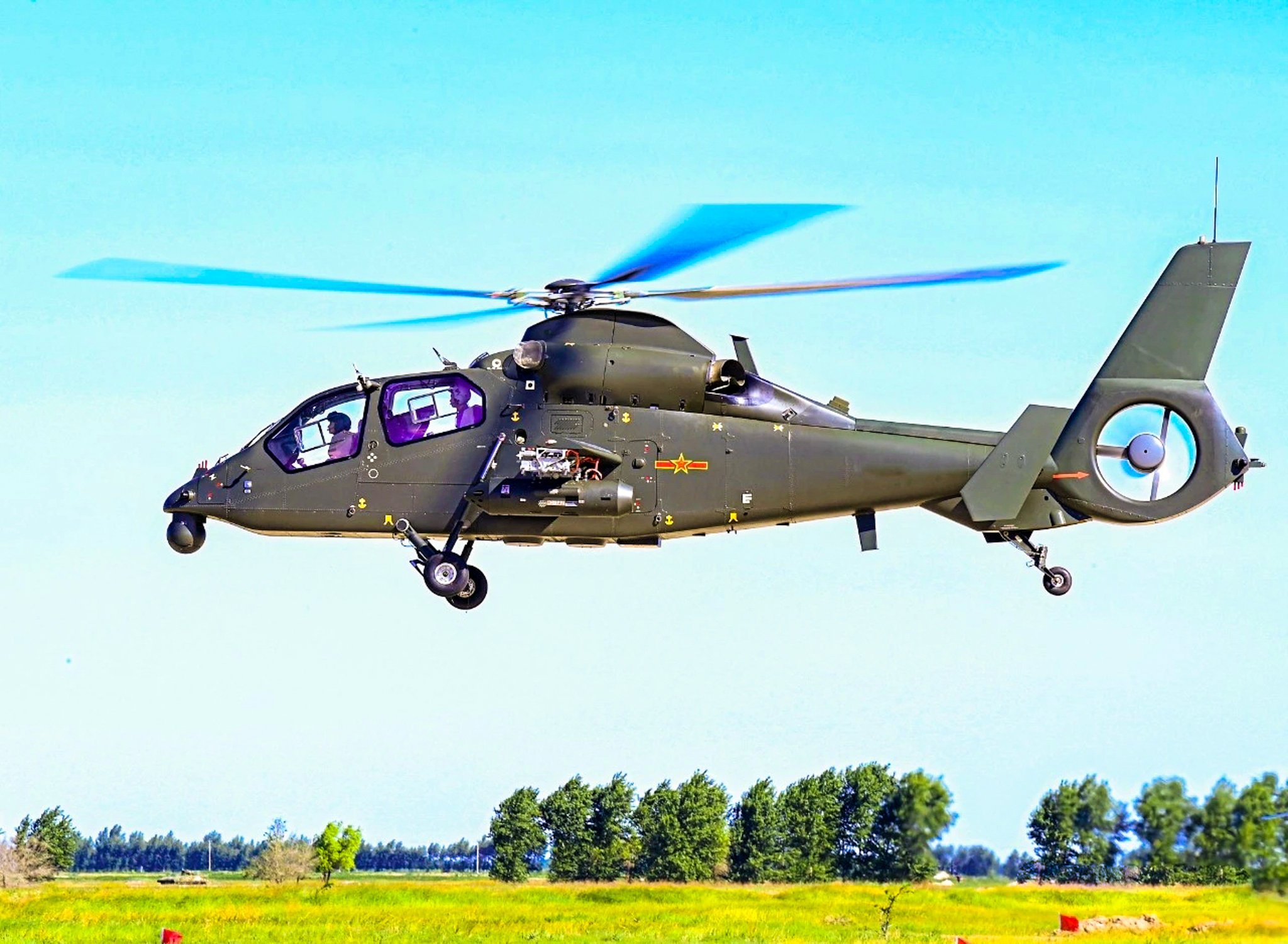
When fitted with a mast-mounted MMW radar, the Z-19 provides additional target-detection capabilities. The helicopter’s armament is broadly similar to that of the Z-9WA, including KD-9 and KD-10 ATGMs, PL-90 AAMs, rocket launchers, and gun pods.
Later upgrades include MAWS sensors on the nose and tail, along with LWR sensors on the stub wings.
The Z-19 has also been integrated with newer long-range IIR/CCD/laser-guided ATGMs, including the KF-9, KF-10, and KF-11. These weapons require an additional datalink antenna mounted on the nose.
Z-21
The Z-21 is a new heavy attack helicopter first identified in 2024. Developed by the 602 Research Institute, Changhe, and Hafei, it appears to be a substantially larger and more heavily protected gunship than the Z-10.
The helicopter is believed to use the WZ-10 turboshaft engines and rotor systems developed for the Z-20. It features a conventional tandem-seat configuration, with a gunner in the front and a pilot behind.
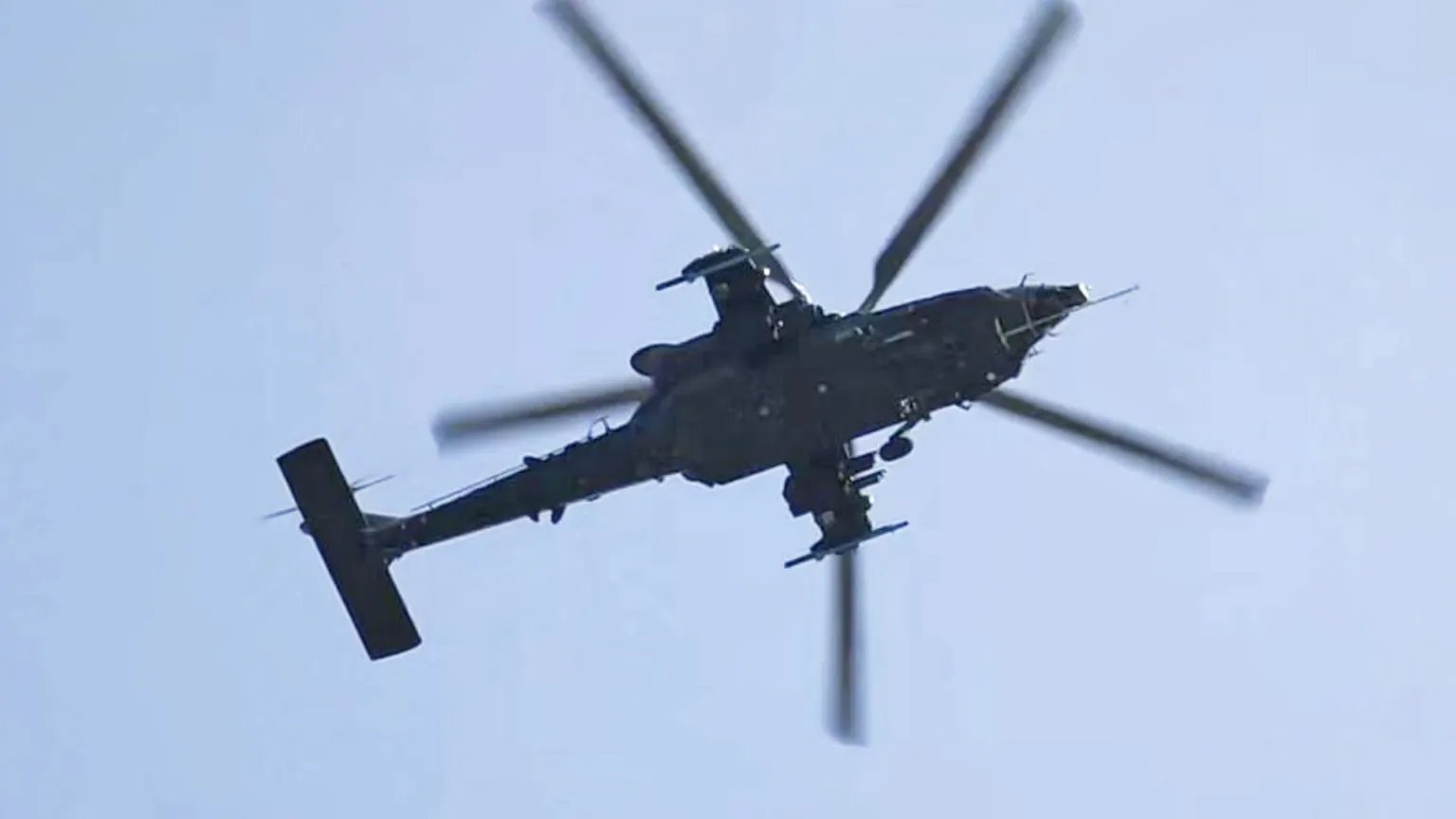
Large cheek fairings on either side of the fuselage incorporate MAWS, LWR, ESM, and electronic countermeasures (ECM) equipment. The nose features a new PNVS above a TADS, while an MMW search radar is mounted above the main rotor mast.
Laser-powered directional infrared countermeasures (DIRCM) are installed on the wingtips. Additional defensive equipment includes chaff and flare dispensers on the cheek fairings and tail boom.
A BeiDou antenna is mounted on the tail boom, while at least one prototype has been observed with upward-facing engine exhausts.
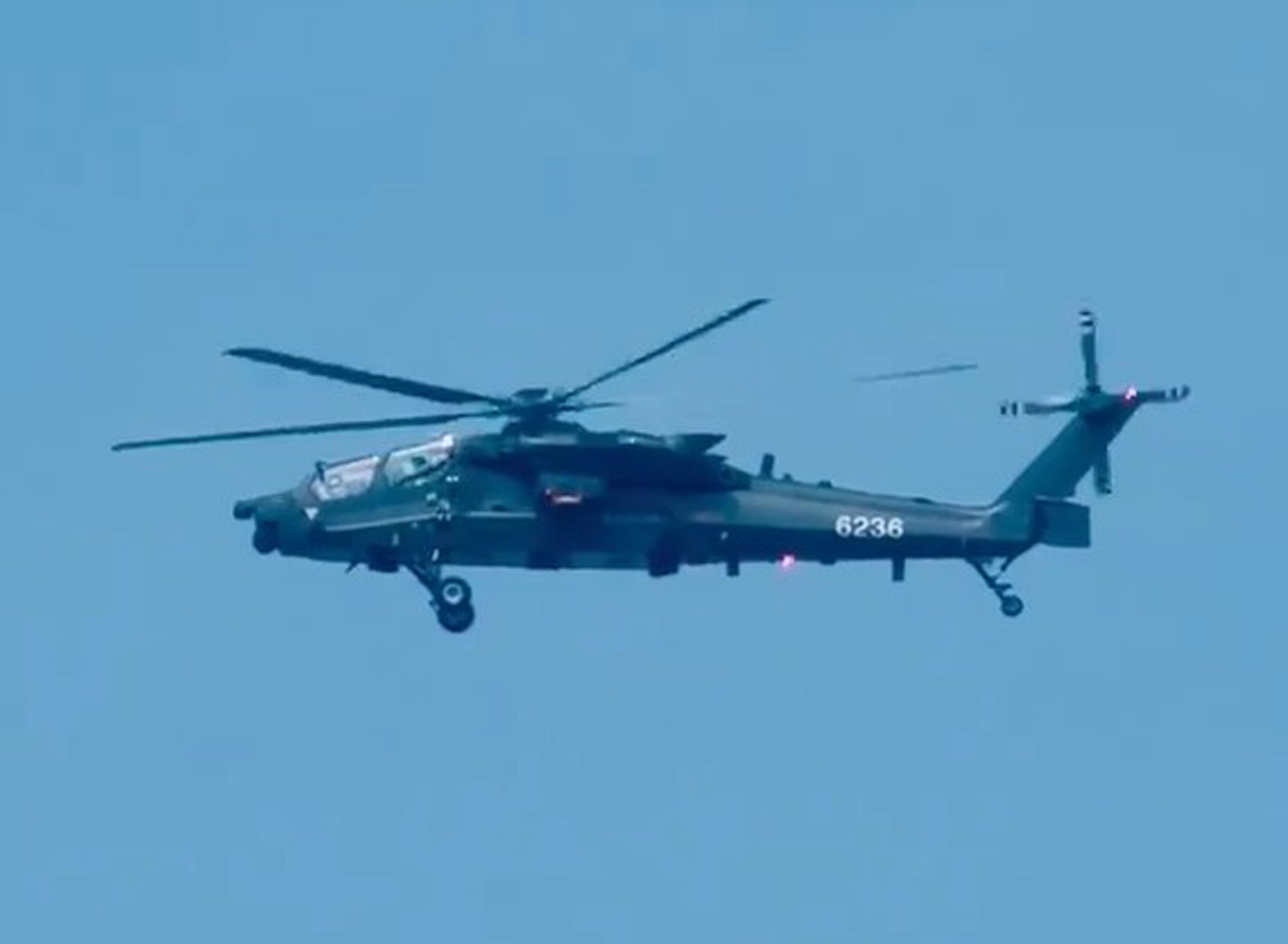
The Z-21 is expected to feature a 30mm chain gun beneath the forward fuselage. Each stub wing incorporates three weapon stations capable of carrying the newer KF-series long-range ATGMs, PL-90 AAMs, and other emerging weapons.
Compared with the Z-20, the Z-21 is expected to offer improved high-altitude performance, greater armor protection, and a heavier payload, making it better suited to demanding attack missions.
The Z-20 Family: China’s New Medium Helicopter
Z-20
The Z-20 is China’s new medium-lift general-purpose helicopter, developed by the 602 Research Institute, Harbin, and Changhe since the late 1990s.
The design is heavily influenced by the Sikorsky S-70 Black Hawk, examples of which China acquired for the PLA during the 1980s. However, the Z-20 incorporates a number of indigenous systems and is intended to replace the Mi-17 series in Army Aviation service.
The helicopter features a five-blade main rotor, a glass cockpit, and armor protection around the cockpit. A PNVS is mounted beneath the chin, while RWR antennas are installed on both sides of the forward and rear fuselage.
Additional equipment includes LWR sensors on both sides of the nose, SATCOM, ECM antennas on top of the fuselage, and a nose-mounted weather radar and terrain-following radar.
The Z-20 is powered by two WZ-10 turboshaft engines and can carry up to 13 fully equipped soldiers. An optional fuel tank can be installed in the cargo compartment to extend its range.
Stub wings can be fitted to carry rocket launchers, gun pods, and external fuel tanks.
The Z-20 first flew in 2013 and entered service with PLA Army Aviation by 2019.
Several aircraft have been observed with upward-facing engine exhausts. A SAR variant incorporates an EO turret and searchlight beneath the forward fuselage, together with a rescue hoist above the cabin door.
Z-20K/KS/KT
The Z-20 has also spawned a number of specialized variants for the PLAAF.
The Z-20K, identified in 2022, is a transport helicopter intended for airborne assault units.
The PLAAF operates the Z-20KS subvariant in the SAR role. This model features an EO turret and searchlight beneath the forward fuselage, while optional stub wings allow it to carry rocket launchers and gun pods.
An improved assault variant, the Z-20KT, incorporates a larger SATCOM antenna on top of the tail boom. Its folding tail section indicates that the helicopter is designed to facilitate aerial transport, allowing rapid deployment over long distances.
Z-20T
The Z-20T is a specialized assault helicopter broadly comparable in concept to the MH-60L Direct Action Penetrator used by the U.S. Army.
The helicopter features large stub wings capable of carrying KD-9 and KD-10 ATGMs, KF-9A ATGMs, PL-90 AAMs, ECM pods, and external fuel tanks.
LWR sensors have been relocated to the wingtips, while a TADS has replaced the weather radar in the nose. Additional armor plates provide increased protection for the crew and critical systems.
Later examples have also been observed with upward-facing engine exhausts.
Z-20F
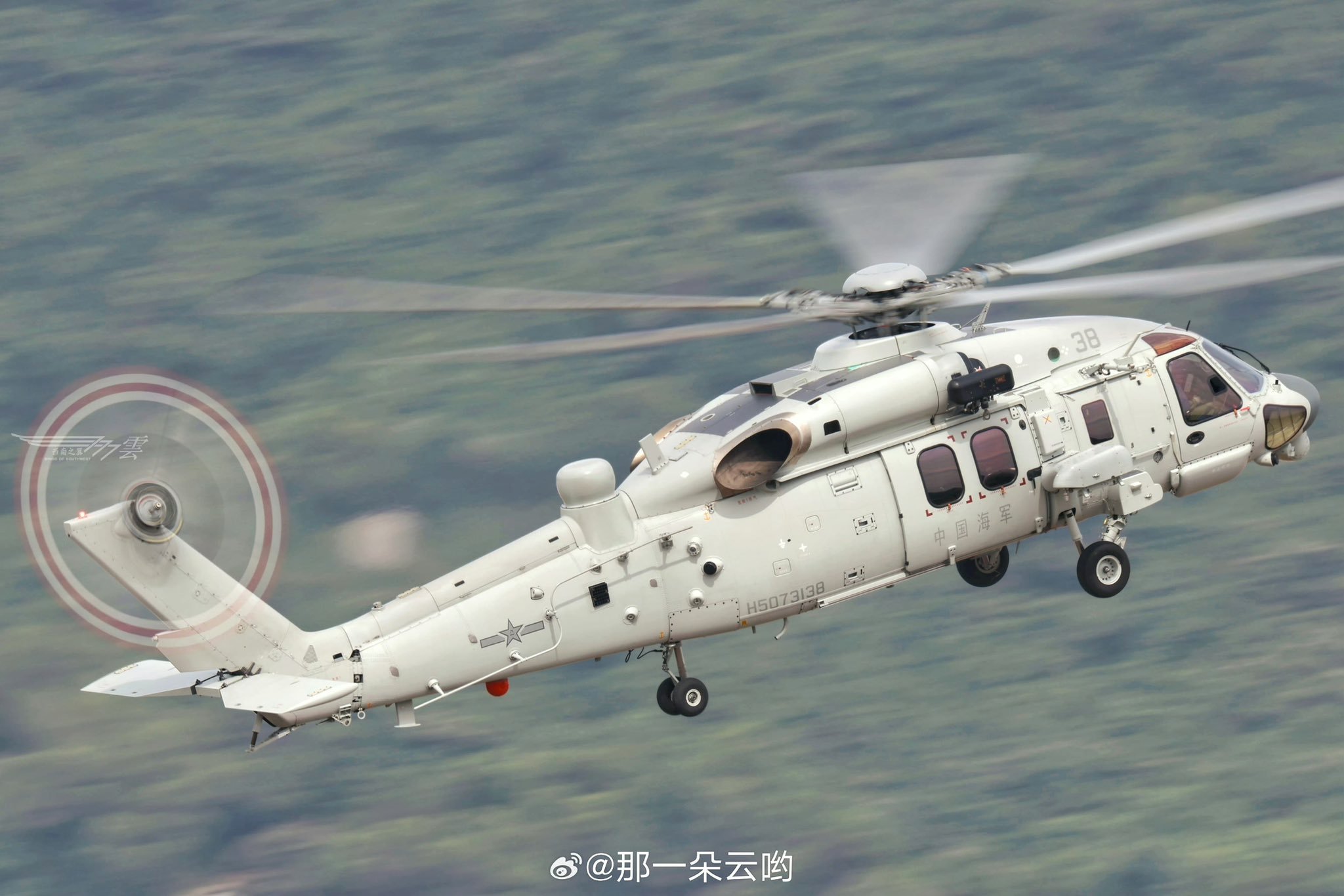
The Z-20F is a shipborne ASW helicopter developed to provide the PLAN with a modern equivalent to the MH-60R Seahawk. It first flew in 2018.
The helicopter incorporates folding rotor blades and a folding tail boom to facilitate shipboard storage. An emergency flotation system is fitted, while the rear landing gear has been relocated forward to the rear end of the fuselage.
The redesigned nose features an EO/laser-ranging turret, with a surface-search radar antenna mounted beneath the chin. A SATCOM antenna is installed on top of the tail boom.
Additional ESM antennas are distributed around the nose and rear fuselage. A 25-round sonobuoy launcher is mounted on the port side, while a dipping sonar and rescue hoist provide additional ASW and SAR capabilities.
The Z-20F can carry up to four YJ-9 AShMs beneath its stub wings, alongside lightweight ASW torpedoes on rear fuselage pylons.
The helicopter is expected to replace the older Z-9C on Type 054 frigates and Type 052 and Type 055 destroyers. It has also been observed aboard the aircraft carrier Fujian and Type 075 amphibious assault ships.
Z-20J
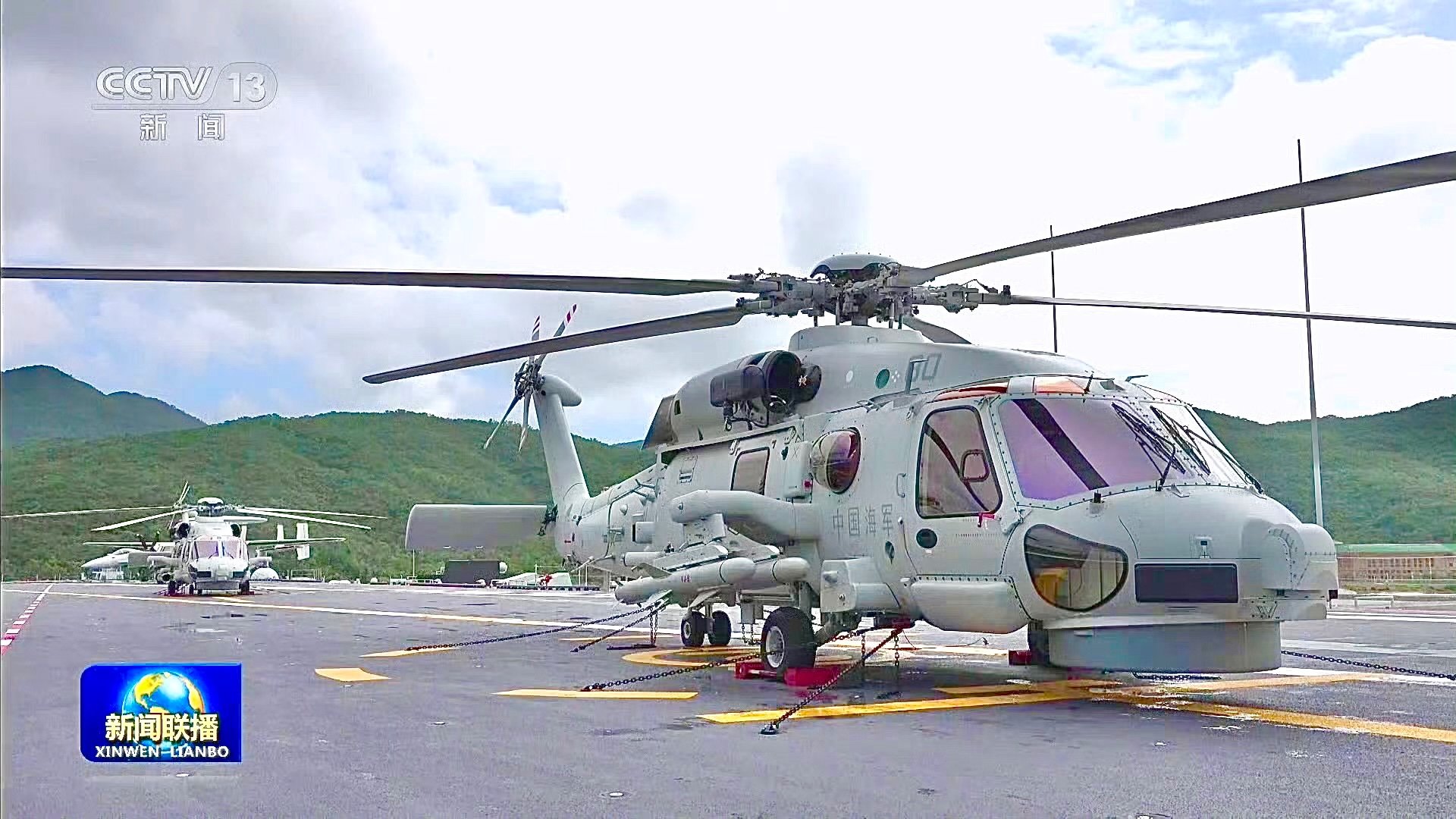
The Z-20J is a shipborne transport and assault variant designed for the PLAN.
Its stub wings can carry up to eight KD-9 ATGMs or four YJ-9 AShMs, as well as rocket launchers, external fuel tanks, and gun pods.
MAWS sensors are installed on both sides of the chin and along the rear fuselage, providing additional protection during operations over water.
The Z-20J expands the range of missions that can be performed from Chinese surface combatants and amphibious assault ships, complementing the ASW-focused Z-20F.
Conclusion
Despite often being overshadowed by the PLA’s latest combat aircraft, missiles, and other high-profile weapons programs, helicopters remain an indispensable part of China’s military modernization. They provide critical capabilities, from moving troops and supplies across difficult terrain to supporting amphibious operations, special forces, search and rescue, and naval warfare.
More importantly, the steady development of indigenous helicopter designs reflects China’s determination to reduce reliance on foreign suppliers and build a more capable, self-sufficient rotary-wing force. These aircraft may attract less attention than the PLA’s newest fighters, but their growing sophistication and expanding roles make them an essential part of the force’s ability to operate across a wide range of contingencies.
Contact the author: thomas@thewarzone.com
Loading comments…
Comments couldn’t be loaded. Please refresh the page.