
A GJ-21 stealthy flying-wing uncrewed combat air vehicle (UCAV) has successfully launched from and recovered aboard the Type 076 amphibious assault ship Sichuan, according to China’s People’s Liberation Army (PLA). Visual confirmation of this milestone has yet to emerge, but there have been steady signs of preparations for flight trials from the Sichuan, which features an electromagnetic catapult. GJ-21s have already been spotted flying from airfields on land.
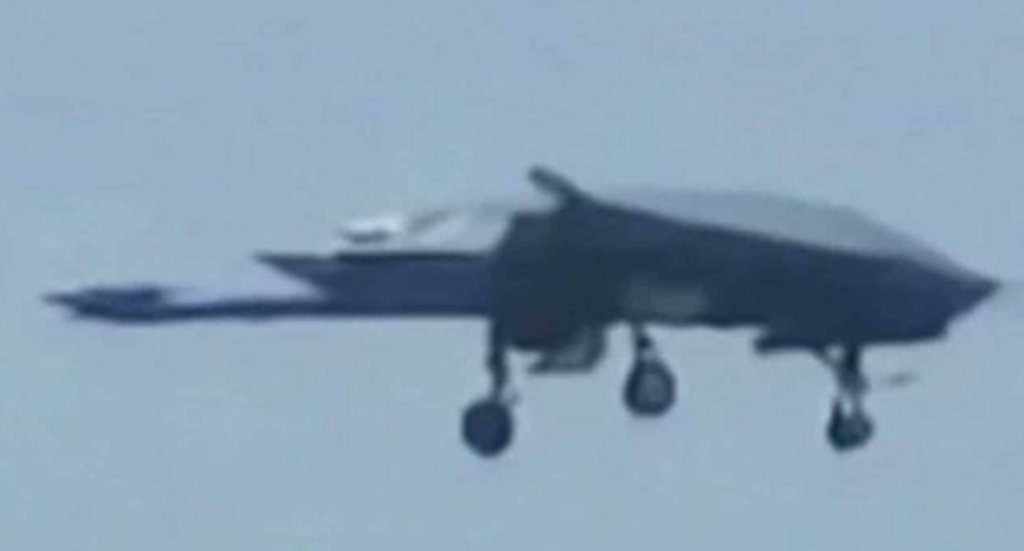
The GJ-21 and the land-based GJ-11 Mysterious Dragon it is based on are prime examples of China’s major investments in UCAVs and other flying-wing-type drones. These developments stand in particular contrast to the U.S. military’s eschewing of such designs, at least publicly. This is despite significant past U.S. achievements in this arena, including in the development of carrier-based UCAVs. The PLA Navy (PLAN) now looks to be on track to be the first country to field an operational capability of this kind.

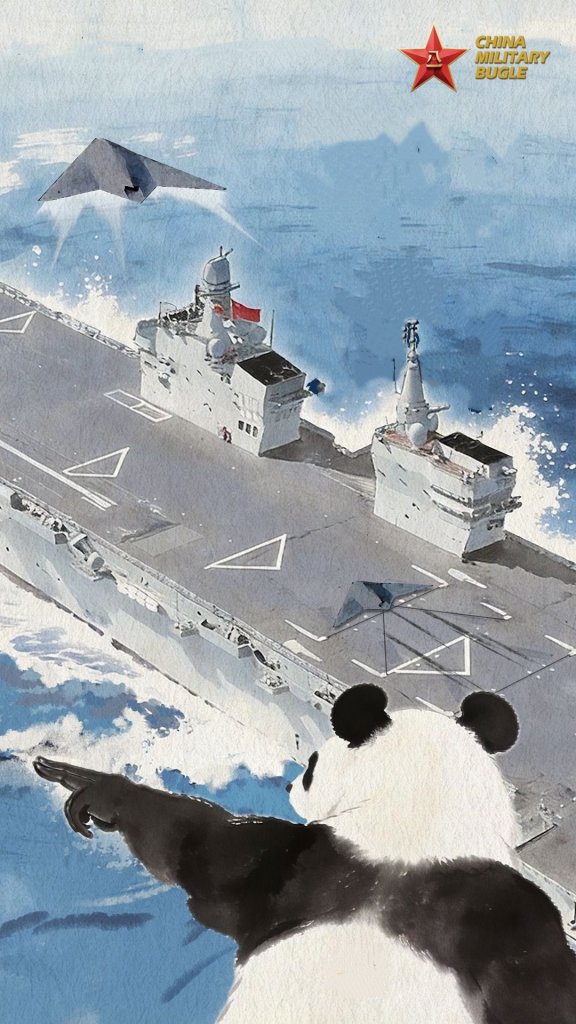
“China’s first ship-borne stealth reconnaissance and attack drone ‘GJ-21’ recently made its first successful take-off and landing on [the Type] 076 amphibious assault ship, the ‘Sichuan’ (Hull 51),” according to a post today from the China Military Bugle account on X, an official PLA mouthpiece. “This is another significant breakthrough in the development of China’s amphibious assault ship, indicating that the Chinese Navy now has the capability to operate fixed-wing stealth drones from large maritime combat platforms.”
At the time of writing, neither the PLA nor Chinese state media have shared where or when these trials occurred or provided any other additional details, including how many total launches and recoveries were conducted. No official pictures or videos from the testing have been released so far.
Unconfirmed claims that a GJ-21 had been launched from Sichuan had already begun circulating on social media earlier this month. As an aside, the GJ-21 is readily discernible from the land-based GJ-11 by the catapult bar on its nose landing gear strut.
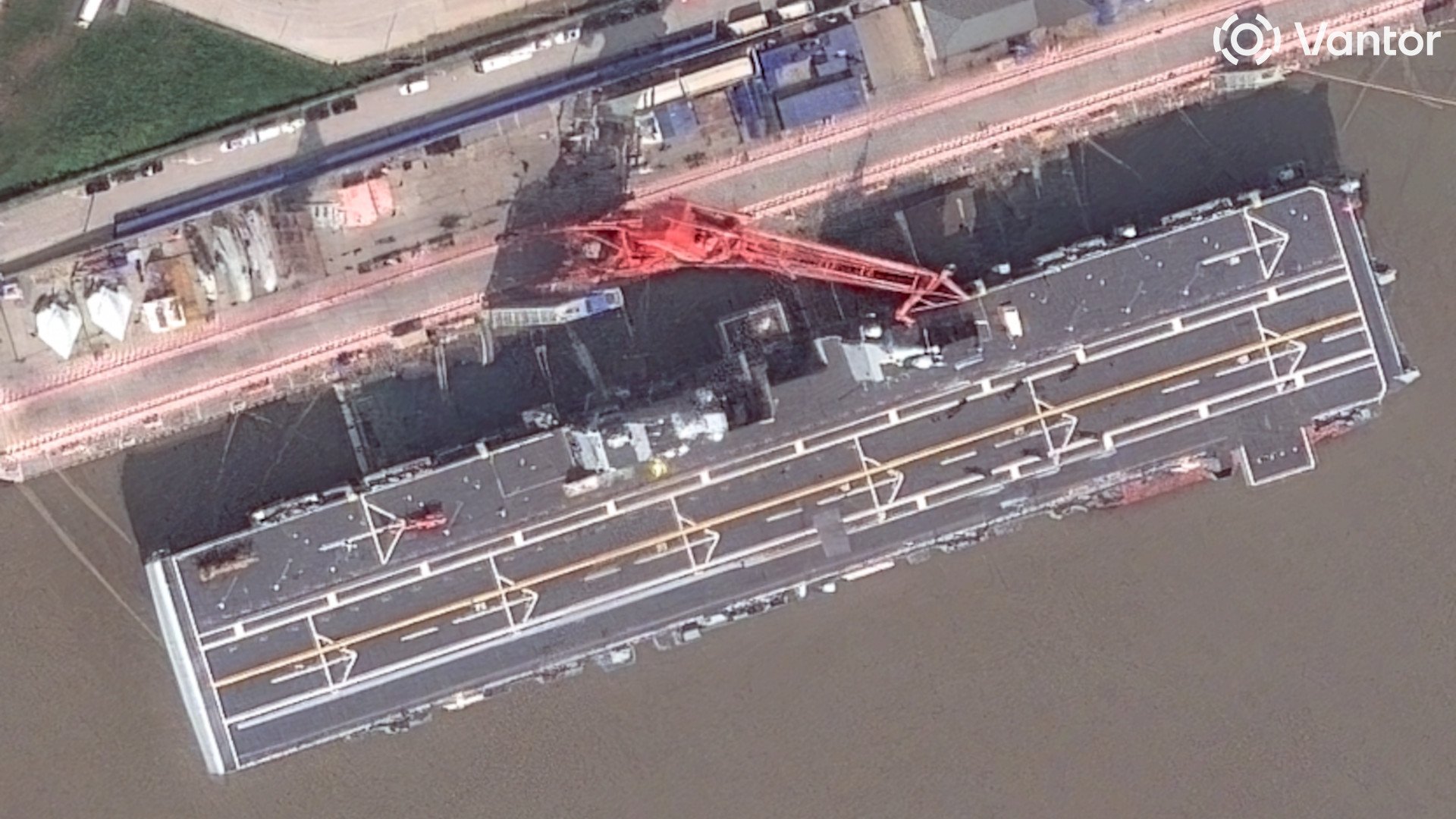
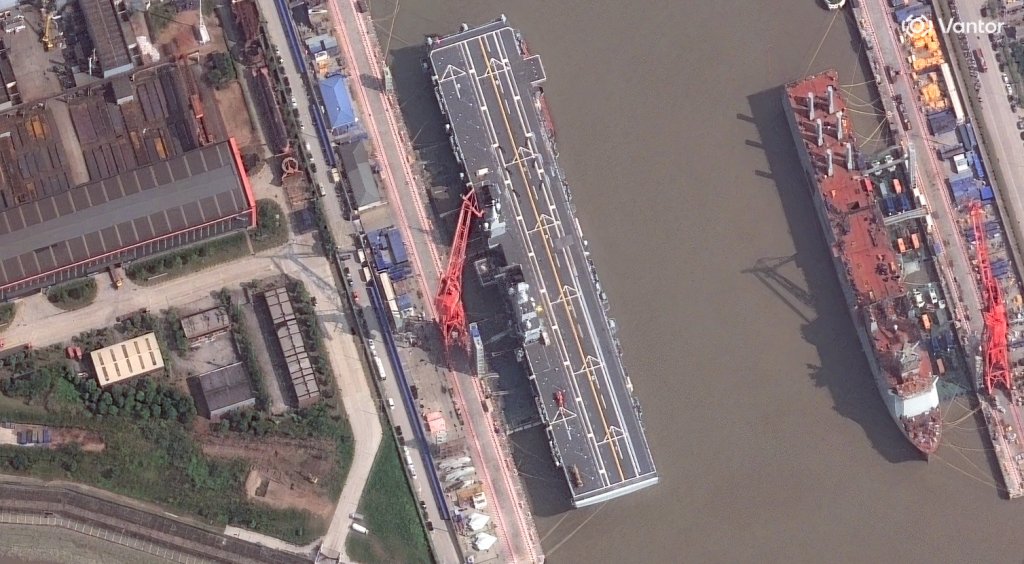
A review of satellite imagery from Planet Labs does show Sichuan was at its usual berth at Hudong-Zhonghua in Shanghai as of October 13, but absent four days later. When exactly it left port is unclear. The one-of-a-kind Type 076 does not appear to have returned until October 26. TWZ has also obtained a satellite image of Hudong-Zhonghua taken just today from Vantor, with the ship still seen sitting at the pier, as seen at the top of this story and below. GJ-21 drones, or more likely mockups thereof, have also been present on the pier for some time.
Even while Sichuan was still under construction, there were growing signs that a navalized version of the GJ-11, as well as other uncrewed platforms, would be major components of its future air wing. With its electromagnetic catapult and notably large overall size, the Type 076 is unlike any other big-deck amphibious warship in service today globally, as TWZ has previously explored in depth.

As mentioned, there have been further signs that the PLA has been preparing Sichuan for real launches and recoveries, especially of GJ-21s, since last year. Pictures emerged online in October 2025 showing a red-colored test ‘truck’ on the ship’s flight deck, indicating the start of catapult testing. Video from those tests has since been released. Weighted trucks like this have long been used to test catapults on aircraft carriers during construction or following maintenance. The Type 076 left port for the first time in November 2025.
“Two GJ-21 aircraft were displayed at the victory parade in September 2025, reportedly having entered PLAN service in mid-2025,” according to Andreas Rupprecht, an expert on Chinese aviation and contributor to TWZ. “By late 2025, several GJ-21 aircraft were reportedly undergoing simulated EMALS launches and arrested landings at the PLAN’s land-based facility at Huangdicun.”
In February of this year, GJ-21 mockups were spotted on Sichuan’s flight deck and riding on the ship’s port-side elevator to the hangar deck as part of what appeared to be deck-handling trials.
More recent satellite imagery had shown that the Type 076’s flight deck had received additional markings in line with progress toward real flight operations. Fittings for three arresting cables also became plainly visible. Those cables are also notably depicted in the graphic that the China Military Bugle shared online today.
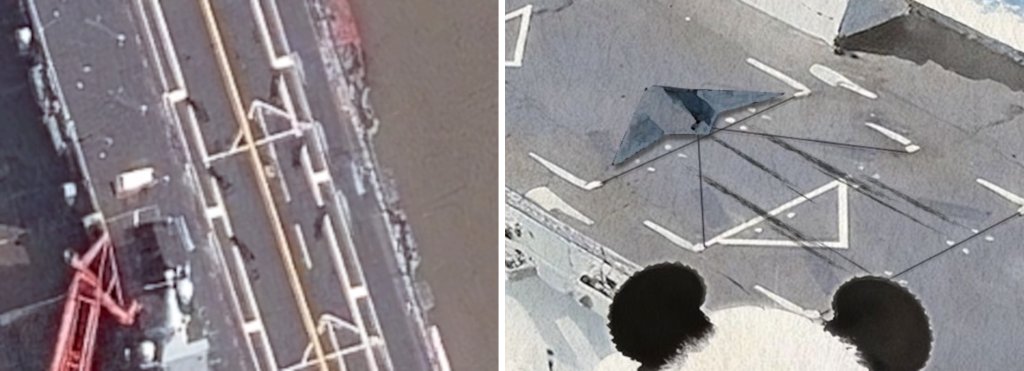
The GJ-21 will of course not be the only aircraft in the Type 076’s future air wing. The ship is also expected to carry a variety of other uncrewed aircraft, as well as crewed helicopters. China has shown a range of other combat drone designs in recent years. Navalized versions could well be developed for deployment on Sichuan, as well as PLAN’s growing fleet of traditional carriers and other suitable configured vessels.
Loading the Type 076 with operational UCAVs would only underscore the significance of this particular ship. As we have previously written:
“The potential value to the PLAN of having a fleet of very large deck amphibious assault ships that are highly capable of large-scale drone operations as well as traditional amphibious assaults is clear. These ships could be used to launch and recover UCAVs like the GJ-11 and other types of drones to perform a host of missions from maritime strike to intelligence, surveillance, and reconnaissance (ISR). They could be used to provide additional ‘mass’ in support of the operations of larger carrier strike groups and help to free the air wings of flattops like Fujian up for tasks they might be better suited for. In addition, they could provide a lower tier of naval aviation support that could be employed independently.”
…
“Simply having more naval aviation capacity overall would give the PLAN added flexibility for various operations closer to the mainland, including a potential military intervention against Taiwan or defending its expansive and largely unrecognized territorial claims in places like the South China Sea. Type 076s could also help project naval and air power further from China’s shores, something that has also been a driving factor behind the country’s broader carrier ambitions.”
…
“The Type 076 could help provide support during humanitarian assistance and disaster relief operations. Big deck amphibious warfare ships, in general, provide their operators with immensely valuable platforms for projecting both hard and soft power.”

Last year, the PLA separately confirmed that the GJ-11 had entered at least limited operational service. That followed a steady ramp-up in testing of that drone based on what could be seen in satellite imagery and video clips that had emerged online. This included evidence of near-daily flights at Malan Air Base, a major hub for testing uncrewed platforms. GJ-11s had also been spotted at an operational air base in China’s Tibet Autonomous Region.
As mentioned earlier, the continued development of the GJ-11 and GJ-21 are reflective of the PLA’s broader pursuit of stealthy flying-wing drones, which is not limited to UCAVs. Several larger designs that look most immediately suited to high-altitude, long-endurance ISR missions have also broken cover in the country in the past few years.
There is something of a trend in this regard globally, with Russia, India, Turkey, and France also pursuing flying-wing drone designs. The U.S. military continues to be markedly absent from this space, at least that we know, despite major investments and real demonstrations of relevant capability, before various programs were abandoned for reasons that still remain largely unclear. In the late 2010s, the U.S. Navy notably looked to be right on the edge of fielding a carrier-based UCAV, before changing course entirely to an uncrewed tanker instead. There are some signs now that the service may be taking another look at the capabilities it passed over.
It is still to be seen how quickly the PLA’s official statement today will be followed by real confirmation of the launching and recovery of a GJ-21 from the Sichuan.
Contact the author: joe@twz.com
Loading comments…
Comments couldn’t be loaded. Please refresh the page.