
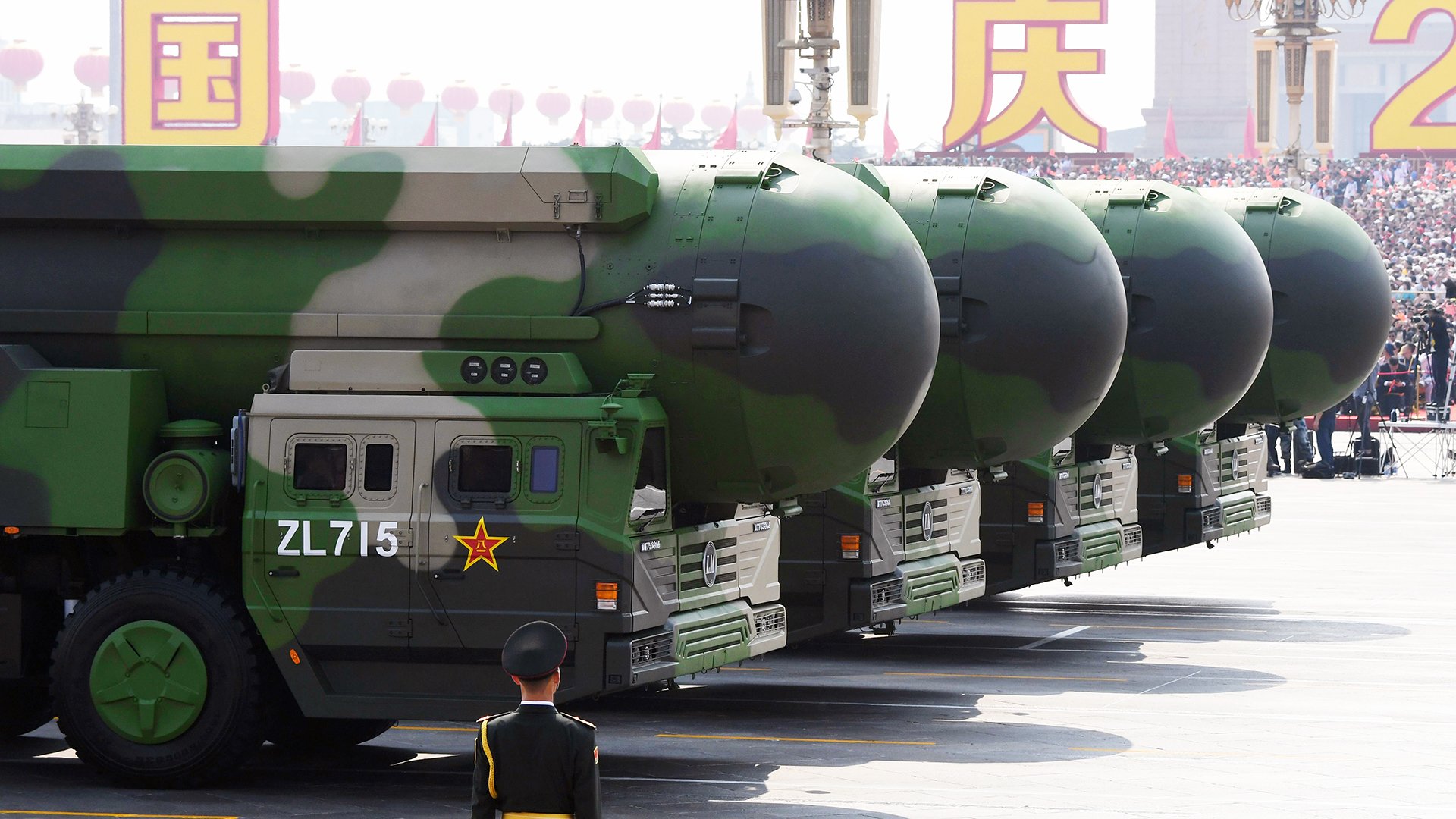
China fields the largest and most sophisticated ballistic missile arsenal in Asia, supported by what the U.S. Department of Defense has described as “the world’s most active and diverse missile development program.” In the first of this series, TWZ provides an overview of the country’s intercontinental and submarine-launched ballistic missiles (ICBMs and SLBMs), representing the leading edge of Beijing’s nuclear deterrent forces.
China has rapidly expanded and modernized the arsenal of its People’s Liberation Army Rocket Force (PLARF), fielding a growing number of ballistic missiles capable of delivering either conventional or nuclear warheads. The backbone of the force now consists of road-mobile, solid-fuel medium-, intermediate-, and intercontinental-range missiles. However, legacy liquid-fueled systems such as the Dong Feng-5 (CSS-4) remain in service, and a new silo-building program will change the balance yet again.

The expansion shows no signs of slowing. According to one report, by the start of this decade, the number of Chinese ballistic missile brigades had grown by more than 35 percent in just three years, with most new formations operating medium- and intermediate-range ballistic missiles (MRBMs and IRBMs) alongside ground-launched cruise missiles (GLCMs).
Perhaps most dramatically, China has embarked on a rapid expansion of its ICBM silos. In 2021, open-source researchers observed the construction of several hundred new missile silos. These are located near Yumen (120 silos), Hami (110 silos), and Ordos (around 90), and they raise big questions about how many ICBMs China aims to deploy. The analysts responsible for locating the new solos described it as “the most significant expansion of the Chinese nuclear arsenal ever,” but its full significance remains to be seen.
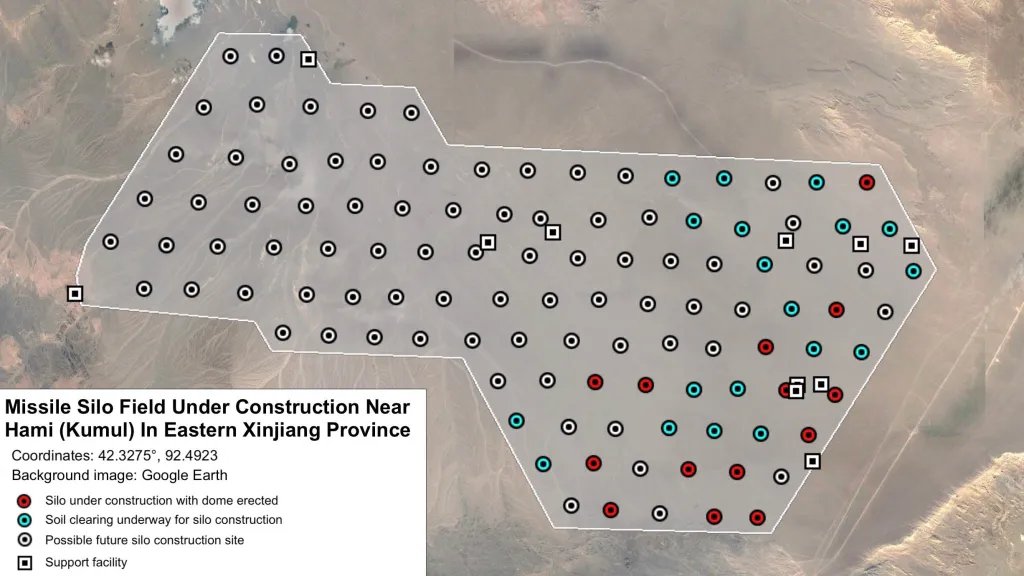
Leaving some of the new silos empty might be an option, revisiting the ‘shell game’ that was planned for the U.S. Peacekeeper ICBM in the late 1970s. However, the U.S. State Department has said that the U.S. intelligence community believes every silo will have a missile ‘loaded.’ You can read our previous assessment of this development here.
At the same time, Beijing is improving the survivability and effectiveness of its strategic arsenal through the deployment of multiple independent re-entry vehicles (MIRVs) and penetration aids, while advancing new sea- and air-based nuclear delivery systems. These include the Type 096 ballistic missile submarine (SSBN) and its JL-3 submarine-launched ballistic missile (SLBM), as well as the nuclear-capable H-20 stealth bomber currently under development, further strengthening China’s emergence as a fully fledged nuclear triad power.
As for the nuclear warheads that arm the ICBMs and SLBMs discussed below, the numbers available are a closely guarded secret. However, the Pentagon has estimated that China had surpassed 600 operational nuclear warheads in its stockpile as of mid-2024 and will have over 1,000 operational warheads by 2030, much of which will be deployed at higher readiness levels.
DF-5 (CSS-4)
Range: 12,000+ kilometers
With the DF-4, a ‘limited-range ICBM,’ having been retired from service around 2023, the DF-5, China’s first true ICBM, is now the oldest in the inventory.
On account of its size, the two-stage, liquid-fueled DF-5 was always intended for silo deployment.
Although tested as early as 1971, the missile wasn’t successfully flown over longer ranges until 1980. It appears that China had particular challenges getting the powerful new engines to work, and other new developments over the DF-4 included using nitrogen tetroxide as an oxidizer and steering via gimballed engines and vernier engines rather than jet vanes.
As tensions with the Soviet Union increased, China accelerated the program, placing the missiles in experimental silos by December 1980, a month after the handover of the first DF-5.
As early as 1983, work began on the improved DF-5A, known in the West as the CSS-4 Mod 2, four units of which were reportedly operational by 1992. Deployed DF-5 units were gradually replaced with the DF-5A. The DF-5 and DF-5A both featured a multi-megaton warhead.
In 2015, the further-improved DF-5B (CSS-4 Mod 2) variant was unveiled. In a first for China, this version is understood to differ from its predecessors in carrying multiple warheads, reportedly four re-entry vehicles per missile. The delay in fielding a missile with nuclear-armed multiple independent re-entry vehicles (MIRVs) may seem surprising, but reflects the major technological challenges, which saw China lag behind the Soviet Union (later Russia) and the United States for many years.
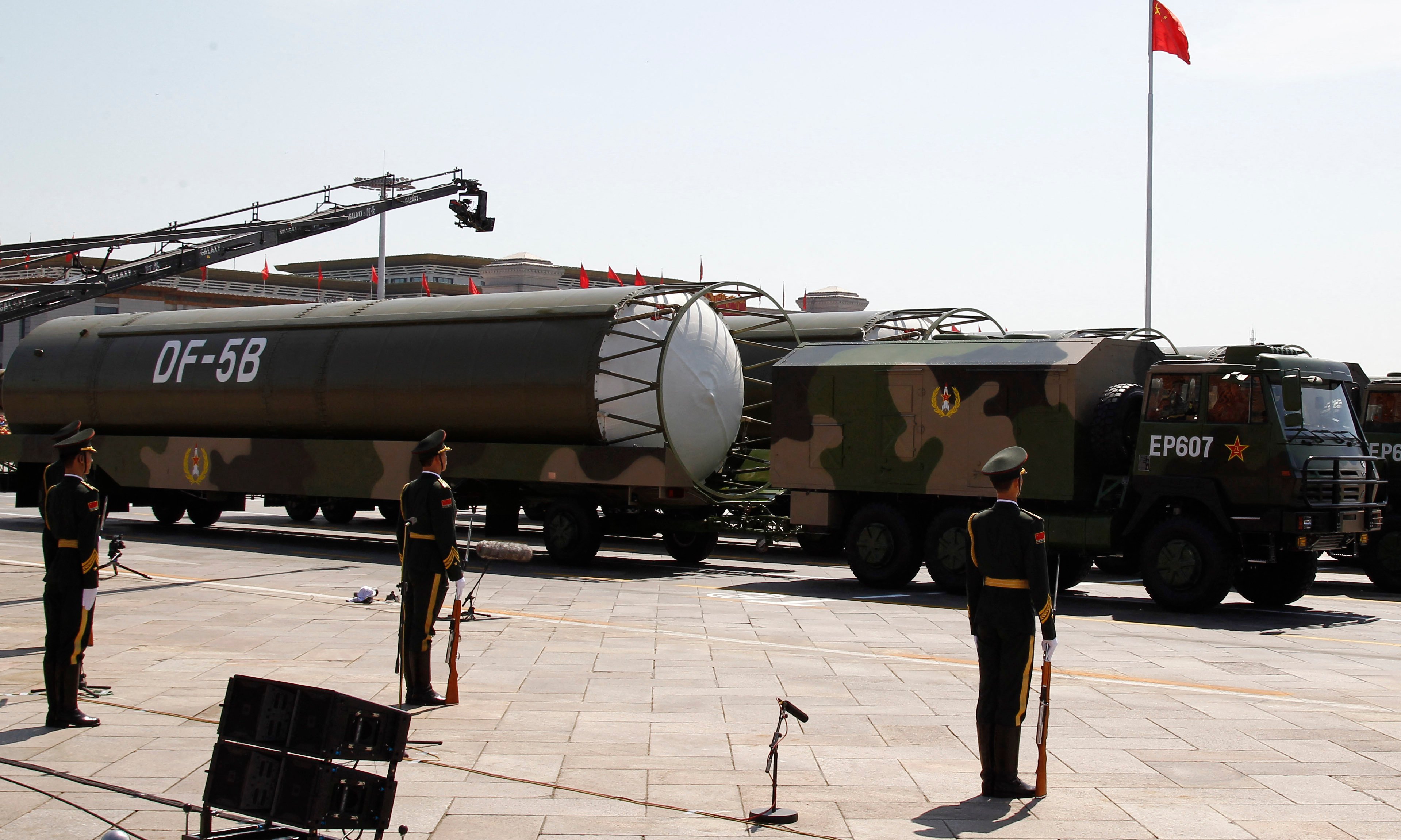
At the same time, it appears that, instead of attempting to boost penetrative power against enemy defenses by adopting MIRVs, China instead focused more on rapid launch sequences and hardened silos for its ICBMs.
It should be noted that the DF-5 also served as the basis for China’s important Long March 2 series of space launch vehicles and its successors.
The latest version of the missile is the DF-5C (CSS-4 Mod 4). This features an enlarged final stage section, which the Pentagon has suggested carries a multi-megaton-sized warhead. This would indicate a counter-value rather than a counter-force system, i.e., expected to target enemy population centers and economic assets, rather than its military capabilities like missile silos and command bases.
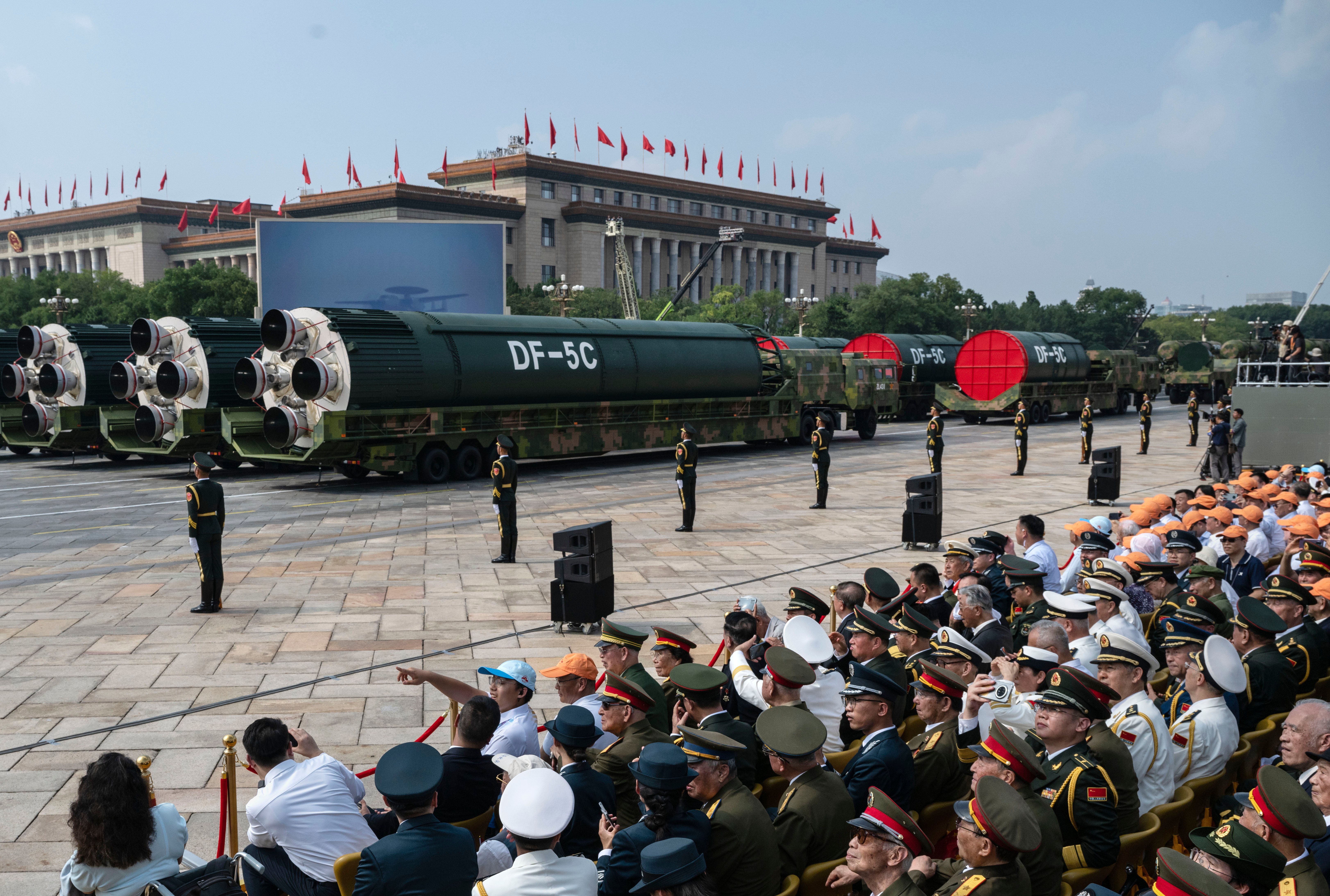
The DF-5 and its improved variants remain in service as China’s last liquid-fueled ballistic missiles. According to Western estimates, there are 20 known DF-5 silos, although China is building additional silos which may well also be used to house these weapons, as well as more modern missiles.
DF-31 and DF-31A (CSS-10 Mod 1 and CSS-10 Mod 2)
Range: DF-31 (CSS-10 Mod 1) 7,000+ km; DF-31A (CSS-10 Mod 2) 11,000+ km
With Sino-Soviet relations hitting a low in the early 1970s, China launched the development of a solid-fuel ICBM (and a submarine-launched counterpart) as part of a major overhaul of its strategic forces.
Initial work on what became the DF-31 began in 1974, but the program made little progress until 1978. Successful tests of a new solid-fuel motor in 1983 spurred these efforts and led Beijing to scrap work on a new liquid-fuel ICBM. In 1984, an official directive called for a shift from liquid to solid propellants, as well as a focus on tactical rather than strategic missile systems.
Solid-fueled missiles, when combined with mobile launchers, can leave cover and launch far more quickly, eliminating the lengthy fueling process required while the missile is erected. As a result, they are significantly less vulnerable to preemptive strikes. The shorter launch timeline also drastically improves the ability to respond to a crisis.
From 1985, China embarked on its ‘second-generation strategic missile’ program, spearheaded by the DF-31 and the submarine-launched JL-2.
In 1999, the three-stage DF-31 was publicly unveiled for the first time during a parade. However, the missile didn’t enter service until 2006, reportedly due to difficulties related to the guidance systems.
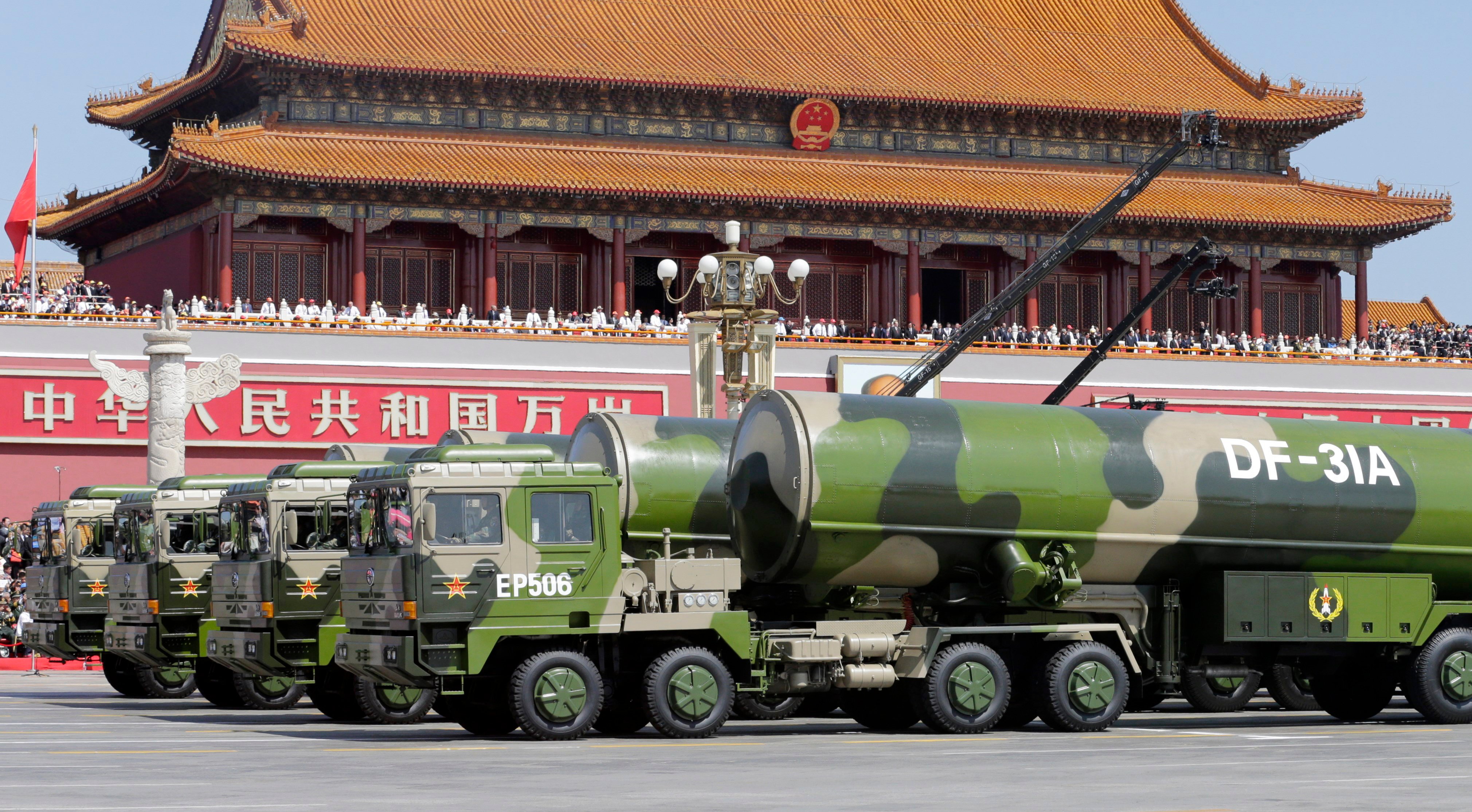
As a mobile solid-fuel ICBM, the closest match to the DF-31 is perhaps Russia’s Topol. The U.S. Minuteman III is similar in terms of size and configuration but is exclusively silo-based and has significantly better performance.
The DF-31 is an important part of Beijing’s strategic force. Most significantly, perhaps, it reflects a shift from a Chinese ICBM force dominated by heavy, liquid-fuel missiles to one fielding a larger number of smaller, mobile solid-fuel missiles.
As well as the original DF-31 (CSS-10 Mod 1), of which around eight launchers are understood to be deployed, China operates around 24 launchers armed with the DF-31A (CSS-10 Mod 2). The DF-31A reportedly first flew in 1999 and has a longer range thanks to a lighter guidance system and other improvements. Both types carry a single warhead.
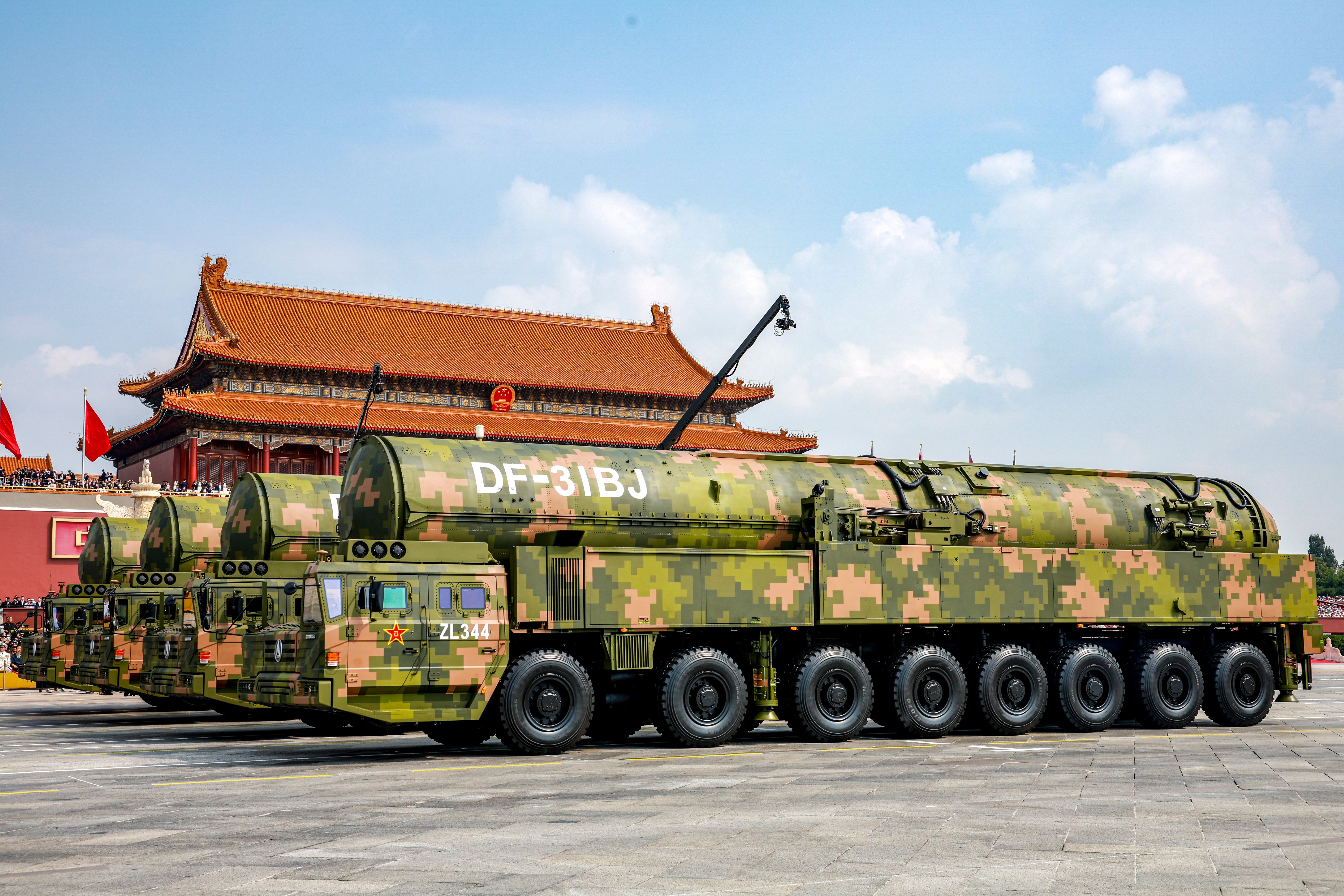
There is also a silo-based version of the missile, which Beijing is now presumed to have installed in many of the silos in its missile fields. This is designated as the DF-31BJ, but few details about it are known.
DF-31AG (CSS-10 Mod 3)
Range: unknown
In 2017, China publicly displayed a new variant of the DF-31, the DF-31AG. Mounted on a new transporter-erector-launcher (TEL), the new missile system has a distinctly unique appearance and likely has certain different capabilities, perhaps including multiple warheads. Based on commercial satellite imagery, it appears that China is converting at least some of its existing DF-31A brigades to this new variant.
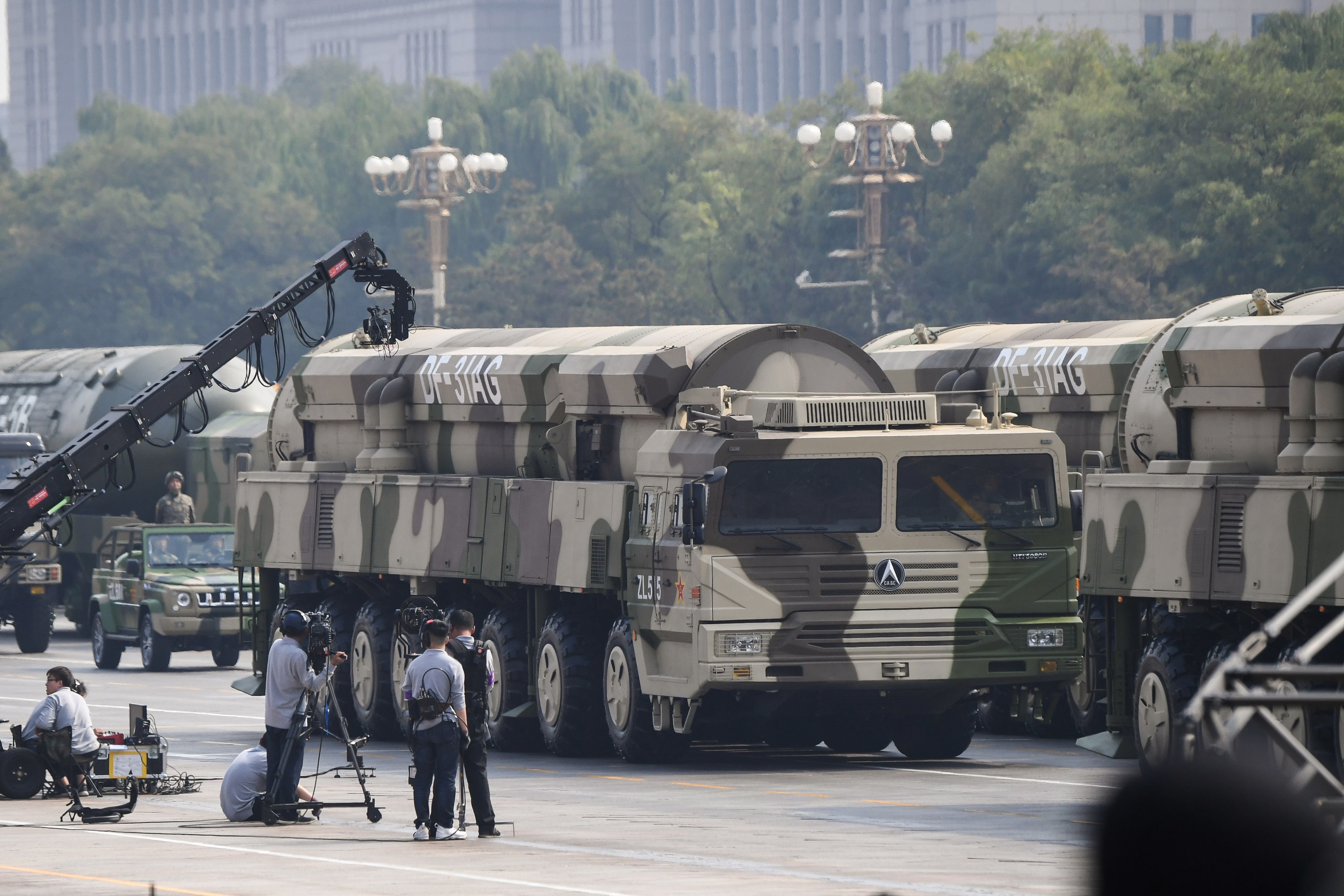
Compared to the tractor-trailer configuration of the MEL used on the DF-31/DF-31A, that for the DF-31AG is highly mobile and much more suitable for off-road operations, suggesting a different employment concept. Around 56 launchers are understood to be deployed.
DF-41 (CSS-20)
Range: 12,000+ km
While the DF-31 series marked a step change for China’s strategic forces, these ‘second-generation strategic missiles’ were just a part of the process of modernizing the deterrent.
By 1986, China was working on an even more ambitious three-stage solid-fuel missile, the DF-41. This was intended to fully replace the liquid-fuel DF-5 by no later than 2010, although this goal was not achieved.
Like the DF-31, the new ICBM would be mobile, and, in parallel with its development, China made efforts to make portions of its highway network more suitable for handling the heavy mobile launchers.
The DF-41 was revealed to the public during a parade in 2019. At the time, it was announced that two brigades were already equipped with this system.
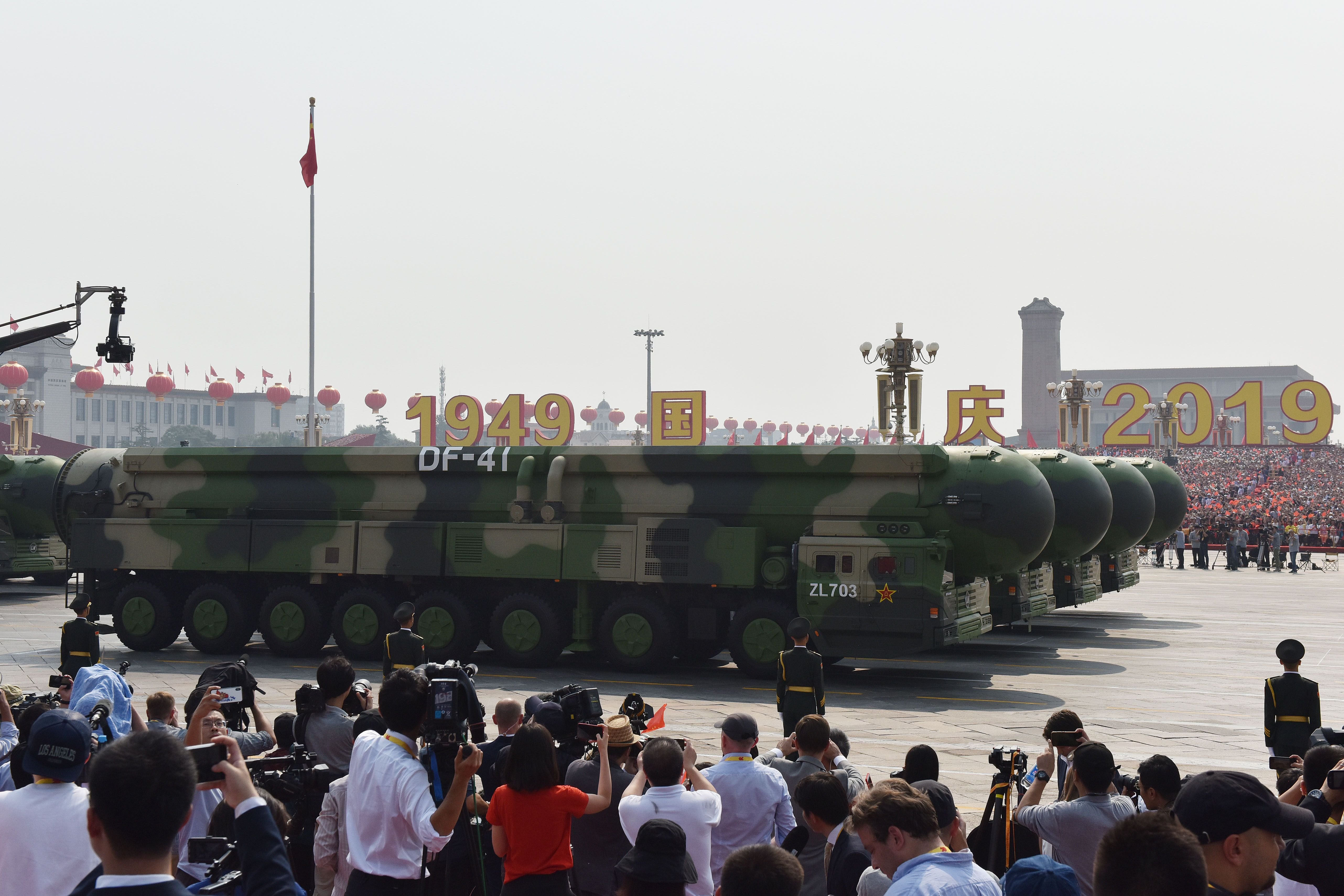
In contrast to the DF-31, the DF-41 is thought to be equipped with multiple warheads, although sources disagree on how many. Published figures range from three to 10 MIRVs, although it’s probable that a range of different numbers and yields can be accommodated. One Pentagon assessment said that “the system is likely intended to carry no more than three warheads per missile and has improved range and accuracy over DF-31 class ICBMs.”
In addition to the road-mobile version, the U.S. Department of Defense has assessed that both silo-based and rail-based variants are under development. Potentially, the newly built silos could accommodate other ICBMs, like the DF-31 and DF-5, but the more modern DF-41 appears a more likely candidate.
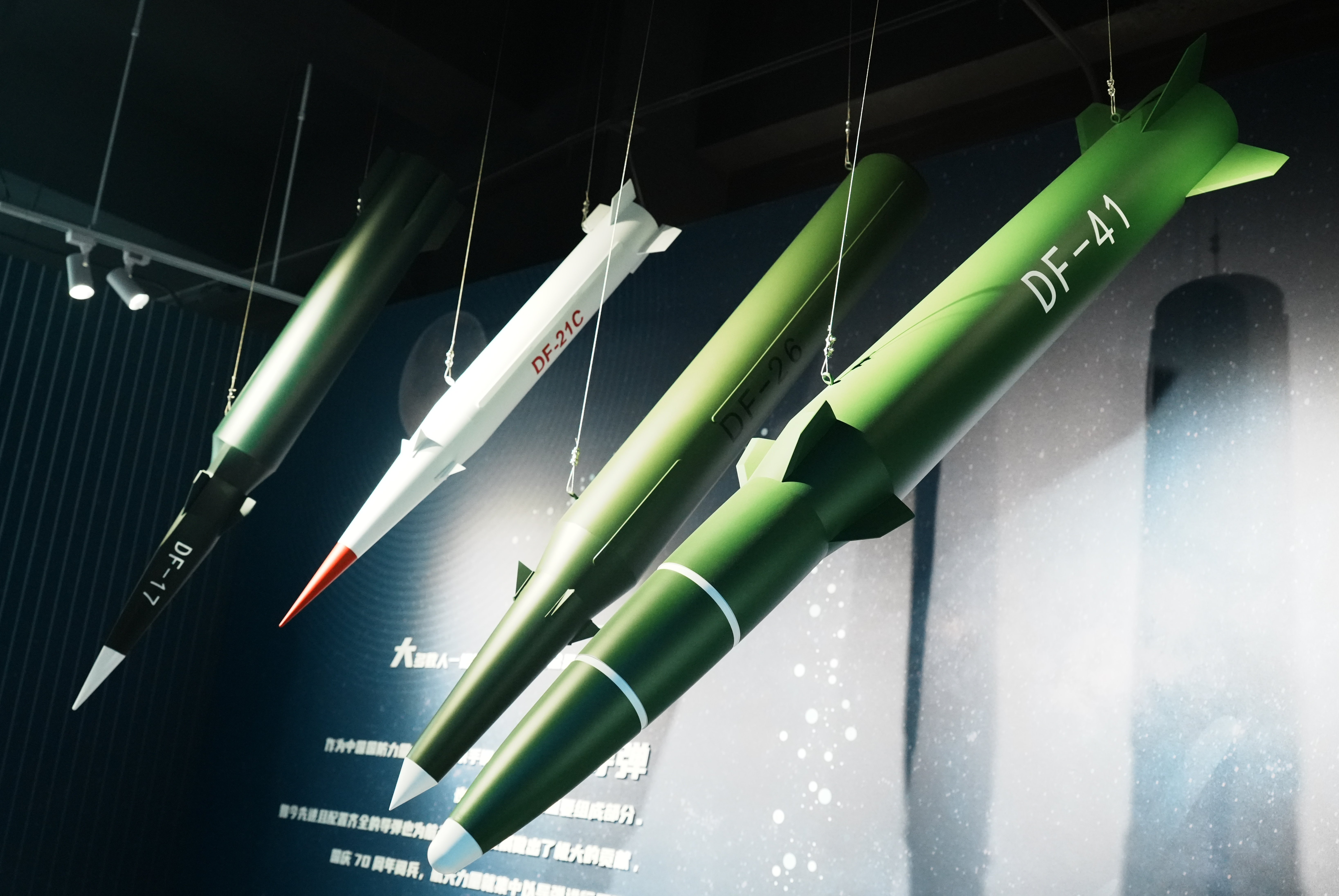
Looking at the road-mobile type only, a total of around 44 launchers for the DF-41 are understood to be deployed.
DF-61
Range: unknown
The latest Chinese ICBM to have been revealed is the DF-61, shown publicly for the first time during the parade celebrating the 80th anniversary of victory in World War II, in September 2025. There have been suggestions that the missile could be the launcher for one or more intercontinental-range nuclear-armed HGVs. (It is unclear what happened to the ‘missing’ DF-51 designation, which only ever appears to have been used speculatively).
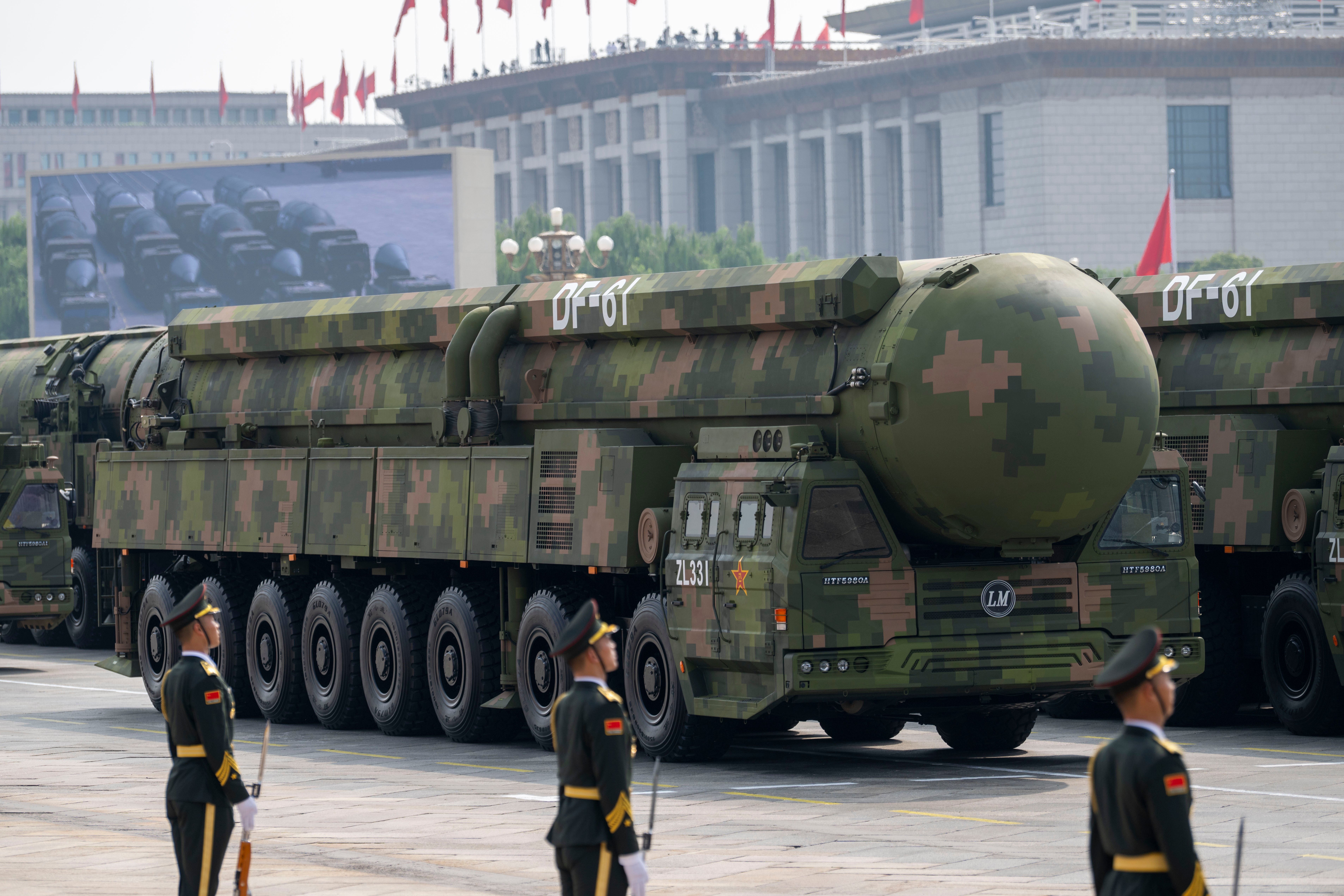
U.S. intelligence considers that there is a Chinese counterpart to Russia’s Avangard, namely, an intercontinental-range hypersonic glide vehicle (HGV), which may be carried atop the DF-61. Designed to fly at high speeds and low altitudes, it would seriously complicate an adversary’s ability to provide precise warning. It is likely the same gliding re-entry vehicle that China tested in 2021 as a fractional orbital bombardment system (FOBS) capable of defeating U.S. missile defences.
Chinese officials have hinted at such a capability in the past. In 2024, then-Principal Assistant Deputy Secretary of Defense for Space Policy, Dr. Vipin Narang, described a ‘strategic hypersonic glide missile that can carry nuclear warheads’ in Beijing’s arsenal. Such a missile would provide a long-range, strategic complement to the theater-range, conventionally armed DF-17 hypersonic boost glide vehicle.
JL-2 (CSS-N-14)
Range: 7,000 km
Soon after embarking on its nuclear program, China began looking at launching a ballistic missile from a nuclear-powered submarine. The ambition was long delayed, since the People’s Liberation Army Navy (PLAN) did not commission its first nuclear-powered ballistic missile submarines (SSBN) until 1984. The goal was further thwarted when it deprioritized its SSBN program, and only a single Type 092 class boat was ever fielded.
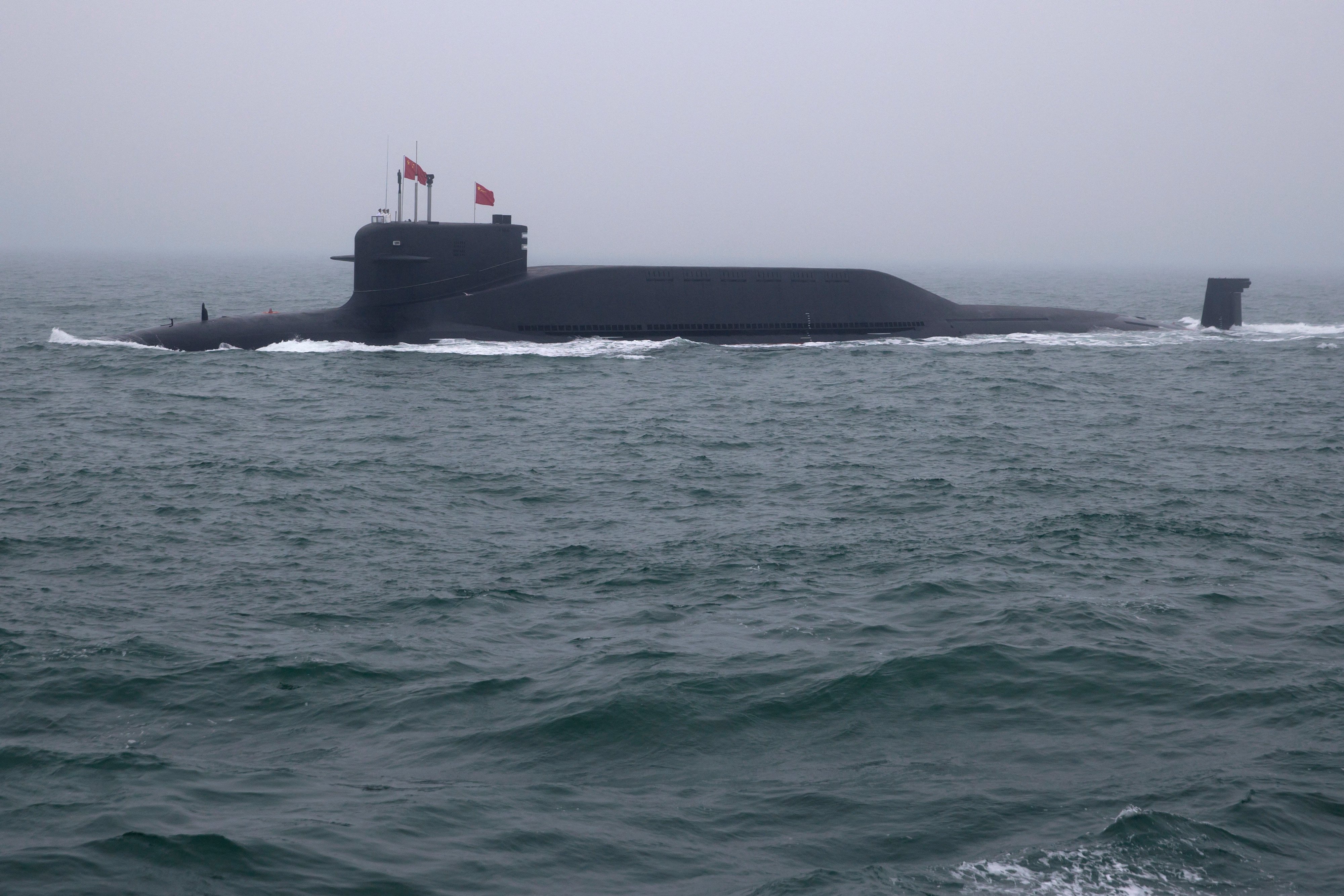
Ultimately, China did not possess a true sea-based deterrent until the mid-2010s. The PLAN deployed its first Type 094 Jin class SSBN in 2007 and commissioned its sixth example in 2021.
Each Jin class submarine carries 12 JL-2 (CSS-N-14) submarine-launched ballistic missiles (SLBMs), which are derived from the DF-31 ICBM. The three-stage solid-fuel missile was reportedly tested for the first time in 2004. British and U.S. intelligence reports on the status of the JL-2 were generally circumspect, and they only started to list the missile as operational around 2015.
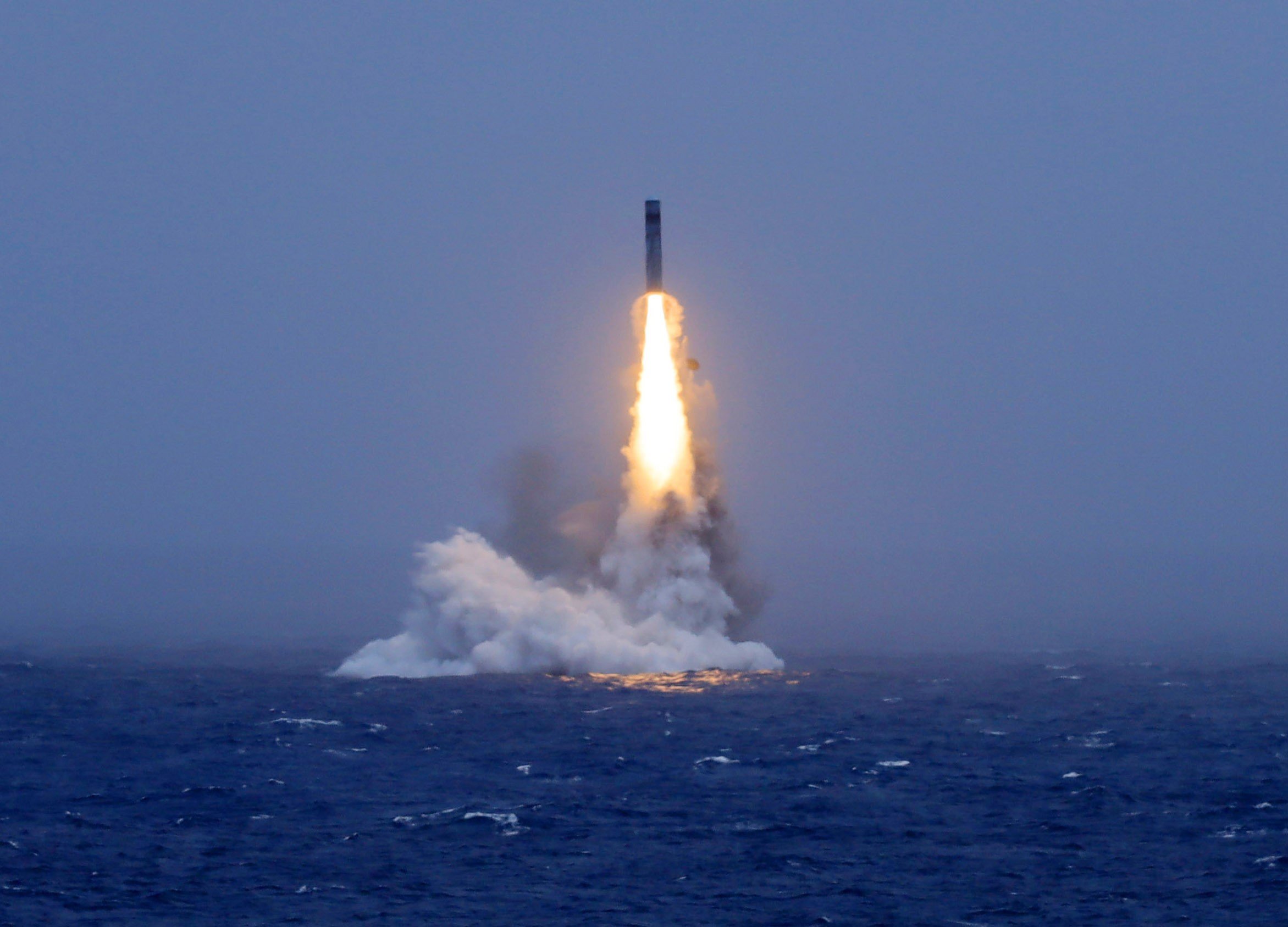
The limited range of the JL-2 means that the Type 094 submarines would need to operate in areas north and east of Hawaii if China wanted to strike targets on the U.S. east coast. This puts a serious dent in the credibility of China’s sea-based deterrent, and this is exacerbated by the fact that only a portion of what is already a small SSBN force will be on patrol at any given time.
Most Western sources consider that the JL-2 is armed with a single warhead, although there have been rumors of a multiple-warhead configuration with three to eight MIRVs.
JL-3
Range: 10,000 km (estimated)
China is developing a follow-on to the JL-2, the JL-3, which would allow it to target portions of the continental United States from its own territorial waters. This missile is expected to be deployed on the new Type 096 submarine, which China likely began constructing in the early 2020s. These new SSBNs are expected to enter service in the 2030s and will provide China with a much more credible sea-based deterrent. The Pentagon has also reported that some of the older Type 094 submarines may have been equipped to carry the JL-3 as well as the older JL-2.
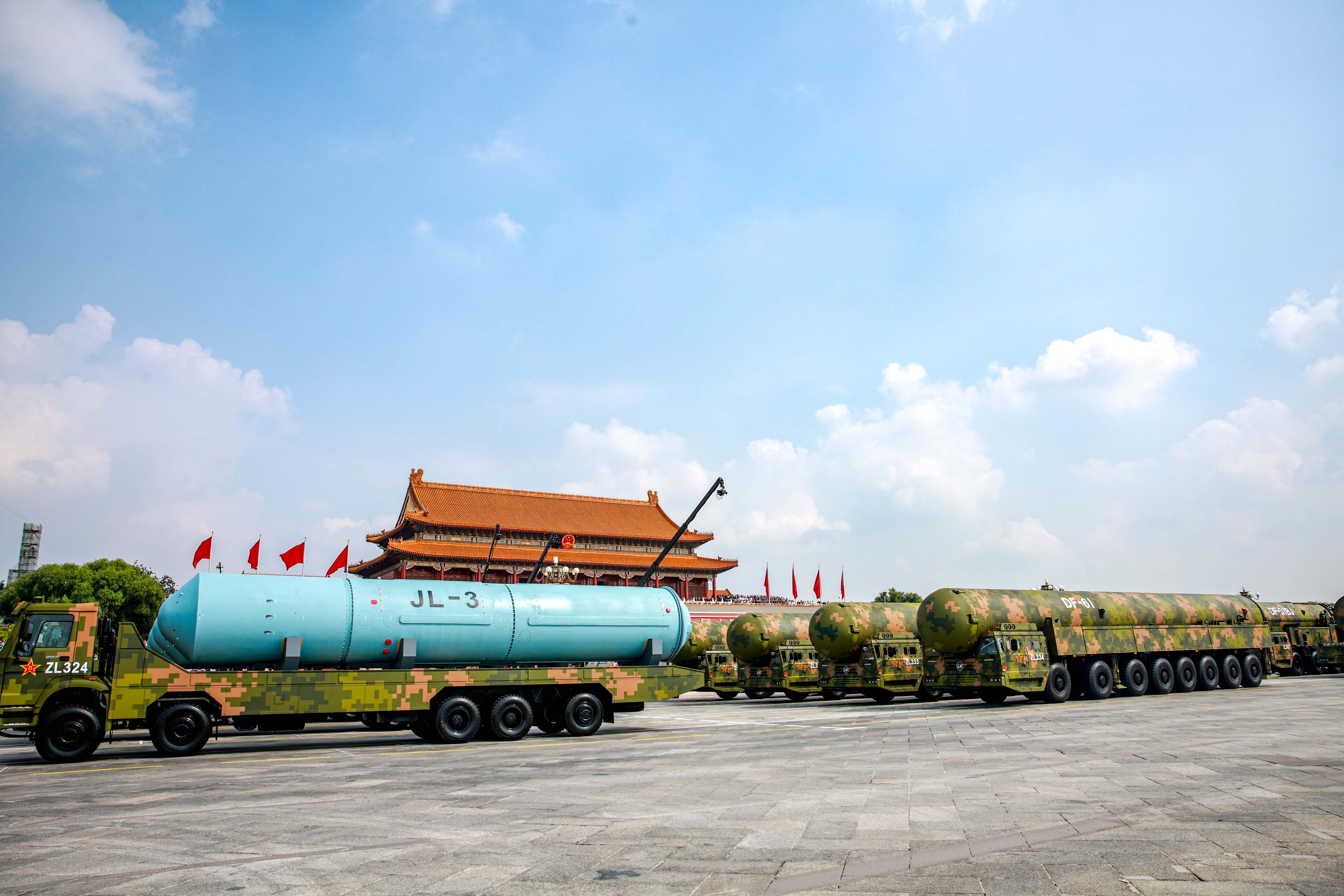
The JL-3 is presumed to be a three-stage, solid-fuel weapon carrying multiple warheads.
“Over the next decade, the PRC [People’s Republic of China] probably will continue to modernize, diversify, and expand its nuclear forces rapidly,” the Pentagon had noted in the unclassified version of an annual report on Chinese military developments that it sent to Congress in December 2024.
“The PLARF is advancing its long-term modernization plans to enhance its ‘strategic deterrence’ capabilities,” the report added.
The development of new ICBMs and SLBMs is an important part of this, and one that will significantly improve its nuclear-capable missile forces. However, these weapons are just one part of the picture. China is busy working on fielding a larger and more diverse missile force, both nuclear and conventional. China’s bewildering array of intermediate-, medium-, and short-range ballistic missiles will be discussed in a forthcoming article.
Contact the author: thomas@thewarzone.com
Loading comments…
Comments couldn’t be loaded. Please refresh the page.