
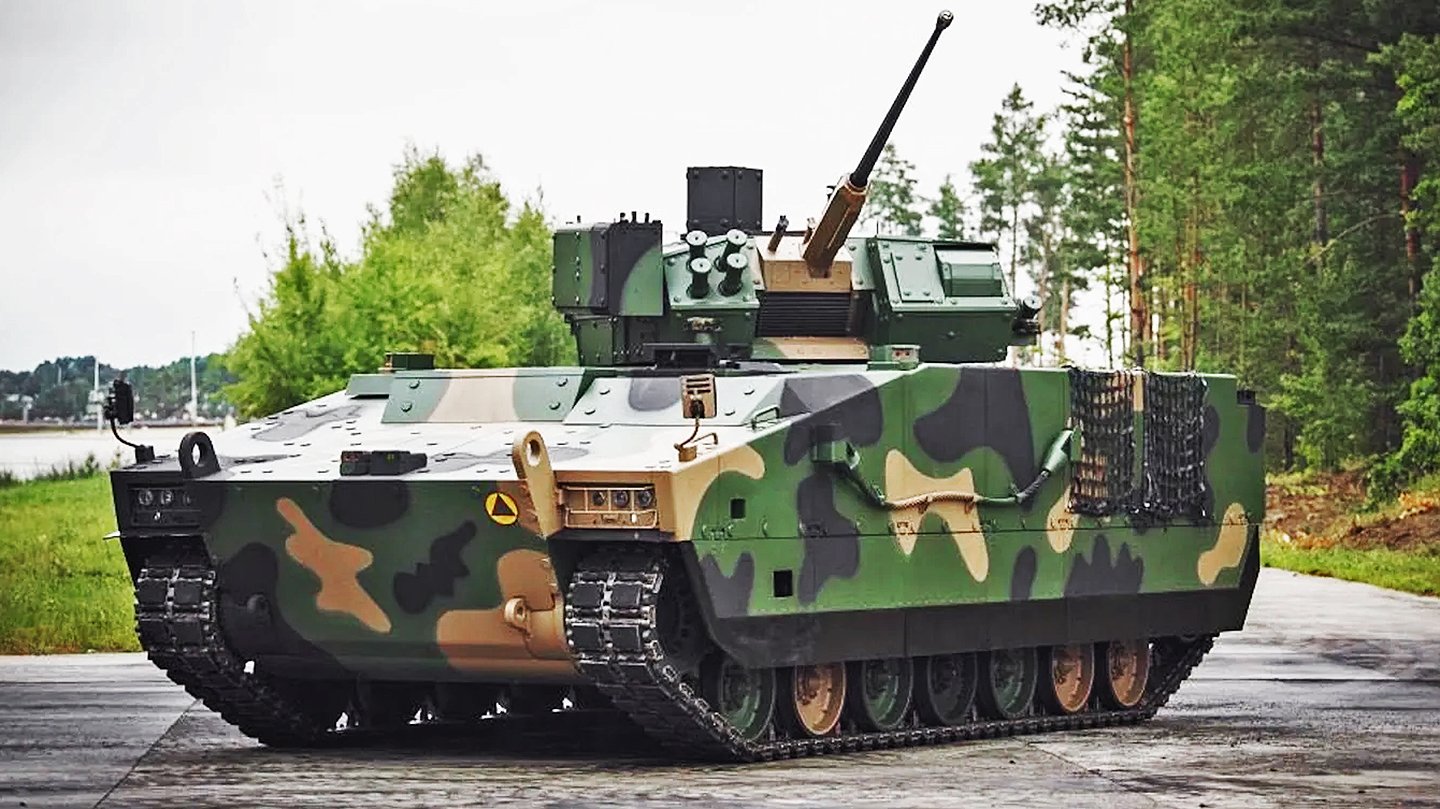
Poland has unveiled a full-sized demonstrator of a new heavy infantry fighting vehicle (IFV) intended to put more armor and firepower between mechanized troops and the increasingly lethal threats of the modern battlefield. The unveiling comes as Poland undertakes a sweeping modernization of its armored forces, driven in large part by the threat posed by Russia.
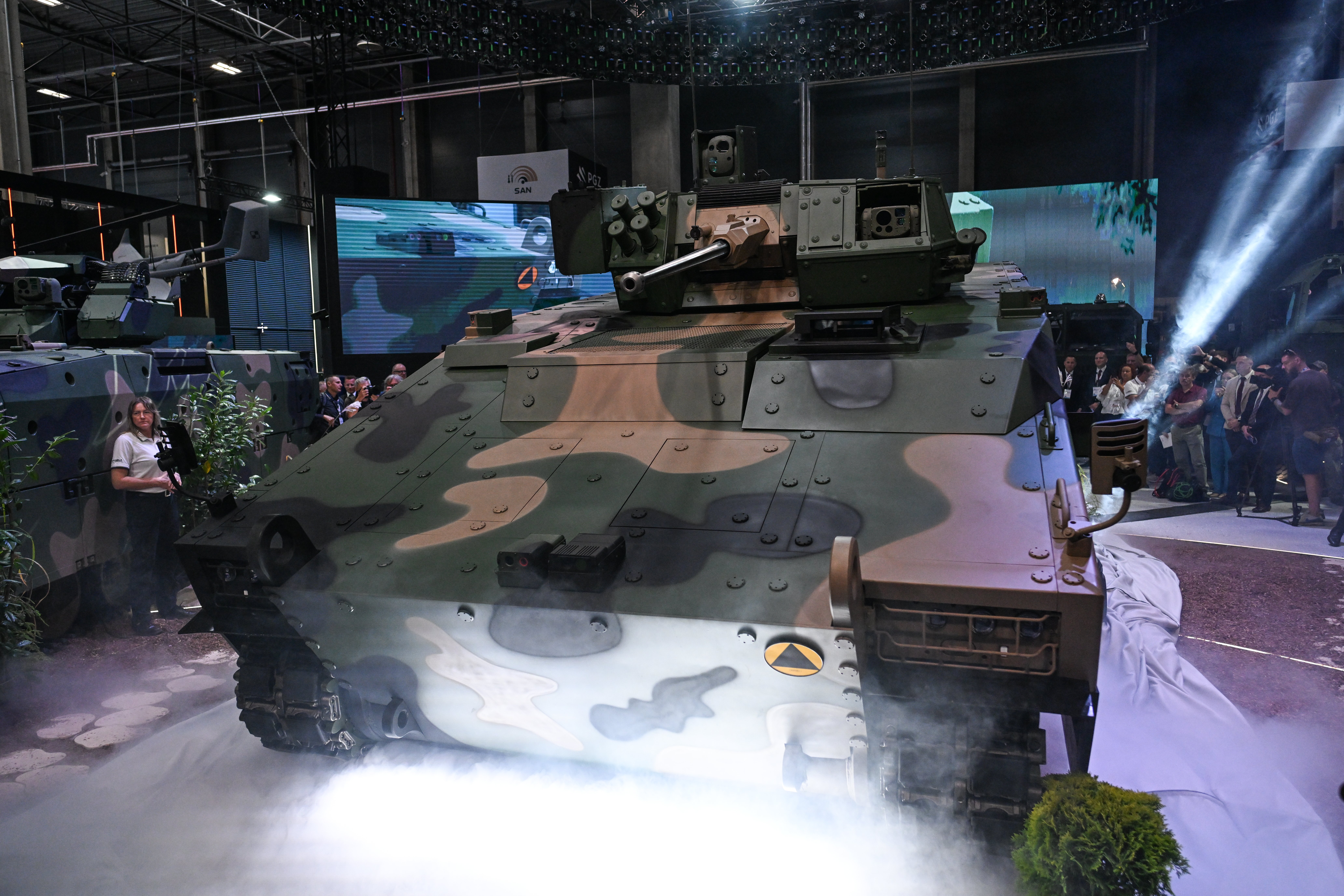
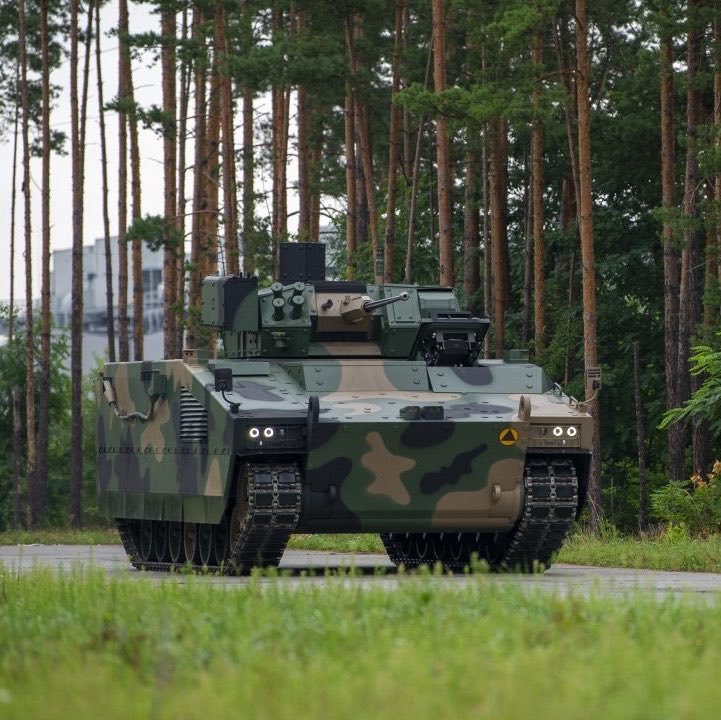
Huta Stalowa Wola, part of state-owned Polska Grupa Zbrojeniowa, presented the Ciężki Bojowy Wóz Piechoty (CBWP), or Heavy Infantry Fighting Vehicle, at the MSPO defense exhibition in Kielce, Poland, today. The vehicle, commonly referred to as Ratel (honey badger), is the latest step in a Polish effort to develop a heavily protected tracked combat platform that can complement the lighter, amphibious Borsuk (badger) infantry fighting vehicle.

“The demonstrator presented today confirms that Polish companies possess the expertise to design and develop advanced combat platforms that meet the demands of the modern battlefield,” Adam Leszkiewicz, president of PGZ’s management board, said during the unveiling.
At approximately 40 tons, the CBWP is about 12 tons heavier than the roughly 28-ton Borsuk (and adds an axle, for seven road wheels on each side), the result of a fundamental difference in design philosophy.
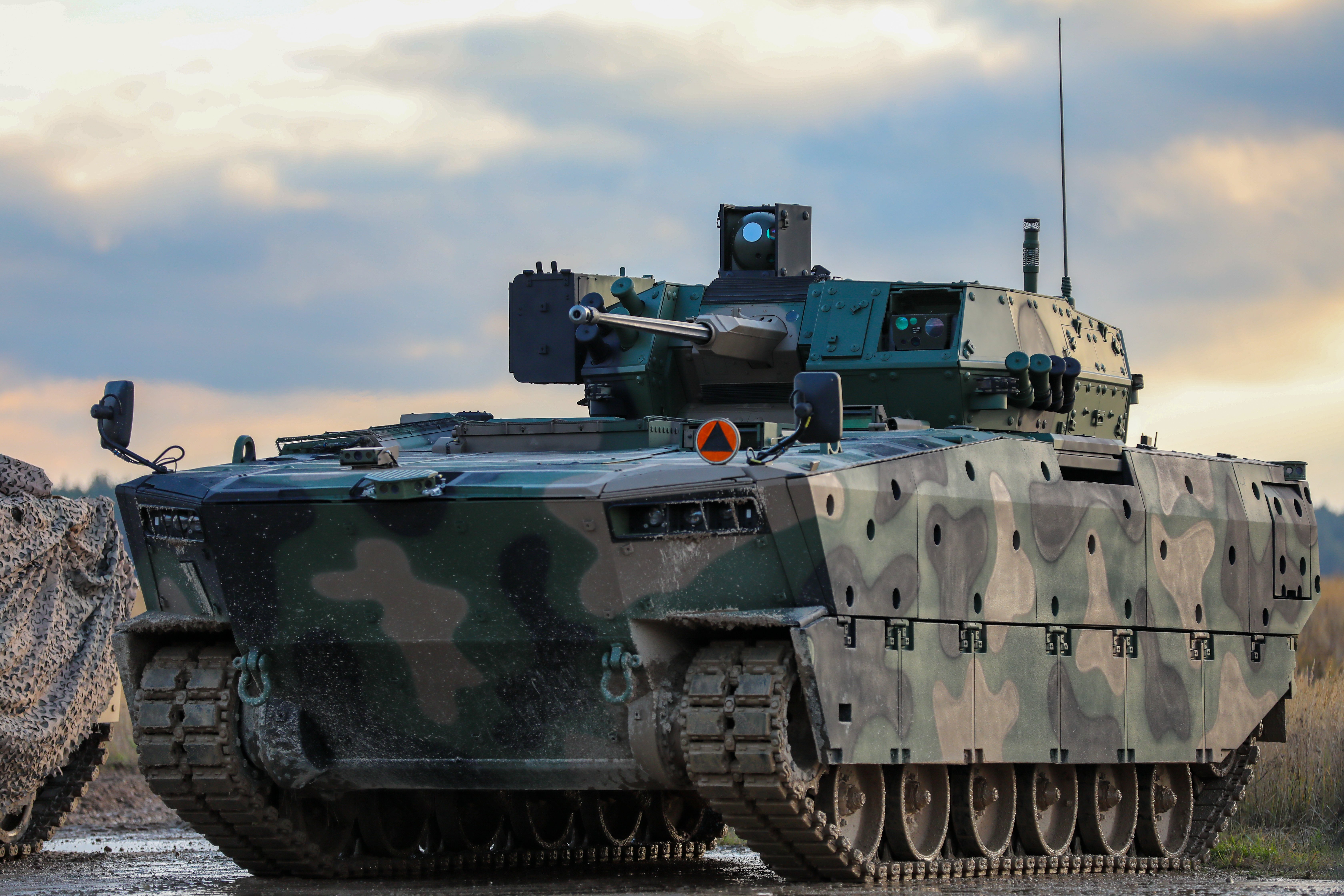
Borsuk was conceived as a relatively lightweight IFV able to operate alongside mechanized infantry while retaining the ability to swim. The CBWP instead prioritizes protection and battlefield survivability, placing it in the growing category of heavy IFVs being developed and operated by NATO countries and others.
The vehicle will have a three-person crew and carry up to eight infantrymen. Its primary role is to transport those troops safely into contested areas while providing direct fire support once they reach the objective.
The war in Ukraine has demonstrated how quickly armored vehicles can be exposed to anti-tank guided missiles, mines, artillery fragments, loitering munitions, and small drones. Even vehicles that survive direct attacks can be functionally disabled by damage to tracks, sensors, or external equipment.
A Ukrainian M2A2 Bradley engaging and damaging a Russian T-90M in a close-range fight. After a mission kill, the T-90M is subsequently finished by an FPV drone:
While Ukraine has shown that armor is increasingly easy to find and attack, and thus less relevant, Warsaw is far from convinced that armored vehicles are now irrelevant, with multiple acquisition projects underway. However, Ukraine does change what these vehicles need to be able to do and how they must be employed to have a chance of survival. In certain circumstances, when properly concealed, dispersed, and integrated with counter-drone capabilities, armor is still seen as important for protected mobility and firepower by militaries around the globe.
According to PGZ, the CBWP’s design therefore puts considerable emphasis on survivability. It incorporates advanced ballistic and mine protection designed to meet relevant STANAG standards. It also uses specialized mine-resistant seats intended to reduce the effects of explosions beneath the hull.
The protection architecture can be supplemented by an active protection system (APS). If integrated on a production vehicle, such a system could provide another layer of defense against incoming anti-tank weapons, and potentially small drones, although PGZ has described the APS as an optional component rather than specifying a particular production configuration.
For detecting threats, the vehicle can employ laser-warning equipment including the OBRA-3 system, integrated with smoke grenade launchers. A laser warning can provide the crew with an indication that the vehicle has been illuminated by a rangefinder or targeting system, potentially allowing it to react before an anti-tank weapon is launched.
A video showing a test of the OBRA-3 protection system on a Polish Rosomak wheeled armored fighting vehicle, with a smoke screen being generated to blind hostile optics. The view is from the driver’s compartment:

The CBWP will also carry an integrated nuclear, biological, and chemical protection system, allowing the crew and embarked infantry to operate in contaminated environments.
Firepower comes from the ZSSW-30 remotely operated turret, one of the most important locally developed systems in Poland’s current armored vehicle modernization effort.
The turret is equipped with a 30mm cannon armed with programmable ammunition, plus Rafael Spike anti-tank guided missiles. Together, the weapons are intended to give the CBWP the ability to engage armored vehicles, infantry, and other battlefield targets while also providing a degree of capability against aerial threats. In particular, the programmable ammunition provides greater flexibility against different target types — such as drones — by allowing the projectile’s effects to be tailored to the engagement.
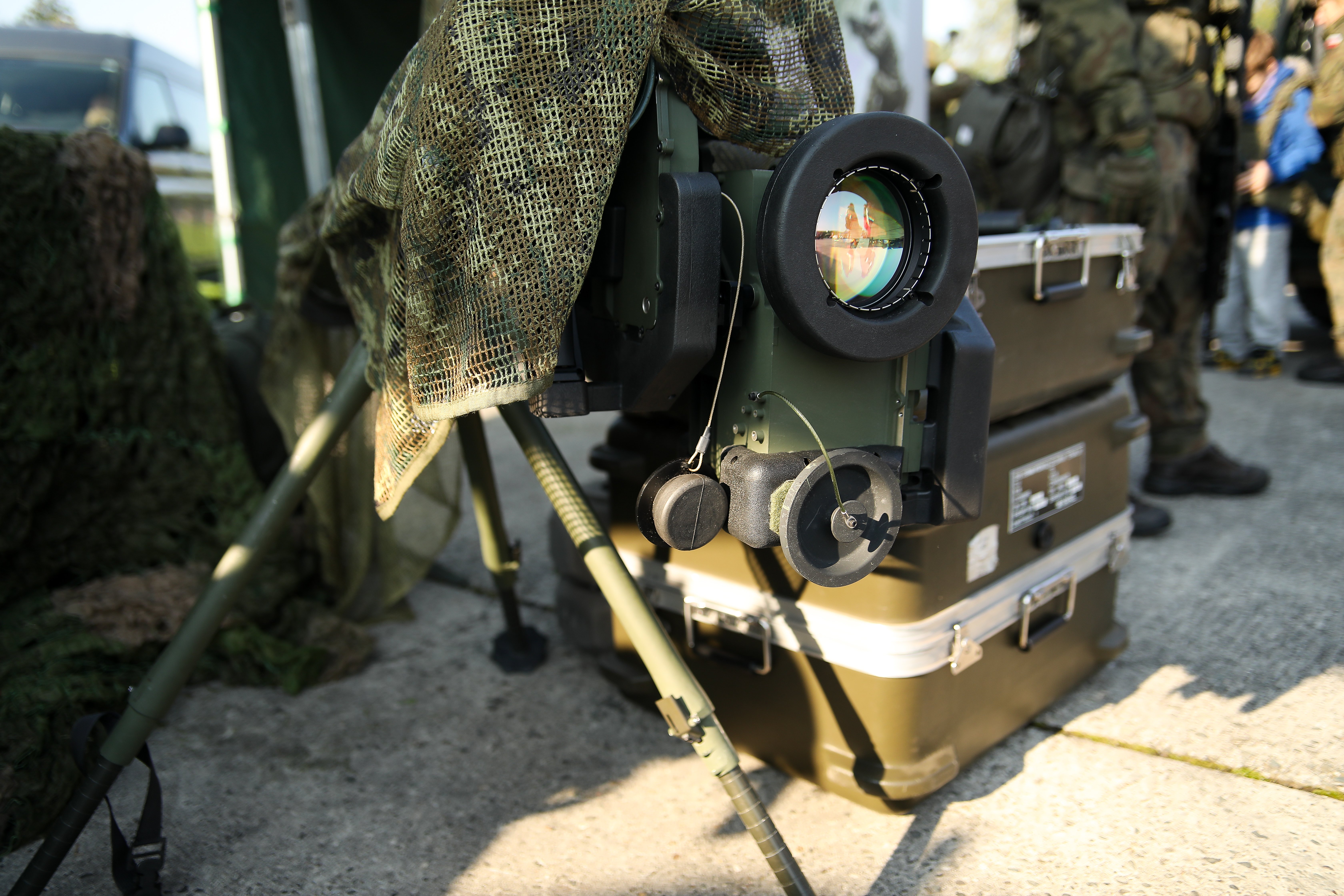
The inclusion of Spike missiles gives the vehicle an extended-range anti-armor option beyond the effective range of its automatic cannon. Much more than a traditional anti-tank guided missile, Spike provides an indirect-fire capability including the option to loiter over a particular area and search for targets, among other attributes.
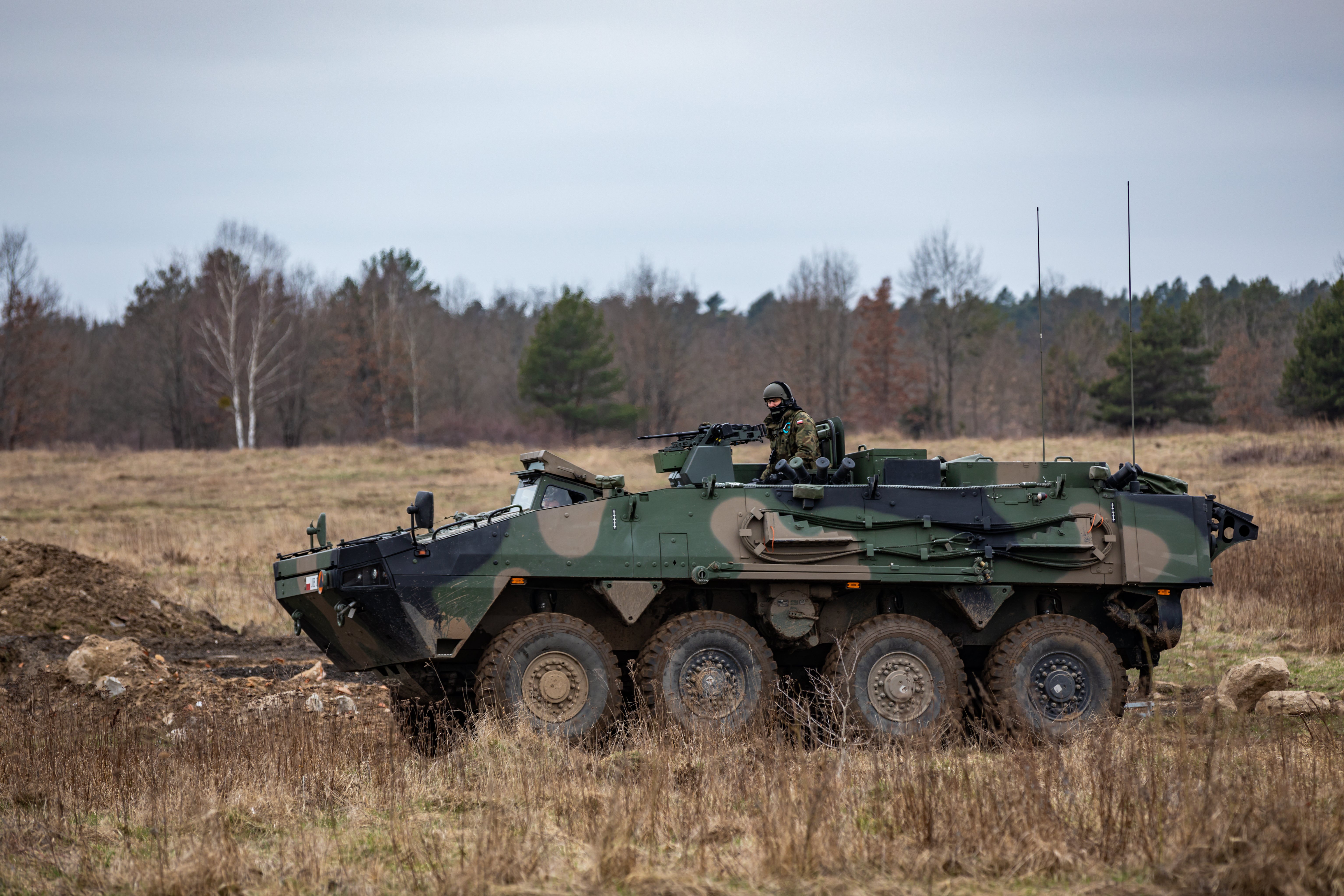
The ZSSW-30 also gives Poland a degree of commonality across its growing fleet of modern armored vehicles, with the system already being introduced on Borsuk and on some Rosomak wheeled armored fighting vehicles.
The CBWP reflects a trend for fighting vehicles that blur the boundaries between traditional IFV and infantry-support concepts. It is expected to carry a relatively large infantry squad while possessing the sensors and weapons necessary to remain directly involved in combat alongside those troops. At the same time, its high level of protection makes for a notably large vehicle.
The new vehicle is just one part of Poland’s broader military modernization.
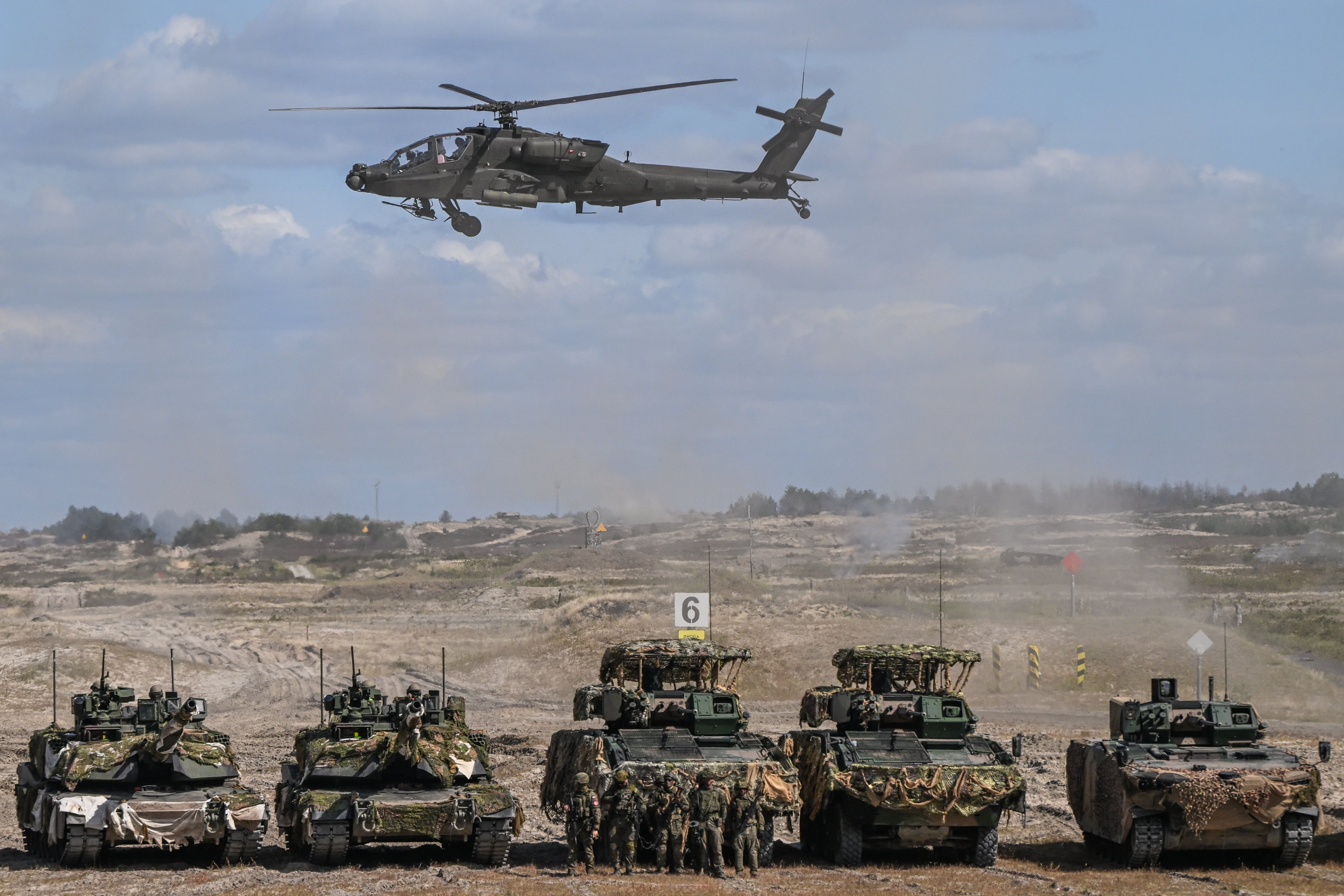
Warsaw has embarked on one of NATO’s most ambitious efforts to expand and modernize its ground forces, with major acquisitions of two different types of main battle tank, artillery, rocket systems, and infantry fighting vehicles. Poland is simultaneously expanding domestic production capacity, seeking to ensure that at least part of the equipment needed for a larger army can be produced and sustained within the country.
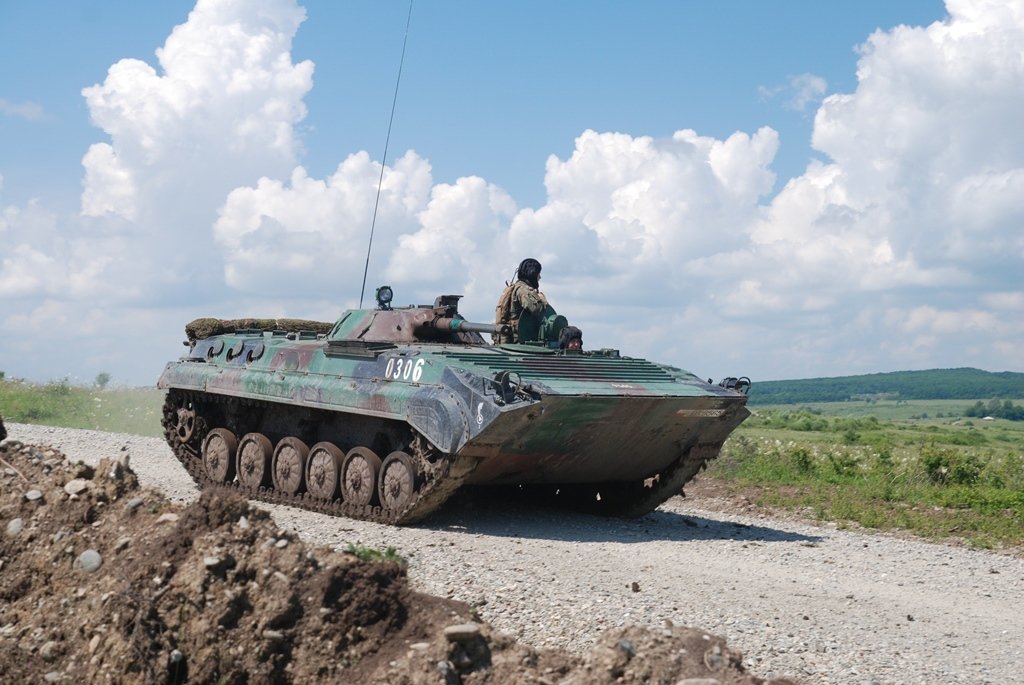
The Borsuk program is central to that effort and is intended to replace Poland’s aging Soviet-designed BWP-1 (the Polish version of the BMP-1).
The heavier CBWP offers even more capability, but its heavier weight comes with tradeoffs. It will be inherently less flexible than a lighter amphibious IFV, and more costly. In return, it will give Polish commanders another option for missions where survivability matters more than swimming capability or rapid deployment.
Such a vehicle would be particularly important for units operating in heavily contested areas, where the threat from mines, anti-tank weapons, and drones makes protection a higher priority. This provides some indication of what Polish planners expect a conflict with Russia on Europe’s eastern flank to look like. However, lessons from Ukraine show that, whatever its quality, an armored fighting vehicle will only be as survivable as the network and tactics around it.
Still, the CBWP remains some distance from operational service.
PGZ currently has one operational demonstrator, intended for factory trials. The company plans to subsequently construct two fully functional prototypes, with both expected to be ready in 2027.
Those vehicles will then undergo intensive testing with the Polish Armed Forces. The results could lead to changes in the protection architecture, turret integration, or other elements before a production configuration is finalized.
PGZ has indicated that it could be ready for production as early as 2029, but that timeline is not yet a firm procurement schedule. It will depend on the results of testing, any modifications required during development, and negotiations with the customer.
Poland has been reported to be considering a requirement for up to 700 CBWP vehicles. In addition, Poland has so far contracted for 257 Borsuk IFVs, with another roughly 1,000 Borsuk-family combat and specialized vehicles envisioned under a broader framework agreement.
If the program succeeds, Poland will ultimately field a highly capable two-tier tracked IFV force in which the CBWP equips units expected to operate in the most dangerous portions of the battlefield.
Contact the author: thomas@thewarzone.com
Loading comments…
Comments couldn’t be loaded. Please refresh the page.