
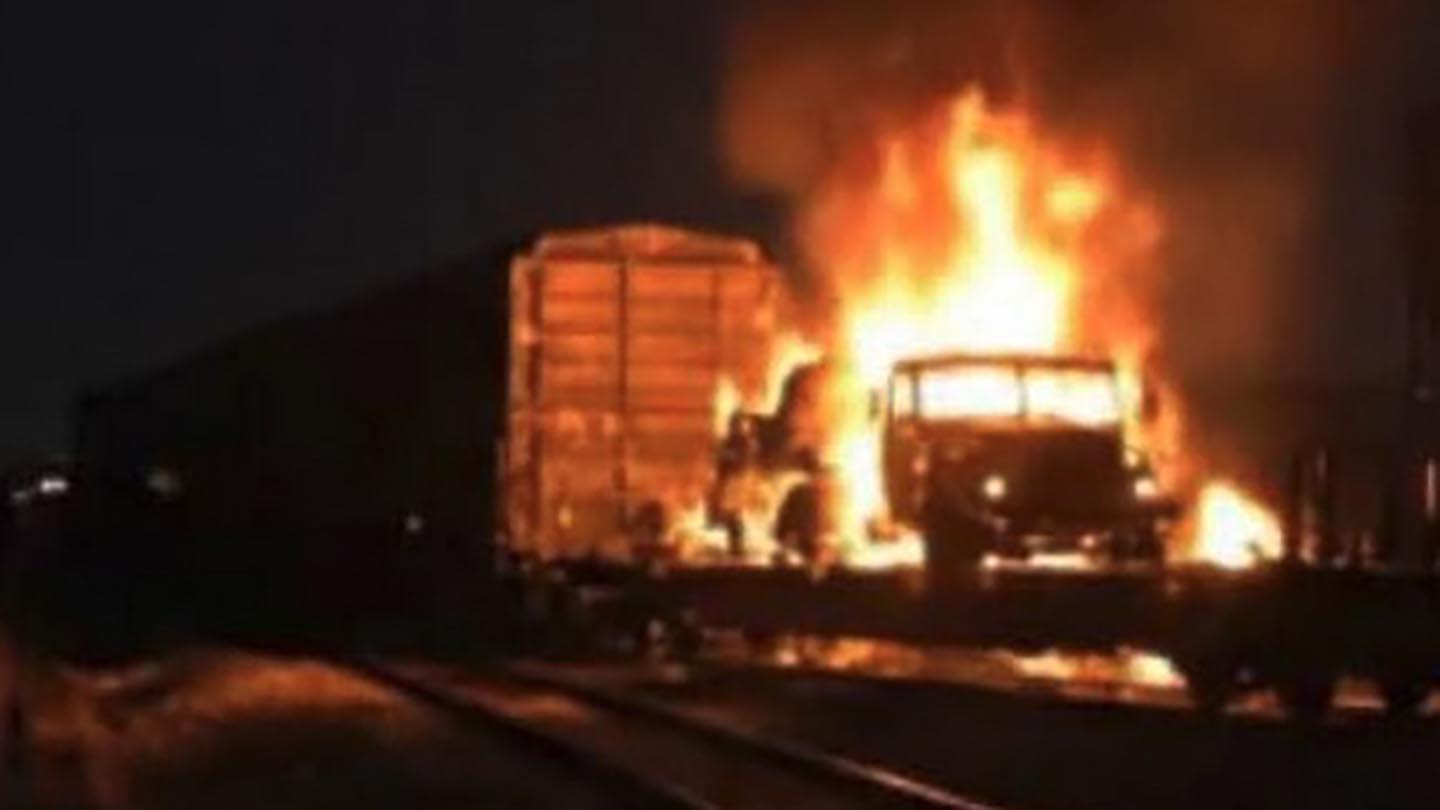
Ukrainian drones struck a railway station in the city of Salsk in the Rostov region overnight, the third time in as many days that this key rail line has been hit. The Russians use this line to supply troops in the occupied Crimea, Donetsk and Luhansk regions. The strikes are part of a larger Ukrainian effort to disrupt Russian rail traffic deep behind the front lines, some 155 miles to the west. Rail is the backbone of logistics for Russia, which moves the vast majority of its equipment and supplies by train.
It appears that the drones striking the Salsk station were targeting “a train carrying military equipment and fuel and lubricants,” according to the Ukrainian Khorne Group military unit. The “target of the drone strike was a military train of the Russian occupation forces moving toward the Ukrainian border,” the Ukrainian Militarnyi media outlet suggested.
The local governor of the Salsk district reported “hits on two tank cars and the locomotive,” according to Radio Svaboda.
Video emerging on social media showed the moment the drones hit the station, explosions resulting in flames and train cars burning. The attack delayed 18 passenger trains for upwards of seven hours, Russian Railway officials reported, according to the official Russian RIA Novosti media outlet.
In addition to striking the rail station, Ukrainian drones also struck a train line power substation in the town of Orlovsky on Tuesday, according to the Ukrainian Exilenova+ Telegram channel. The substation is located about 35 miles northeast of Salsk and helps provide power for this line.
Meanwhile, the Russian Defense Ministry claimed that its forces shot down 74 Ukrainian drones overnight, including 22 over Rostov Oblast.
Tuesday’s attacks follow a strike on Sunday in the Volgograd region at an electrical substation that powers the same rail line.
“As a result of drone debris falling, power supply to the railway contact network in the Oktyabrsky district was disrupted. Specialists from operational and repair services, as well as Russian Railways, are working on the site to assess the damage and eliminate the consequences,” the regional governor stated, according to the independent Russian ASTRA news outlet.
Last week, Ukrainian drones attacked another key railway hub in this region, Militarnyi reported. The attack took place in “the urban-type settlement of Kamenolomna,” the publication explained. “Kamenolomni is one of the major railway junctions in the southern corridor and holds significant strategic importance. The station is located in southern Russia, along the route Rostov-on-Don – Taganrog – Donetsk, and plays an important role in the transportation of military equipment.”
These railway strikes “have repeatedly targeted infrastructure along the rail line, which serves both industry and the supply of Russian forces, including those in Donetsk and Luhansk,” a well-known Ukrainian milblogger and reserve officer who goes by the pseudonym Tatarigami noted on X. “The pattern points to a deliberate and systematic effort to disrupt the route.”
“Overall, our team notes a systematic approach with deliberate target selection,” added Tatarigami, founder of Frontelligence Insight, an all-source/OSINT/GEOINT analytical group. “The strike on the fuel-carrying train suggests Ukraine had detailed intelligence to time the attack precisely.”
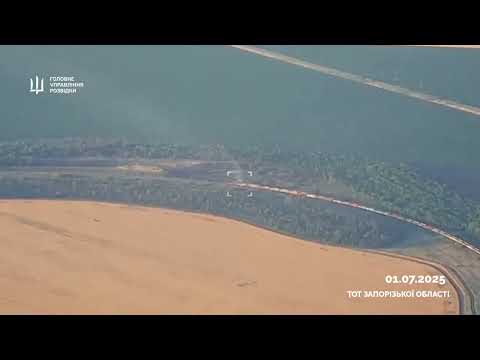
Ukraine is also attacking rail lines much closer to the front lines, in territory occupied by Russia. In May, the Ukrainian Defense Intelligence Directorate (GUR) carried out a drone attack on a Russian fuel train in the Zaporizhzhia region. It was reportedly the first such attack inside Ukraine in five months.
“At least three fuel tankers were destroyed,” GUR said in a release accompanying a video it published showing multiple aerial hits on the moving target, resulting in large explosions and heavy fire.
GUR isn’t just relying on drone strikes in this campaign. The intelligence directorate also works with locals who support Ukraine. The partisans have been carrying out sabotage attacks, blowing up rail lines, attacking trains and disabling railway equipment.
“Another successful operation of the resistance movement against the Russian invaders in cooperation with” GUR took place on June 26, 2025, in occupied Zaporizhzhia, the directorate claimed.
“The railway track was destroyed as a result of an explosion,” GUR noted. “The movement along the section actively used by the Russian invaders for logistics was paralyzed for more than a week.”
A week later, the partisans struck again, attacking a locomotive.
“The enemy locomotive was disabled,” according to GUR. “One of the key logistical branches of the occupation army in the Zaporizhzhia region is blocked again.”
Russia has also struck Ukrainian rail. Last month, a missile attack on a passenger train in Dnipro injured several people, destroyed several train cars and damaged tracks. It was part of a larger attack on Dnipro that killed at least 21 people.
Russian attacks on rail are far less frequent than the ones carried out by Ukraine, which seem to be increasing.
“There is an uptick [on train attacks] in comparison with 2023 and 2024, for sure,” Tatarigami told us. “Especially if we are talking about successful, tactical strikes.”
With the Salsk station still smouldering, it is unclear whether Ukraine intends to hit this line again. There are other Russian train lines of even greater logistical importance, Tatarigami added.
The attacks could be part of “some kind of shaping operation,” ahead of a larger attack, Tatarigami posited. “Or it’s just an isolated case, where Ukraine simply located a vulnerable spot and engaged it, without any further plans.”
Either way, Russian rail traffic was interrupted, and rolling stock was destroyed. Though the lasting effect is unclear, these attacks come as Ukraine continues to lose ground in the east while being forced to send troops to the northern Sumy region to help defend against a Russian offensive there. Repeated strikes on Russian rail logistics help relieve some of that pressure.
While Ukraine has been attacking Russian trains since the all-out invasion began, its new long-range drones allow strikes far deeper into Russian territory.
Contact the author: howard@thewarzone.com
Loading comments…
Comments couldn’t be loaded. Please refresh the page.