
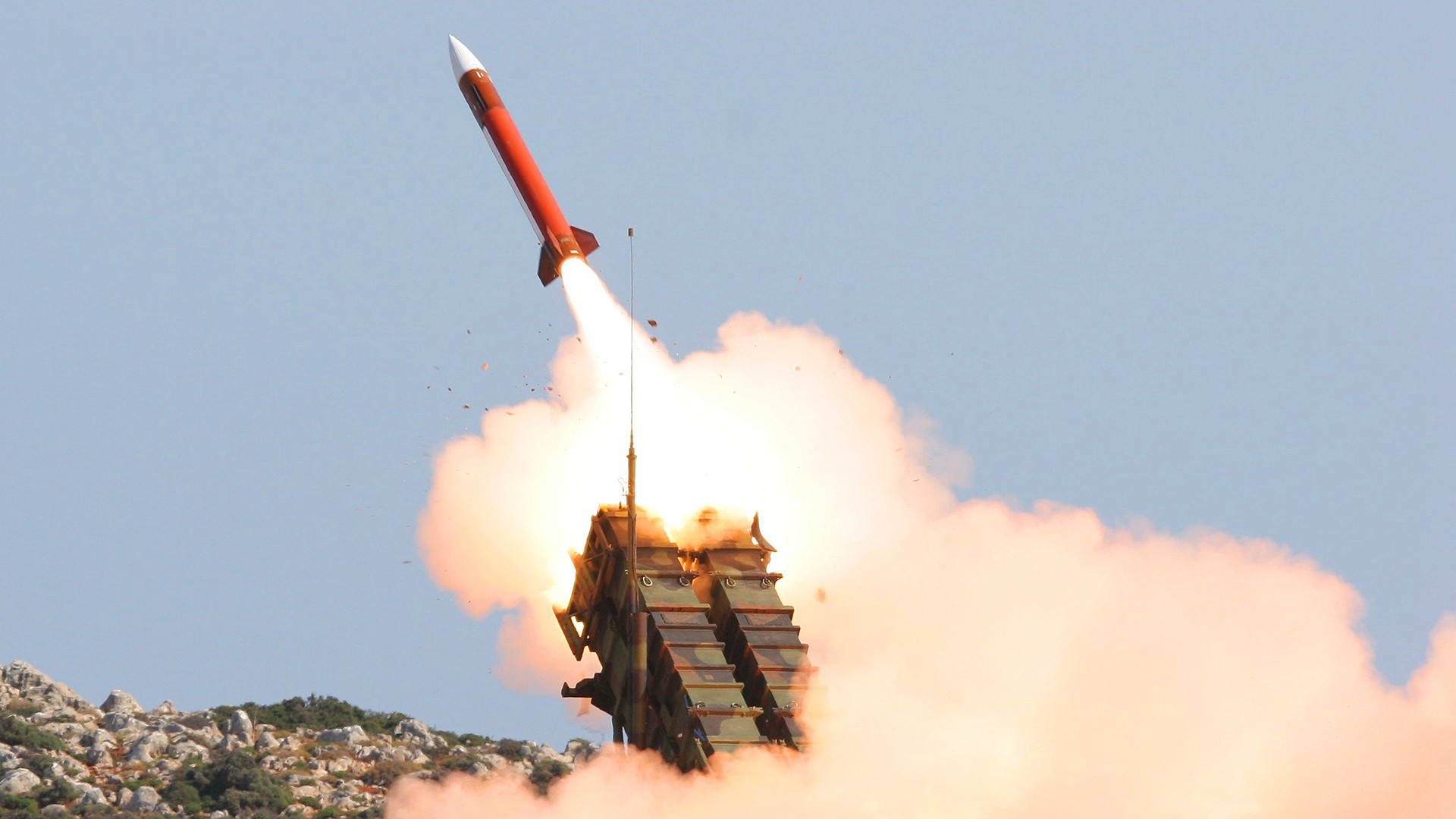
Ukraine is set to receive additional Patriot air defense batteries it badly needs to fight off Russian aerial threats, U.S. President Donald Trump announced at the White House on Monday. Trump said that several European nations will pay for the batteries and that, in some cases, those systems will be shipped from existing European stockpiles to be backfilled by new ones from America. His comments came during a meeting Monday morning with NATO Secretary General Mark Rutte and at a time when Russia is launching record numbers of missiles and drones at Ukraine.
In addition to providing Ukraine with additional weapons, Trump threatened to levy new “secondary tariffs” on Russia if President Vladimir Putin does not agree to a peace deal in 50 days. Commerce Secretary Howard Lutnick later clarified that to mean secondary sanctions. The goal of both actions is to coax Putin to end the war, Trump stated.

The first U.S.-made Patriot systems arrived in Ukraine in April 2023 from Germany. Since then, the U.S. has provided three batteries and an unspecified number of interceptors, which have been put to great use swatting down Russian missiles, drones and aircraft. The Patriot is the only system that can defend against Russian high-speed and ballistic missiles.
“We make the best equipment, the best missiles, the best of everything,” Trump told reporters on Monday. “The European nations know that, and we made a deal today … where we’re going to be sending them weapons, but they’re going to be paying for them.”
The first additional Patriot batteries should arrive in Ukraine in the next few days, Trump pointed out.
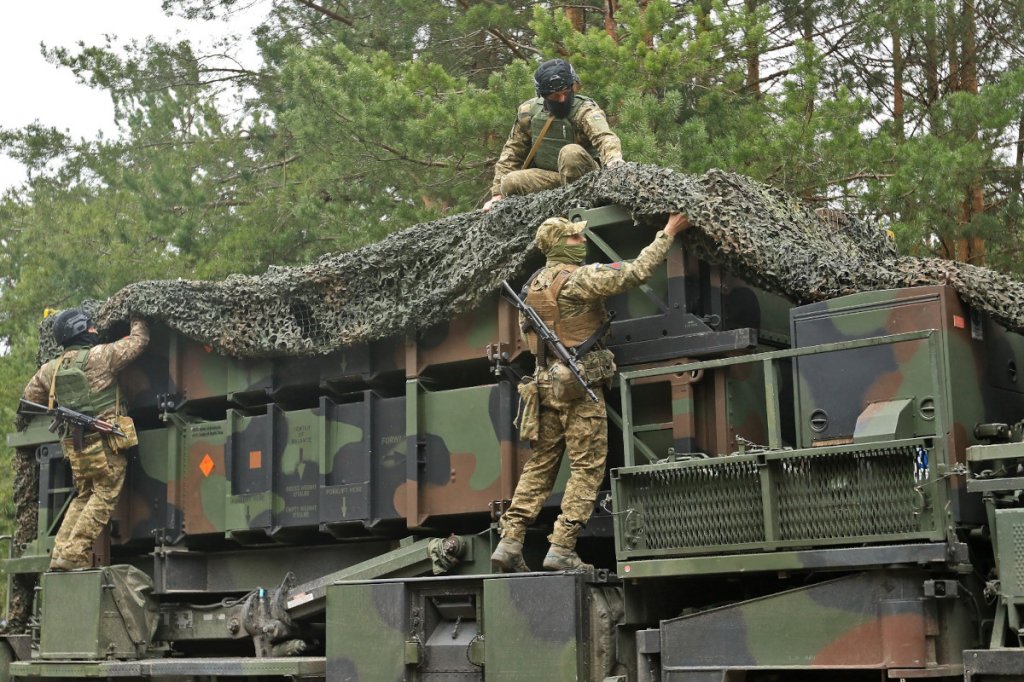
“A couple of countries who have Patriots are going to swap them out,” Trump added. “We have one country that has 17 Patriots getting ready to be shipped. They’re not going to need them. So we’re going to work again where the 17 will go, or a big portion of the 17 will go … That could be done very quickly.”
Trump did not say which country he was talking about, and it remains unclear what he meant. We have reported in the past that Israel has at least 12 Patriot batteries and an arsenal of PAC-2 missiles it recently retired. There has been persistent talk that Ukraine would receive these batteries after they were transferred from Israel to the United States. This very well could be at least part of what Trump is discussing. As we have stated in the past, Ukraine receiving Israel’s mothballed Patriot systems and missile stocks would be a boon for the war-torn country at a time when Patriot missiles are running in short supply and are in high demand globally. We have reached out to the White House for clarification and will update this story with any pertinent information provided.
Trump added that Germany will provide Ukraine with Patriot batteries that will be replaced by American ones.
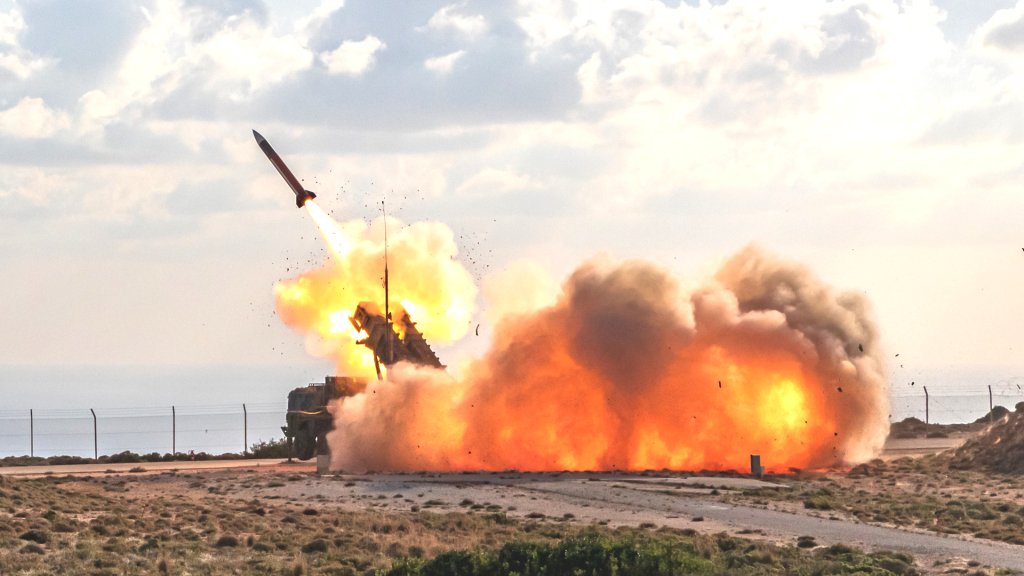
“And this is only the first wave,” Rutte explained. “There will be more. So what we will do is work through the ecosystems to make sure that we know what Ukrainians need, so that we can make packages, of course, in a way we discussed it this morning with (U.S. Defense Secretary) Pete Hegseth at the Pentagon. In a way that, of course, the U.S. will keep … its stockpiles necessary to defend this country. That’s absolutely clear, but it will mean that Ukraine can get its hands on really massive numbers of military equipment, both for air defense, but also missiles, ammunition, etc, etc.”
Germany has acknowledged that it will send Ukraine Patriot batteries it will purchase from the United States. German Defense Minister Boris Pistorius has stated that Germany does not have enough to share with Ukraine otherwise. Pistorius was scheduled to meet with Hegseth today at the Pentagon.
“We only have six left in Germany,” Pistorius told Financial Times, explaining that Berlin had already given three Patriot systems to Kyiv while two others were lent to Poland and at least one remains unavailable due to maintenance or training.
“That’s really too few, especially considering the NATO capability goals we have to meet. We definitely can’t give any more,” he added.
Still, Rutte said that Germany, Finland, Denmark, Sweden, Norway, the Netherlands and Canada have all expressed interest in this program.
For Ukraine, the need for air defenses is great. As the Institute for the Study of War recently pointed out, Ukraine is facing an increased onslaught of Russian missiles and drones, which have jumped five-fold since the beginning of the year. Last week, Russia launched its biggest drone attack of the all-out war, attempting to strike 741 targets across Ukraine using 728 one-way attack drones and decoy drones, launched from locations in the Bryansk, Primorsko-Akhtarsk, Kursk, Oryol, and Millerovo regions of Russia.

Concerns about U.S. weapons stockpiles came into sharp focus earlier this month when Hegseth ordered a pause in shipping weapons to Ukraine to get a better handle on American supplies. During today’s press conference, Trump also acknowledged that he was aware of that decision, saying it was in advance of today’s announcement. Trump had previously said he did not know who ordered the pause.
“I knew what Pete was doing was an evaluation, because we knew this was going to happen,” Trump noted. “We were pretty sure this was going to happen, so we did a little bit of a pause. But … this is a very big event today.”
There have also been unconfirmed suggestions that the U.S. could supply Ukraine with “long-range missiles that could reach targets deep inside Russian territory, including Moscow,” Axios reported.
Axios did not specify what kind of missiles, but the statement led to speculation that it could be one of two weapons.
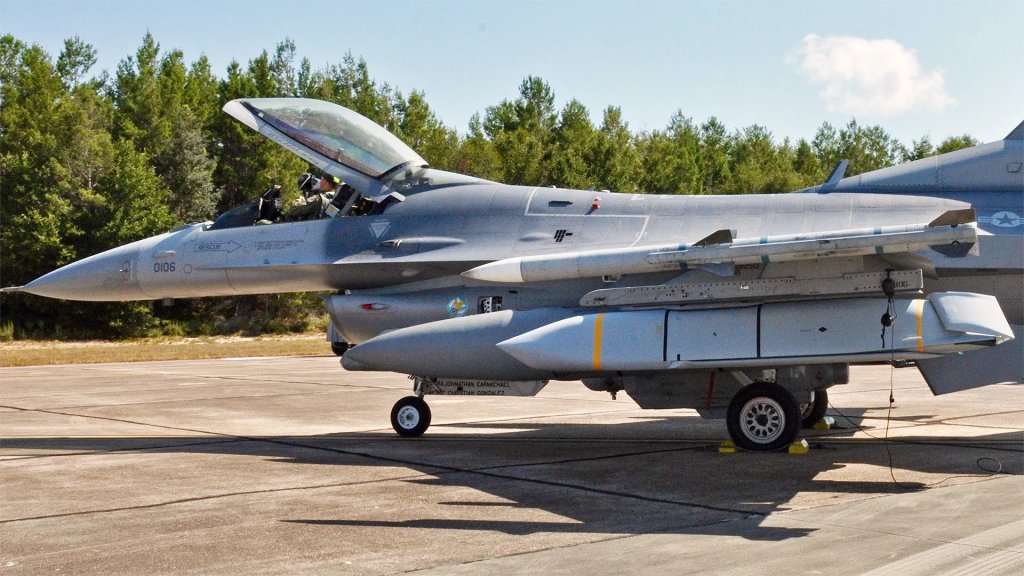
One is the AGM-158 Joint Air-to-Surface Standoff Missile (JASSM), which would be used to arm Ukraine’s F-16s. The other is the ground-launched Precision Strike Missile (PrSM) short-range ballistic missile. However, neither of those seems likely.
During Monday’s press conference, neither Trump nor Rutte specifically discussed long-range strike weapons.
Talk about providing Patriot batteries to Ukraine comes even though the systems, and the munitions they fire, are in finite supply.
As we have reported in the past, replenishing the stocks of these weapons is neither easy nor cheap. They are highly sophisticated and require a long lead time for production and cost nearly $4 million a piece, according to the Army’s Fiscal Year 2026 Justification Book. The U.S. Army is looking to drastically increase its stock of these weapons.
“The Army Requirements Oversight Council Memorandum (AROCM) approved a PAC-3 MSE AAO/APO increase from 3,376 to 13,773 on 16 April 2025,” according to the budget document.
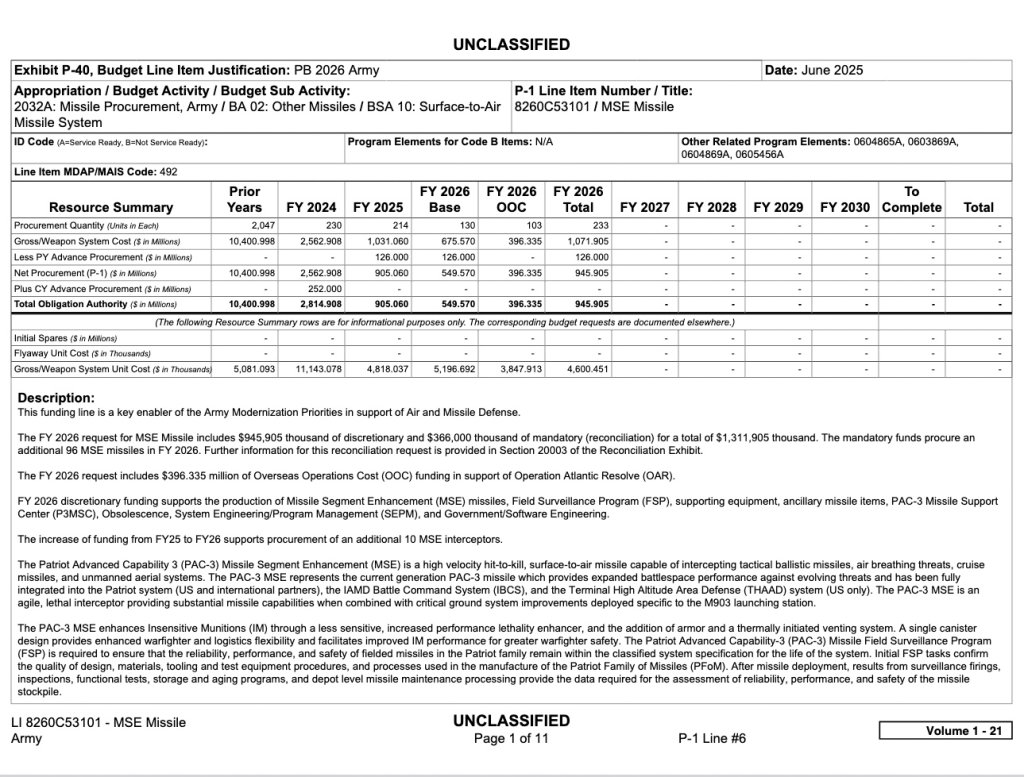
Meanwhile, there is a great strain as well on U.S. Patriot batteries, as we have explained in the past and updated again today with the latest news of the U.S. Army aiming to increase the force by 25%. Between deployments to the Middle East and elsewhere around the world, there are not enough to go around.
Concerns about what this means for the prospect of adequately defending U.S. forces deployed overseas, as well as the U.S. homeland, are something senior U.S. military leaders, as well as The War Zone, have been drawing attention to for some time. It’s not just the U.S. All of Europe is looking to protect its skies from increasingly advanced aerial threats, as are allies in Asia.
The question of how long can the U.S. and other allies supply Ukraine with Patriot interceptors before reaching critically low levels for their own defense, and before production can ramp up significantly, is becoming more pressing. As it sits now, Ukraine looks set to get a much needed air defense boost, but just how long that can be sustained remains very much unclear.
Contact the author: howard@thewarzone.com
Loading comments…
Comments couldn’t be loaded. Please refresh the page.