
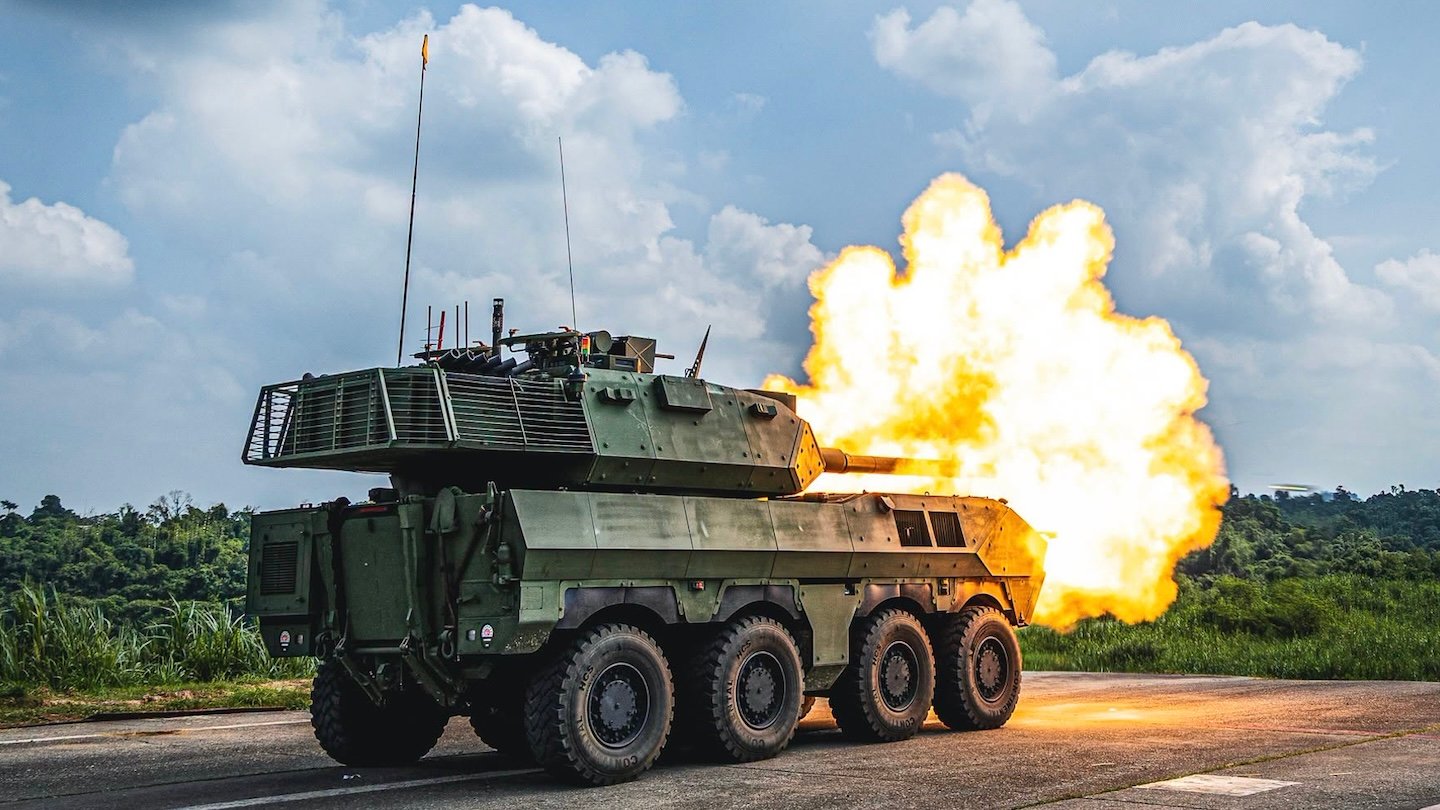
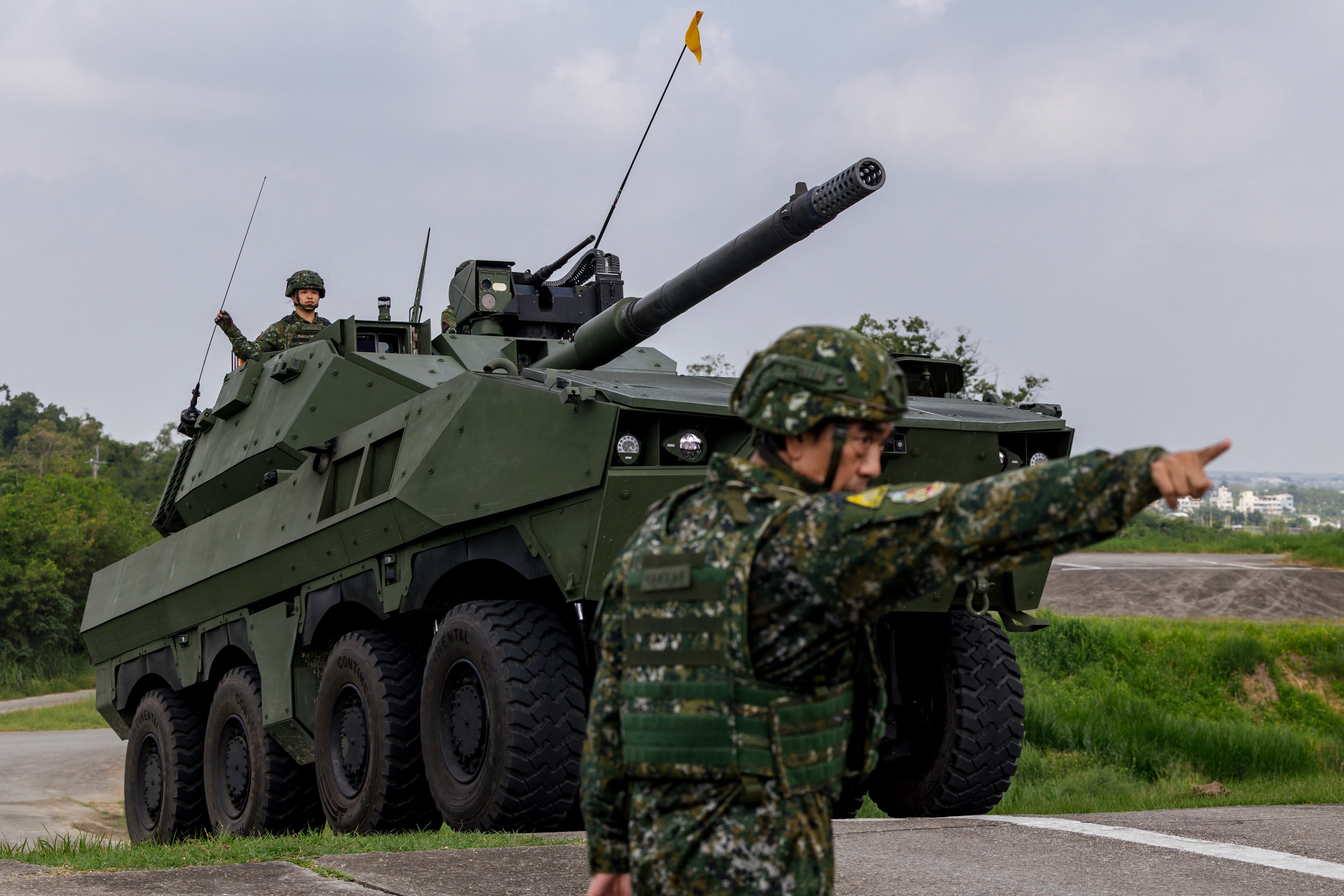
Taiwan has provided the first public look at its new 105mm 8×8 mobile gun system in action, with the domestically developed vehicle engaging moving and stationary targets during a live-fire demonstration in southern Taiwan. The vehicle is being developed as Taiwan continues to modernize its ground forces in response to the growing capabilities and increasingly frequent military activity of the Chinese People’s Liberation Army (PLA) around the island.

During the demonstration, held by the Republic of China Army (ROCA) at a training area in Tainan today, the vehicle reportedly engaged a moving target at approximately 0.75 miles and a stationary target at around 0.6 miles. It also fired against targets positioned 90 degrees to the side of the vehicle while operating on a gentle slope, demonstrating the gun system’s ability to engage targets while the vehicle is positioned on uneven terrain.
The vehicle subsequently fired its 7.62mm coaxial machine gun simultaneously with its main gun as part of a scenario intended to demonstrate engagement of multiple targets, including simulated amphibious assault vehicles.
An apparent weapon malfunction was also recorded during the demonstration. One of the 105mm rounds initially failed to fire, according to reports. The crew waited approximately two minutes in accordance with safety procedures before reloading the weapon, after which the vehicle fired normally. Maj. Gen. Chen Chien-chung, head of Taiwan’s Arsenal 202, the Production and Manufacturing Center of the Armament Bureau, said an investigation would be conducted into the misfire.
Despite the incident, the demonstration provided an important look at a vehicle that Taiwan is developing specifically around the country’s geography and battlefield requirements, including a potential amphibious invasion by the Chinese PLA.
A new direct fire support variant of the Clouded Leopard 8×8 infantry fighting vehicle was first publicly displayed at the Taipei Aerospace & Defense Technology Exhibition in 2023. It passed initial combat readiness testing with the ROCA in October 2023, and it was authorized for mass production in April 2024.
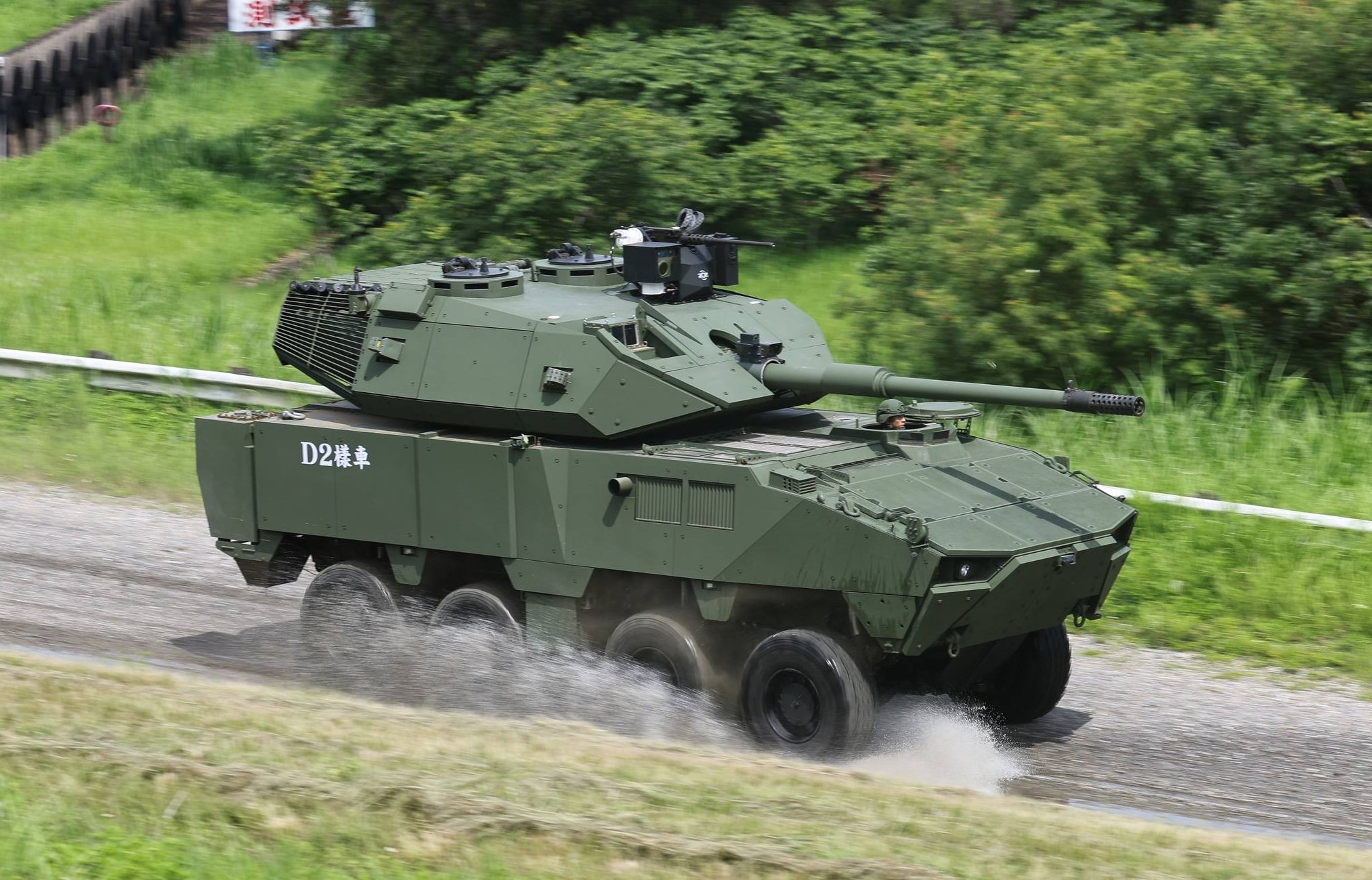
The production configuration has undergone significant changes since then.
Its height has been reduced by approximately 12 inches, bringing the overall vehicle height to below 9 feet 10 inches. Its turning radius has also been reduced from 36 feet to 26 feet. The reduction in turning radius was achieved by providing steering to three pairs of wheels, rather than two pairs on the earlier configuration.
Those changes are especially relevant to Taiwan, where large sections of the island feature restrictive terrain, dense urban development, narrow roads, drainage channels, and other obstacles that can limit the movement of heavy armored vehicles.
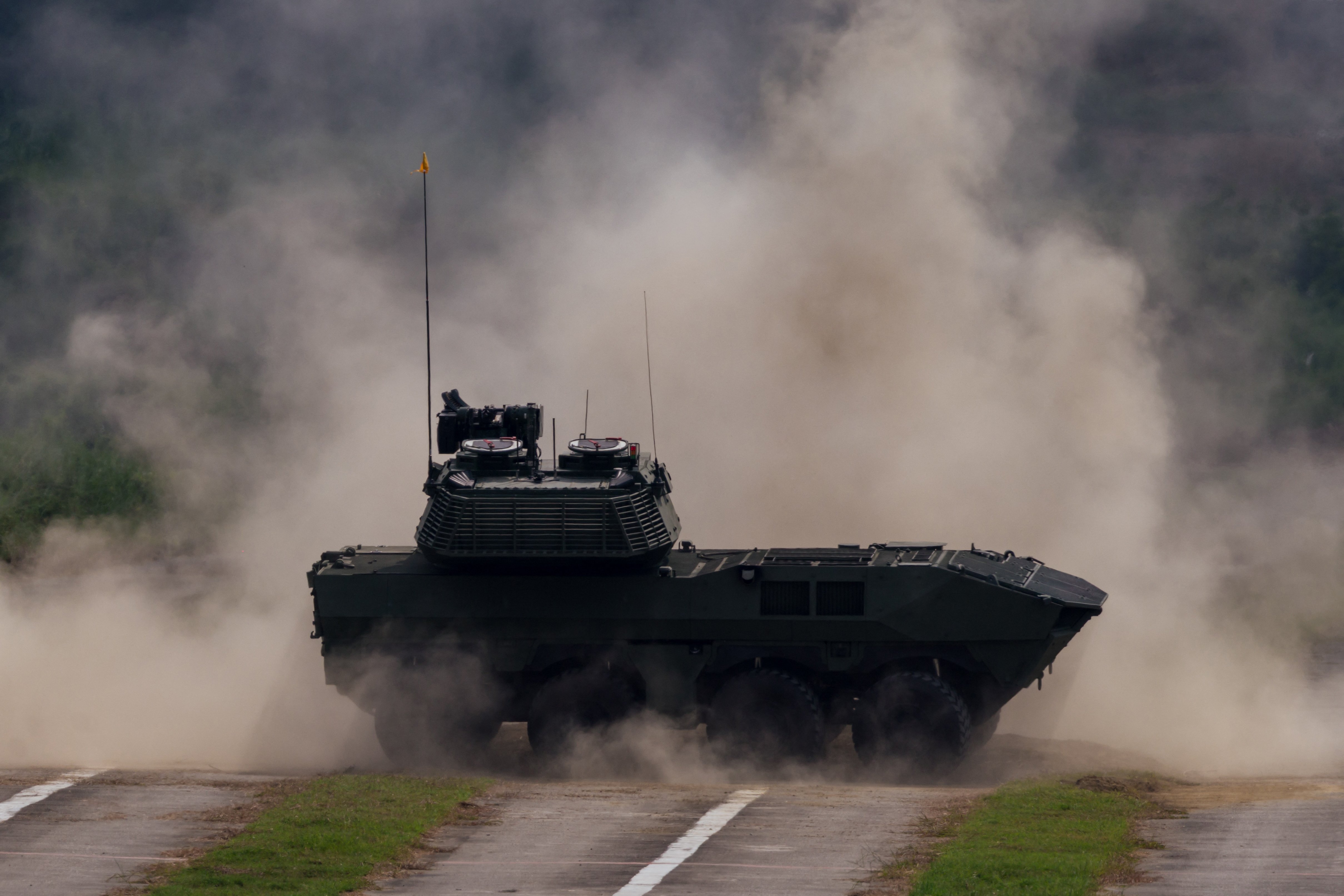
Taiwanese officials specifically highlighted the system’s suitability for culverts and urban areas, as well as the challenging terrain of Hualien and Taitung on the island’s mountainous east coast.
The vehicle’s principal weapon is a 105mm gun. The weapon can fire the general-purpose ammunition already developed for tank guns, in addition to ammunition developed specifically for the new system. The ROCA displayed armor-piercing, anti-personnel, and training ammunition during the demonstration. The gun also offers useful ammunition commonality with Taiwan’s older, but sill active M60A3 and CM11 tanks.
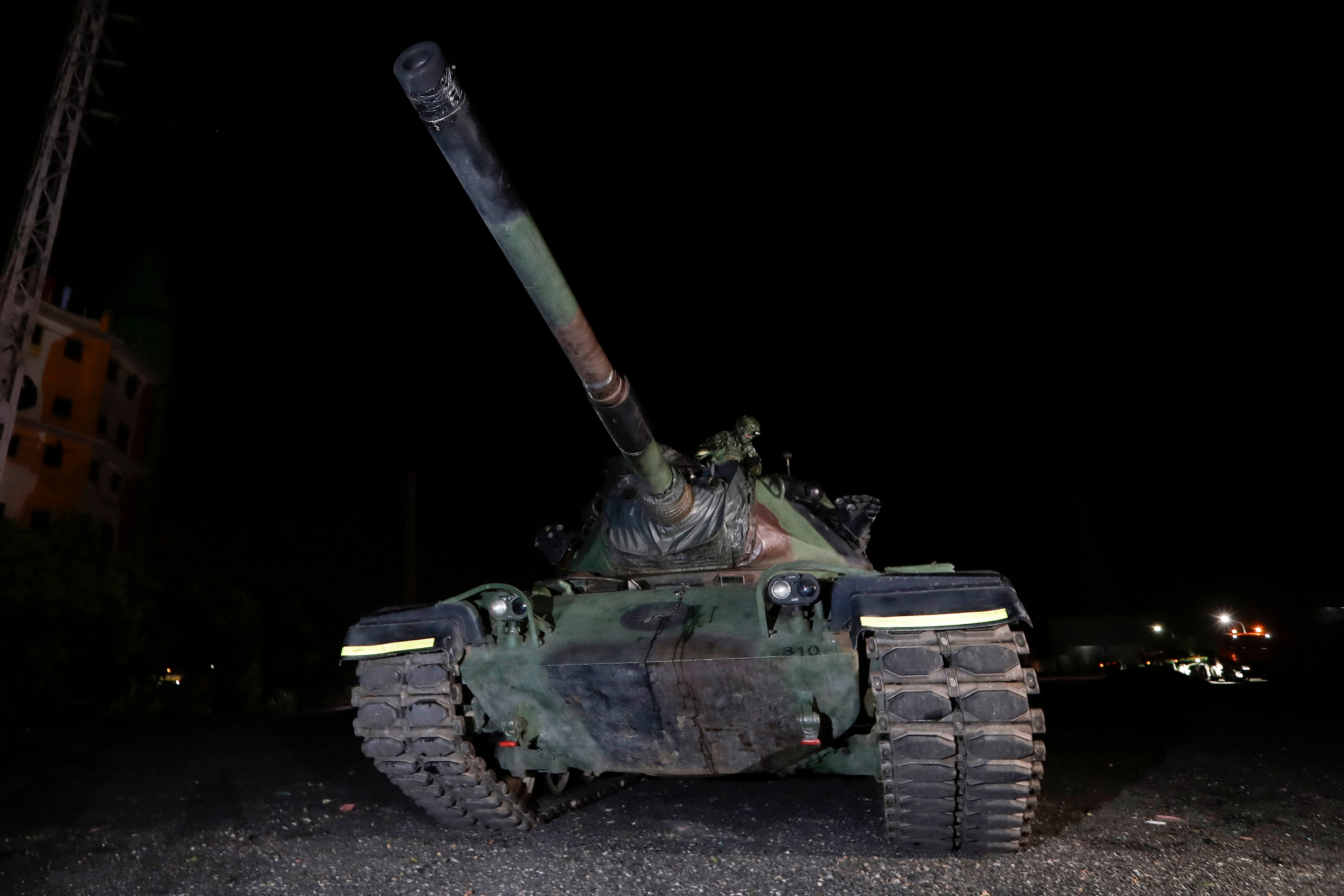
That compatibility potentially gives the vehicle access to an existing ammunition ecosystem while allowing Taiwan to develop specialized rounds for its particular requirements.
Against a PLA assault, the 105mm system would provide mobile direct firepower against amphibious vehicles, armored personnel carriers, fortifications, and other ground targets, complementing Taiwan’s heavier tanks and other anti-armor weapons. Its wheeled configuration also allows the vehicle to rapidly reposition along Taiwan’s road network, giving commanders a mobile source of direct firepower that could respond to amphibious landings and reinforce threatened sectors.
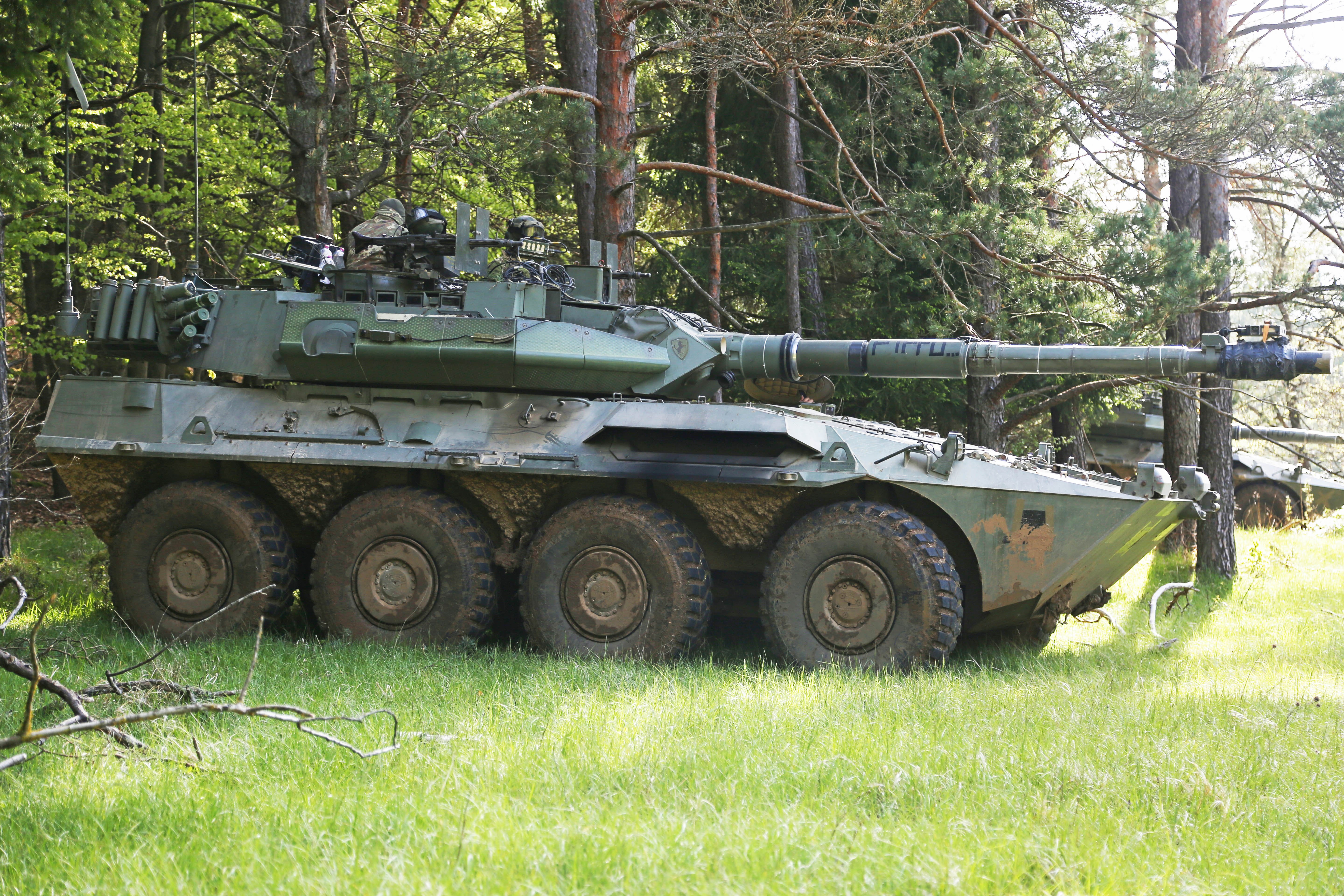
The system falls into the same broad category as other modern 8×8 mobile gun systems, including Italy’s Centauro family and Japan’s Type 16 Mobile Combat Vehicle.
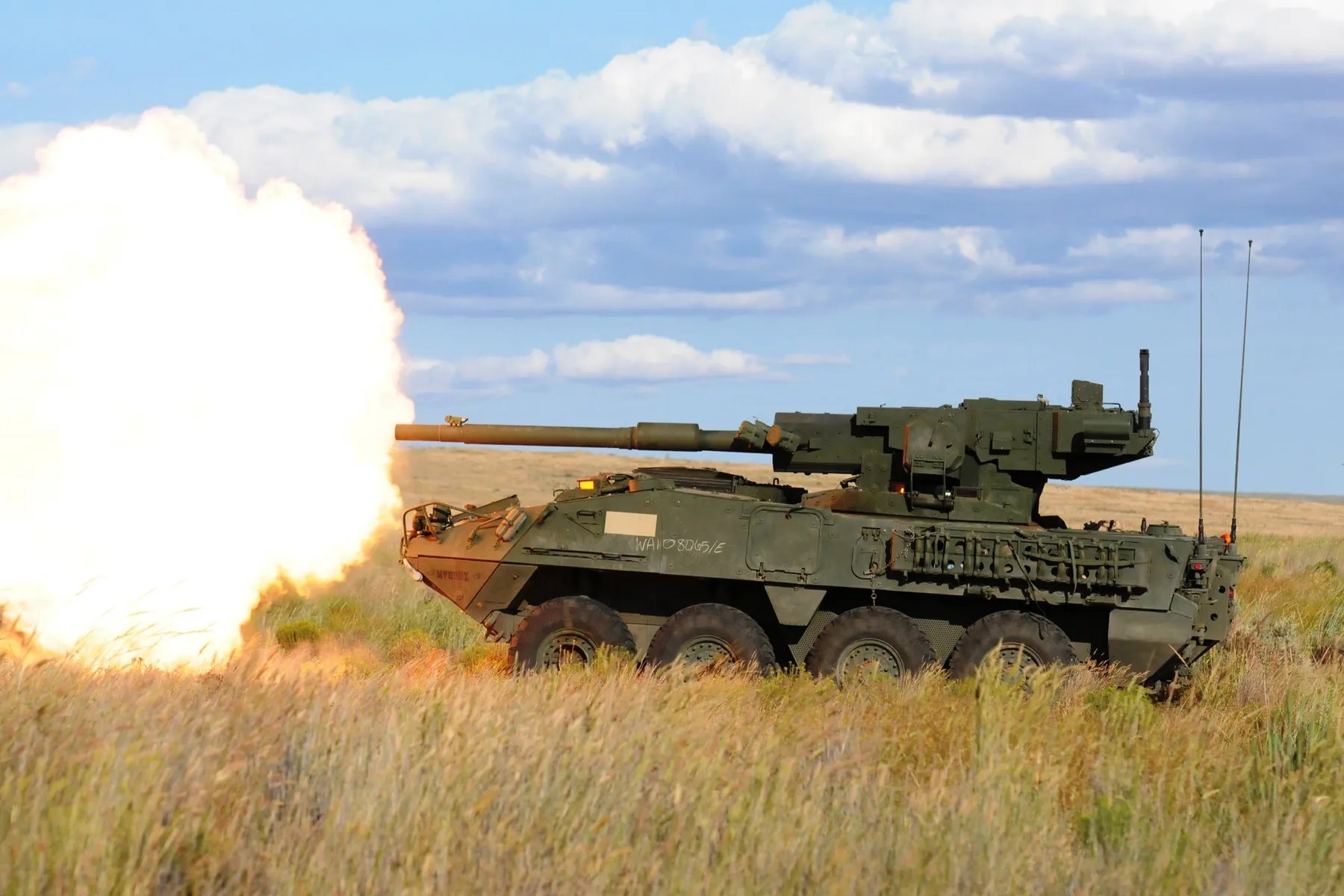
Less successful was a mobile gun system version of the U.S. Army Stryker, also with a 105mm gun, but the service divested that in 2021 because of problems with its dated cannon and autoloader. The U.S. Army then received the M10 Booker Combat Vehicle. Armed with a 105mm main gun, the Booker is a tracked vehicle with a much higher degree of armor protection and off-road mobility, but this, too, was canceled in 2025, amid cost and weight increases.
A wheeled 105mm gun system can provide substantial direct-fire capability while offering advantages in road mobility and potentially lower logistical demands. It also lacks the combination of protection, cross-country mobility, and heavy armament associated with a tracked main battle tank.
For Taiwan, this kind of vehicle provides a comparatively compact armored platform able to move rapidly between positions and bring heavy direct firepower to areas where larger vehicles could face mobility constraints.
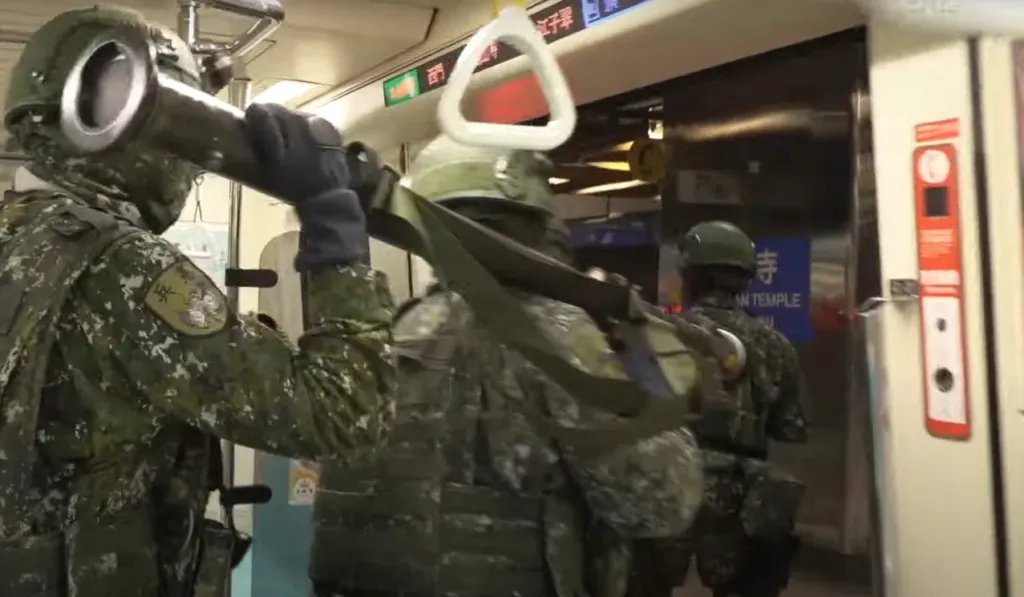
If fighting reaches Taiwan’s cities, the ROCA regularly trains for the challenges of urban warfare. The service has also demonstrated unusual measures to conceal and protect its armored vehicles, including disguising tanks and other vehicles as scrap piles or civilian construction equipment to complicate PLA targeting.
The vehicle’s development is also being influenced by the threat of battlefield drones. Taiwanese military officials say the system is expected to receive additional counter-drone capabilities before entering mass production. One planned modification is an anti-drone cage around the vehicle.
More ambitious changes could involve the installation of a larger-caliber automatic weapon. Reportedly, the vehicle could eventually receive another machine gun or larger-caliber automatic cannon, with the 30mm M230 chain gun identified as one possible option. The proposed weapon could use canister-type ammunition designed to disperse numerous fragments against small drones.
Adding dedicated counter-drone equipment to the mobile gun system would therefore give the vehicle another role beyond direct engagement of conventional ground targets.
The prominence of counter-drone measures in the planning of the vehicle also reflects the increasingly contested environment in which Taiwan’s armored forces would have to operate. In a conflict with China, armored units have to operate under the threat of persistent surveillance and attacks from a wide range of uncrewed systems, making concealment, mobility, dispersion, and organic counter-drone capabilities very important to any change of survival. Questioning just how long any armor would last in a full-on invasion scenario is absolutely relevant. As we have seen in Ukraine, the drone threat alone has sidelined even the most capable armor. At the same time, Taiwan is working toward its own drone-heavy battlefield doctrine, part of a broader plan to turn the island into a “hellscape” for any invading force.
Overall, the September 23 demonstration offered a useful glimpse into the thinking behind Taiwan’s indigenous armored vehicle program.
As part of a wider modernization of ROCA armor, the service has also received 108 M1A2T Abrams tanks, broadly equivalent to the M1A2 SEPv3 version — or System Enhancement Package version 3 — which you can read more about here.
With production of 178 series examples of the new vehicle scheduled to begin in 2027, Taiwan’s new 105mm mobile gun system is moving toward becoming a significant component of the island’s domestically produced armored fleet.
Contact the author: thomas@thewarzone.com
Loading comments…
Comments couldn’t be loaded. Please refresh the page.