
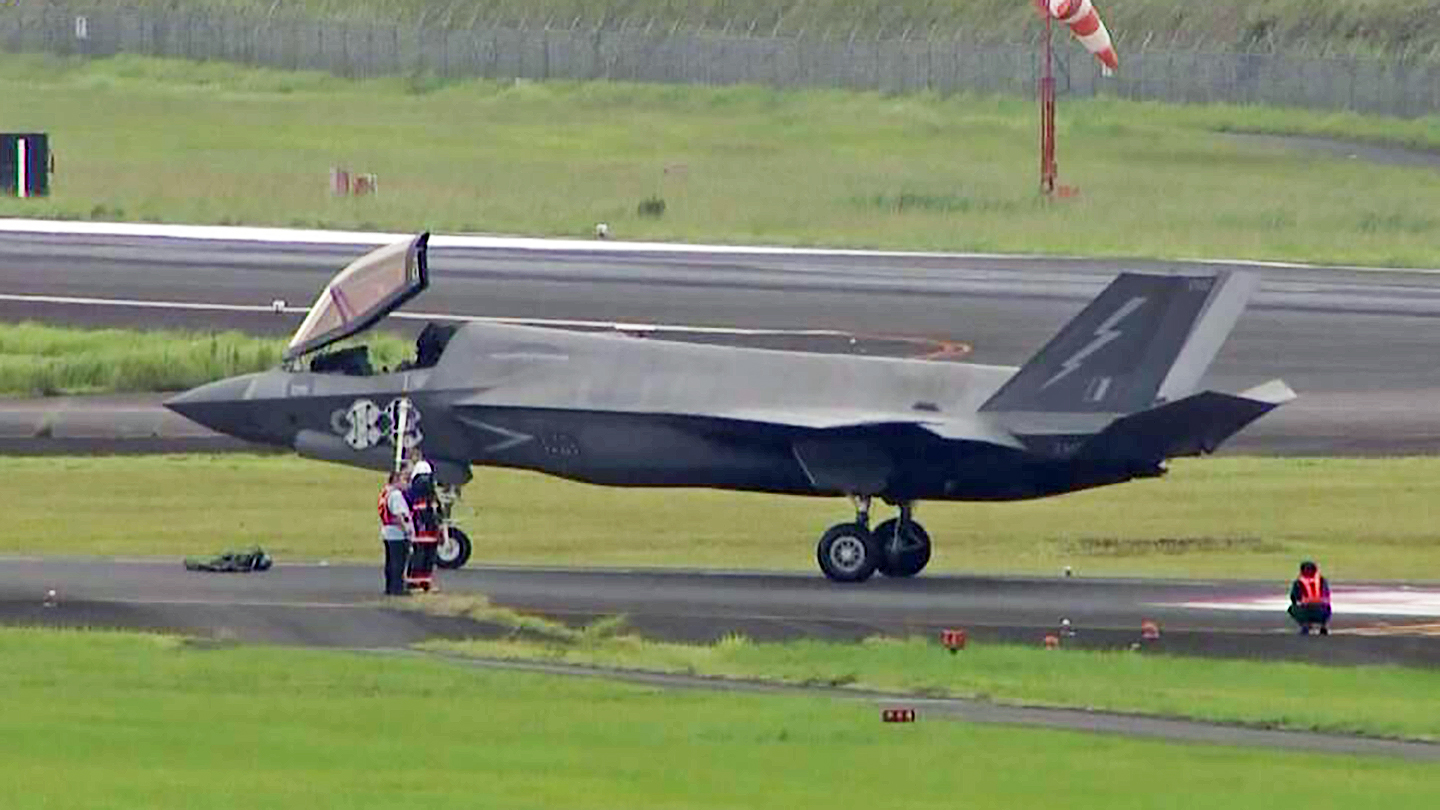
The U.K. Royal Air Force F-35B stealth fighter that was forced to make an emergency diversion to Japan last week is still there, the U.K. Ministry of Defense has told TWZ.
The F-35B in question, from the Royal Navy carrier HMS Prince of Wales, landed at Kagoshima Airport, in Kirishima City, southwest Japan, at around 11:30 a.m. local time on Aug. 10, following an in-flight malfunction. No injuries to the pilot were reported, and although six flights in and out of Kagoshima were said to be delayed, the airport was soon operating normally again. In the meantime, the F-35B was moved from the runway to a taxiway. Its exact location at the airfield is not currently known.
While the U.K. Ministry of Defense offered no further detail to TWZ about the nature of the technical issues affecting the aircraft now in Japan, it did say that it was completely unrelated to the fault encountered earlier in the cruise, which required a different F-35B to divert to an airfield in India, where it was left stranded for over a month.
The U.K. Ministry of Defense also confirmed that the aircraft in Japan has been assessed by Royal Navy and Royal Air Force engineers; it is now awaiting spares, after which it will be repaired. In the past, the global supply chain of F-35 parts has been questioned, although both the U.S. Marine Corps and Japan itself have F-35Bs based locally.
The two F-35B diversions come during what is one of the highest-profile cruises for the type in British service.
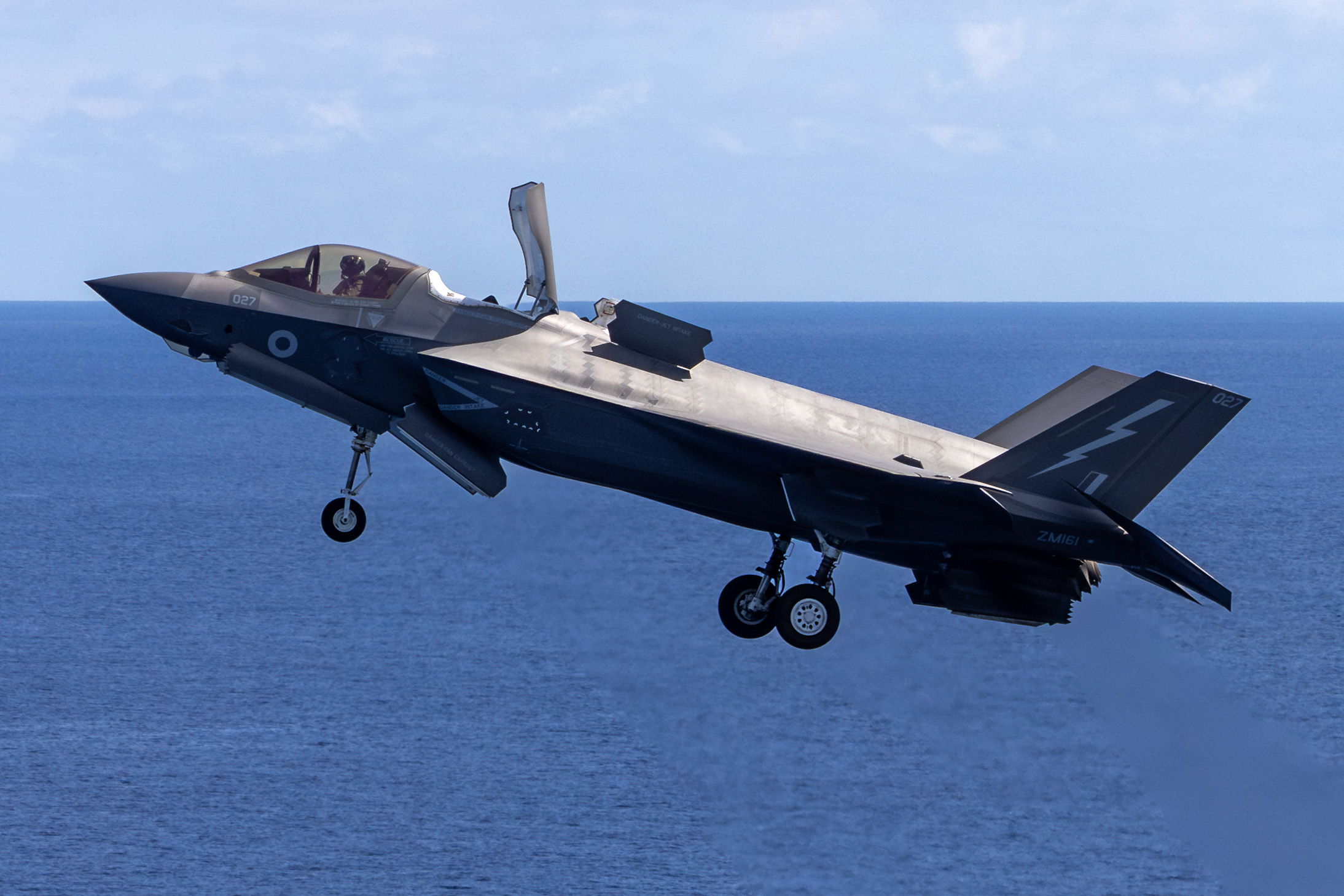
Under Operation Highmast, 18 British F-35Bs are embarked in the Prince of Wales, which has sailed to the Indo-Pacific region. Here, it operated in waters off Australia, during which it took part in Exercise Talisman Sabre. The F-35B component comes from one Royal Air Force and one Royal Navy squadron, with at least one U.S. Marine Corps F-35B boosting these numbers. In the past, Marine Corps F-35Bs have been relied upon to make up the required aircraft numbers during U.K. carrier cruises.
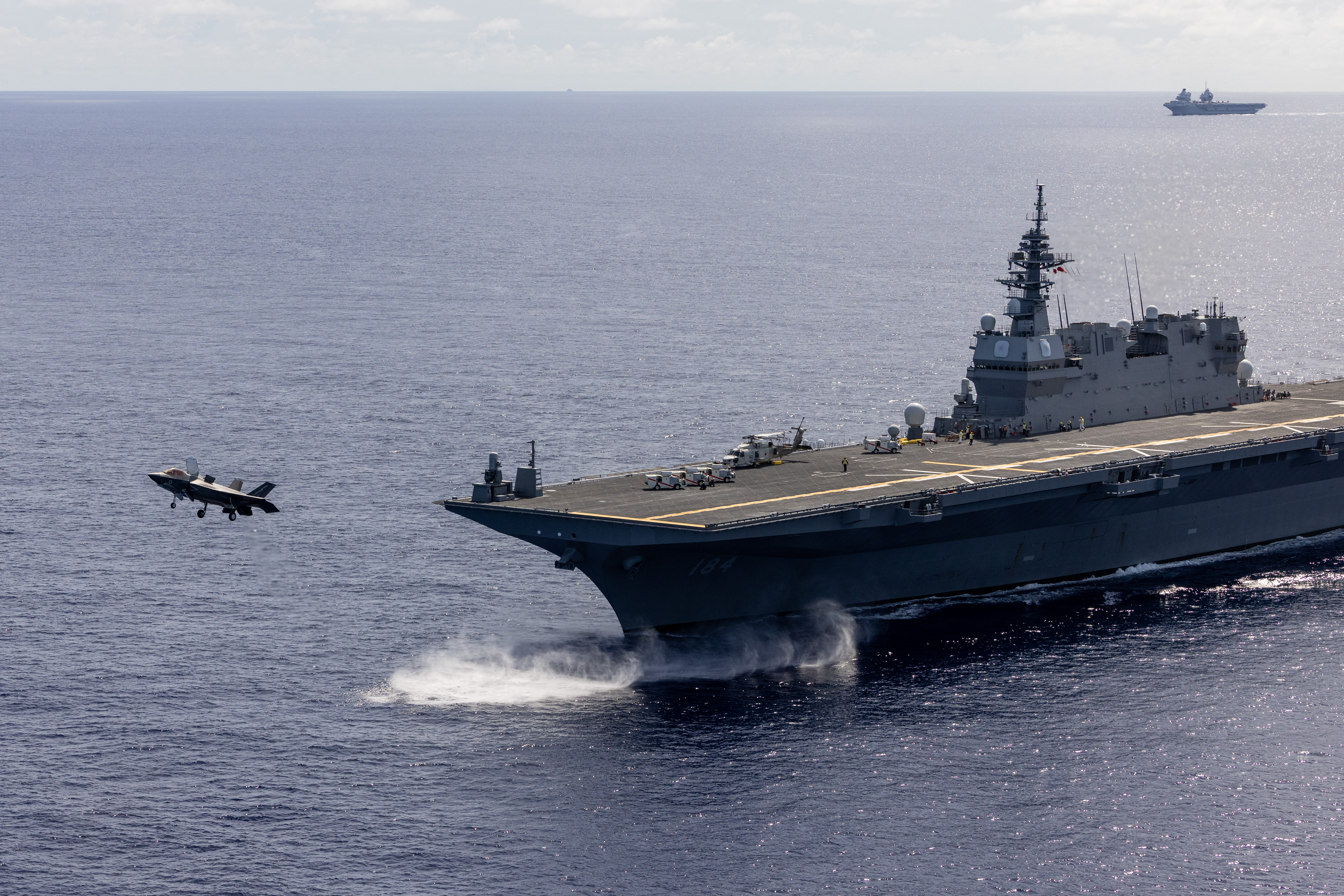
Thereafter, the carrier moved to the waters around Japan. While there, the F-35Bs were involved in Exercise Hightower, alongside Japanese and South Korean assets. F-35Bs from the Prince of Wales also became the first British jets to operate from a Japanese naval vessel, when they conducted joint exercises with the Kaga, a helicopter carrier that has been adapted to be compatible with the short takeoff and vertical landing (STOVL) F-35B.
The two F-35B diversions during Highmast are, in themselves, nothing extraordinary. Such incidents are part and parcel of carrier-based aircraft operations. When not executing blue-water operations, a precautionary emergency landing is often the safest option, bearing in mind the many technical, human-factor, and ship-operational issues that make recovering on the carrier a higher risk. This can include low fuel states.
However, given the turbulent history of the F-35 program and persistent questions about the future of the procurement of this aircraft in the United Kingdom, they are subject to additional scrutiny.
The United Kingdom also lost an F-35B in a well-publicized accident during a previous cruise, when an example crashed in the Mediterranean after an aborted takeoff attempt from the carrier HMS Queen Elizabeth in November 2021, as seen in the video embedded in the tweet below. It later emerged that the cause of the mishap was that one of the jet’s intake blanks had become stuck in the intake itself.
While the U.K. Ministry of Defense has so far revealed little of what exactly caused the two F-35Bs to divert to alternative airfields, we do now at least have an update on the latest incident. It remains to be seen how long it will take for the required spare parts to arrive, but attention on Operation Highmast is likely to remain intense, with two aircraft now having been sidelined during the same cruise.
Contact the author: thomas@thewarzone.com
Loading comments…
Comments couldn’t be loaded. Please refresh the page.