
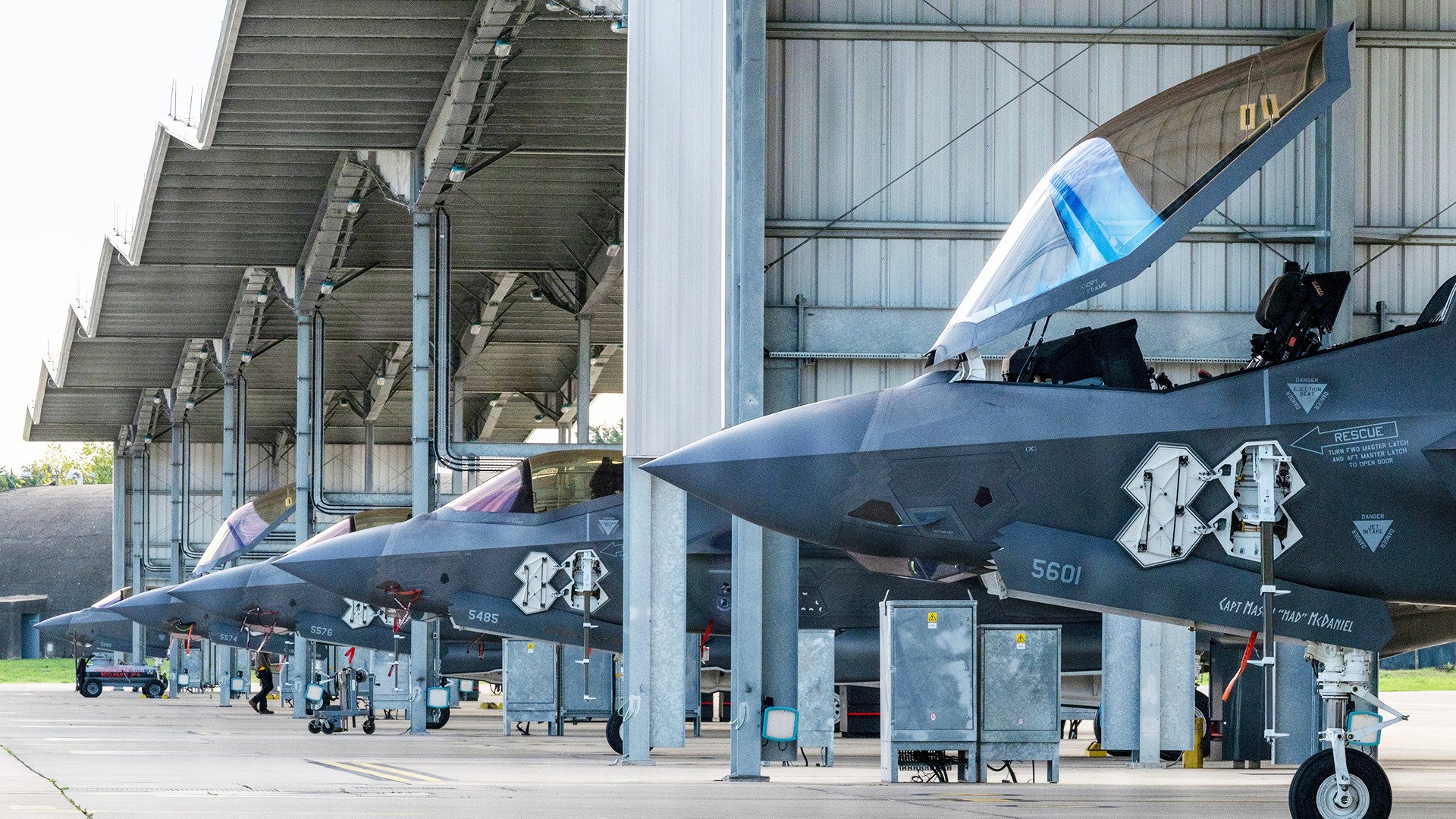
At least two bases in England hosting U.S. Air Force aircraft are operating under beefed-up security protocols, a U.S. official told us Monday afternoon. The official was responding to our questions about what appeared to be unusual aircraft movements out of RAF Mildenhall. It is unclear what spurred these measures, how long they have been in place or whether they are connected to an ongoing investigation into whether Iran was behind a security incident at RAF Fairford in September that reportedly prompted the hasty departure of B-1 Lancer bombers.
“Enhanced force protection measures are in effect across RAF Lakenheath and RAF Mildenhall,” the official told us. “We constantly assess a variety of factors that determine what measures we institute or modify to protect our installations, our people and their families. We are working closely with our host nation counterparts to minimize impacts from enhanced force protection activities and ensure the safety of U.S. personnel, their families and the local community.”
The official declined to say what steps were taken.
“For operational security reasons, we do not discuss specific force protection measures,” the official added.
RAF Mildenhall and RAF Lakenheath are both major hubs for the U.S. Air Force. Mildenhall’s host unit is the 100th Air Refueling Wing, which operates KC-135 Stratotanker aerial refueling jets. The base is also home to Air Force RC-135V/W Rivet Joint reconnaissance aircraft, Air Force Special Operations Command (AFSOC) CV-22 Osprey tiltrotor aircraft and MC-130J Commando II special operations cargo planes. Lakenheath hosts Air Force F-15E Strike Eagle and F-35A Lightning II aircraft.
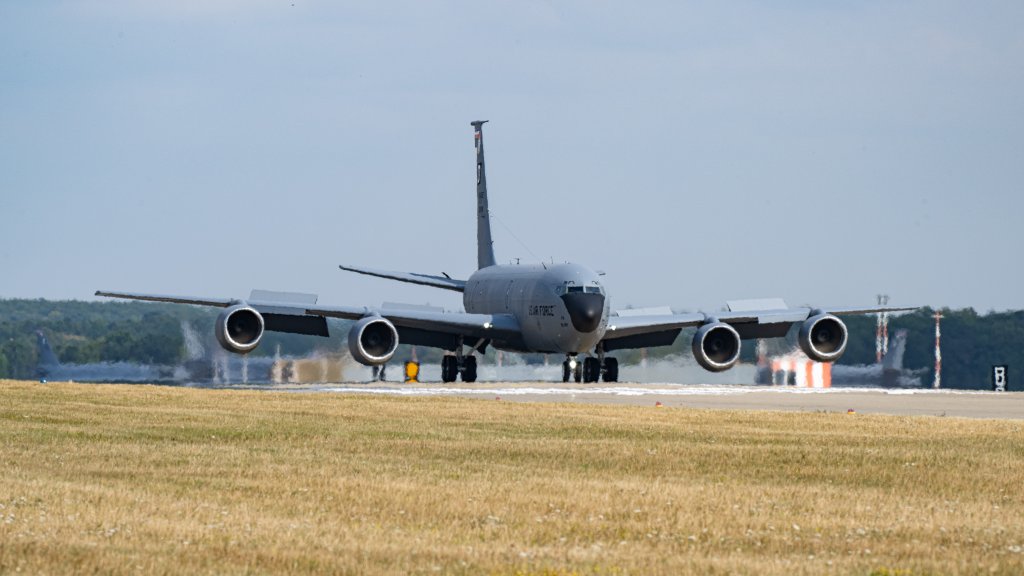
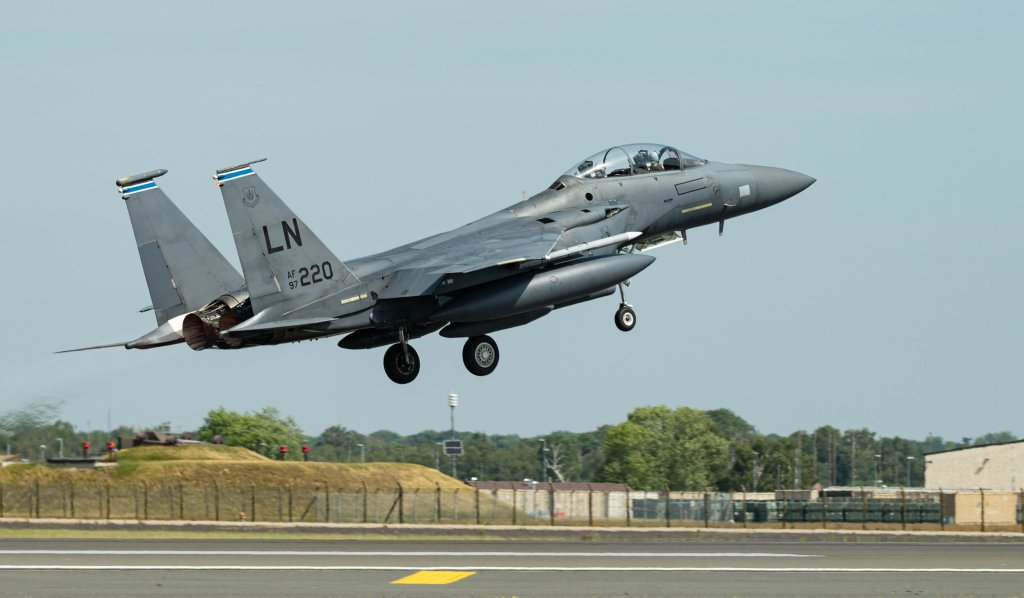
Both bases also see frequent flights transiting to other locations.
As we noted earlier in this piece, the official was responding to our questions about unusual aircraft movements out of Mildenhall. They were first noticed by the @DefenceGeek open-source flight tracker account.
“Over the course of today, a number of US Air Force assets at RAF Mildenhall (EGUN) have made unannounced/unexpected movements to other locations, with several of those movements in motion presently,” DefenceGeek wrote on X. “The initial few this morning I assumed were due to heavy fog in the area, but other information is now suggesting something else… – Several KC-135s have moved to Spangdahlem (ETAD) or Prestwick (EGPK) – CV-22Bs have moved from Mildenhall to Lakenheath It remains unclear if there is an ongoing exercise or information of a potential threat (following the incident at RAF Fairford)…”
DefenceGeek also noted that RAF Lakenheath posted a notice this morning on Facebook urging vigilance in spotting and reporting drones.
“Our strongest security asset is an observant community,” the RAF Lakenheath Facebook post read. “Staying vigilant and reporting suspicious activity, including unauthorized drone activity, helps protect our Airmen, families and mission. If you see something unusual on or around the Tri-Base area, report it to Security Forces.”
It is unclear what connection, if any, the Lakenheath post has to the enhanced force protection status. U.S. Air Forces in Europe – Air Forces Africa (USAFE) declined to discuss security measures. The command oversees U.S. Air Force operations in Europe and Africa.
“U.S. Air Force aircraft rotate between installations and operating locations for a variety of reasons including training and real world requirements,” USAFE told us. “U.S. military aircraft are hosted in accordance with access, basing, and overflight agreements with our Allies and partners. Due to operations security, we will not provide further information on movement of assets.”
The departures from Mildenhall took place amid an ongoing flow of refueling tankers and other aircraft to the Middle East as President Donald Trump continues to mull whether to resume strikes against Iran. This afternoon, Trump wrapped up his meeting with Qatari Prime Minister Mohammed bin Abdulrahman Al Thani to discuss a flagging effort to resolve the conflict with Iran through diplomacy.
It should also be noted that in late November 2024, Lakenheath, Mildenhall and two other RAF bases hosting U.S. forces experienced drone incursions, which we were the first to write about.
As we mentioned earlier in this piece, security concerns about bases in England hosting U.S. Air Force aircraft and personnel were raised following an incident at RAF Fairford.
Like Mildenhall and Lakenheath, RAF Fairford is a major hub for U.S. military aircraft in the United Kingdom. It is a regular host of strategic assets, including bombers and U-2 spy planes. It also acts as a pit stop for other aircraft, including fighters, that are being ferried to and from the United States. Bomber strikes launched from Fairford were a central aspect of major U.S. combat operations against Iran earlier this year.
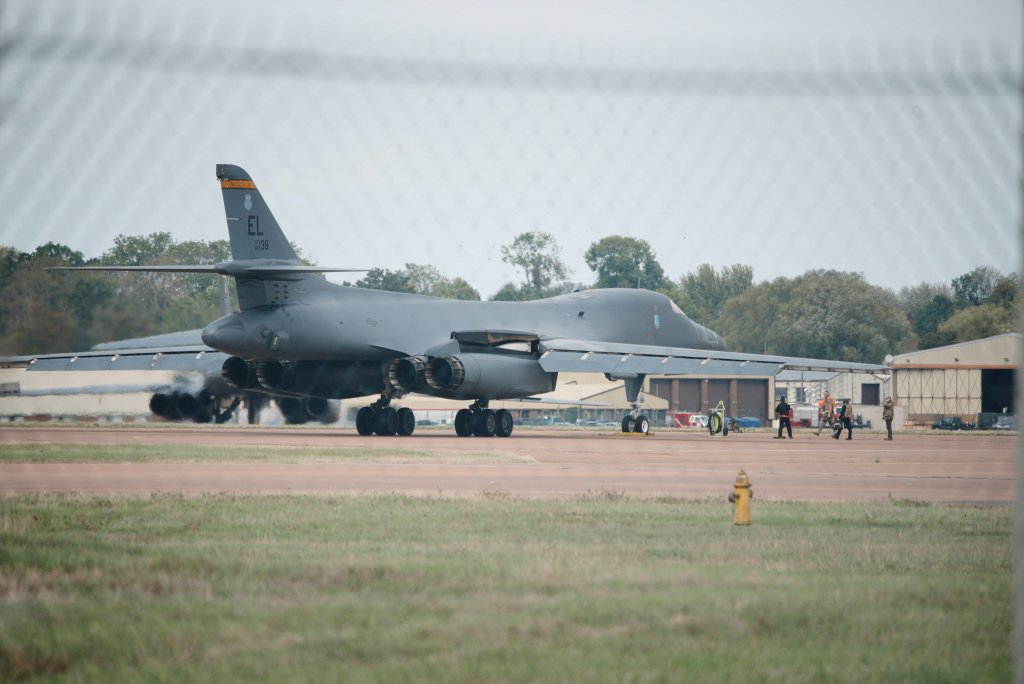
In late September, five men were arrested on suspicion of driving bomb-laden vans toward it. They were soon released on bail after no explosives were found, but two men were later arrested, one of who “charged with assisting a foreign intelligence service, which police earlier said they believed to be Iran,” according to the BBC.
A week after the security incident, U.S. Air Force B-1B Lancer bombers that had been deployed to RAF Fairford in the U.K. since Operation Epic Fury returned to their home stations, a U.S. defense official confirmed to TWZ at the time. The hasty movement was reportedly sparked by new Iranian threats against the base. As we previously reported, Tehran directly threatened RAF Fairford in July over its use as a base to launch attacks against Iran.
We can’t say for sure what prompted the enhanced security at RAF Lakenheath and RAF Mildenhall or whether the aircraft movements at Mildenhall are precautionary or just normal shifting of resources. We will continue to monitor the situation and provide updates when warranted.
Contact the author: howard@twz.com
Loading comments…
Comments couldn’t be loaded. Please refresh the page.