
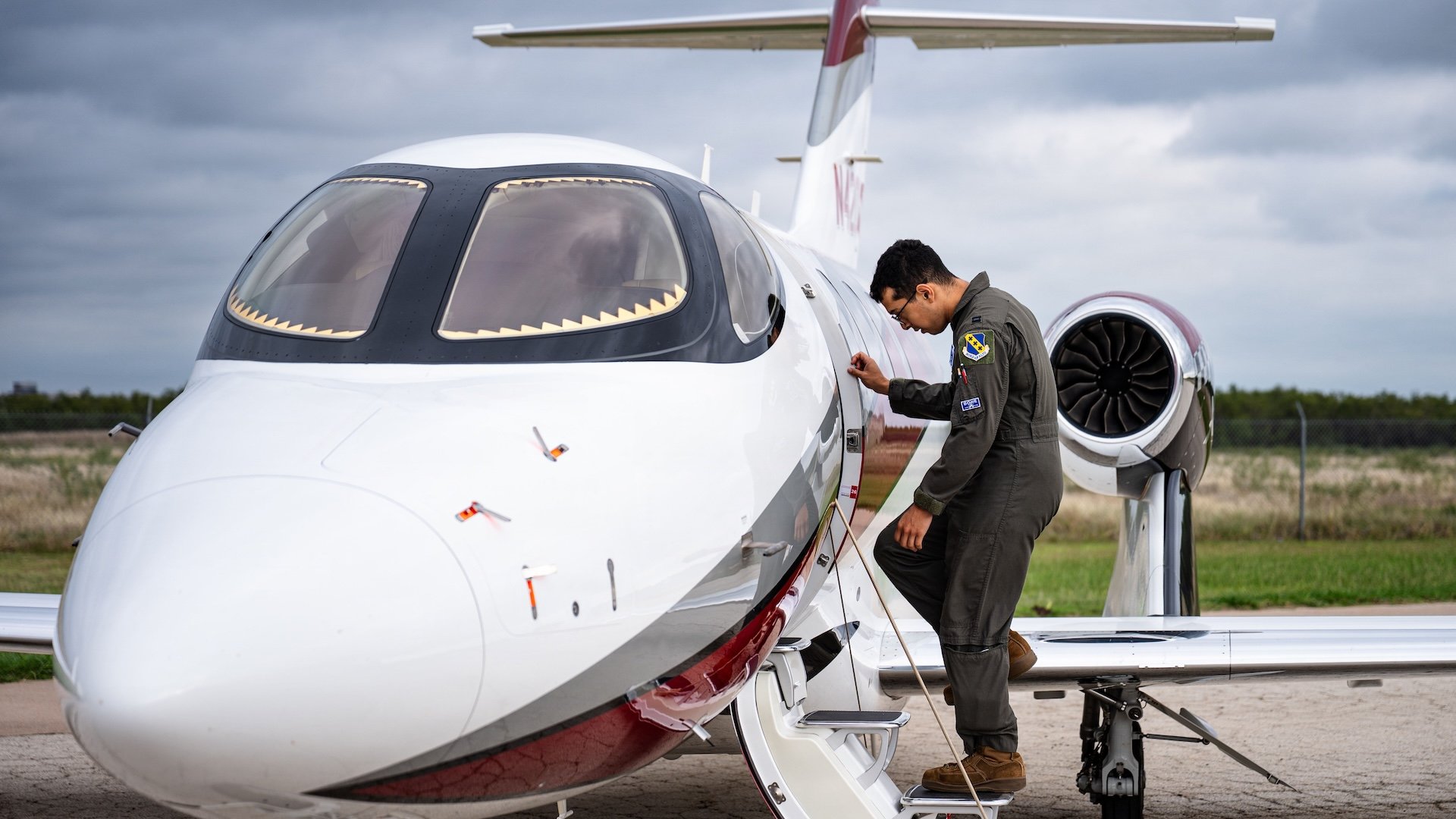
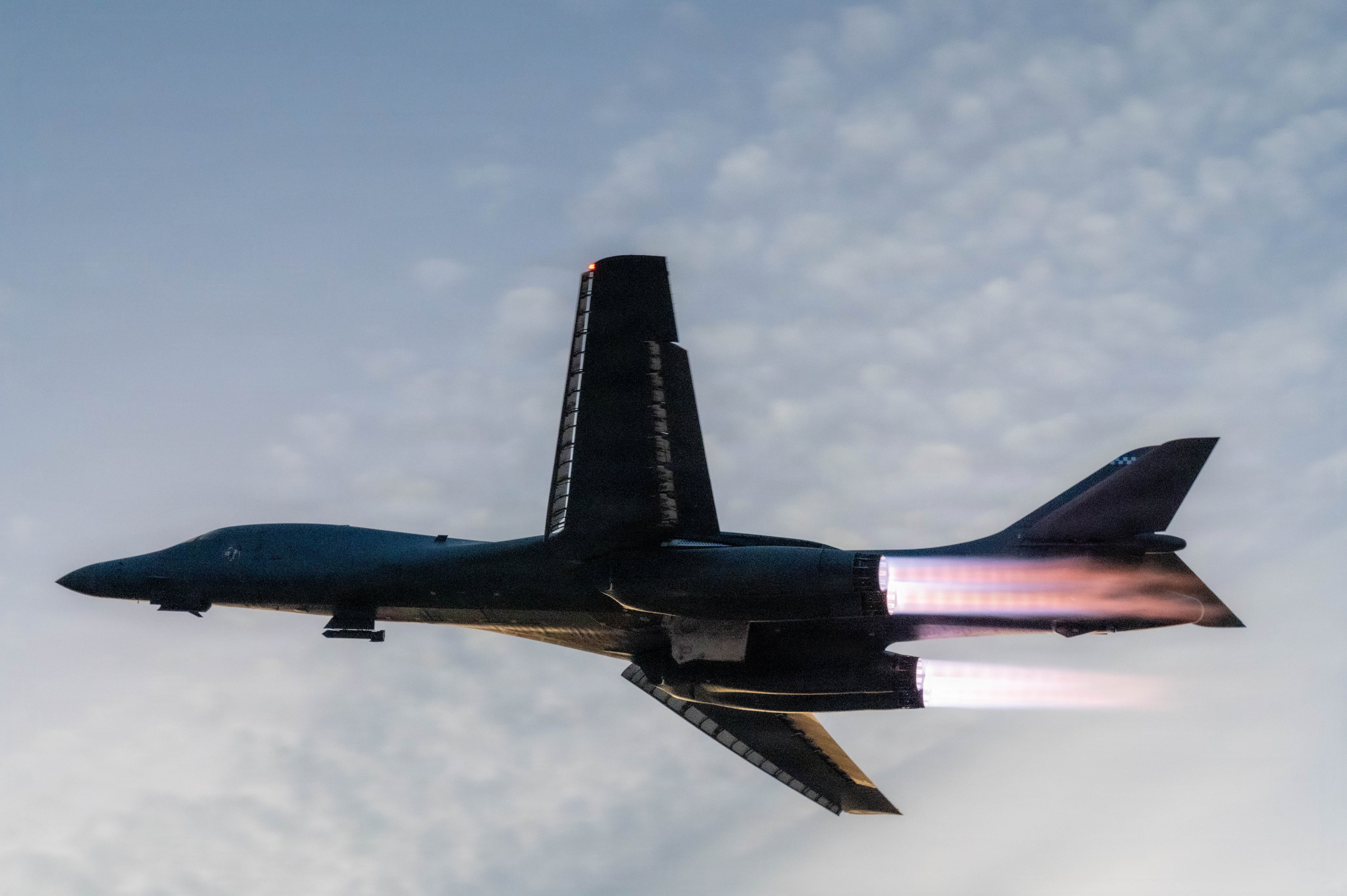
Air Force B-1B Lancer pilots have begun taking to the skies in small, contractor-operated bizjets under a new initiative designed to give them more flying time without putting additional demands on the bomber fleet. The Bomber Supplemental Trainer for Aircrew Readiness (BSTAR) program began flying earlier this month in Abilene, Texas, close to Dyess Air Force Base. Using civilian HondaJet aircraft, the program is supposed to help bomber crews build foundational airmanship while preserving B-1 sorties for specialized combat training, and is now set to expand.
The first military training flight took place on November 2, 2026, with a B-1 pilot from Dyess at the controls. The Air Force officially launched the initiative two days later, with Air Force Global Strike Command (AFGSC) commander Gen. S.L. Davis and an incoming B-1 pilot taking part in the event. Maj. Gen. Ty Neuman, Eighth Air Force and Joint-Global Strike Operations Center commander, also participated in an observer flight.
“Combat-ready aircrews are built on foundational airmanship, sound decision-making and time in the air,” Davis said. He added that the program provides additional flying opportunities at a much lower cost than using the bombers themselves.
The initiative uses a contractor-owned, contractor-operated (COCO) model. XSTAR Aviation provides the aircraft, instructor pilots, maintenance, scheduling, and other support. Flights operate from Abilene Regional Airport, meaning the Air Force does not need to dedicate additional B-1 aircraft or military maintenance personnel to the effort.
The goal is to provide eligible B-1 pilots with approximately 100 additional flight hours each year. That is equivalent to roughly four additional two-hour sorties per month. The training focuses on core flying skills, including instrument procedures, mission planning, aircraft handling, and crew resource management.
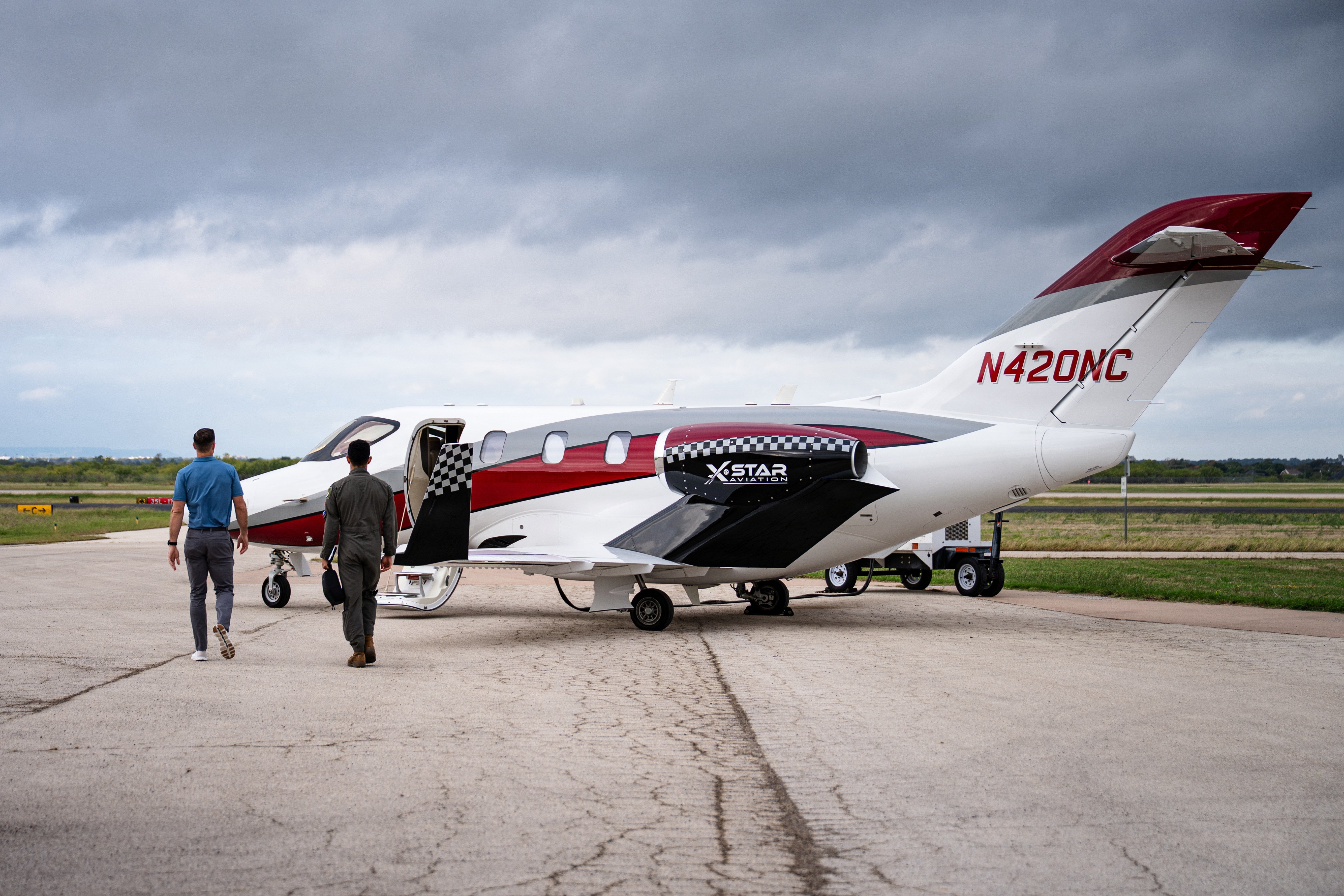
Those hours are intended to build and sustain general airmanship, not to replace training that can only be conducted in the B-1. Aerial refueling, tactical employment, and weapons delivery will remain part of the bomber’s own training syllabus. The idea is to preserve B-1 flight hours for those specialized requirements while allowing pilots to maintain and develop more basic flying skills in less expensive aircraft.
“B-1 aircrews require precision, discipline, and sound judgment,” Neuman said. “BSTAR increases airmanship, producing safer, more effective and more lethal operators while preserving B-1 flight hours for specialized training.”
Sorties are tracked and debriefed, with feedback and operational data collected to help assess the program’s effectiveness. That information is also expected to inform the development of training curricula and potential expansion of the effort.
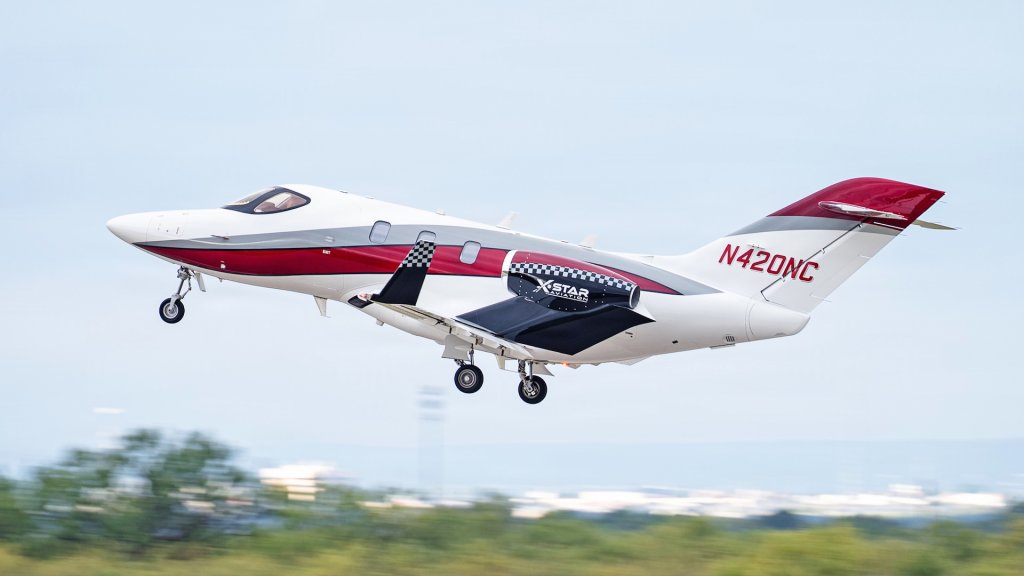
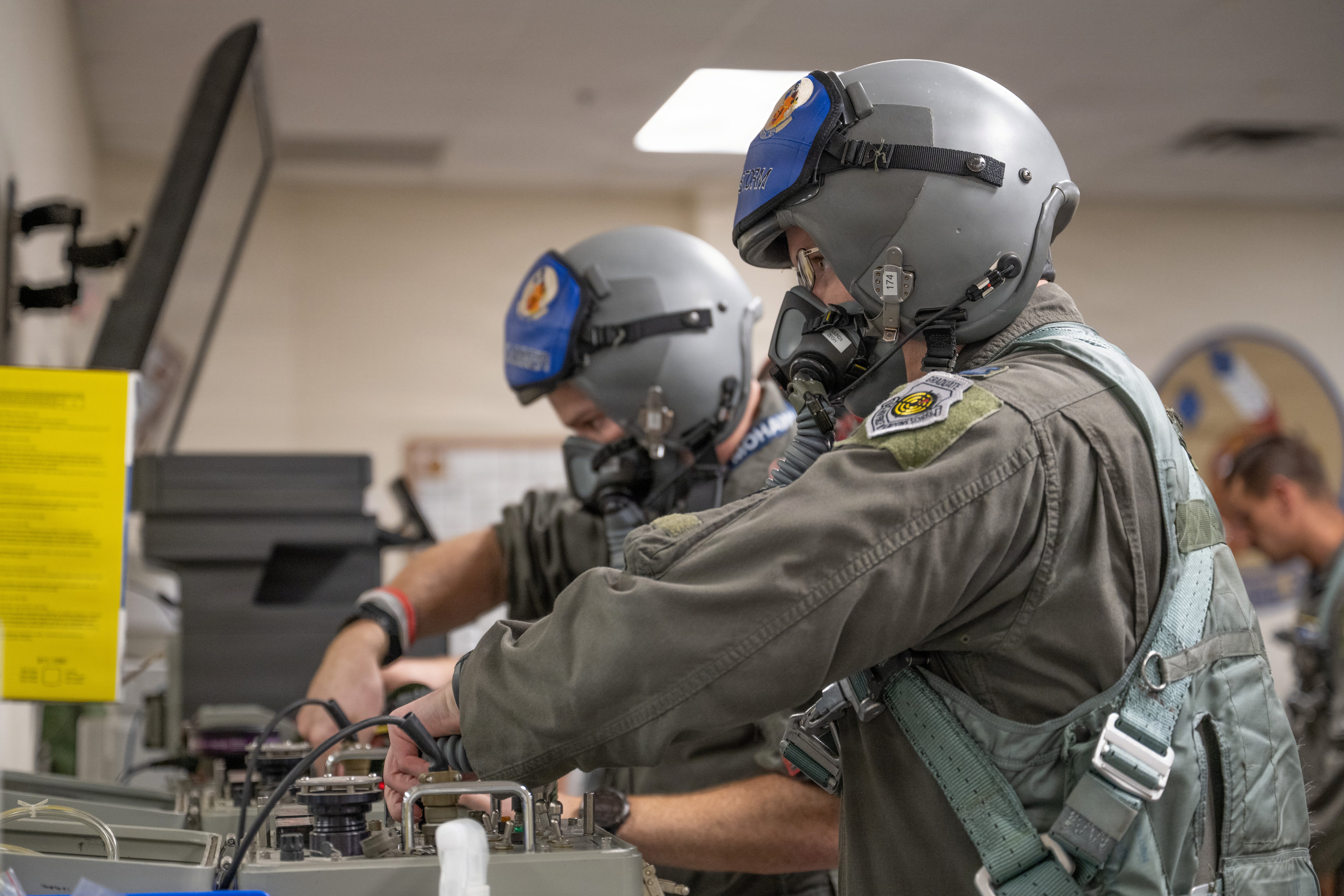
U.S. Air Force/Senior Airman Jade Caldwell
A New Training Model For The B-1 Force
The aircraft and personnel supporting BSTAR began moving into place earlier this year. Positioning and validation flights took place in September, followed by the start of contractor instructor-pilot operations in October.
XSTAR Aviation says the program is designed to grow beyond its initial location. The company plans to expand operations to Rapid City, South Dakota, in January 2027, supporting B-1 pilots assigned to nearby Ellsworth Air Force Base. That would establish a two-location operation serving the bomber’s two principal bases.
The effort is backed by a significant contract award. A March 23, 2026, award notice on SAM.gov lists X-Star Inc. as the recipient of an award worth up to $78 million, including base and option periods. The award is identified as “Bomber Supplemental Trainer for Aircrew Readiness Production Other Transaction SBIR Phase III.”
The award’s objectives extend beyond simply providing aircraft and flight hours. They include developing training solutions and curricula, collecting performance data, evaluating training outcomes, and tracking airmanship trends. The work is also intended to help determine how the model could be sustained and scaled, potentially supporting a steady-state BSTAR Companion Trainer Program across the wider Air Force.
XSTAR Aviation describes itself as a veteran-owned small business created as a direct outgrowth of an AFGSC-led BSTAR study. The company says it was established as a subsidiary of SBCC to manage contractor-owned and contractor-operated aircraft and provide turnkey training solutions for the Department of Defense.
The aircraft being used are civilian HondaJets. The HondaJet family is a light business jet powered by two GE Honda HF120 turbofan engines, with the engines in an unusual installation on pylons above the wings. The Elite II version, for example, has a published maximum cruise speed of 422 knots, a maximum operating altitude of 43,000 feet, and a range of 1,547 nautical miles with four passengers and fuel reserves.

Companion Trainers Are Nothing New For The Air Force
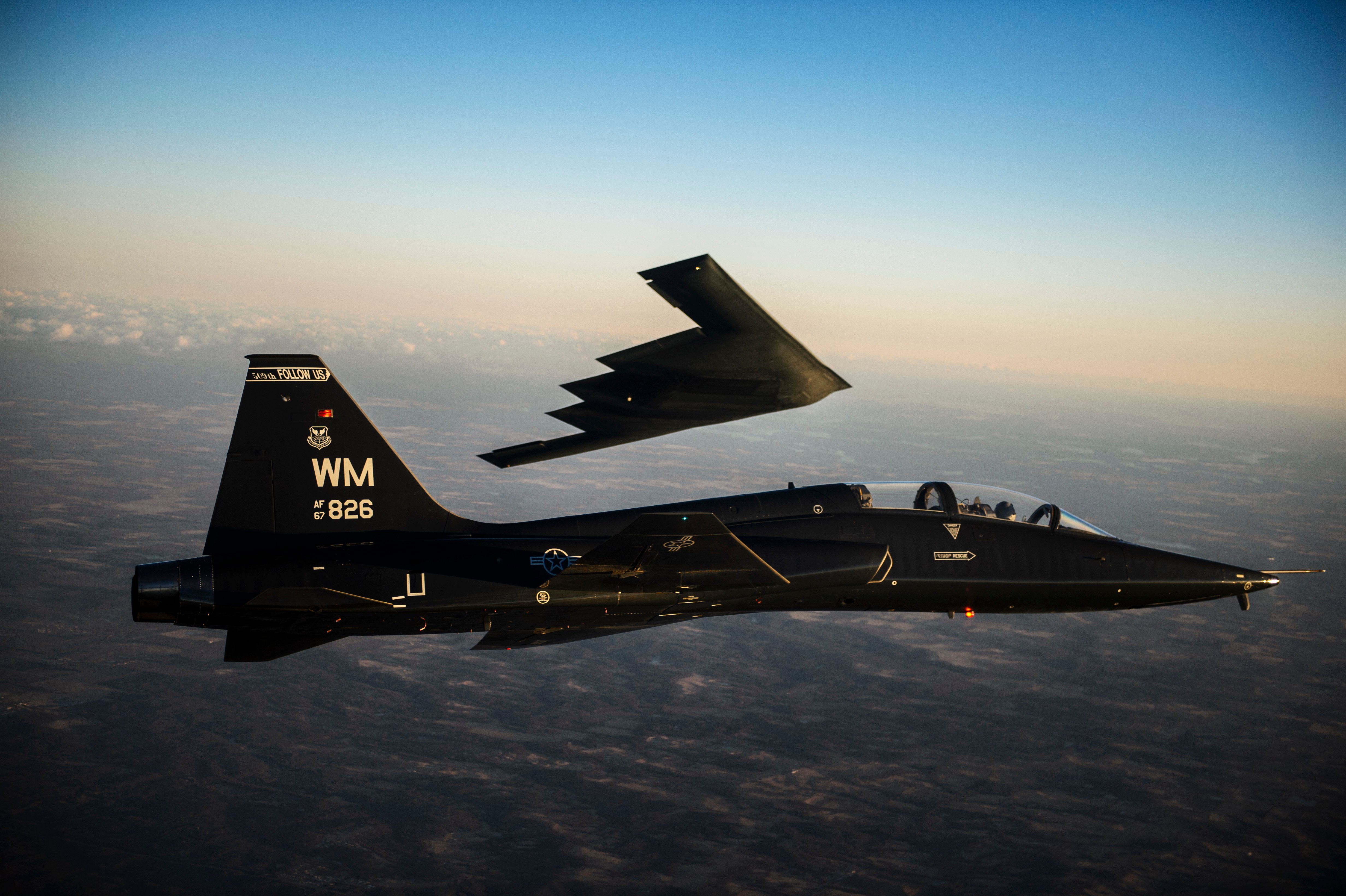
The use of companion aircraft to supplement pilot training is not a new concept for the Air Force. B-2 pilots, for example, have long used T-38 Talon advanced jet trainers to maintain basic flying proficiency. The smaller jets allow crews to practice skills such as instrument flying, formation work, and aircraft handling without having to use the much more expensive stealth bombers for every training event. The Air Force has also used T-37 and T-38 trainers to support other aircraft communities, including B-52, F-22, KC-135, and U-2 crews.
The idea of using business jets specifically for bomber training also goes back a long way. A 1981 Government Accountability Office (GAO) report discussed an Air Force proposal for a dedicated Companion Trainer Aircraft (CTA) for B-52 crews. The concept called for a small, fuel-efficient, business-type aircraft with avionics similar to those in the Stratofortress. It was intended to supplement simulator training and provide opportunities to practice tasks such as communications, aerial refueling rendezvous, navigation, terrain avoidance, and weapons delivery, while reducing the need to use B-52s for those activities.
The Air Force planned to evaluate the concept in fiscal year 1981, though it never became an operational program.
What Happens Next?
BSTAR is a modern take on that 1980s-era Companion Trainer Aircraft idea, using contractor-operated civilian business jets to provide supplemental flying experience without requiring the Air Force to acquire and sustain a dedicated fleet of military companion trainers.
Returning to the BSTAR initiative, XSTAR Aviation Executive Vice President of Operations Col. Miles McClung, USAF (Ret.), described the effort as an investment in fundamental flying skills. “Our mission is to build airmanship through flight training,” he said.
For the B-1 community, the program means pilots can gain more time in the air and practice important flying skills without putting additional hours on an aging bomber fleet. The B-1 remains essential for training in the aircraft’s unique mission systems and combat capabilities, but not every proficiency requirement needs to be met in the aircraft itself.
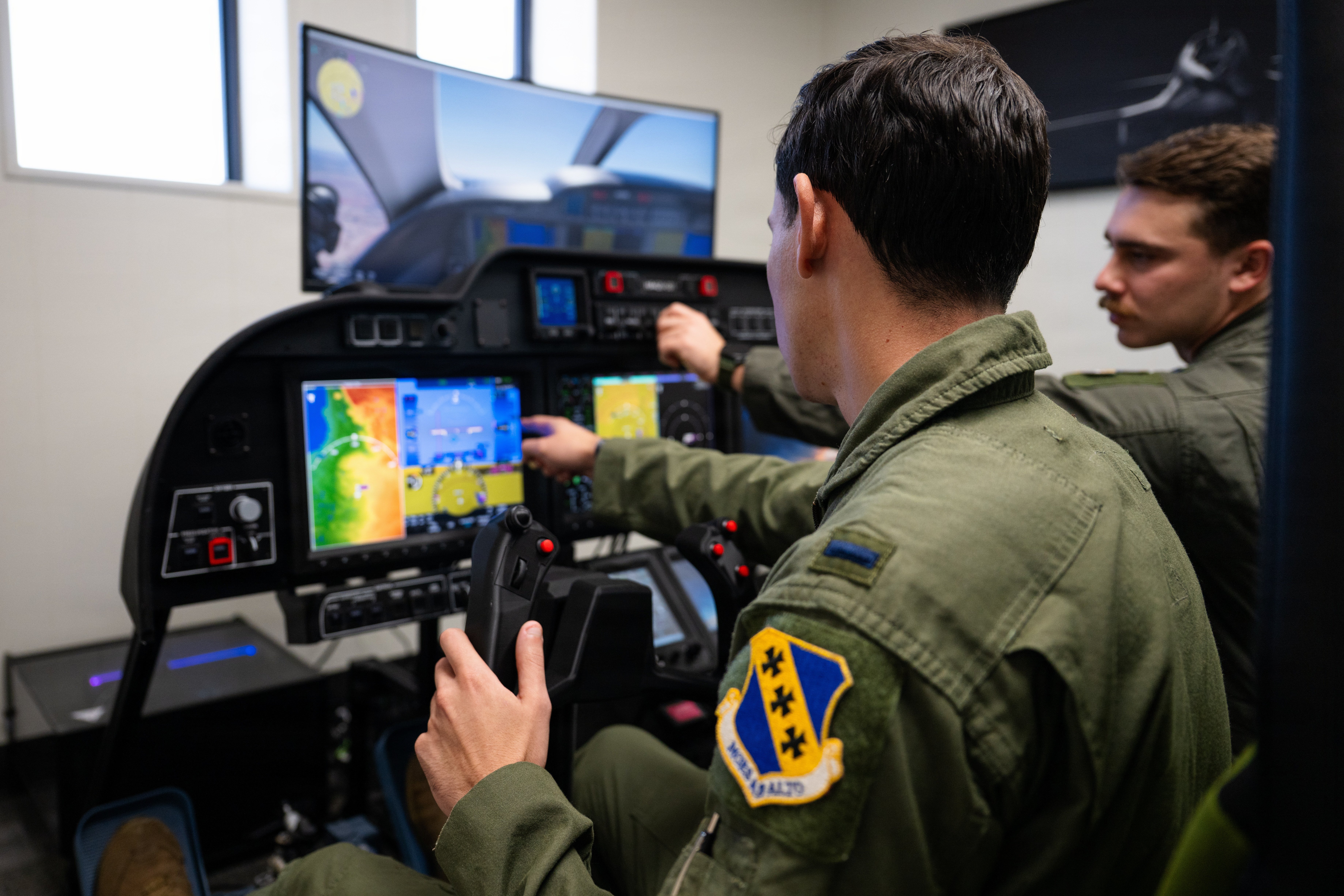
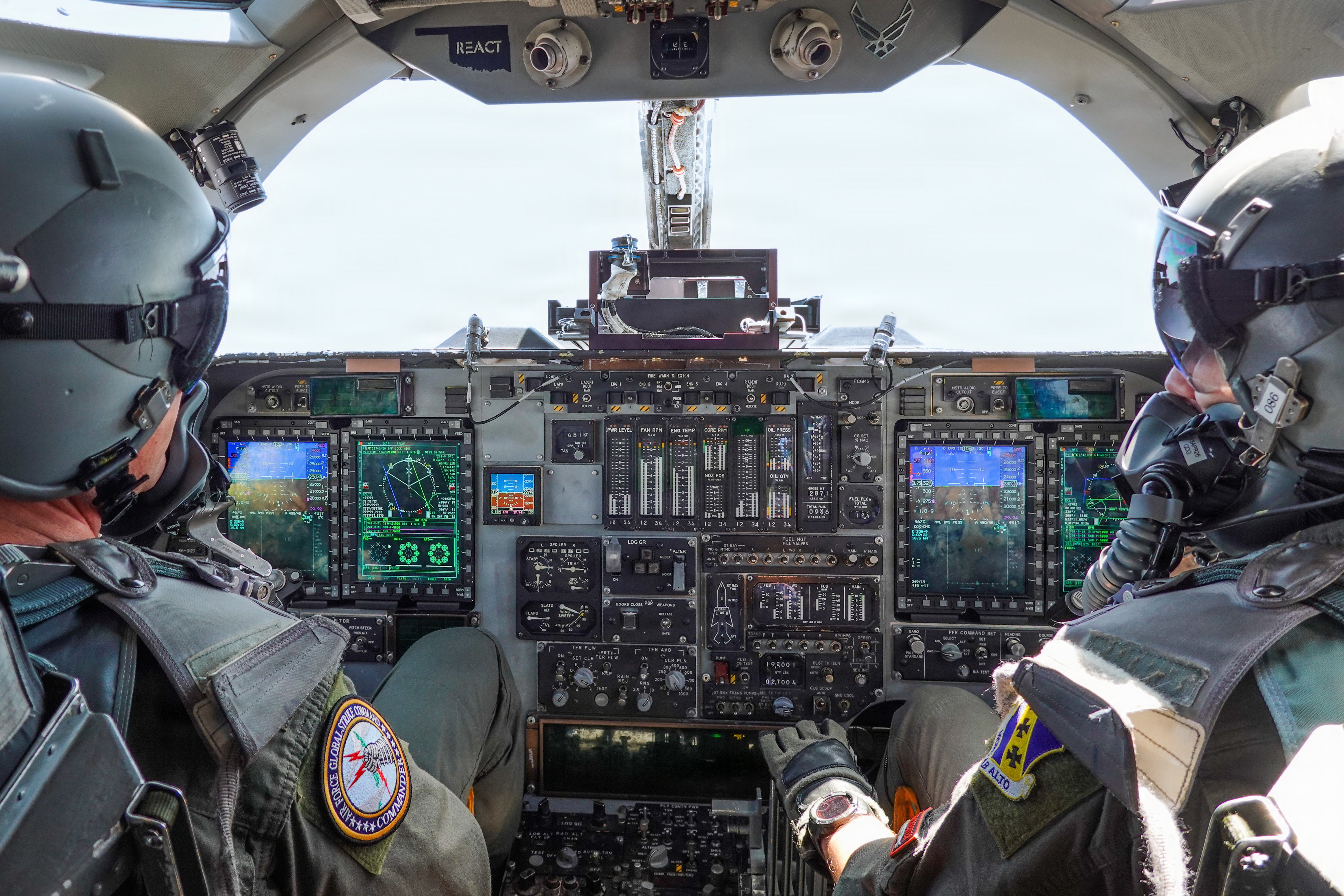
The initiative is not without its skeptics. One former B-1 pilot, speaking to TWZ on condition of anonymity, questioned how much additional proficiency crews would gain from flying HondaJets, given that its handling characteristics and instrumentation bear little resemblance to those of the Bone. While acknowledging that getting pilots into the air is preferable to relying entirely on simulators, the former pilot argued that the latter can be more useful for practicing bomber-specific mission tasks. The HondaJet also offers little direct benefit to weapon systems officers, who cannot use it to practice the B-1’s specialized mission systems or combat procedures.
The former pilot suggested that BSTAR reflects a wider challenge facing the B-1 community, with reductions in aircraft availability, flight hours, crew numbers, and maintenance resources making it increasingly difficult to maintain the flying requirements of the Air Force’s Ready Aircrew Program (RAP), which establishes minimum standards for retaining combat-ready status. While the contractor-operated approach should be considerably less expensive than generating additional B-1 sorties, he questioned whether the resulting flight time would translate into meaningful improvements in combat readiness.
Nevertheless, the economics of the approach are difficult to ignore. A HondaJet is estimated to cost roughly $2,000-$3,000 per flight hour to operate, compared with approximately $90,000 for a B-1B flight hour. Even allowing for a higher effective cost of perhaps $4,000 per hour under the BSTAR contract, that represents a cost difference of more than 20 times, potentially reaching 30-45 times depending on the actual operating costs. The COCO model also gives the Air Force considerable flexibility. After all, XSTAR provides the aircraft, pilots, maintenance, and supporting infrastructure, without requiring the service to acquire additional aircraft, establish new facilities, or assign military personnel to run the operation. As with Red Air adversary providers, the arrangement can also be expanded, recompeted, or discontinued at the end of the contract period, offering a degree of flexibility that would be difficult to achieve with an Air Force-owned fleet.
Fiscal Year 2027 budget documents outline plans for a $342 million investment in upgrades for the Air Force’s remaining 44 B-1Bs over the 2027-2031 period. The funding is intended to modernize the bomber and preserve its combat capabilities through 2037, extending the aircraft’s relevance well beyond its previously anticipated retirement timeline. That extended service life comes as demand for the B-1B remains high, including its recent heavy involvement in Operation Epic Fury. Keeping a fleet that has been reduced by a third viable for another decade will therefore require not only major aircraft upgrades and careful preservation of airframes, but also sustained investment in maintaining aircrew proficiency and readiness.
There is also the possibility that BSTAR is spinning up at this point in order to support the Air Force’s forthcoming B-21 Raider. As we have explored in the past, the B-21 fleet could be tasked with a much broader range of operational missions than the B-1 that it will replace, putting a premium on available airframes, which could impact hours allocated to pilot training. The B-21, although built for better efficiency than the B-2, will not be cheap to fly either. A COCO pilot trainer might be one approach to help mitigate that.
In the meantime, as the Air Force works to sustain its bomber force and prepare its crews for their demanding missions, the service eyes BSTAR as a way of adding flying opportunities while keeping the Lancers available for the training only they can provide. Time will tell if that investment proves worthwhile enough for wider adoption.
Contact the author: thomas@thewarzone.com
Loading comments…
Comments couldn’t be loaded. Please refresh the page.