
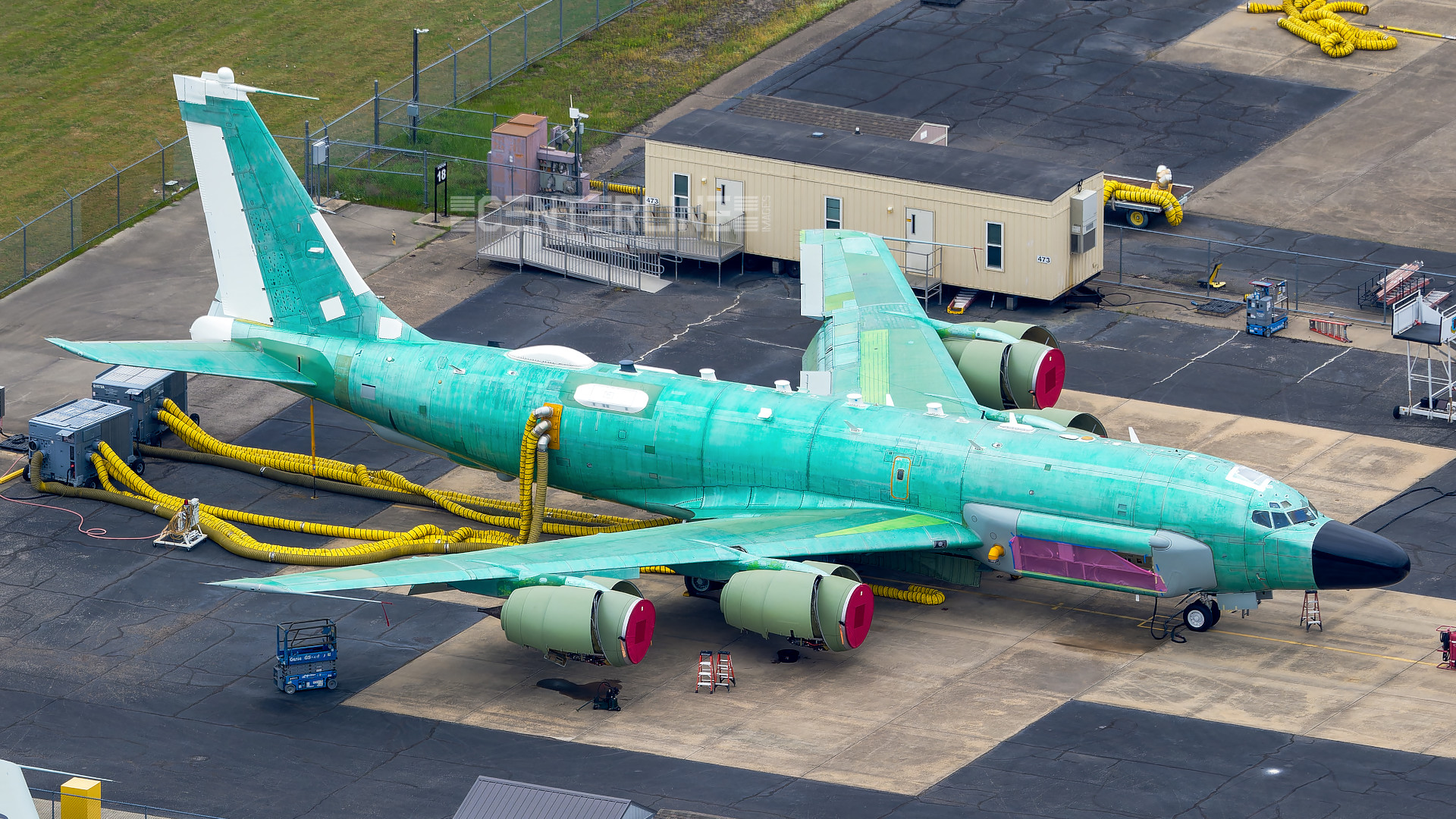
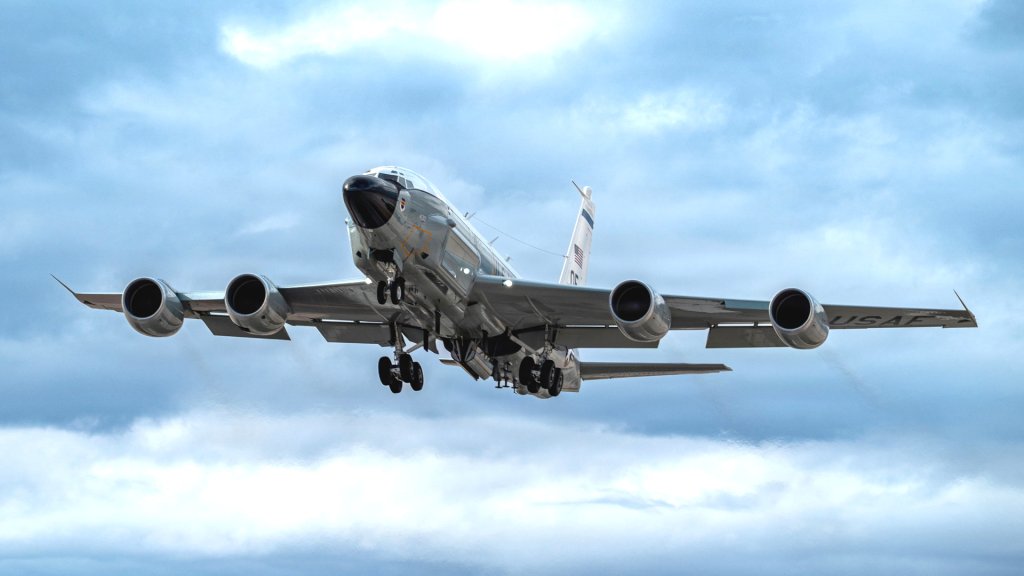
A photographer on a flight over Greenville, Texas, captured an especially good look at one of the U.S. Air Force’s RC-135V/W Rivet Joint aircraft with its usual paint scheme completely stripped off. Instead, much of its skin is seen covered with a green-colored protective coating. The airliner-sized, C-135-based Rivet Joints are powerful multi-purpose intelligence, surveillance, and reconnaissance (ISR) aircraft that can scoop up details about an opponent’s air defenses and other assets from their electronic emissions, as well as intercept communications chatter.
Dylan Phelps took the picture of the ‘naked’ Rivet Joint, seen at the top of this story, while flying over Greenville Municipal Airport, also known as Majors Field, at the tail end of a recent trip across the middle of the United States. Phelps flew in a Cessna 182 piloted by Curt Lewis.
L3Harris has a facility at the airport in Greenville where the Air Force’s Rivet Joints and other RC-135 variants routinely go to receive upgrades, as well as undergo higher-level maintenance. L3Harris performs similar work there on a variety of other large U.S. military special mission and VIP planes. This kind of work also often involves stripping and repainting the aircraft.
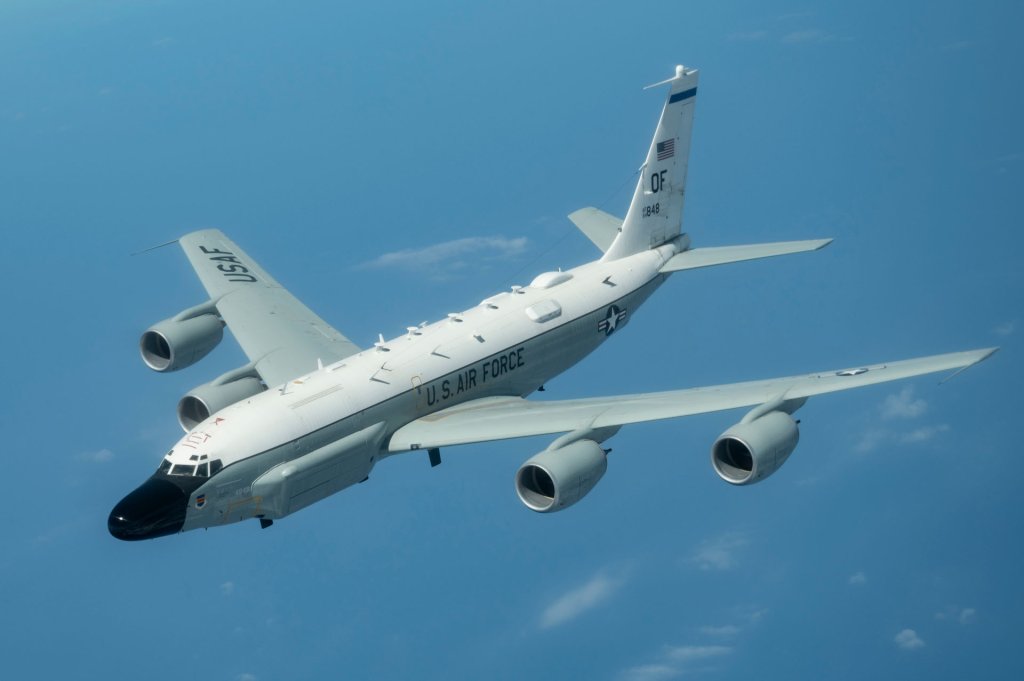
Rivet Joints are “perhaps the most sophisticated airborne surveillance and reconnaissance platform in the world,” Jon Rambeau, President of L3Harris Integrated Mission Systems, told reporters at the Royal International Air Tattoo (RIAT) in the United Kingdom last July, according to FlightGlobal. “The aircraft gets a full tip-to-tail refresh every four years – that’s the airframe as well as all the technology that resides inside it.”
With its paint stripped off, the sheer volume of antennas that dot the top of the Rivet Joint’s fuselage really stands out. Not visible from this particular viewpoint are the arrays of additional antennas underneath the aircraft. The RC-135V/Ws also carry additional systems in their elongated noses and “chipmunk cheeks” on either side of the forward fuselage. The Automatic Electronic Emitter Locating System (AEELS) is one of the things that has been contained inside the cheek fairings, at least in the past.
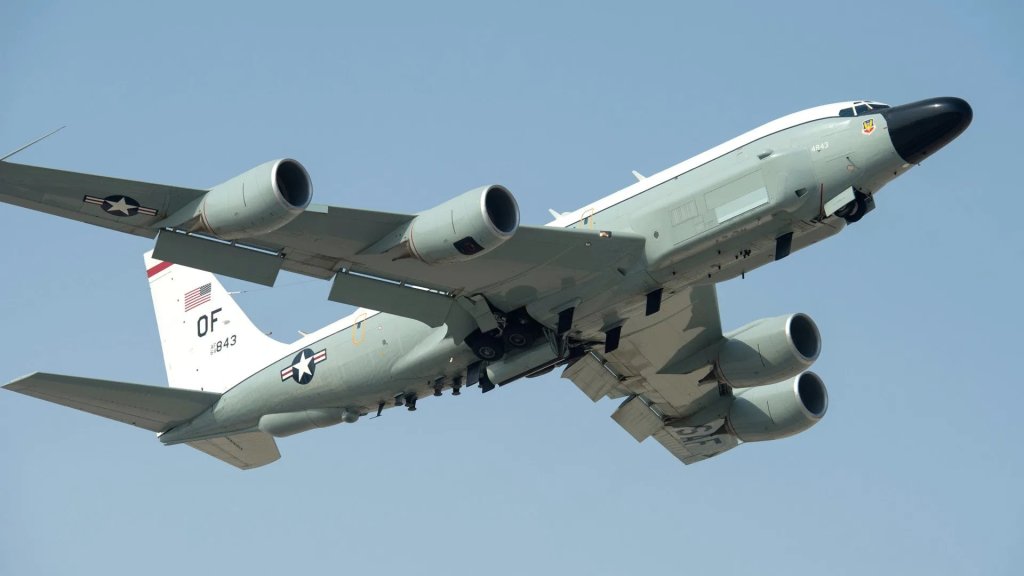
The Air Force’s current fleet of 17 Rivet Joints are the latest iterations of RC-135 variants that first entered service in the early 1960s. The United Kingdom is currently the only other operator of the Rivet Joint, with the Royal Air Force (RAF) flying three of these aircraft. The image from Greenville underscores how, despite the age of these assets, they continue to get new capabilities, as exemplified by the multiple high-bandwidth satellite communications terminals now seen on their spines.
Specific details about their capabilities are classified, but the RC-135V/Ws are known to be able to detect, geolocate, categorize, and monitor a variety of different signals and whatever is transmitting them. As such, the aircraft can gather valuable intelligence about the capabilities of those emitters, which can include air defense radars and command and control nodes, as well as just map out their locations. In this way, the jets provide information that is invaluable for creating so-called “electronic orders of battle” detailing an opponent’s force posture during peacetime, as well as in the lead-up to a major campaign. Rivet Joints can then continue to provide that kind of support during combat operations, helping keep tabs on changes in an enemy’s disposition on the battlefield.
As noted, Rivet Joints can also intercept communications chatter. In addition to onboard signals and electronic warfare specialists, the crews of the jets typically include linguists to allow for immediate analysis of those intercepts, as well as signals data. The RC-135V/Ws also have extensive communications and data-sharing suites so they can send intelligence collected to other nodes for further exploitation in near real time. The jets are also capable of passing information directly to forces engaged in tactical operations.
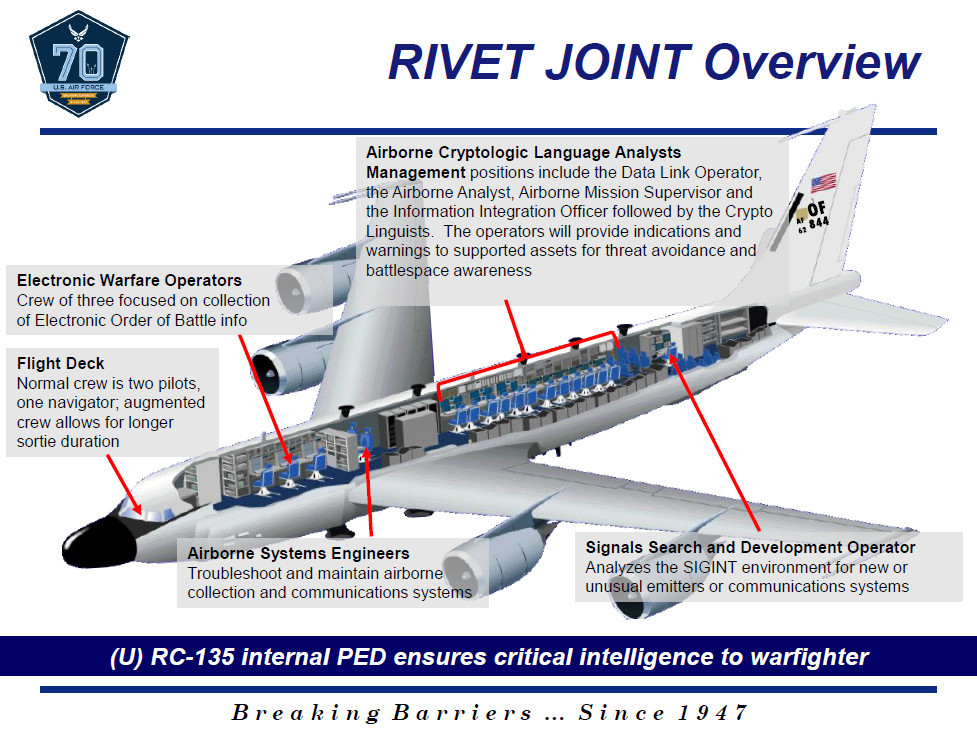
With their complete standoff surveillance suite, Air Force RC-135V/Ws serve as the backbone of U.S. airborne electronic intelligence collection capabilities, and are in consistently high demand as a result. Rivet Joints are currently among the array of ISR assets supporting ongoing operations against Iran. The aircraft also played a key role in the lead-up to the capture of Venezuelan dictator Nicolas Maduro in January, as well as the execution of that operation.
The Rivet Joint’s capabilities continue to evolve, as underscored by the pairing of an RC-135V/W with one of the Air Force’s new EA-37B Compass Call electronic warfare jets. You can read more about the EA-37B, which is also now taking part in operations against Iran, here.
“The synergistic integration of Rivet Joint’s intelligence gathering with Compass Call’s electronic warfare capabilities has proven to be a game-changer on the modern battlefield. We’re not simply flying sorties; we’re creating a new paradigm,” Air Force Capt. Jasmine Harris, a member of the 38th Reconnaissance Squadron, said in a statement at the time. “By refining tactics, techniques, and procedures, we’re ensuring our forces maintain a decisive advantage in the electromagnetic spectrum.”
“This level of sustained, continuous integration has never been conducted before by these two assets,” Air Force Capt. Wesley Ballinger, also from the 38th, said, as well. “Both assets complete specific actions in the kill-chain, and now the kill-chain is being refined into a faster, robust, and more lethal tool.”
As it stands now, there is no firm plan for a replacement for the Rivet Joints, at least that is publicly known. The Air Force has said in the past that it expects the RC-135V/Ws to continue flying at least through 2050.
Overall, “the RC-135 is an unmatched capability,” L3Harris’ Rambeau also said at RIAT last year, per FlightGlobal. “While some of the Rivet Joint capability could be integrated on a business jet-size platform, there are some things related to physics and the distance between point A and point B that have to be on a larger aircraft.”
At the same time, the Cold War-era aircraft are aging, and the Air Force has faced challenges in sustaining them in the past. Questions have also been raised about their survivability in future conflicts, especially in a potential high-end fight in the Pacific against China.
Regardless, the RC-135V/W fleet looks to have decades more service ahead of it, and the aircraft will continue to make trips to Greenville for upgrades in maintenance.
Special thanks again to Dylan Phelps for sharing the picture of the Rivet Joint stripped of its paint with us.
Contact the author: joe@twz.com
Loading comments…
Comments couldn’t be loaded. Please refresh the page.