
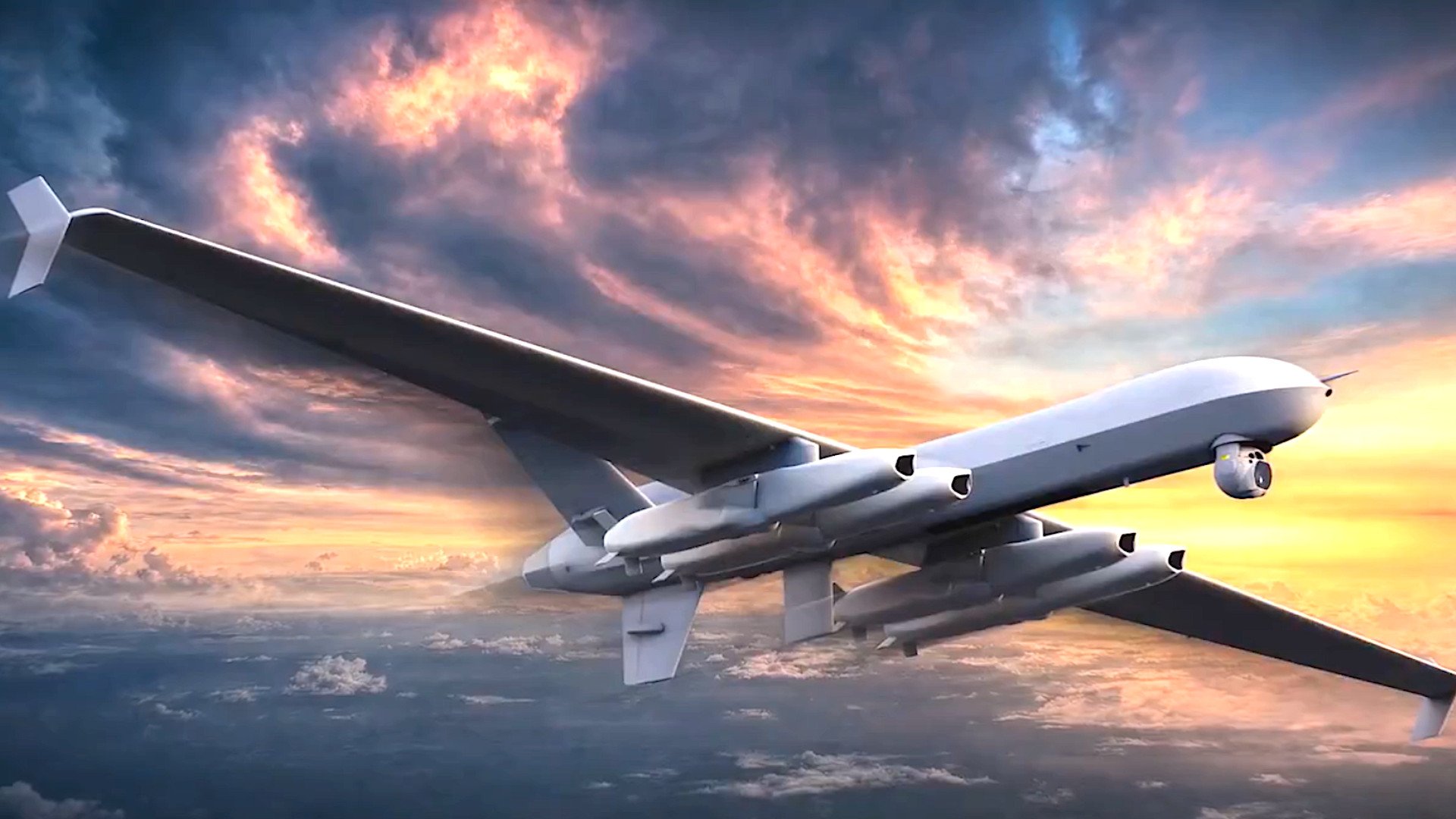
General Atomics has given us the first look at its new Wildfire drone design. The company is developing this armed medium-altitude, long-endurance (MALE) uncrewed aircraft in response to new U.S. Air Force requirements for a lower-cost successor to the MQ-9A Reaper.
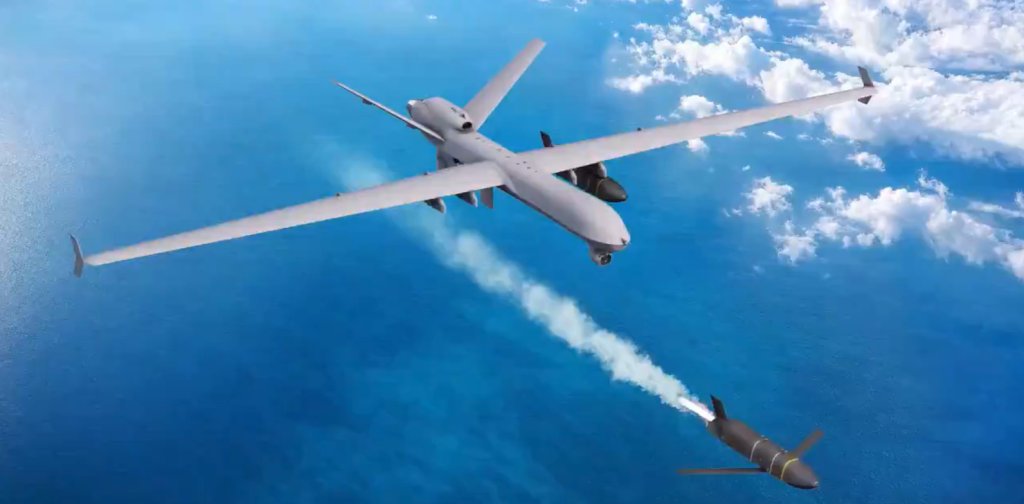
A rendering of Wildfire was included in a video montage, seen below, which General Atomics Aeronautical Systems, Inc. division (GA-ASI) released earlier today. GA-ASI first announced work on this new drone last month. The Air Force, in partnership with the Pentagon’s Defense Innovation Unit (DIU), formally kicked off its new search for a Reaper successor, currently called the Massed Modular Aircraft (MMA), in July. GA-ASI also developed the MQ-9A, which is now out of production.
Wildfire’s pusher-prop design shown is clearly an extension of the existing MQ-9 family, with an overall planform that is extremely similar to that of the Reaper. Like the latest versions of the MQ-9A, the new drone has a sensor turret under the nose and a large blade antenna under the rear fuselage.
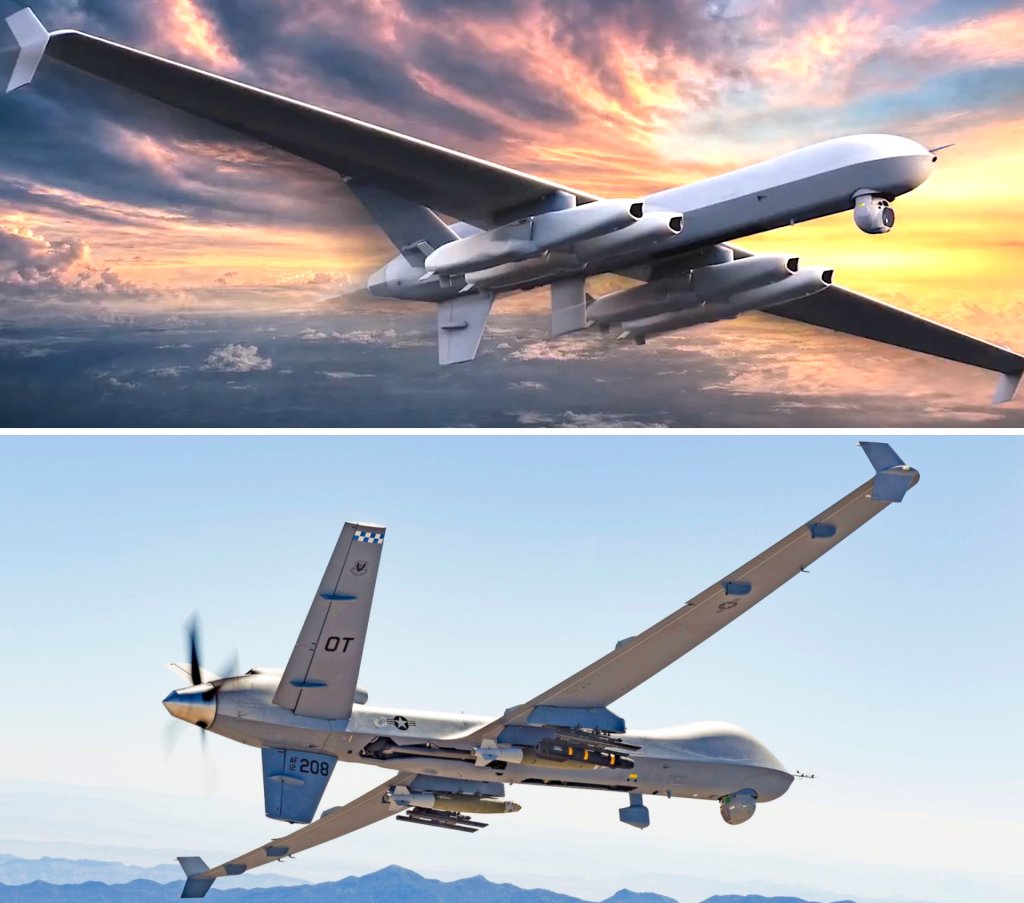
Wildfire does notably lack the Reaper’s distinctive hump on top of the forward fuselage. On the MQ-9A, this feature contains the drone’s satellite communications (SATCOM) antenna. What this might mean about how Wildfire is controlled and otherwise communicates is not immediately clear, but it points to the use of a smaller, lower-cost SATCOM terminal. That, in turn, would most likely be tied to a network like Starshield, the government-focused cousin of SpaceX’s Starlink. We could also see greater semi-autonomous control here, or at least a greater reliance on it.
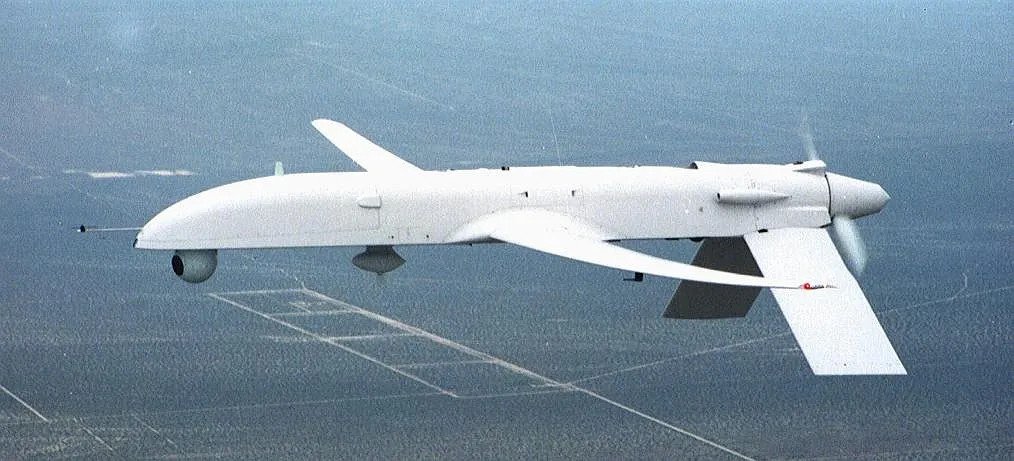
The resulting shape of the forward end of the fuselage is vaguely reminiscent of GA-ASI’s Gnat series of drones from the 1990s, which evolved into the iconic Predator. The MQ-9 family, in turn, is an outgrowth of the Predator.
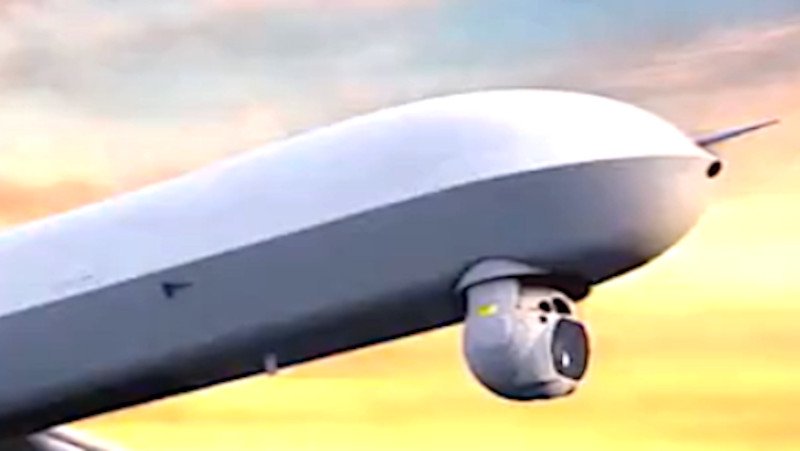
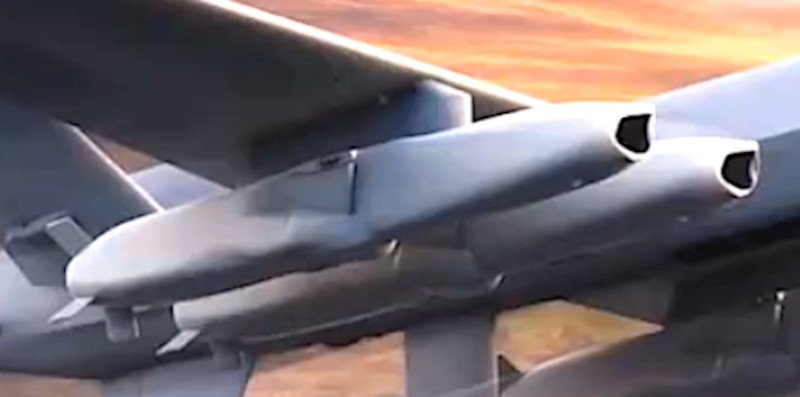
The rendering of Wildfire also depicts the drone armed with four Joint Strike Missile (JSM) cruise missiles, with two loaded on what appears to be a single pylon under each wing. The stealthy JSM can be employed as an anti-ship or land-attack weapon. GA-ASI has released renderings of MQ-9s in the past with similar loadouts. The Air Force is already acquiring stocks of JSMs, primarily to arm its F-35A Joint Strike Fighters. Stand-off munitions like the JSM have long been seen as an increasingly important, if not critical, addition to the non-stealth Reaper’s arsenal, helping to keep the drones further away from potential threats.
TWZ has reached out to General Atomics for more details.
“General Atomics is looking at it and asking ourselves, ‘What can we really do? No kidding, no BS, actually do,’” GA-ASI spokesperson C. Mark Brinkley did tell us back in August when asked about Wildfire. “Let’s be honest with ourselves first. How do we come out of the box, day one, with a 10,000-nautical-mile ferry range? Can we carry four LRASMs [AGM-158C Long Range Anti-Ship Missiles]? Can we swarm 100 aircraft under semi-autonomous control? Can we fuse all of that data into a highly effective common operating picture? Can we do that at scalable, affordable mass?”
“So that was the assignment, and our engineers sharpened their pencils and got to work,” he added. “What came out the other side was our new Wildfire UAS. That thing is a beast, and no one who actually does this for a living, and is honestly concerned about America’s warfighting edge, can look at it and not want 100 of them as fast as we can make them.”
Wildfire “addresses all of the concerns posed by the MMA solicitation. We can deliver years earlier and maintain the same high quality. You can have everything that makes Reaper special, plus more, at a price that doesn’t break the bank,” Brinkley also told Breaking Defense for a story published last week.
In terms of what the Air Force has said it is looking for with the MMA, as we have previously written:
“[The service] …wants the MMA drone to perform the same general intelligence, surveillance, and reconnaissance (ISR) and strike missions as the MQ-9A. To that end, stated program requirements to date include a speed of at least 200 knots true airspeed, a munition and sensor payload capacity of at least 2,800 pounds, an unrefueled combat radius of at least 2,300 nautical miles with payload, the ability to self-deploy one-way at least 8,000 nautical miles, and the ability to operate from runways no longer than 6,000 feet. The MMAs also need to be highly modular and use open architecture mission systems to make it easier to integrate new capabilities and functionality down the line.”
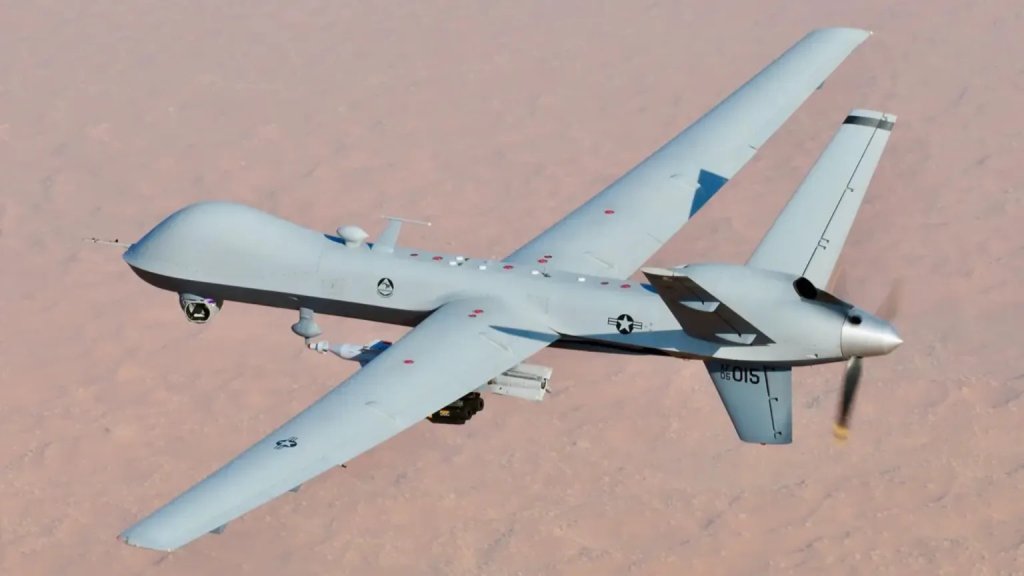
The Air Force also shared last week that it is targeting a roughly $10 million unit cost for the MMA drones, not including sensors and certain other systems. As mentioned, the Reaper is out of production, but the price tag on a fully-equipped Reaper today is widely reported to be between $30 million and $50 million. The Air Force has itself used the $50 million figure as a reference point in discussing its latest plans for what comes after the MQ-9.
It is unclear how Wildfire might achieve this cost goal while retaining so much obvious Reaper DNA, but even a major 30 to 50 percent reduction in the price tag compared to its predecessor would be a huge deal. In the past, General Atomics’ Brinkley has openly questioned just how cheap an MMA drone could realistically be while still offering comparable capabilities to MQ-9.
The original timeline for the MMA program envisioned the Air Force reaching initial operational capability in 2031 after receiving 20 of the drones. The service is now looking to accelerate that schedule by around two years. The Air Force expects to eventually acquire around 180 MMAs.
The Air Force has tried, without success, to develop a successor to the MQ-9 on several occasions in the past. However, a key driving factor now is huge losses of Reapers in the course of the ongoing conflict against Iran. The service’s MQ-9 fleet has already shrunk dramatically in recent years, in part due to additional losses during operations targeting Iranian-backed Houthi militants in Yemen last year.
“Although we have plenty of MQ-9As today, we are going through them at a rate that is concerning to us,” Air Force Lt. Gen. Christopher Niemi, the service’s Chief Modernization Officer, told reporters at a roundtable at the Pentagon last week, according to Air & Space Forces Magazine. “There’s not a lot of good options to immediately replace those aircraft.”
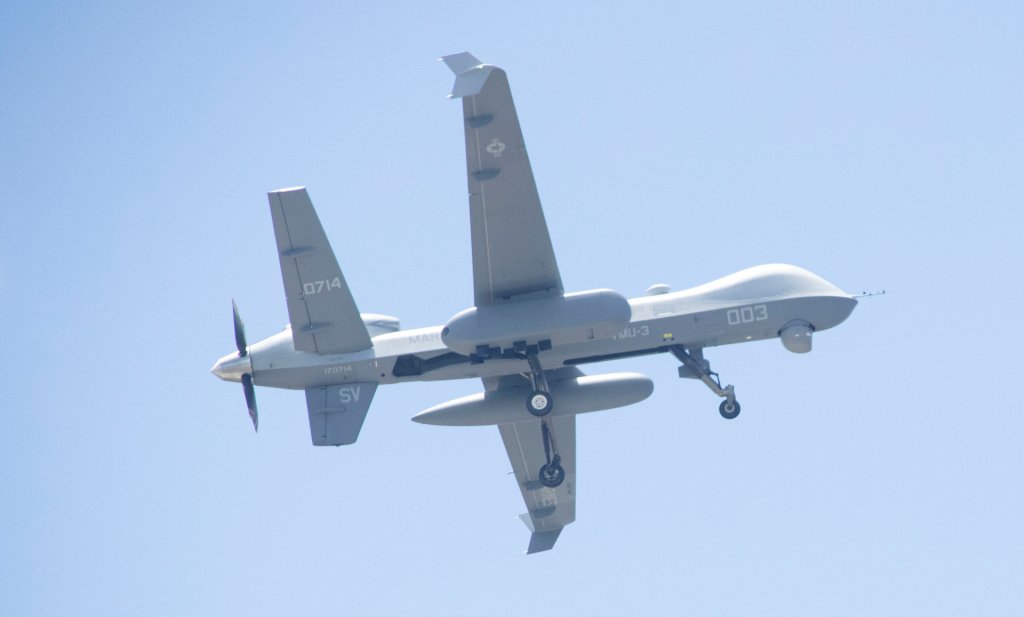
GA-ASI has long had a monopoly on MALE combat drone sales in the United States, and is clearly looking to extend that now with Wildfire. However, this market space has been expanding, and other companies are already competing for what could be a very lucrative new deal with the Air Force. Winning the MMA contract could open doors to opportunities elsewhere within the U.S. government and with foreign countries. Variants and derivatives of the MQ-9 are also in service today with the U.S. Marine Corps, the Central Intelligence Agency (CIA), U.S. Customs and Border Protection (CBP), and several additional air arms globally.
More information about Wildfire, as well as its competitors, is only likely to continue emerging as the Air Force pushes ahead with new and aggressive plans to finally acquire a follow-on drone to the venerable Reaper.
Update: 2:15 PM ET –
General Atomics spokesperson C. Mark Brinkley has now shared additional details about Wildfire with TWZ.
“You’re not imagining it. These new Wildfire renders do lack the dorsal hump you see on Reaper, MQ-9B, Gray Eagle, Mojave STOL and many copycat aircraft,” Brinkley explained. “General Atomics has pushed proliferated low-earth orbit controls onto many of our existing aircraft and pioneered that integration across unmanned aerospace. That is a relatively new technology that we already have great experience integrating, and it makes sense to bring that into Wildfire.”
“Proliferated low-earth orbit” (abbreviated variously as pLEO and P-LEO) refers to distributed constellations of hundreds or potentially thousands of satellites in that orbital region. SpaceX’s constellations supporting the aforementioned Starlink/Starshield networks fall into this general category.
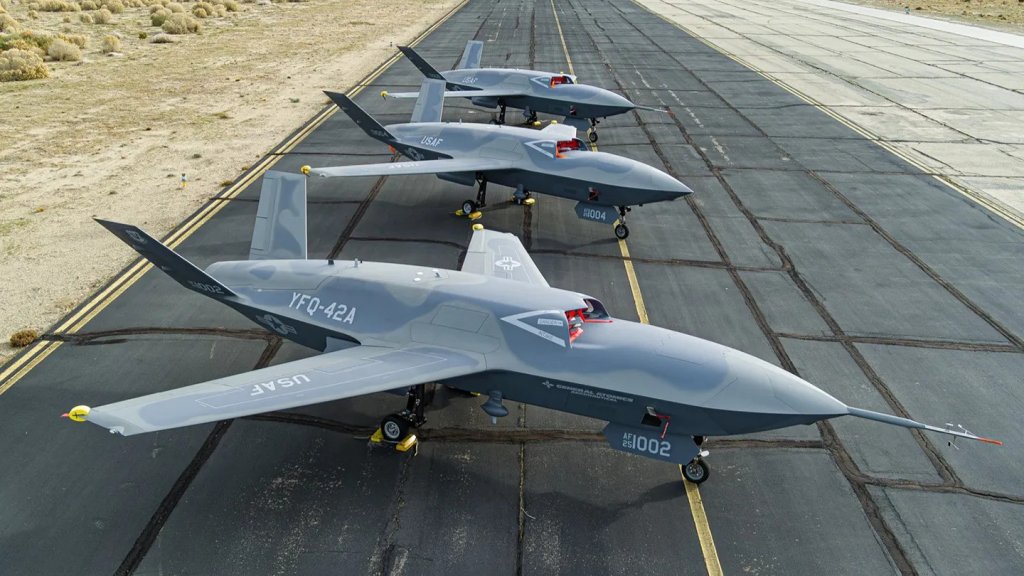
“Wildfire is going to leverage ongoing advancements in autonomy on Day One. We envision networking dozens of Wildfires for true combat mass,” according to Brinkley. “Again, not a hypothetical. We’ve been pioneering many advancements in autonomy, AI, and machine learning across the FQ-42A program and using our own MQ-20 Avenger as a CCA [Collaborative Combat Aircraft] surrogate connected to F-22 and F-35. That’s proven, not concept.”
The FQ-42A, also known as the Dark Merlin, is one of two designs now in development under the first phase, or Increment 1, of the Air Force’s CCA program, the other being Anduril’s FQ-44A Fury. The service announced in June that its initial CCA force would be a mixed fleet of FQ-42As and FQ-44As.
“Four JSMs tells you something about Wildfire overall. We can’t just look at overall external weight limits. You have to consider individual hardpoint capacity,” Brinkley continued. “We’ve concepted four JSMs on MQ-9B before, as a concept, but we’ve never done that on Reaper. Wildfire can absolutely do that, from a hardpoint capacity and also an overall MGTOW [maximum gross takeoff weight] perspective.”
“We’re showing two LRASMs on Wildfire, which is twice as much as the DIU solicitation asked for. If you’re going to build a flying weapons truck, give it some teeth,” he added. “These longer-range missiles also give you increased standoff compared to other weapons you associate with the MQ-9, so that also gives you some flexibility. Wildfire can carry two LRASMs for meaningful combat distances.”
The AGM-158C LRASM (Long-Range Anti-Ship Missile) is a derivative of the AGM-158 Joint Air-to-Surface Standoff Missile (JASSM) family of land-attack cruise missiles, and is also in the Air Force’s inventory today.
Brinkley also said that Wildfire’s ferry range will exceed the MMA’s target of 8,000 nautical miles.
“We can deliver way ahead of the original FY 2031 schedule [for MMA]. We can deliver more than twice as many aircraft as requested in the same amount of time, because our manufacturing is real. Our network of suppliers, subcontractors and partners is real,” he added. “The obvious question is always cost, and I struggle to discuss costs because no one ever wants to compare apples to apples. There are stated price targets out there, and we’ll hit those. We’ll do it with an aircraft you can trust. We have nearly 10 million flight hours and more than 1,600 aircraft delivered. This is what we do.”
Speaking more generally, Brinkley also highlighted General Atomics’ extensive experience in developing and producing armed MALE drones, including the MQ-9.
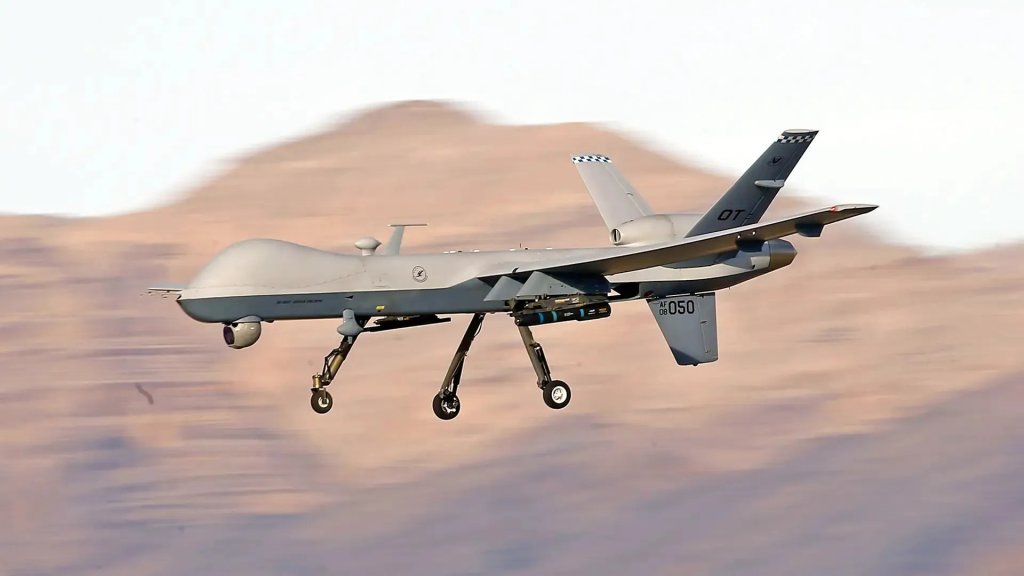
“It’s important to remember that Reaper made its first flight 25 years ago and was so far ahead of everything else that it still defines the entire category of medium-altitude, long-endurance strike aircraft worldwide. When you build something new to do this kind of work, it rolls out into the Reaper’s shadow,” he said. “I don’t have to defend MQ-9 because the track record speaks for itself. It’s been called the MVP of Epic Fury [the U.S. military’s nickname for the initial phase of operations against Iran this year] for good reason, and I think it has squashed all questions about the relevance of MALE ISR and strike.”
“So that brings us to questions of affordability versus attrition, cost-per-effect, and the true price of combat operations. It also brings up questions of reliability and mission availability, and Reaper excels at both of these, so you can’t replace it with junk and expect to get the same effects,” he continued. “That’s where Wildfire comes in. Our team went to the graph paper and started sketching out what they would do differently and what they would keep the same. Where are the tradeoffs, and what do you change? No one knows this category of aircraft and missions like we do. We’re not guessing and hoping.”
“I can’t get into deep specifics on Wildfire yet, because it’s too early for that and the goalposts seem to move every time I say something publicly. What I can say is that Wildfire takes all of the known quantities of Reaper, blends them with some cutting-edge technologies and manufacturing advancements, and incorporates our more than three decades of lessons learned about large, unmanned combat aircraft to drive cost-per-effect math down.”
Contact the author: joe@twz.com
Loading comments…
Comments couldn’t be loaded. Please refresh the page.