
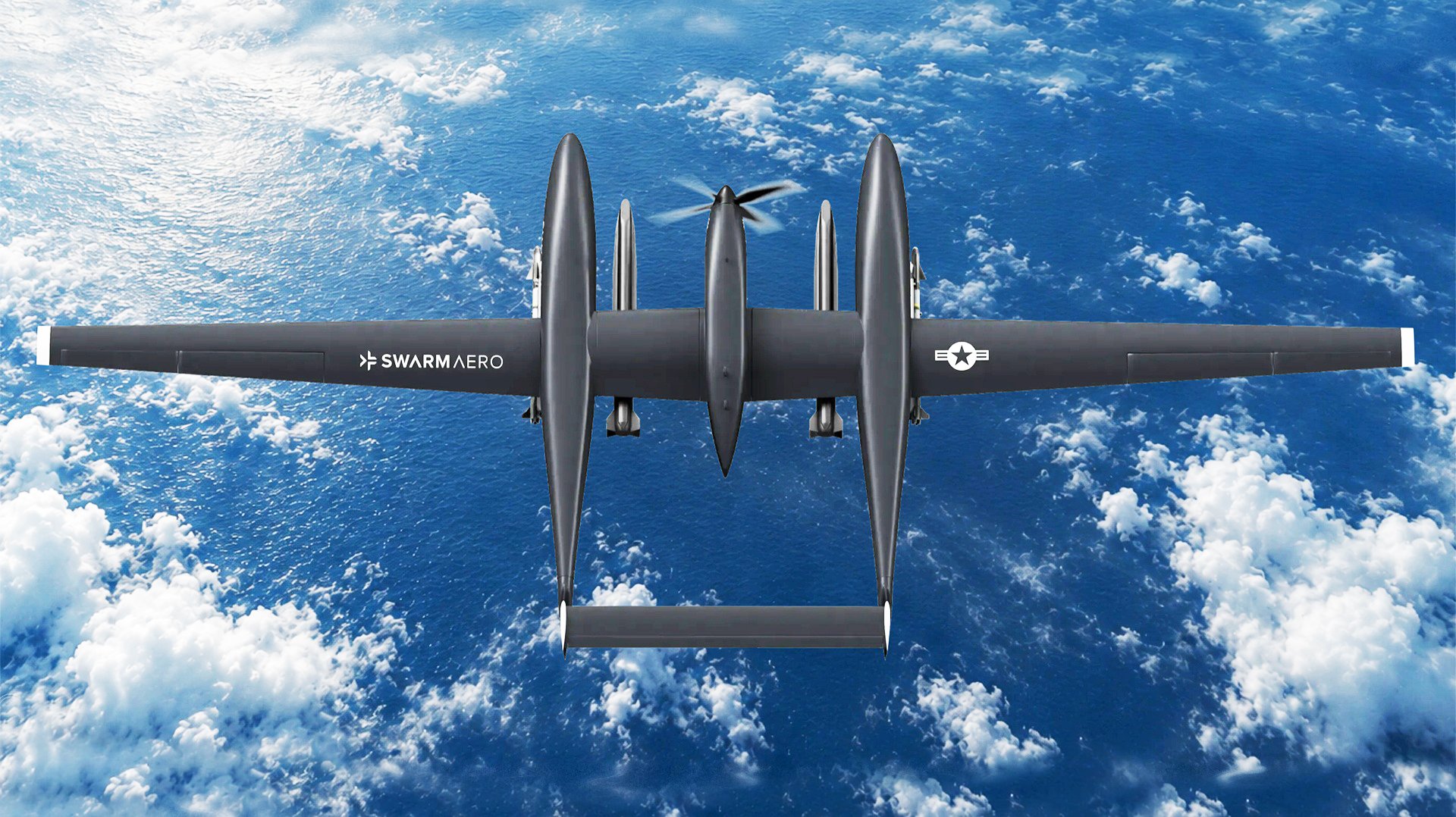
After the U.S. lost dozens of its MQ-9 Reaper drones to fighting in Iran, newcomer drone-maker Swarm Aero announced Monday that it had developed a drone in the same medium altitude, long-endurance (MALE) class, capable of executing swarm missions and cheap enough to afford losing, even in large numbers. This comes as the USAF is looking for a cheap replacement for the Reaper, targeting just a fraction of the MQ-9’s cost, at $10M per copy.
Called Gamera, the new drone, built from a clean-sheet design, has a wingspan of about 72 feet, a payload capacity of 2,800 pounds, a “Pacific-spanning” unrefueled range of 9,000 miles and a combat radius of 2,300 miles with “hours” of on-station time once at its patrol area. Kitted-out Reapers, which reportedly cost $30-50 million apiece, have a payload capacity of up to 3,800 pounds.
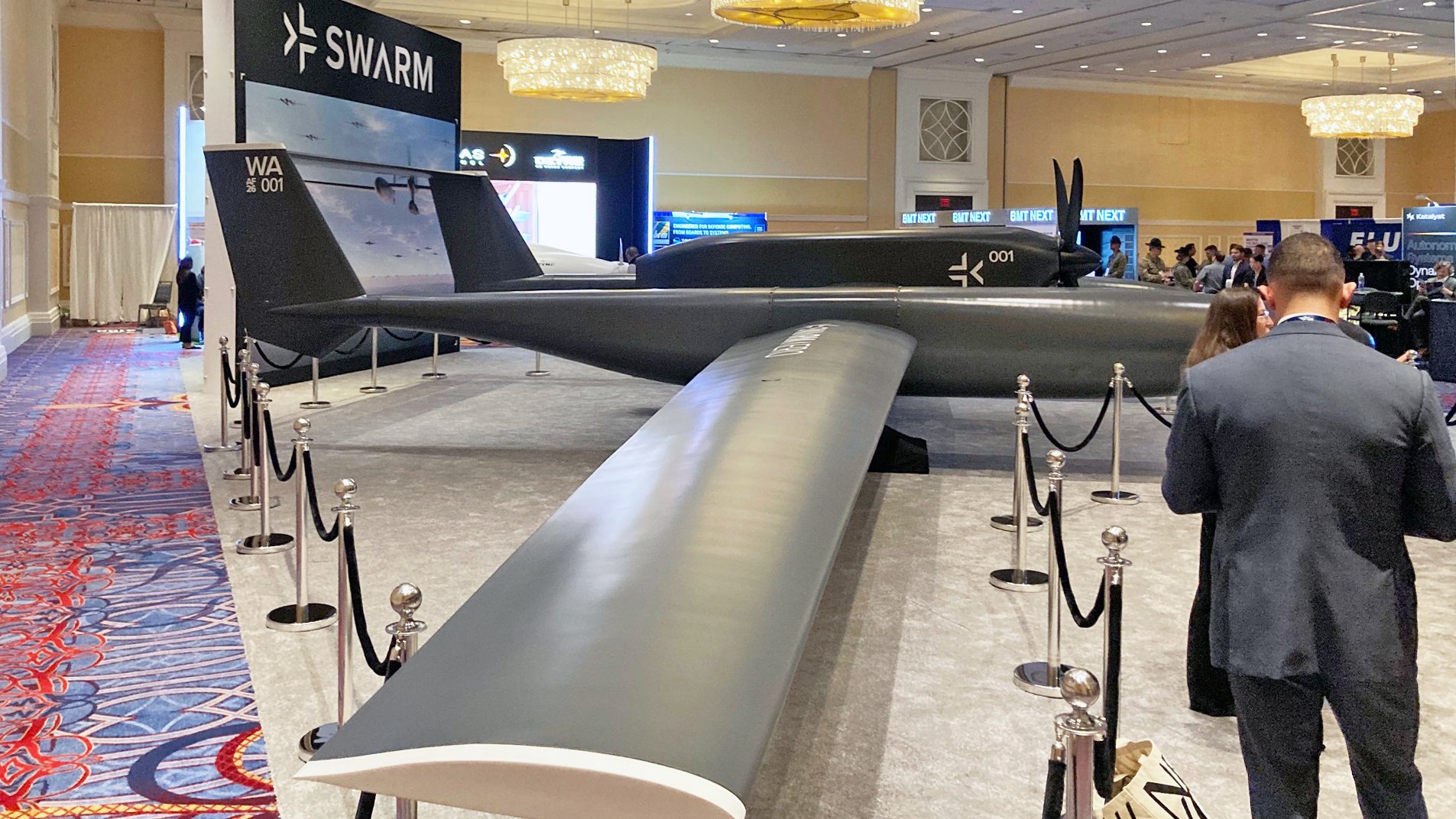
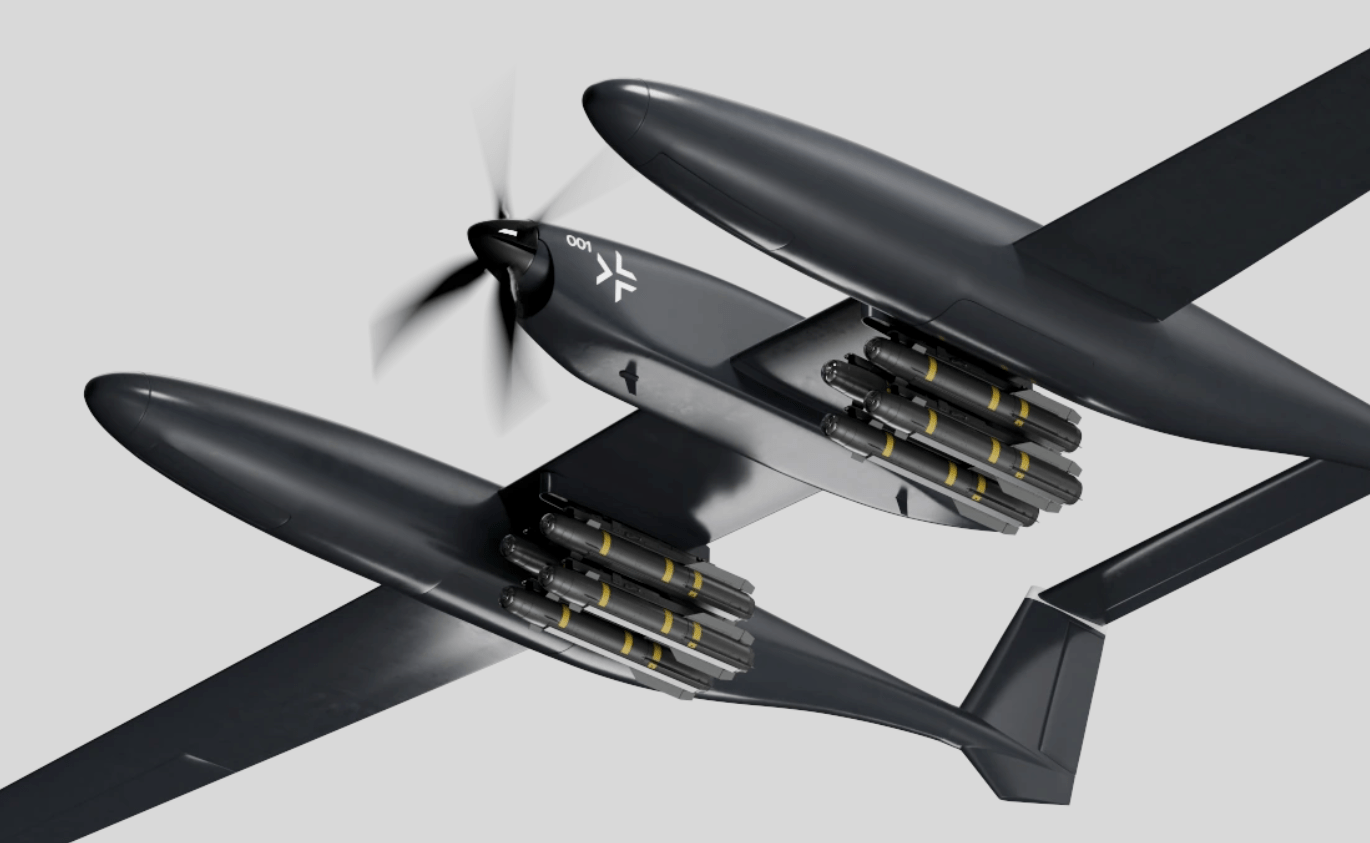
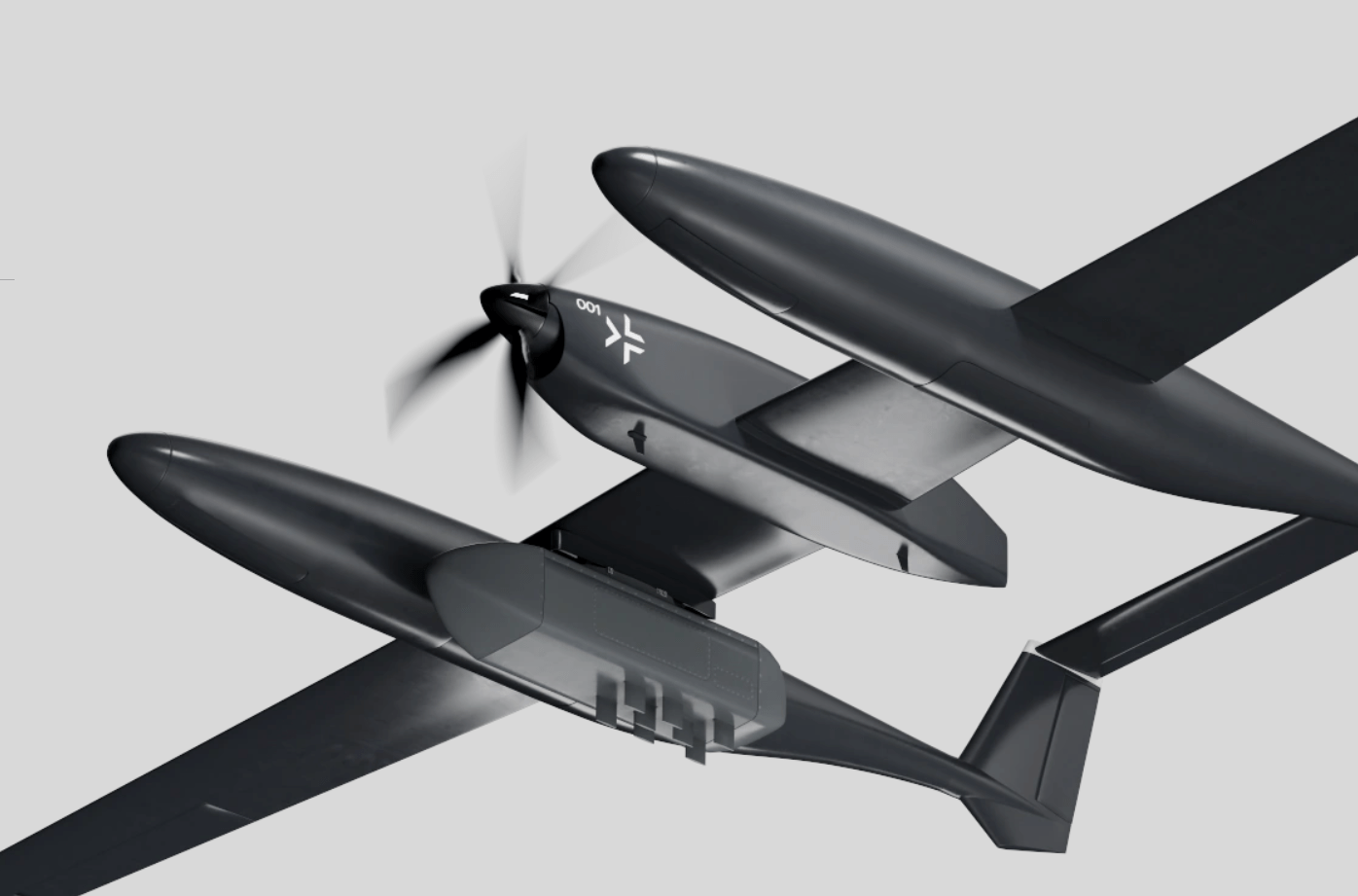
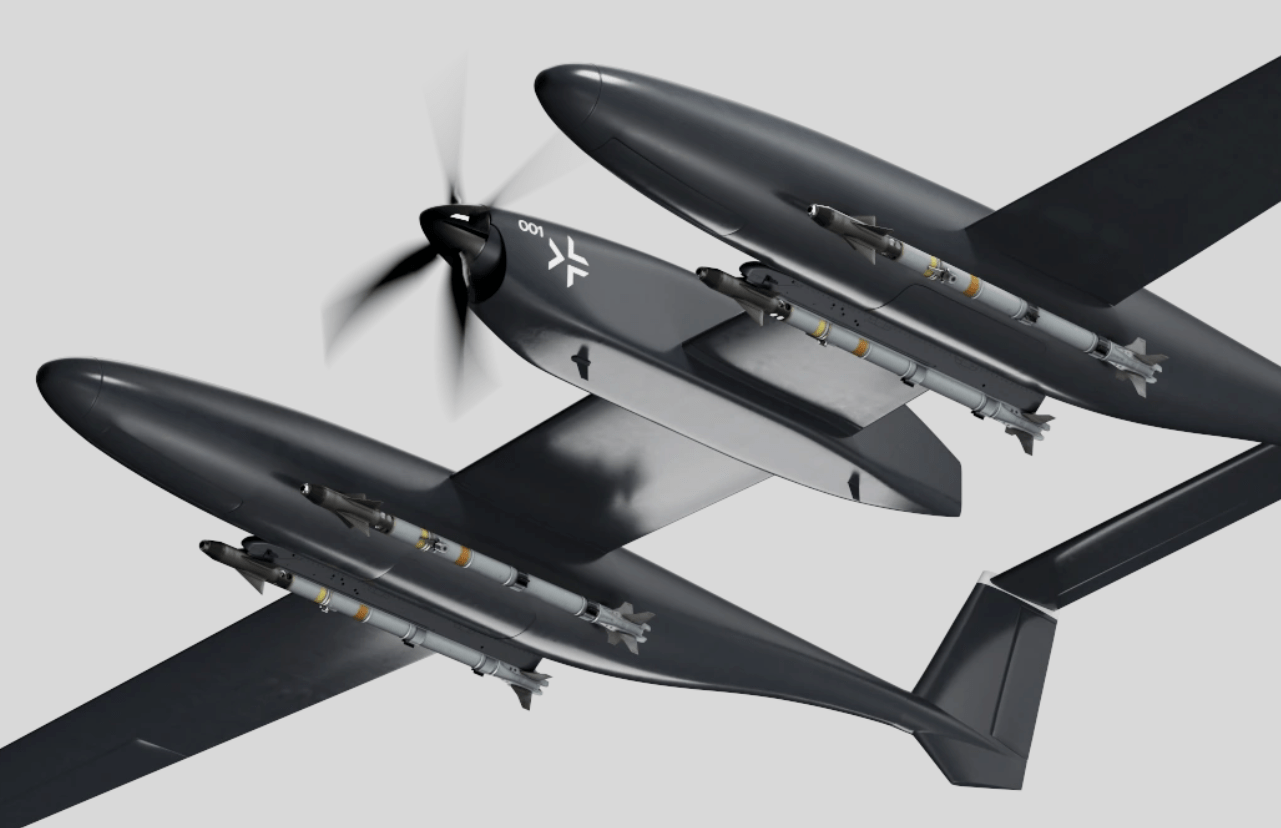
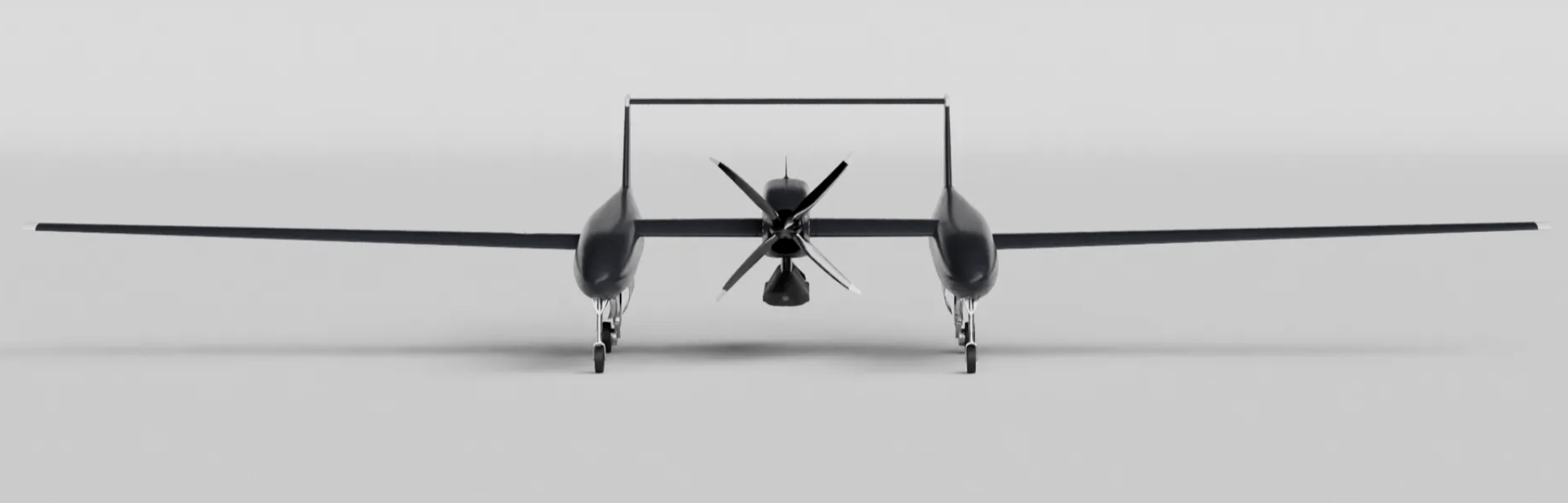
A mockup unveiled at the Air & Space Forces Association’s Air, Space & Cyber Conference in Washington, D.C., underscores the aircraft’s large wingspan and showcases its unique design that is built for cost efficiency, above all else. It features a single propeller, like the Reaper, a central fuselage and hardpoint, large fuel cells in sponsons on either side and an OV-10 Bronco-style twin-boom t-tail.
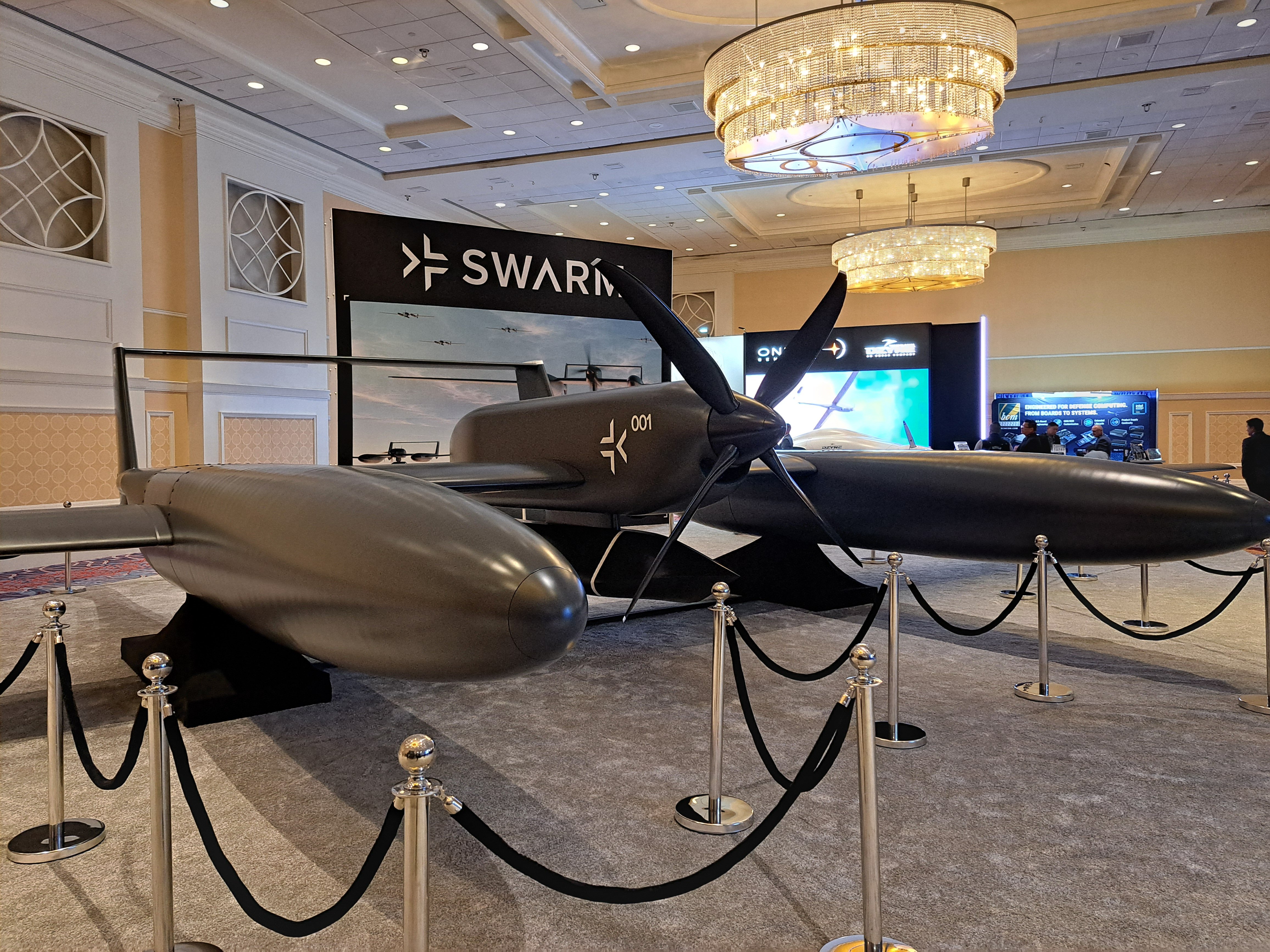
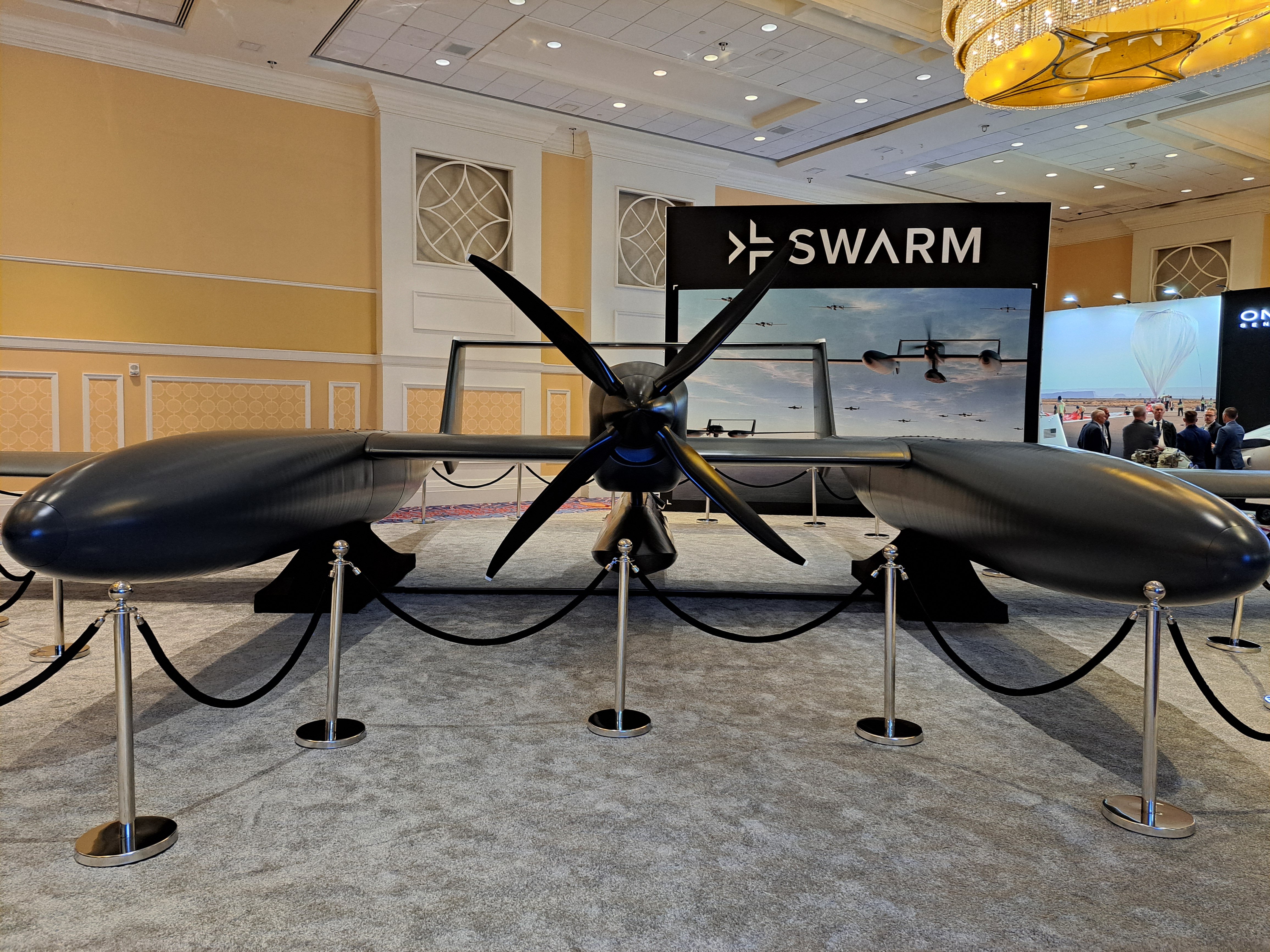
These general design choices were made for efficiency and practicality, Peter Kalogiannis, CEO of Swarm Aero, said in an interview on the show floor.
“The Bronco tail is really there to provide us that flexibility. So it allows us to use a variety of payloads, whether they’re released, whether they’re rocket-powered, and it really gives us it… it really sets into the flexibility goal here, which is we can carry a whole bunch of different payloads, whether they’re strike, whether they’re sensing,” he said. “And it’s also easy to manufacture, right? It’s straightforward, and that’s a design decision that again we’ve made everywhere across the design standpoint.”
Other modularity features include making the wings removable and separate from the fuel system (dry wing), the executive said, which increases efficiency in manufacturing.
Gamera’s native payload, according to the announcement, will be JASSM-ER cruise missiles, which have a plussed-up range of 600 miles. This payload, the company said, will deliver “comparable strike effects to exquisite systems for roughly one-tenth the cost-per-effect of existing platforms.”
The MQ-9 is in the process of integrating the AGM-158 Joint Air-to-Surface Standoff Missile and other missiles as compatible payloads in a move to turn the drones, which conventionally carry laser-guided Paveway bombs and Hellfire missiles, into more robust standoff “missile trucks.”
Swarm Aero execs said the aircraft’s six other hardpoints beyond its centerline one allow it to carry many munitions and other payloads. Renderings of a number of configurations show the drone configured for direct strike with Hellfire/JAGM missiles, ISR support with podded sensing payloads, and even air-to-air missiles.
Swarm Aero’s announcement comes after the Air Force announced its desire for what it’s calling a “Massed Modular Aircraft” – a MQ-9 successor at a fraction of the price point: $10 million per copy.
Certain announced Gamera specs line up with the Air Force’s MMA wish list, which included a 2,800-pound payload capacity and an unrefueled combat radius of 2,300 nautical miles.
“Built around a unique manufacturing approach, swarms of these Group 5 UAV give the U.S. Air Force the cost-effective force structure needed for their ultimate goals of surface strike, sensing, and other missions,” the company said in its announcement. “Their tremendous range and payload flexibility fill the gaps between ‘pulsing’ forces to provide highly persistent air dominance over vast areas.”
Oliver Palmer, Chief Revenue Officer and co-founder of Swarm Aero, said the unit cost of Gamera would come in under the $10 million target. While he declined to say by how much, he maintained that the offering for the Air Force’s Massed Modular Aircraft requirement would be “competitive.”
Kalogiannis said the clean-sheet and targeted approach was critical to achieving cost reduction.
“Low cost isn’t something that you kind of sprinkle on an existing design, an existing engineering system, even an existing organization,” he said. “You have to design the aircraft, design the company around that, and that’s what we’ve done. So every design decision we’ve made has been factoring in cost from the very beginning, and manufacturability and the ability to build these at scale.”
Though the company has been reticent about the main materials in Gamera, executives referred to the $10 million Air Force Research Lab contract the company is executing to develop metal composites. The company’s first engineering hire, they said, was a materials and process engineer.
“We’re demonstrating the progress there and kind of applying those technologies to real aerostructure development,” Kalogiannis said.
Expanding the picture is the drone’s swarming capability – the company says it’s most effective in “groups of up to 80,” powered by a Swarm Aero command-and-control and autonomy system called Legion. The system purports to let a single military operator or team direct a cluster of dozens of different uncrewed systems across multiple domains at the same time and has already been experimentally deployed by the Navy to direct air and sea drones.
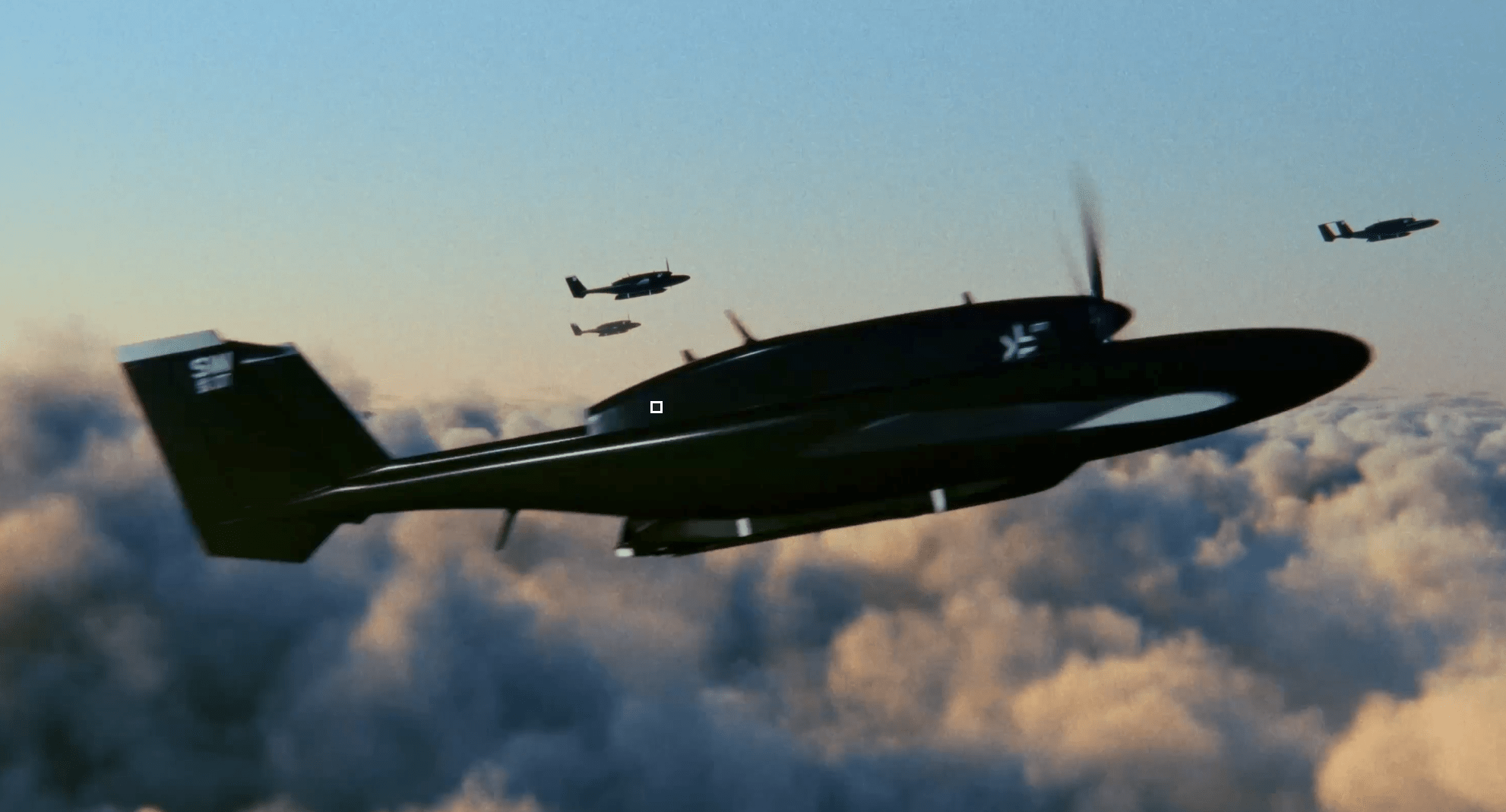
The company, which was founded in 2022 and is based in northwest Arkansas, also noted that Legion has already been tapped by the Defense Innovation Unit as a C2 source for its Autonomous Collaborative Teaming program.
“At Swarm we’ve inverted conventional wisdom around air power platform design, manufacturing, and combat operations and introduced an affordable, mass-producible strike platform that will re-establish an asymmetric edge over our adversaries,” Palmer said in a statement.
The Air Force has stressed its desire to develop Group 5 unmanned aerial systems akin to Reaper, emphasizing that attritability is not the same as expendability and the category lives between single-use weapons and more exquisite, higher-cost platforms.
The Air Force’s Reaper fleet is reportedly now around 135 units, down from a desired floor of 189, with dozens lost over Iran and Yemen in recent fighting. But the Air Force has only purchased up to 337 of the aircraft over the 19-year life of the program.
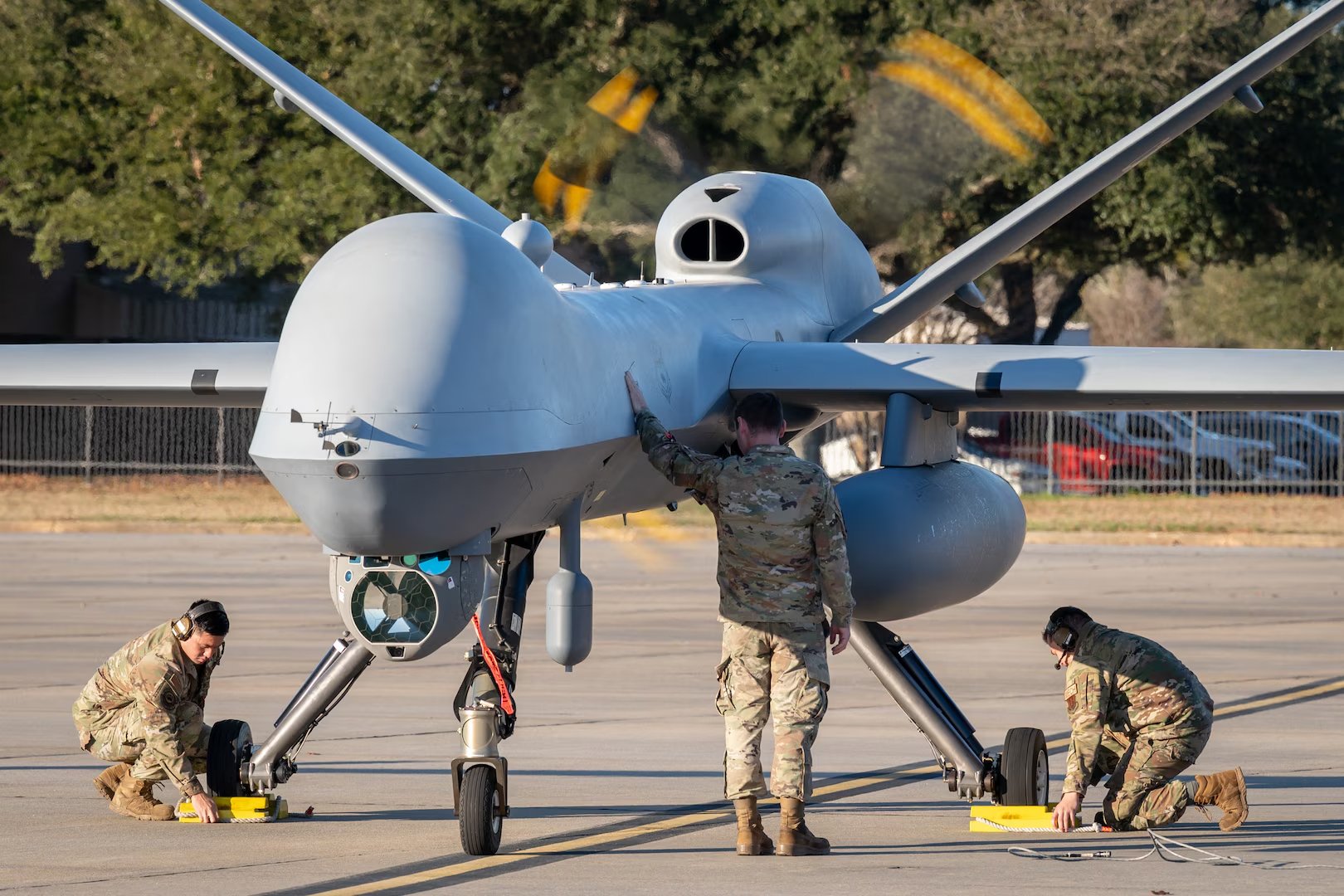
While the Air Force has said it wants at least 180 MMA units, Palmer suggested Gamera’s low price point and capabilities might push the service toward a higher acquisition target.
“Reaper was very specifically for terrorism, overhead surveillance and strike with very short ranges in uncontested airspace, and really not transiting massive distances to do those operations,” he said. “This is really intended more for long-range strike, and then also can do all of those MQ-9 sensing [and other] missions. It’s a different paradigm. So when we think about how you build out the force, how you size that, it’s really for long-range strike, and that really drives the program and the aircraft into a different direction.”
Just today at the Air & Space Forces Association’s conference, the USAF confirmed it plans to buy 500 MMAs by 2032. So the stakes are high, to say the least.
The Air Force’s quest for a less-expensive Reaper successor will clearly trigger a race to meet the requirement. Earlier this month, Reaper maker General Atomics unveiled Wildfire, a MALE drone developed from the MQ-9 that purports to deliver similar performance to its progenitor, with some key tradeoffs, at a lower cost. The company has been outspoken about how achieving Reaper’s full capabilities at a fraction of the cost will be an unrealistic challenge. General Atomics has yet to provide full specifics on if it will arrive under the $10 million target cost stipulated by the Air Force.
Contact the editor: Tyler@twz.com
Loading comments…
Comments couldn’t be loaded. Please refresh the page.