
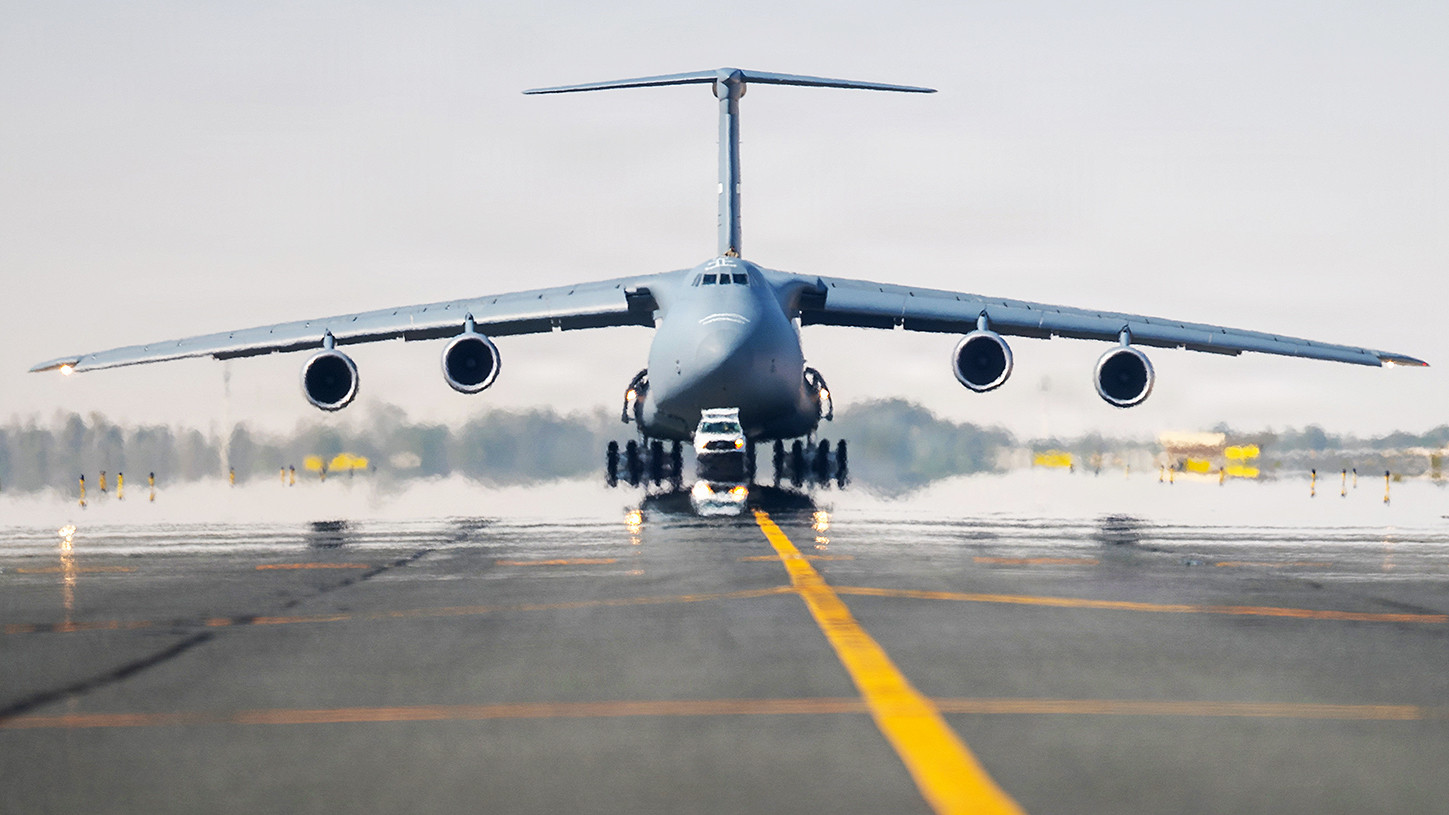
The U.S. Air Force says it does not expect the last of its huge C-5M Galaxy cargo planes to be replaced by a Next-Generation Airlift (NGAL) platform until Fiscal Year 2050. This is roughly five years later than the retirement schedule for the C-5M fleet that the service had laid out last year. NGAL is also expected to supplant the C-17A Globemaster III, but the plan is for those aircraft to keep flying through 2075. The C-5s are a vital part of the Air Force’s current strategic airlift force, but they have a long history of being hard to maintain despite major upgrades in the past.
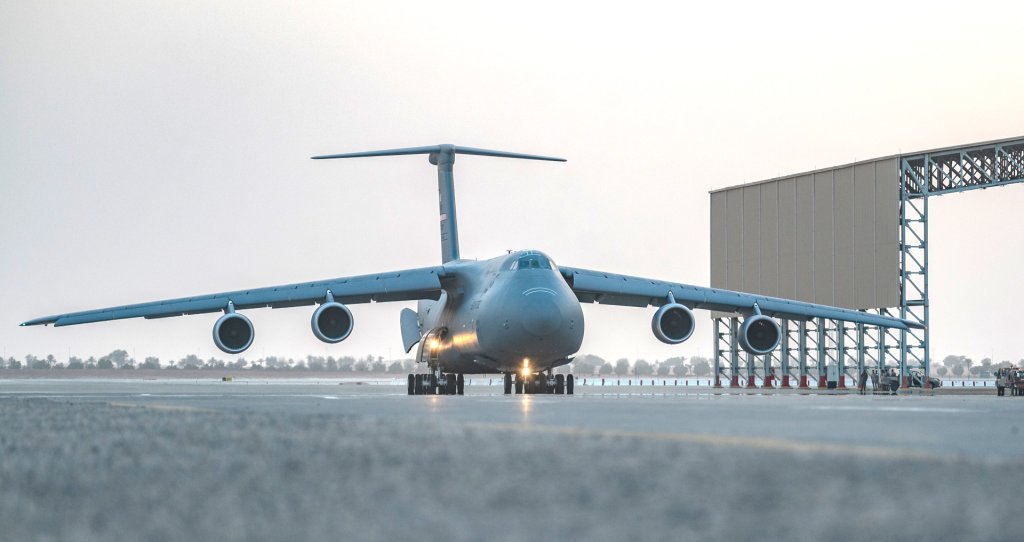
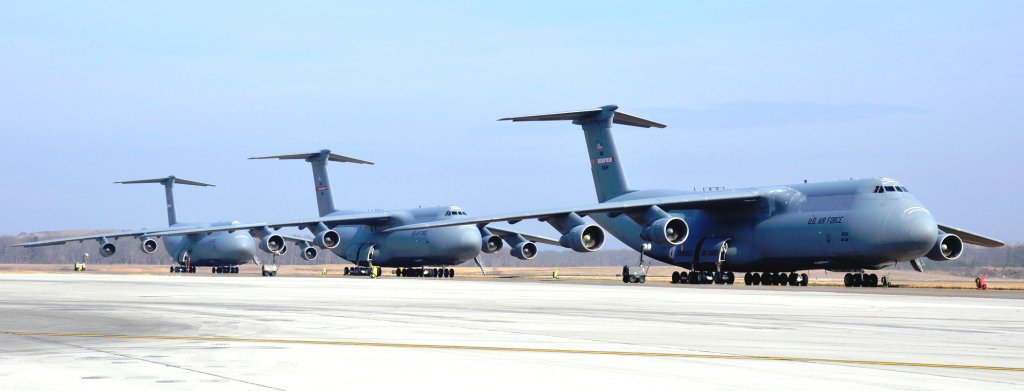
The latest sunset timeline for the Galaxy and details about the near-term plans for NGAL are contained in the Air Force’s 2027 Fiscal Year budget request. The service currently has 52 C-5Ms in its inventory, all of which were upgraded from older B and C variants, the last of which were built in 1989. Service through 2050 means the youngest examples will be 61 years old at the time of their retirement. The Air Force also just recently disclosed that the C-5 fleet’s mission capable rate has slumped to 37 percent. The Air Force also has 222 C-17As, the last of which it acquired in 2013. Neither the C-5 nor the C-17 is still in production today.
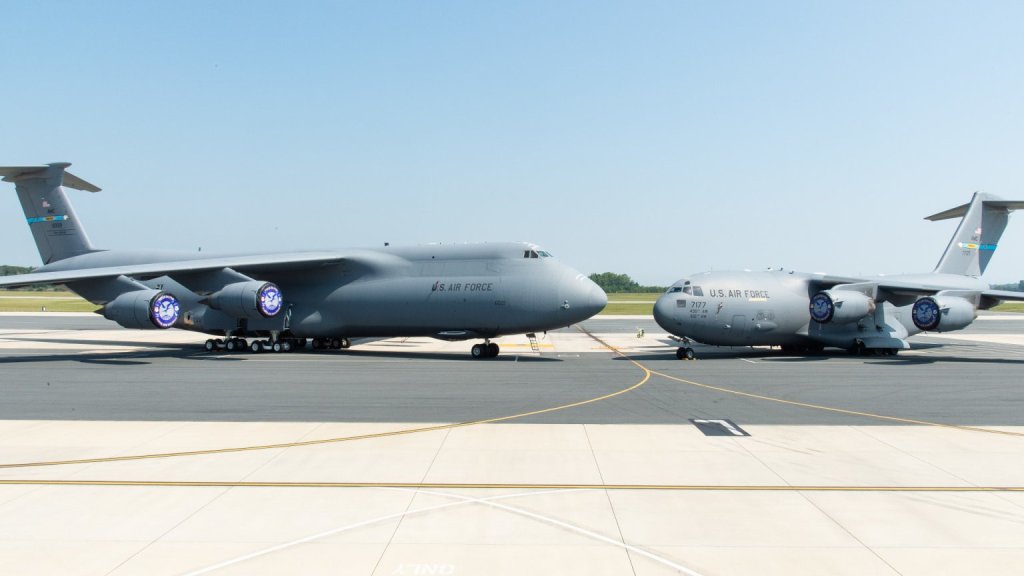
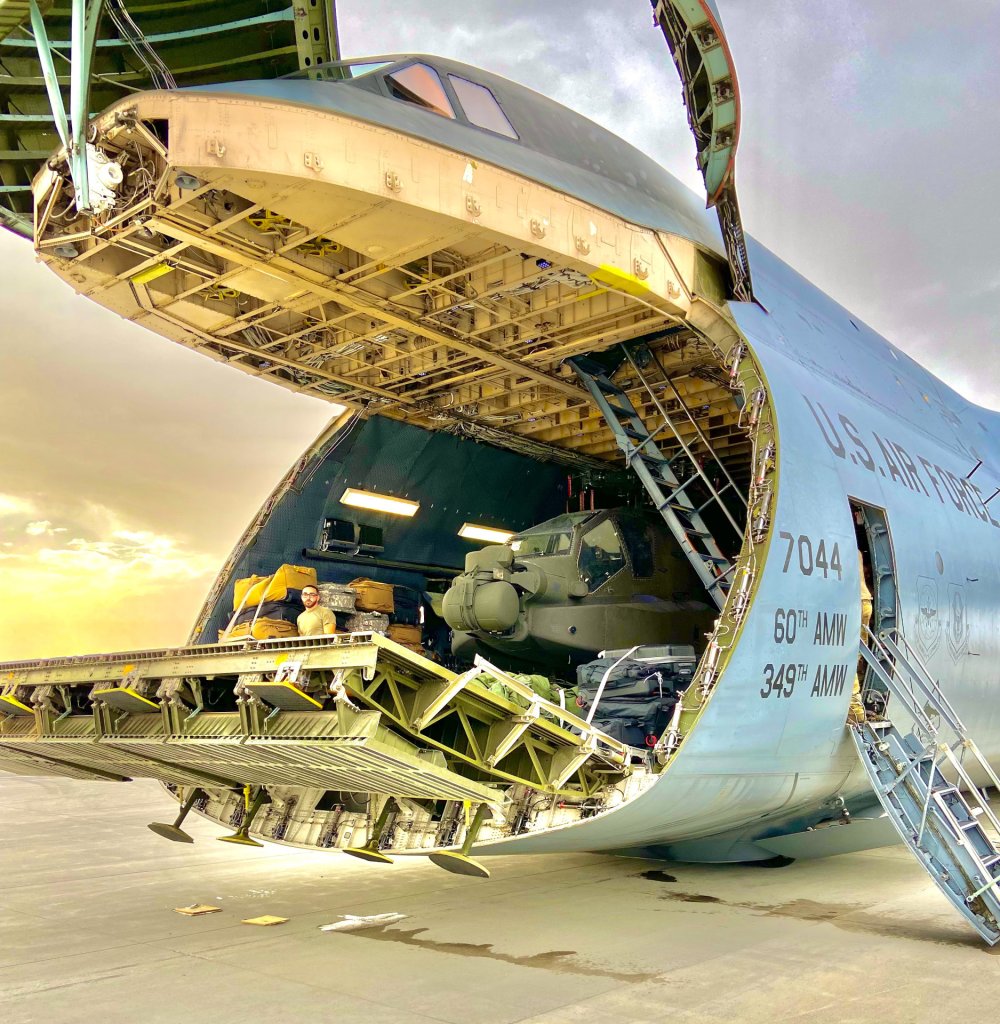
The C-5M is the largest airlifter in U.S. military service today, and one of the biggest in operational use anywhere globally. In addition to just being able to accommodate much larger payload mass and volume compared to the C-17A, it has the benefit of being able to load cargo and personnel from the nose and tail ends, and do so simultaneously. The Galaxy offers a unique capability within the U.S. military for moving outsized and unusual payloads by air, including satellites and other space-related items. The services of the C-5 remain in high demand, as highlighted by support provided for ongoing operations against Iran, as well as during the build-up to that conflict, along with other contingencies around the Middle East in the past few years.
“In accordance with [the] Air Force’s strategic direction, C-5 Modernization Efforts funding supports Next-Gen Airlift (NGAL) Analysis of Alternatives (AoA) and Concept Development efforts,” per the service’s Fiscal Year 2027 budget documents. “NGAL is projected to fully replace the C-5M fleet tentatively in FY 2050 and maintain the Strat Air [sic] program floor of 223 C-17 aircraft and 52 C-5 aircraft per the FY 2013 National Defense Authorization Act (NDAA).”
The Air Force is asking for $8.9 million to support the NGAL AoA and related concept development work through the C-5 Modernization Efforts line in Fiscal Year 2027. This is on top of $200,000 in funding received for NGAL in this part of the budget in the 2027 Fiscal Year. The AoA process offers a means to assess potential options and further refine requirements for new weapon systems and other capabilities.
“NGAL efforts will include but [are] not limited to operational analysis, concept development, and acquisition strategy framework to prepare for Milestone A approval and entry into the Technology Maturation and Risk Reduction (TMRR) phase of a major defense acquisition program,” the budget documents further note.
As mentioned, the Air Force released a strategic airlift strategy document last year that envisioned the C-5Ms being replaced by the mid-2040s.
“With an accelerated NGAL Analysis of Alternatives (AoA) in FY27 [Fiscal Year 2027] and an uninterrupted acquisition process with consistent funding, the first NGAL aircraft could be produced as early as FY38,” the Airlift Recapitalization Strategy document, dated November 18, 2025, said. “It is estimated the NGAL program will reach Initial Operational Capability (IOC) in FY41.”
“One NGAL aircraft will replace one C-5M aircraft until the entire C-5M fleet is retired. Then, the C-17A fleet will be replaced by NGAL at a one-for-one swap,” the document added. “Uninterrupted inter-theater airlift capacity is paramount for global operations during fleet recapitalization. Current recapitalization projections require C-5M viability until 2045 and C-17A viability through 2075.”
“We’re working forward on the NGAL to combine the view of the C-5 and the C-17 fleet, and figure out what the next strategic airlifter needs to be,” Air Force Lt. Gen. Rebecca Sonkiss had also told TWZ and other outlets at a roundtable on the sidelines of the Air & Space Forces Association’s (AFA) annual Warfare Symposium in February. “That conversation in my book can’t happen enough, or can’t happen fast enough, candidly.”
Sonkiss is Deputy Commander of Air Mobility Command (AMC). She has been serving as the interim commander of AMC since her predecessor, Gen. John Lamontagne, became Vice Chief of Staff of the Air Force in January.
As mentioned, the Air Force’s C-5s are key strategic airlift assets, but are also aging and increasingly difficult to sustain. Keeping the Galaxy fleet flying has already presented significant challenges for years now.
“I’m a year and a half out of the conversation. The last data point I got was from U.S. Transportation Command (TRANSCOM) commander Gen. [Randall] Reed‘s congressional testimony, where he said that the mission reliability rate, I believe, had fallen to 46%,” retired Air Force Gen. Michael “Mini” Minihan, who last served as commander of AMC, told TWZ in an interview in February. “So, if that’s true, then it’s still an enormous concern. I don’t know any part of your life where you tolerate a critical capability operating less than half the time when you need it. So C-5s are an enormous concern for me.”
At a hearing before the House Appropriations Committee in April, Air Force Chief of Staff Gen. Kenneth S. Wilsbach told members of Congress that the C-5’s mission capable rate had fallen to 37 percent, further underscoring these difficulties.
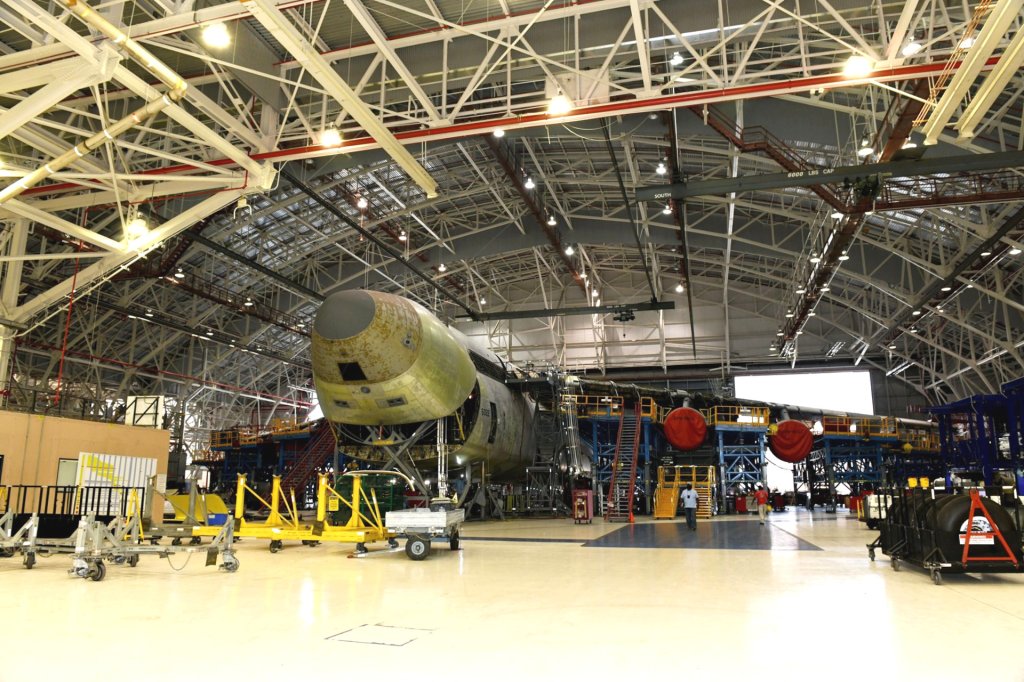
“It has to be,” Lt. Gen. Sonkiss had said at the roundtable in February when asked if it was reasonable to expect the C-5 to remain viable even to 2045.
“Define risk. I’m not trying to be pejorative in here, but what risk would you like me to talk about?” she added when asked about the risks this might entail. “There’s a financial risk to having to sustain an older aircraft. And we’ve shown in the Air Force that we’re capable of doing that. The C-5, we’ve invested a lot of money to keep it on board, and it is, and there is no other aircraft that can provide the capacity that the C-5 does.”
“We’ve shown time and time again that when that aircraft [the C-5] is asked to perform, it does. And so we’ll continue to invest,” she continued. “What I would like to see us do, though, is move forward from having to pour that much money into something old to the pathway to a modernized fleet.”
Especially given Sonkiss’ comments here about the C-5’s unique attributes, questions have also already been raised about the viability of a common replacement for that aircraft and the C-17A. The Globemaster III is also an essential and heavily demanded component of the U.S. strategic airlift force today, but is a very different aircraft with its own distinct capabilities. In particular, the C-17 offers significant short and rough field performance that enables it to bring heavy payloads very far forward for an aircraft of its size, even in the absence of improved runways. It was designed from the outset to transport combat-ready ground units, including tanks and other heavy armor, to landing zones at or at least near the front lines, as well as drop paratroopers into those same areas.

There is also the matter of an ever-expanding threat ecosystem, which the Air Force expects to include anti-air missiles with ranges of up to 1,000 miles by 2050. This will pose increasing challenges to advanced aircraft, let alone non-stealthy and slower-flying types. Key supporting assets, like airlifters and aerial refueling tankers, would also be top targets during any conflict, and even more so in a high-end fight, such as one against China in the Pacific.
One company, Radia, is actively pitching a new airlifter that is bigger than the C-17 and the C-5, and is being designed with a high degree of operational flexibility in mind, to meet the Air Force’s NGAL needs. Development of that aircraft, called Windrunner, originally started with a focus on carrying oversized components for wind turbines, and its projected range is shorter than that of either the Galaxy or Globemaster III. Overall, Windrunner is still in a very aspirational stage, as you can read more about here.

Lockheed Martin and Boeing, among others, have also been publicly showing various concepts for advanced transports and tankers in recent years. This includes stealthy types and blended wing body designs. A BWB aircraft could also offer a more limited degree of low-observability (stealthiness) together with significant internal payload capacity.
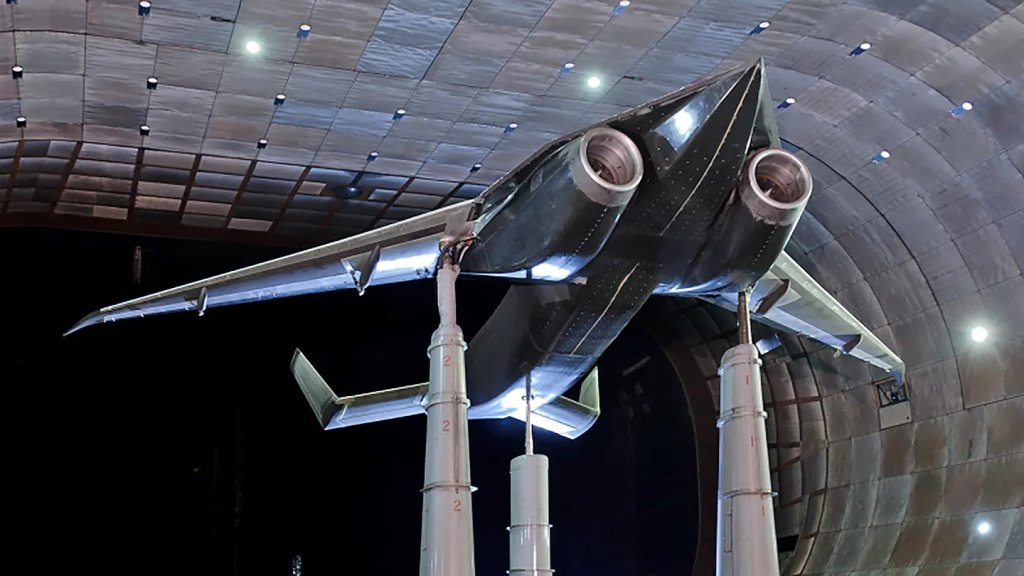
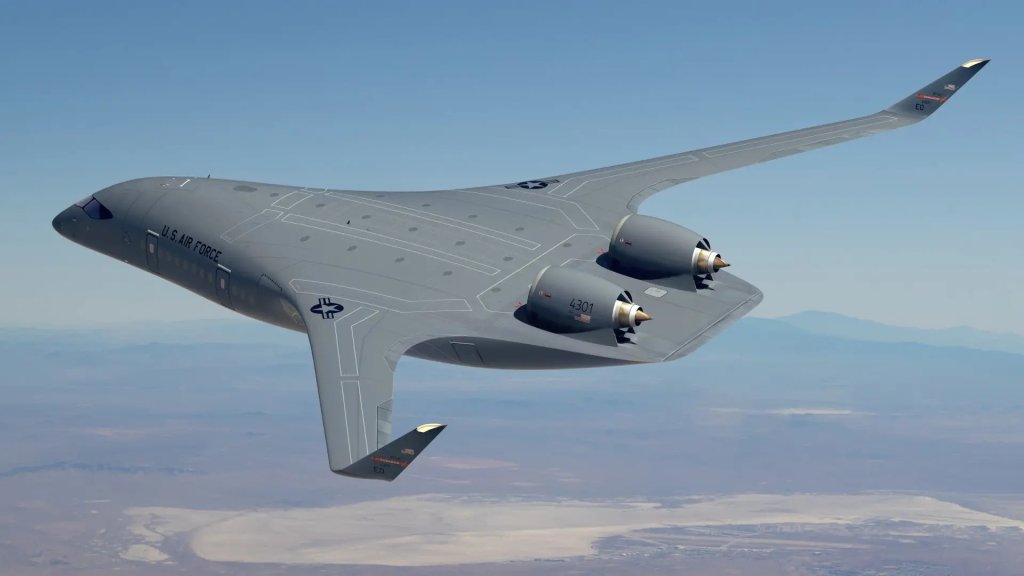
“I think there are options out there when it comes to large-volume aircraft that exist, that are being worked now, that can help us get capability quickly,” former AMC commander Minihan said in his interview with TWZ earlier this year. “And then I think there are concepts out there, like the commercialization of the C-5 fleet, that need to be taken seriously as well and apply commercial standards, commercial supply chain to increase the readiness of it. And between a combination of those two, I think that you can sustain what America needs to project large volume lift.”
There has also been significant overlap in work on future airlift concepts and potential designs for next-generation aerial refueling tankers, something the Air Force has also been hoping to get into service in the 2040s timeframe. The Air Force’s proposed Fiscal Year 2027 budget shifts work on future aerial refueling capabilities from what had been called the Next Generation Air-refueling System (NGAS) to a new effort dubbed Advanced Tanker Systems.
“We are shifting to what’s called Advanced Tanker Systems,” Air Force Maj. Gen. Frank Verdugo, Deputy Assistant Secretary of the Air Force for Budget, had said during a briefing on the rollout of the service’s latest request last month. “It’s looking to offer more options than just NGAS, and to make sure that our future advanced tanker systems are more resilient and can operate in contested environments.”
What this means for when the Air Force might see a next-generation tanker enter service, and how that might factor into NGAL, is unclear. The service’s current aerial refueling plans include more purchases of KC-46s in the coming years, which will increase the total objective fleet size. Older KC-135s are still expected to remain in service for years to come.
The Air Force’s future airlift strategy also clearly has yet to fully solidify, with the C-5s now set to remain in service into Fiscal Year 2050.
Contact the author: joe@twz.com
Loading comments…
Comments couldn’t be loaded. Please refresh the page.