
Under heavy escort, the USS Abraham Lincoln transited the Strait of Malacca and Singapore Strait over the weekend, en route to Thailand for a highly publicized and much-needed liberty port call. Guided-missile cruiser USS Robert Smalls led the three-ship column, with guided-missile destroyer USS Frank E. Petersen Jr. following astern of the supercarrier as she entered the South China Sea. Multiple Thai officials have confirmed the upcoming port visit since it was first reported by USA Today last week, with the flattop expected to pull into port at Laem Chabang in the coming days. Meanwhile, America’s other two deployed carrier groups are in the Middle East enforcing the ongoing blockade as the U.S. and Iran exchange fire for the first time since July.
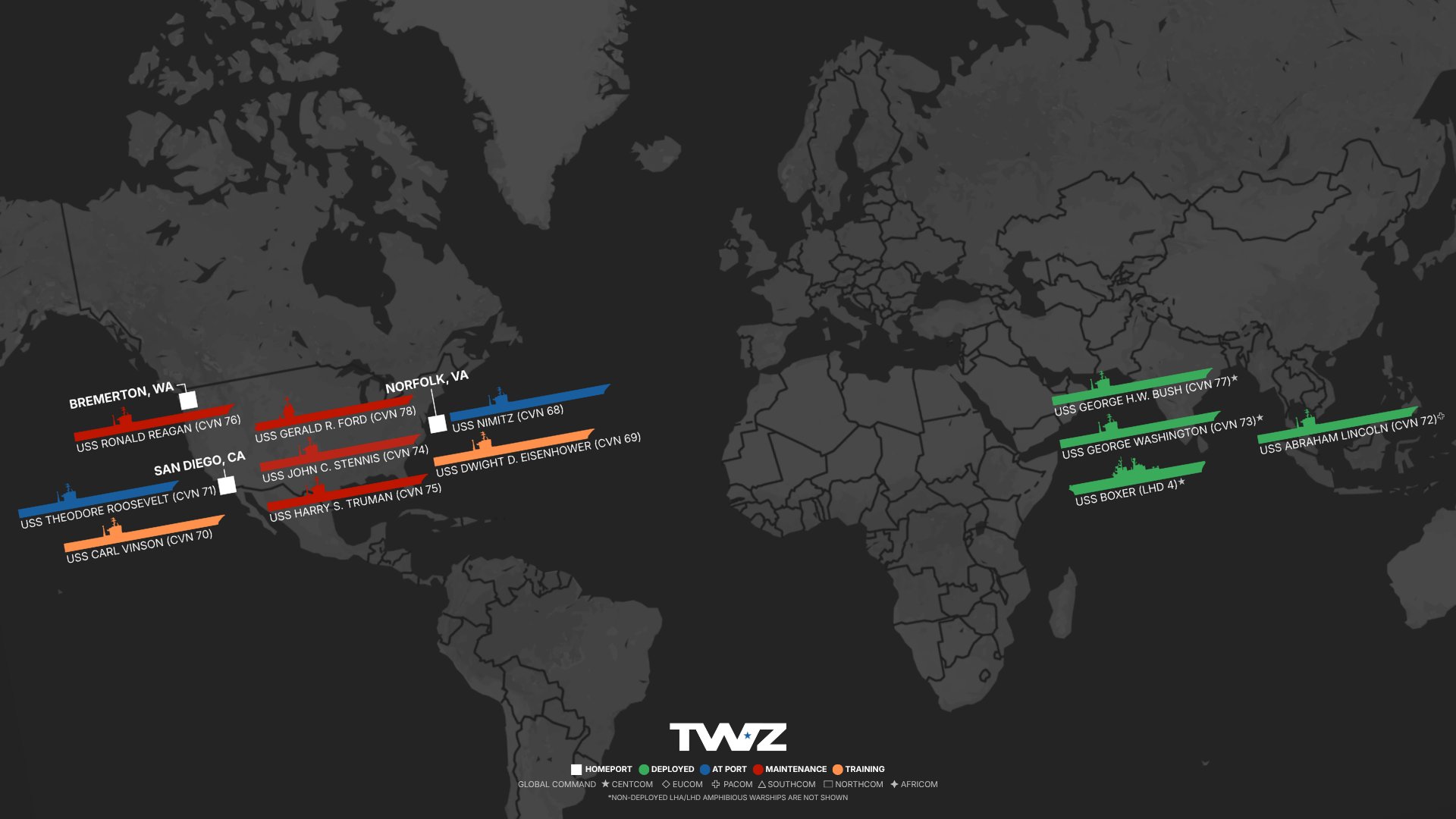
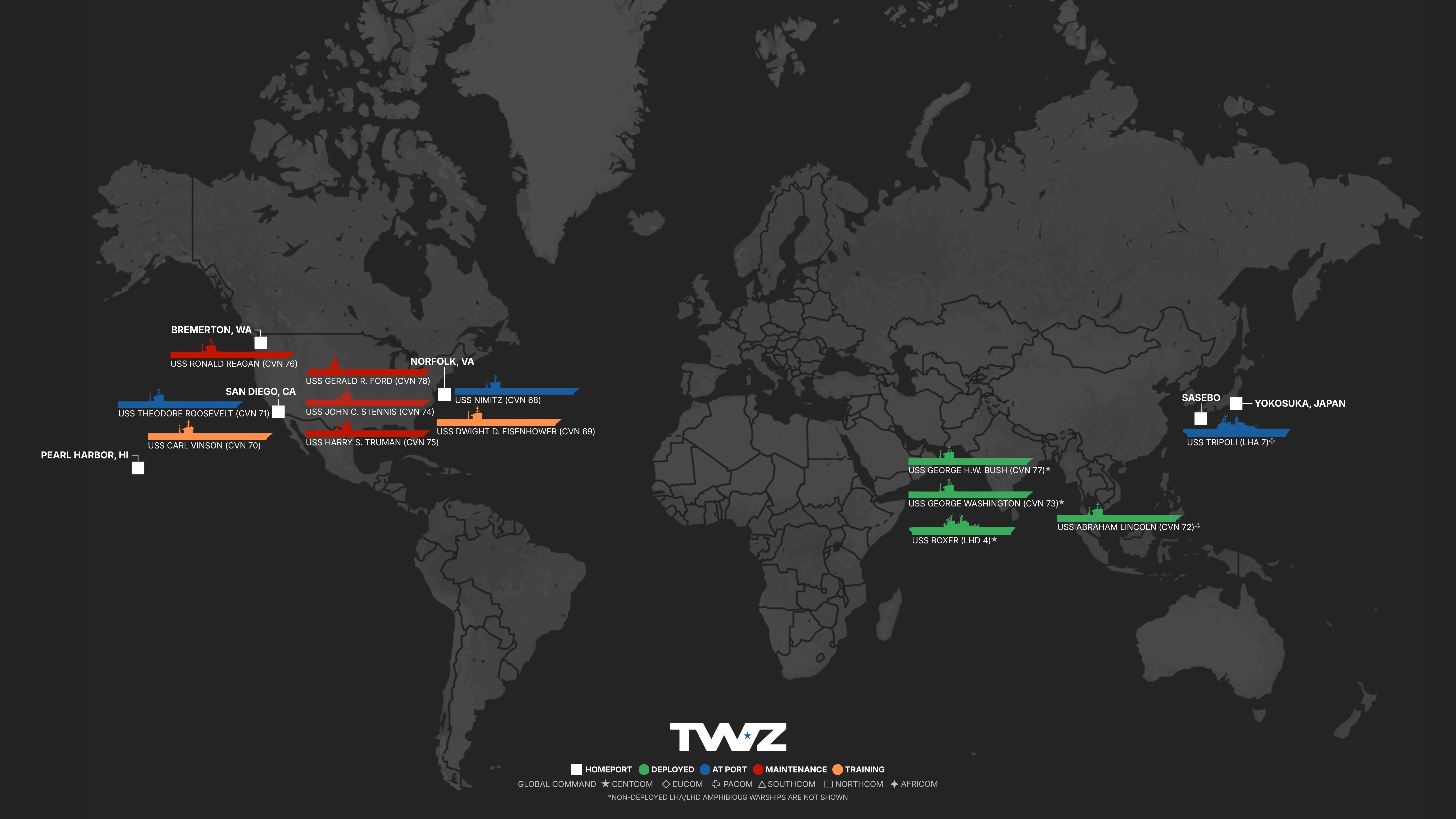
Here’s TWZ’s weekly carrier tracker monitoring America’s flattop fleet, including deployed Carrier Strike Groups (CSG) and Amphibious Ready Groups (ARG), using publicly available open-source information. Check out last week’s report here.
Lincoln Enters The South China Sea, Again, En Route To Thailand For Liberty
Abraham Lincoln flipped her Automatic Identification System (AIS) transponder on ahead of the transit, broadcasting the flattop’s position publicly for the first time since January 28, 2026, when the CSG made the transit in the opposite direction prior to Operation Epic Fury. Lincoln has now been deployed for 285 days without a liberty call, but that streak is set to end this week.
For friends and family, we anticipate an arrival back home in late September or early October, depending on how long the crew stays in Thailand and whether any other stops are made along the way. When all is said and done, Abraham Lincoln’s deployment will likely become the second-longest in the modern carrier era behind the historic 326 days logged by the USS Gerald R. Ford earlier this year.
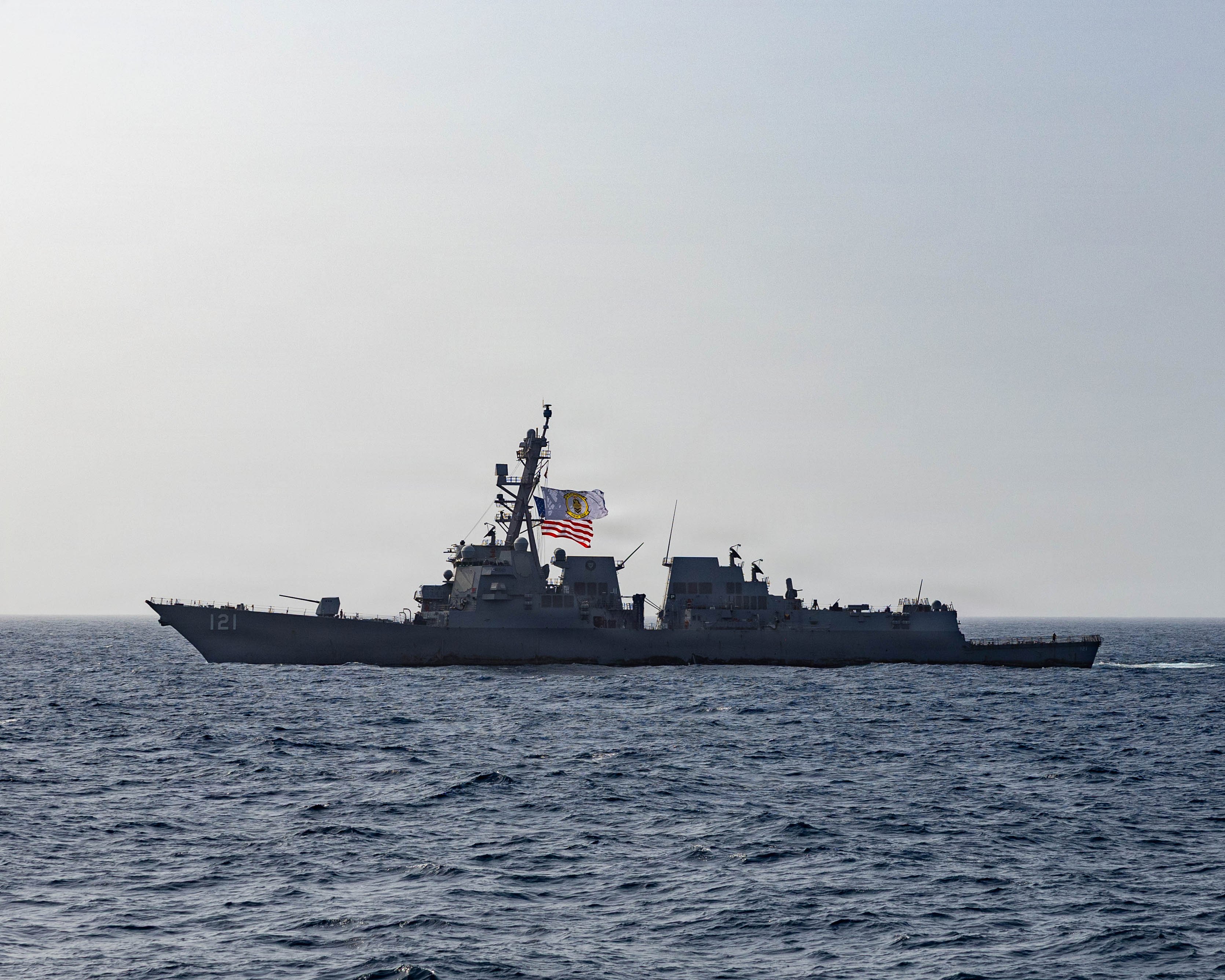
While the composition of the Abraham Lincoln CSG has shifted over the nine-plus-month deployment, Frank E. Petersen Jr., a Flight IIA Technology Insertion (TI) Arleigh Burke class destroyer and one of the newest in the fleet, embarked the commander of Integrated Air and Missile Defense (IAMD) throughout the six months of almost nonstop combat operations against Iran. The IAMD commander is responsible for coordinating the detection, response, and interception of inbound aerial threats, and Petersen Jr. is equipped with the world’s foremost integrated naval combat system – the Aegis Combat System Baseline 9 – which delivers quick reaction times, concentrated and networked firepower, and advanced electronic countermeasure capabilities for anti-air warfare.
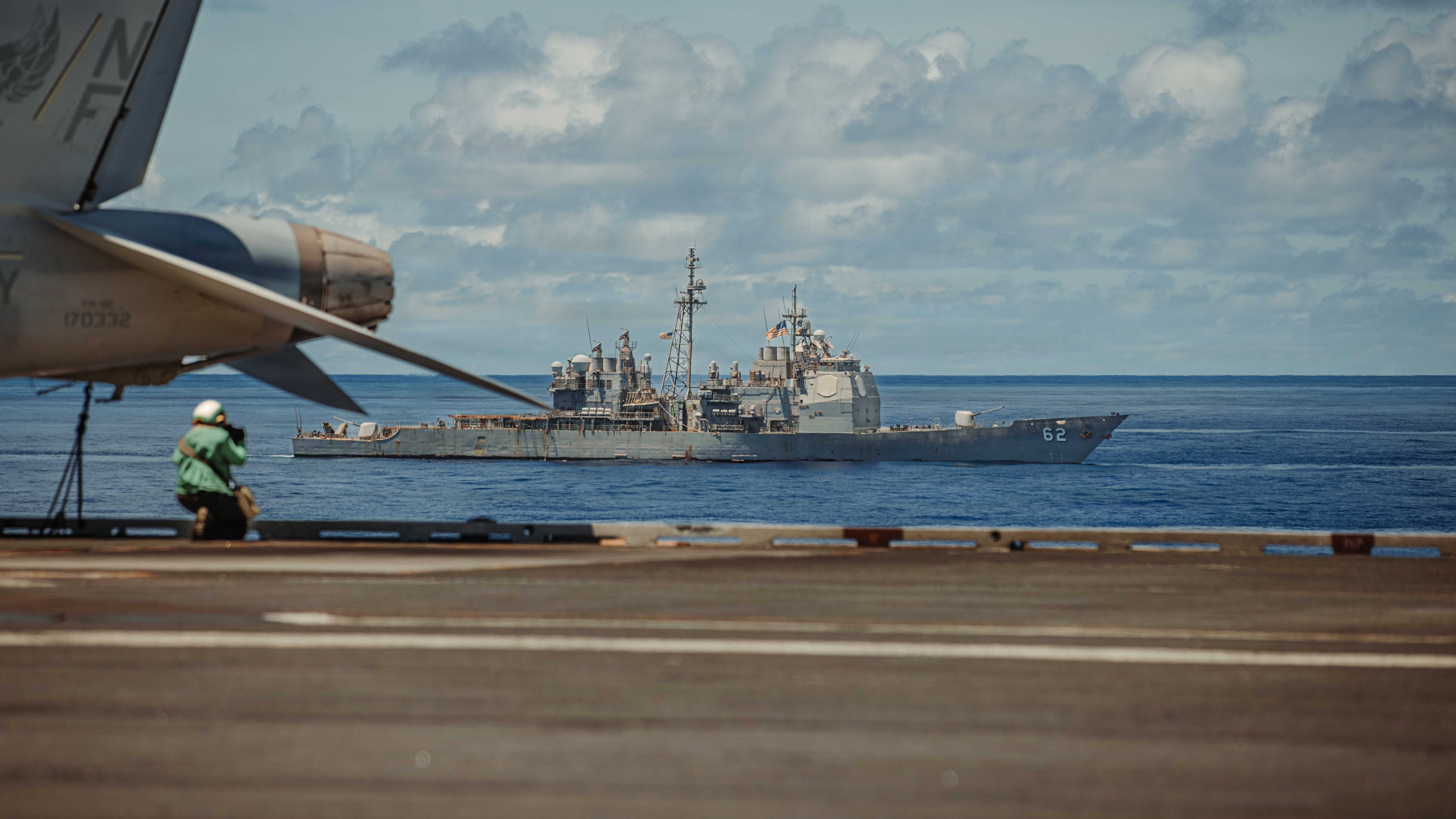
The unannounced addition of Ticonderoga class cruiser USS Robert Smalls, which has historically served as the IAMD commander for the carriers forward-deployed out of Yokosuka, Japan, adds 122 Vertical Launch System (VLS) cells packed with missiles for protection and firepower. The rationale for the additional Tico cruiser, an iconic class that will be completely retired over the coming years without a comparable replacement, is unclear. TWZ has not received an on-the-record response from the U.S. Central Command (CENTCOM) or U.S. Naval Forces Central Command (NAVCENT) public affairs explaining the redirection.
Robert Smalls was part of the George Washington CSG as recently as August 18, making the northwest-bound Malacca Strait transit with the strike group the week prior, before peeling off to escort the Abraham Lincoln back through.
U.S. Launches Another Round of Strikes Against Iran Today As Tensions Escalate
Ahead of publication on Tuesday, CENTCOM announced a fresh round of strikes against targets in Iran that began at noon Eastern Time. “The strikes follow recent attempted attacks by the IRGC against commercial shipping in the Strait of Hormuz and against American service members deployed to the region,” the command posted in a statement on social media.
George Washington, which is currently accompanied by a single destroyer, USS Shoup, relieved the Abraham Lincoln in the Middle East earlier this month. Other U.S. 5th Fleet ships are reportedly moving in and out of the CSG, but the situation is fluid and TWZ cannot confirm the current, complete composition of the group. It’s unknown which warship, if any, is currently serving as IAMD commander for the CSG, which chopped into the CENTCOM area of responsibility (AOR) on or around August 19.
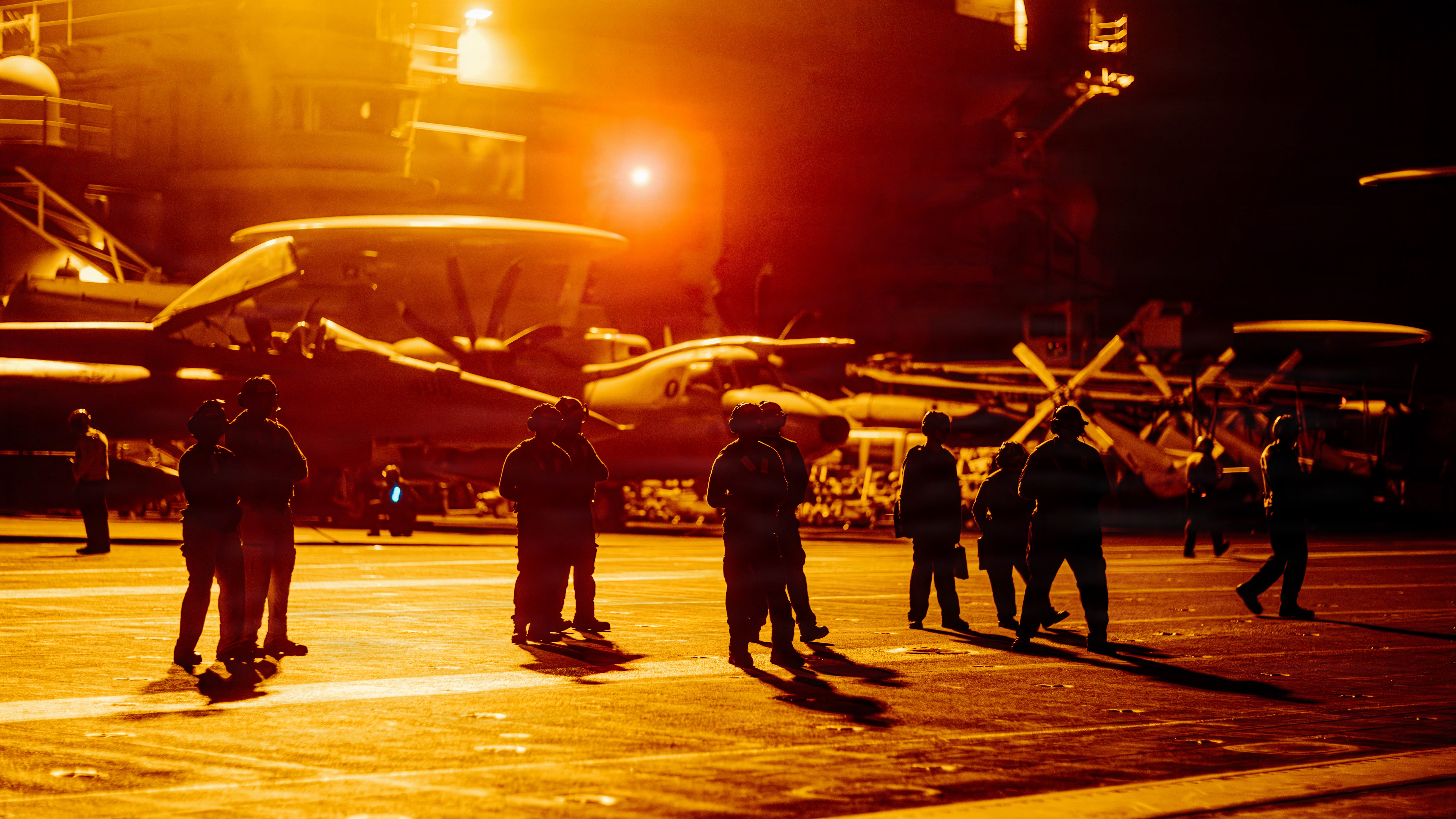
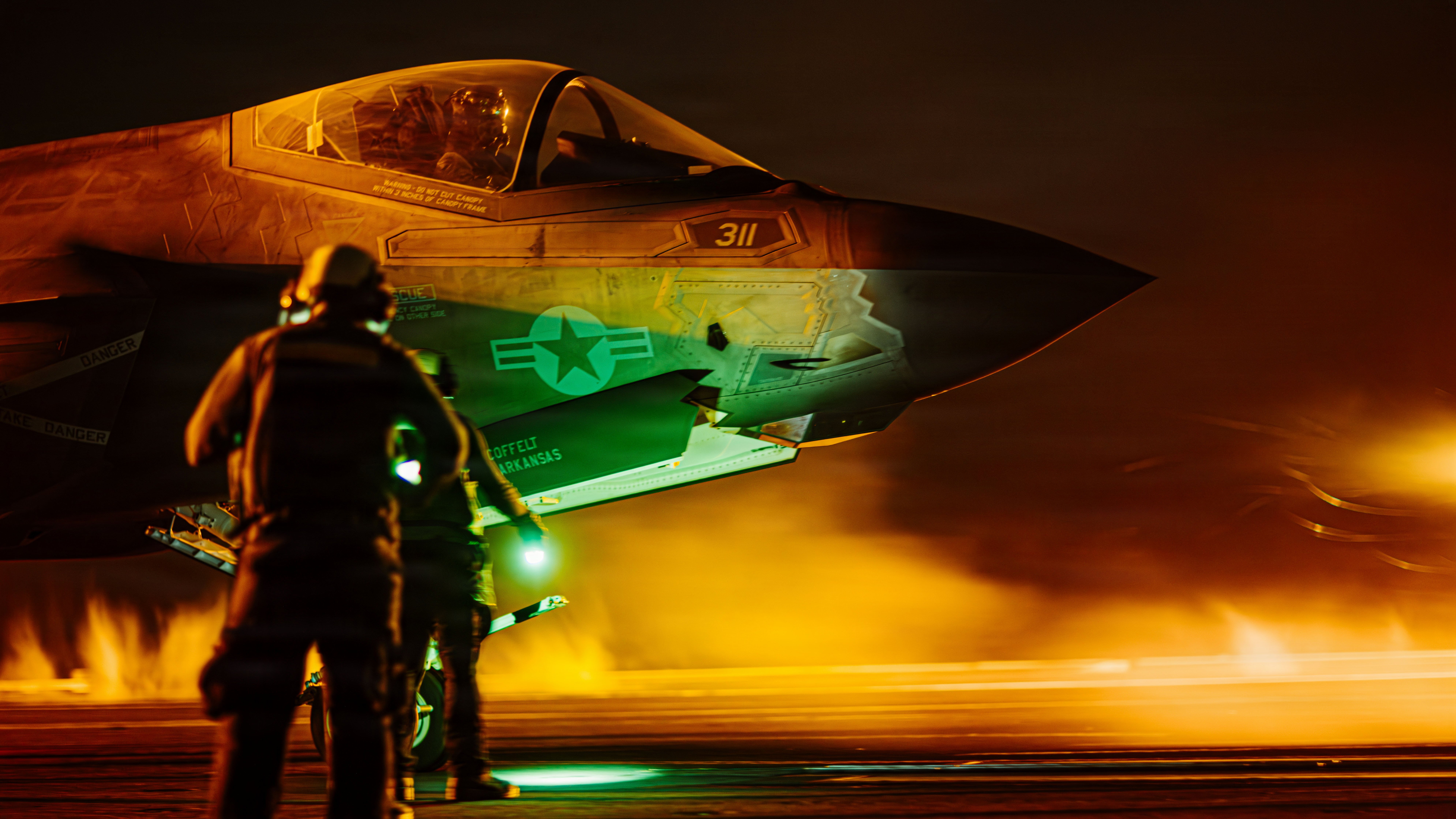
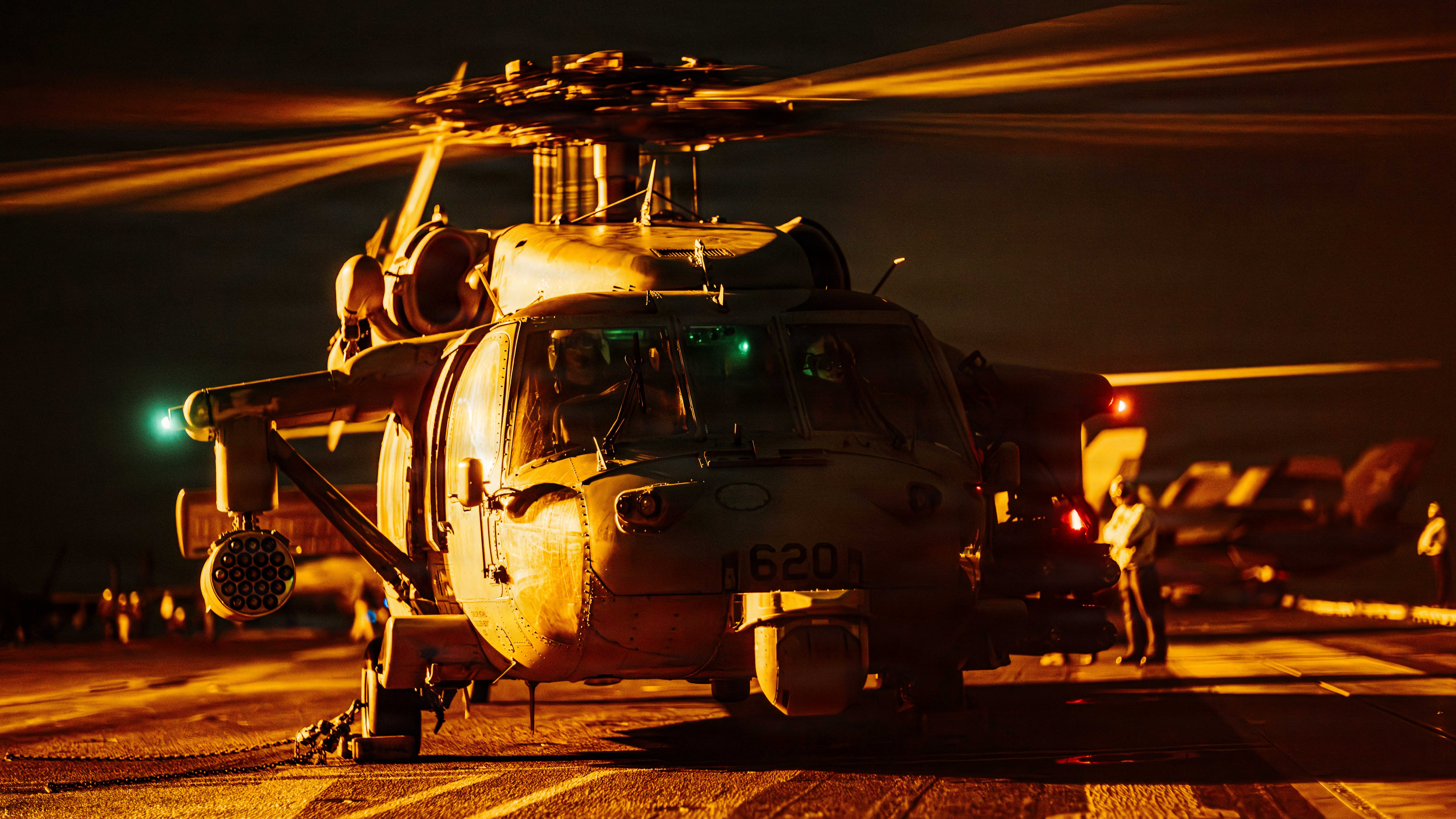
Also operating in the Middle East, the four-ship George H.W. Bush CSG is underway at an undisclosed location in the Arabian Sea. Alongside USS George H.W. Bush is Tico cruiser USS Princeton, the IAMD commander, and two Burke destroyers, USS Ross and USS Donald Cook.
The carriers are enforcing the ongoing blockade of Iran – and presumably participating in the latest round of airstrikes – although they are both officially on station to “support maritime security and stability in the Middle East,” according to DVIDS, the military’s content-sharing platform. CENTCOM forces have redirected 84 commercial vessels, disabled three using kinetic force, and boarded another two since the blockade resumed, as of September 1.
Over the weekend, the United States and Iran traded blows for the first time in over a month. CENTCOM opened the tit-for-tat exchange on Sunday by targeting rocket systems on Larak Island, located in the Strait of Hormuz on the Iranian side of the northern corridor, that are fitted to launch naval mines, after the Islamic Revolutionary Guard Corps (IRGC) was observed making preparations to fire into the contested waterway.
“I can confirm that earlier today U.S. forces struck two Iranian launchers on Larak Island,” Navy Capt. Tim Hawkins, CENTCOM’s spokesman, told TWZ. “Islamic Revolutionary Guard Corps forces were observed preparing to launch rockets with sea mines into the Strait of Hormuz,” he added. The IRGC retaliated by launching a salvo of ballistic missiles at Muwaffaq Salti Air Base, a Jordanian installation the U.S. military operates from. Jordan’s military said it successfully intercepted eight missiles.
The preemptive strikes to prevent Iran from deploying additional mines came just days after CENTCOM commander Adm. Brad Cooper said U.S. forces “successfully cleared” Iranian sea mines from international shipping lanes in the Strait of Hormuz. Commercial traffic through the strait is slowly recovering but still well below pre-war levels.
Ongoing Maintenance Delays Stateside Impact Fleet Readiness
On the other side of the world, in the United States, three carriers are active: two are underway training while one is in homeport getting ready for an upcoming deployment. USS Dwight D. Eisenhower, which left Norfolk on August 21, transited south in the Atlantic Ocean and was last operating approximately 70 nautical miles off the coast of Florida, well into East Coast Fleet Replacement Squadron (FRS) and Training Command (TRACOM) Carrier Qualifications (CQ). After departing San Diego on August 10, USS Carl Vinson was spotted on satellite imagery off the California coast by ship-tracker MT Anderson, in the process of completing Tailored Ship’s Training Availability (TSTA) and Final Evaluation Period (FEP) training.
USS Theodore Roosevelt, the next carrier slated to deploy from the continental U.S., is pierside at Naval Air Station North Island in San Diego, based on commercial satellite imagery. Speculation is rampant about where Theodore Roosevelt will deploy, but as the Navy has told us many times, “we do not discuss future operations or timelines.”
The balance of America’s carriers (excluding USS Nimitz, which will begin deactivation in 2027) is either in maintenance or scheduled to begin an availability in the future.
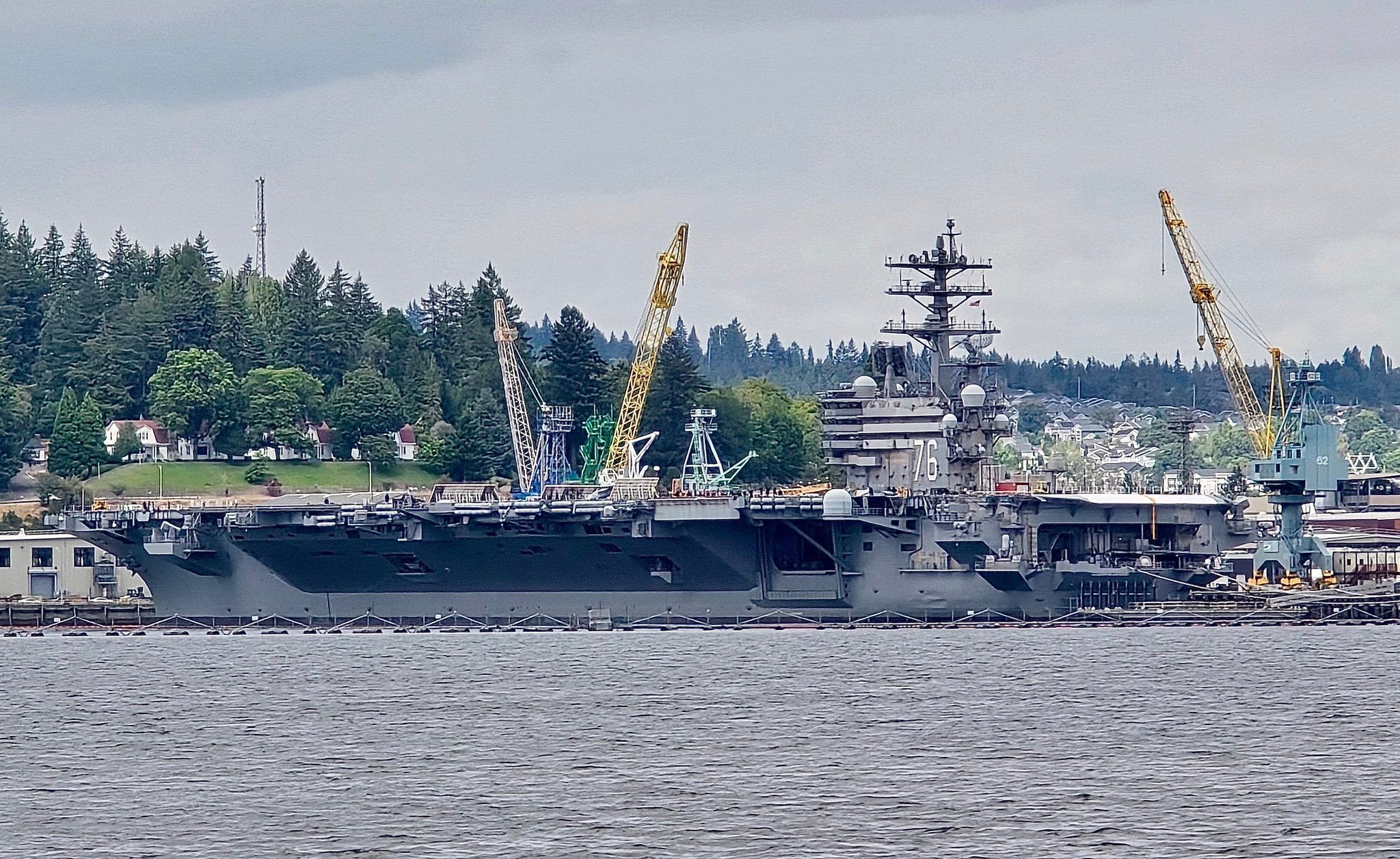
The next flattop that will re-enter service, USS Ronald Reagan, is expected to finish a roughly 17-month Docking Planned Incremental Availability (DPIA) soon. “The docking planned incremental availability for Ronald Reagan is on track for its scheduled completion at the end of August 2026,” Catherine Norton, the Public Affairs Officer (PAO) for Puget Sound Naval Shipyard and Intermediate Maintenance Facility, told Stars and Stripes earlier this month. However, the ship has not gotten underway as of publication, even though yesterday was the end of the month, and it appears the DPIA will stretch into September. TWZ reached out to Puget Sound’s PAO but has not received a response yet. For the latest status of the other three carriers in current or upcoming maintenance, marked in red on the map above, check out our recent deep-dive here.
Current Big Deck Force Posture At A Glance
Overall carrier force posture is unchanged compared to our previous report on August 24. Three U.S. carriers are deployed (although one is on the tail end of her deployment and heading home to San Diego), one is preparing to deploy in the near term, two are working up in various states of readiness, four are in maintenance, and another, the USS Nimitz, is being used primarily for training before deactivating next year. One amphibious ready group is deployed, one is forward-deployed and at homeport, four are working up or in port, and three are in maintenance.
Update as of September 2: The USS Abraham Lincoln arrived in Laem Chabang, Thailand, on Wednesday, local time. “Our arrival in Laem Chabang provides a well-deserved opportunity for our Sailors and Marines to rest and recharge. It also underscores the strong and enduring partnership and alliance between the United States and Thailand,” Rear Adm. Robert E. Loughran, commander, CSG-3, said in a statement released by the ship’s public affairs team. “What this strike group has accomplished is truly historic. I could not be prouder of the exceptional professionalism and expertise demonstrated by every member of this team during our operations in the U.S. Central Command area of responsibility,” he added.
Check out our full report on the carrier, which has been run very hard over the past nine months and has the scars to show for it, here.
Note: Positions are general approximations. Non-deployed LHA/LHD amphibious warships are not shown.
Contact the author: ian.ellis-jones@recurrent.io
Loading comments…
Comments couldn’t be loaded. Please refresh the page.