
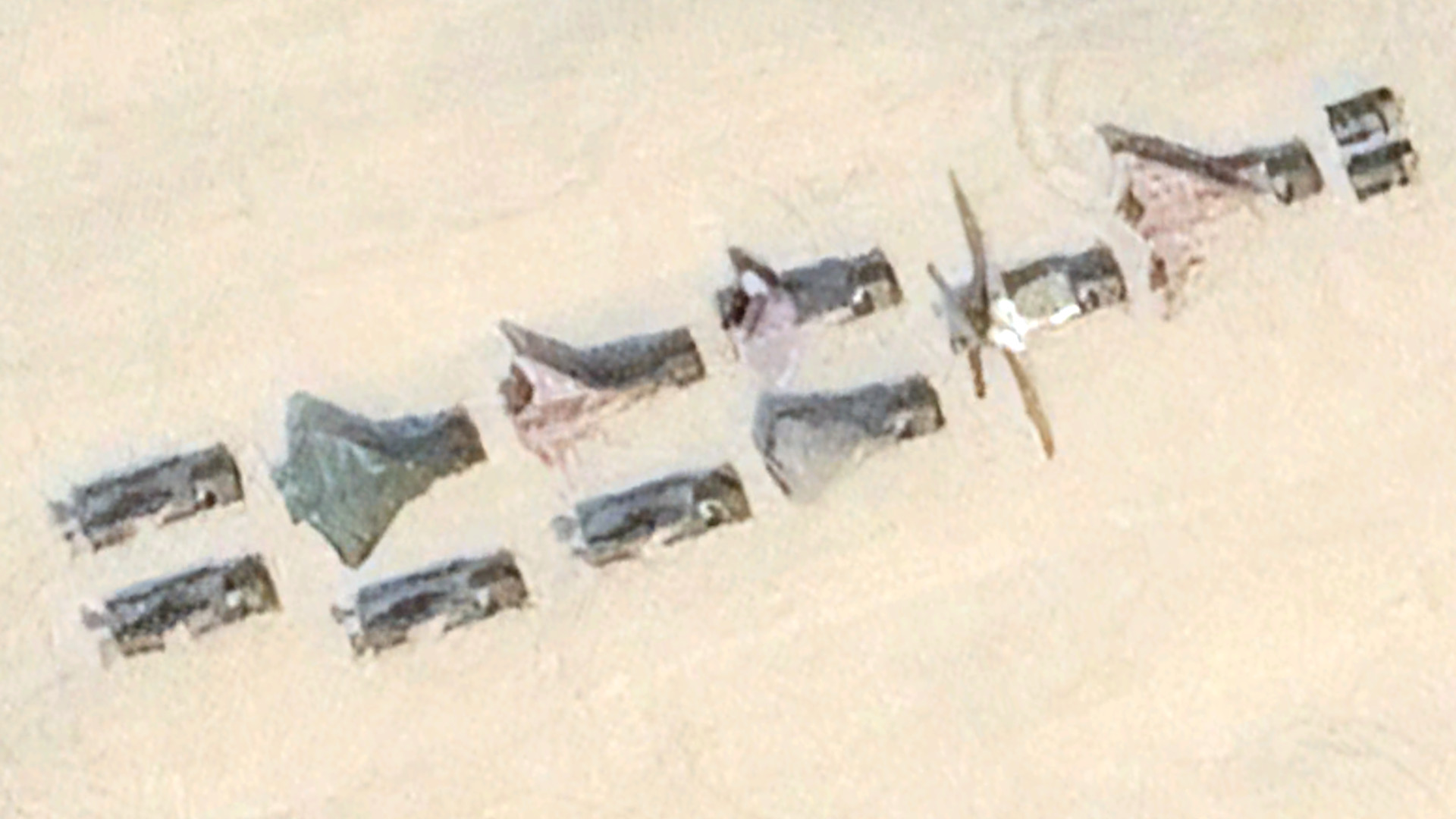
Satellite imagery of preparations for a major upcoming military parade in China shows that new ‘loyal wingman’ type drones, or at least mockups thereof, are set to be revealed. A video clip has now emerged that is also drawing new attention to Chinese crewed-uncrewed teaming developments.
Google Earth recently updated its library to include a satellite image taken on June 11, 2025, of a military base in Yangfang, a suburb northwest of the Chinese capital of Beijing. China’s People’s Liberation Army (PLA) regularly uses the facility to stage assets and train for large-scale parades. In June, Chinese authorities announced that a parade marking the 80th anniversary of the country’s victory over Japan in World War II would be held on Sept. 3, and that it would feature unspecified “new-type combat capabilities.” Nearly two weeks ago, video also emerged showing mysteriously unidentified vehicles concealed underneath large, box-like structures, prompting speculation that a new armored vehicle will also be unveiled at the event.
Related Stories
The June 11 image, which began circulating online last week, shows hundreds of vehicles, including what look to be self-propelled artillery pieces and transporter erector launchers for large ballistic missiles, and other materiel in neat rows at various areas of the Yangfang base. Of particular interest are drones under wraps on trailers at the northern end of the facility. The PLA has unveiled new and updated uncrewed aircraft designs in this same way at past parades in Beijing.
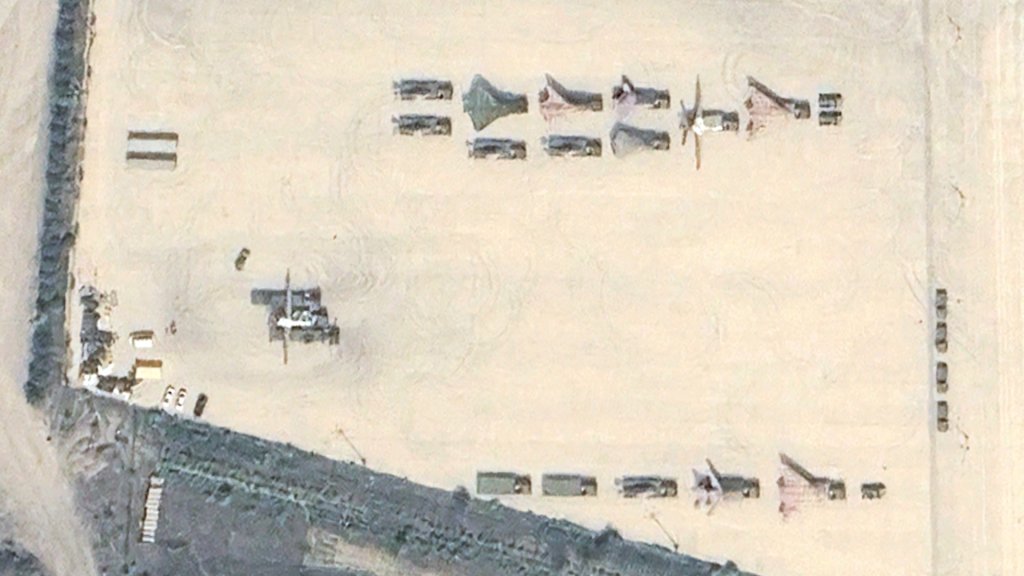
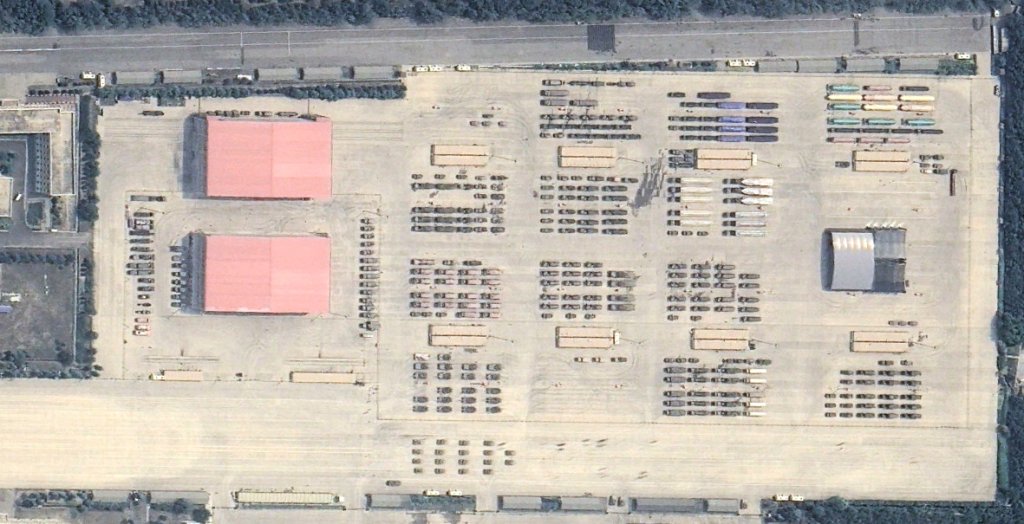
Though the resolution of the satellite image is low, what look to be GJ-11 Sharp Sword stealthy flying-wing uncrewed combat air vehicles (UCAV), as well as what may be either Wing Loong or CH-4/5 Rainbow-series medium-altitude long-endurance (MALE) types, are present. A BZK-005, another MALE design, looks to be visible, too.
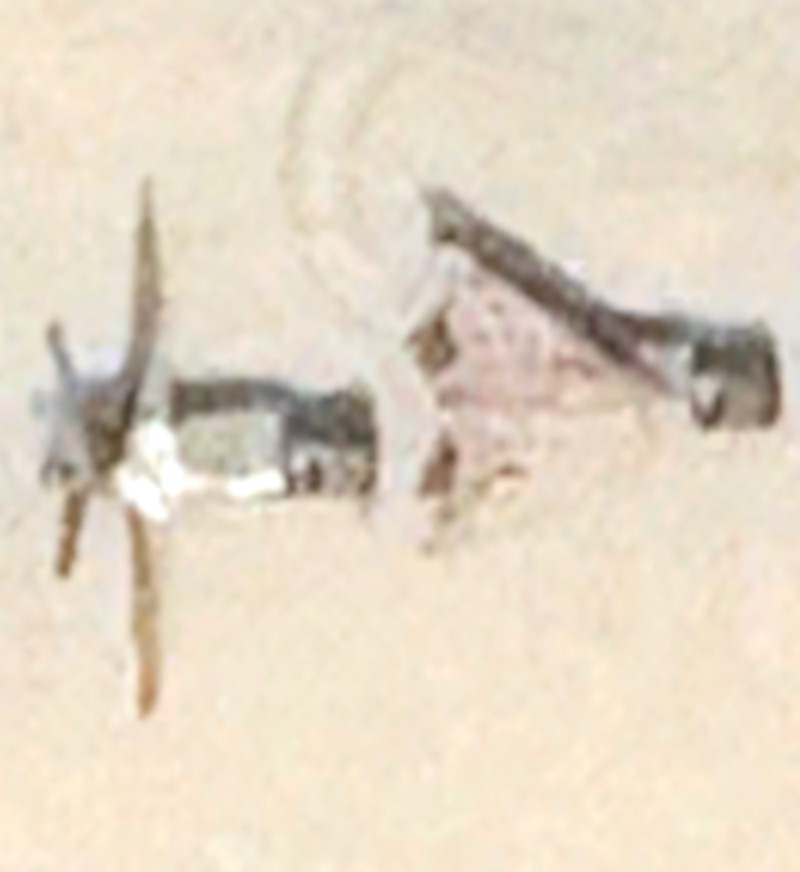
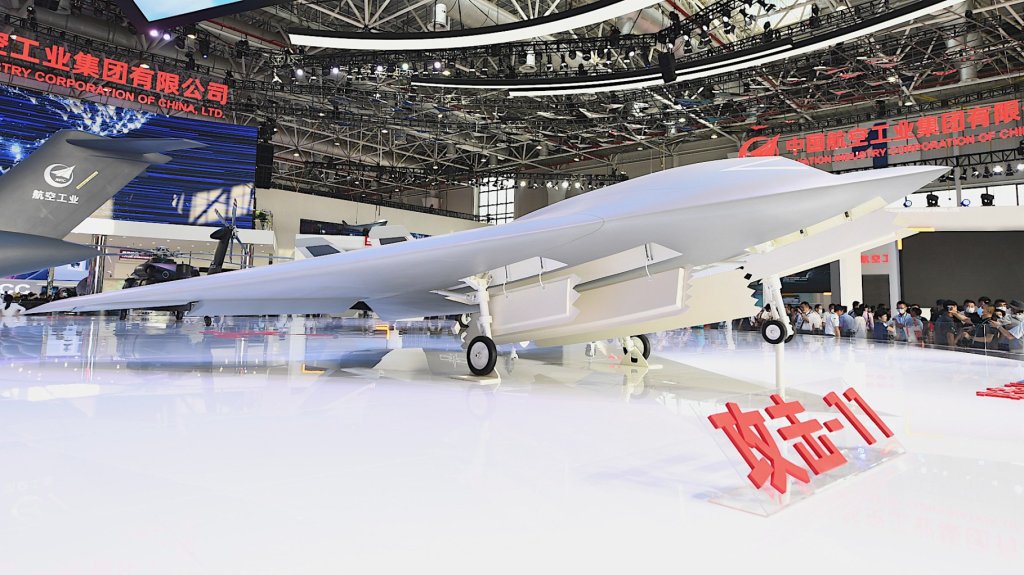
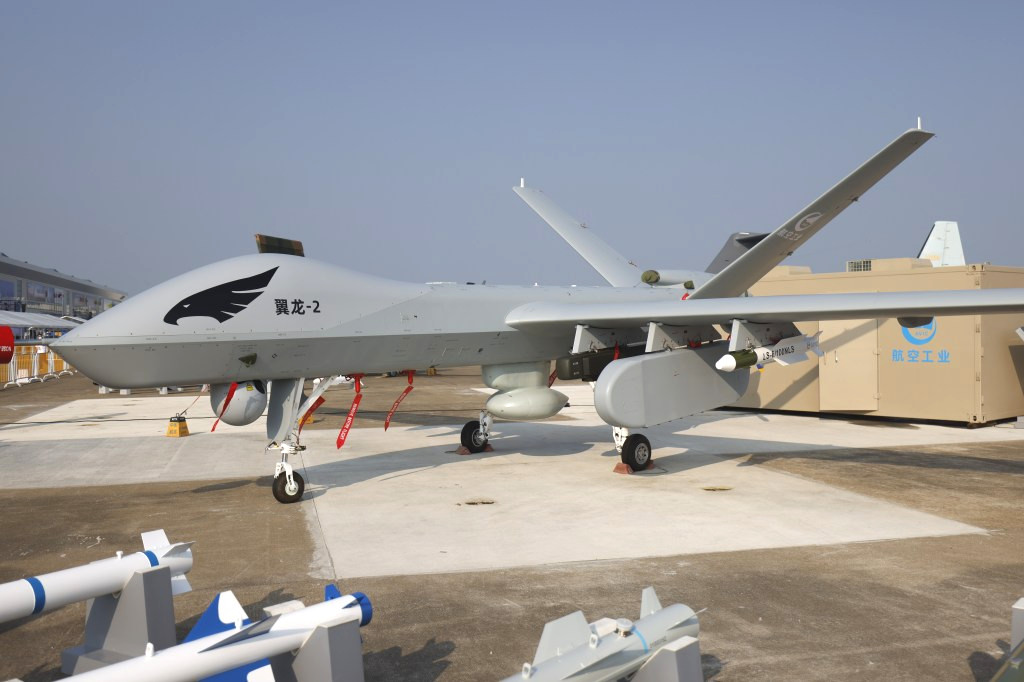
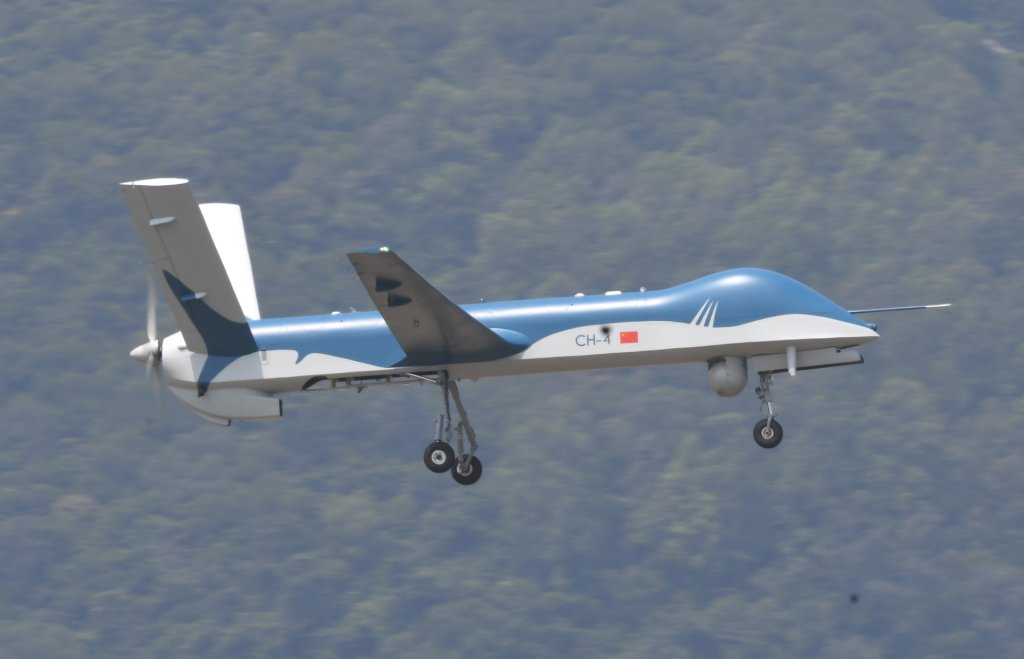
However, there are five airframes visible in the June 11 image that do not readily align with known Chinese types, and that look to be in line with loyal wingman-type designs. Four of them look to be tailless with modified diamond-like delta and cranked-kite wings, while the last one has what appears to be a more traditional wing and tail arrangement. The designs range in length from approximately 30 to 38 feet (nine to 12 meters), and in wingspan from 20 to 35 feet (six to 11 meters).
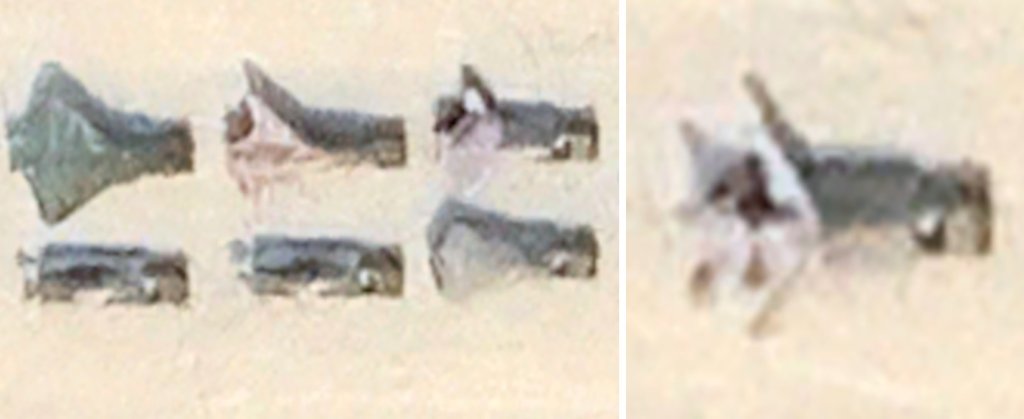
Additional analysis of drones seen in the satellite image by Andreas Rupprecht, a Chinese aviation expert and contributor to this website, and Rick Joe, a long-time tracker of Chinese military developments, aligns with that of TWZ.
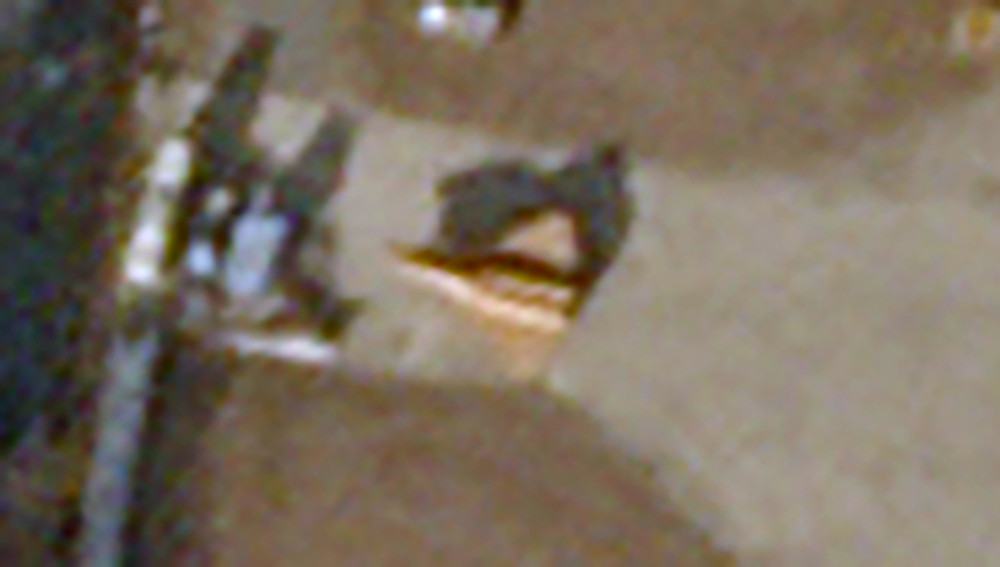
Just this past weekend, a video also began circulating online showing what looks to be a tailless aircraft with a modified diamond-like delta platform flying in formation with a Y-8/9-series turboprop. The clip also shows a second Y-8/9 trailing behind by itself. An additional still image, which looks to be a frame from a separate video showing the same tailless design, has also emerged. Where and when the video or the separate still image were taken is unclear, but what is visible in both has some very broad similarities with one of the designs seen in the June satellite image of Yangfang.
The possibility has been raised that the recently emerged video and still image may show one of China’s two new stealthy crewed combat jets, either the Chengdu J-36 or the Shenyang design referred to variously as the J-XDS and J-50. However, the planform does not directly match that of either of the next-generation fighters, and it also looks to be smaller based on its size relative to the accompanying Y-8/9.
Questions have also been raised about whether filters enabled by default on many phone cameras may have ‘transformed’ an existing aircraft type, like a J-16 fighter, into a ‘new’ design. This seems especially unlikely given the absence of vertical tails or any artifacts thereof. There are no immediately clear signs of any other kind of manipulation.
It is also interesting to note that another next-generation fighter-like airframe or mockup with a modified diamond-like delta platform emerged at Shenyang’s main plant earlier this year, as TWZ was first to report. That design does not appear to align with the J-XDS/J-50, but also looks to be longer (roughly 50 feet/15 meters) than any of the possible loyal wingman drones seen in the satellite image of Yangfang.
Regardless of what is seen in the June 11 satellite image, as well as the video and still image that more recently emerged, the PLA is very actively pursuing multiple types of loyal wingmen-type drones, and crewed-uncrewed teaming capabilities, in general. The aforementioned GJ-11 UCAV is understood to be a centerpiece of those efforts, but other lower-tier uncrewed designs intended to operate closely with crewed aircraft have also been shown in China in recent years. This includes China Aerospace Science and Technology Corporation’s (CASC) FH-97 and FH-97A, designs at least heavily inspired by Kratos’ XQ-58A Valkyrie and Boeing Australia’s MQ-28 Ghost Bat, respectively.
In addition, the two-seat J-20S stealth fighter is now regularly depicted in official graphics as an airborne drone controller, something TWZ has long highlighted as an ideal role for the aircraft. The KJ-500 airborne early warning and control aircraft, based on the Y-9 turboprop, is also often discussed as part of this future crewed-uncrewed air combat ecosystem. The concept, at least, of using H-6 missile carrier aircraft as airborne launch platforms for lower-end tactical uncrewed air vehicles has also been put forward.
Chinese drones initially developed for use in close cooperation with crewed platforms could also operate ever more independently, including in networked swarms, as time goes on. The PLA is actively pursuing advanced autonomous aviation capabilities, driven in part by developments in artificial intelligence and machine learning.
More broadly, China continues to cement its position as a global leader in advanced uncrewed aviation developments. In June, TWZ first reported on the emergence of what could be a very large, low-observable, flying-wing, long-endurance unmanned aircraft.
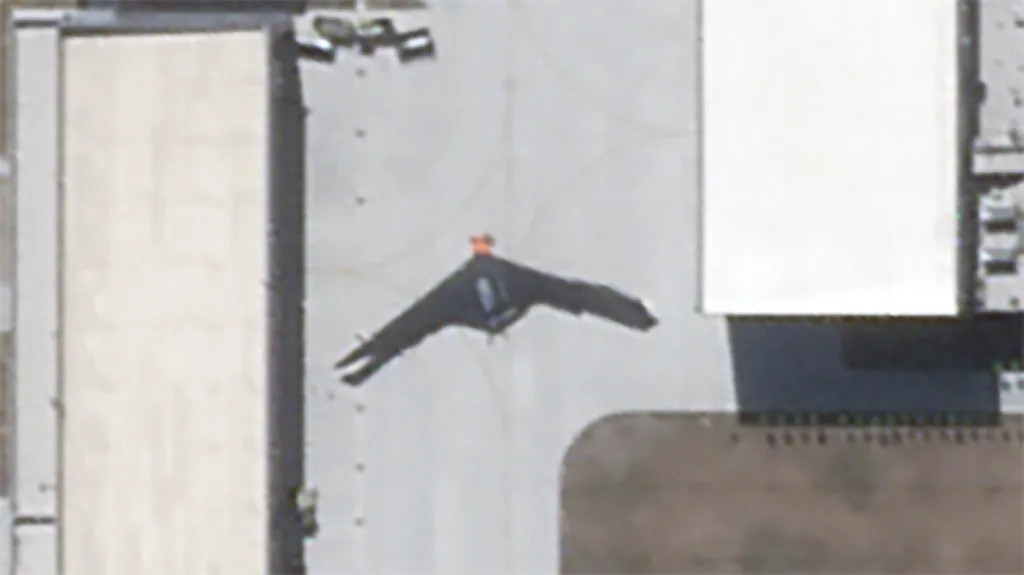
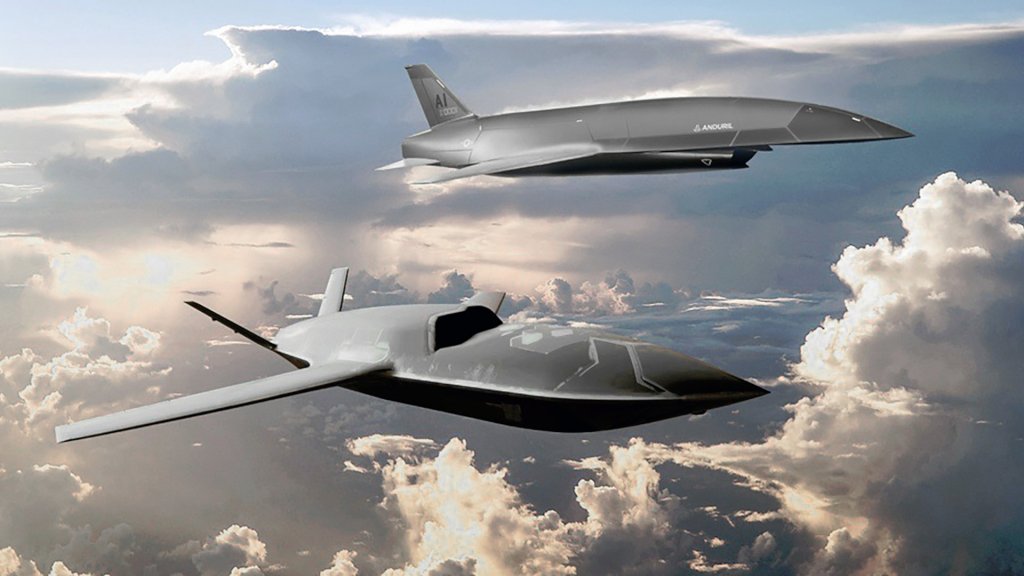
Furthermore, the PLA’s pursuit of stealthy flying wing UCAVs like the GJ-11 stands in particular contrast to the U.S. military’s abandonment of interest in similar capabilities years ago, at least in the unclassified domain. The U.S. Air Force, at least publicly, continues to be outspoken about eschewing UCAVs in favor of less-exquisite, but also lower-cost designs to pair with crewed aircraft. Two so-called Collaborative Combat Aircraft (CCA), the General Atomics YFQ-42A and Anduril YFQ-44A, are in development for the Air Force now and are set to fly for the first time this year. The service, as well as other branches of the U.S. military, is expecting to ultimately field multiple CCA types acquired through iterative development cycles.
There has also been a recent surge in PLA crewed aviation developments, including the emergence of the J-36 and J-XDS/J-50 last December. A new jet-powered airborne early warning and control aircraft, based on the Y-20 cargo plane and referred to as KJ-3000, also emerged that month. The J-20S and a navalized variant of the J-35 stealth fighter also look poised to enter operational service.
As the PLA continues to prepare for the upcoming parade in September, new details about ongoing loyal wingman-type drone developments, as well as work on other previously unseen capabilities, may begin to emerge.
Contact the author: joe@twz.com
Loading comments…
Comments couldn’t be loaded. Please refresh the page.