
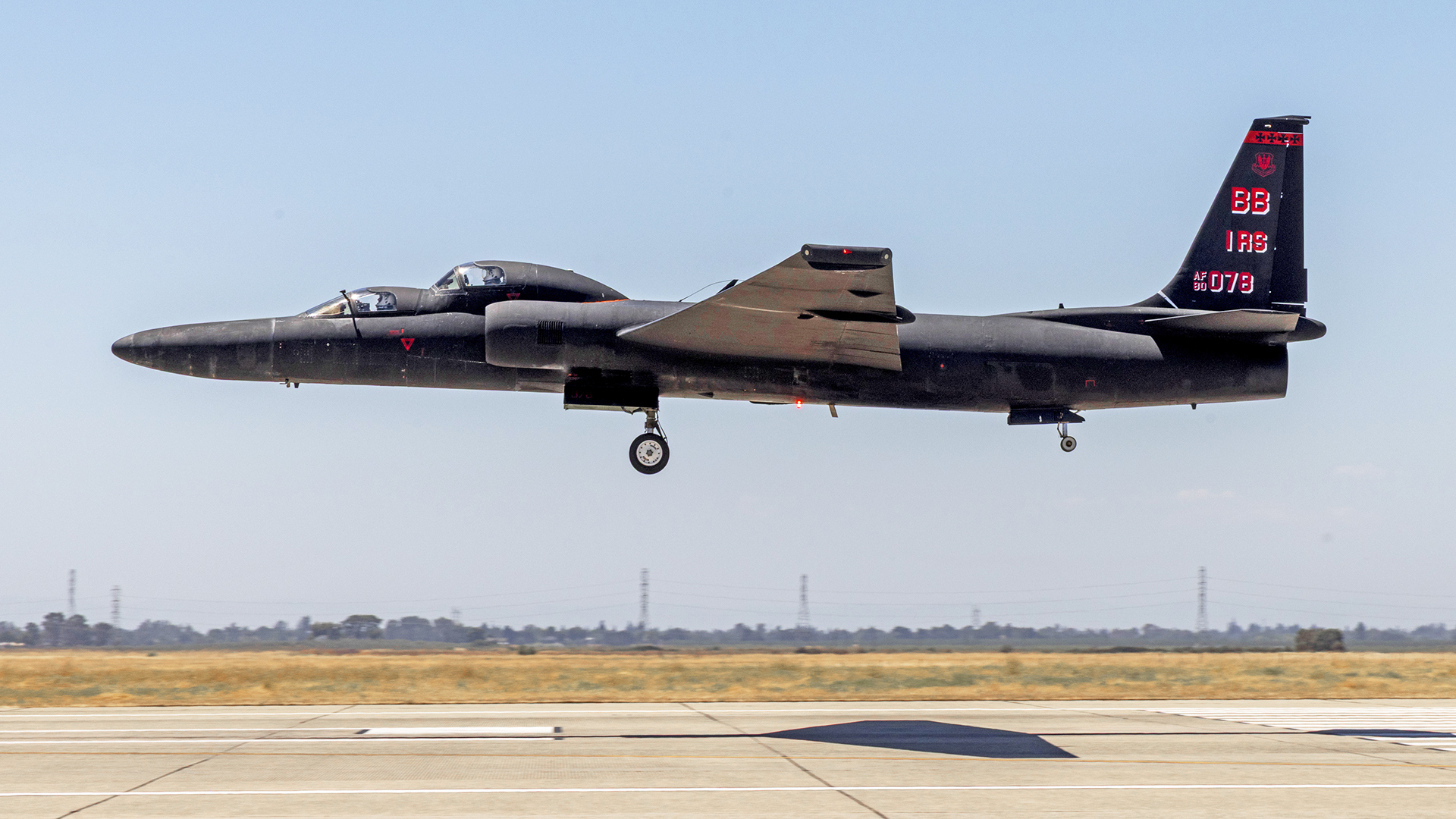
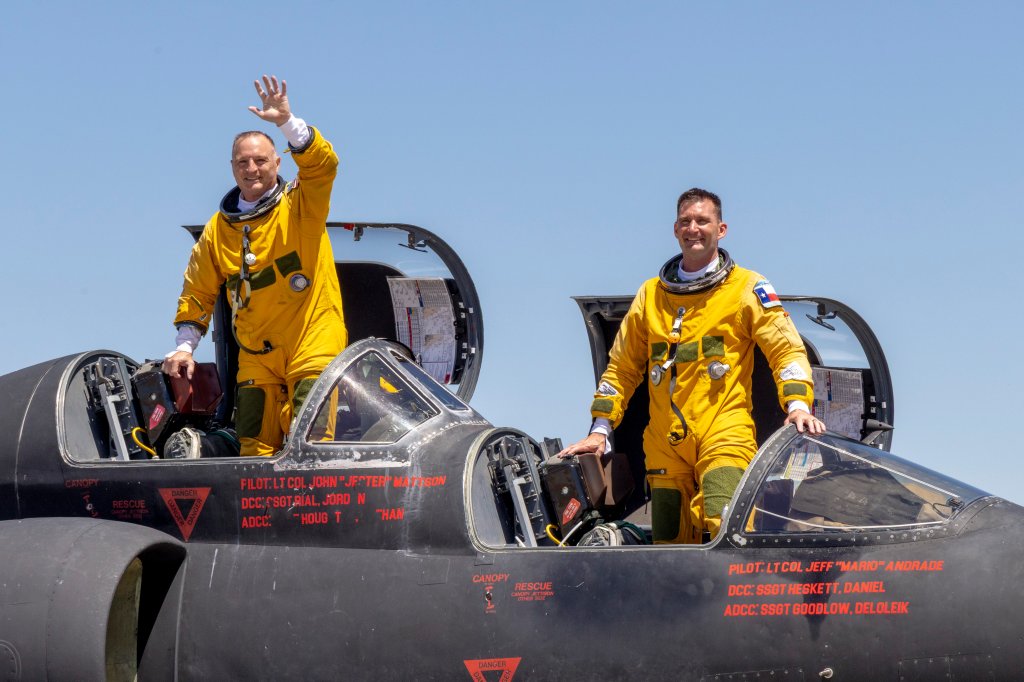
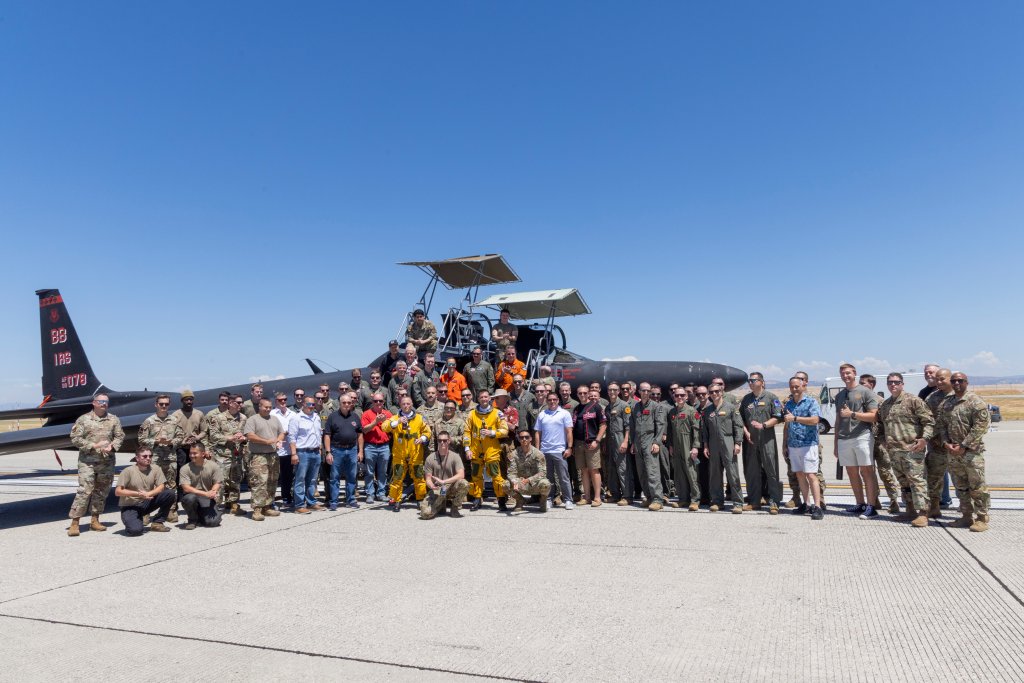
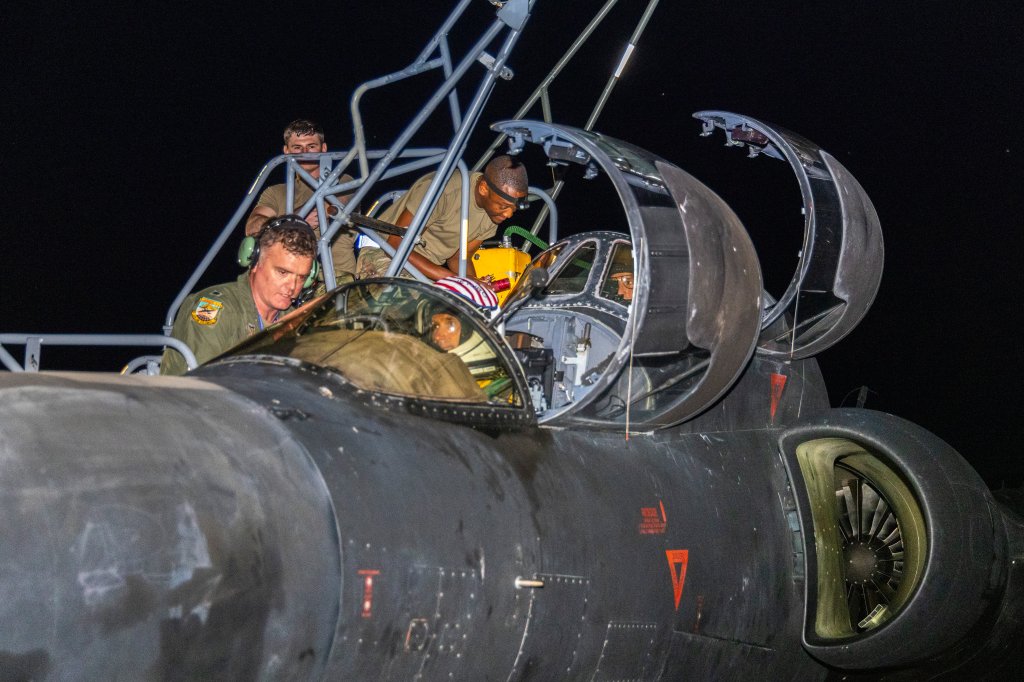
On the evening of July 31, Cory Grant Bartholomew climbed into the cockpit of a U-2 Dragon Lady spy plane at Beale Air Force Base. Some 14 hours and 6,000 miles later, he and the mission’s chief pilot, an Air Force lieutenant colonel who goes by the call sign “Jethro,” returned from what would be a record-setting flight. It was planned to honor the 70th anniversary of the iconic jet’s maiden voyage, which took off Aug. 1, 1955, from Groom Lake, Nevada. On Tuesday, we spoke with Bartholomew, call sign “Ultralord,” in an exclusive interview.
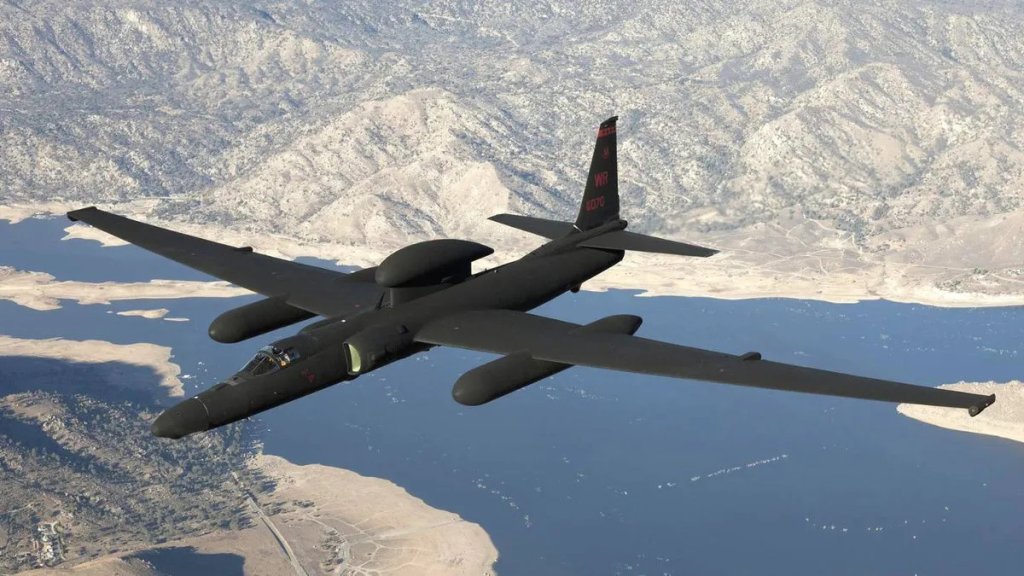
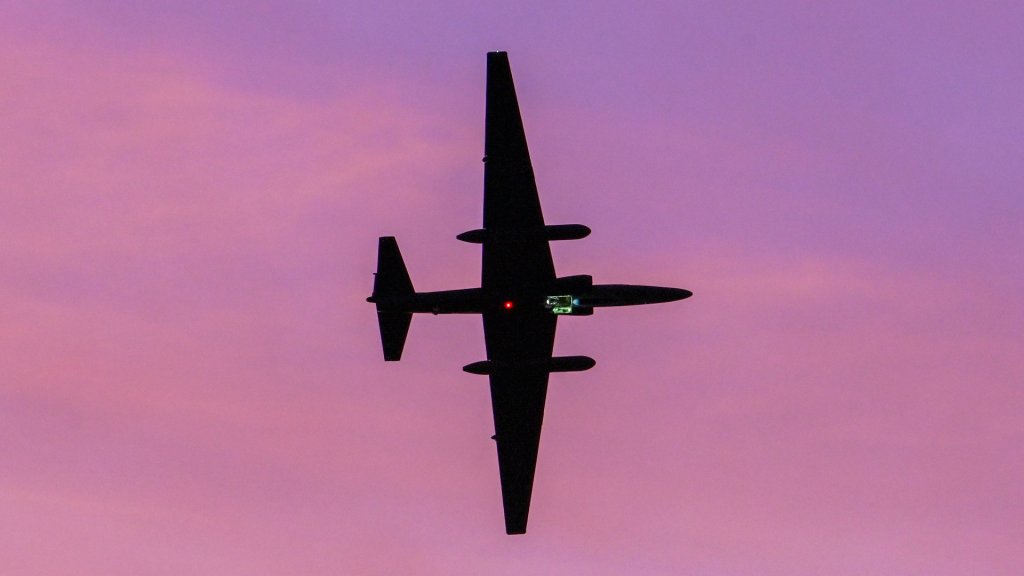
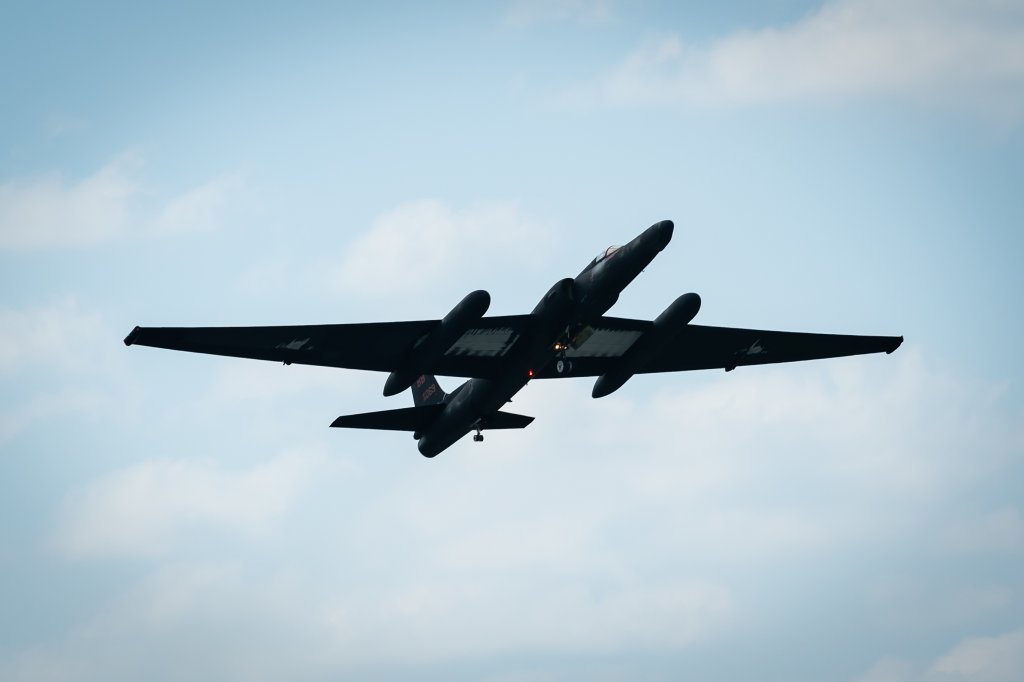
With its long wings, sleek lines and ability to fly at more than 70,000 feet – higher than any other known operational piloted aircraft – the U-2 Dragon Lady is one of America’s most valuable airborne intelligence assets. First introduced during the Cold War to gather information about the Soviet Union, a drastically improved U-2 continues to be a uniquely high-flying ISR platform capable of carrying a wide array of different imaging, signals intelligence, data-relay and other systems simultaneously. U-2s still regularly operate overseas, flying long missions near enemy territory. The U-2 also flies domestic missions, including flights along the border with Mexico as part of the U.S. military’s support for border security efforts. The aircraft is a high-flying ‘sensor truck’ that provides immense flexibility, especially compared to satellites constrained by their orbits and very short times over the collection target.
Despite what it brings to the table, the U-2 has long faced the specter of the budget axe, with Air Force officials wanting to end the program out of concerns that these old jets won’t survive in a fight with a competitor like China. The jet became a household name during the Cold War when a Dragon Lady flown by Francis Gary Powers was shot down by a surface-to-air missile deep over Soviet territory on May 1, 1960. That was long before the advent of the advanced air defense and detection capabilities that exist today. As of right now, the Air Force is planning to sunset the program sometime in Fiscal Year 2026.
Before climbing into the cockpit of a U-2, and eventually flying the historic 70th anniversary record breaking flight, Bartholomew, who is 64 and has been flying in the USAF since 1988, was a B-52 pilot. He left the Air Force in 2014 to fly commercial airliners and later for NASA before returning to the Air Force in 2020 as a civilian instructor pilot with the 9th Reconnaissance Wing.
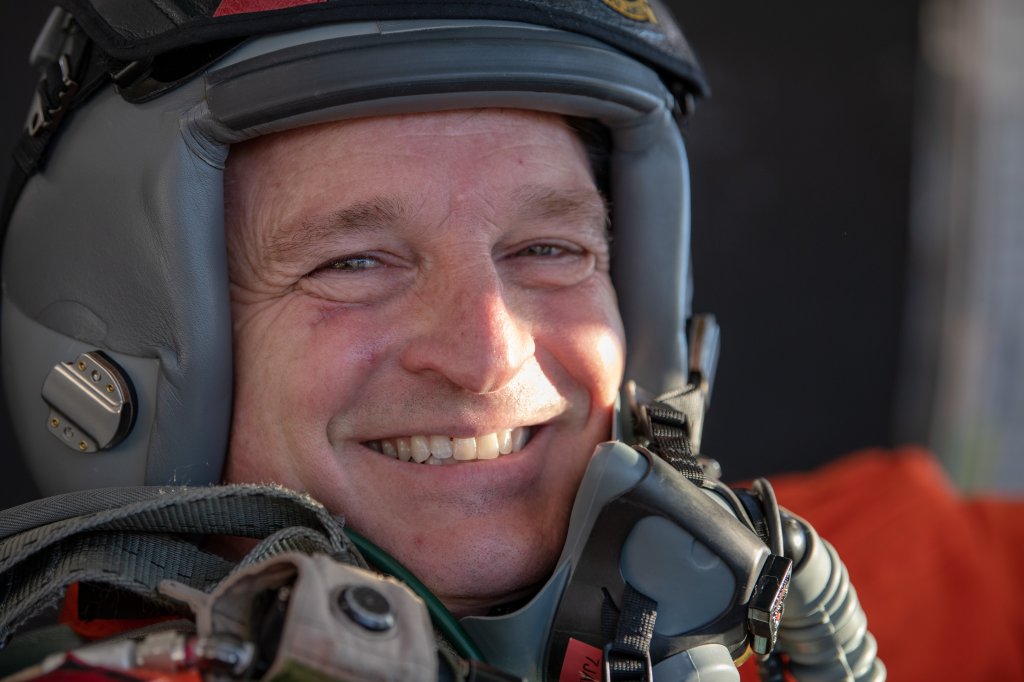
During his interview with TWZ, the highly experienced aviator talked about the historic flight in the rare TU-2S trainer, the future of the program, and the Dragon Lady’s enduring legacy.
Some questions and answers have been lightly edited for clarity.
Q: Tell me about how the record-setting flight came about.
A: Well, you said you’re a bit of a U-2 nerd. I think you’re talking to the biggest U-2 nerd in the world. I’ve been flying the airplane since 1993, and I am a die-hard proponent of our mission and of the U-2 as a platform for the mission. So I’m always looking for ways to promote the Dragon Lady. And I realized several years ago that the untapped capabilities of the aircraft, the range that we can fly, would easily allow us to fly a route through all 48 lower states. And I introduced that idea to my leadership 11 years ago, and I didn’t really get any traction. But more recently, and I think probably because we’re coming up on – well, we just celebrated the 70th anniversary of the first flight of the U-2 – our leadership was more interested in something that would highlight the aircraft’s remarkable capabilities. And so when I reintroduced the idea, it was accepted. And I drew out a rough sketch of the route that I thought we should fly, and I took it to our mission planner, and he worked his magic on it, finished it a bit, and that’s how it came to be.
Q: Was the 70th anniversary the biggest factor pushing it forward?
A: I think that was the sort of emotional push that got it approved. On any other given day, it would have just been a stunt. But we were able to celebrate the 70th anniversary of the aircraft, and call attention to it and remind people that this airplane has been providing critical information to our nation’s decision makers for seven decades, and that it continues to and in fact, it does the job better now than it ever has in the past, because it just continues to improve. The airplane today is a much more capable aircraft than it was back when it was first introduced. So it was gratifying to me that we got a lot of people on board who all wanted to be part of the effort. Everyone’s pretty excited about supporting the whole mission, making it work.
Q: What can you tell me about how you prepared for this flight, mentally and physically? And can you walk me through the pre-flight preparations? Was it different than regular flights?
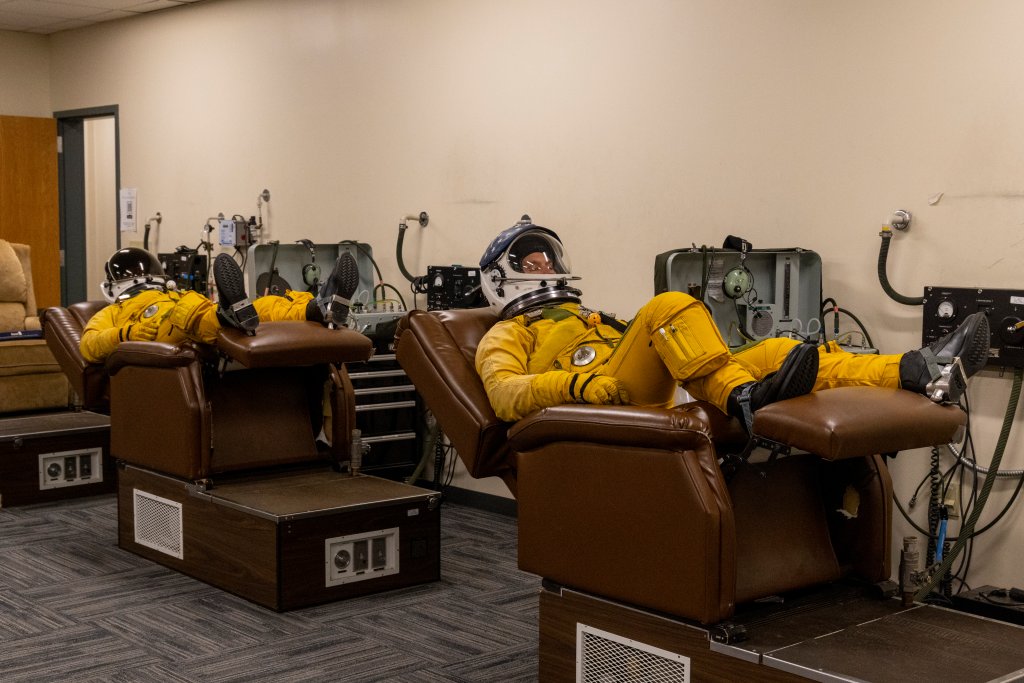
A: I worked to move my sleep schedule a bit since we were taking off at night, and we do typically alter our diet before high flights like this, so that we don’t want to carry anything in our stomachs that’s going to produce a lot of gas because we’re at a lower pressure altitude. So physically, we do prepare by trying to sync up our sleep schedule and trying to alter our diet a bit. Mentally, I think it’s just something probably similar to what long-distance runners will do. You start with a shorter run, and you get used to that, and then you run a little further. And we train our pilots that way. Their first flight only lasts about three and a half hours. And then later in their training, they fly four and a half, five and a half, six and a half. And then eventually we start flying the longer duration, eight- and 10- and 12-hour missions.
Q: How important was it to fly the two-seat TU-2S for this record-setting flight?
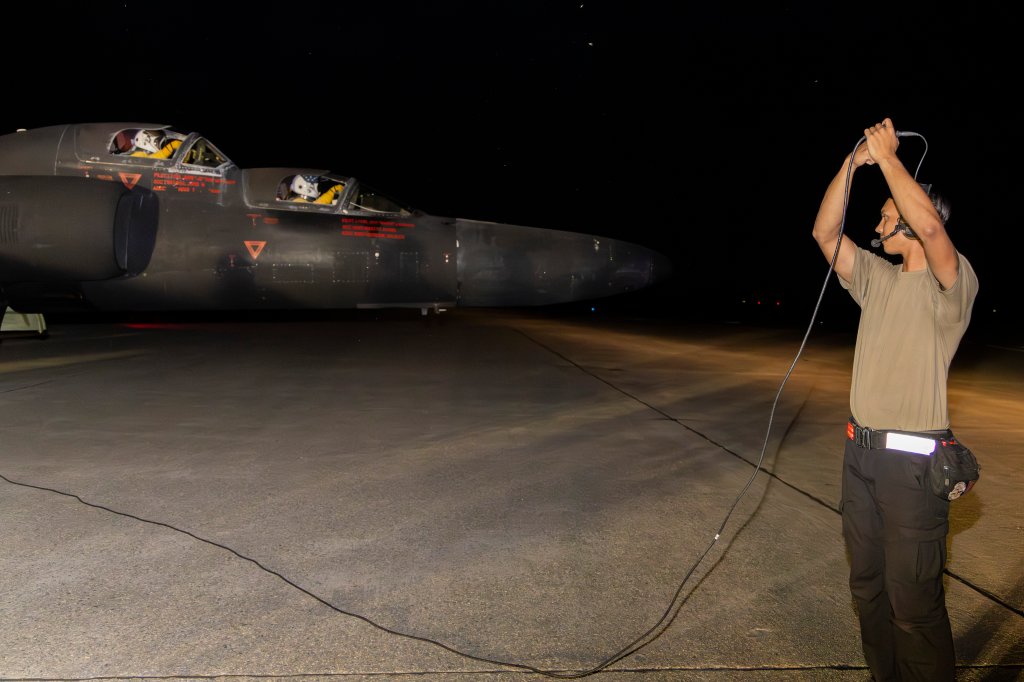
A: Flying the two-seater allowed us to use the two-pilot duty day restrictions, which are longer than the single-pilot limits.
Q: Did the parameters of this flight change the requirements for either the aircraft or the flight suits and if so, how?
A: This was just an extrapolation of what is done by the U-2 and its pilots every day. No alterations to any equipment were required.
Q: Talk about how the flight maxed out the operational range of the U-2 and placed the pilots at the edge of their physiological limits.
A: Well, that might be a little sensational.
Q: I read that in the public affairs office write-up of the historic flight.
A: I know we like to make things sparkle a bit. The truth is that we didn’t really max out the range of the aircraft. I could go out and do this again next week and make the airplane fly further and longer. The true restriction was on our allowable flight duty period, because the human being is the weak link here. We’re only allowed to fly at that altitude for a certain length of time. So that was the true limitation. Indeed, the aircraft itself could fly longer than the pilots are allowed to.
Q: Was that an issue, flying that long and that high?
A: That was the restriction that determined what route we could take. What limited the length of the sortie was our allowable duty period. But honestly, Jethro, the other pilot and I, were both quite comfortable. We both flew slow, long sorties before. Not quite this long, but we were both very comfortable. At no point did either one of us ever feel like, ‘Oh, my God, when is this going to be over?’ We were having a good time the entire sortie. It was fun just watching the world go by underneath. The first few hours it was dark and we were treated to thunderstorms, which is always entertaining, because it’s like watching fireworks, except you’re looking down instead of looking up.

Q: What were the biggest challenges of this flight?
A: I suppose the first challenge was coming up with a route that would definitely go through each of the 48 states. It had to be kind of a zig-zaggy route. After that, we needed to make sure that we would always be within range of a divert base, which we were easily. Honestly, the ability of the aircraft to complete the mission, wasn’t ever really the issue. It was whether or not we would get approval, that was probably the biggest hurdle to overcome. You know, how are we going to justify whatever risk you think this is? And I think that the way we overcame that was with very meticulous mission planning. We showed that the risks were all very manageable. We always had someplace we could duck into if we had to. The pilots were the two most experienced pilots available, and the aircraft was reliable. So the risk was really, in my mind, relatively low, and I think that’s the conclusion everybody else came up with as well.
Q: What factors kept you from achieving the altitude record as well?
A: Well, we just had a minor – I’ll just say a minor performance issue. It’s not a normal thing. It was something specific to this flight. And as I said, if we did this again next week, we could go out and fly further, longer and higher.
Q: Can you provide more details about what that issue was?
A: No, not really.
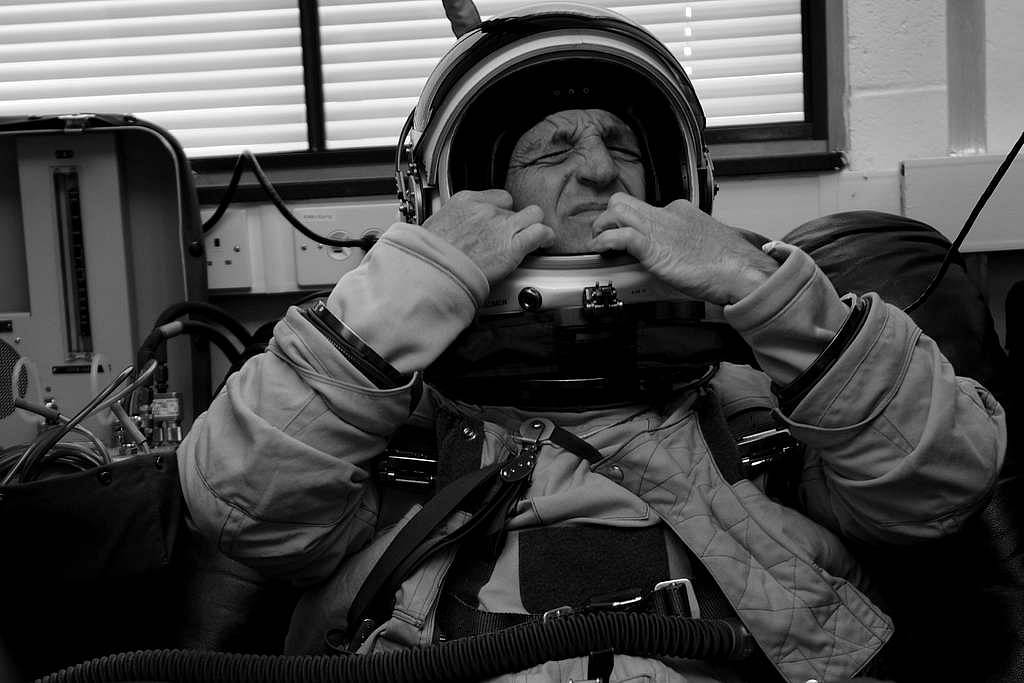
Q: How do you eat and relieve yourself on a 14-hour flight stuck inside a space suit and helmet?
A: Well, the same way that the guys do on their standard U-2 missions. We have a small porthole in the helmet that you can push a straw through, and we carry bottles of water or Gatorade with us to drink, and we carry tube food, which kind of looks like giant toothpaste tubes full of blended meals. The single-seat operational aircraft has a heater. They can actually heat their meals up so they have yummy entrees like beef stroganoff and Chicken à la King and things like that. We don’t have the heaters in the training aircraft, the two-seater, so I went with applesauce and chocolate pudding.
Q: So how do you get rid of that?
A: We wear a device that allows us to relieve ourselves into a tank that’s under the floor of the cockpit.
Q: Any operational parts of this mission?
A: There was nothing operational about this sortie; it was strictly for training.
Q: What’s the hardest thing about landing the U-2?
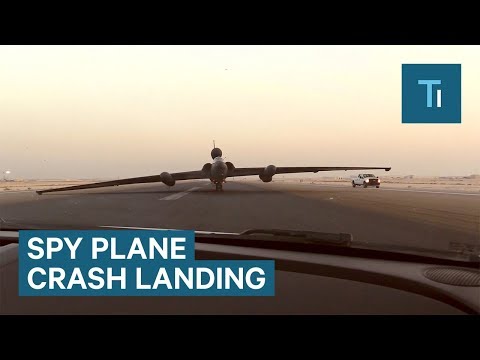
A: It’s got an unconventional landing gear, as you’ve seen, with the main gear in front of the center of gravity and a tail wheel that steers, and then no gear under the wing until after you land, and then they put those little pogos in. So landing the airplane is a challenge because at idle, it still puts out several hundred pounds of thrust, and with over 1,000 square feet of wing area, it just wants to fly. Especially when it gets down into ground effect. So, it is a particularly difficult airplane to get to stay on the ground, but that’s what we train for.
Q: What is the future of the U-2 right now? Is it still planning for sunset?
A: I have a funny story. I was a B-52 pilot, and I did a three-month temporary duty to another location, and happened to meet up with some U-2 pilots. And when I came back from my temporary duty, I told my boss, ‘Hey, I want to apply to that program. I want to be a U-2 pilot,’ not knowing that he had previously been a U-2 pilot. And he said, ‘Well, Cory, I’ll support that. I’ll go ahead and support your application to the U-2 program, but you should know that even if they accept you, and even if you go out there, you might find yourself looking for work because it’s a sunset program.’ And this was a discussion we had in the very early spring of 1993, so it’s been a sunset program for as long as I’ve known. As to its ultimate future, you would have to ask people with a lot more stars on their shoulders or a politician. I have no idea what’s going to happen next.
Q: What will happen to all the skilled pilots and maintainers who have worked on this program?
A: Well, you know, the Air Force prides itself on its people, you know? And they always will say it’s more the people than the tools. And so we’ve got great pilots here who have come to us from every other platform, in the military, from different services. We have pilots from the Navy and the Marines, as well as the Air Force. They all take Air Force commissions, but they come to us from all over the place. So we have fighter and tanker and bomber and trainer pilots who end up here as U-2 pilots, and when they leave here, they go on back to other tankers and fighters and bombers and trainers or they go on and fly for United or Delta or American or Southwest. I flew briefly for JetBlue, so I’m not too worried about what will happen with the pilots. A lot of our maintainers that we have right now came to us from the A-10 or the F-16, and some of them already know that their next tour will be with the F-35 or another platform. So our people are pretty flexible.
Q: The U-2 continues to gain capabilities even in the twilight of its career. Can you share a few newer capabilities that have kept it relevant? Is there anything else planned between now and sundown?
A: The highly efficient new engine allows the U-2 to carry more equipment and fly longer missions than were possible when I started flying back in 1993. The new ‘glass cockpit’ avionics provide a much higher level of situational awareness to the pilot and make it much easier to be flexible in the middle of a sortie.
Q: If the U-2 is given a reprieve, how could it help in a Pacific fight?
A: For seven decades, the U-2 has been the eyes and ears of the USAF, providing the timely, accurate information that our National Command Authorities need to make critical decisions in any conflict. That will continue to be true for as long as the U-2 remains in the inventory.
Q: It seems like there’s going to be a massive hole in strategic reconnaissance capabilities without the U-2. Do you concur, and is there a reason to save it?
A: I don’t want to be like the cavalry officers who thought tanks were stupid. If there is another method, another platform, another way of producing the absolutely critical information that we provide, if there’s a way of doing it faster, smarter, cheaper, better, safer, I’m all for that. And if there is another way of doing that, hopefully it’s a big secret.
Q: Can you give us your take on U-2’s legacy? Beyond its operational history, what did it mean to the USAF, the aviation community and the U.S. as a whole?
A: The U-2, of course was introduced during the Cold War and flown initially by the CIA. It was a purpose-designed aircraft specifically to take a payload up to high altitude and to be able to collect important information. And the fact that this airplane has continued to be the eyes and ears of our national command authority for seven decades is just a truly remarkable feat. And people think to themselves that this aircraft is the same thing that was flying in the 60s, and it really isn’t. It’s an entirely new airframe with a new cockpit, new engine, and, of course, sensors that are always cutting edge. So it’s more like a restomod, you know, it has that cool, sort of 60s, sexy styling to it, but it’s really an entirely new airplane on the inside. And it’s a tremendous tool, and I think, will be looked back on as one of the best aircraft and one of the best investments that the Air Force has ever made.
Contact the author: howard@thewarzone.com
Loading comments…
Comments couldn’t be loaded. Please refresh the page.