
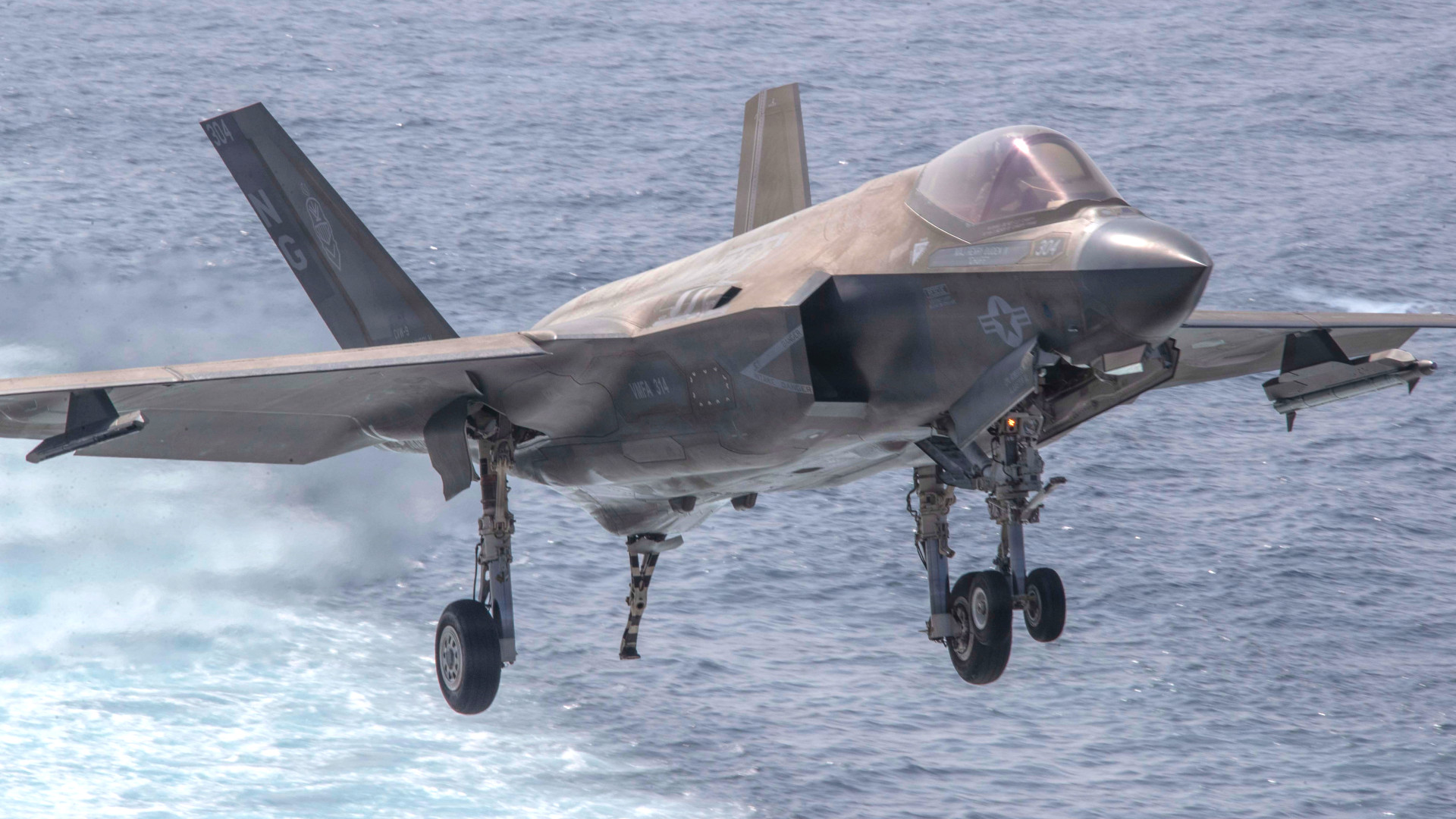
An F-35C Joint Strike Fighter flying from the supercarrier USS Abraham Lincoln has shot down an Iranian drone said to have “aggressively approached” the ship. Separately, American officials say that small boats and a drone belonging to Iran’s Islamic Revolutionary Guard Corps (IRGC) harassed a U.S.-flagged merchant ship transiting the Strait of Hormuz. All of this comes amid a major ongoing U.S. military build-up in the region aimed squarely at Iran, as well as reports that American officials could be set to meet with their Iranian counterparts later in the week.
Reuters was first to report on the F-35C downing the Iranian drone, which was reportedly a Shahed-139. The Shahed-139 is a design roughly in the same class as the U.S. MQ-1 Predator, which could potentially carry small munitions. The Nimitz class USS Abraham Lincoln and elements of its strike group arrived in the U.S. Central Command (CENTCOM) area of responsibility last month after being ordered to head to the region from the Pacific.
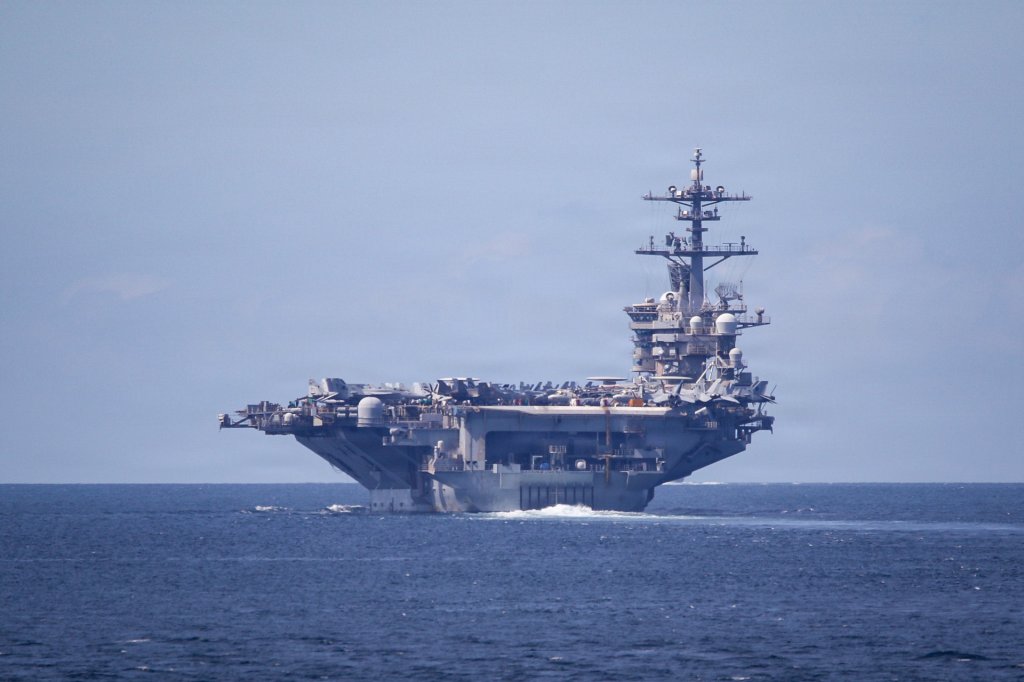
“An F-35C fighter jet from Abraham Lincoln shot down the Iranian drone in self-defense and to protect the aircraft carrier and personnel on board. No American service members were harmed during the incident, and no U.S. equipment was damaged,” U.S. Navy Capt. Tim Hawkins, a spokesperson for U.S. Central Command (CENTCOM), said in a statement to TWZ. “The unmanned aircraft aggressively approached a U.S. Navy aircraft carrier with unclear intent.”
“USS Abraham Lincoln (CVN 72) was transiting the Arabian Sea approximately 500 miles from Iran’s southern coast when an Iranian Shahed-139 drone unnecessarily maneuvered toward the ship,” Hawkins added. “The Iranian drone continued to fly toward the ship despite de-escalatory measures taken by U.S. forces operating in international waters.”
What weapon the F-35C used to down the Iranian drone is unknown. The carrier-based version of the Joint Strike Fighter can be armed with AIM-9X Sidewinders and AIM-120 Advanced Medium Range Air-to-Air Missiles (AMRAAM), and a 25mm gun pod, as well as various air-to-surface munitions. F-35Cs have been employed in the counter-drone role in the region in the past, downing uncrewed aerial threats launched by Iranian-backed Houthi militants in Yemen last year.
U.S. Marines also notably used a counter-drone vehicle lashed to the deck of the Wasp class amphibious assault ship USS Boxer to knock down an Iranian drone as the ship transited the Strait of Hormuz back in 2019. In that instance, the uncrewed aircraft was described as having come within a “threatening range” of the Boxer.
As a general aside, drones inherently present a lower risk of escalation because there is no danger of crew on board being harmed. This also has impacts on the risk calculus for employing uncrewed aerial systems more provocatively, as well as shooting them down.
At the same time, U.S. operations in and around the Red Sea in recent years have underscored the very real threat that drones, and specifically ones of Iranian origin, present to American carriers and other warships. The Houthis in Yemen have actively targeted American naval vessels with kamikaze drones, as well as anti-ship ballistic and cruise missiles, in the past.
“During a separate incident hours later in the Strait of Hormuz, Iran’s Islamic Revolutionary Guard Corps (IRGC) forces harassed a U.S.-flagged, U.S.-crewed merchant vessel lawfully transiting the international sea passage. Two IRGC boats and an Iranian Mohajer drone approached M/V Stena Imperative at high speeds and threatened to board and seize the tanker,” Hawkins, the CENTCOM spokesperson, also said in his statement to TWZ. “Guided-missile destroyer USS McFaul (DDG 74) was operating in the area and immediately responded to the scene to escort M/V Stena Imperative with defensive air support from the U.S. Air Force.”
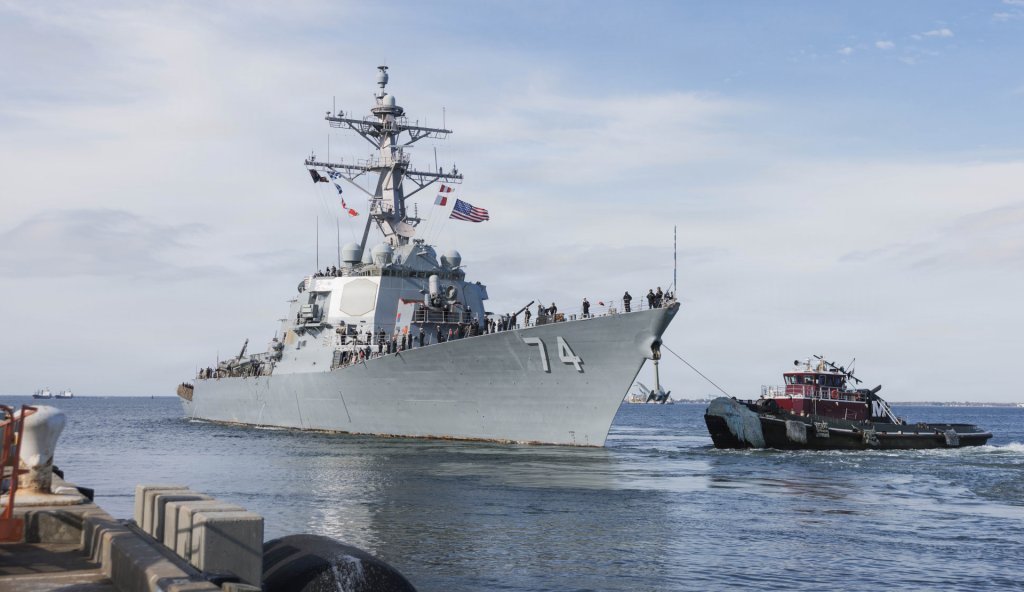
“The situation de-escalated as a result, and the U.S.-flagged tanker is proceeding safely. CENTCOM forces are operating at the highest levels of professionalism and ensuring the safety of U.S. personnel, ships, and aircraft in the Middle East,” Hawkins added. “Continued Iranian harassment and threats in international waters and airspace will not be tolerated. Iran’s unnecessary aggression near U.S. forces, regional partners and commercial vessels increases risks of collision, miscalculation, and regional destabilization.”
The Joint Maritime Information Center of the United Kingdom Maritime Trade Operations (UKMTO) office has also issued a notice regarding what appears to be the same incident, which also does not name the ship that was harassed. Iran has a long history of harassing (and even seizing) foreign commercial and naval vessels in and around the Persian Gulf, especially at times of increased geopolitical friction with the United States.
As already noted, this all comes as U.S. military forces continue to flow into the Middle East. There have been reports for weeks now about the prospect of new American strikes on Iran, at least in part in retaliation for the country’s violent crackdown on recent nationwide protests. More recently, U.S. President Donald Trump has voiced interest in reaching some kind of deal with authorities in Iran, including over the future of that country’s nuclear program. There are reports that U.S. and Iranian officials could meet as soon as Friday in Turkey.
“We have ships heading to Iran right now, big ones — the biggest and the best — and we have talks going on with Iran and we’ll see how it all works out,” Trump said just yesterday while speaking to members of the press at the White House. “If we can work something out, that would be great and if we can’t, probably bad things would happen.”
How today’s events will impact U.S. decision-making going forward remains to be seen.
Update: 2:52 PM Eastern –
Despite the incident, Trump still prefers a diplomatic solution to the tensions with Iran, according to the White House.
Trump “remains committed to always pursuing diplomacy first,” White House Press Secretary Karoline Leavitt told Fox News. “But in order for diplomacy to work, of course, it takes two to tango. You need a willing partner to engage. And so that’s something the president and Special Envoy Witkoff are exploring and discussing right now.”
Witkoff, she added, “is set to have conversations with the Iranians later this week. Those are still scheduled as of right now, but of course, the president has always a range of options on the table, and that includes the use of military force. The Iranians know that better than anyone. Just look no further than the highly successful Operation Midnight Hammer, which took not just Iran but the entire world by surprise and completely obliterated their nuclear capabilities earlier last year.”
Update: 3:35 PM Eastern –
The official Iranian Tasnim news outlet reported that the drone in question was actually a Shahed-129. As we have previously reported, it is similar to an MQ-9 Predator drone.
“The Shahed 129 drone was on its usual and legal mission in international waters, engaged in reconnaissance, monitoring, and filming, which is considered a normal and lawful action,” Tasnim posited. “This drone successfully sent its reconnaissance and identification images to the center but then lost communication. However, the reason for this communication loss is being investigated, and details will be provided once confirmed.”
The War Zone cannot independently verify Tasnim’s claims.
Contact the author: joe@twz.com
Loading comments…
Comments couldn’t be loaded. Please refresh the page.