
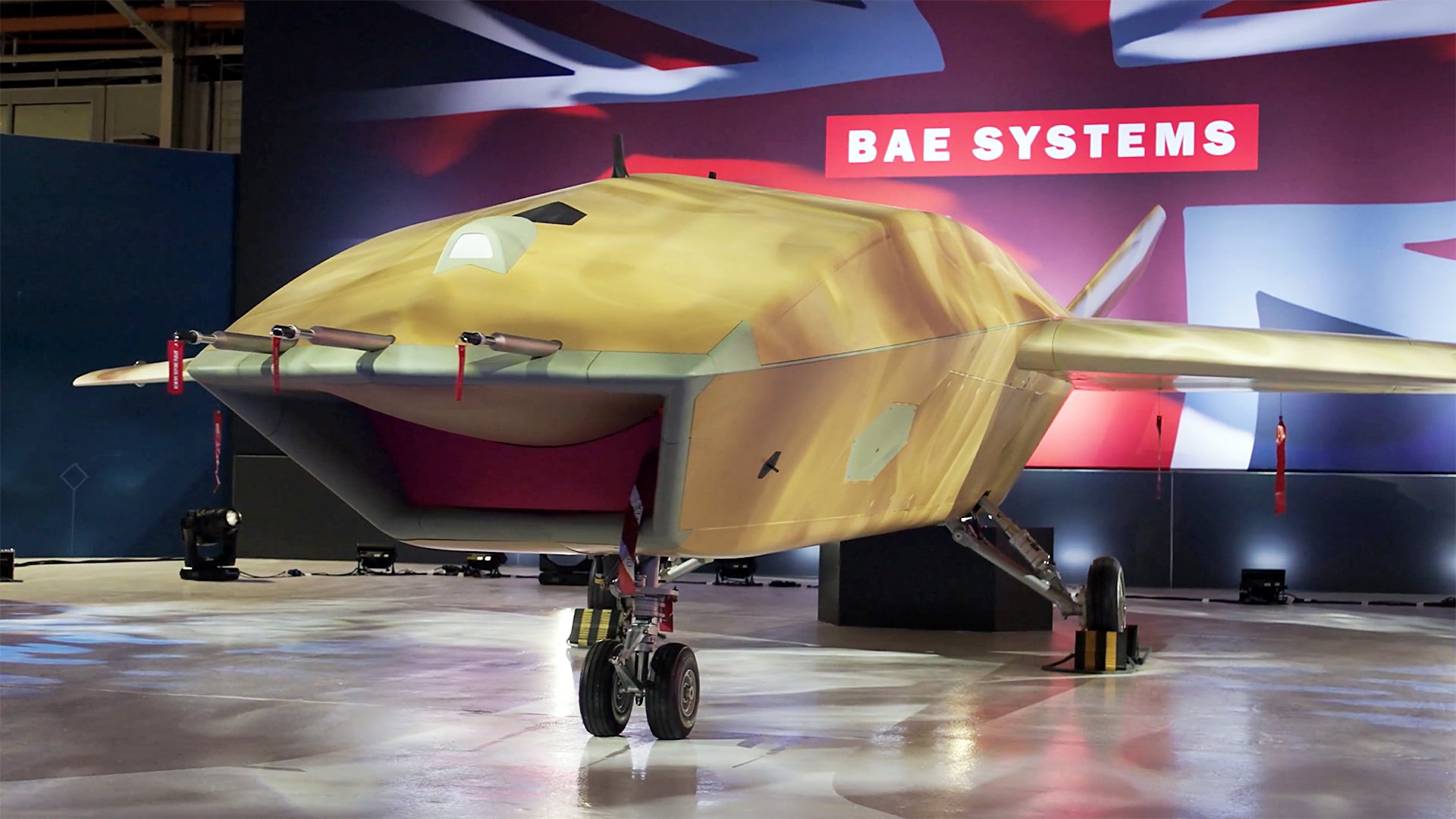
BAE Systems revealed the Brontanax today, a new collaborative combat aircraft (CCA) loyal wingman drone designed for use by the U.K. Royal Air Force. Its unveiling comes less than a week after the service launched its new CCA program, named Storm Fighter, as it seeks to build what it describes as “Europe’s first sixth-generation air force.”
The Brontanax prototype was presented today at the Farnborough International Airshow in England, during an event attended by the United Kingdom’s newly appointed Defense Secretary Wes Streeting. The prototype — rather than a technology demonstrator — was built in secret at BAE Systems’ facility in Warton, Lancashire.
The aircraft is now being prepared for ground-based testing at Warton prior to flight testing within U.K. airspace, and there are reports that it could take part in a NATO exercise as early as next year.
The appearance of the Brontanax also comes a day after BAE Systems revealed details of how it’s exploring using the Eurofighter Typhoon to control CCAs as part of a broader effort to roll out new capabilities for the jet. Ultimately, however, it appears that the Brontanax effort will also, at the very least, inform the kinds of drones that will also accompany the U.K. F-35 and the future Tempest combat jet into battle.
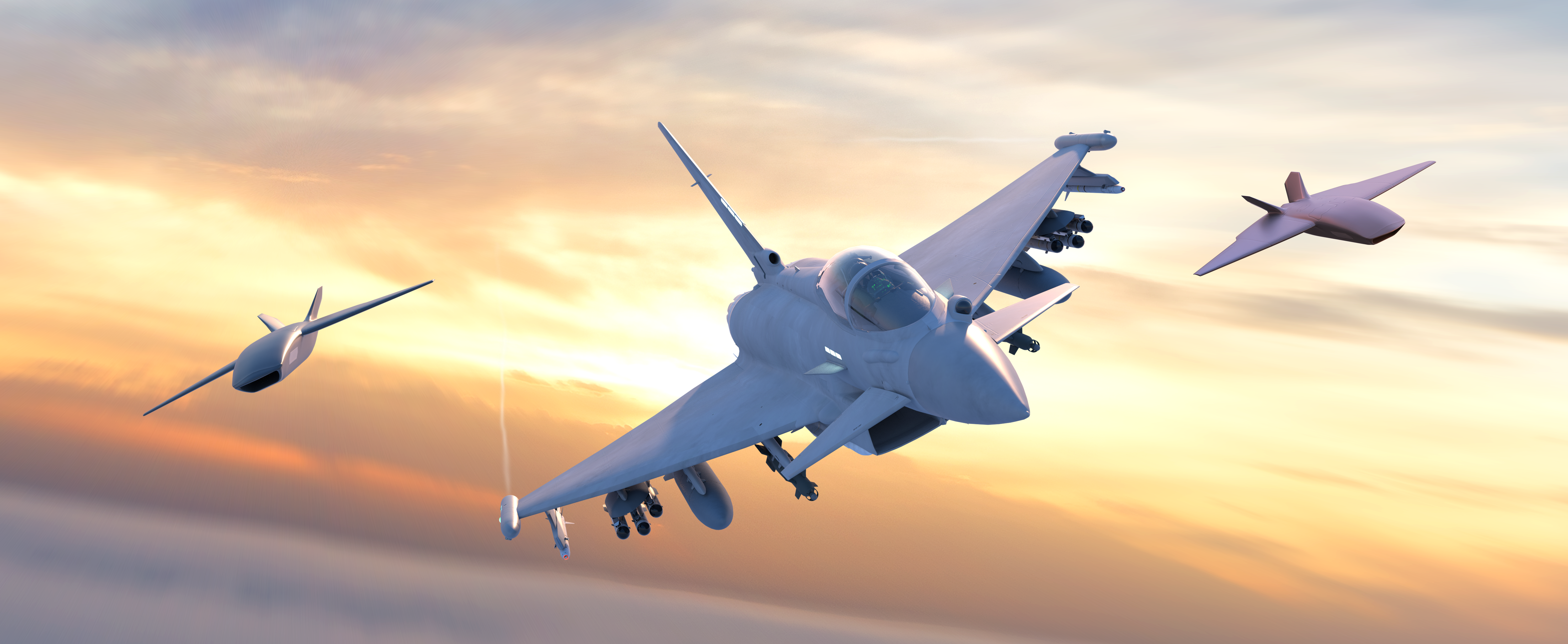
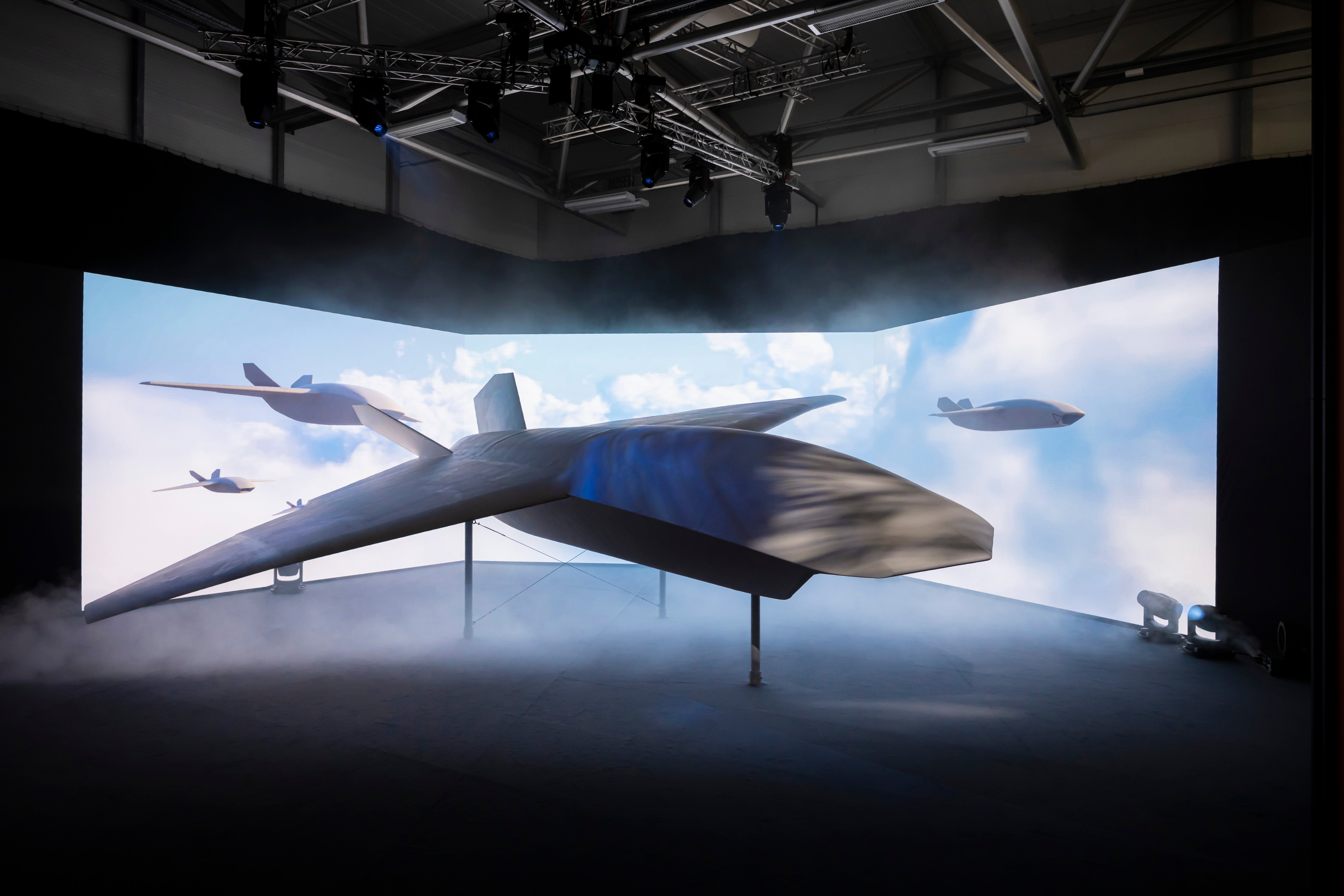
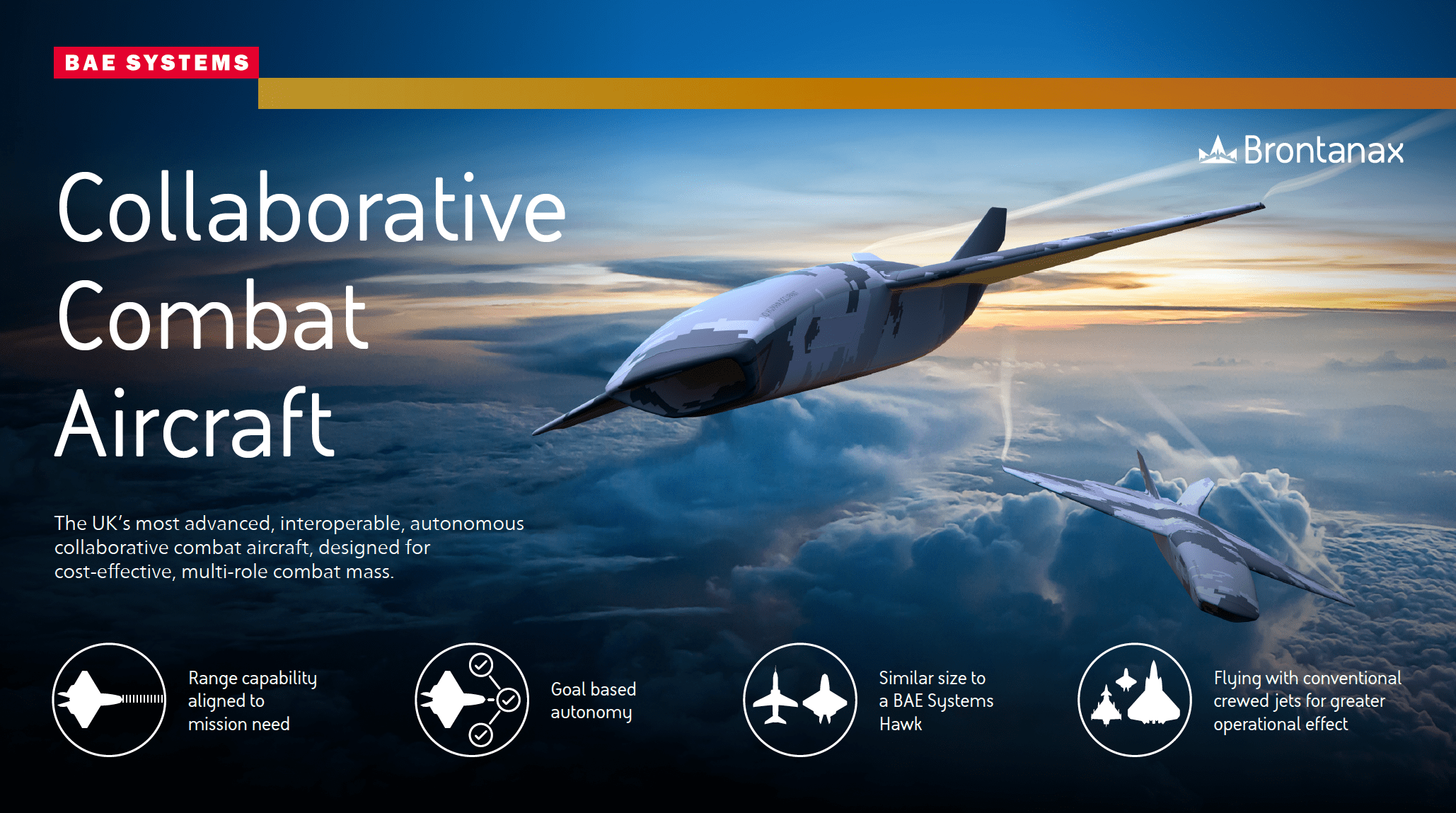
BAE Systems says the Brontanax is roughly the size of its Hawk advanced jet trainer, which is around 41 feet long, with a wingspan of approximately 33 feet. The manufacturer did not, however, provide details of its planned performance, nor of its critical autonomy system, and the degree to which it will be able to perform missions and functions, absent from human control.
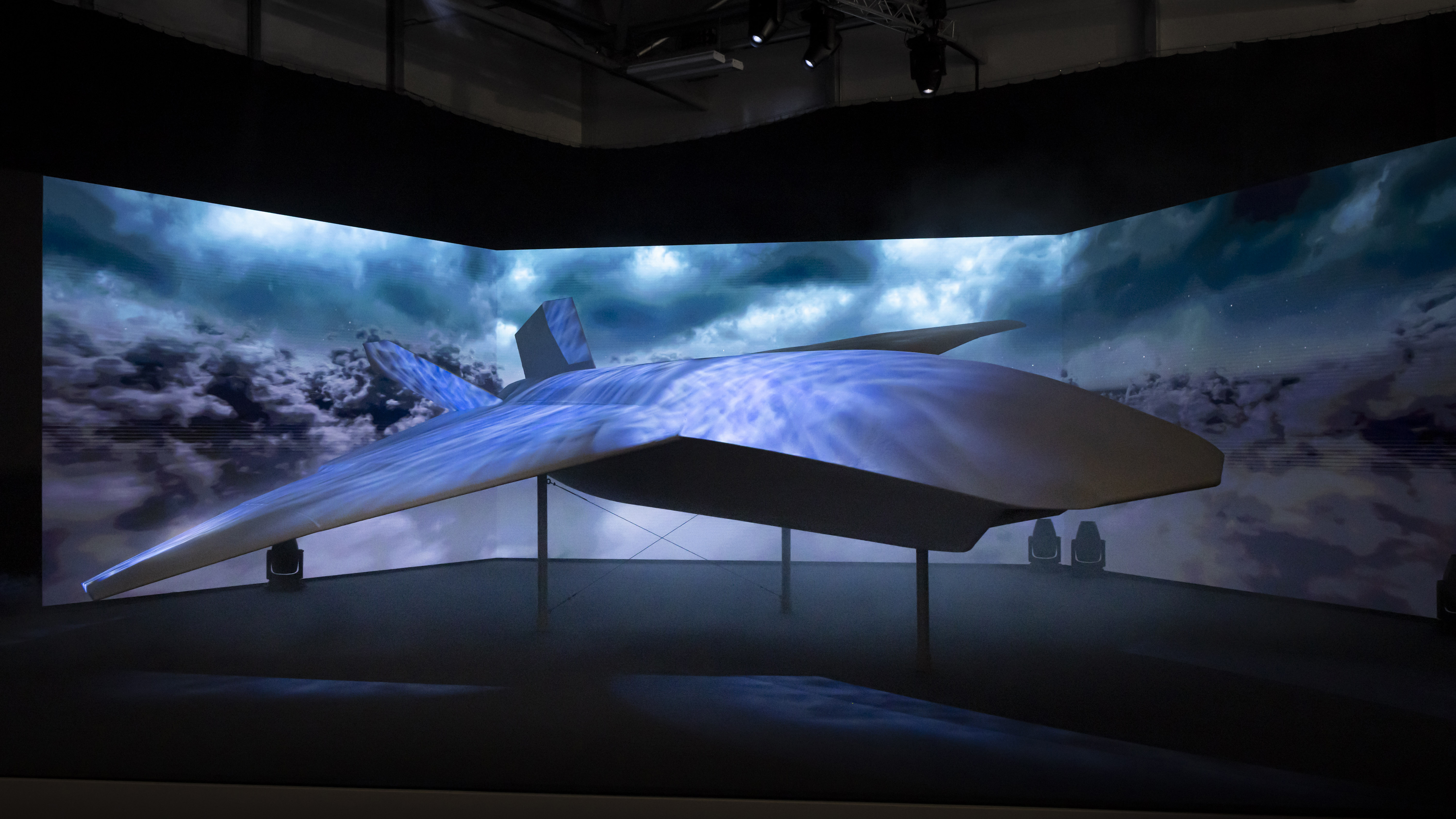
The name Brontanax means “thunder king” in ancient Greek.
We had already gotten a look at the outward appearance of the Brontanax when BAE Systems published a rendering of a pair of the drones when the Storm Fighter program was launched last week.
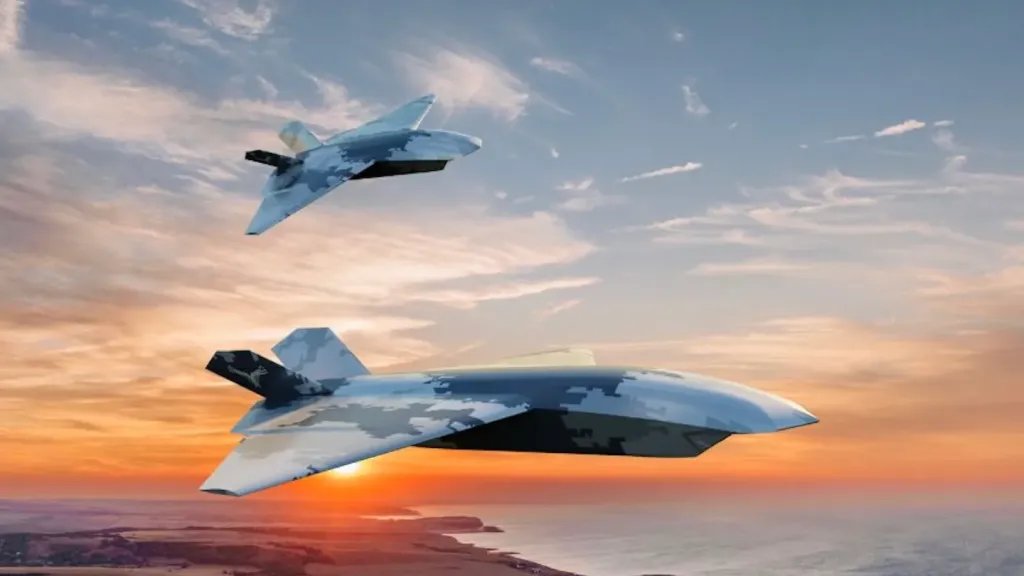
As we stated at the time, the notably stealthy aircraft has some features reminiscent of renderings of the Tempest, including large-area trapezoidal wings and cropped outward-canted vertical stabilizers. There is a prominent chine line and a faceted fuselage. It also features a shovel-like nose plus low-observable apertures. The drone has a wedge-shaped ventral air intake, partially shrouded by a prominent ‘lip,’ and this feeds a serpentine inlet. The end result is not likely to be a very low observable (VLO) overall design, but certainly low observable (LO) one.
Now that we have seen the finished Brontanax, it is also apparent how deep the fuselage is, suggesting generous internal space for fuel and stores. The landing gear, with a twin-wheel nose unit and substantial mains, looks notably robust to deal with heavier loads, likely with an eye toward carrier launch and recovery and austere airfield operations.
A front view of the drone reveals a blister in the nose, likely housing a camera for flight testing, and there are data probes for the same function. It looks like there is a low-observable aperture behind that blister, which could accommodate an infrared search and track system, or other sensor, in an operational configuration.
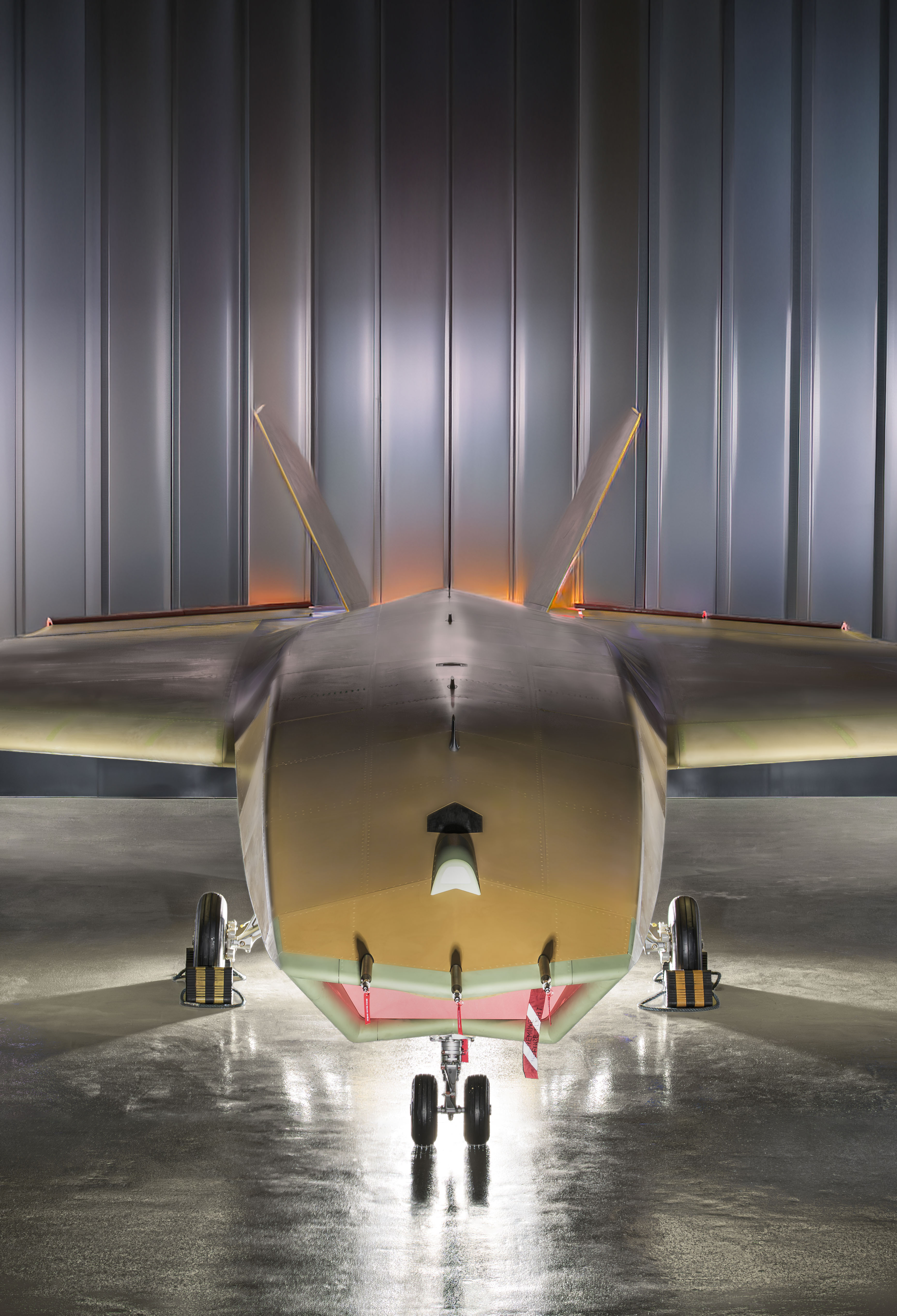
Initially, the Brontanax prototype is fitted with a Williams turbofan engine, but thought is also being given to using Rolls-Royce’s Orpheus powerplant family.
In terms of missions, BAE Systems says the Brontanax is intended to provide electronic warfare, precision strike, and air-to-air capabilities. Previously, Luke Pollard, the U.K. minister for defense readiness and industry, had said that the Storm Fighter program would “deliver guardian angel and attack dog drones.”
BAE Systems has also described an experimental scenario in which CCAs armed with very long-range Meteor air-to-air missiles extended the reach, effectiveness, and the combat mass of Typhoons in the air defense role. BAE Systems officials confirmed today that the Brontanax drone’s internal weapons bay is compatible with all weapons currently in service with the Royal Air Force.
The focus on electronic warfare reflects growing U.K. interest in this area, with other examples including Storm Shroud, which will provide the Royal Air Force with a new uncrewed electronic warfare drone that will enter service this year. Last week, the Royal Air Force announced another new EW drone, named Storm Chrome.
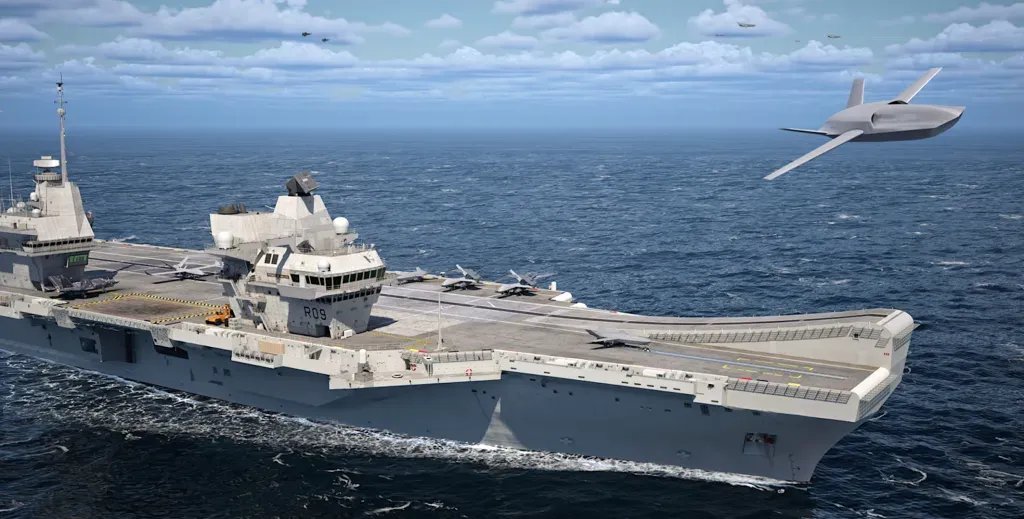
Surprisingly, the ability of the Brontanax, or a variant of it, to operate from aircraft carriers is not referenced beyond a short clip in a BAE Systems video. Under Project Vanquish, the Royal Navy plans to demonstrate a fixed-wing, short takeoff and landing autonomous collaborative platform (ACP) from a Queen Elizabeth class aircraft carrier before the end of 2027. The ACP terminology has been used in the United Kingdom in the past and is broadly equivalent to CCA, and BAE Systems may well plan to adapt the Brontanax for this naval requirement, or a follow-on one, too.
Simon Barnes, the group managing director of BAE Systems’ Air sector, provided more details about the Brontanax, including the fact that, as well as being operated by a Typhoon pilot, the drone can be controlled by a mission commander on the ground.
An open architecture and modular design are intended to future-proof the Brontanax, making it easier to adapt to meet evolving threats, while maintaining operational relevance.
Although it hasn’t commented on its level of ‘attritability,’ BAE Systems is clearly looking to offer a lower-cost air combat platform that can also be produced at scale, if required. According to The Telegraph, the company says the Brontanax will come with a price tag around a quarter of that of the Typhoon. The unit cost of a Typhoon varies dramatically depending on where you look and from what time period. If using a general figure of $115M each, the drones would cost around $28.5M each. This is in line with the cost of CCAs being developed in the U.S., for instance. Still, all this depends on how the cost of the Typhoon is being calculated, and the price range can be pretty vast.
“We recognize armed forces are being challenged to meet the demands of speed, adaptability and scale,” Barnes said. “Our collaborative combat aircraft will provide the ability to extend the reach of crewed aircraft, generating greater combat mass at lower cost, while keeping pilots out of harm’s way.”
On an industrial level, the new CCA has been designed and built by BAE Systems’ FalconWorks, its rapid prototyping team, paid for using the company’s own research and development budget.
Cognizant of the fact that other companies, including more established CCAs, will also be competing for the Royal Air Force’s Storm Fighter requirement, BAE Systems is stressing the homegrown nature of its Brontanax.
“This capability represents a significant company investment in the U.K.’s future of air power and builds on our long-standing commitment to innovation,” Barnes explained. “Alongside supporting defense priorities, it will strengthen the U.K.’s sovereign defense ecosystem by creating opportunities for SMEs, suppliers and partners across the country.”
Competition is still likely to come from the United States, in particular, including the Boeing MQ-28 Ghost Bat, in which BAE Systems is also involved, and the British firm is also working in collaboration with Lockheed Martin’s Skunk Works division, which is also heavily involved in CCAs. Other U.S. pitches could come from Northrop Grumman, Kratos, or General Atomics, which has pitched to the United Kingdom a carrier-capable member of its highly modular Gambit drone family.
In its Defense Investment Plan, published last month, the U.K. government confirmed a $406-million investment in the Storm Fighter CCA program.
Since BAE Systems is already working alongside the Royal Air Force on its CCA effort, the Brontanax would appear to be well placed to win a domestic order, if the U.K. government is serious about fielding a sovereign loyal wingman capability as well as supporting local industrial capability. When it comes to low observable capabilities and stealthy drones, BAE Systems’ experience dates back many years, including a proof-of-concept UCAV testbed called Taranis.
![BAE Systems - Taranis Unmanned Combat Air Vehicle (UCAV) First Flight [1080p] thumbnail](https://i.ytimg.com/vi/znwU_4lLoGE/hqdefault.jpg)
Speaking today, Defense Secretary Streeting heralded the Brontanax as“a testament to the extraordinary talent and innovation across our sovereign defense industry.”
The Chief Of The Air Staff, Air Marshal Sir Harv Smyth, described the Brontanax as “a major step” toward the Royal Air Force’s ambition to become Europe’s first “sixth-generation air force.” He also said that the Brontanax prototype is expected to fly next year.
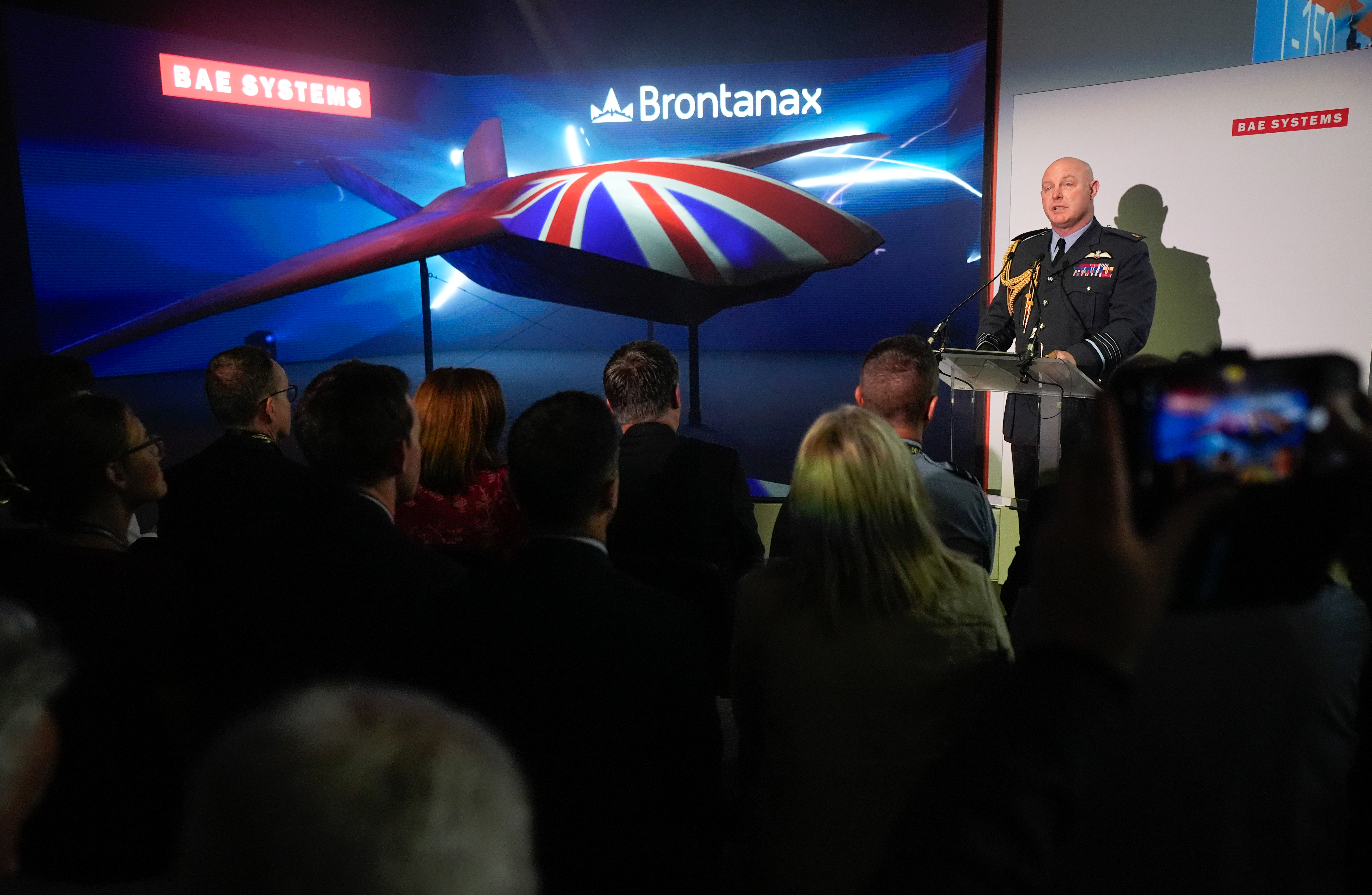
At this stage, the “sixth-generation air force” rubric is somewhat unclear, although Smyth described it in terms of an ecosystem in which “uncrewed air systems integrate seamlessly with our crewed platforms, exponentially increasing our survivability, our lethality, and ultimately our conventional deterrence.”
Whether the Brontanax ultimately enters Royal Air Force service remains to be seen. BAE Systems is entering an increasingly crowded field where other CCA developers already have years of flight-testing and autonomy work behind them, while integrating uncrewed aircraft with crewed fighters remains a major technical challenge. Australia, China, the United States and even Russia are ahead in terms of actual flight testing collaborative drones for fighter aircraft, so the pressure is on for the United Kingdom, especially as it grapples with fighter fleet-size constraints, which could be at least partially alleviated with the introduction of CCAs. At the same time, this drone could give the UK a banner sovereign airframe to export to allies around the globe, which could be extremely lucrative in the years to come.
All told, the appearance of the Brontanax is the clearest sign yet of Britain’s ambition to field a sovereign collaborative combat aircraft capability, underscoring the central role uncrewed systems are expected to play in the Royal Air Force’s future airpower vision.
Contact the author: thomas@thewarzone.com
Loading comments…
Comments couldn’t be loaded. Please refresh the page.