
In a significant development, Airbus has announced that its H145 twin-engine light helicopter is being developed in an uncrewed version, the U145. The move continues and expands the manufacturer’s work in the uncrewed helicopter space and reflects similar developments around the globe — most notably, an uncrewed version of the UH-72 Lakota, which is the U.S. Army’s variant of the H145.
The U145 was officially revealed today, ahead of the ILA Berlin airshow, starting this week, during which a full-scale mock-up will be displayed. Airbus says it is planning a first flight of the U145 — with a safety pilot onboard — before the end of this year, and is aiming for entry into service at the beginning of the next decade.
“With the U145, we are offering our customers an autonomous, uncrewed version of our H145 helicopter — combining the proven airframe, power and useful load of the H145 with the autonomy of a UAS,” said Matthieu Louvot, CEO of Airbus Helicopters, in a company media release. “To develop the U145 and its capabilities as a multi-mission UAS, we will be teaming up with leading autonomous mission partners to further expand the UAS ecosystem in Europe,” he added.
The U145 will have a maximum takeoff weight of around 8,400 pounds, and is described as a “mission-agnostic solution for civil and military applications, primarily high-volume cargo supply.” Airbus has announced the payload will be up to 2,600 pounds. In comparison, the uncrewed version of the Lakota, the MQ-72C Lakota Connector, will carry a maximum payload of around 4,000 pounds, although this includes slung loads. With that in mind, the U145 and MQ-72C will likely end up offering very similar payload capacities.
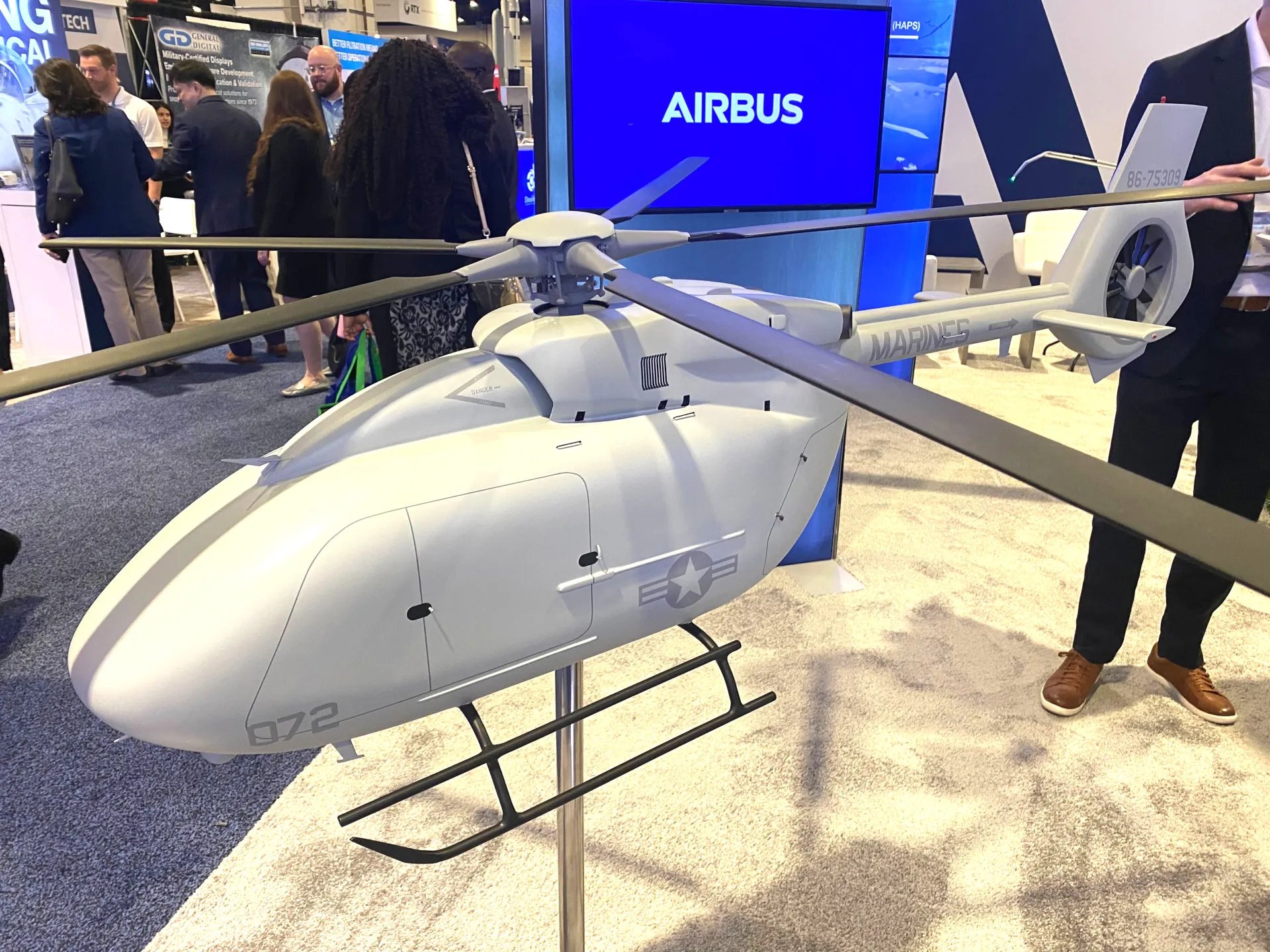
The MQ-72C is expected to be able to cruise at speeds of 135 knots out to ranges of at least 350 nautical miles, according to the Airbus website.
Already at this stage, the company is pitching the U145 for specific military roles, including armed scouting and surveillance. Airbus is also planning to adapt the U145 as a “drone mothership” that will carry “launched effects,” on which the company is partnering with European missile house MBDA. A similar concept is currently being pitched by Sikorsky, with its uncrewed version of the Black Hawk helicopter, dubbed the U-Hawk, which is also intended to be able to fire dozens of launched effects such as surveillance and reconnaissance drones and loitering munitions.
Airbus also envisages the U145 operating in conjunction with conventional helicopters as part of crewed-uncrewed teaming.
The U145 will offer full autonomy, Airbus says, being equipped with a specialized sensor suite and artificial intelligence. For an uncrewed logistics aircraft, the ability to autonomously navigate along a predetermined route using programmed waypoints would provide a practical foundation for autonomous operations. However, more advanced capabilities — such as dynamically adjusting flight paths and responding in real time to emerging threats or unexpected obstacles — would also be very valuable, especially when conducting resupply missions in contested or high-risk environments.
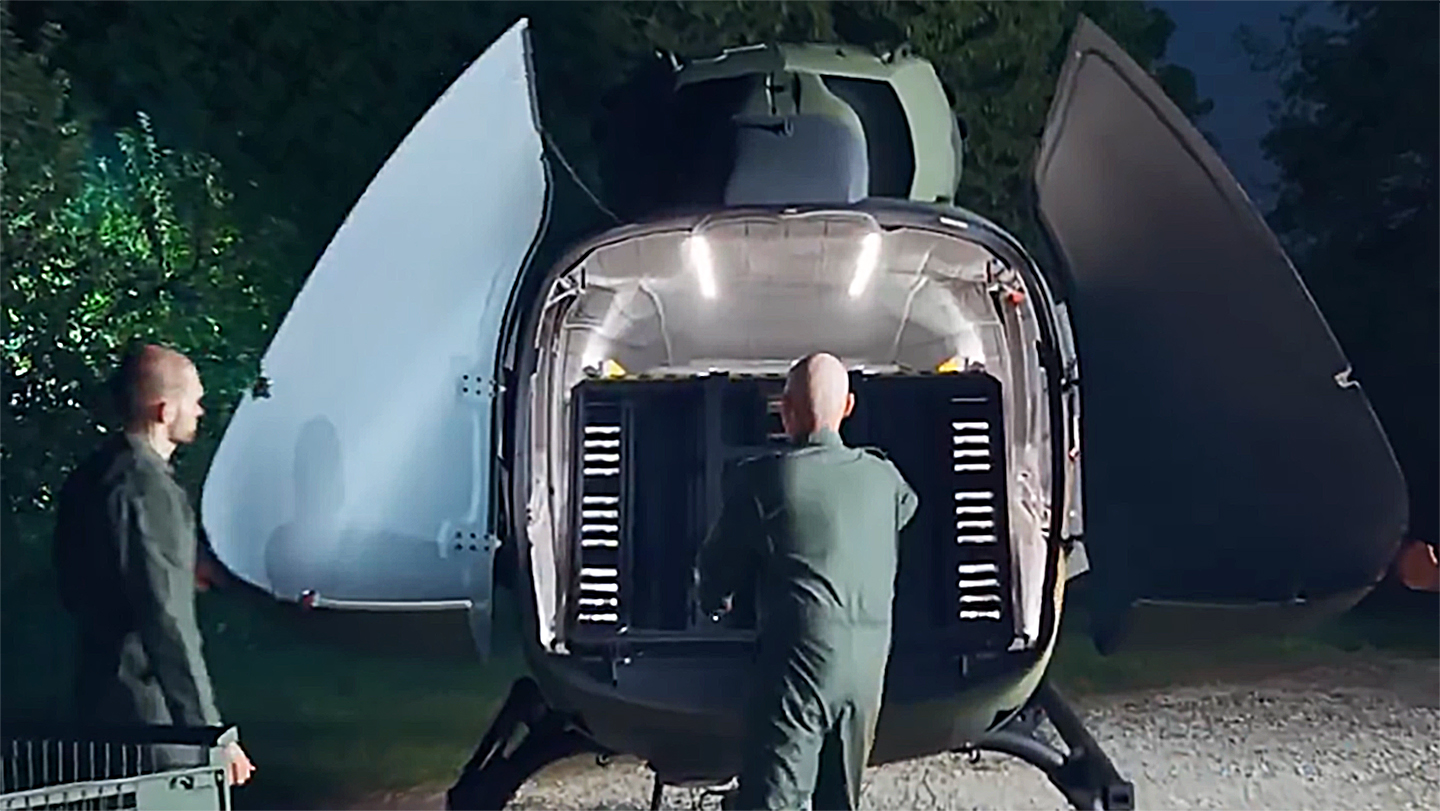
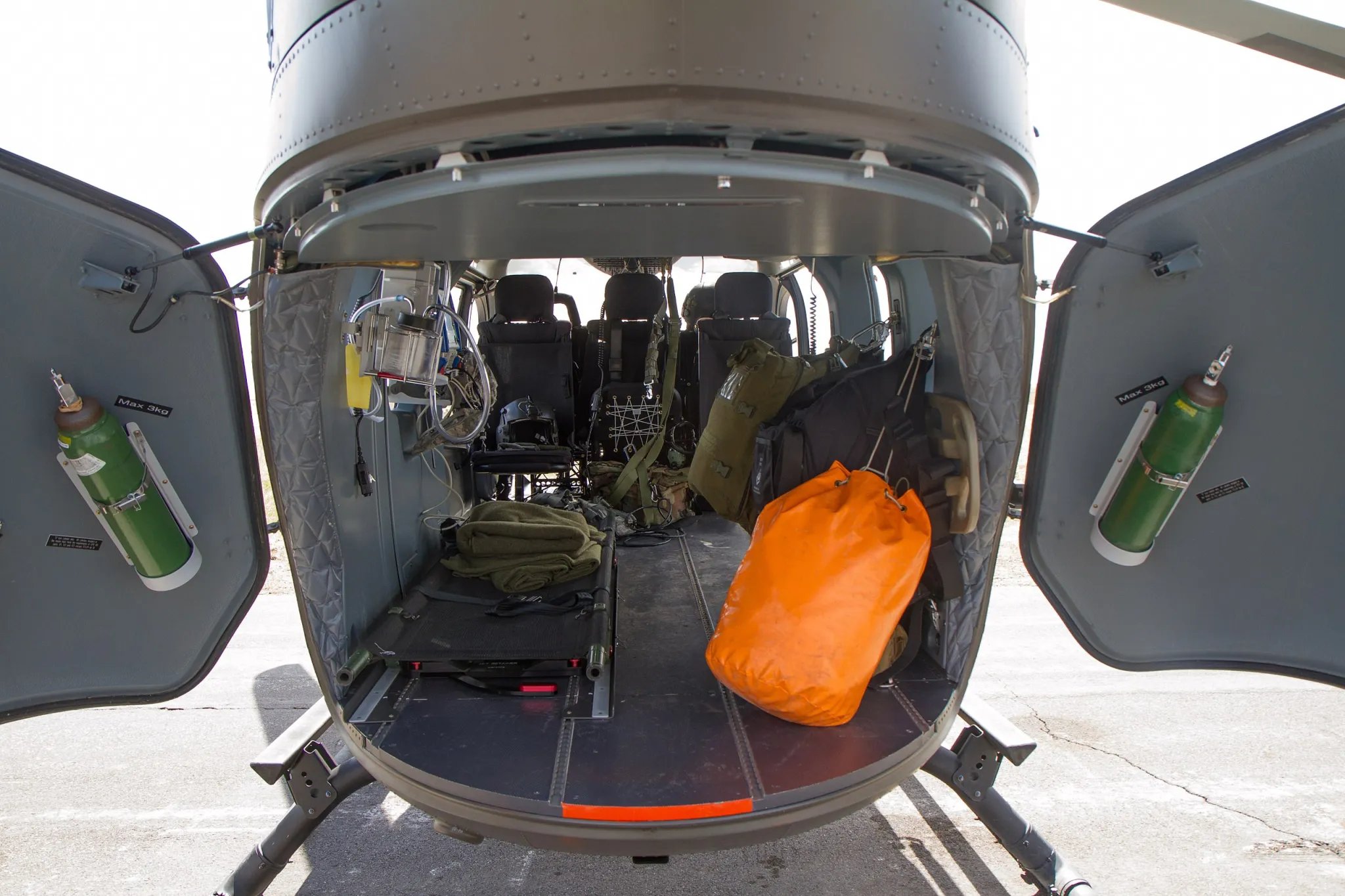
The U145 will have no physical cockpit, so it cannot be flown with human pilots onboard. Other significant changes include adaptations for cargo missions, including a clamshell nose door, a loading platform, and a dedicated cargo floor. The existing rear clamshell doors are retained, as are the cabin side doors. The same configuration has been adopted for the MQ-72C, and a pass-through cargo hold is a big advantage that other crewed helicopters in this class cannot match.
Other features of the new uncrewed helicopter will be carried directly over from the H145, more than 1,800 of which are currently in service.
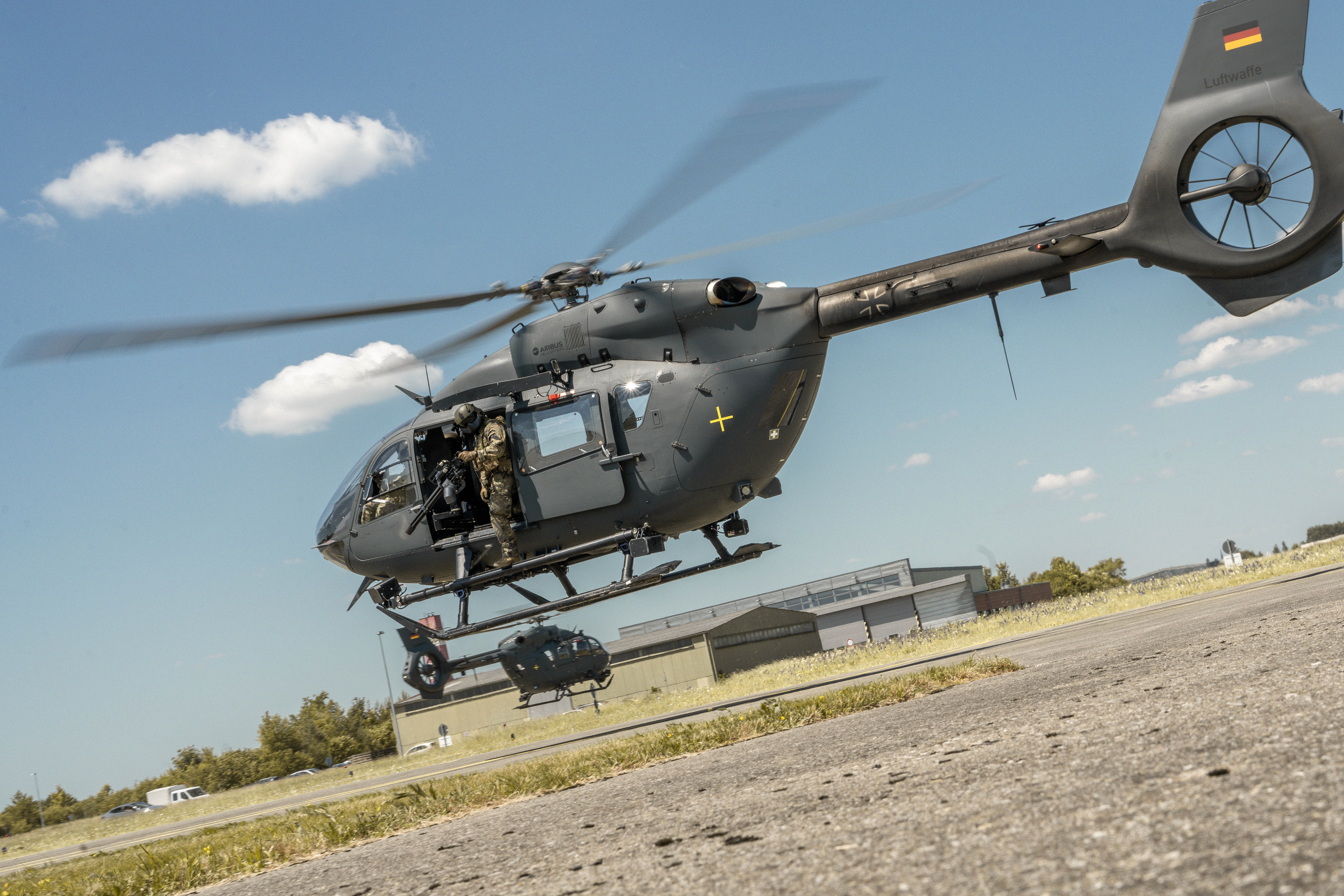
These features include a powerplant of two Safran Arriel 2E engines equipped with a full-authority digital engine control (FADEC) and a fenestron tail rotor.
The U145 is the next step in the manufacturer’s development of uncrewed helicopters. As such, it follows on from the smaller VSR700, a rotary-wing uncrewed air system which was derived from the crewed Cabri G2 light helicopter.
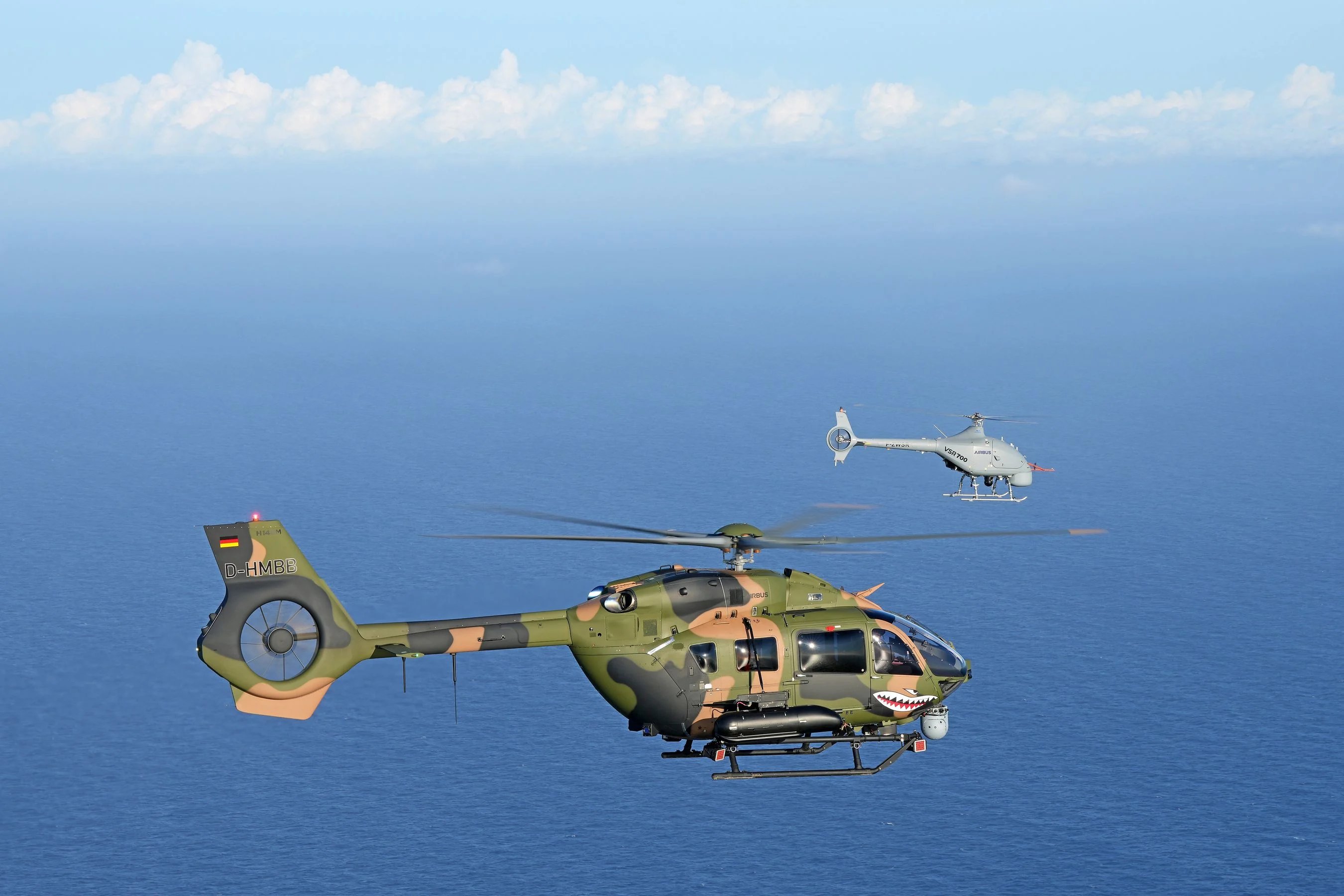
It is unclear what elements might be ported across from the MQ-72C, also called the Unmanned Logistics Connector (ULC), which is being developed separately by Airbus U.S. Space and Defense, together with its partners Shield AI, L3 Harris, and Parry Lab. Based on the U.S.-made UH-72B Lakota, the MQ-72C is similarly autonomous and is primarily aimed at the U.S. Marine Corps. You can read more about the MQ-72C in our previous coverage of the aircraft, here and here.

In the context of the MQ-72C, we have previously looked at how this platform fits with the U.S. Marine Corps’ vision for future fleets of cargo-carrying drones. The Marines see uncrewed logistics ‘connectors’ in the air and down below as essential for supporting future expeditionary and distributed operations, especially in the context of a possible future high-end fight with China in the Pacific.
Other U.S. efforts in this space include optionally crewed and uncrewed versions of the larger H-60 Black Hawk series. The U-Hawk demonstrator, a fully uncrewed version of the Black Hawk helicopter, is intended to carry cargo and deliver launched effects and similarly features clamshell doors in the nose. At the heavier end of the scale, Boeing has said its future plans for the H-47 Chinook include creating a path toward an uncrewed version of the aircraft.

However, these kinds of capabilities are increasingly being eyed by other services around the world, too.
With this in mind, Airbus is hoping to leverage the existing customer base for the H145, which has footprints on six continents. The H145 is already in service, or on order, with a growing number of international military operators for utility and light-attack missions. The uncrewed version maintains significant commonality, which will bring down support and maintenance costs.
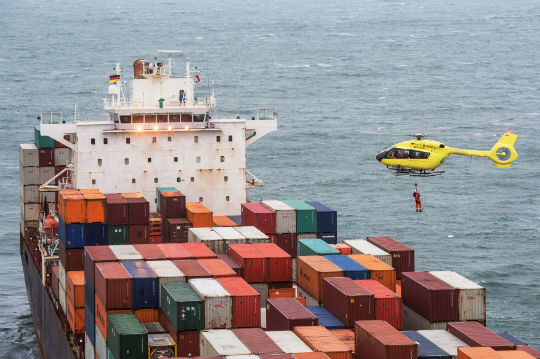
At the same time, the U145 has obvious commercial applications. Airbus highlights its suitability for roles like disaster management and firefighting, although it would also be ideal for cargo conveyance, especially remote resupply work and logistics support to offshore platforms and remote areas on land, for example.
An Airbus spokesperson told Breaking Defense that the U145 has not been developed for any specific national or European acquisition.
Undoubtedly, there is growing recognition in Europe, in particular, that changes in the geopolitical landscape mean that the continent cannot necessarily rely on the United States to meet its defense needs. Developing the U145 in addition to the MQ-72C aligns with Europe’s ambition to strengthen its sovereign capabilities.
With the U145, Airbus is betting that autonomous rotorcraft will become an increasingly important part of military operations. By leveraging a proven helicopter platform, it should accelerate the transition to uncrewed operations, but the drone helicopter will be entering an increasingly competitive marketplace.
Contact the author: thomas@thewarzone.com
Loading comments…
Comments couldn’t be loaded. Please refresh the page.