

Recently released pictures have highlighted a particularly interesting feature on the U.S. Navy’s Arleigh Burke class destroyer USS Mustin: a piggy-backed point defense system with a .50 caliber machine gun mounted on top of a 30mm chain gun. The Mk 38 Mod 4 Gun Weapon System (GWS) is interesting to examine as it offers significant boosts in firepower and other capabilities, including against drones, compared to preceding Mk 38 types.
Yesterday, Destroyer Squadron 15’s (DESRON 15) public affairs office released several pictures showing USS Mustin replenishing at sea in the Indian Ocean, including one highlighting the ship’s Mk 38 Mod 4 GWS (also sometimes confusingly referred to as a Machine Gun System, or MGS). DESRON 15 had put out another group of pictures late last month showing the weapon system being fired during routine training. Mustin was the first vessel in the Navy to receive Mod 4, and still looks to be the service’s only warship with this new version.
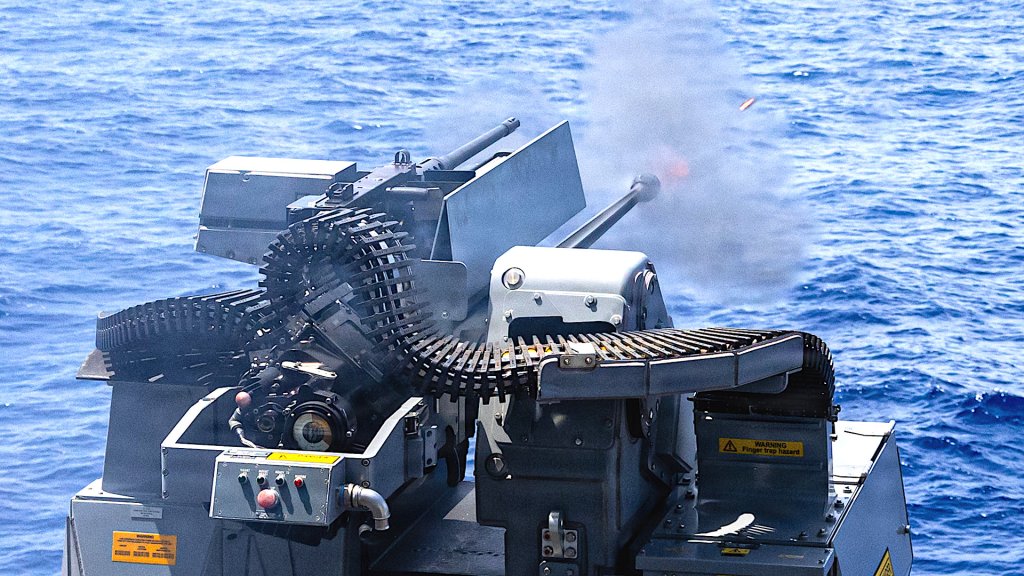

Though designated as a Mk 38 variant, the Mod 4 is fundamentally different from other Mk 38 types currently in service in the U.S. Navy, as well as several foreign naval arms.
“The Mk 38 Mod 4 Machine Gun System (MGS) is an upgrade … to address deficiencies in meeting Counter Unmanned Aerial Systems (C-UAS) requirements,” the Navy has said in the past. “In addition, the upgrade will also improve performance against surface targets and maintain Anti-Terrorist / Force Protection capabilities.”
To take a step back quickly, the original Mk 38 Mod 0 was developed internally by the Navy in the late 1970s and was simply a manually operated deck-mounted 25mm M242 Bushmaster chain gun with a maximum rate of fire of 180 rounds per minute. The M242 was entering U.S. Army service at around the same time as the main armament for the Bradley Fighting Vehicle. A product improved Mod 1 version was the first Mk 38 to actually enter serial production and began to be fitted to Navy ships in the late 1980s.
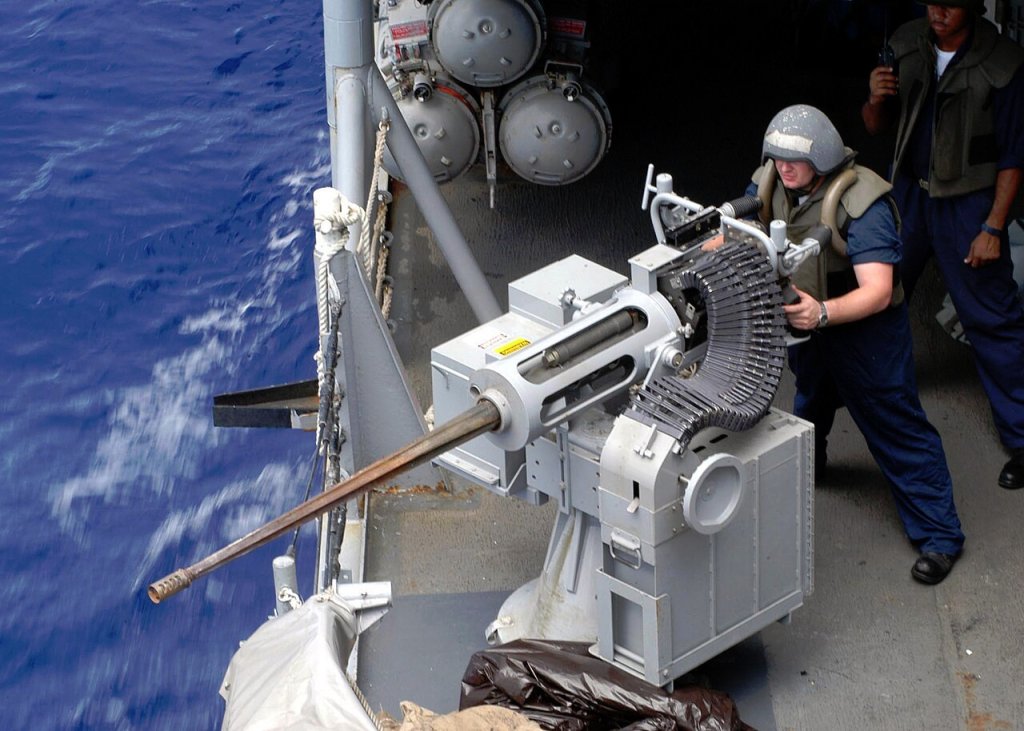
Following the deadly terrorist attack on the Arleigh Burke class destroyer USS Cole in the port of Aden in Yemen in 2000, the Navy began to acquire Mk 38 Mod 2s, also known as the Typhoon Weapon System, from United Defense (later BAE Systems).
The Mod 2 “introduced remote-control operation and mount stabilization and allowed the weapon to maintain aim even as the ship pitched and rolled. It also added a new electro-optical/infrared sensor and a laser rangefinder, giving the system reliable day/night target performance,” according to the Navy. “Beyond sensors, Mod 2 brought improved ammunition handling and enhanced interfaces – resulting in faster and more reliable engagement. Testing showed it delivered two to three times the strike accuracy of its predecessor.”

The Mk 38 Mod 2 otherwise featured the same M242 gun as the Mod 0/1 types, feeding from a magazine on the mount that could be loaded with up to 168 rounds. It is worth noting here that this is less than a minute of total firing time at the weapon’s maximum rate of fire. However, it can also be fired in single-shot and three-round burst modes, as well as at a lower automatic rate of fire of 100 rounds per minute.
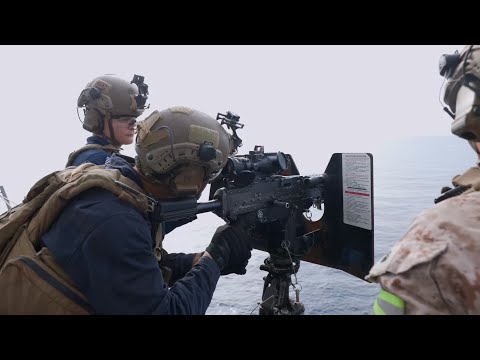
In the 2010s, the Navy began acquiring the Mk 38 Mod 3 from BAE Systems, which added a smaller 7.62x51mm Mk 52 Mod 0 chain gun feeding from a 750-round magazine to the complete weapon system. The Mk 52 is also a much faster-firing weapon than the M242, with a maximum rate of fire of 570 rounds per minute.
The Mod 3 “also incorporated an improved EO/IR sensor that provides 330-degree surveillance capability and multiple fields of view,” per the Navy. “This sensor is decoupled from the gun, allowing operators to scan independently of the weapon and reducing the chance of alerting an adversary that they’ve been detected.”

Over the years, Mk 38 1/2/3 types have been integrated on a wide array of Navy ships, including Ticonderoga class cruisers, Arleigh Burke class destroyers, Nimitz and Ford class aircraft carriers, as well as a host of other amphibious warfare ships and auxiliaries.
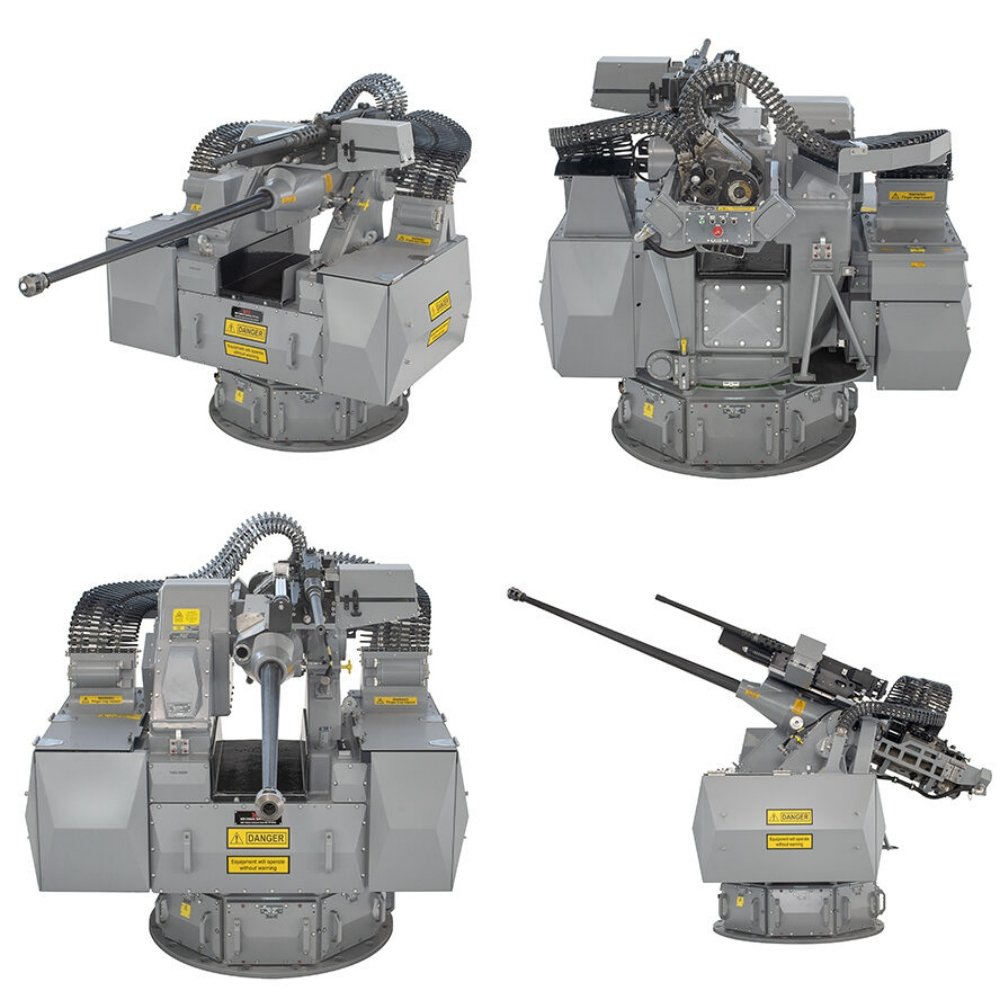
All of this brings us back to the Mk 38 Mod 4, the Navy’s designation for a version of the Seahawk DS30 series from MSI Defense Systems, which the service first began acquiring in the late 2010s. The Mk 38 Mod 4’s main weapon is a 30mm Mk 44 Mod 3 Bushmaster II chain gun. Like the M242, the Mk 44 also has single-shot and burst modes, as well as low and high fully automatic settings (100 and 200 rounds per minute, respectively). The Mk 44 is also found on versions of the Mk 46 Gun Weapon System installed on stealthy Zumwalt class destroyers and San Antonio class amphibious warfare ships. It is used in a variety of ground-based applications and on the U.S. Air Force’s AC-130J Ghostrider gunship aircraft. As mentioned, the Mk 38 Mod 4 also has a .50 caliber M2 machine gun with a rate of fire of around 500 rounds per minute. The system’s magazine capacity for each gun is not immediately clear.
The complete Mk 38 Mod 4 also comes with a new Mk 48 Mod 2 electro-optical sight system (EOSS), which is mounted separately on the ship, and a Mk 134 Mod 0 operator console for remote operation. Furthermore, the complete system is designed to be fully integrated with the Aegis Combat System on Arleigh Burke class destroyers like USS Mustin. The optical turret appears to replace the older EOSS system mounted atop the bridge that was primarily used to target the ship’s 5-inch gun. It isn’t clear how these new mounts are individually targeted simultaneously as they don’t appear to have their own optics. Radar targeting through Aegis would be a big advancement for at least some targets types, like drones. The older Mk 38s had their own individual FLIR systems. It’s still possible these new turrets could have a basic boresighted electro-optical system as well.
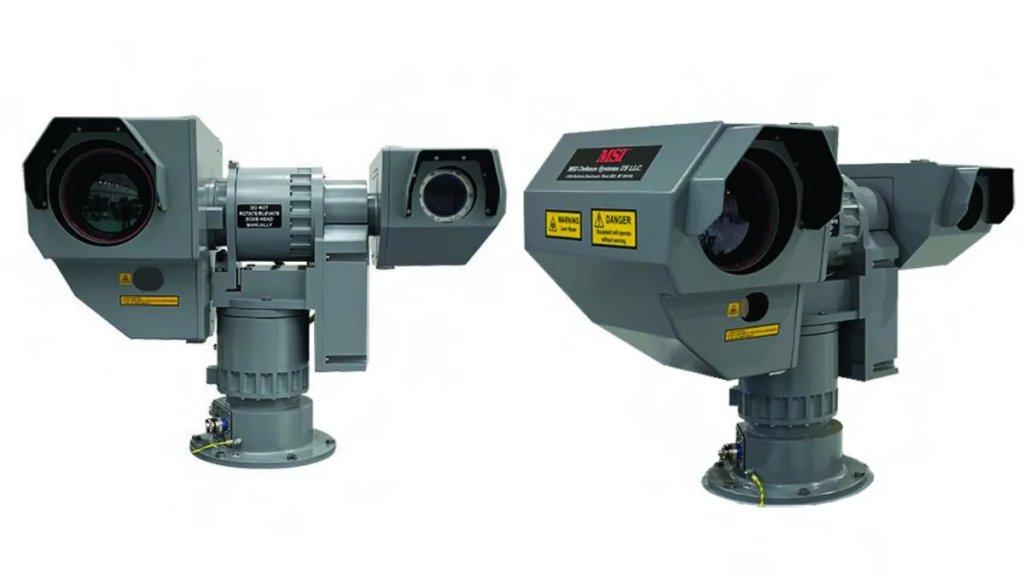
In a July 2022 test, a Mk 38 Mod 4 system “successfully identified, tracked and engaged both surface and aerial targets using live ammunition against fixed and moving targets,” according to the Navy. The event “also highlighted the enhanced fire-control chain, the 30 mm gun’s improved performance and its ability to counter new challenges.”
The USS Mustin received its Mk 38 Mod 4 in 2024 and, as noted, this destroyer still appears to be the only ship in the Navy with this new weapon system, for reasons that are not entirely clear. The service had signed a contract with MSI Defense for an initial low-rate production batch of 15 systems in 2023. Other versions of the Seahawk DS30 are in use today on several classes of naval vessels globally, including British Type 23 frigates.
“USS Mustin (DDG 89), an Arleigh Burke class Aegis guided missile destroyer, was the first U.S. Navy warship to receive the upgrade. [The Naval Surface Warfare Center] Dahlgren Division is now finalizing the configuration so the system can be introduced to a wider set of platforms as fleet requirements evolve,” according to an official news item from Naval Sea Systems Command (NAVSEA) just this past February.
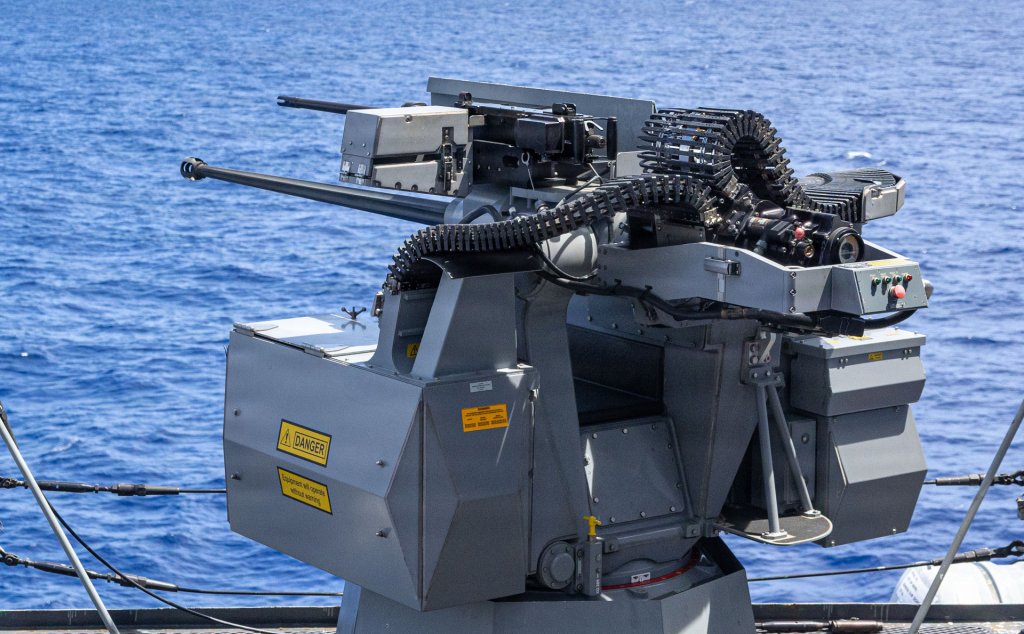
The Navy’s 2027 fiscal year budget request, released earlier this year, makes clear the plan is still to integrate the Mk 38 Mod 4 at least on all Flight IIA and Flight III subvariants of the Arleigh Burke destroyer. The Mk 38 Mod 4 is also set to be a feature on future U.S. Coast Guard icebreakers, which will also have combat systems derived from Aegis.
All remaining Mk 38 Mod 2s in Navy service are being brought up to the Mod 3 standard, as well.
For the Navy’s Arleigh Burke class destroyers, specifically, the Mk 38 Mod 4 reflects broader efforts to improve and expand the shorter-range defensive capabilities of those ships, especially against growing drone threats. An increasing number of these destroyers are also being equipped with new anti-drone interceptors. In addition, the service is working to replace the 20mm Vulcan cannon-armed Mk 15 Phalanx Close-in Weapon Systems (CIWS) on all subvariants in the class with different launchers for RIM-116 Rolling Airframe Missiles (RAM) to further bolster defenses against drones, as well as incoming missiles and other aerial threats.
In general, the Navy has been investing heavily in new counter-drone defenses for ships across its fleets in recent years. These efforts include laser and high-power microwave directed energy weapons, as well as various types of physical interceptors and electronic warfare systems. Lessons learned from the ongoing conflict with Iran, as well as recent operations in and around the Red Sea, together with observations from the war in Ukraine, have only underscored the increasingly critical need for additional layers of protection against uncrewed attackers in the air and at sea. Small crewed boats attacking in large groups remain a real threat, too.
Mustin may not be the only Navy warship equipped with the Mk 38 Mod 4 for much longer, if the system has not already started finding its way at least onto more Arleigh Burke class destroyers.
Contact the author: joe@twz.com
Loading comments…
Comments couldn’t be loaded. Please refresh the page.