
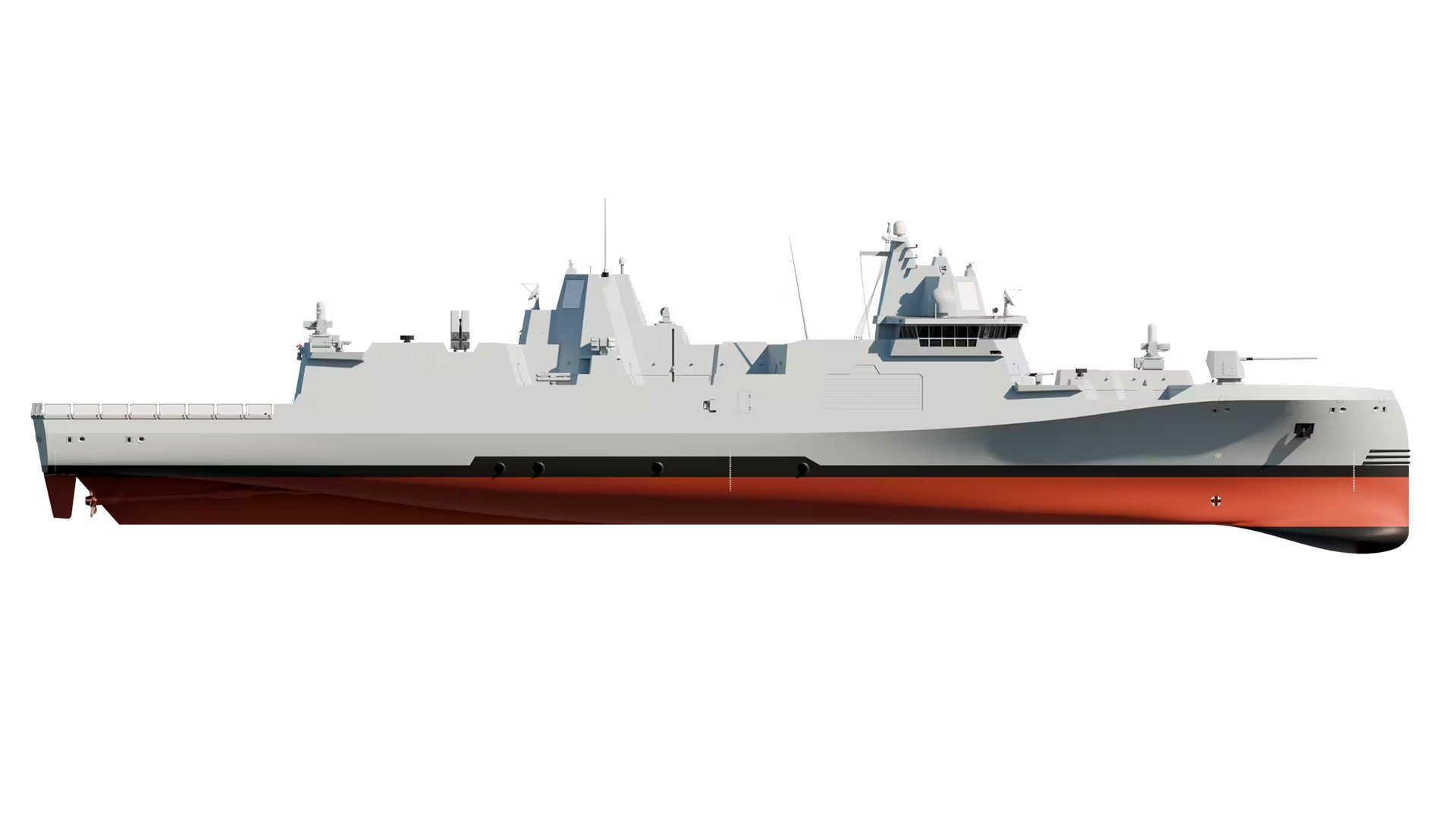
German defense contractor Rheinmetall has unveiled the GMF 140, a new 140-meter guided-missile frigate aimed at NATO and allied navies seeking a next-generation surface combatant with integrated air and missile defense, anti-submarine warfare, and long-range strike capabilities. Better known for armored vehicles, artillery, air defense systems, ammunition, as well as naval munitions and electronics, the new warship marks Rheinmetall’s entry into an entirely new segment of the defense market.
The 6,000-ton-plus vessel is being positioned for export, with Rheinmetall planning to offer the design “initially as part of a procurement project in North America” before pursuing opportunities with other allied navies.
Designed for operations in contested maritime environments, the GMF 140 combines area air defense, ballistic missile defense (BMD), anti-submarine warfare (ASW), and strike capabilities in a single platform optimized for blue-water operations while retaining the flexibility to support expeditionary, littoral, and coalition missions.
“The GMF 140 has been specifically developed for the requirements of NATO and allied navies seeking a highly capable, affordable, and interoperable next-generation surface combatant,” Rheinmetall said in a statement.
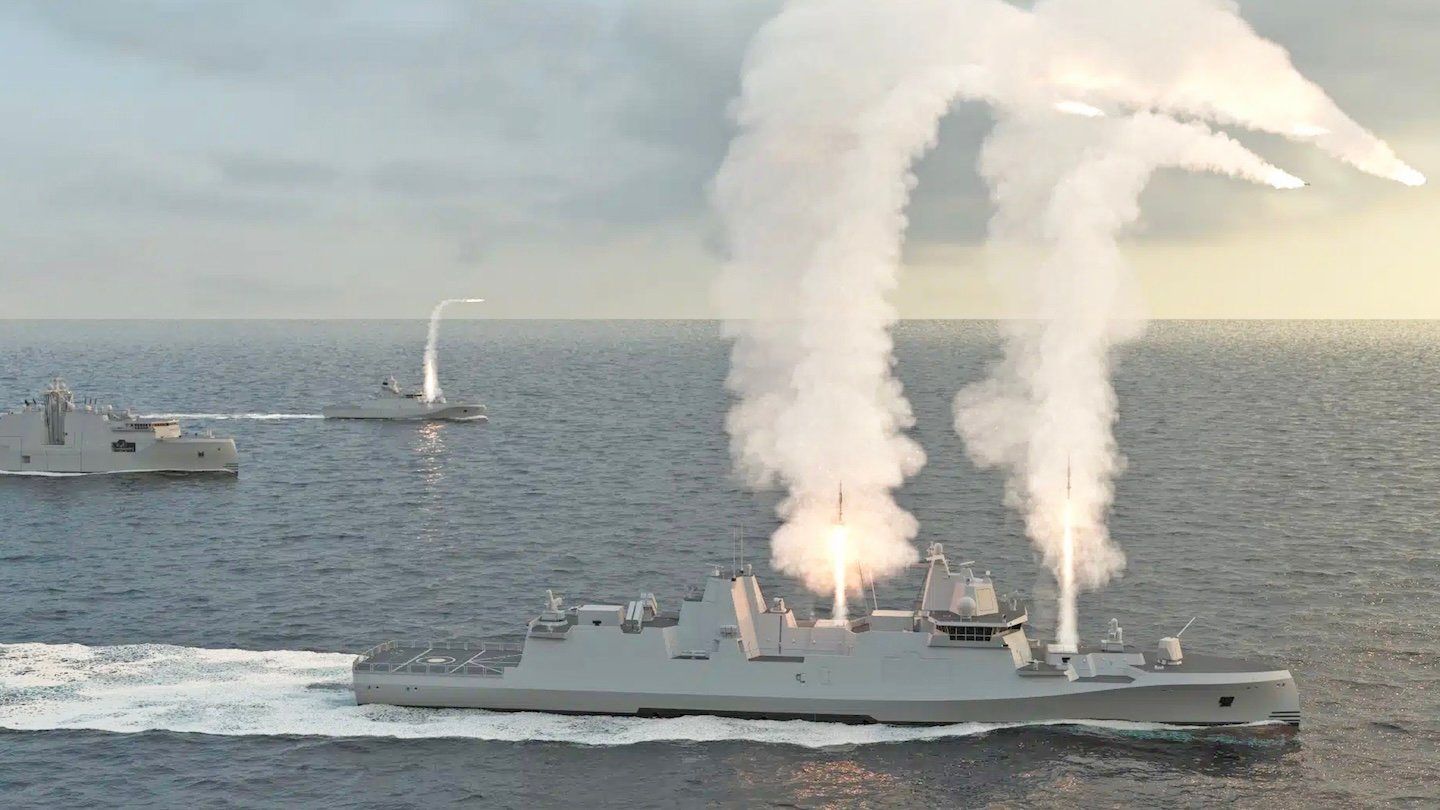
A key feature of the design is its integration of U.S.-sourced combat systems and sensors. Rheinmetall says the frigate is designed around the AEGIS combat system and can accommodate multiple U.S.-sourced radar options capable of detecting, tracking, and engaging conventional air threats, hypersonic weapons, and ballistic missiles.
For customers seeking an alternative combat management architecture, the company says the GMF 140 can also be configured with Lockheed Martin’s CMS330 combat management system, providing an open and scalable architecture capable of integrating both U.S. and European sensors and weapons.
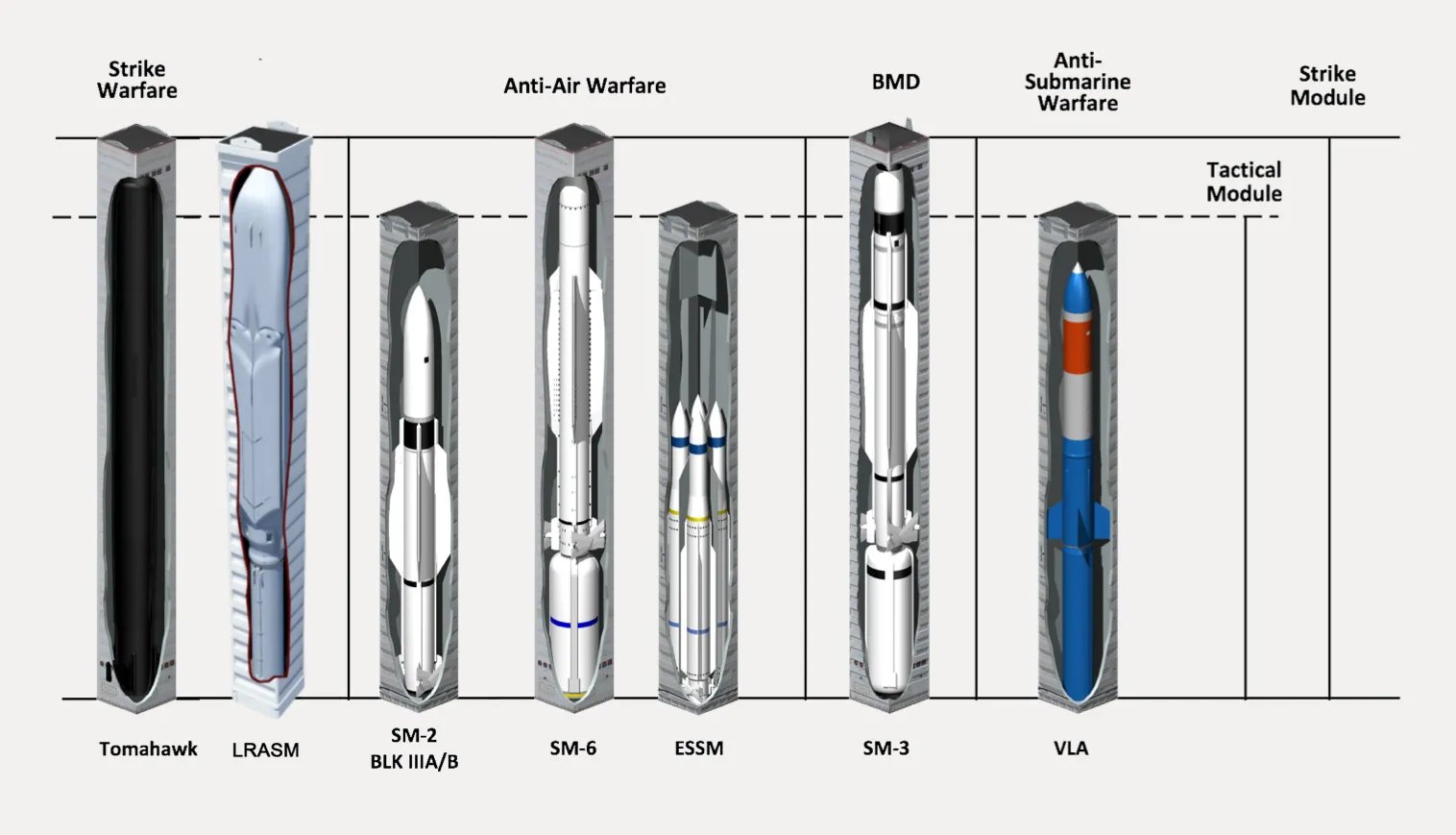
The ship is equipped with 64 strike-length Mk 41 vertical launch system (VLS) cells, allowing it to employ a wide range of air defense, ballistic missile defense, and land-attack missiles. For air defense, for example, 64 VLS cells would give the option of up to 256 Evolved Sea Sparrow Missiles, which come in quad packs, although a typical load-out would provide a far more balanced inventory of larger, longer-reaching anti-air missile and strike weapons, such as the Tomahawk cruise missile and Standard family of surface-to-air missiles.
Additional armament includes anti-ship missiles, torpedo launchers, a 5-inch (127mm) main gun, laser weapon systems, close-in weapon systems (CIWS), and secondary guns. In the concept artwork, the warship appears to have a U.S. Navy-standard Mk 45 main gun, as well as a SeaRAM CIWS mounted fore and aft, again in line with a pitch to the North American market.
Rheinmetall says the ship incorporates a low-signature hull, integrated acoustic management measures, hull-mounted and towed sonar systems, and facilities to support embarked helicopters and uncrewed systems from either U.S. or European suppliers.
The company says the design is intended to address growing demand from navies modernizing their fleets in response to evolving security challenges in Europe, the North Atlantic, and the Indo-Pacific. It also comes with a small crew complement for its size: each vessel will have a core crew of just 90, with the option to add another 35 if and when required.
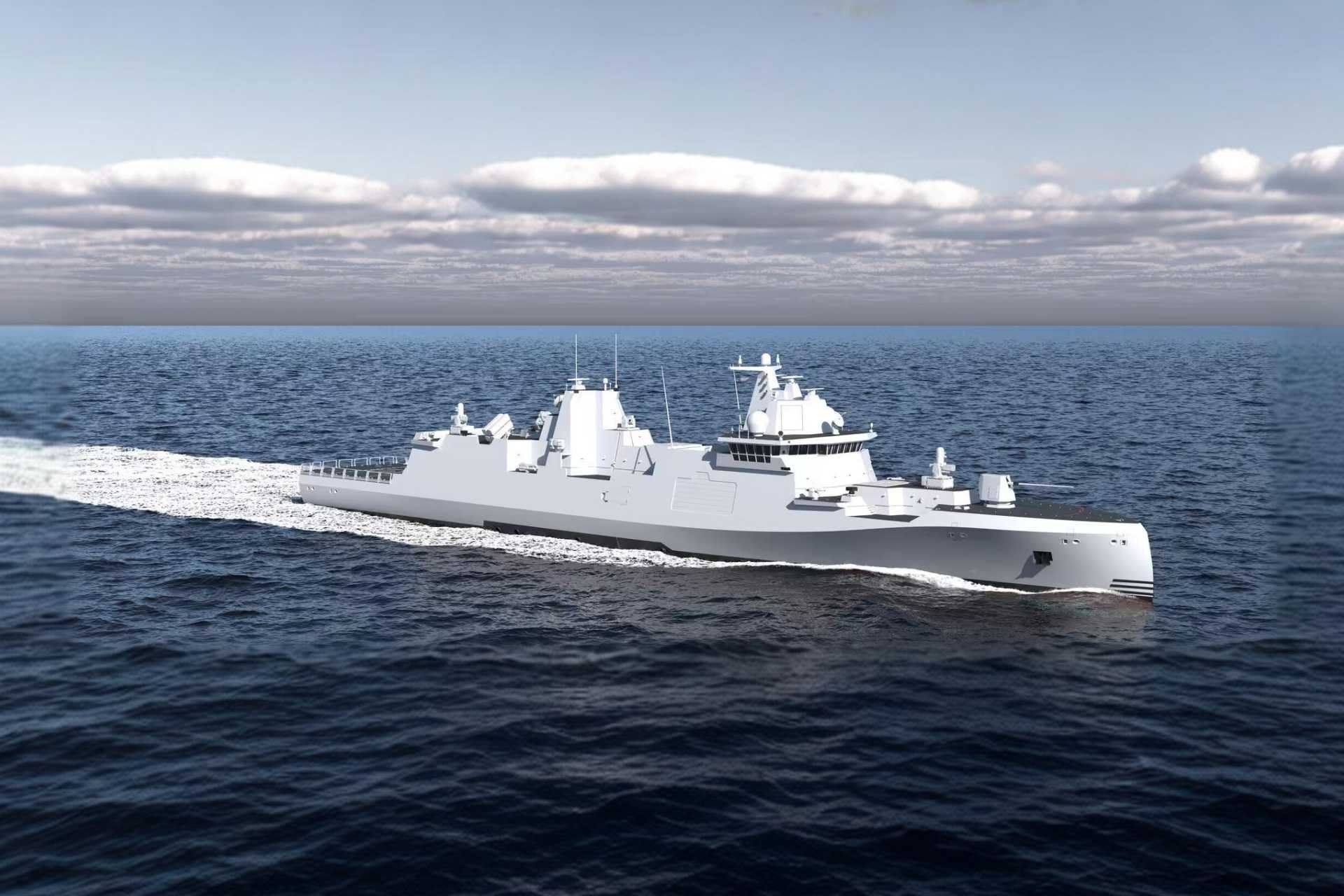
The new frigate’s wave-piercing bow is somewhat reminiscent of that seen on the smaller French Frégate de Défense et d’Intervention (FDI), or defense and intervention frigate. The bow of that vessel, which gives an appearance approaching that of a reverse bow, or inverted bow, is something we have discussed in the past. Both warships also have a dramatic chine that extends from the bow along the entire hull line.
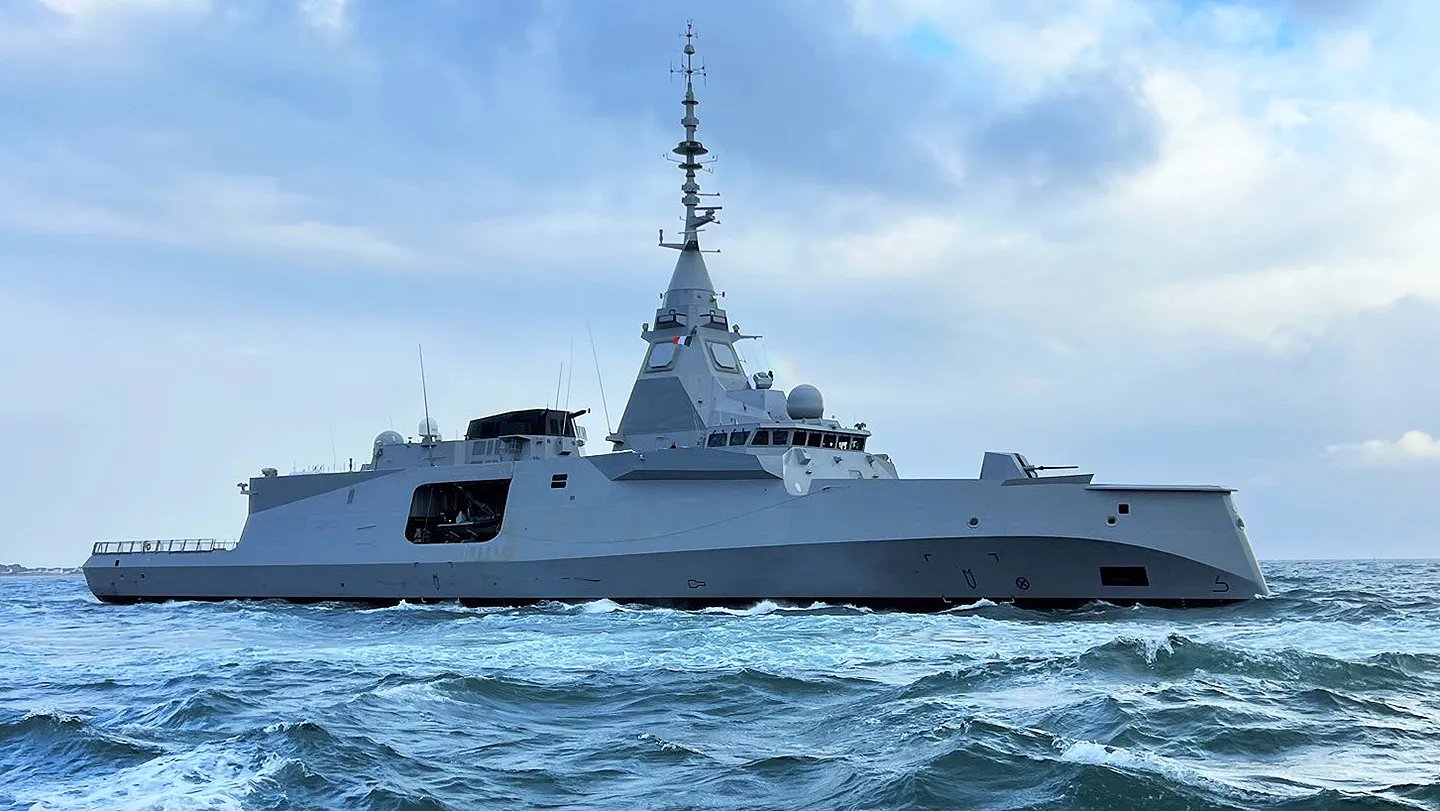
The GMF 140 is approximately 460 feet long and has a displacement of more than 6,600 tons.
This puts it at the upper end of the modern frigate category, close to the boundary between a large frigate and a small destroyer. Its displacement should provide the volume and electrical power margins needed to support large radar arrays, future directed-energy weapons, additional electronic warfare systems, and growth in computing capacity. This capacity is especially important as navies adapt toward integrated air and missile defense against increasingly complex threats, including hypersonic weapons and ballistic missiles.
In terms of size and capability, the GMF 140 sits squarely in the same category as the now-canceled U.S. Constellation class frigate, British Type 26, and the Franco-Italian FREMM, but with a different emphasis.
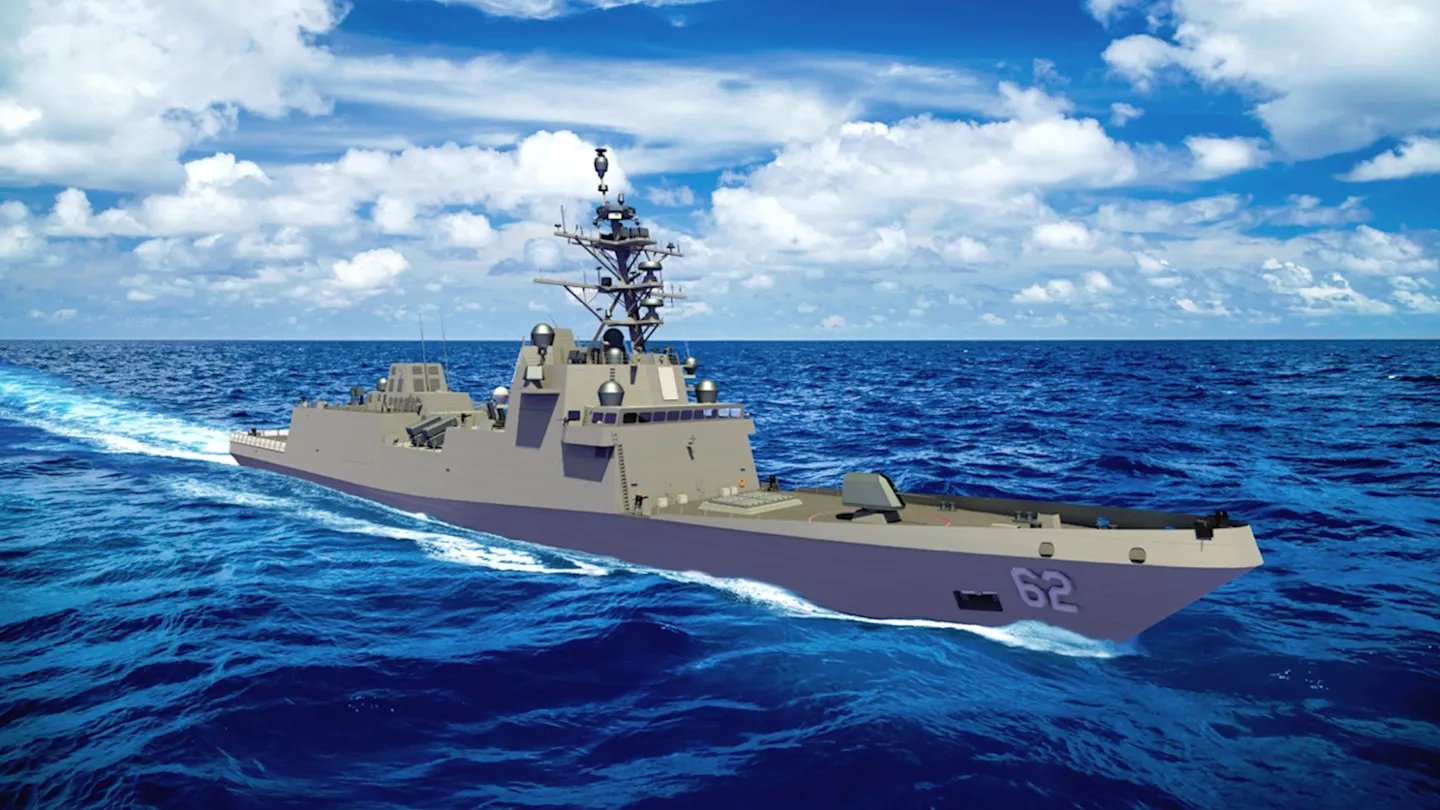
While the Type 26 was primarily designed around anti-submarine warfare and the FREMM family has evolved into multiple variants optimized for either ASW or general-purpose missions, the GMF 140 has been conceived from the outset as a fully integrated air and missile defense combatant capable of contributing to fleet-level ballistic missile defense while retaining robust ASW and long-range strike capabilities.
It is also notable that, rather than relying on proprietary national systems, Rheinmetall has built the GMF 140 around widely fielded U.S. and NATO technologies, including AEGIS, U.S.-sourced radar options, and the Mk 41 VLS. That approach reduces integration risk for navies already operating U.S.-made weapons and sensors while also improving interoperability during coalition operations.
The GMF 140 design reflects a broader trend among NATO navies toward heavily armed, multi-mission frigates that increasingly blur the traditional distinction between frigates and destroyers, at least in terms of missions. Rather than serving primarily as escorts, these ships are expected to provide area air defense, contribute to integrated missile defense networks, prosecute submarines, and deliver long-range precision strikes as part of distributed maritime operations.
While Rheinmetall is positioning the GMF 140 for the export market rather than domestic procurement, it should be noted that the German Navy recently canceled its planned F126 frigates, which, at 545 feet long and with a displacement of up to 11,000 tons, would have been physically the biggest surface warships to join the German Navy since World War II. You can read more about this ambitious program here.
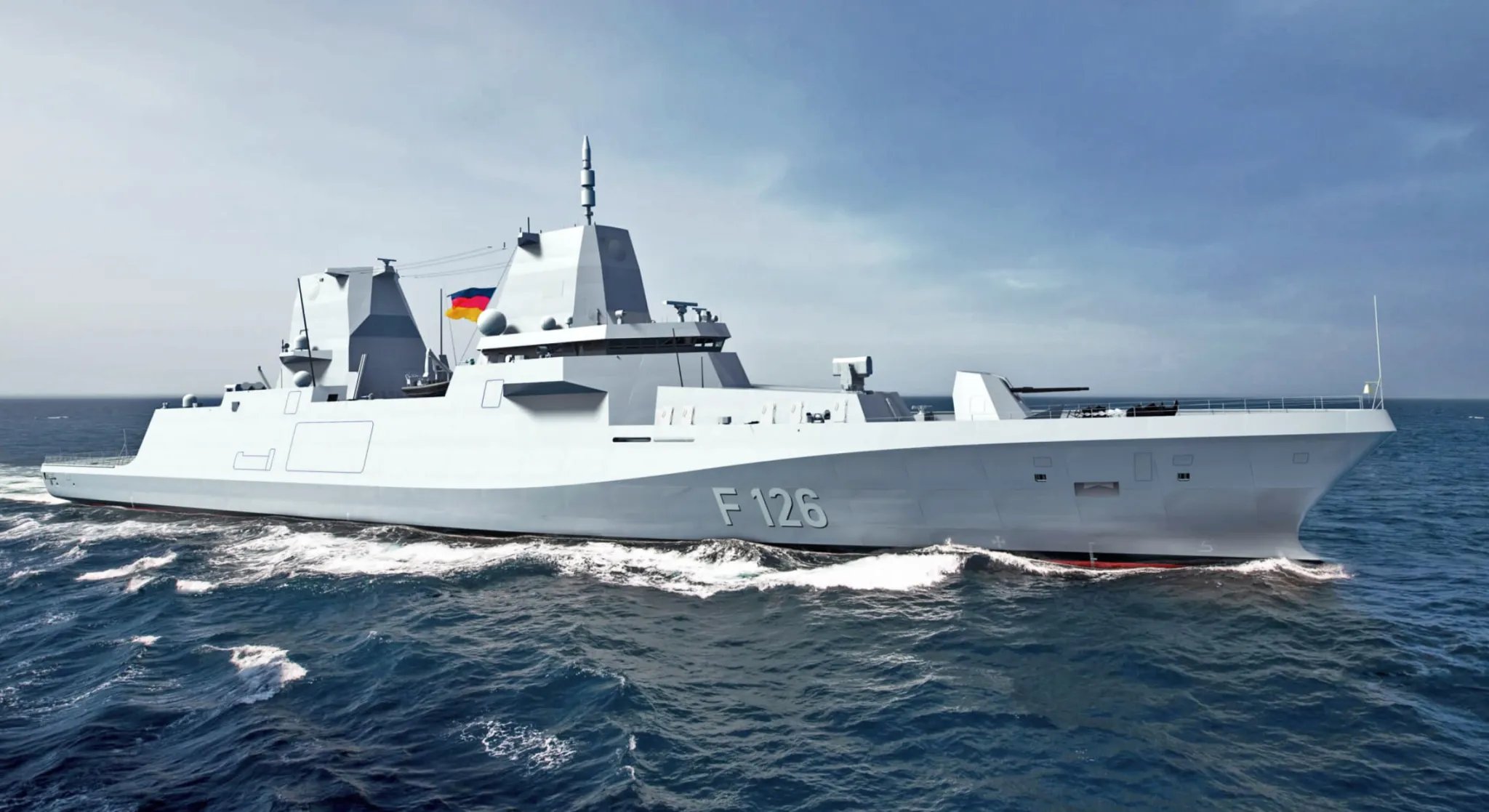
Instead, Germany opted for a smaller, lower-risk design optimized for anti-submarine warfare, and based on the proven A-200 frigate design from the German shipbuilder TKMS. This will be known as the F128.
Rheinmetall’s GMF 140 represents a different answer to that challenge. Rather than trading capability for affordability, it aims to deliver a heavily armed, highly interoperable frigate with robust integrated air and missile defense, long-range strike, and anti-submarine warfare capabilities in a single platform.
At the same time, the GMF 140 also marks a significant departure for Rheinmetall. While the company has long been a major supplier of naval weapons, sensors, ammunition, and mission systems, it has not previously competed as a prime contractor for a major surface combatant. As Rheinmetall’s first attempt to enter a highly competitive global market with a complete warship design, this necessarily comes with a degree of risk attached for any potential buyers.
There is also the question about where these vessels would be built. Earlier this year, Rheinmetall acquired Naval Vessels Lürssen, which includes various German shipyards, of which Blohm+Voss in Hamburg would be the most likely candidate, having a long history of building surface combatants.
Rheinmetall’s reference to a procurement project in North America is interesting, pointing to either Canada or the United States.
As it stands, Canada has already selected the River class destroyer (based on the Type 26), so Rheinmetall would be relying here on a future tranche or a follow-on requirement.

In the United States, the Constellation class frigate program was terminated last year, and it was announced that the National Security Cutter design will serve as the basis of a new U.S. Navy frigate program that is named FF(X). Introducing an entirely new design into that program would seem highly unlikely, but the appearance of the GMF 140 does suggest that Rheinmetall has identified a gap in the market between the new FF(X) and the Arleigh Burke class destroyer, with a VLS capacity and level of capability matching that.
As allied navies weigh the balance between capability, cost, and procurement risk over the coming decade, it will be interesting to see whether more navies also move toward a more affordable, lower-risk frigate, as Germany has done, or bigger designs like the GMF 140 that seek to retain destroyer-like capabilities in a frigate-sized hull.
Contact the author: thomas@thewarzone.com
Loading comments…
Comments couldn’t be loaded. Please refresh the page.