
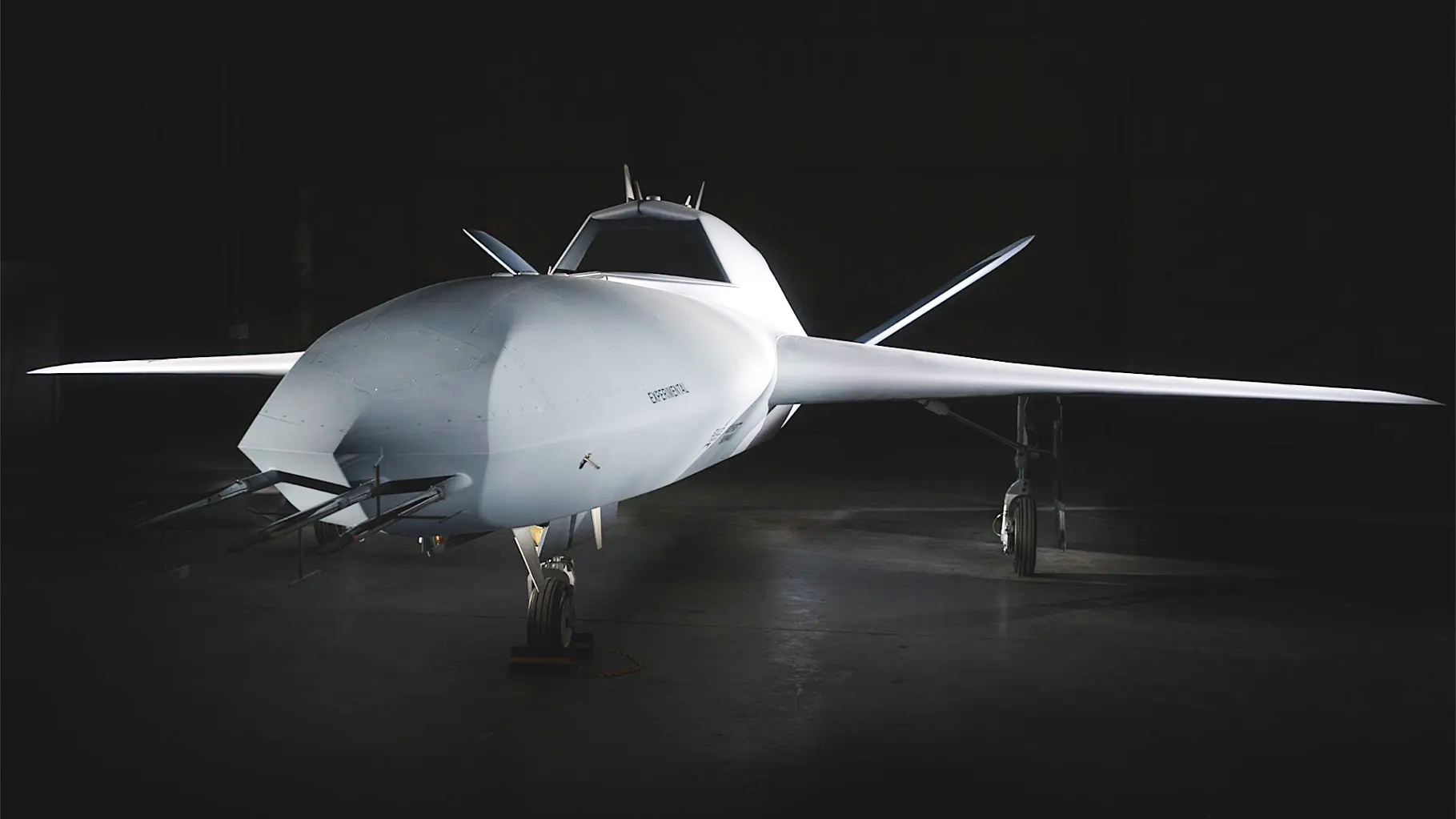
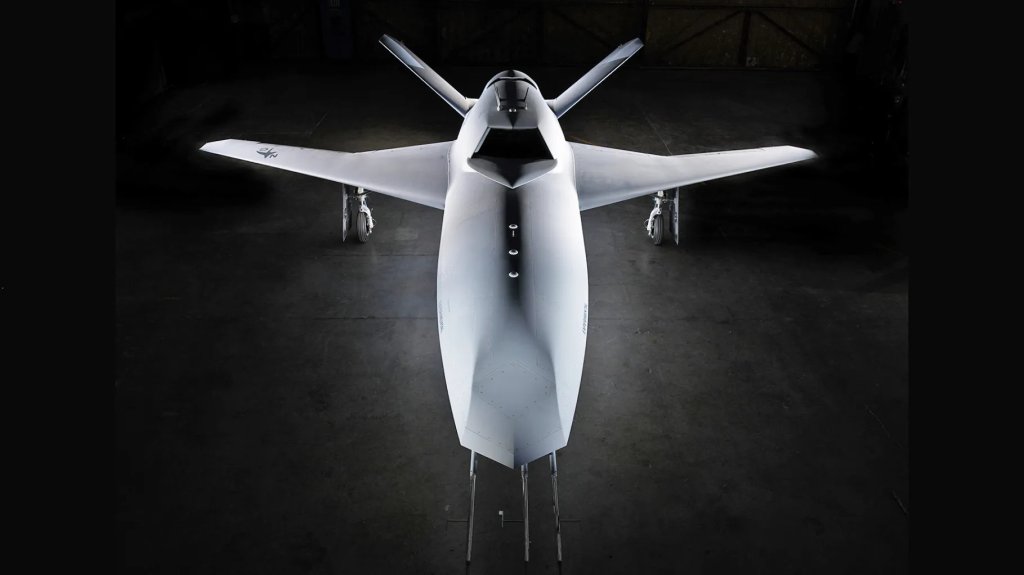
The U.S. Air Force has formally designated Northrop Grumman’s Project Talon drone as the YFQ-48A and described it as a “strong contender” to be part of its future Collaborative Combat Aircraft (CCA) fleets. This follows news that the service has handed contracts to nine companies to refine a wide array of designs under Increment 2 of its CCA program. Northrop Grumman, together with its subsidiary Scaled Composites, only lifted the lid on Project Talon earlier this month, as you can read more about in our initial report here.
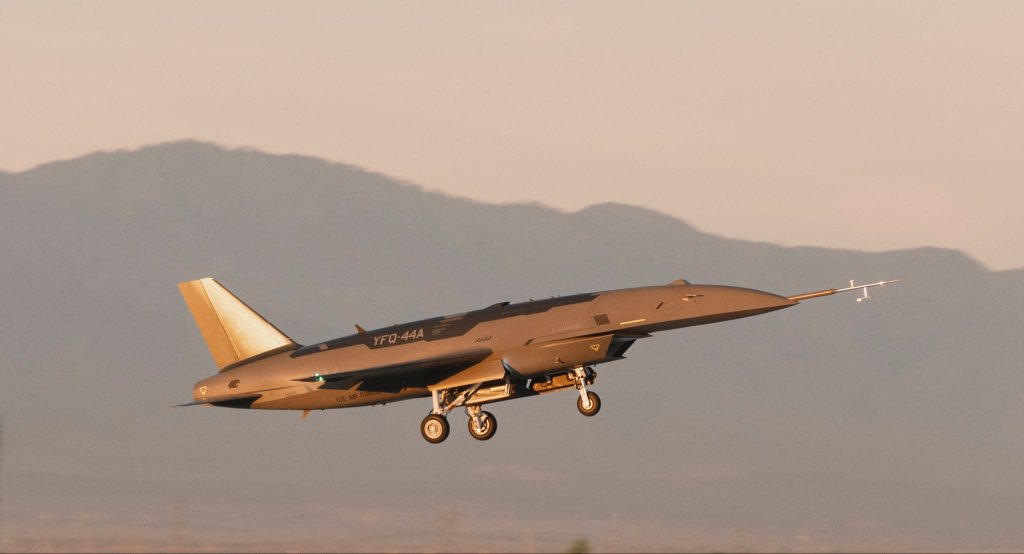
YFQ-48A is the third ‘fighter drone’ designation the U.S. military has now applied to a CCA-type design. The service announced in March that the drones General Atomics and Anduril have been developing under Increment 1 of the CCA program had received the designations YFQ-42A and YFQ-44A, respectively. However, the Project Talon design is not part of Increment 1, as we will come back to later on.
“The MDS designation highlights the ongoing partnership between the Air Force and Northrop Grumman and acknowledges the continued progress of the YFQ-48A as a strong contender in the CCA program,” according to an official Air Force release.
“We are encouraged by Northrop Grumman’s continued investment in developing advanced semi-autonomous capabilities,” Air Force Brig. Gen. Jason Voorheis, the service’s Program Executive Officer for Fighters and Advanced Aircraft, said in a statement. “Their approach aligns with our strategy to foster competition, drive industry innovation, and deliver cutting-edge technology at speed and scale.”
“Northrop Grumman’s commitment to innovation, low-cost manufacturing, and calculated risk-taking aligns perfectly with the CCA acquisition strategy and the Secretary of War’s Acquisition Transformation Strategy,” Air Force Col. Timothy Helfrich, Director of the Agile Development Office, also said. “Project Talon is a testament to their ability to push boundaries and experiment with new technologies, ultimately advancing solutions that could enhance the future of airpower.”
While details about the Project Talon drone itself remain limited, Northrop Grumman has made clear that it is based on lessons learned from its losing entry in the Increment 1 competition. The company has said that its Increment 1 design was at the higher end of the performance and capability spectrum, and had a price to match. Talon, by extension, has been described as “cheaper and better” and “significantly different” from the Increment 1 offering, and a first flight is now targeted for late next year. You can learn more about what TWZ has been able to glean so far here.
“Northrop Grumman remains in a vendor pool that can compete for future efforts, including the Increment 1 production contract and subsequent increments,” an Air Force spokesperson told TWZ when asked about the current relationship of Northrop Grumman and Project Talon to the CCA program.
“As the Air Force continues to advance the CCA program, the ongoing collaboration with Northrop Grumman and the defense and aerospace industry will ensure that the Air Force remains at the forefront of airpower innovation,” the Air Force’s release today also noted. “These types of partnerships will help the Air Force meet the challenges of an increasingly complex and competitive global security environment while maintaining the technological superiority necessary to prevail in future conflicts. “

TWZ has also reached out to Northrop Grumman. Northrop Grumman and Scaled Composites have also previously said that Project Talon, which has been described so far as a demonstrator effort, is not explicitly aimed at a particular contract opportunity, such as the Air Force CCA program’s Increment 2.
As mentioned, the Air Force has separately confirmed that nine companies have now received initial concept refinement contracts under the CCA program’s Increment 2, which were all awarded earlier this month. The service is presently declining to name any of those companies, one of which could be Northrop Grumman. An Air Force spokesperson told TWZ that the vendor details are currently “protected by enhanced security measures.”
“These designs [being refined under Increment 2 now] represent a broad spectrum, ranging from more affordable, attritable concepts to higher-end, more exquisite designs,” that same spokesperson also told TWZ. “This variety ensures that the program explores different approaches, optimizing for cost-effectiveness while maintaining the flexibility and capabilities necessary to enhance operational effectiveness.”
That the Air Force is again considering a mix of lower and higher-end designs for Increment 2 is a notable development. The service had indicated previously that it would focus heavily on less exquisite and cheaper designs for the second tranche of CCA drones based on its experience with Increment 1. It’s also worth remembering here that Increment 2 has also long been expected to include foreign participation, which would have impacts on the requirements. In October, the Netherlands announced it had formally joined the Air Force’s CCA program.
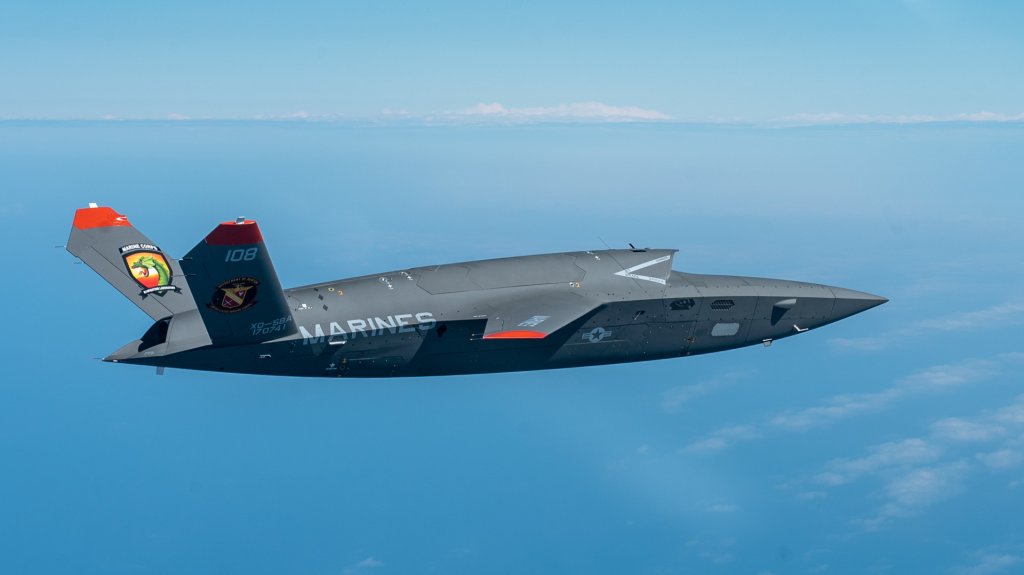
The U.S. Marine Corps and U.S. Navy also have their own CCA programs, which are formally intertwined with the Air Force’s effort, including in the development of common command and control and autonomy architectures. However, the Marines and Navy have been pursuing specific airframe designs to meet their respective needs independently. The Marine Corps is moving to field an operational version of Kratos’ XQ-58A Valkyrie drone following extensive testing with that design. The Navy has four companies under contract now for conceptual aircraft carrier-based CCA designs.
“The next competitive contract award will occur after the Concept Refinement Phase, as the Air Force evaluates the technical and operational merits of the submitted designs for prototyping,” the Air Force spokesperson added. “Increment 2 will be structured similarly to Increment 1, where more than one awardee may be selected for prototyping. This approach allows for competitive development and ensures that the Air Force can evaluate various solutions before selecting the final designs to move into production.”
“For CCA Increment 2, following concept refinement, the Air Force will proceed with prototyping, with plans for a future competitive award leading to production awards,” they continued. “The specific timeline for these milestones will depend on the results from Concept Refinement and the vendor’s performance during testing.”
Many questions remain about the Air Force’s CCA plans, including exactly how many drones the service is set to acquire under Increment 1, and whether that initial fleet will be all YFQ-42As or YFQ-44As, or a mix of both. The Air Force, Marine Corps, and Navy are all still very much refining their core concepts of operations for future CCA fleets, including deployed, launched, recovered, supported, and otherwise operated on a day-to-day peacetime basis, let alone employing them tactically.
In the meantime, the Air Force is clearly pushing with the development of additional CCA types, including Northrop Grumman’s and Scaled Composites’ Project Talon design. With Increment 2 now underway, more insights into the new field of CCA competitors may begin to emerge.
Contact the author: joe@twz.com
Loading comments…
Comments couldn’t be loaded. Please refresh the page.