
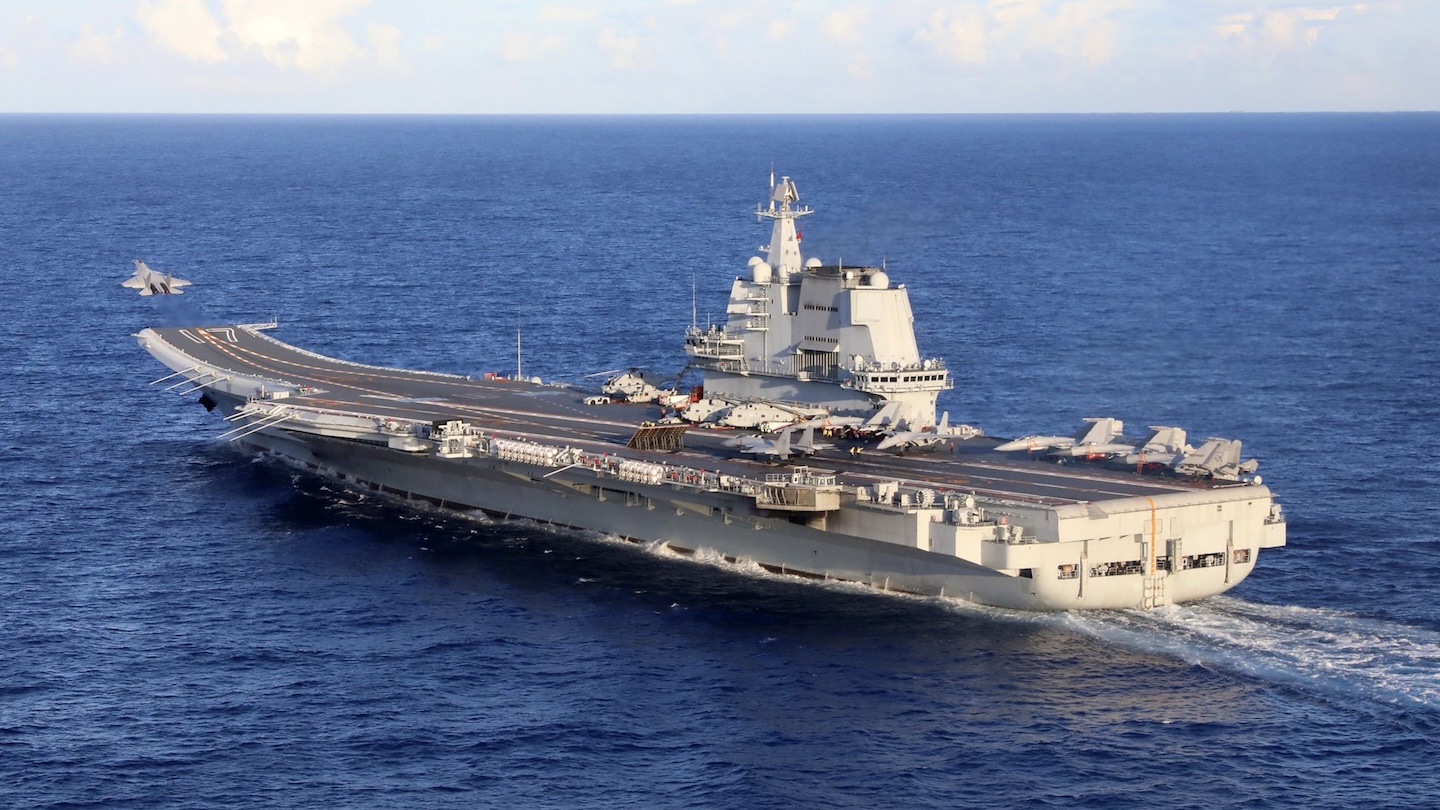
The Chinese People’s Liberation Army Navy (PLAN) has released photos showing two of its aircraft carriers operating simultaneously for the first time beyond the so-called First Island Chain in the western Pacific. The latest development showcases China’s growing carrier power as well as its ambition to challenge U.S. strategies of maritime containment in the Indo-Pacific region.
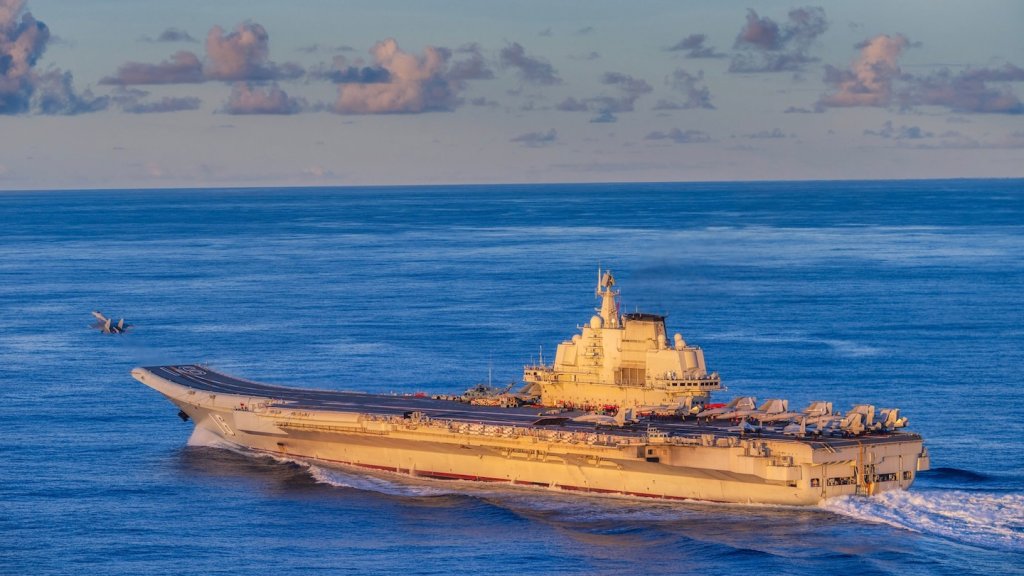
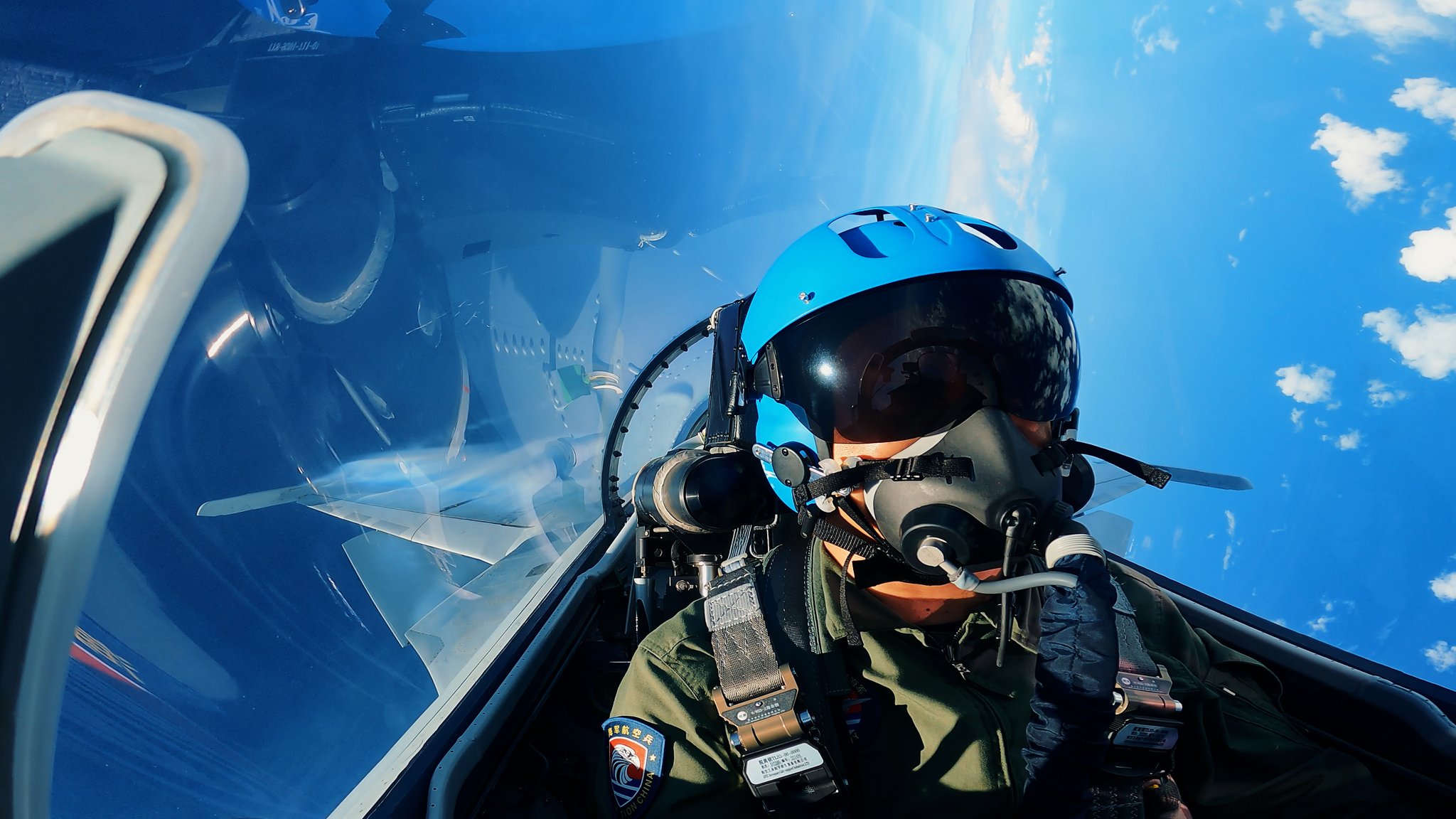
Photos of the aircraft carriers Liaoning and Shandong, as well as their J-15 Flanker fighters, were posted on the social media platform X by the official PLAN account. They were accompanied by a statement attributed to PLAN spokesperson Senior Captain Wang Xuemeng, who confirmed that the two carriers and their task groups had been “training in the waters of the western Pacific to test their capabilities in far-seas protection and joint operations.”
The statement continued: “The routine training is organized in accordance with the annual plan, aiming at continuously enhancing the PLA Navy’s capabilities of fulfilling the missions. It is in compliance with relevant international laws and practices and is not directed against any specific country or target.”
It should be noted that, although they are not thought to have been previously published, the photos in question could have originated on a different occasion and may not necessarily have been taken in the western Pacific.
Interestingly, the fighters seen arranged on the deck of the Liaoning in one of the photos reveal that all are the more modern J-15T versions. The J-15T is primarily distinguished from the original J-15 in being equipped for catapult takeoff but assisted recovery (CATOBAR) operations, rather than short takeoff but assisted recovery (STOBAR) operations. Neither the Liaoning nor the Shandong have CATOBAR equipment, but this will be featured on the PLAN’s forthcoming carriers.
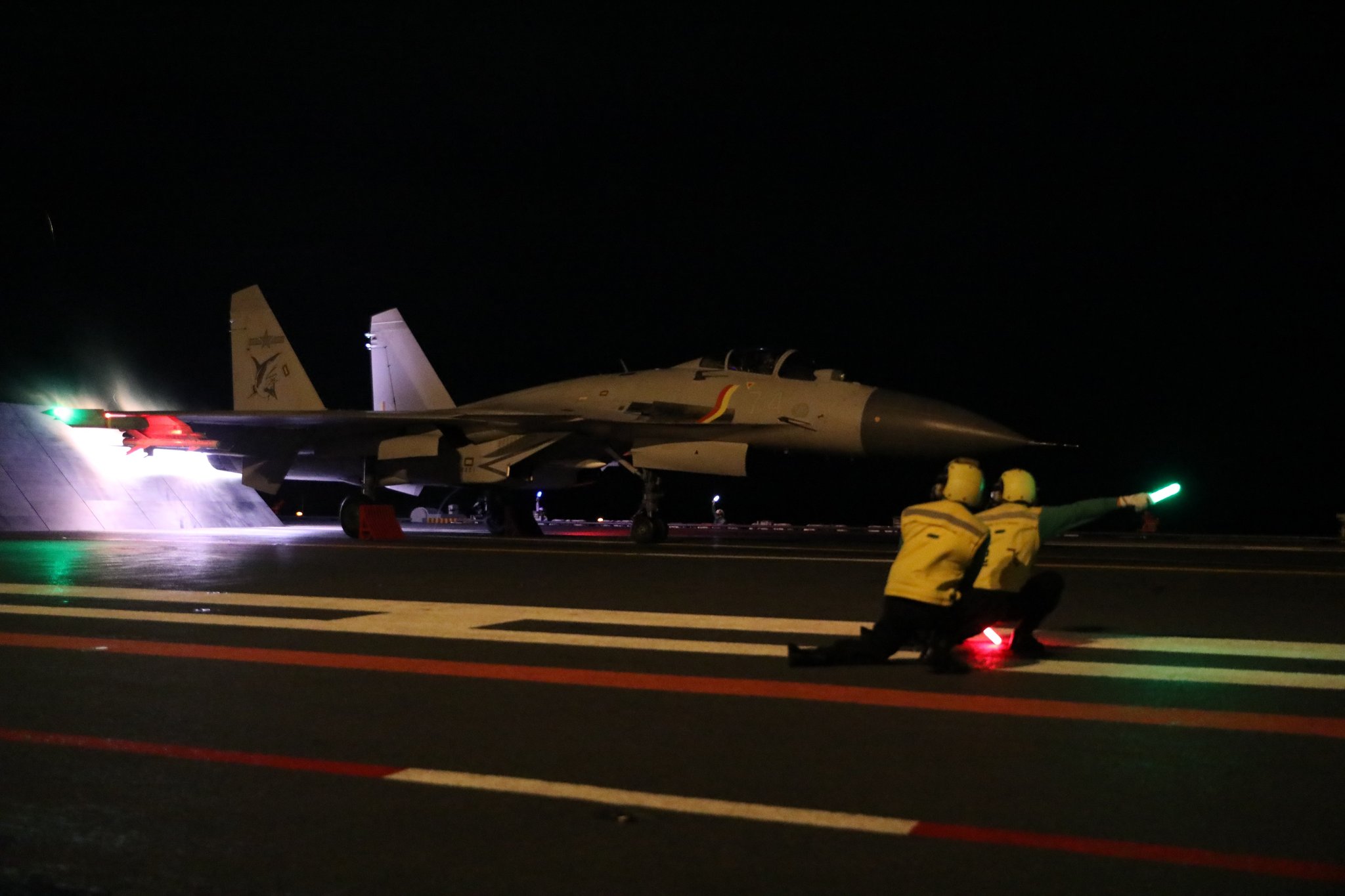
Otherwise, the J-15T is fitted with domestically produced WS-10 turbofans in place of the Russian-made AL-31F engines previously found on production J-15s. It has more modern avionics, likely including an active electronically scanned array (AESA) radar, and is compatible with new weapons. However, the examples seen on the Liaoning are armed with the older PL-12 medium-range air-to-air missiles, rather than the more advanced PL-15 that they are also able to carry.
Regardless, it’s notable that the PLAN is reporting the dual-carrier operations in these highly strategic waters so publicly.
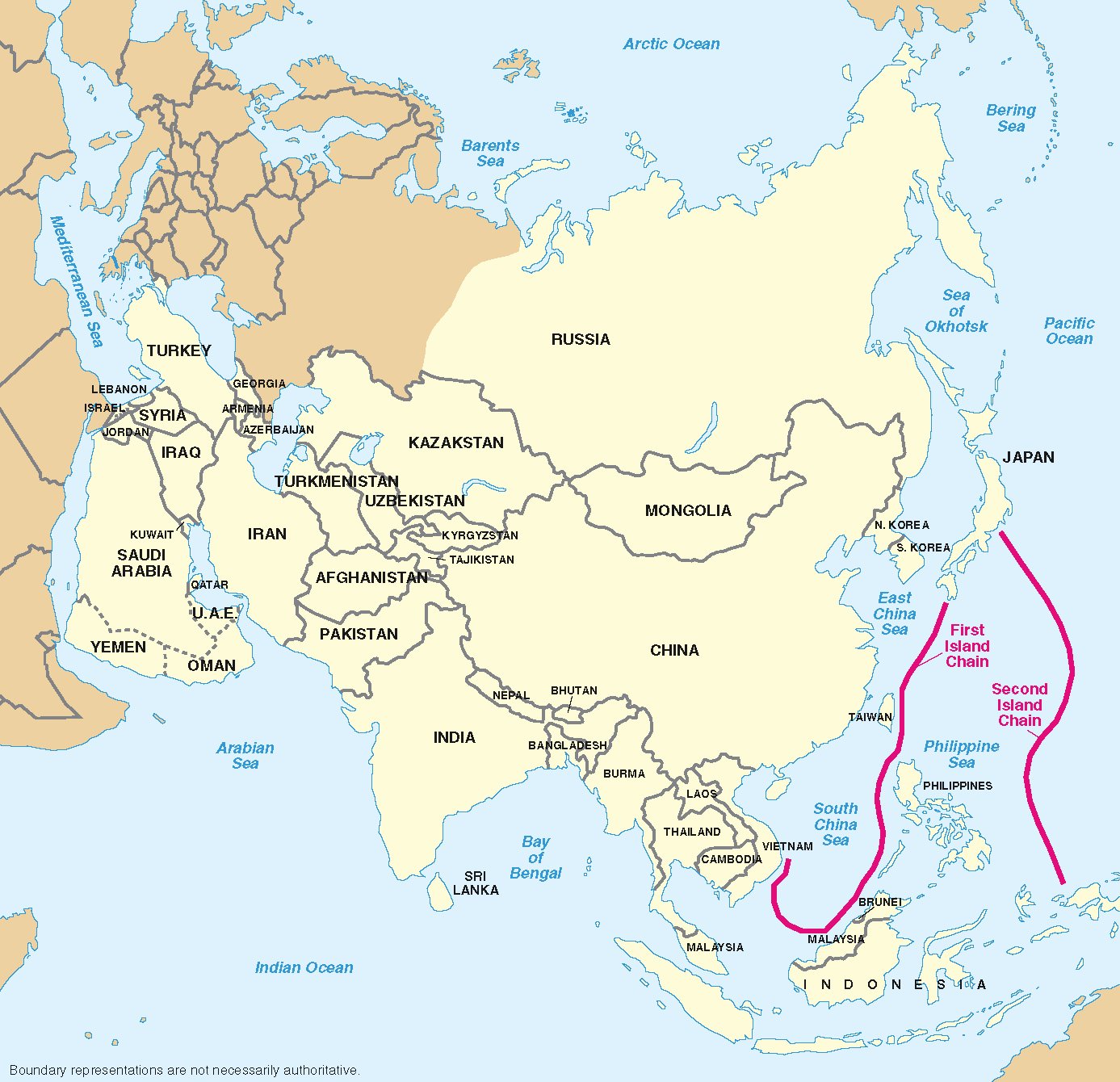
The First Island Chain is a boundary defined by archipelagos opposite mainland East Asia, extending from the southern end of the Japanese home islands all the way to the South China Sea.
Extending further out into the western Pacific is the Second Island Chain, which links Japan to New Guinea and includes Guam and other U.S. island territories in the Marianas.
“Chinese naval vessels’ activities in those waters are fully consistent with international law and international practices,” Lin Jian, a spokesperson for the Chinese Foreign Ministry, said at a press conference today, in reference to carrier operations beyond the First Island Chain. “Our national defense policy is defensive in nature.”
Confirmation that the Liaoning was sailing in waters beyond the First Island Chain emerged on Saturday, when its presence there was reported by the Japanese Ministry of Defense. The Liaoning has been underway since at least late May. It had been operating in the East China Sea before passing through the Miyako Strait and toward the Philippine Sea.
The same day, the Japanese Ministry of Defense said that the Shandong, together with four other PLAN vessels, was being tracked in the Philippine Sea, around 340 miles southeast of Miyako Island, southwest of Japan. To get there, the Shandong and its task group likely passed through the Luzon Strait, between Taiwan and the Philippines.
Included in the task group with Shandong were the Type 055 ‘super-destroyer’ Zunyi, the two Type 054A frigates Yuncheng and Hengshui, as well as a Type 905 replenishment oiler, according to photos and pennant numbers published by the Japanese Ministry of Defense.
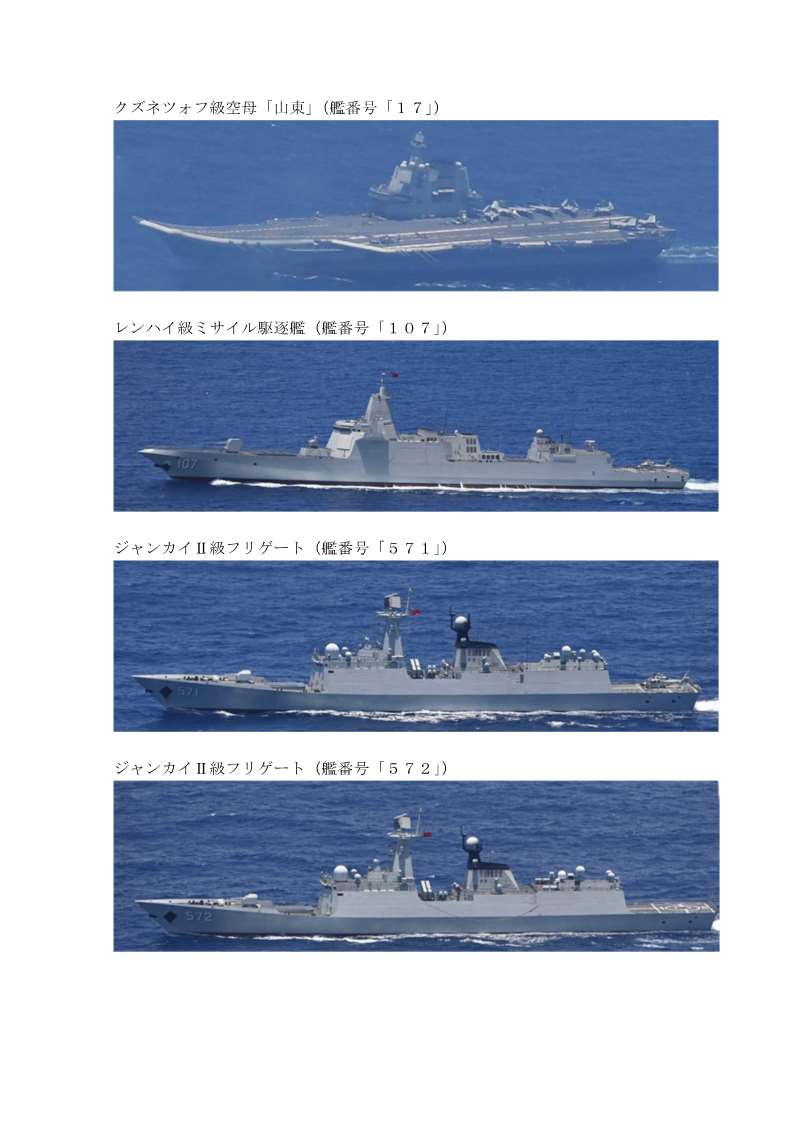
As of today, the Japanese Ministry of Defense reported the Shandong task group moving northeast, reaching a point north of the island of Okinotorishima, Japan’s southernmost territory. In the process, the Shandong has been conducting flight operations, including flying J-15s and helicopters within Japan’s exclusive economic zone (EEZ) around the island. The EEZ extends to a distance of 230 miles around Okinotorishima.
Naval operations within another country’s EEZ are permitted under international law, as part of freedom of navigation and overflight.
Similarly, the PLAN is entirely within its right to operate in and around and beyond the various island chains. However, the significance of carrier operations here, especially involving two task groups, is something that Beijing will be keenly aware of.
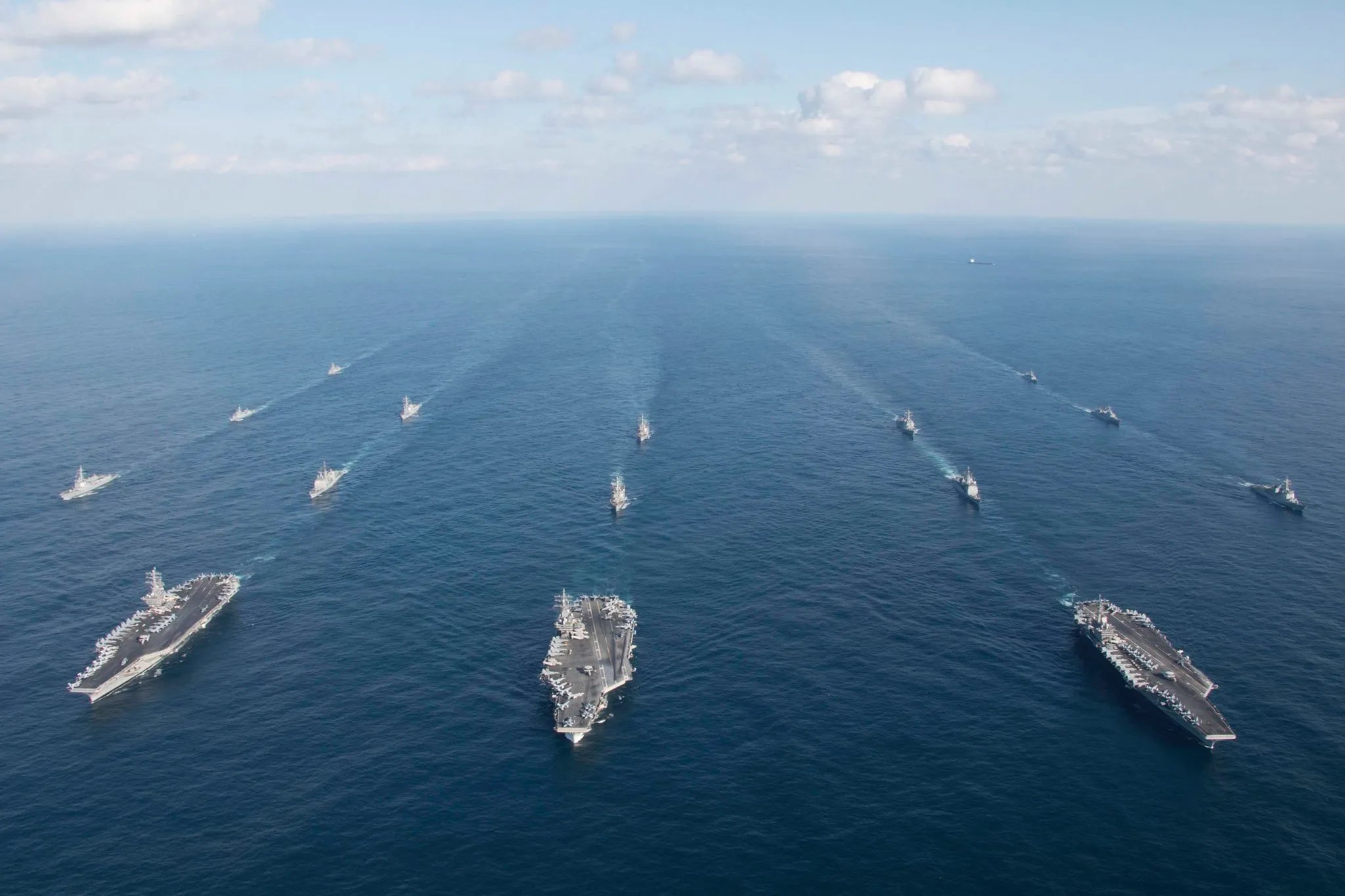
After all, the island chains were created by the United States as tools of foreign policy, serving above all as strategic lines of defense to keep China’s naval forces in check. By projecting its expanding naval power beyond these lines, Beijing demonstrates how it could, in a conflict scenario, contest the ability of the U.S. military and its allies to access these critical areas and the broader Pacific.
Meanwhile, the PLAN’s fast-growing carrier force is a very visible and increasingly important tool as China, more generally, extends its reach further out into international waters, including beyond the Pacific.
While the Chinese Foreign Ministry may stress the “defensive” nature of the PLAN vessels’ activities, in wartime, they would very much be on the offensive, with carrier power at the forefront, to challenge for control of vast areas of the Pacific.
With that in mind, the PLAN’s current dual-carrier deployment in the western Pacific is in keeping with ambitions to build a credible blue-water navy that is large and capable enough to challenge even the U.S. Navy.
Before too long, PLAN carrier task groups are also likely to be prowling around Guam, and venturing farther east, toward Wake, Midway, and eventually Hawaii. This is also in line with PLAN operations increasingly outside of its traditional areas of activity, including a growing focus on deployments around Alaska and in the High North.
It should be noted that the Liaoning and Shandong already conducted a joint operation last October, but didn’t on that occasion venture beyond the South China Sea. Even so, dual-carrier operations in these tense waters also constitute a powerful symbol of Beijing’s military and territorial ambitions.
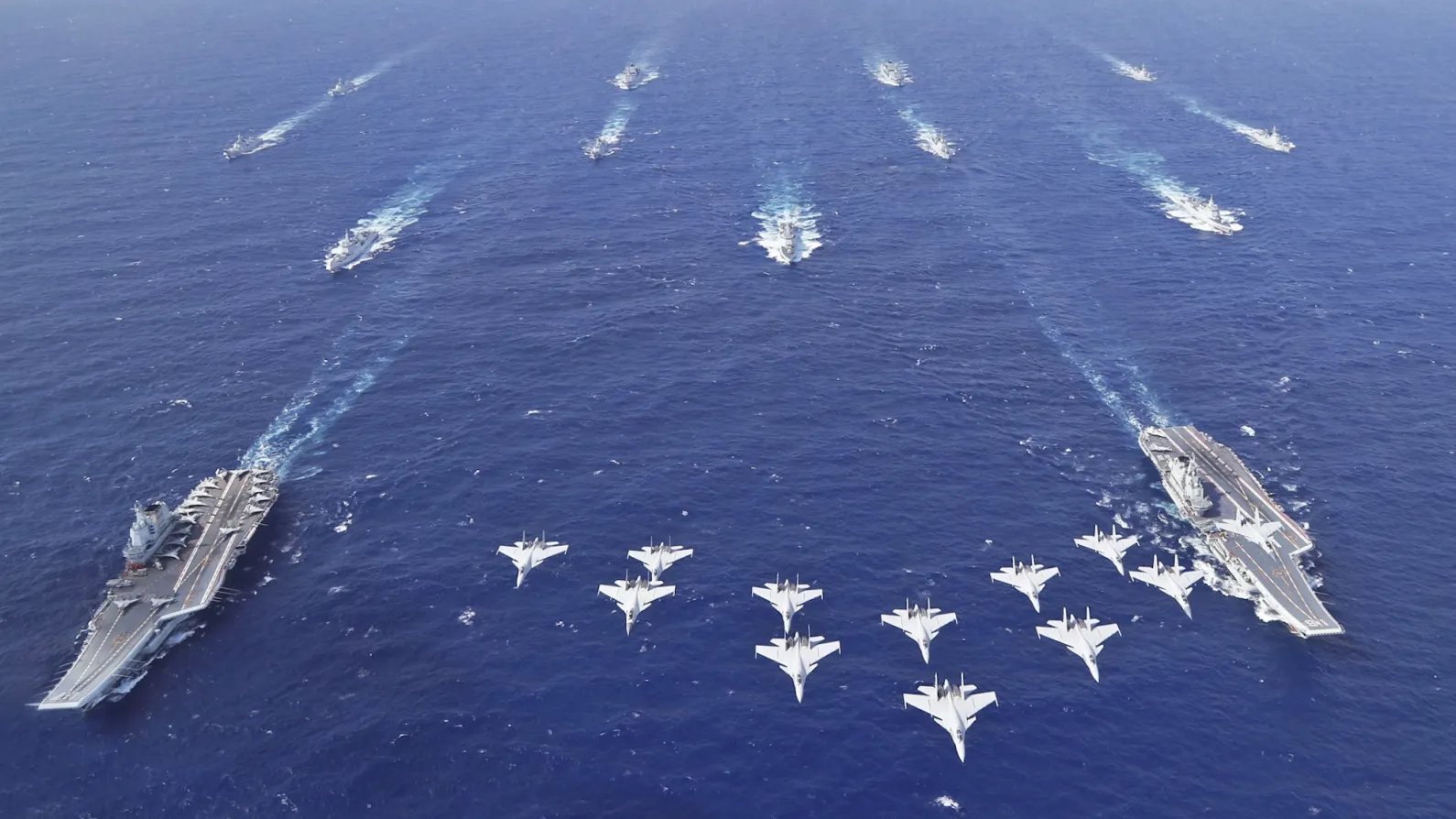
With China’s third aircraft carrier, the Fujian, now conducting pre-commissioning trials, it’s only a matter of time before three PLAN flattops are able to conduct joint operations out into the western Pacific — and beyond.
A useful comparison of the Chinese aircraft carriers Liaoning (CV-16), Shandong (CV-17), and Fujian (CV-18):
With so much hardware under construction, the PLAN will have the ability to project that much more capacity in the future. The growing size of the PLAN blue-water fleet means that Chinese naval power becomes an even harder problem to deal with, with the potential for Chinese warships, including carriers, to be in a lot of places at once.
Clearly, China’s carrier power is still far more limited than that of the United States, but with at least another carrier under construction, together with big-deck amphibious assault ships, Beijing’s efforts to counter the U.S. Navy and its allies in the Indo-Pacific region show no sign of slowing.
Contact the author: thomas@thewarzone.com
Loading comments…
Comments couldn’t be loaded. Please refresh the page.