
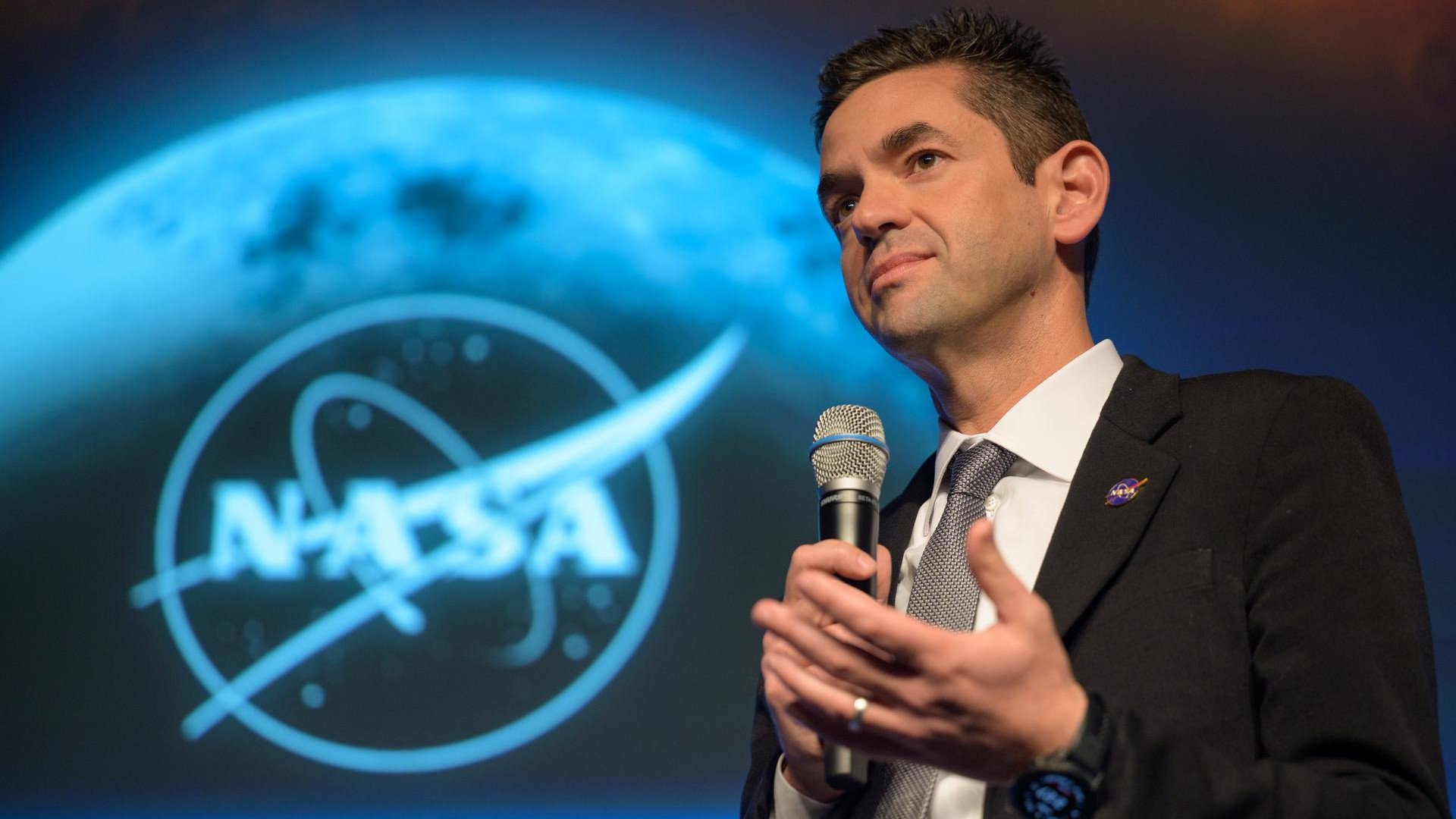
NASA Administrator Jared Isaacman says a new X-plane will be announced at the Max Power exhibition at the Kennedy Space Center in Florida this coming weekend. He insisted, however, that this is unrelated to an SR-71 Blackbird that mysteriously disappeared from public display earlier this year. Isaacman also deflected a direct question about that SR-71 and the possibility that it could fly again, quipping that “we’re just cleaning it, man.”
Isaacman made his new remarks about the SR-71 that had been on display, commonly referred to by the tail number 844, and NASA’s broader X-plane plans on a new edition of NASASpaceflight’s The Flame Trench podcast, which was posted online last Friday. 844 had been on display at NASA’s Armstrong Flight Research Center, which is co-located at Edwards Air Force Base in California, following its retirement in 1999. This particular SR-71 had been the last flying Blackbird.
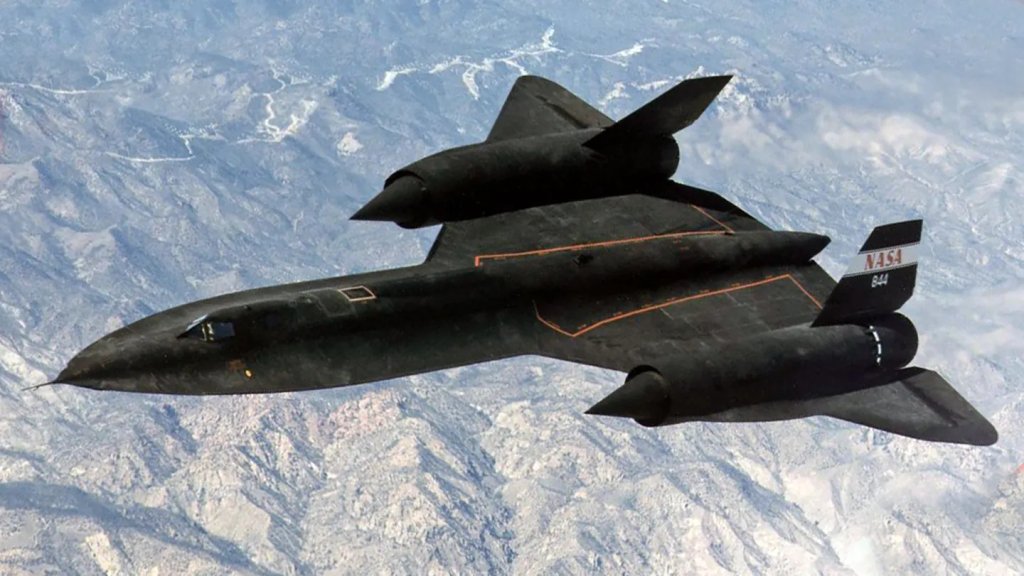
“I gotta ask, has 844 been powered on yet?” Eric Johnson, a science, technology, engineering, and mathematics educator and streamer, who was also on the podcast, asked Isaacman.
“So, we’re just cleaning it, man,” Isaacman said in response, with a smile and a small laugh. “It was so dusty out there in the desert, and it just felt like it needed a cleaning.”
The possibility that NASA has at least been exploring returning an SR-71 to flight in some configuration has been a hot topic of discussion since September. At a conference that month, Isaacman appeared to tease that possibility, or that his agency was eyeing a follow-on of some kind, with cryptic remarks and an image of a distinctly Blackbird-like silhouette. The matter of the ‘missing’ SR-71, as well as reports that NASA has been courting former SR-71 program members for a return-to-flight effort, subsequently emerged.

“Since I didn’t answer your question that you asked before, I will give you some insight that we will announce a new X-plane at it [Max Power], and it is not the one you’re thinking about,” the NASA director said in an ensuing discussion on the podcast about that event, which is set to kick off on Saturday. “I am gonna deliver on the promise there will be more X-planes.”
Isaacman has openly pledged to revitalize NASA’s X-plane portfolio on several occasions, including during a town hall with NASA staff on just his second day on the job in December 2025.

While on The Flame Trench podcast, Isaacman also noted that he had just been out to Armonstrong recently, primarily to mark the naming of Troy Asher as the facility’s new director.
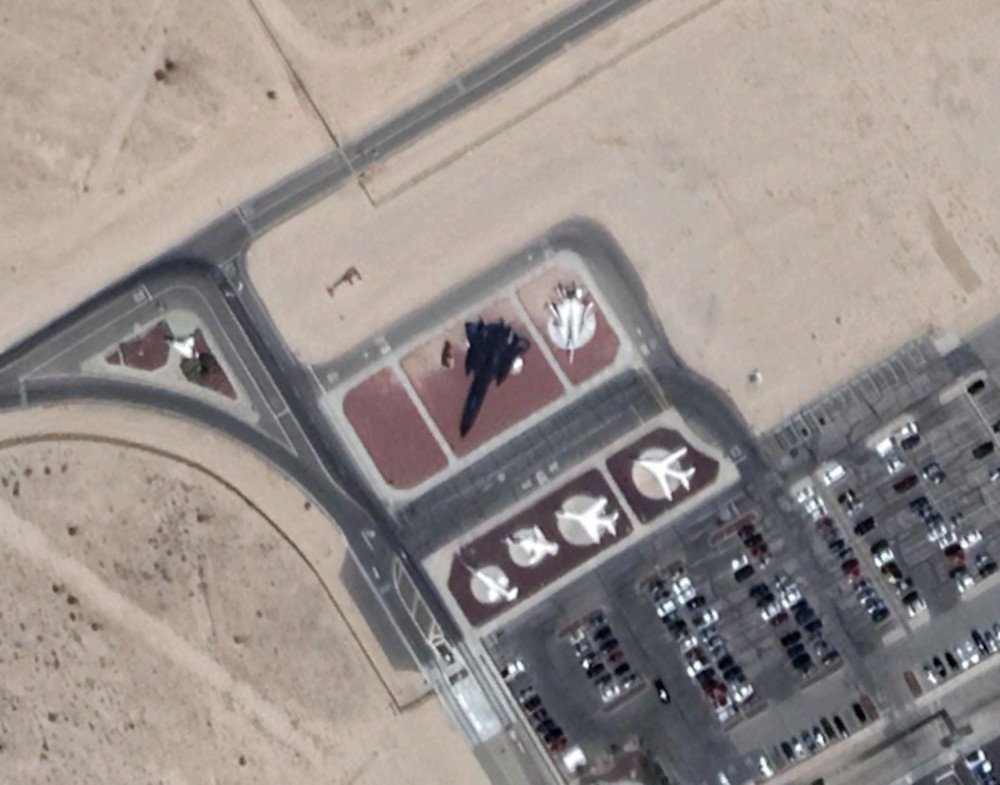
“They know to speed up when we go past the outdoor museum. They definitely don’t want me out –” the head of NASA said of that recent trip, before Johnson interjected with a tongue-in-cheek remark that they didn’t want him “cleaning more planes, right?”
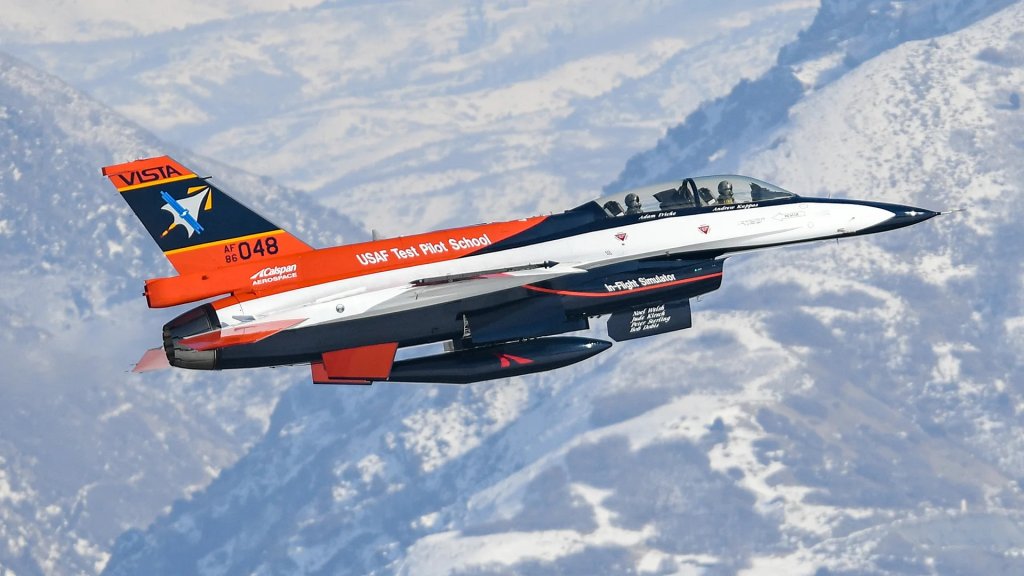
“I was like, is there anything else?” Isaacman added immediately afterward. “You know the F-16 VISTA, pretty cool plane. Got some cool jets.”
The “F-16 VISTA” mentioned here is the Variable Stability In-flight Simulator Test Aircraft, a heavily modified two-seat F-16D Viper fighter that is now designated as an X-plane, the X-62A. The X-62A is in active U.S. Air Force service as a testbed based at Edwards. NASA’s museum at Armstrong does have several other retired jet-powered X-planes on display, including a delta-winged F-16XL and an X-29 with its distinctive reverse-swept wings.
As noted, Isaacman is an outspoken advocate for new X-planes, including types that could be capable of supersonic or even hypersonic flight. This has been reflected in NASA budget proposals and the prior announcement of a new Aeronautics Flight Accelerator (AFA) initiative.
At the aforementioned conference in September, Isaacman had also pushed back on the idea that the silhouette he had shown in his presentation was of an SR-71, despite it having a host of features in line with the Blackbird’s iconic shape. He declined to elaborate further at that time, but did say that “NASA is getting back in the business of flying high and fast again.”
“NASA has a long history of building and flying experimental aircraft that push the boundaries of what is possible,” NASA told TWZ at that time when asked for more information. “As Administrator Isaacman has said, we want to see more X-planes flying in the years ahead, developing the technologies that will allow us to fly higher, farther, and faster than we have in decades. We look forward to sharing more as those efforts progress.”
“NASA has a long history of pushing the boundaries of experimental aviation, and we continue to explore opportunities to build on that legacy,” the agency told us again following the initial story on the disappearance of 844 from Aviation Week. “As Administrator Isaacman has said, we want to see NASA flying higher, farther, and faster than we have in decades. We recognize the interest in the SR-71 and its remarkable history at NASA but have no additional information to share regarding the aircraft at this time.”
TWZ has reached back out to NASA today in light of Isaacman’s latest comments.
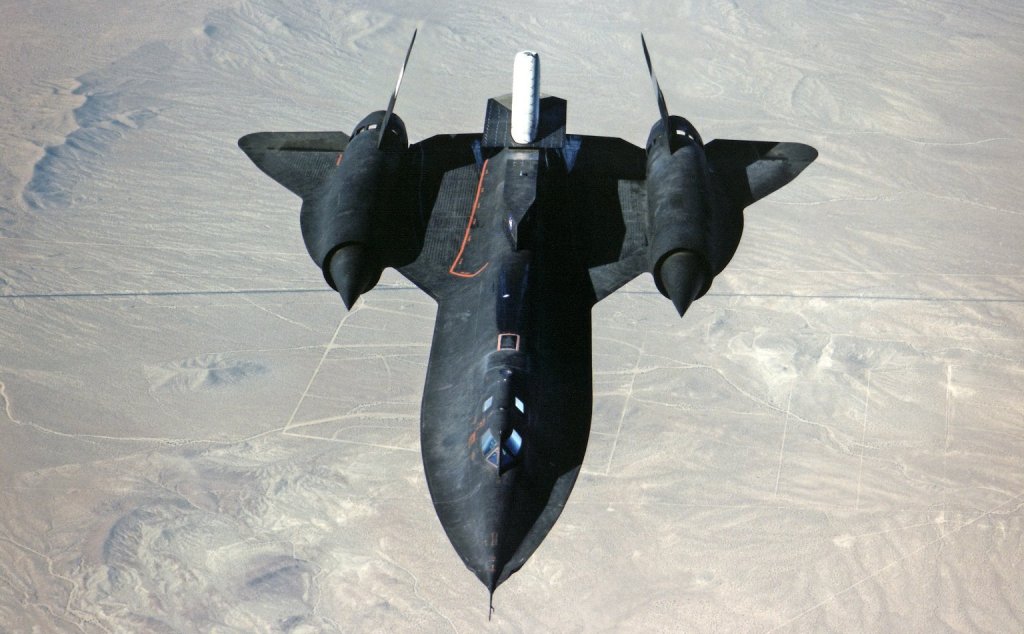
There do continue to be significant questions about the viability and practicality of returning even one SR-71 to flight, as we have detailed in our previous reporting. At the same time, getting a Blackbird flying again could be seen as being worth the cost and complexity given the unique high-flying, high-speed testbed the aircraft would offer. This entire discussion comes at a time when very high-speed flight is back in vogue, particularly within the U.S. military, but also in America’s commercial aviation sector.
“One of the reasons why there’s interest in this speed regime, it was neglected for a number of years. The focus was on hypersonics. If you proposed anything going back, say, 15 years in the Mach 3.5 speed regime, it was ignored,” Tim Conners, an engineer who worked on the SR-71 program at NASA, told us in an exclusive interview published earlier this month. “The glitz and glamor was on hypersonics. Hypersonics is great tactically for certain scenarios, but the weaknesses of hypersonics are now becoming apparent.”
“And as far as countermeasures, hypersonics still has a place. Don’t get me wrong, but every system cannot be hypersonic from an affordability standpoint. So, now you’ve seen it over the last, say, five years. A lot of systems are coming back on the scene that operate in the Mach 2 to Mach 4 regime, and there’s a reason they’re all fitting in there, right?” Conners, who is now technical director for advanced weapons systems at Tiberius Aerospace, continued. “You stay below the speed limit that requires more exotic metallics. You stay in the titanium regime. You can fly, of course, up to [Mach] 3.5 with brief excursions up to about [Mach] 4, so that is tactically relevant against a lot of military targets and defensive systems. So here it is. You know we now have a potential flying test bed that can carry engines in the J58 size class.”

“They probably are not going to do this for — or trying to do this — for aerodynamic reasons. You can do CFD [computational fluid dynamics]-based modeling in this speed regime all day long and very accurately in this day and age. It does not take a lot of time or money to do that,” he also added. “What you cannot do is an accurate representation of a new type of engine integrated into a high-speed airframe. You can do the conceptual modeling of it. Of course, it’s difficult to get the final installed answer, especially if it involves an engine that operates at long duration. That is where I think they’re going with this. I believe that they’re developing basically a high-speed engine test bed. That would make the most sense to me.”
TWZ has also laid out in detail how the process itself of making an SR-71 flyable could be immensely valuable, including for informing follow-on developments. As we have noted in the past, it is possible that what NASA is doing with 844 now could be intended as a stepping stone to a new X-plane. There is also a potential for the aircraft to re-emerge in a substantially reworked form, potentially configured for pilot-optional or even completely uncrewed operation. However, any such conversion effort would be a different kind of major undertaking.
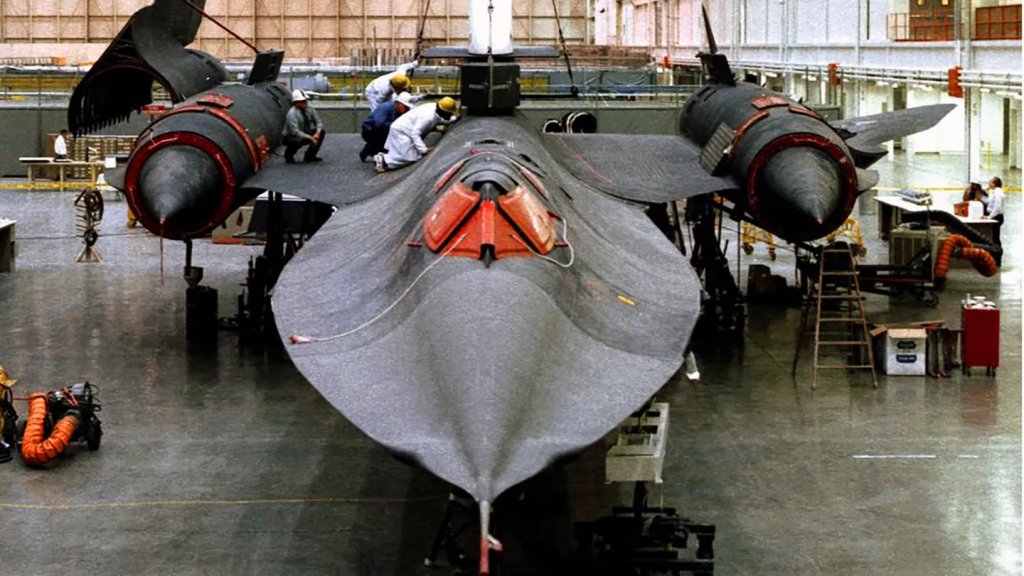
How any of this may or may not relate to the plans for the new X-plane that Isaacman mentioned remains to be seen. Even within the context of high-speed flight, NASA is publicly pursuing advanced technology developments in various different directions.
The main face of the agency’s X-plane work currently is the X-59 Quiet SuperSonic Technology (QueSST) jet, which has now flown 41 test flights since taking to the skies for the first time in October 2025. The X-59, which will also be present at Max Power, has been able to reach a top speed of Mach 1.53 and get up to an altitude of 56,000 feet in the course of that testing. The central goal of the QueSST program is to prove out technologies that could eventually enable commercial supersonic flight over land with a substantially reduced sonic boom. With this in mind, the X-59 has been in no way designed for the kind of extreme speeds the SR-71 is capable of reaching.
Max Power is “turning into a big exposition. I think you’re going to have a lot of stuff on display there, from space to VTOLs [vertical takeoff and landing designs], [and] drones. And for sure an air show will be a component to it,” NASA’s Isaacman said on The Flame Trench podcast. “From here forward, we might be trying to make a run at putting some real infrastructure on that next to that runway [at t the Kennedy Space Center], and trying to create our own kind of Paris/Farnborough type, Dubai type, event here.”
Isaacman was referring here to the Paris Air Show, Farnborough International Air Show, and Dubai Airshow, all of which are major biennial events that aerospace firms globally routinely use as showcases for new developments.
In the meantime, what we do know now for sure is that we are set to get details about at least one new NASA X-plane this coming weekend at Max Power. There may also be new hints about what the future holds for SR-71 tail number 844.
Contact the author: joe@twz.com
Loading comments…
Comments couldn’t be loaded. Please refresh the page.