
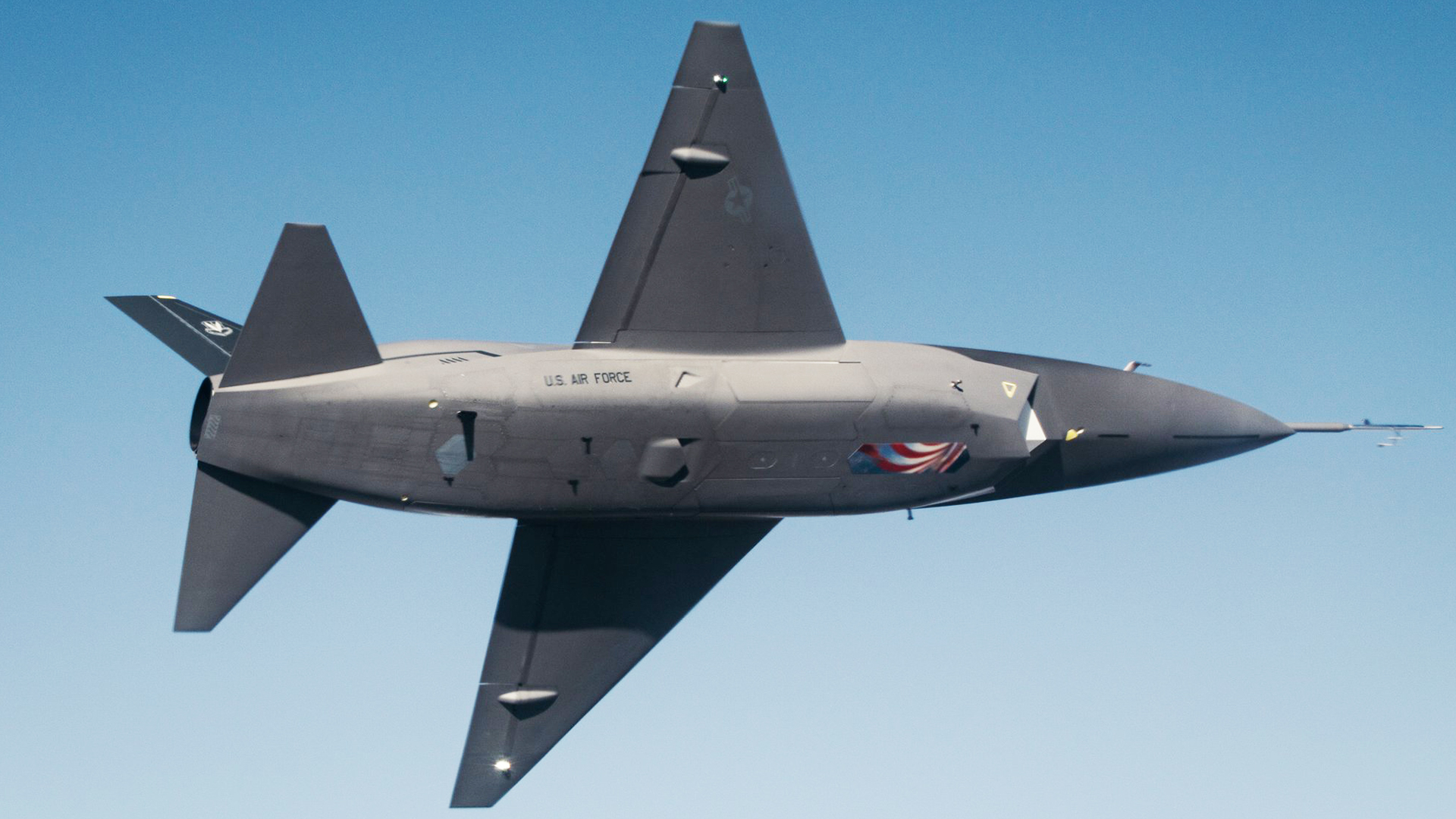
Anduril’s YFQ-44 Fury Collaborative Combat Aircraft (CCA) caught the attention of aircraft trackers yesterday evening when it appeared to leave its developmental home at the Southern California Logistics Airport in Victorville and flew alongside its Learjet chase aircraft west. The pilotless ‘fighter’ would end up recovering at America’s central hub for uncrewed aircraft operations, Creech Air Force Base in southern Nevada, home of the MQ-9 Reaper and RQ-170 Sentinel. It is the first time that we know of that Fury has been hosted at Creech. TWZ has now found out what Fury will be doing there and what it will soon be joined by.
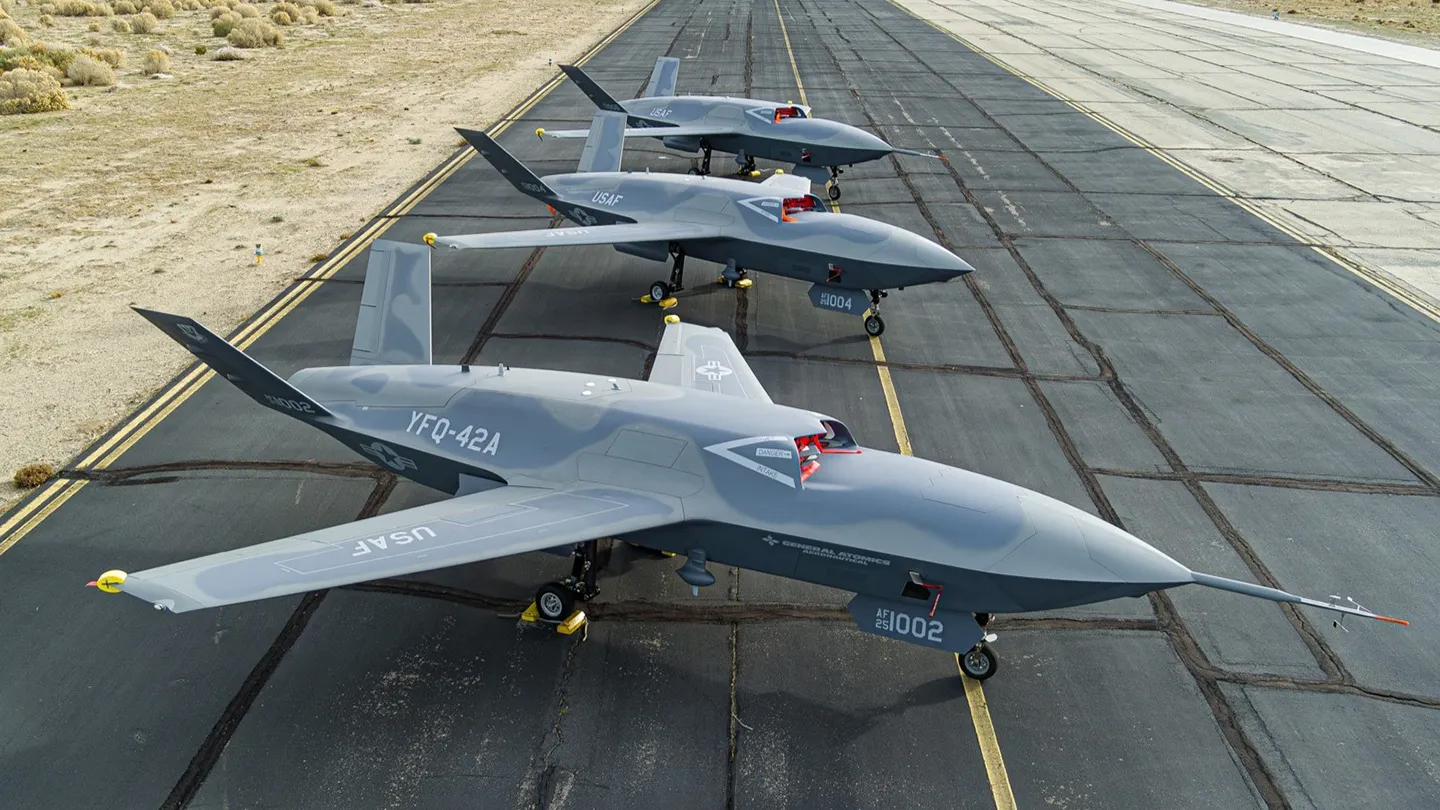
The USAF’s CCA program is really picking up steam, with both of the Increment One down-select aircraft – Anduril’s YFQ-44 Fury and General Atomics’ YFQ-42 Dark Merlin – having been chosen for production. Now, the next step in their ongoing development is imminent. Both types will be hosted by Creech for an exercise that will test the CCAs’ ability to operate from austere locales with minimal logistical footprint, and often on the move from location to location, under the USAF’s Agile Combat Employment (ACE) combat doctrine. This operational concept was baked into the CCA requirements from the get-go, which you can read all about here.
A USAF spokesperson responded to our inquiry about Fury’s arrival at Creech with the following statement:
“From July 20-24, 2026, the Air Force Collaborative Combat Aircraft (CCA) Experimental Operations Unit (EOU) is conducting an Agile Combat Employment (ACE) exercise at Creech AFB, Nevada. Military operators are leading end-to-end ground and flight operations for both the YFQ-42 and YFQ-44 to build tactical concepts, test lean sustainment, and refine Air Force-led human-machine teaming alongside observers from the Royal Netherlands Air Force.”
“CCA testing is taking place at a combination of government-owned and contractor-owned facilities. Testing is occurring at sites that allow us to evaluate CCA performance in realistic operational scenarios. Further details are protected for operational security.”
The CCA EOU was stood up exactly for these kinds of trials. The unit is working to blaze a path for the service to operationalize its CCA ambitions, and its personnel certainly have their work cut out for them. Some of the biggest concerns surrounding the CCA concept have more to do with logistics, maintenance, integration with the manned fighter force, and above all else, building trust, than with how they will shoot down other aircraft. This exercise is clearly aimed at reducing risks in these areas and adding clarity to what pages will be needed in the USAF’s future CCA playbook.
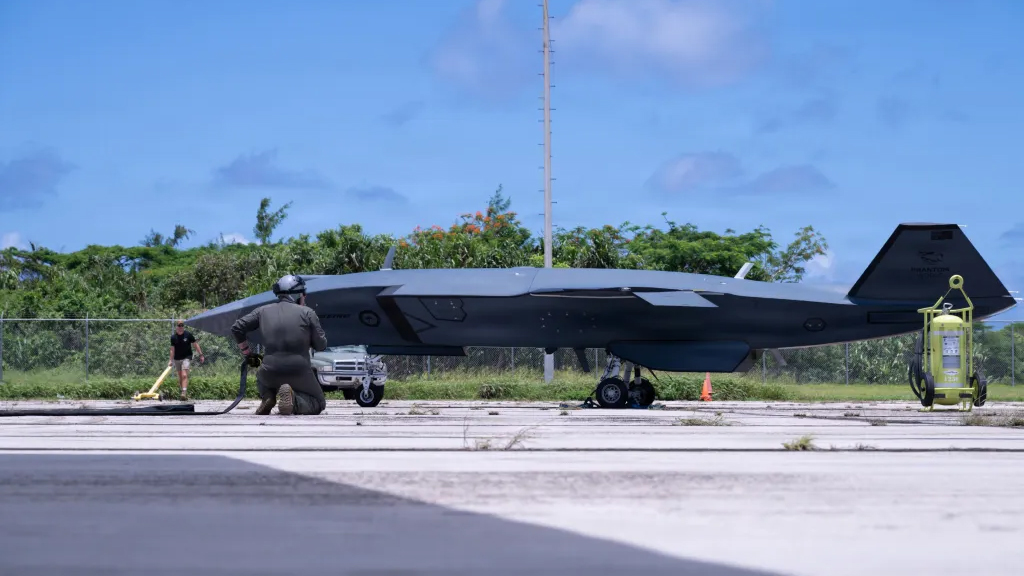
The timing is especially relevant, too. The EOU just got done with testing the same ACE concepts in the Pacific with Boeing’s MQ-28 Ghost Bat CCA as part of Exercise Valiant Shield. This should provide a good baseline to compare with the capabilities of the YFQ-44 and YFQ-42.
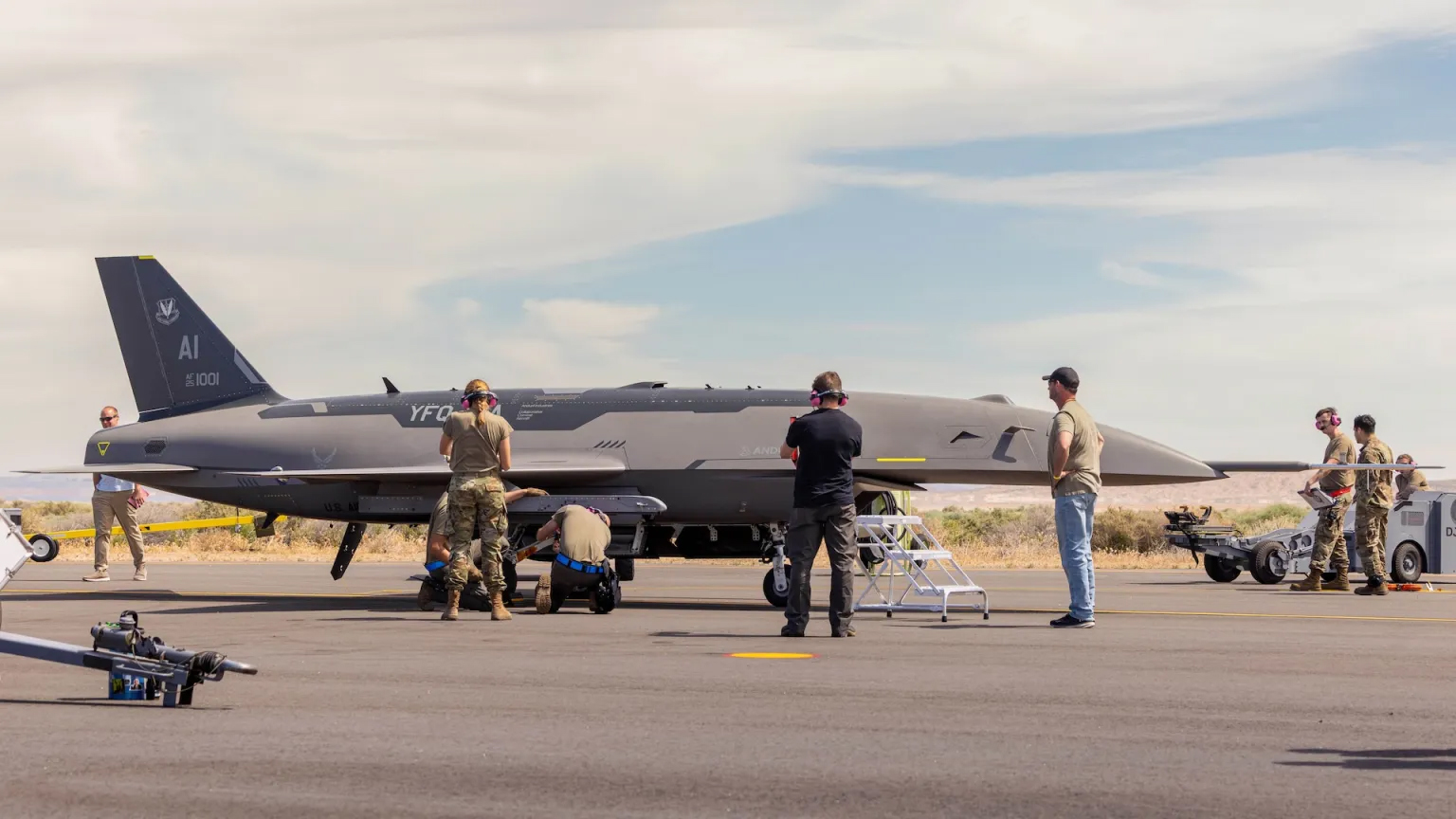
A similar exercise happened at Edwards Air Force Base in California in April of this year, but, at the time, just the YFQ-44 Fury could attend. The Dark Merlin had an accident and was in a stand-down period while the cause was understood and resolved. Dark Merlin has been back in the air for some time now, and the USAF placed a huge vote of confidence in both designs with their decision to move them into production.
It’s also worth noting that the Fury that flew to Creech AFB, serial number 25-1003, was the same one that recently made history as the first American CCA to fire an air-to-air missile.
There is a remarkably large amount of pressure on the CCA program, overall. Much is being bet on this technology as a way to help provide the USAF’s aging force with a tactical edge and to furnish the combat mass needed to confront a near-peer opponent on their own turf – China. And this adversary is moving ahead with its own loyal wingman efforts at what appears to be a rapid pace.
Regardless, there is still much to learn about actually employing CCAs in a true end-to-end combat context, and this appears to be what this latest exercise at America’s premier drone base is all about.
Contact the author: Tyler@twz.com
Loading comments…
Comments couldn’t be loaded. Please refresh the page.