
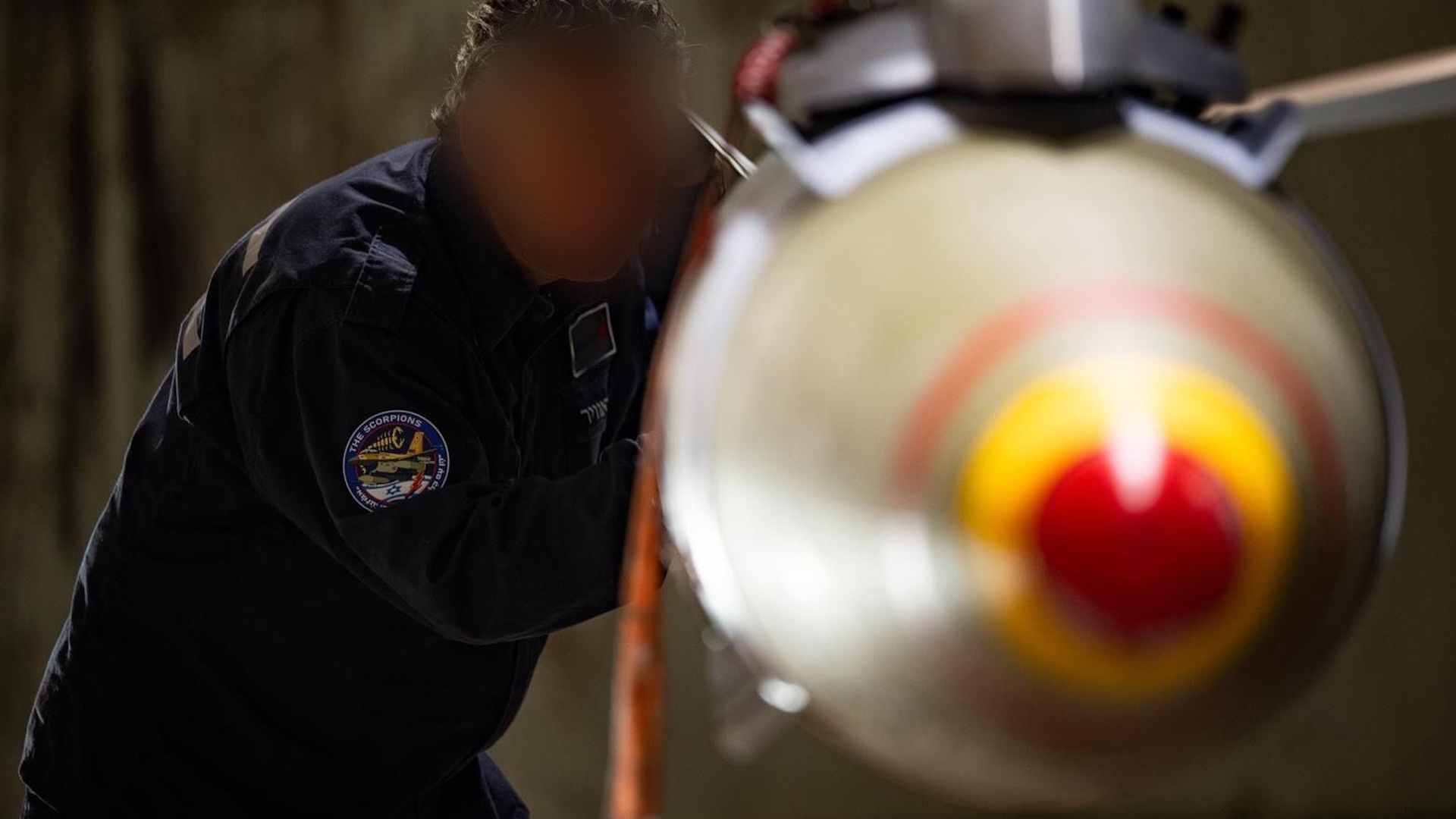
Less than a week into Operation Epic Fury, we have seen a wide variety of munitions used by the U.S. and Israeli militaries and have previously looked at how their employment evolved as the conflict has progressed. We have also gotten a look at an apparently mysterious version of the widely used Joint Direct Attack Munition (JDAM) in Israeli Air Force (IAF) service.
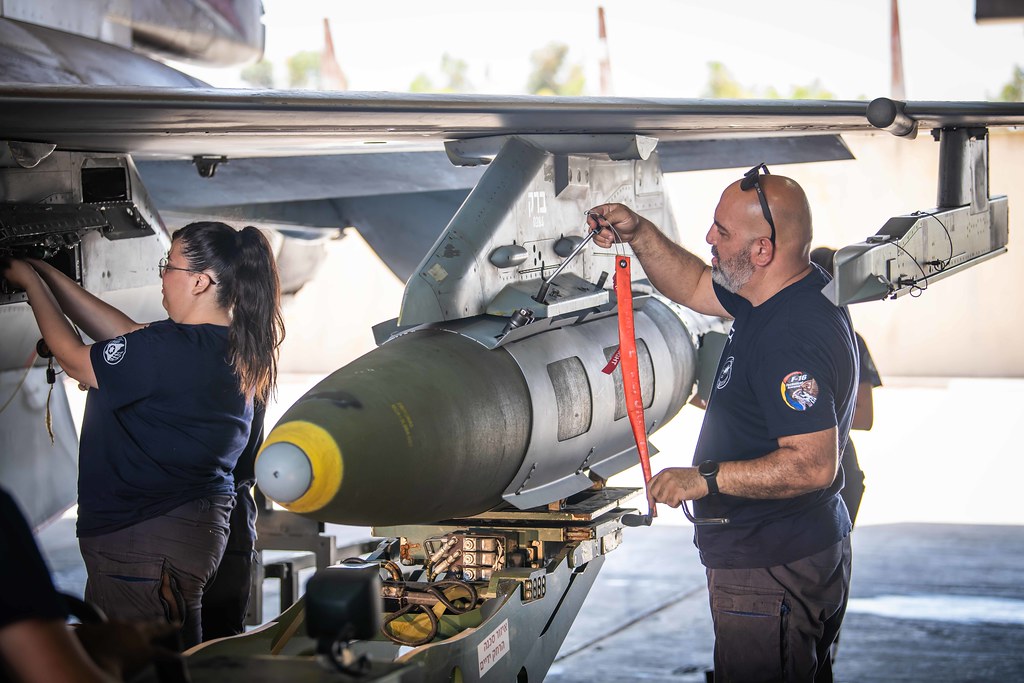
The imagery in question, showing two unusually marked 2,000-pound GBU-31 series JDAMs under the wing of an F-16C/D Barak jet, was posted on the IAF’s official X account earlier this week. It appears some of the photos may have been subsequently taken down. The photos were presented alongside an account of missions flown deep into Iranian territory and over its capital city, Tehran, in the form of a statement from the commander of Ramat David Air Base, identified only as “Col. A.” However, no explanation of the bomb appears to have been given.
The standout feature of the JDAM seen in the photos is its markings. These include a red band around the nose of the weapon, as well as a red-painted nose plug. There is also a more familiar yellow band, which on U.S.-standard munitions indicates that they contain high explosives, around the nose.

A red band, however, is far more unusual and rarely — if ever — seen on a JDAM.
Based on U.S.-standard munitions markings, a red band can indicate an incendiary payload, while dark red on a gray panel “indicates the ammunition contains an irritant (riot control) agent.” There is a good chance that the JDAM might be an incendiary type.
One of the few fielded examples of a JDAM with an incendiary payload that we are readily aware of is the 2,000-pound BLU-119/B Crash PAD (Prompt Agent Defeat), a weapon that doesn’t seem to have been shown before.
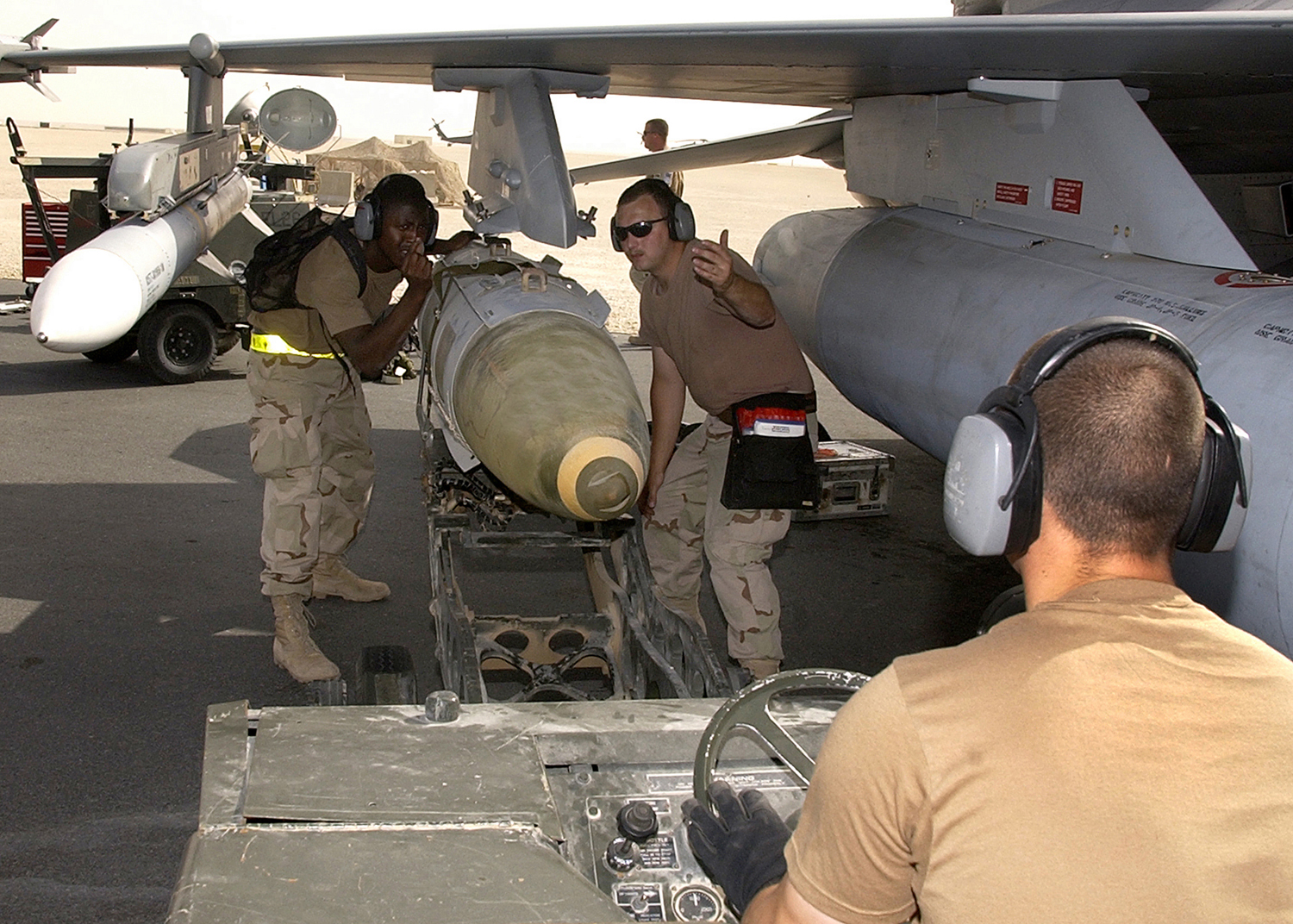
Crash PAD was intended to be used exclusively with the JDAM guidance package. Before looking at this weapon in more detail, the basic JDAM kit consists of the guidance package and control section, tailfins for steering, and strakes attached to the bomb for stability and a limited gliding capability. This kit is then mated to an existing bomb body, normally a variant or derivative of the ubiquitous Mk 80 series of weapons.
The Crash PAD was developed in 2002 as a quick reaction capability for use in Operation Iraqi Freedom in 2003. It was designed to attack chemical and biological weapon stockpiles. It does this by using a combined payload of approximately 145 pounds of PBX-109 high explosive and 420 pounds of white phosphorus.
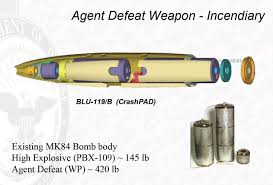
In this way, the high-explosive blast-fragmentation warhead penetrates the weapon containers, and the white phosphorus warhead defeats the agents by literally incinerating them. This is intended to minimize effects on the civilians and the environment.
There was also a similar type of weapon named Shredder, which was based on the bunker-busting BLU-109 bomb body, as used in the GBU-31 JDAM, for deeper penetration, and also with WP content, but it does not seem to have been produced. There could be other such weapons, too, also based on the JDAM, that we don’t know about.
As for white phosphorus, this remains a controversial and misunderstood weapon.
White phosphorus is not a chemical weapon, as sometimes described, since it is primarily an incendiary weapon, although it’s also regularly used for making smokescreens and for target marking. Burning at around 1,500 degrees Fahrenheit, white phosphorus can obviously inflict terrible injuries, and its use in densely populated areas violates international law.
The warhead for Crash PAD was developed by Alliant Techsystems (ATK), which received a $4-million contract in October 2003 from the U.S. Air Force Research Laboratory (AFRL) at Eglin Air Force Base, Florida. Sled-track testing took place in late January 2003, and flight test occurred in late February 2003, just ahead of the invasion of Iraq.
Details of the use of Crash PAD in Iraq are very scarce, but the weapon seems to have been retained in the U.S. Air Force inventory and, in Fiscal Year 2011, the Defense Threat Reduction Agency initiated concept studies for a BLU-119/B conversion that would use a safer, lower- cost payload fill.
Interestingly, during the Gaza-Israel conflict, the IAF released a photo of one of its AH-64D Apache attack helicopters armed with a mysterious version of the Hellfire air-to-ground missile with a prominent red stripe painted around the middle of its body, all the more intriguing.
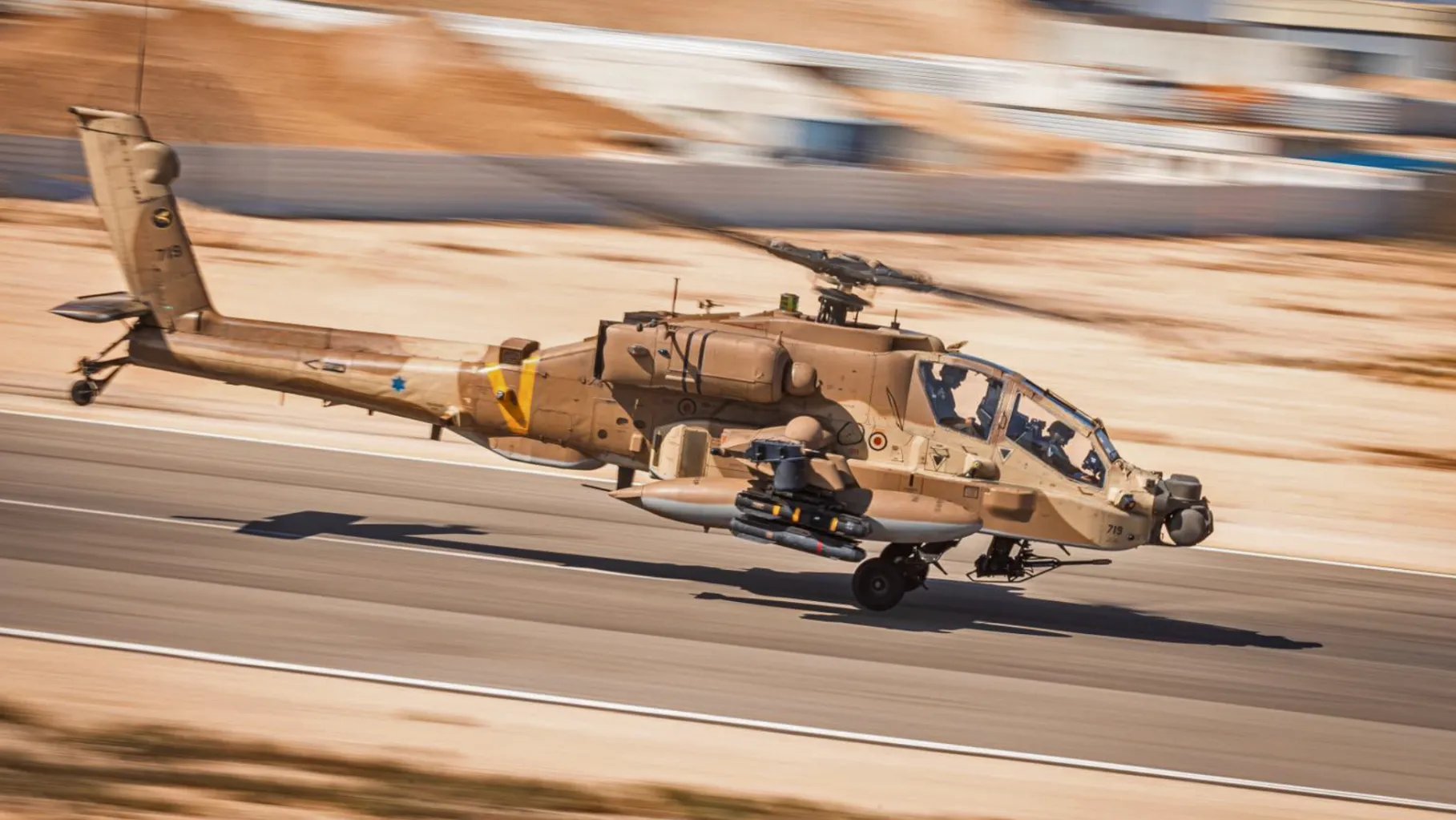
As we discussed at the time, this may well have been a version of the Hellfire with a thermobaric warhead, another type of incendiary, designed for destroying enclosed targets.
As internet chatter about the possible meaning behind the red-banded Hellfire spiked, the IAF quietly deleted the post in question, replacing it with a similar photo, this time showing a different AH-64D taking off with standard-looking Hellfires fitted.
Perhaps the red-banded JDAM was another social media slip-up, although at least one of the images is still found on the IAF’s X account.
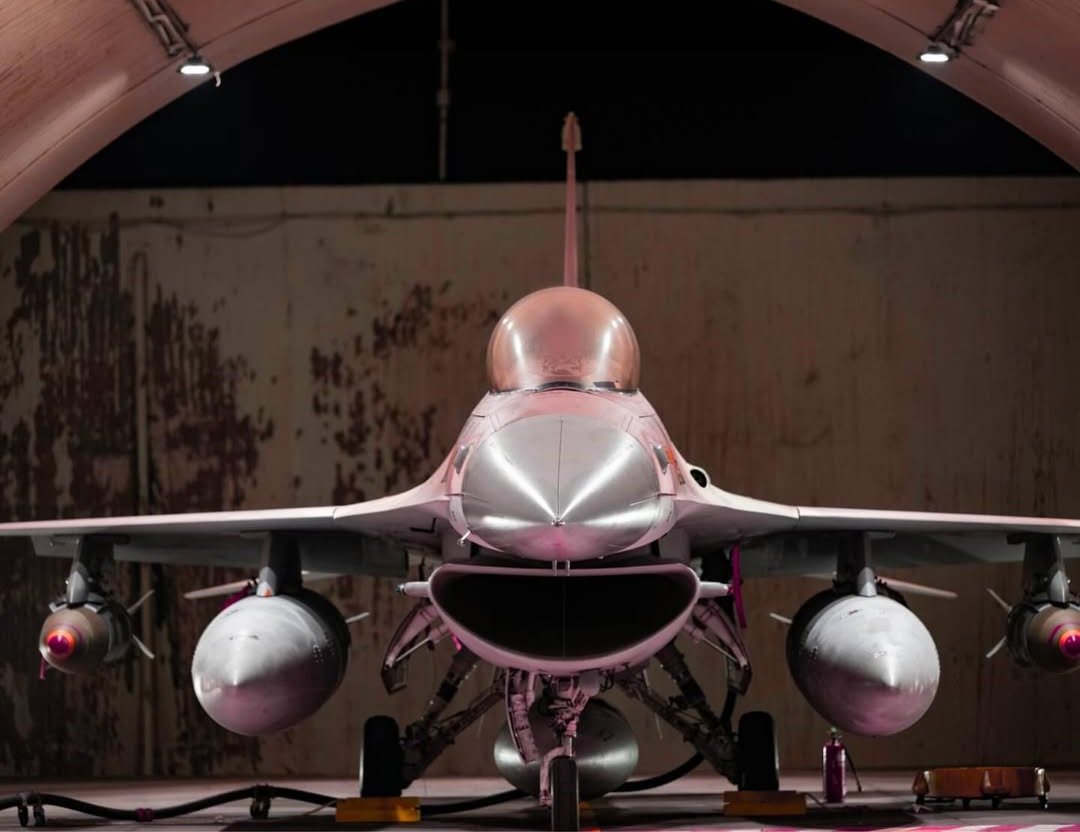
Since the Israel Defense Forces (IDF) has generally been extremely discriminating about the kinds of photos and videos that it releases for public consumption, the red stripes on the JDAM might also indicate something different altogether.
Israel has a long history of adapting U.S.-made and other weapons to its very particular needs, and the marking in question may be entirely specific to the IDF, pointing to a different, novel version of the JDAM.
Regardless, there could certainly be a role in the current conflict for Crash PAD or another agent-defeating munition.
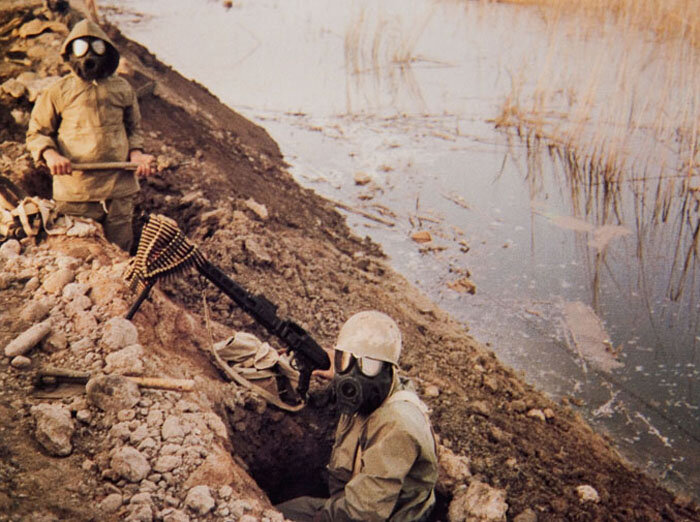
Iran was developing chemical weapons at least as long ago as the early 1980s, and allegedly used them in the Iran-Iraq War, although not on a comparable scale to its adversary.
In 2025, the U.S. Department of State reported unresolved questions surrounding Iran’s chemical and biological activities, including around experiments with pharmaceutical-based agents, and stated that Iran “has not abandoned its intention to conduct research and development of biological agents and toxins for offensive purposes.”
There could be other reasons to use a weapon like Crash PAD in Iran, possibly tied to targets that produce volatile rocket fuel and other dangerous compounds.
In a report last month, the U.K.-based International Institute for Strategic Studies (IISS) think tank assessed that “Iran’s nuclear facilities hold a range of chemical and toxic hazards.” This includes certain nuclear materials that are also highly toxic.
In the course of time, and despite the secrecy surrounding the details of Israeli combat operations, we might still learn more about what is, for now, something of a mystery munition.
Contact the author: thomas@thewarzone.com