
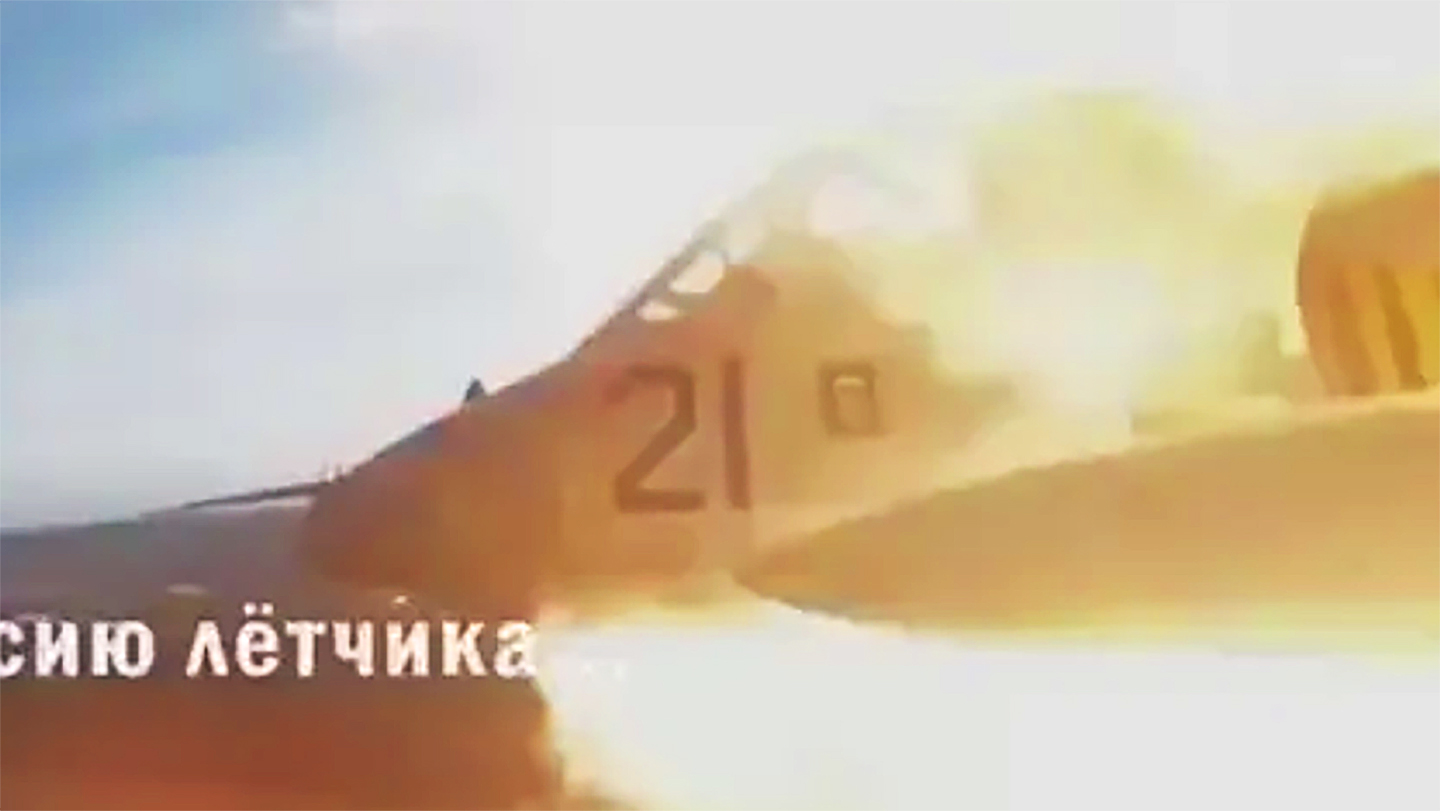
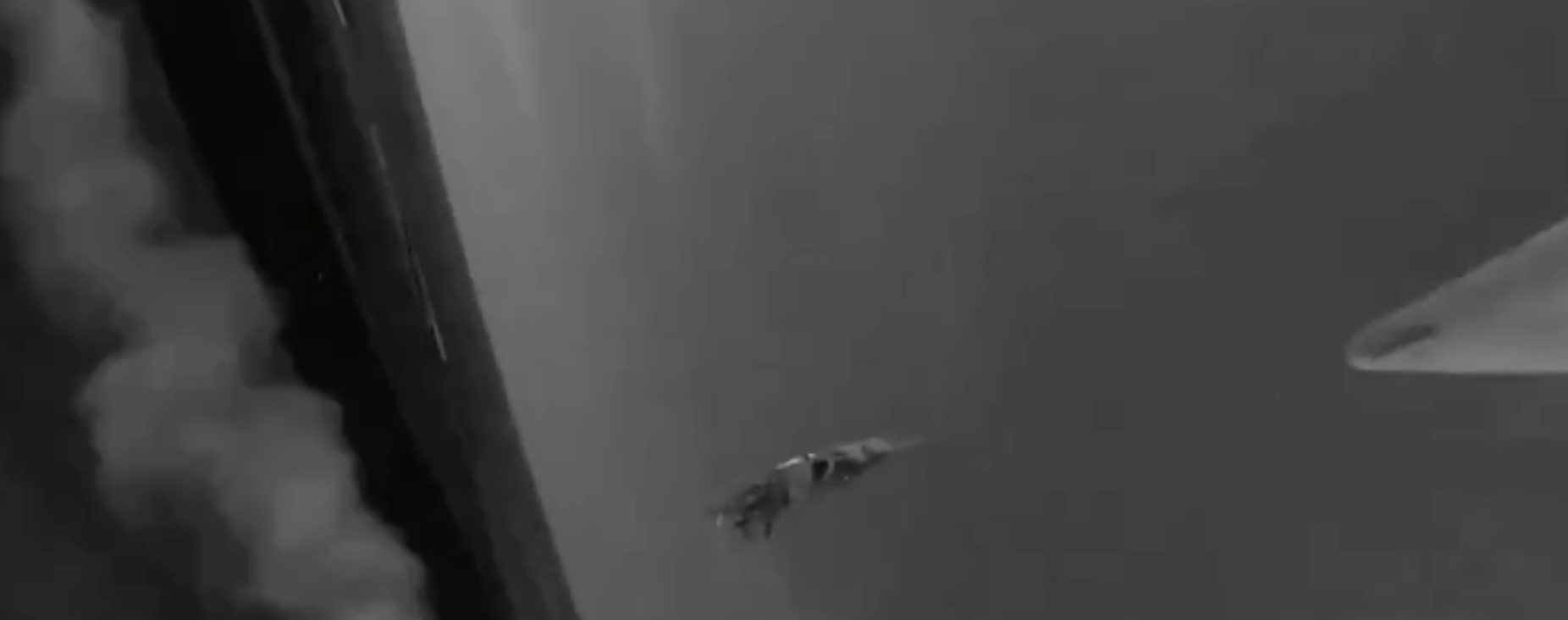
A camera mounted on the wingtip of a Ukrainian Air Force Su-25 Frogfoot close air support jet recorded the dramatic demise of the aircraft, after it was reportedly struck by a Russian long-range air-to-air missile. This is not the first time in the Ukrainian conflict that we’ve seen the destruction of a combat jet at such close quarters. However, with the death of the pilot confirmed by Ukrainian authorities, the footage is a sobering reminder of the huge risks faced by aircrew in some of the most lethal airspace in history.
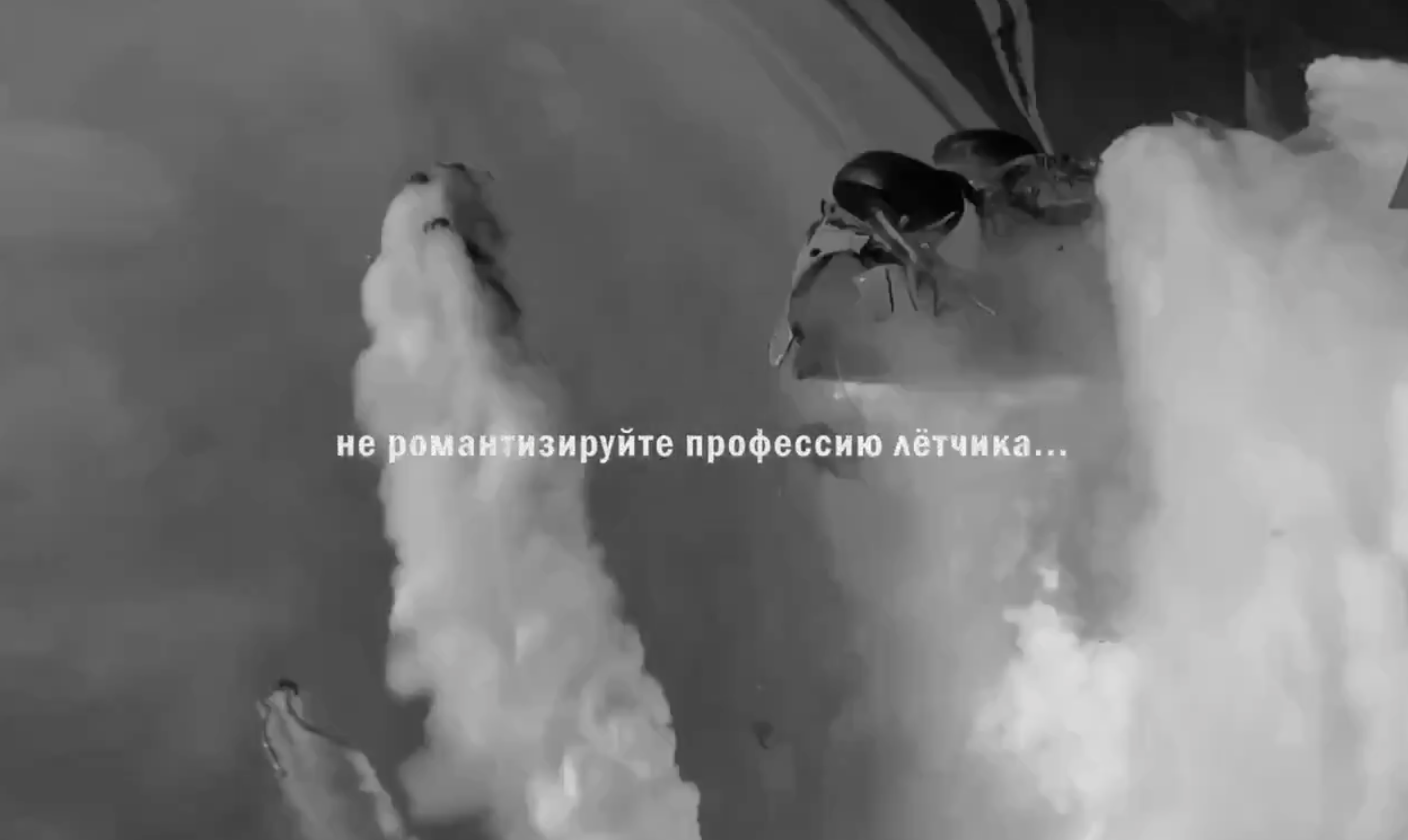
The footage in question was apparently captured by a GoPro or similar camera mounted under the starboard wing of the Su-25, which was flying straight and level when engaged. The first indication that the Frogfoot has been hit is a flash and a shower of sparks, and the suggestion that the cockpit canopy may have been partly torn away. Then, one of its external fuel tanks is seen breaking away. The aircraft starts to cartwheel through the sky, its fuselage clearly ripped open, evidenced by the exposed main landing gear. The wing-mounted camera continues to record the plane breaking up, including the forward fuselage and cockpit, now separated from the fuselage, which is burning fiercely. The wing spirals to the ground, with the sequence ending with a black column of smoke in the near distance.
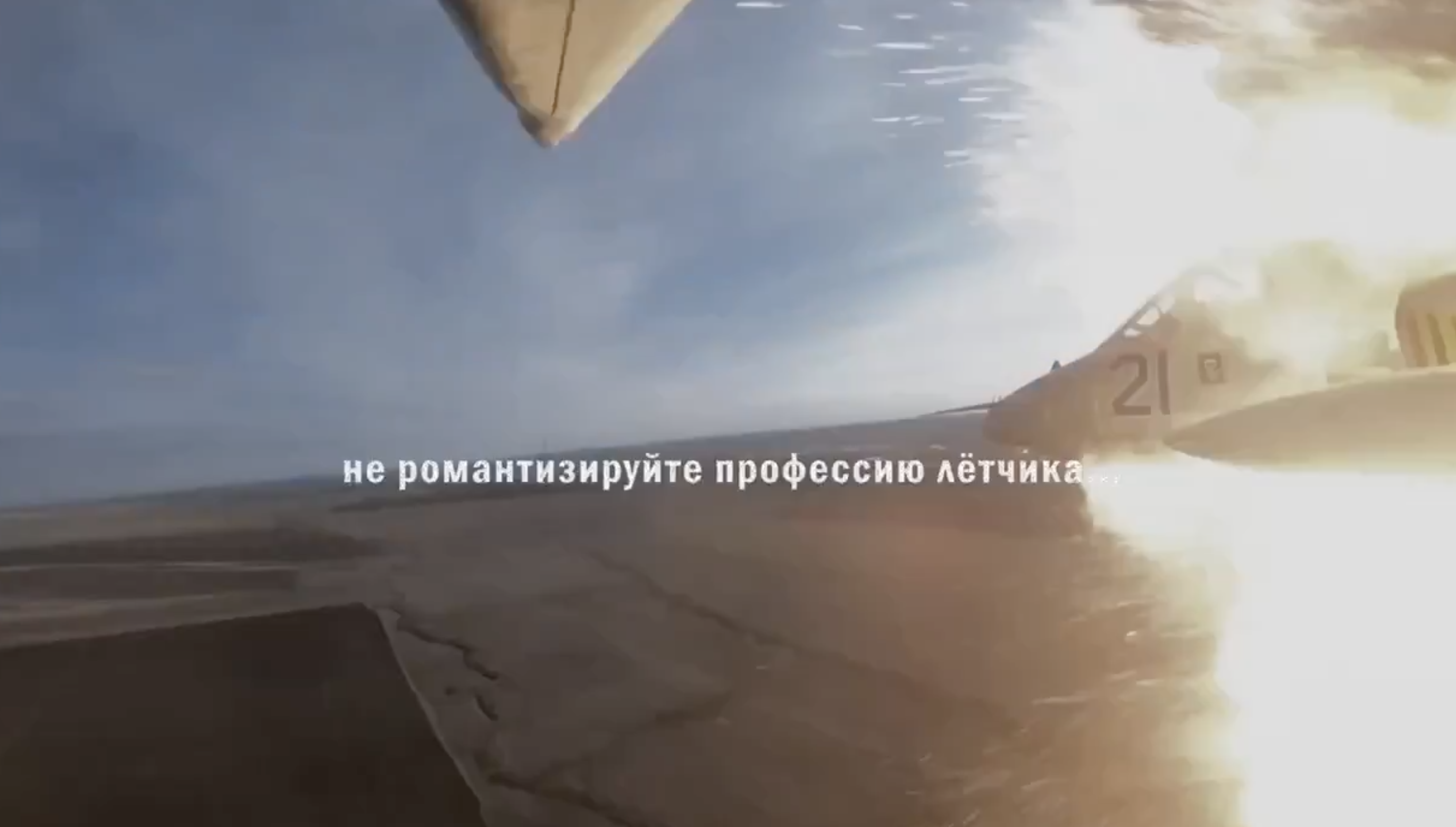
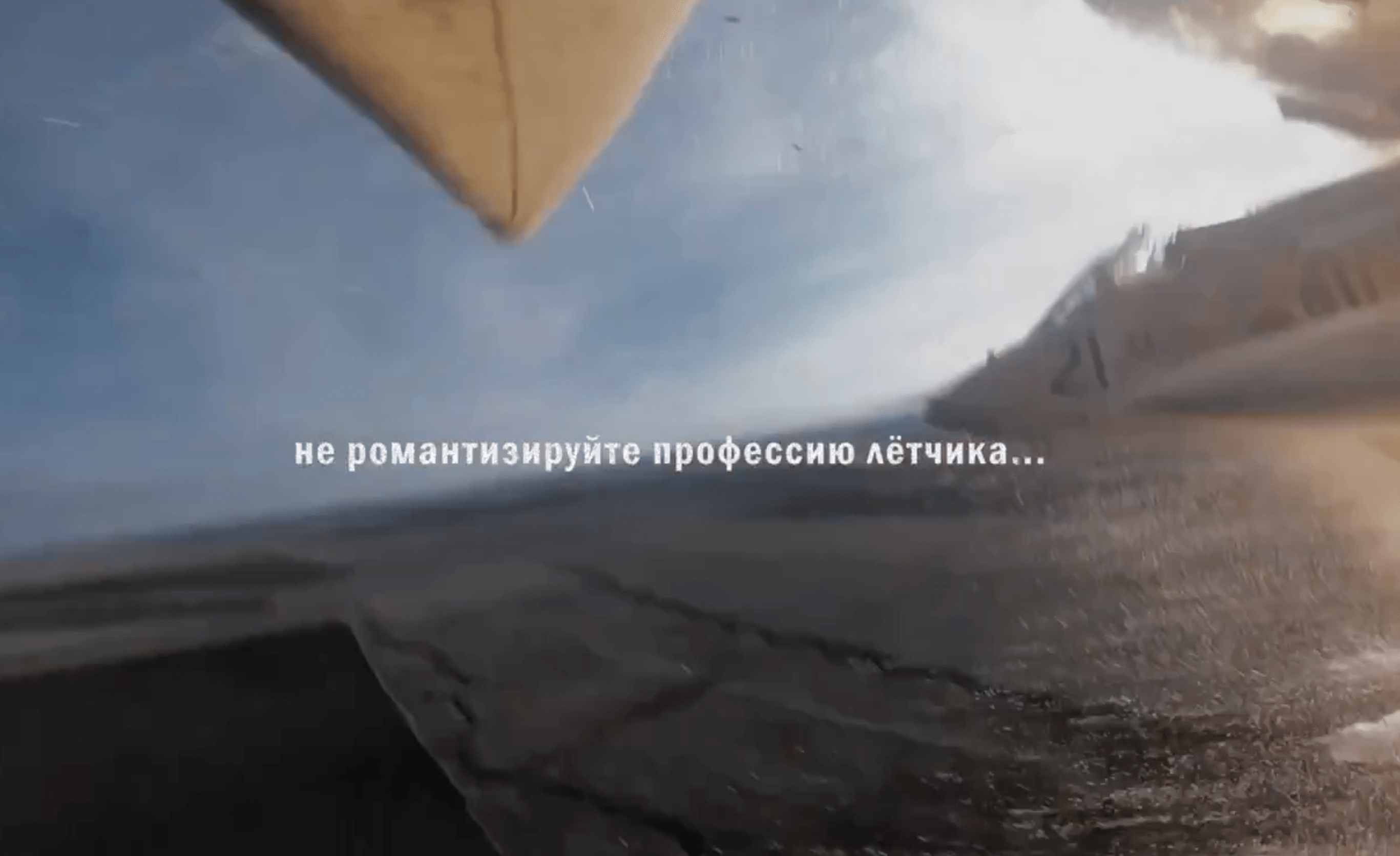
There is less than 20 seconds from the first signs of impact to the wing lying on the ground, motionless, and an indication of just how quickly the pilot’s fate was sealed. Provided they weren’t killed or incapacitated in the initial impact, there was very little time to activate his Zvezda K-36 ejection seat, if that was even an option, given the catastrophic damage.
The specific Su-25 carried the tactical number ‘21 Blue.’ It was reportedly at the controls of this jet that Ukrainian Air Force pilot Stanislav Rykov, from the 299th Tactical Aviation Brigade, was killed during a sortie on February 7, 2024. Rykov was described as one of the more experienced ground-attack pilots in the force, with 385 combat sorties to his name.
Soon after his death, fellow Ukrainian Air Force pilot Rostyslav Lazarenko posted on Facebook. “My heart was ripped out yesterday.” He added that Rykov “was the best pilot and commander I knew.”
The exact whereabouts of Rykov’s loss were not reported by the Ukrainian side, although a Russian Ministry of Defense briefing stated that a Ukrainian Su-25 was destroyed on the same date, close to the settlement of Novotroitske, in the Donetsk region of eastern Ukraine.
Exactly why the video only began to circulate in public now is not clear.
Multiple unconfirmed accounts suggest that the weapon responsible for bringing the Su-25 down was an R-37M, a long-range air-to-air missile with the Western codename AA-13 Axehead. The missile is mainly used by Su-35S Flanker multirole fighters and MiG-31BM Foxhound interceptors.
The R-37M is a missile we have examined in detail in the past.
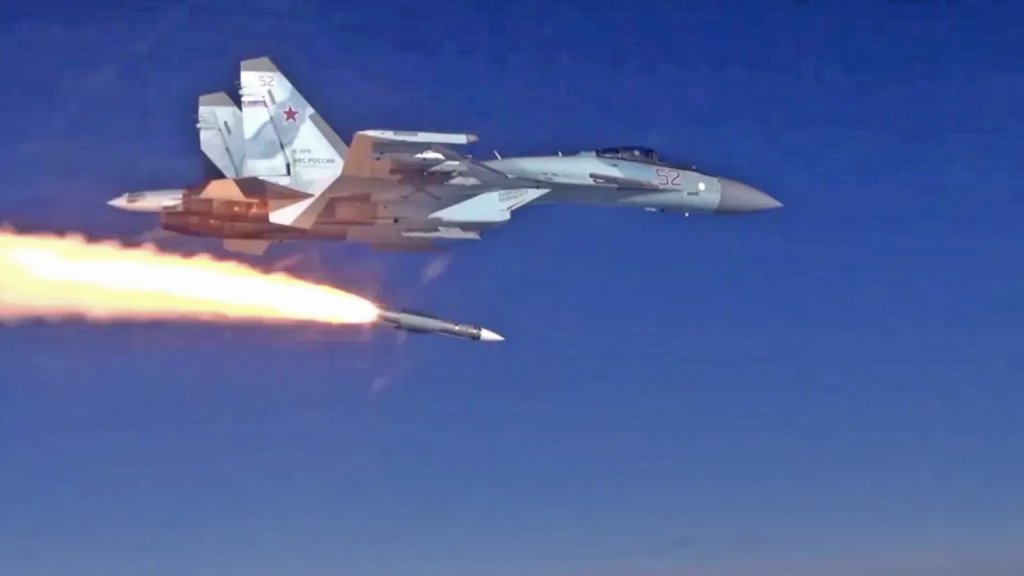
With a range of 124 miles, it flies to the target on a lofted trajectory, controlled by an inertial navigation system with mid-course radio correction, and uses an active radar seeker for its terminal phase attack. It has been a key threat to the Ukrainian Air Force since the start of the full-scale invasion.
Speaking to TWZ before his death in a 2023 flying accident, Ukrainian MiG-29 pilot Andrii “Juice” Pilshchykov said that the R-37M, typically fired from within Russian airspace, was “limiting our capabilities to conduct our missions. Of course, if you’re maneuvering, we are not able to provide an airstrike or something else, so the game is still very, very, very tough in the air and very, very risky. If you’re not aware of the launch of a missile, you’re dead.”
Once again, we don’t know for sure that an R-37M was involved in this incident, but it’s certainly a strong possibility. On the other hand, there is no shortage of other Russian air-to-air missiles and ground-based air defense systems that present a very serious hazard to Ukrainian tactical aviation.
The Su-25 is particularly vulnerable due to the high-risk envelope in which it operates and its performance. This is reflected in the documented losses of 22 examples in Ukrainian hands. That figure is almost certainly higher since it only comprises losses that can be confirmed visually.
Soon after the start of the conflict, Ukrainian Su-25s adopted loft tactics to add extra range to their unguided rockets. By the summer of 2024, stockpiles of unguided rockets were reportedly exhausted, but adding the French-made Hammer rocket-assisted bomb has provided much greater standoff reach and a much harder-hitting weapon specifically adapted for low-altitude launch profiles.
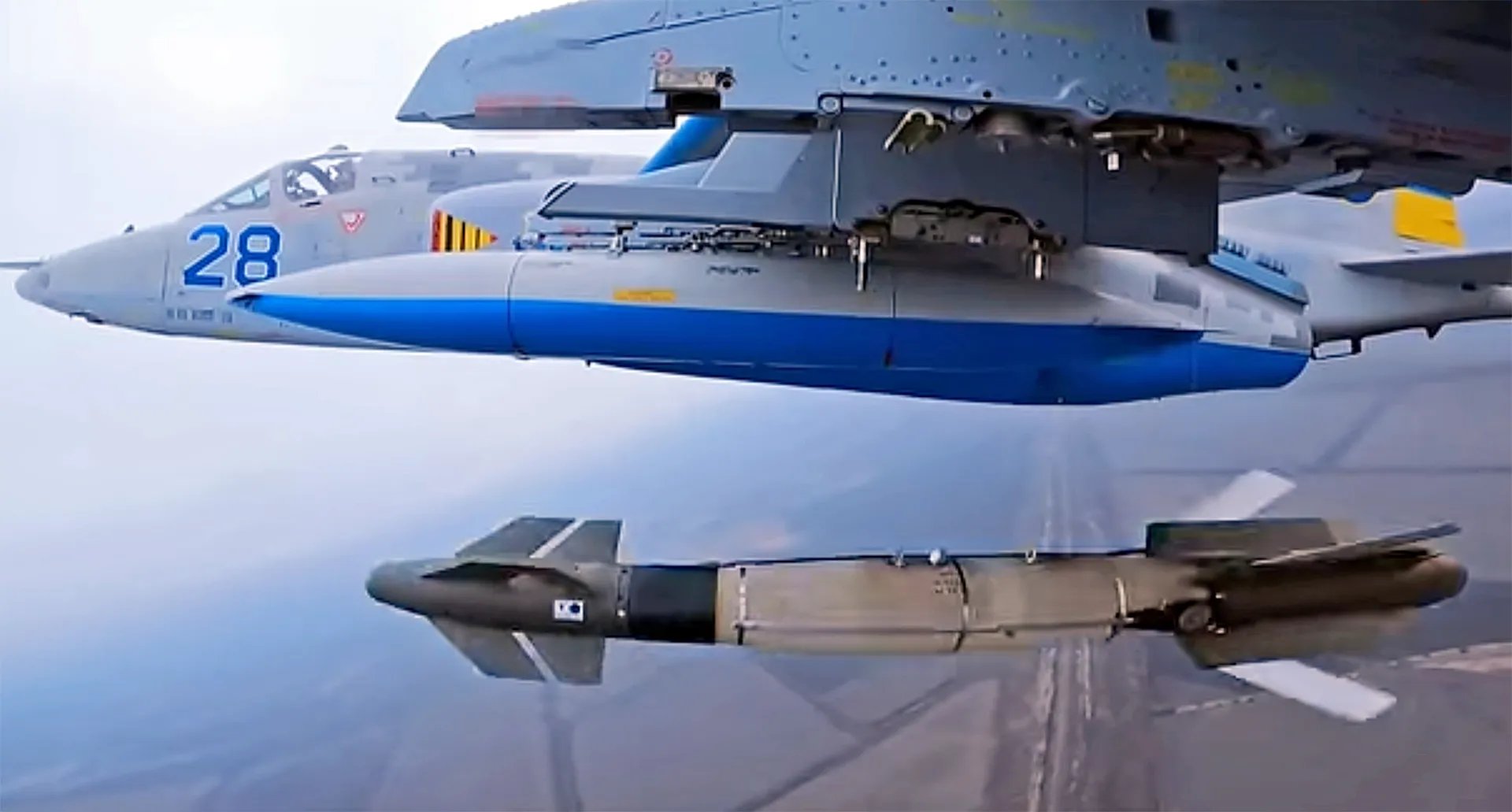
Since the full-scale invasion began, the Su-25 has been heavily utilized by both sides. Confirmed Russian Su-25 losses amount to 41 — the highest for any fixed-wing tactical type.
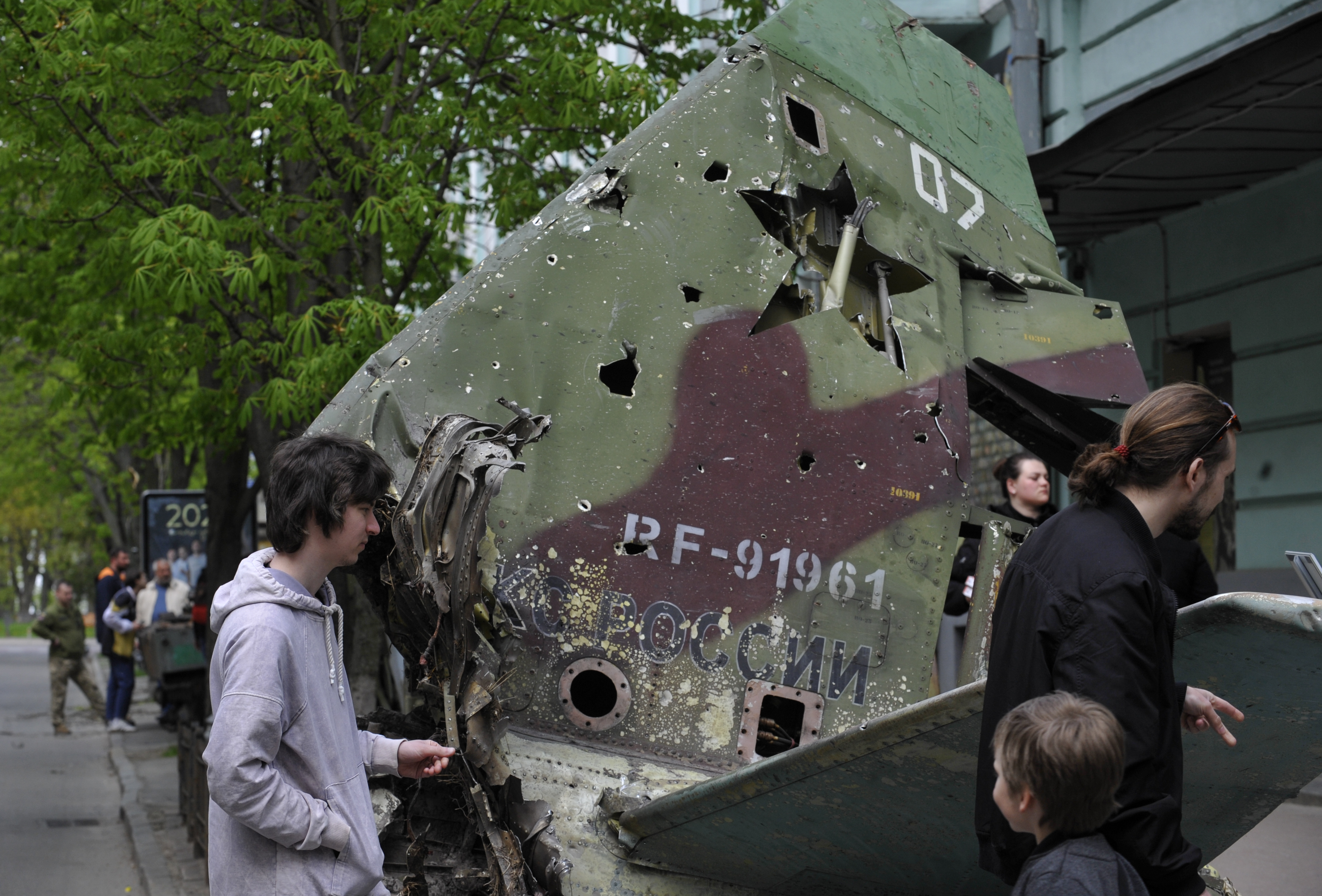
At least one Russian Su-25 loss has also been filmed from on board, in this case, in dramatic headcam footage from the pilot, who survived. You can see that video below and read more about it here.
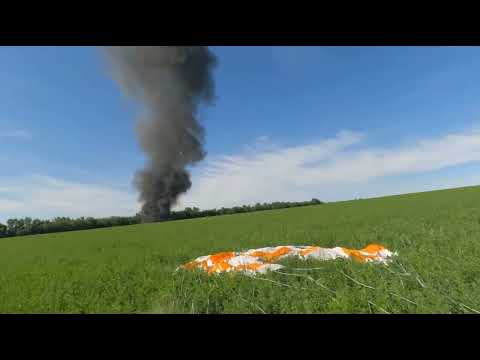
While videos like these might look like something from a combat flight sim, they are all too real. This latest one to be released reflects the brutal realities of life — and death — for tactical aviation pilots over and around the frontlines of Ukraine.
Contact the author: thomas@thewarzone.com
Loading comments…
Comments couldn’t be loaded. Please refresh the page.