
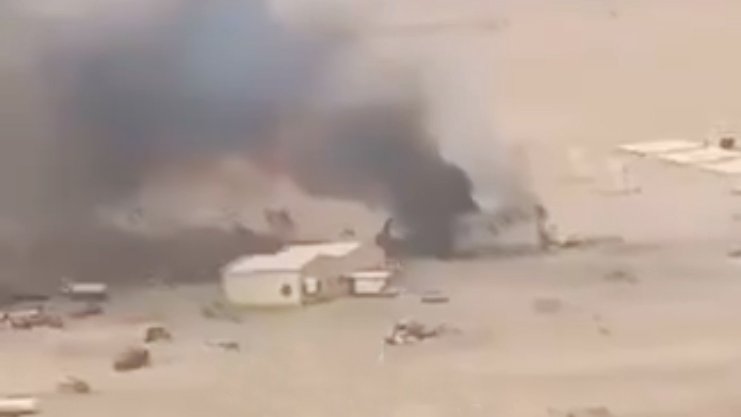
The Houthi rebels of Yemen have launched one of their biggest attacks on Saudi-aligned forces in that country in years. The strikes are a flare-up in what up until recently has been a largely dormant conflict. They took place in eastern Yemeni provinces of Marib and Hadhramaut, which are areas controlled by local forces opposed to the Houthis. This unfolded as the Iranian-backed rebel group is also expanding its campaign against Saudi shipping in the Red Sea region and its oil production infrastructure.
The Houthis claim they killed and injured hundreds of the Saudi-aligned troops. Yemeni government officials said that at least 30 troops were killed while there has been no official comment from Riyadh. However, the U.S. Embassy in Yemen, the Yemeni Defense Ministry and the Saudi-led forces confirmed the attacks.
“Our armed forces carried out a broad and precise military operation targeting the Saudi enemy’s mobilizations in the areas of Al-Ruwaik, Al-Abr, and Al-Thaniyah, and other camps belonging to what is called the First and Third Emergency Divisions, using a large number of ballistic missiles and drones,” Houthi spokesman Yahya Saree stated on X. In addition to “the deaths and injuries of hundreds of Saudi enemy mercenaries,” Saree claimed the “destruction and burning of a large number of Saudi enemy camps, mobilizations, storage depots, and weapons in the Al-Wadiah area in the east of the country” as well as the “destruction of a large number of vehicles.”
Saree added that the actions were preemptive to prevent an assault on Houthi forces.
In a statement on X, the Yemeni Defense Ministry said the Houthis “carried out a treacherous attack using ballistic missiles and drones, targeting several camps and units of the Armed Forces deployed in the provinces of Marib and Hadramaut… The Ministry of Defense affirmed that the Yemeni Armed Forces will respond to this aggression at the appropriate time and place, and that this treacherous attack will not undermine the resolve of the Armed Forces’ heroes or affect their ability to perform their national duties; rather, it will increase their steadfastness, cohesion, and determination to defend the Republic, restore the state, and end the coup.”
The target of these strikes, the Yemen Emergency Forces (YEF), acknowledged they had been hit.
“In a new military escalation, the Houthi terrorist militias targeted several military bases and military units, including emergency forces, resulting in material and human losses,” YEF claimed on Facebook. “This targeting comes after the military forces’ success in carrying out their duties under the directives of the Minister of Defense, aiming to secure areas, protect international roads, pursue gangs of kidnappers and smugglers, and apprehend those involved in robbery, kidnapping, and organized crimes.”
The Yemen Emergency Forces “are made up mostly of Salafi-aligned fighters from Yemen’s northern governorates and fall entirely under the Yemeni Forces Authority, itself commanded by the Saudi-led Joint Forces Command,” according to Defenseliney, an independent Yemeni media platform focusing on security issues. “Their roots trace to an earlier nucleus called the ‘Happy Yemen Forces,’ formed with Saudi funding, training, and support since 2019 and deployed along the Saada border strip extending north into Al-Jawf; most of its brigades had earlier operated under separate presidential decrees before being absorbed into the Emergency Forces.”
The U.S. Embassy in Yemen derided the Houthi attack as an act of terrorism.
“The U.S. Embassy to Yemen expresses our deepest condolences to the families of the brave Yemeni soldiers killed today in Hadhramawt and Marib,” the embassy announced on X. “The Iran-backed Houthis’ cowardly attacks represent yet another example of their terrorism against the Yemeni people. We wish the wounded a speedy recovery.”
Several videos emerged online purporting to show the Houthi attacks. They depict plumes of smoke wafting from what appear to be strikes and the sounds of small arms fire and what appears to be a drone strike can be heard, but they offer little real sense of the scope of the incidents or the damage inflicted.
There was also video purporting to show Houthi missile launches against the Saudi-backed forces; however TWZ cannot confirm any of the claims about these videos.
Today’s engagement marks a major escalation both in Houthi-Saudi hostilities and in the battle for Yemen, one of the world’s poorest countries, but strategically located along the Red Sea and Gulf of Aden.
The civil war in Yemen erupted in 2014 and expanded a year later when a Saudi-led coalition joined forces with the government ousted by the Houthis. For a while, the U.S. was supporting that coalition’s bombing campaign by providing aerial refueling and intelligence. However, then-Defense Secretary James Mattis ended that in 2018 during the first Trump presidency after growing concerns over the large number of civilian casualties being inflicted. The Saudi coalition’s fight against the Houthis also complicated the U.S. counterterrorism campaign against Al-Qaida in the Arabian Peninsula (AQAP).
The fighting between Saudi-led forces and the Houthis largely abated after a tenuous ceasefire was signed in 2022. Tensions, however, reignited in recent weeks after the Houthis joined the U.S.-Iran conflict on the side of their major supporter. The Houthis imposed a blockade on the Bab al-Mandeb Strait, and began striking Saudi ships in the southern part of the Red Sea as well as refineries along the northern portion. As we noted yesterday, the Yemeni rebel group said it was expanding its campaign against Saudi Arabia to strike vessels in the northern part of the Red Sea.
All this is adding to the pressure on oil supplies flowing out of the region, which has created global economic stress.
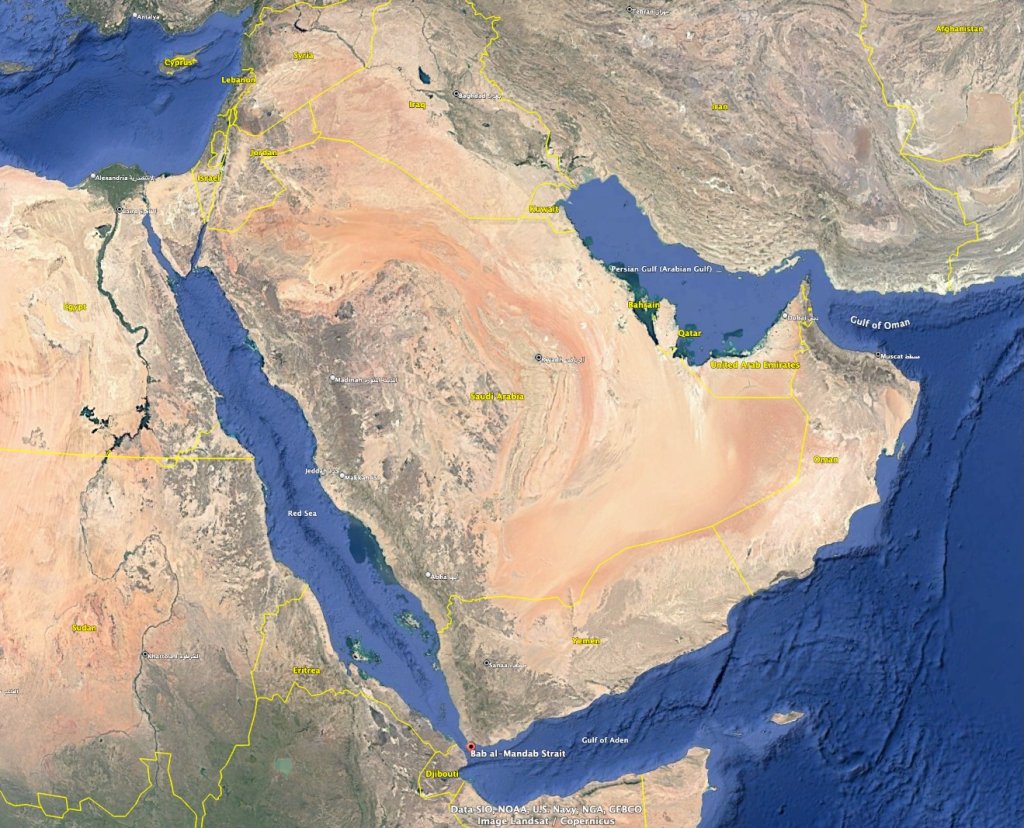
In response to attacks on its shipping, Saudi Arabia hit Houthi missile-launch platforms, a rocket-launch site, and weapons depots. However, the Saudi reaction was limited in nature. It remains to be seen how the kingdom will respond now given that many of the fighters it supports have been killed.
The uptick in Saudi-Houthi fighting comes as the region is already roiled in conflict, though efforts are underway to achieve a diplomatic solution to the U.S.-Iran war, now paused in an uneasy ceasefire.
As we have reported in the past, the two countries and Oman are working toward a deal that would essentially give Iran control over the Strait of Hormuz.
Tehran is “insisting the framework represents a new security model for the strategic waterway rather than a full reopening of the strait,” CBS News reported on Thursday, citing Iran’s state news agency IRNA.
The proposed mechanism would regulate the movement of commercial vessels, with ships entering through Iranian waters and exiting through Omani waters.
IRNA said the talks are aimed at defining “a new model that is different from the 60-year-old practice of the past” in which ships passed through the strait at will.
The flow of traffic through the strategic chokepoint has become the main sticking point between Washington and Tehran as the two sides work toward ending hostilities. U.S. President Donald Trump has insisted that Iran must fully open the vital chokepoint or face new and more intense attacks that would include power plants, other civilian infrastructure and even leadership.
How much increased fighting between the Saudis and Houthis complicates these matters is an open question. As we have frequently noted, the closing of the BAM to Saudi oil traffic and now threats to the transit route north to the canal have already raised the specter of the U.S. having to get as involved as it did during the previous Houthi campaign against shipping that ended last September, which could pull resources away from Iranian-focused operations. It’s possible Egypt would have a major problem with such actions too, as it would impact the canal’s revenue and freedom of movement.
A major intensification of Saudi-Houthi hostilities represents yet another complication in a region already in turmoil.
Contact the author: howard@twz.com
Loading comments…
Comments couldn’t be loaded. Please refresh the page.