
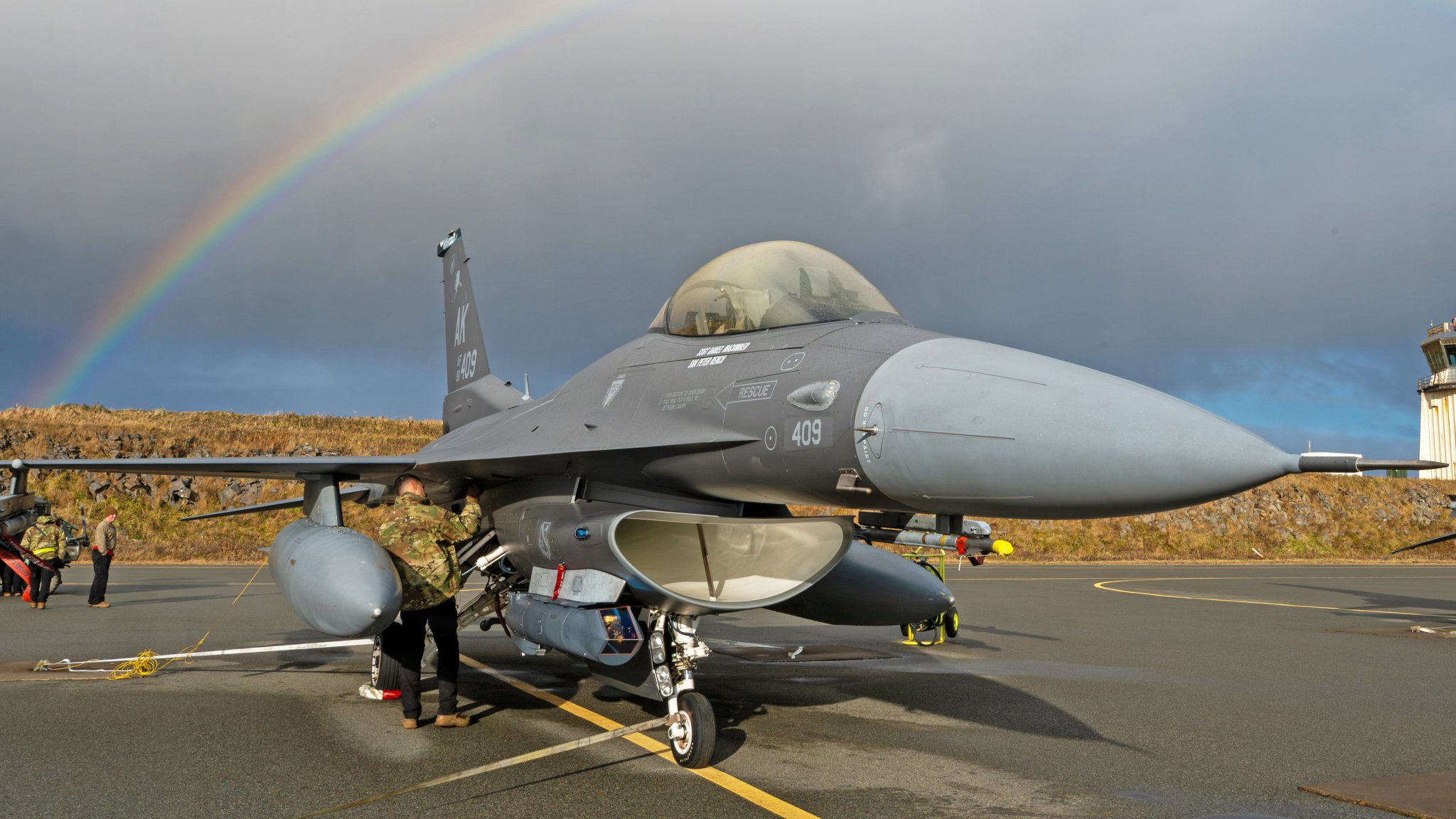
In a sign of the times, for the first time in many years, U.S. Air Force fighters have returned to an air defense alert posture at Eareckson Air Station in Alaska’s remote Aleutian Islands. This represents a notable development in efforts to strengthen NORAD’s ability to defend North America’s northern and Pacific approaches from a key strategic stronghold on Russia’s back doorstep. The deployment culminated in a multinational air defense mission involving U.S. and Canadian fighters operating across thousands of miles, reflecting a growing focus on the increasingly strategic Arctic and North Pacific regions.
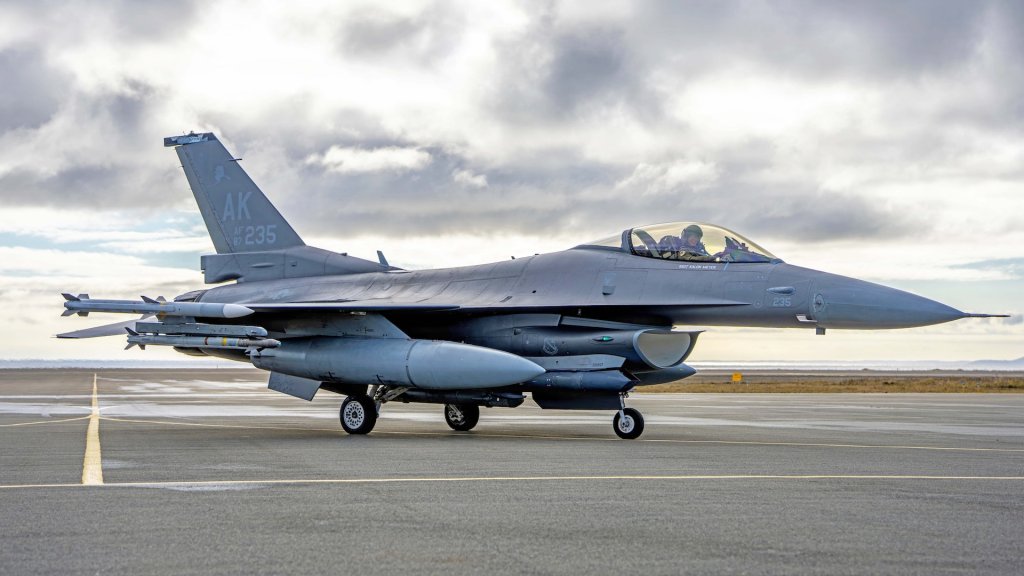
Fighter operations at Eareckson date back to the Cold War, when F-4s and F-15s deployed to the island to support air defense missions against Soviet aircraft. The base’s routine fighter mission ended in the early 1990s, making the October 2026 deployment a notable return to an alert posture at one of America’s westernmost military outposts. In the interim, we have seen fighters, including F-16s, return to Eareckson, but not in the context of air defense alert missions.
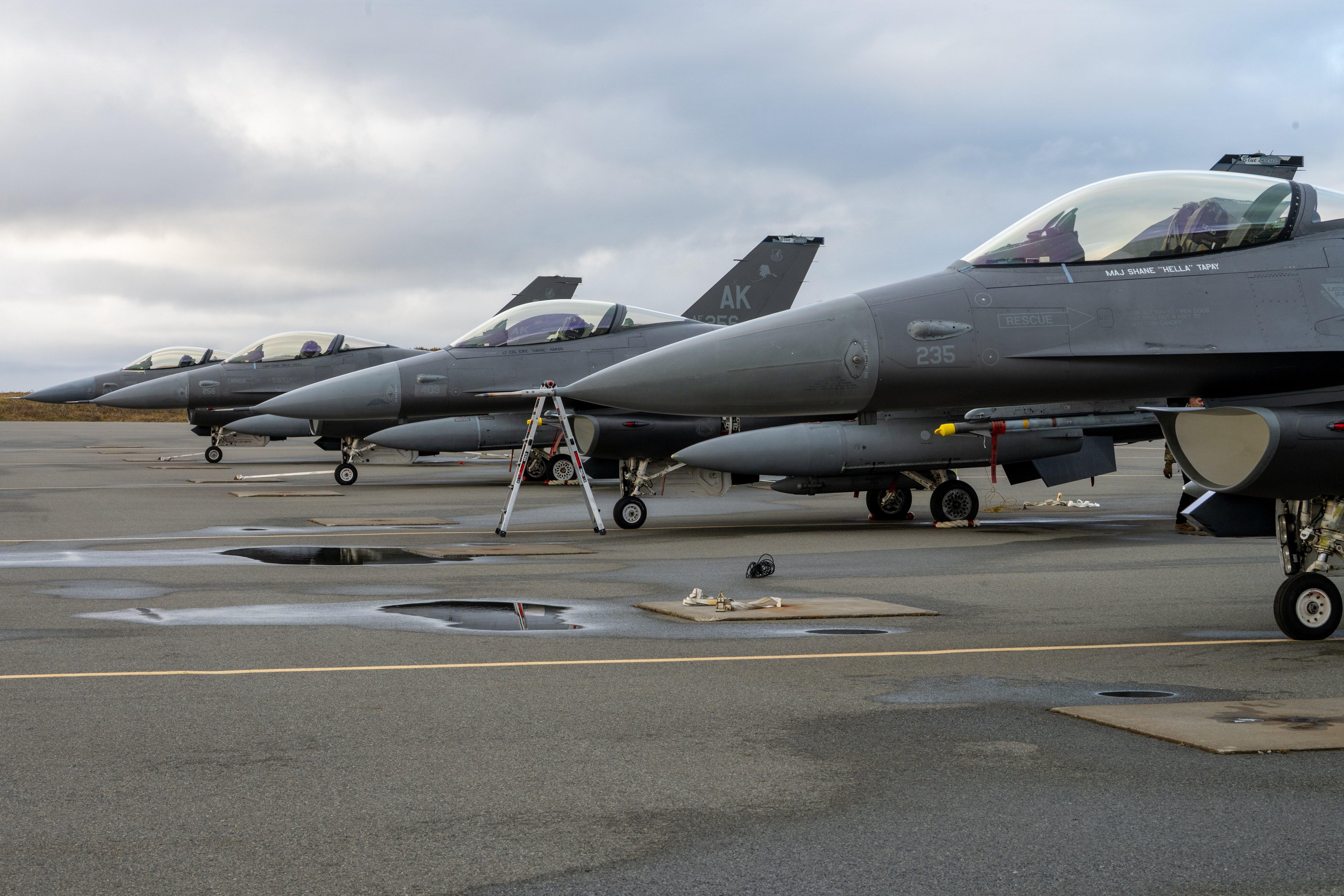
Packing live air-to-air missiles, the F-16s were deployed to Eareckson, on Shemya Island, from October 18 through 26, maintaining an alert posture before launching on October 25 as part of a homeland defense mission.
The latest mission began under Operation Noble Defender before transitioning into Operation Noble Eagle in support of northern sovereignty operations. It brought together F-16s operating from Eareckson, F-35As and additional F-16s from Eielson Air Force Base, and Royal Canadian Air Force CF-18 Hornets deployed from Cold Lake, Alberta.
The F-16s operating from Eielson were assigned to the 18th Fighter Interceptor Squadron (FIS), a particularly unusual unit with roots as the 18th Aggressor Squadron. The unit was redesignated in 2024, shifting its primary combat focus from adversary training toward aerospace control and homeland defense in Alaska. Its Block 30 F-16s bring a combination of air defense capabilities and experience in replicating adversary tactics, making them a very specialized outfit, as you can read about here.
From their distributed locations, the Eareckson-based F-16s provided coverage in the southern portion of the theater, while fighters from Eielson operated in the northwest. Canadian CF-18s covered the northern approaches.
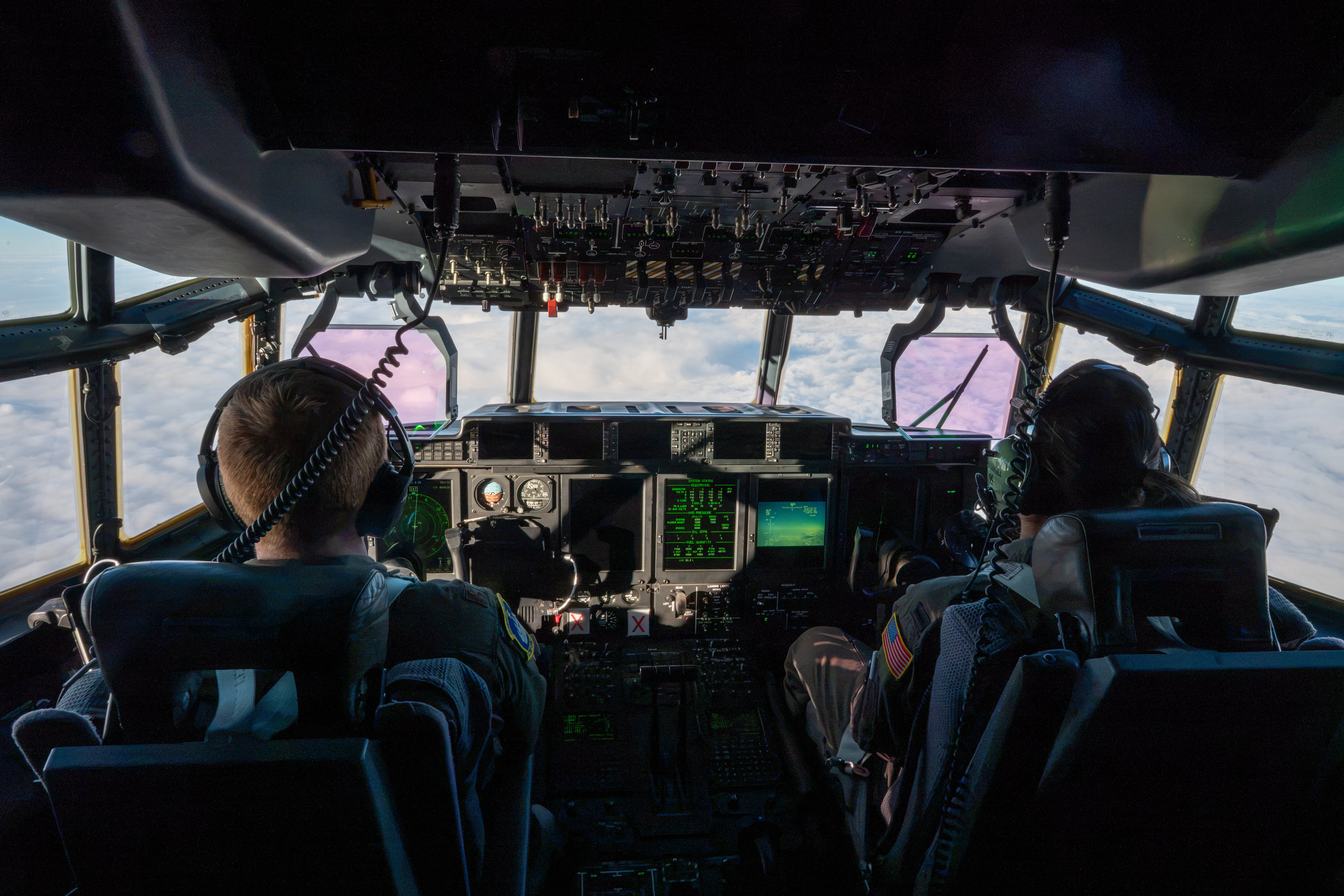
An E-3 Sentry Airborne Warning and Control System (AWACS) aircraft from Joint Base Elmendorf-Richardson provided airborne command and control, supported by multiple U.S. KC-135 tankers and a Canadian CC-150 Polaris. An HC-130 Combat King II also participated, providing contingency search and rescue and personnel recovery coverage.
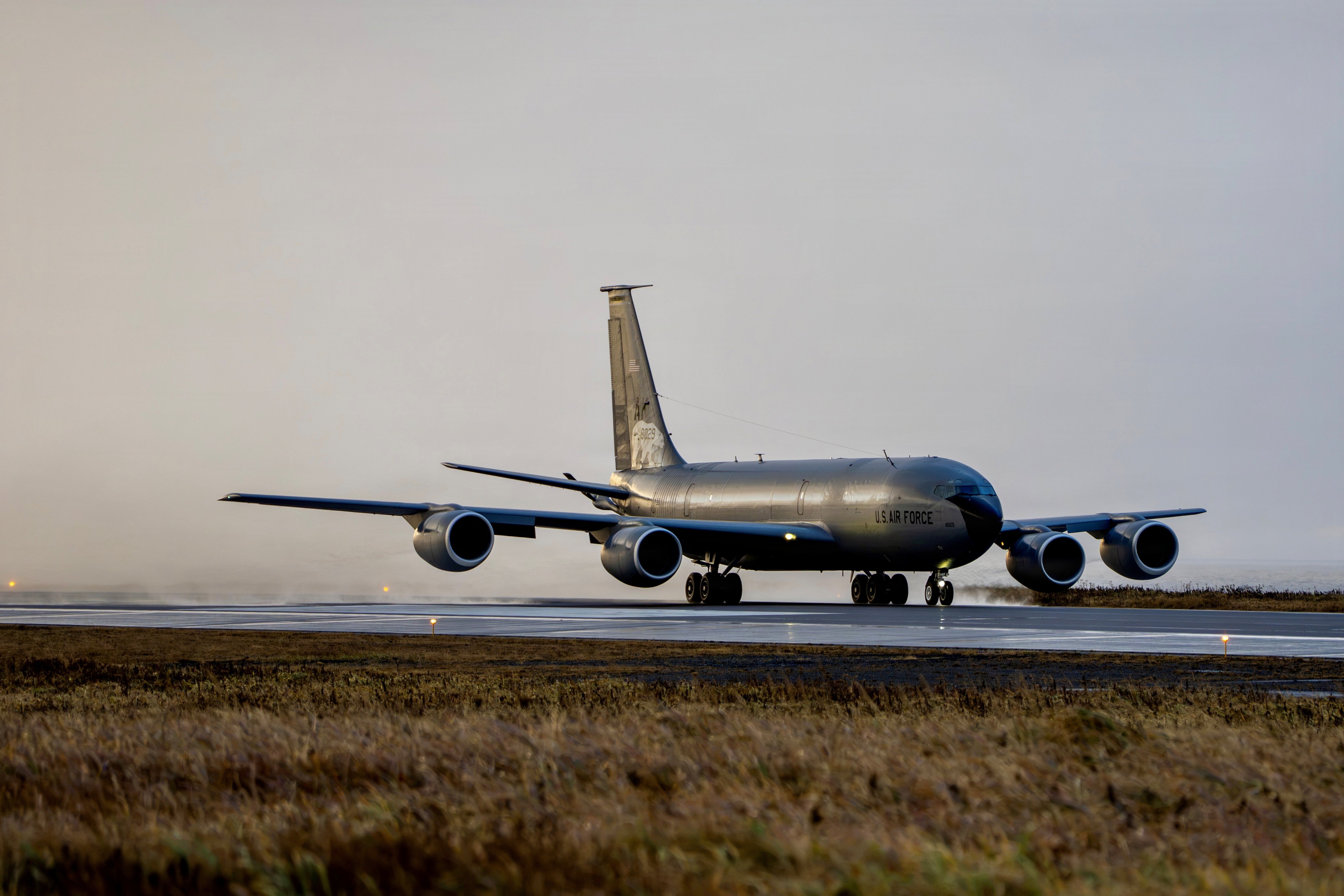
The distances involved illustrate the scale of the operation. Eareckson is approximately 1,600 miles from Eielson and 2,600 miles from Cold Lake, requiring substantial coordination and aerial refueling support to bring the different elements together.
Strategic Significance
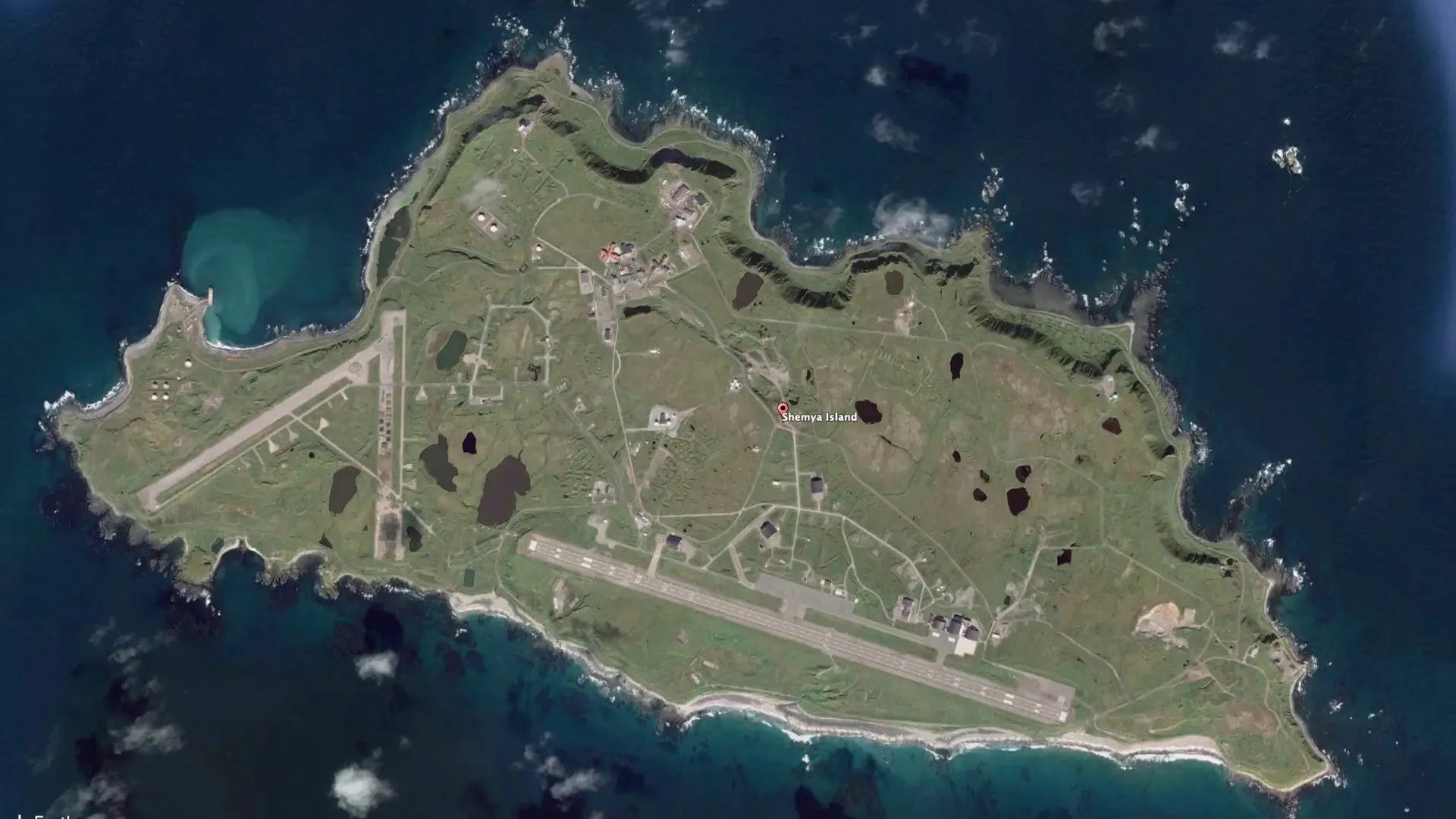
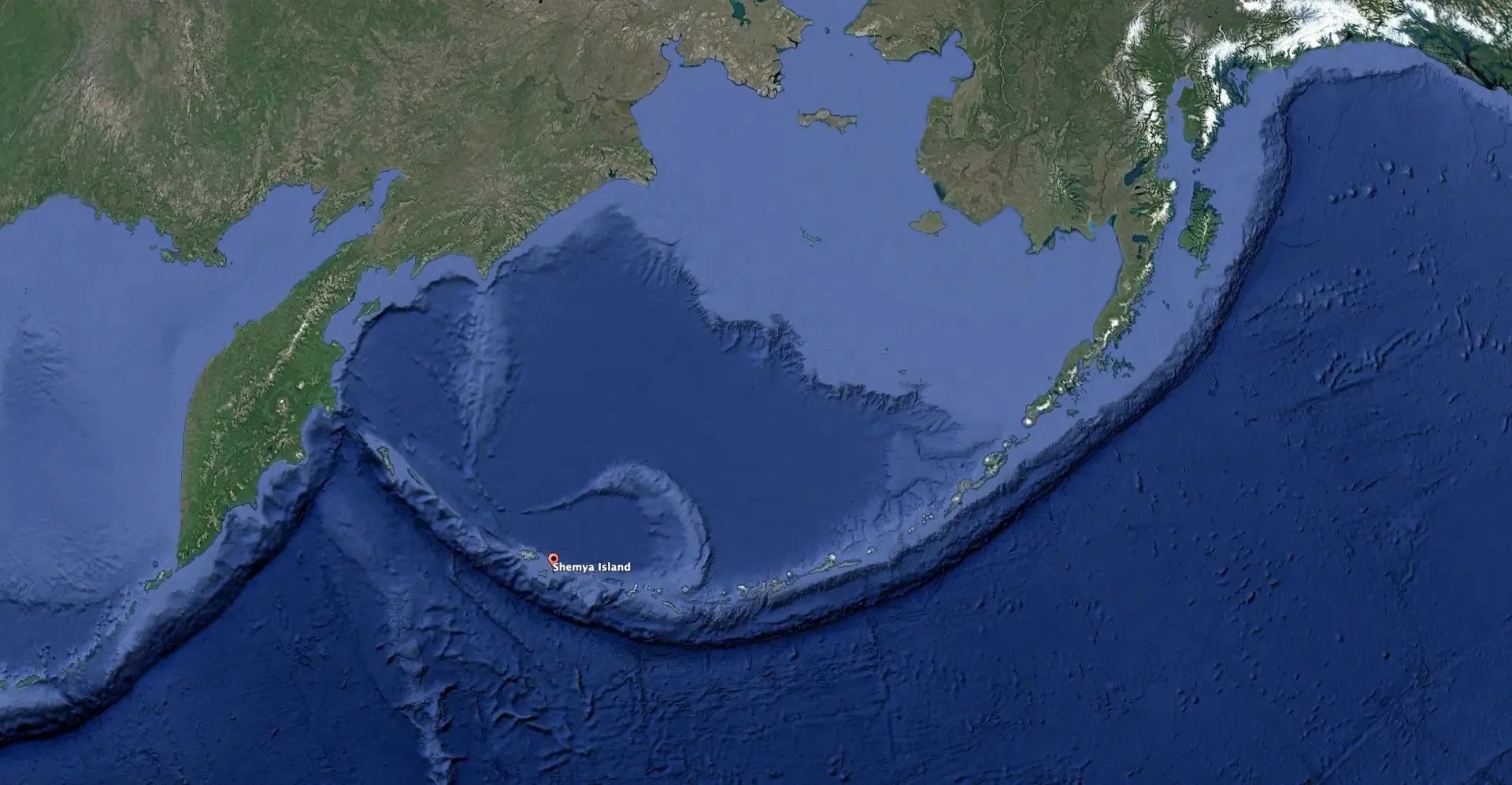
Located at the western end of the Aleutian chain, Shemya occupies a strategically important position in the North Pacific, facing the approaches from Russia’s Far East and the wider Pacific region and acting as a gateway to the Arctic. While fighters operating from Joint Base Elmendorf-Richardson, with additional support from Eielson when needed, normally provide coverage across this vast area, Eareckson puts combat aircraft dramatically farther west. Its reactivation as a fighter operating location gives NORAD another forward option, extending the reach of its air defense network well beyond Alaska’s principal airbases.
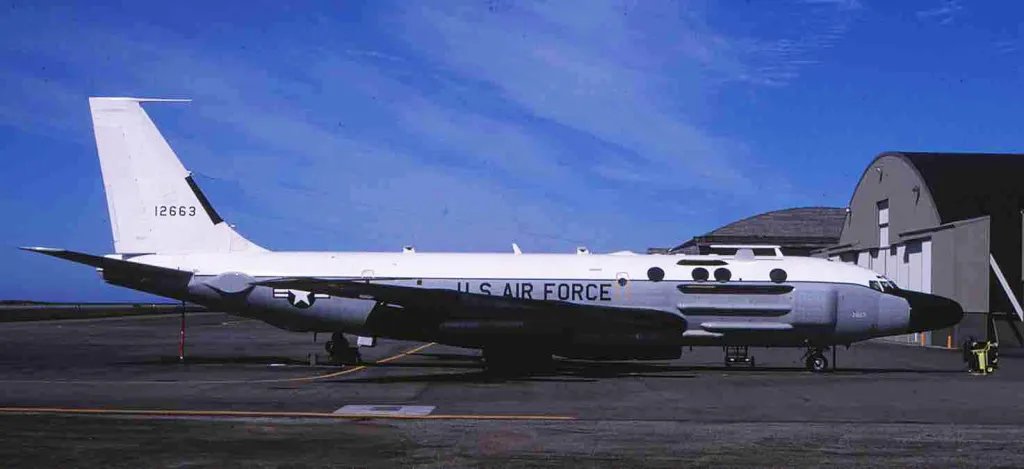
The island’s military significance was especially pronounced during the Cold War, when it supported detachments of RC-135 surveillance aircraft, including hosting Cobra Ball missile-tracking aircraft, as you can read about here.
Shemya’s potential role in a future conflict has attracted increasing attention from U.S. military planners in recent years. The island hosts the AN/FPS-108 Cobra Dane radar, a massive phased-array installation that provides critical ballistic missile warning and tracking capabilities. Its position in the western Aleutians, roughly 500 miles from Russia’s Kamchatka Peninsula and approximately 1,000 miles from mainland Alaska, gives it considerable strategic importance but also leaves it isolated and potentially vulnerable.
The growing threat posed by one-way attack drones and cruise missiles also makes protecting Cobra Dane a significant force-protection challenge. Forward-deployed fighters provide a highly adaptable, wide-area defensive layer, intercepting aerial threats before they reach the island, much like the fighter deployments to Diego Garcia in the Indian Ocean.
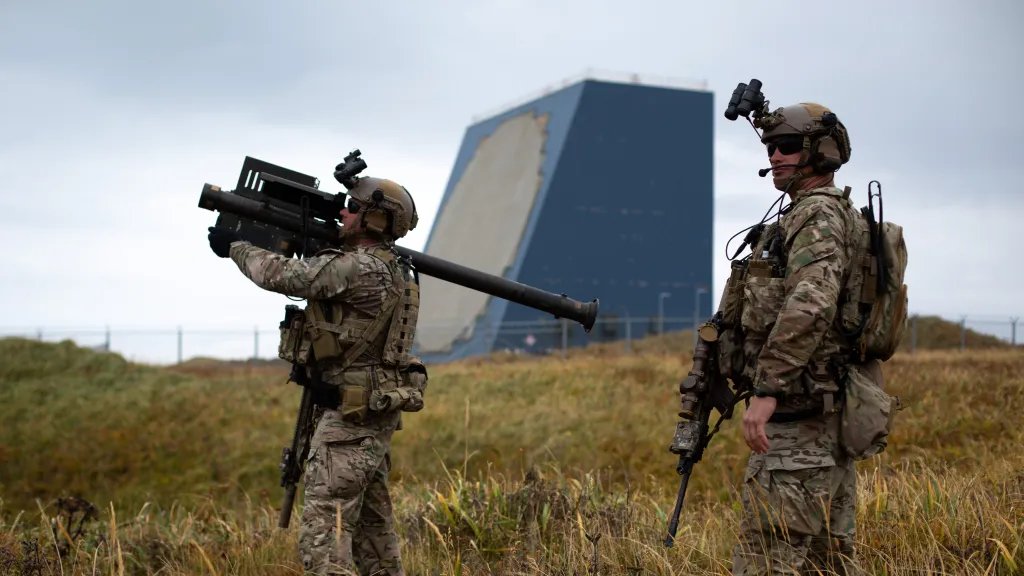
The vulnerability of Shemya and Cobra Dane has been the focus of several military exercises. In 2021, Green Berets assigned to Special Operations Command North participated in a NORAD exercise that involved deploying to Shemya and preparing to defend the Cobra Dane installation against potential attack. The troops arrived by sea and brought Stinger man-portable air defense systems, highlighting concerns about protecting the island against both conventional and unconventional threats.
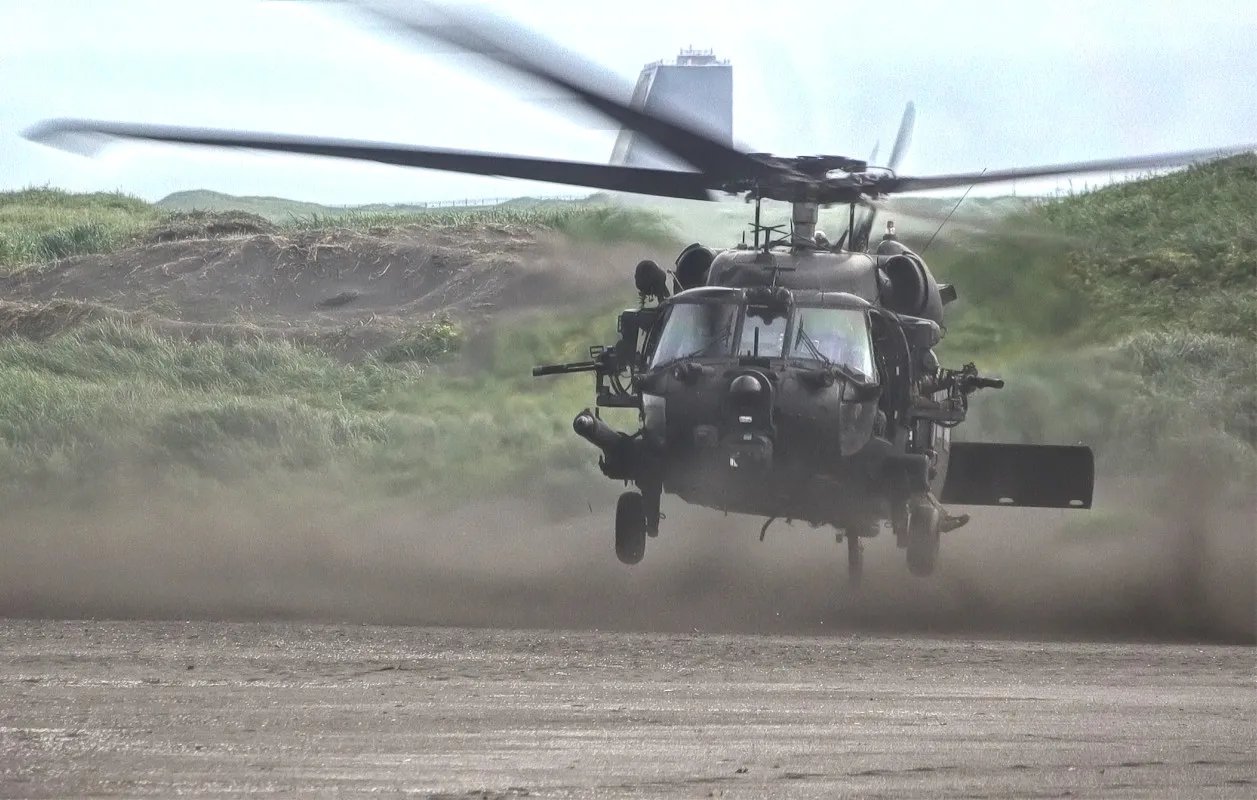
In August 2023, elements of the Army’s 160th Special Operations Aviation Regiment, better known as the Night Stalkers, returned to the island as part of Operation Polar Dagger, as TWZ reported at the time. At least two MH-60M Black Hawk helicopters and associated personnel and equipment deployed to Eareckson, with a C-17 transporting personnel and materiel. The exercise explored the ability to rapidly project special operations capabilities into the remote region, protect critical infrastructure, and improve operational awareness in the Arctic and sub-Arctic.
Taken together, these developments point to growing interest in Shemya as a potential forward operating location in a wider North Pacific defense network. Its radar, long runway, and remote position offer considerable advantages, but its isolation also presents significant logistical and force-protection challenges.
The return of F-16s to an air defense alert posture at Eareckson adds another dimension to the installation. With its ability to host forward-deployed fighters, the base can maintain an alert posture and generate homeland defense sorties. Its location would be particularly useful for responding to activity approaching Alaska from the western Pacific and the Bering Sea. At the same time, having fighters at Eareckson provides an organic means of defending Shemya’s critical surveillance assets.
There are other potential benefits in dispersing fighter operations away from Alaska’s principal airbases. In a major conflict, those installations could be subject to missile strikes and other attacks, making alternative operating locations valuable. Eareckson’s long runway, ramp space, and arresting equipment provide a foundation for such operations, although sustaining fighters there over an extended period would require significant fuel, munitions, maintenance, and force-protection support.
Outside of Eareckson, Alaska has a network of remote airfields that can support dispersed fighter operations during contingencies. These include King Salmon Airport on the Alaska Peninsula, which hosted four 18th FIS F-16s during an Agile Combat Employment deployment in September last year.
All this comes as concerns grow about the level of protection afforded to Air Force airbases. There are growing calls for the U.S. military to invest in new hardened shelters, and the lack of physical hardening of bases has been hammered home by the experiences from the war with Iran, which have underscored the huge risks posed to aircraft sat out in the open on flightlines.
The October deployment does not mean Eareckson is being transformed into a permanently staffed fighter base. It does, however, demonstrate that NORAD can use this isolated installation as another node in its air defense network, extending the geographic reach and flexibility of its operations across the North Pacific.
For NORAD, having additional locations from which it can generate air defense sorties is a major plus. The combination of forward-based fighters, airborne command and control, aerial refueling, and Canadian participation demonstrates another way of distributing combat power across a broad geographic area rather than depending exclusively on a handful of major bases.
More broadly, the Aleutians are assuming renewed strategic importance as the westernmost part of U.S. territory, positioned at the intersection of the North Pacific and Arctic theaters. As military competition with both Russia and China intensifies, the island chain offers a valuable forward position for surveillance, air defense, and power projection, as well as a means of gaining time and distance against potential threats approaching North America or operating across the Pacific. The return of F-16 alert operations to Eareckson adds another piece to that defensive architecture, underscoring the continued military relevance of this remote island chain.
Contact the author: thomas@thewarzone.com
Loading comments…
Comments couldn’t be loaded. Please refresh the page.