
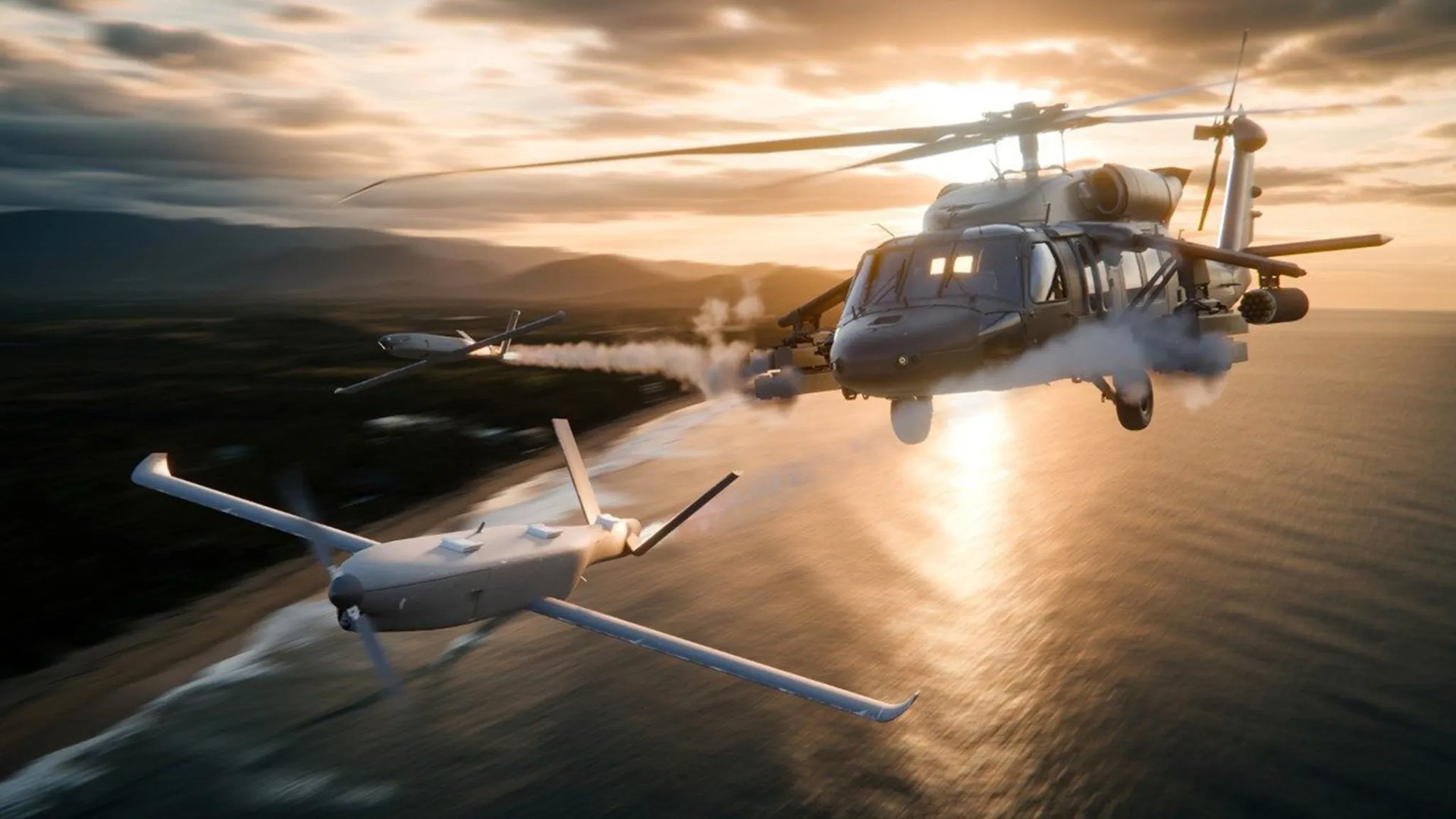
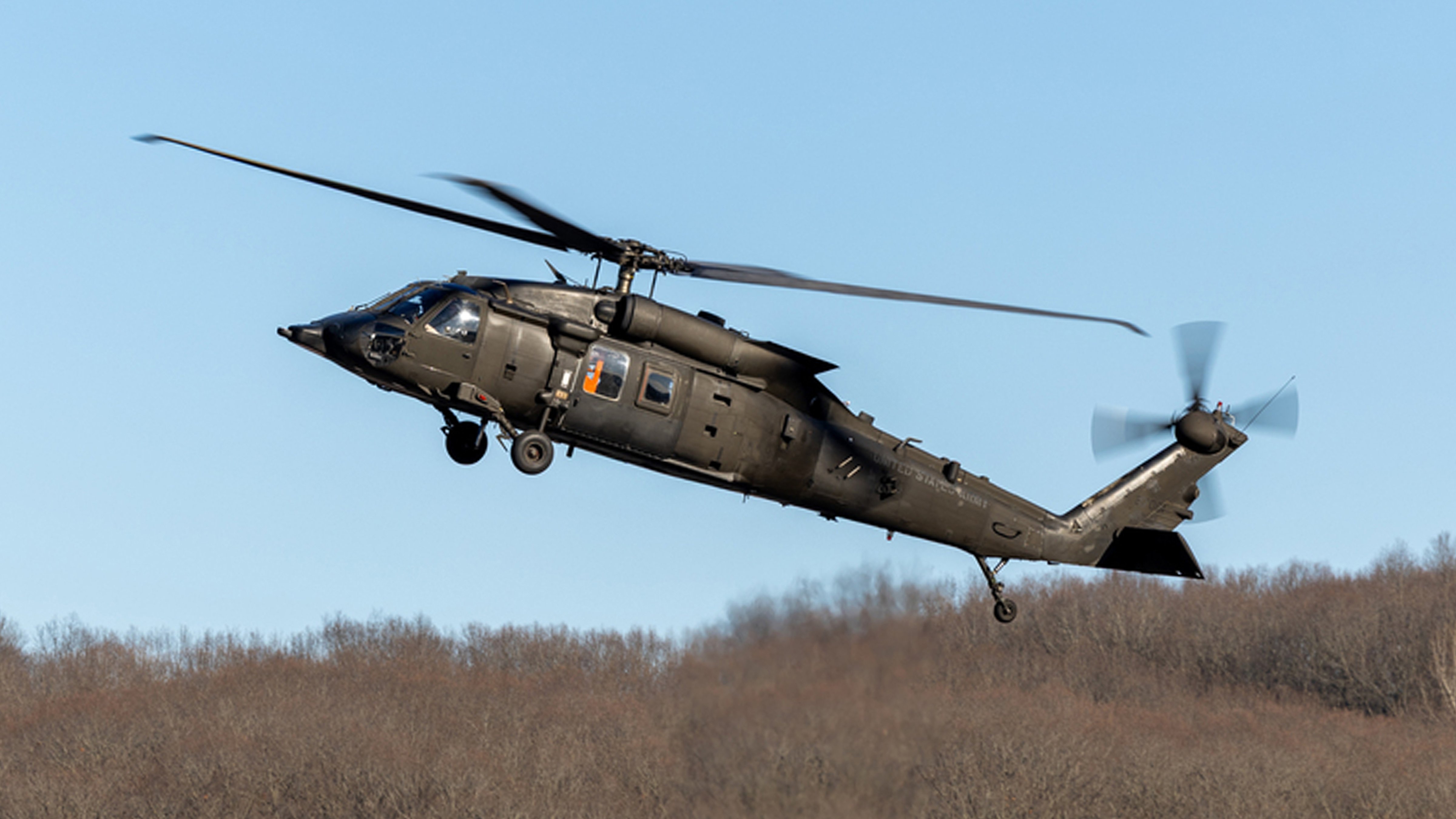
The UH-60 Black Hawk has been the rugged workhorse of U.S. Army aviation for nearly 50 years, with around 4,000 examples currently in service with 36 nations worldwide. Many of these helicopters, and new aircraft coming off the line, are set to fly as far out as 2070, and Sikorsky is curating a suite of upgrades to keep them valuable assets for the future fight. A new “digital backbone” is designed to underpin swift technological insertions such as launched effects, with related initiatives including the provision of more power to lug greater payloads, and the fully-autonomous U-Hawk cargo drone variant.

“As part of an overall “Black Hawk 2070” modernization effort we’re developing a number of complementary capabilities, including our U-Hawk uncrewed cargo variant, which we plan to fly later this year,” Jason Wrigley, Sikorsky’s director of business development for Black Hawk, told TWZ at the company’s Stratford plant in Connecticut.
“A new digital backbone for the Black Hawk is at an advanced design phase in our labs and it’s designed to provide interfaces throughout the aircraft that will provide power, data, a network, cooling and most importantly, open architecture interfaces that enable the easy integration of new equipment, such as sensors. We see this as a core building block for the next generation of Black Hawk, along with new engines and other airframe improvements designed to futureproof the platform.”
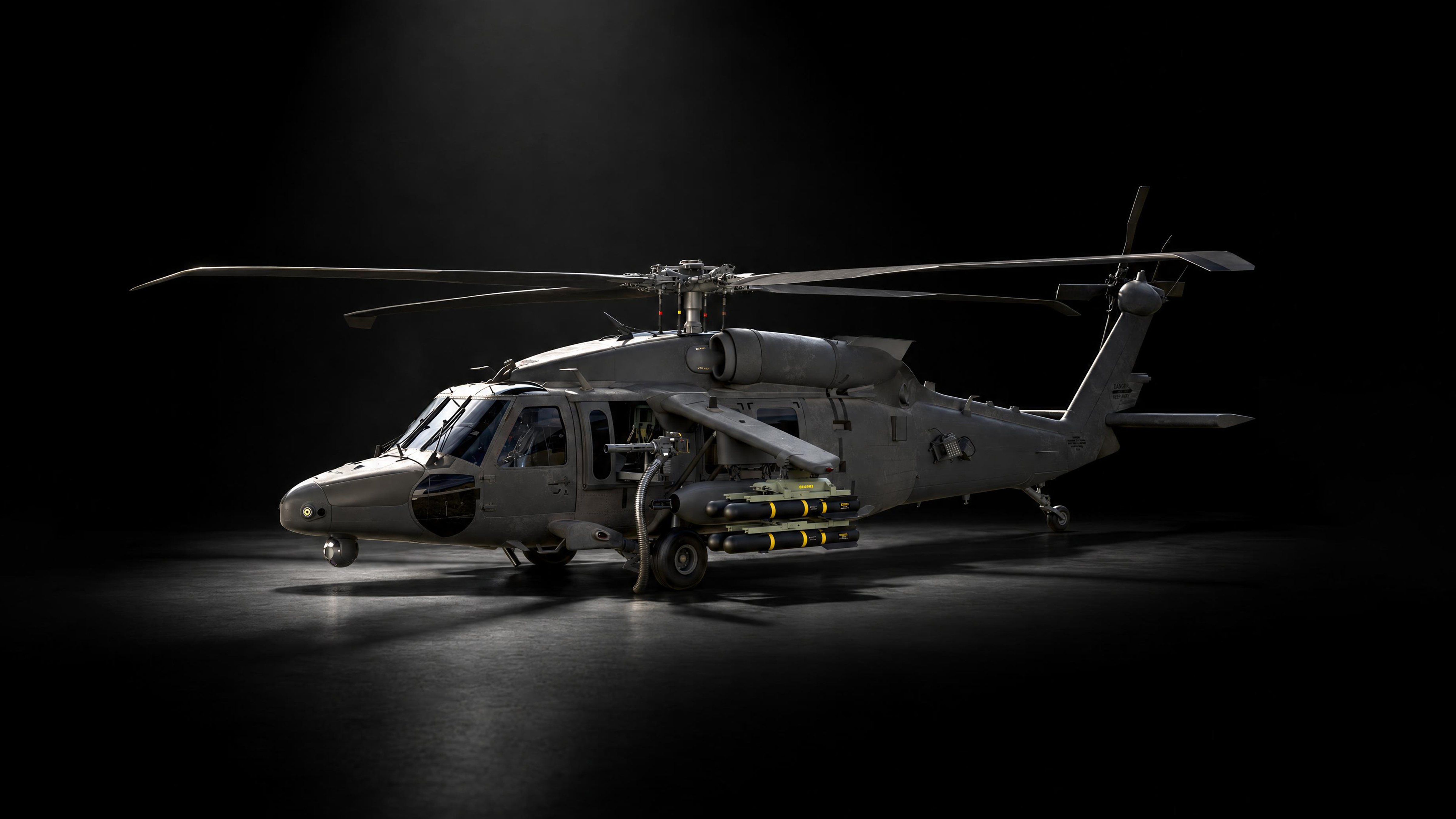
The new digital backbone is designed to work in concert with a modern, software-driven strategy that meets the Army’s Modular Open Systems Approach and the desire to add technologies cheaper, faster, and more easily. Wrigley says that as customers identify new capabilities and needs for their Black Hawks, the digital backbone will be sufficiently efficient to permit customization even on a mission-by-mission basis. Sikorsky is also introducing a new modular nose to the H-60, which is reconfigurable with sufficient volume to support even more sensors and electronics.
“There’s a big focus on open architecture and that ability to quickly plug-and-play,” says Wrigley. “The new modular nose will change the look of the Black Hawk up front to provide even more space for equipment that will work directly with the new digital architecture.”
The new modular nose will give the Black Hawk more than twice the internal volume of the original nose section and it’s designed to provide space for internal electronics and an integrated mount for external sensor pods. It is designed to provide sufficient space to accommodate electronics that enable roles such as search and rescue, drone control, and flying in degraded environments, and it will also house some of the equipment required as the Black Hawk’s autonomous capabilities expand.
Joshua Powers spent 22 years as an Army Aviation officer flying the Black Hawk, and he’s well qualified for his new role with Sikorsky handling business development for rapid capabilities insertions. “Army units know the Black Hawk inside out; how to fly it, maintain it, and use it to maximum effect. The upgrades we are developing will bring new capabilities faster, without time-consuming and complex changes to sustainment, training, and operations, plus we are adding more range, more payload, and more power to meet the demands of the Indo-Pacific region.”
“I find it amazing to pair new technology with a rugged platform like the Black Hawk. These new innovations are needed to meet the needs of the new complex battlefield. The fight I fought in Iraq is very different from the current operating environment and what future warriors are going to go up against, and what we’re asking them to do is very different from what came before.”
Bringing autonomous co-pilots to the Black Hawk
Autonomy is a central pillar of Sikorsky’s strategy for the future Black Hawk. The company’s MATRIX autonomy software is now being matured on a UH-60M variant, and while it’s not necessarily designed to completely replace pilots, MATRIX will assume some of their workload, making flying safer and simpler as mission sets grow increasingly complex and dangerous. “Pilots that are controlling collaborative drones, for example, need to be able to focus on the drone mission, and autonomy will help lighten their cognitive load,” explains Wrigley.
“The standard Black Hawk crew operates with two pilots. Adding our MATRIX autonomy system gives the operator options – a single pilot could fly without an unbearable workload and still fulfil a mission commander role, for example. The Army could then operate the Black Hawk with no pilots at all when that’s the appropriate option.”
Sikorsky’s MATRIX autonomy has been developed on the company’s UH-60A fly-by-wire Optionally Piloted Black Hawk, which has been tested by Sikorsky and Army aviators. MATRIX has accumulated more than 1,000 flight hours across 500 tests and demonstrations. It has already been integrated on over 20 different platforms, including on the Black Hawk for testing by the Defense Advanced Research Projects Agency (DARPA) and the U.S. Army in multiple exercises.
“We delivered the first UH-60MX to the Army earlier this year,” says Wrigley. The delivery marked the first full authority fly-by-wire and optionally-piloted UH-60 in the Army fleet. “They are using it for testing and soldier feedback to develop tactics, techniques and procedures for the autonomous Black Hawk. We have since received a contract to deliver three more MX aircraft to the Army.”
MATRIX autonomy kits have now been installed on all three U.S. Army Black Hawk models; the UH-60A, UH-60L and UH-60M. Sikorsky plans to incorporate autonomy options into all Black Hawks as they are built, plus the MATRIX system will be able to be retrofitted to existing examples.
Powers is well aware of the benefits autonomy will provide from complex combat operations to more mundane day-to-day missions. “Flying at night and seeing the tracer fire coming up at you, things like that, I honestly feel that’s not the big threat. It’s when you’re going to land and there’s just a big dust cloud. When you’re tired, you aren’t as focused. Having MATRIX, whether that’s with one, two, or no pilots, it’s about that reduced workload on the mission. Pilots won’t be as fatigued, plus they have the safety net of a fully autonomous aircraft that can, if needed, land in all of those difficult environments. It will give commanders more operational flexibility and the ability to mitigate risk in less-than-ideal conditions dictated by the enemy or weather.”
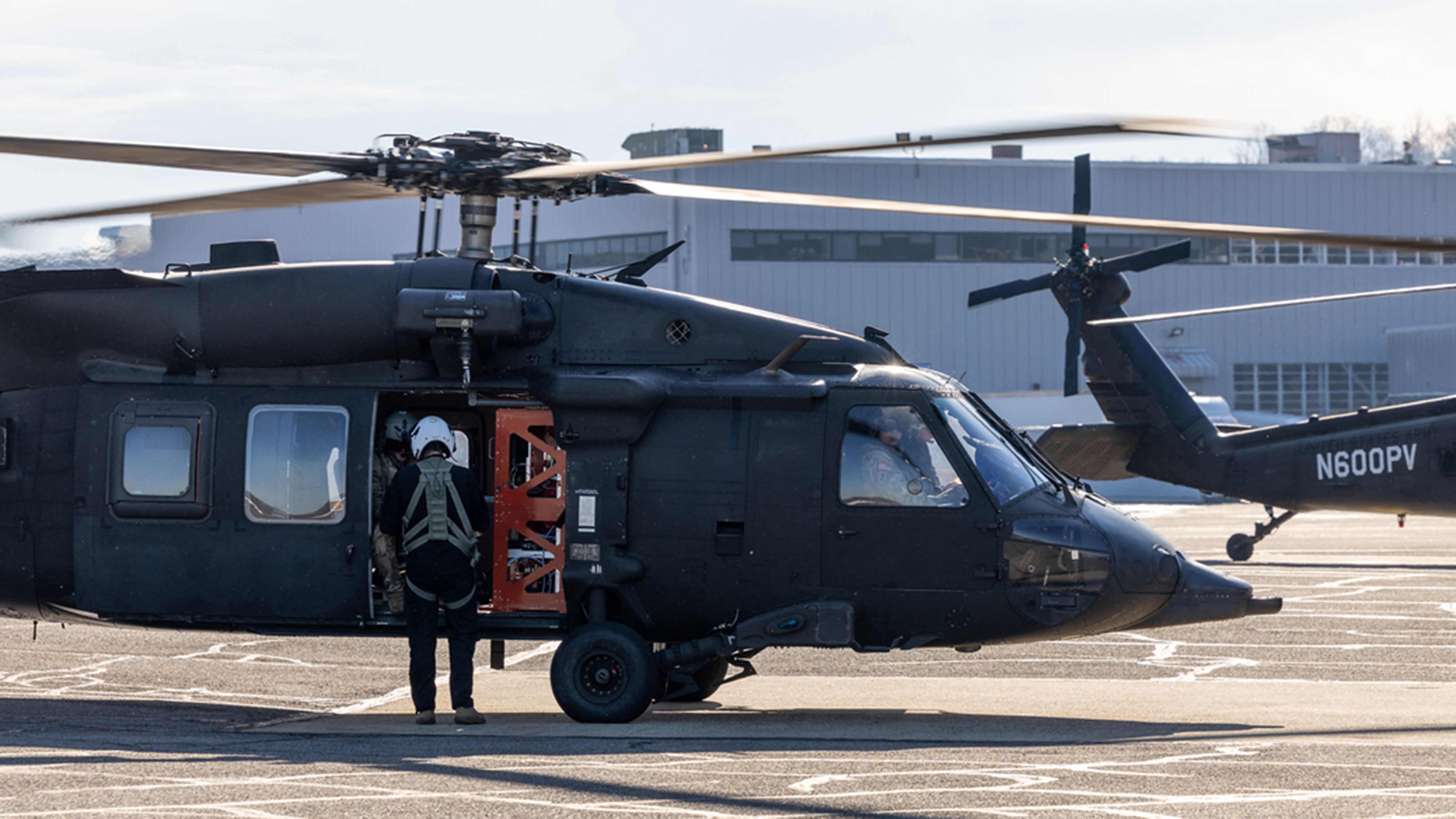
“The Black Hawk operation isn’t just about pilots, it’s also that integrated four-person crew. As a pilot, you’re relying on your senses and also on the guys in the back to watch out and tell you where you’re going. MATRIX is just going to help that team effort and put you in a better position to bring the crew back safely. It integrates all the systems and sensors and uses altitude, airspeed, radar altimeter, drift indications, and puts the fly-by-wire technology to where it can make rapid adjustments and changes based on what it’s seeing with the sensors.”
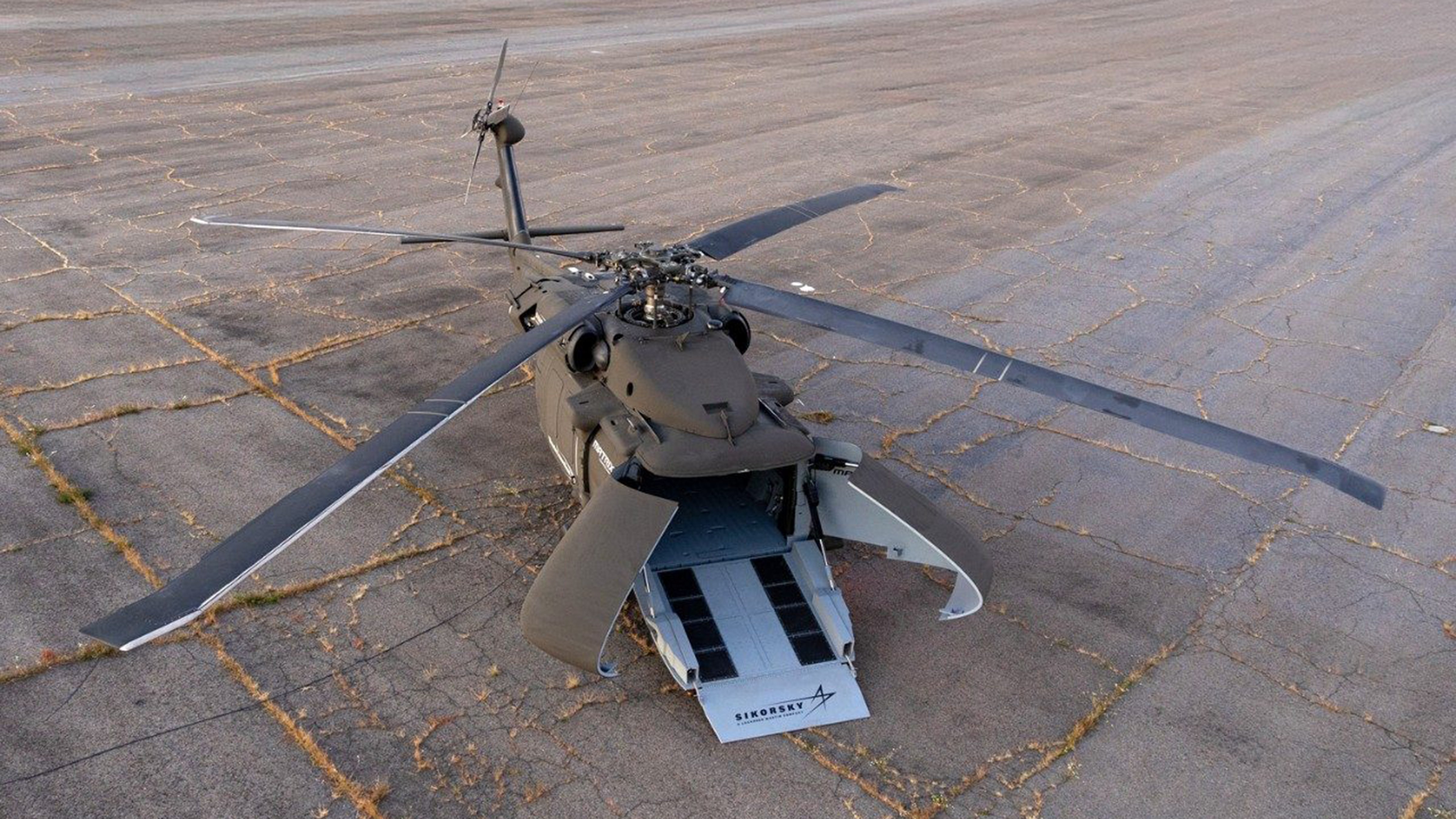
The volume of testing, the maturity, and the confidence in MATRIX helped Sikorsky to develop the S-70UAS, or U-Hawk, which was unveiled in 2025. The U-Hawk project essentially removes the cockpit and its associated equipment from a Black Hawk and replaces the front end with cargo doors to provide a huge internal space as a supply drone.
“We acquired a used UH-60L Black Hawk as the template for our initial U-Hawk. We added the clamshell doors and that was the actual aircraft that we showed at AUSA last year,” says Wrigley. “Since then we’ve been adding the fly-by-wire and integrating the MATRIX autonomy. It’s currently in our innovations hangar in Bridgeport, Connecticut, getting the final work done and it will make its first flight as a U-Hawk later this year.”
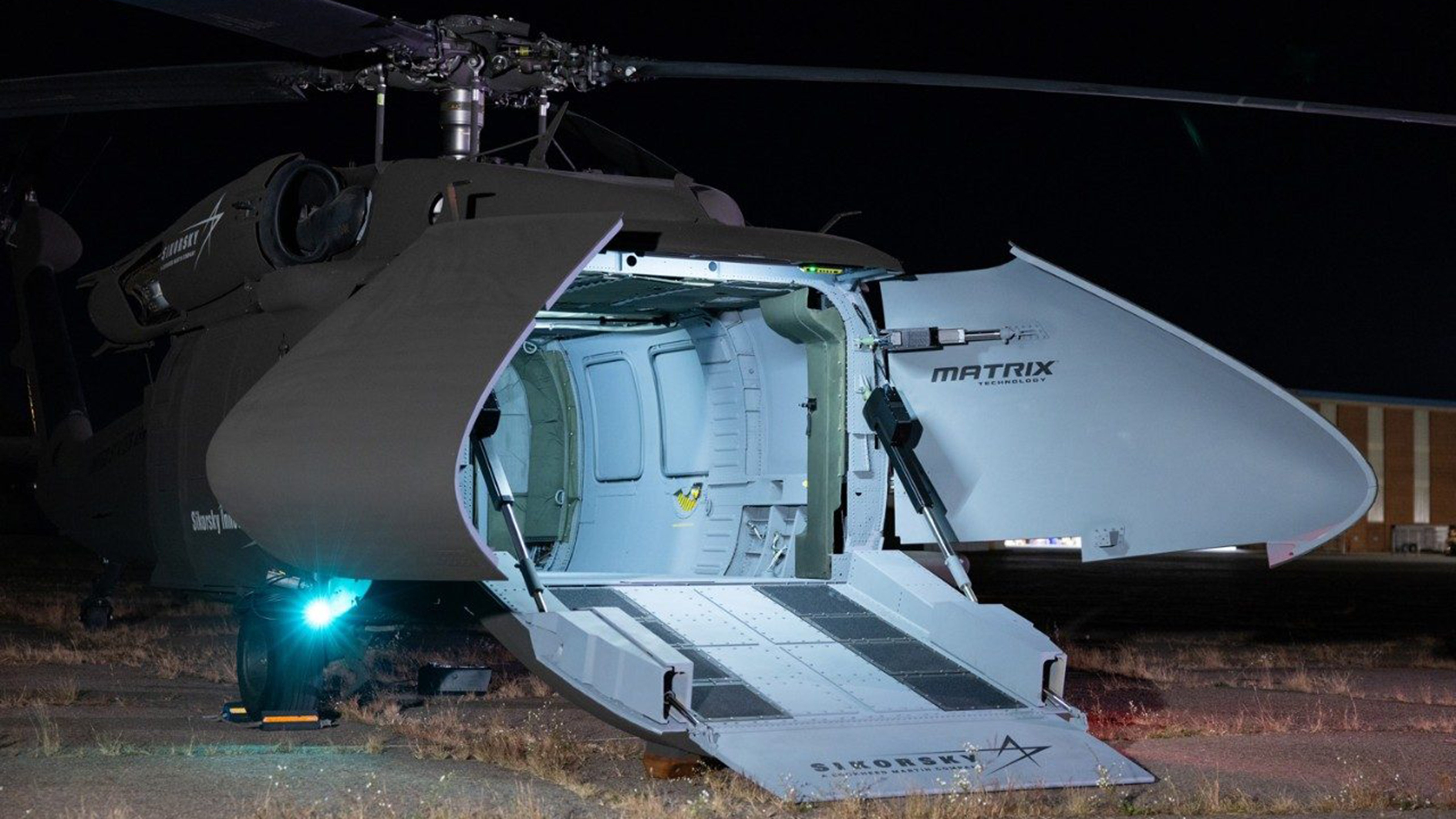
Sikorsky sees the U-Hawk as a natural evolution for the Black Hawk in contested logistics missions, when cargo needs to be moved but the threat is sufficiently high that it drives a need for uncrewed platforms to tackle the mission.
“We’re spending a lot of time on the U-Hawk and its roles. As well as being an uncrewed cargo helicopter, it can also be a truck that can carry a large volume of launched effects,” explains Wrigley. “There are Black Hawk models on the market right now that are being divested, and we see those as being an ideal option for conversion to U-Hawk configuration to affordably introduce this capability to the market.”
Drone dispenser
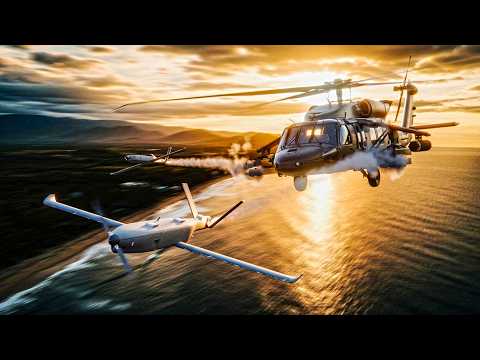
The integration of small drones dubbed ‘launched effects’ into rotary-wing operations is a major initiative from the Army as a new means to collect intelligence for commanders on the battlefield, relay communications, jam and distract enemy emitters, and act as loitering munitions. These mini air-launched drones can be carried and fired from stub-wing-mounted launchers, with other concepts seeing larger volumes of them carried inside the cabin as a “mega-pack,” with Sikorsky seeing both as being highly-applicable to both the Black Hawk and the U-Hawk.
This is exactly the kind of capability that the digital backbone in the Black Hawk is intended to open the door to; installing plug-and-play drone command kits, which could enable the Black Hawk to act as a “drone mothership” to launch, task, and command swarms of multi-mission launched effects.
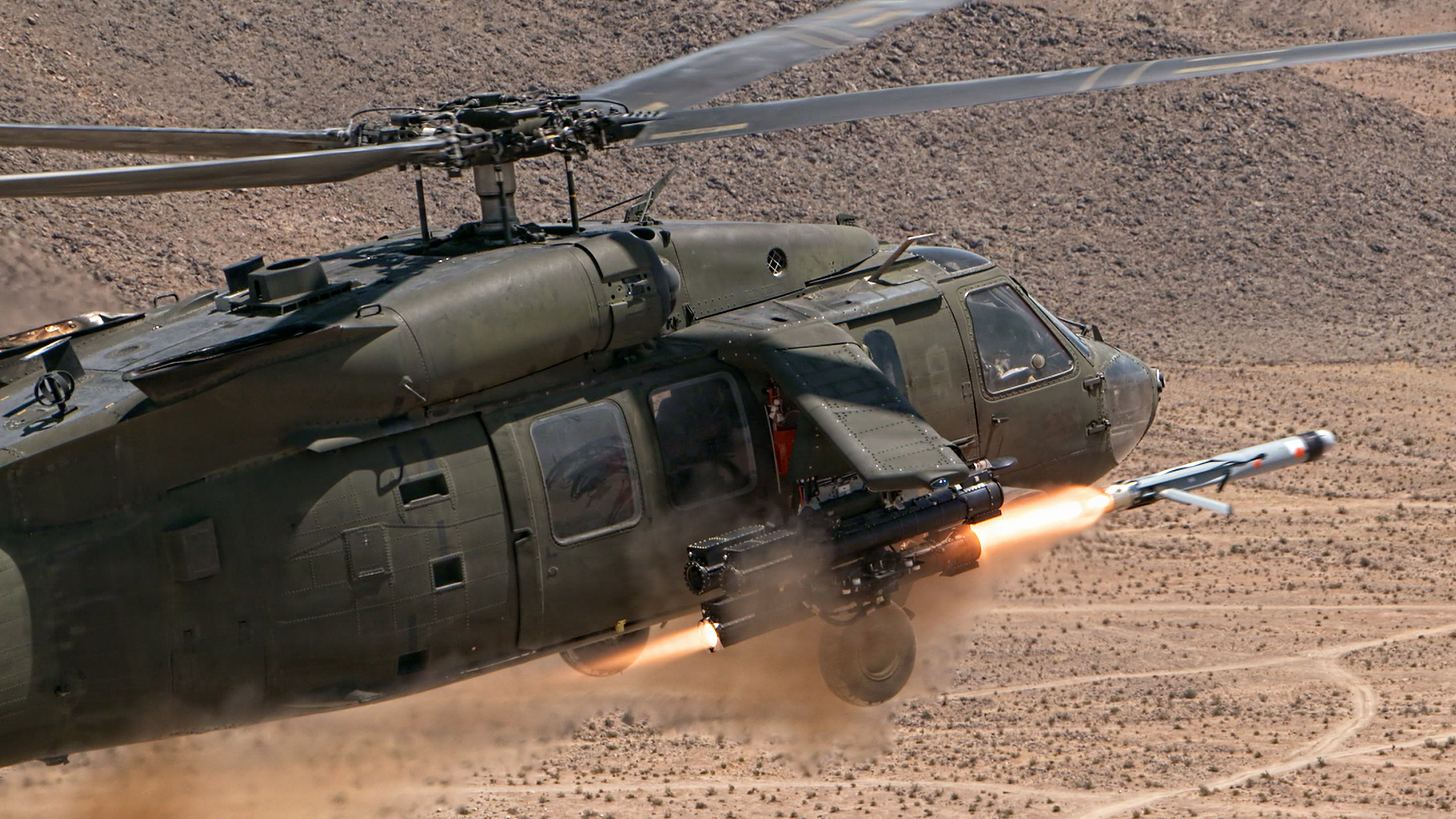
The Army tested its latest operational concepts for launched effects during the Project Convergence Capstone 6 demonstration event this summer. This annual exercise is designed to develop concepts and tactics as well as gather soldier feedback, as it works to transition new systems into service. The latest exercise built on previous launched effects testing on the Black Hawk, when a UH-60M deployed Anduril’s Altius-700 launched effects that then operated as an autonomous hunter-killer team to locate targets, share data on those targets, and then strike them, without the need for the Black Hawk to expose itself to threats.
“As a young Black Hawk pilot, the OH-58 Kiowa Warrior was the primary scout platform, but it was limited by range and its ability to be detected,” explains Joshua Powers. “Today, we launch small drones that can remain unseen and they can give us real-time feedback. Launched effects make our lift assets more capable.”
“We see the Black Hawk as the aircraft capable of carrying, deploying and then acting as an airborne mission command node for launched effects,” adds Jason Wrigley. “In the operational environment of the future, it’s really about the mass of those launched effects. This isn’t about carrying one or two of them, this is about carrying and controlling a large number of them.”

“We’ve tested them on the stub-wings, but we are also exploring what we call “quiver” – that large number of launched effects inside the cabin in that “mega-pack.” This creates additional opportunities for mass that we think is going to be really critical. We’ve done a lot of operational analysis in concert with the Army on what the right mix of launched effects might be to extend the standoff range of the aircraft to improve survivability – which is of course what it’s all about – but the right mix will ultimately come down to the mission. We have seen a lot of testing over the past few years, so we do believe this is a capability that can be introduced operationally soon on the Black Hawk.”
More power for more missions
To support the increased lift that might be needed for a missionized Black Hawk lugging large payloads, including an arsenal of launched effects, Sikorsky is well along in development of a new engine that is designed to create over 1,000 pounds of increased payload capacity and increased range for the Black Hawk. The T901 Improved Turbine Engine (ITE) from GE Aerospace provides 50 percent more horsepower over the existing T700 engines in the UH-60M.
“One of the key building blocks of the future of the Black Hawk are the twin ITEs as we look to expand the mission capability and the utility of this aircraft for decades to come,” explains Wrigley. Sikorsky began initial testing of the first UH-60M with ITE in January 2025. “We are actively in the test program right now at our test facility in West Palm Beach, Florida. The twin ITEs in each Black Hawk and that additional power translates into some pretty significant operational opportunities. Since our first flight with ITE in May 2025 we’ve flown the aircraft with the new engine for over 50 hours and up to 17,000 ft above sea level.”
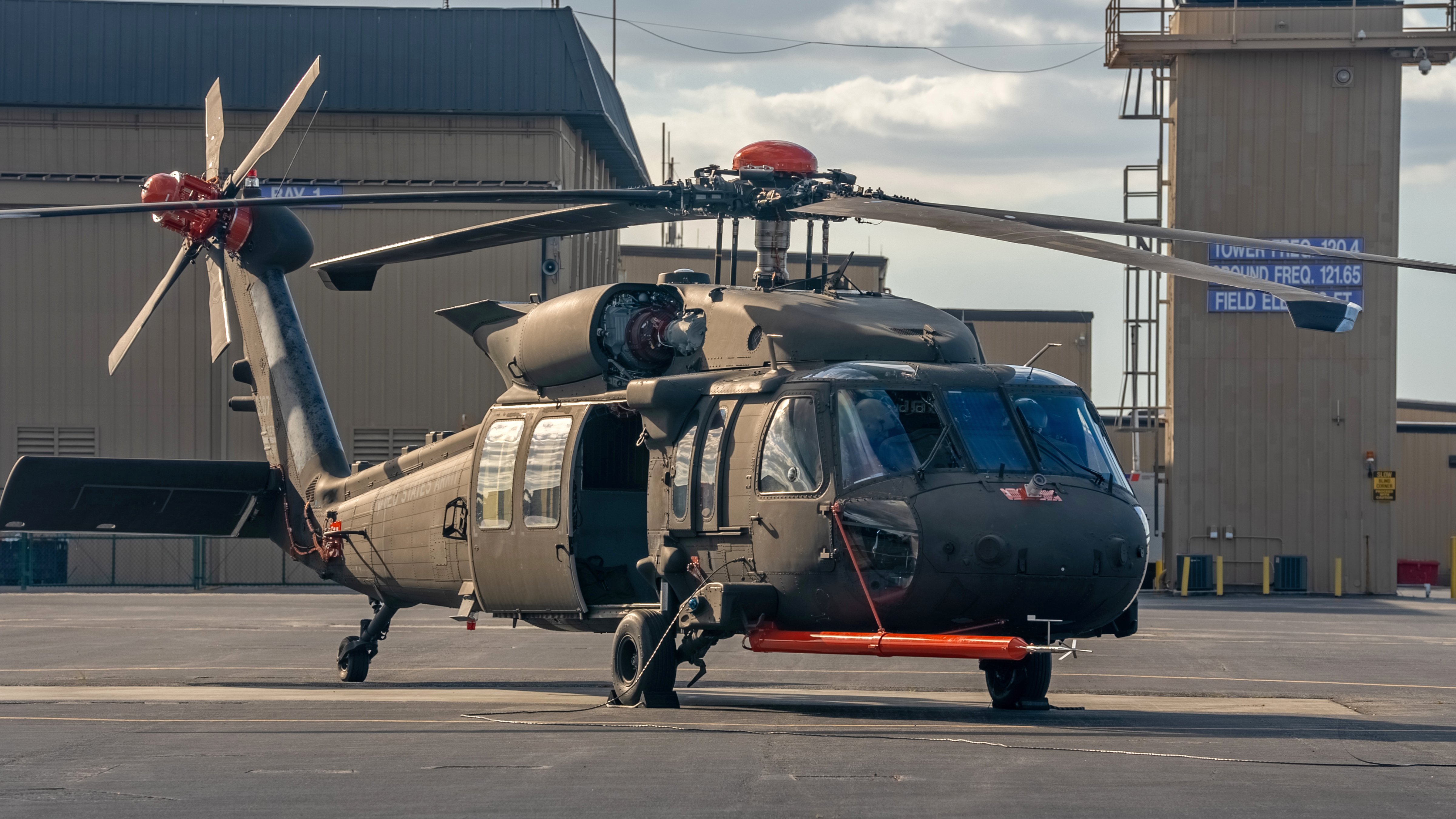
Sikorsky is accompanying the addition of the new engines with a significant expansion of the fuel tank to increase capacity and range. This is being done without impinging on cabin volume and thus retaining the important ability to transport 11 combat troops, while increasing range by around 100 nautical miles. “The T901 also improves fuel efficiency and eases maintenance – so overall we are really improving the payload capacity of the aircraft. We’ll be getting to the milestone C production decision on ITE within the next couple of years, and at that point it will become a core element of the Black Hawk program going forward,” Wrigley explains.
Building Black Hawks
Touring the Black Hawk production line in Stratford, Connecticut, it’s a hive of activity. Many of the major components for each helicopter are manufactured here. The long final assembly line sees teams of workers busily constructing UH-60M and HH-60M medevac Black Hawks for both domestic and foreign military sales customers, along with new HH-60W Combat Rescue Helicopters for the U.S. Air Force and MH-60R Seahawks.
“We’re designing all of these upgrades with the intent that they will all be available off the production line in new build aircraft, as well as in kit form for upgrades to existing assets in the field,” notes Wrigley. “Here in Stratford in what we call the “back shop” we build all the rotor blades, gearboxes, and many other components that go into each aircraft. We are already thinking ahead and we’ve invested significantly into additive manufacturing, with 11 parts on the Black Hawk today that are additively manufactured. It’s a great place to start, but there’s a long way to go and we’re working on qualifying more challenging components and load-bearing parts.”
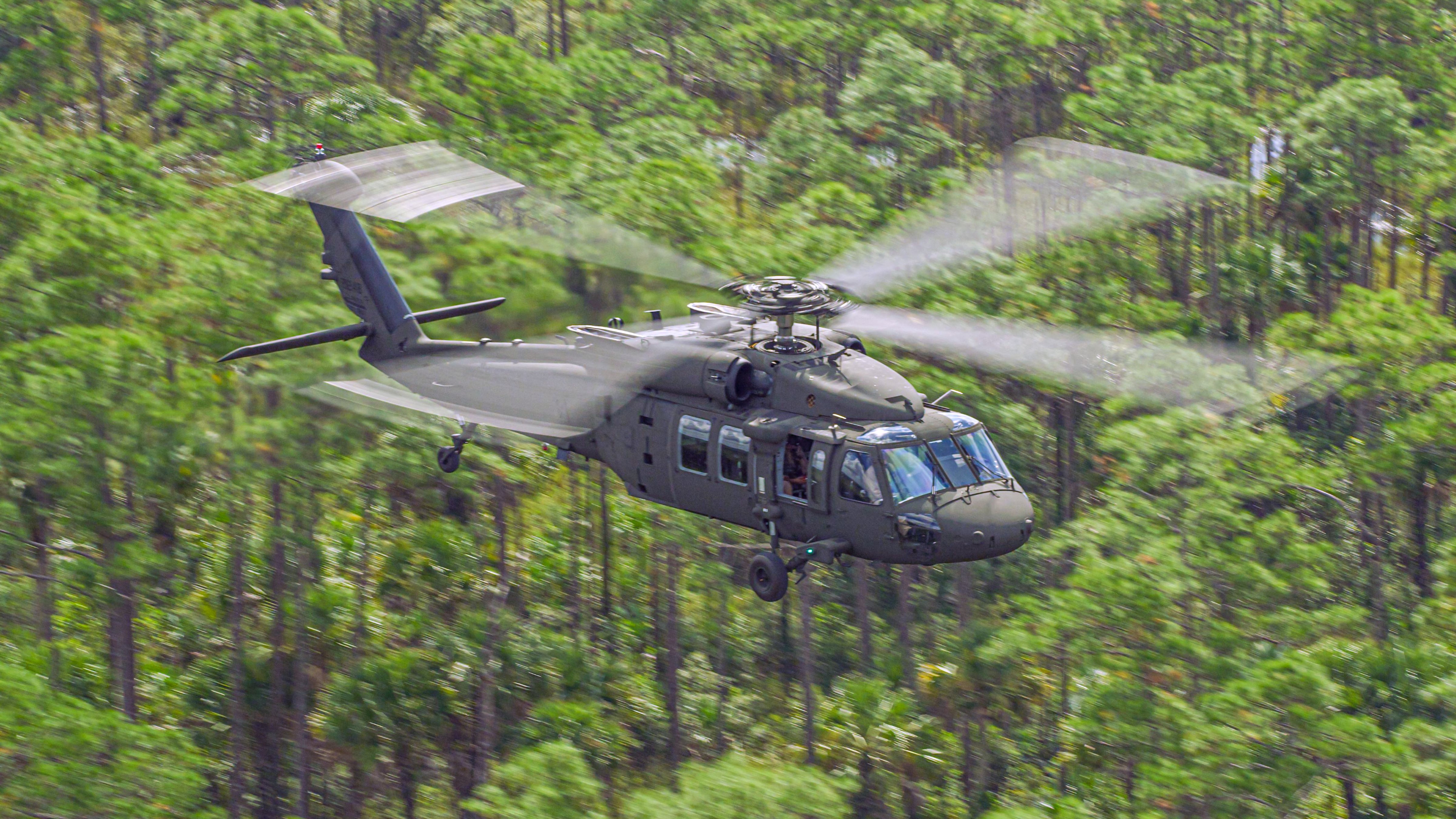
Cohesively, the digital backbone, larger fuel tank, new engines, and the new modular nose will all be introduced on the production floor in the coming years to pave the way for that increased payload capacity to carry fully-equipped combat troops, supplies, and all the new kit needed for the future fight and the Black Hawk’s role as a multi-mission forward battlefield node. The autonomous U-Hawk and the optionally piloted flexibility afforded by MATRIX – all of these pieces of the future Black Hawk are presently coming together under an overarching effort.
“The future Black Hawk will be that complement to the future long-range MV-75 Cheyenne II,” says Powers. “These won’t be a one-for-one replacement for every Black Hawk currently in the fleet – the MV-75 has a specific purpose and function that the Black Hawk isn’t designed to do. What the Black Hawk can do with these new upgrades is shape the battlefield and with its autonomy be out there flying missions into contested environments.”
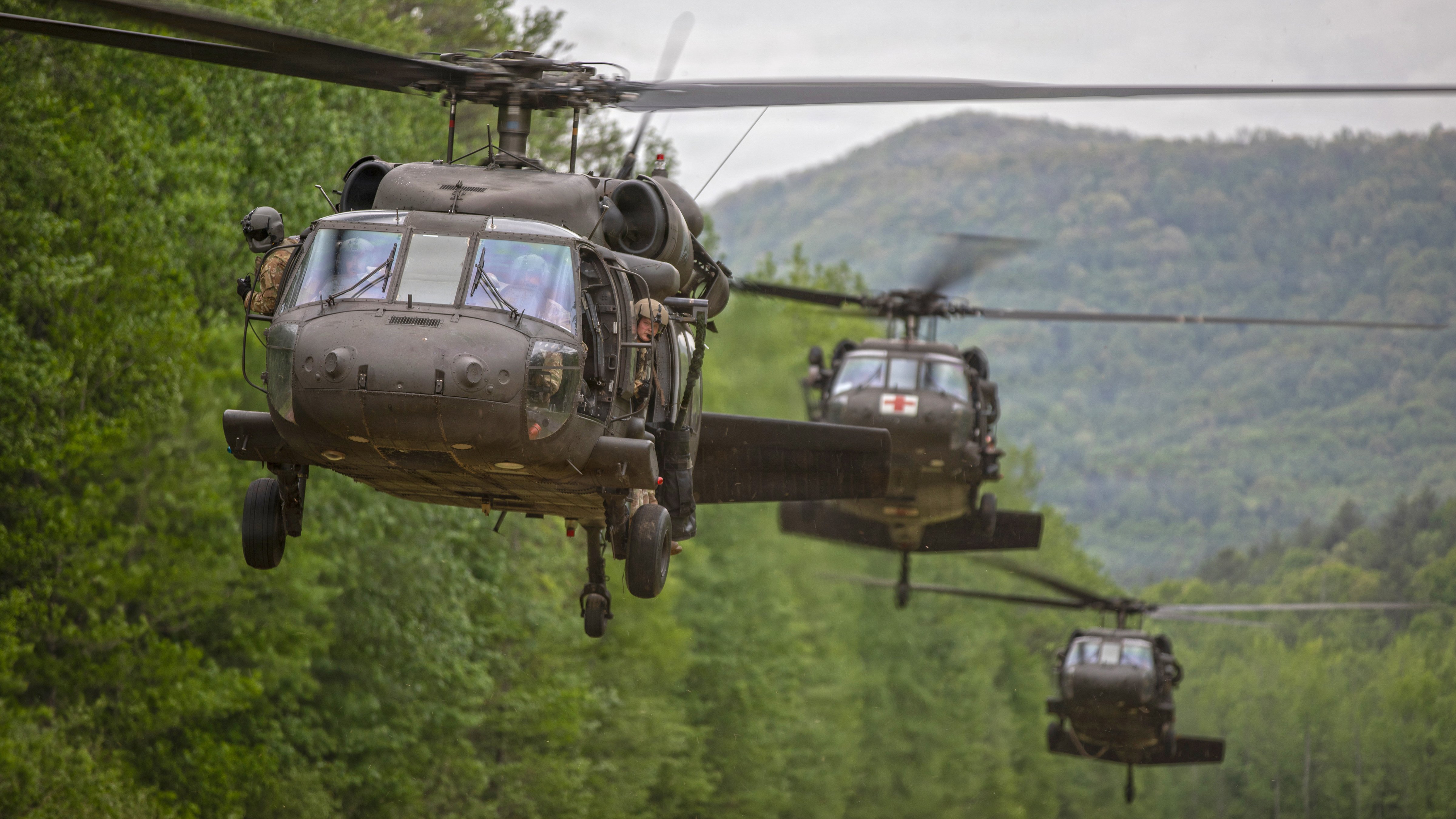
“Those homeland missions are equally necessary. I recall talking about this in flight school when choosing an aircraft to fly, how it’s one thing to be deployed on combat missions, but it’s also about being back in the homeland on disaster relief when you need the Black Hawk to go out and save lives, those kinds of missions the Army National Guard does – it really underlines the importance and versatility of the Black Hawk.”
Over the past 50 years and looking ahead to the next 50, continuing the proven legacy of the Black Hawk will mean constant evolution to meet new missions and needs. Sikorsky’s task is for all of these new elements to meld into a future Black Hawk that’s ready to roll off this production line soon, that still also provides the same dependable, rugged capability for the Army at home or overseas, well into the future.
Loading comments…
Comments couldn’t be loaded. Please refresh the page.