
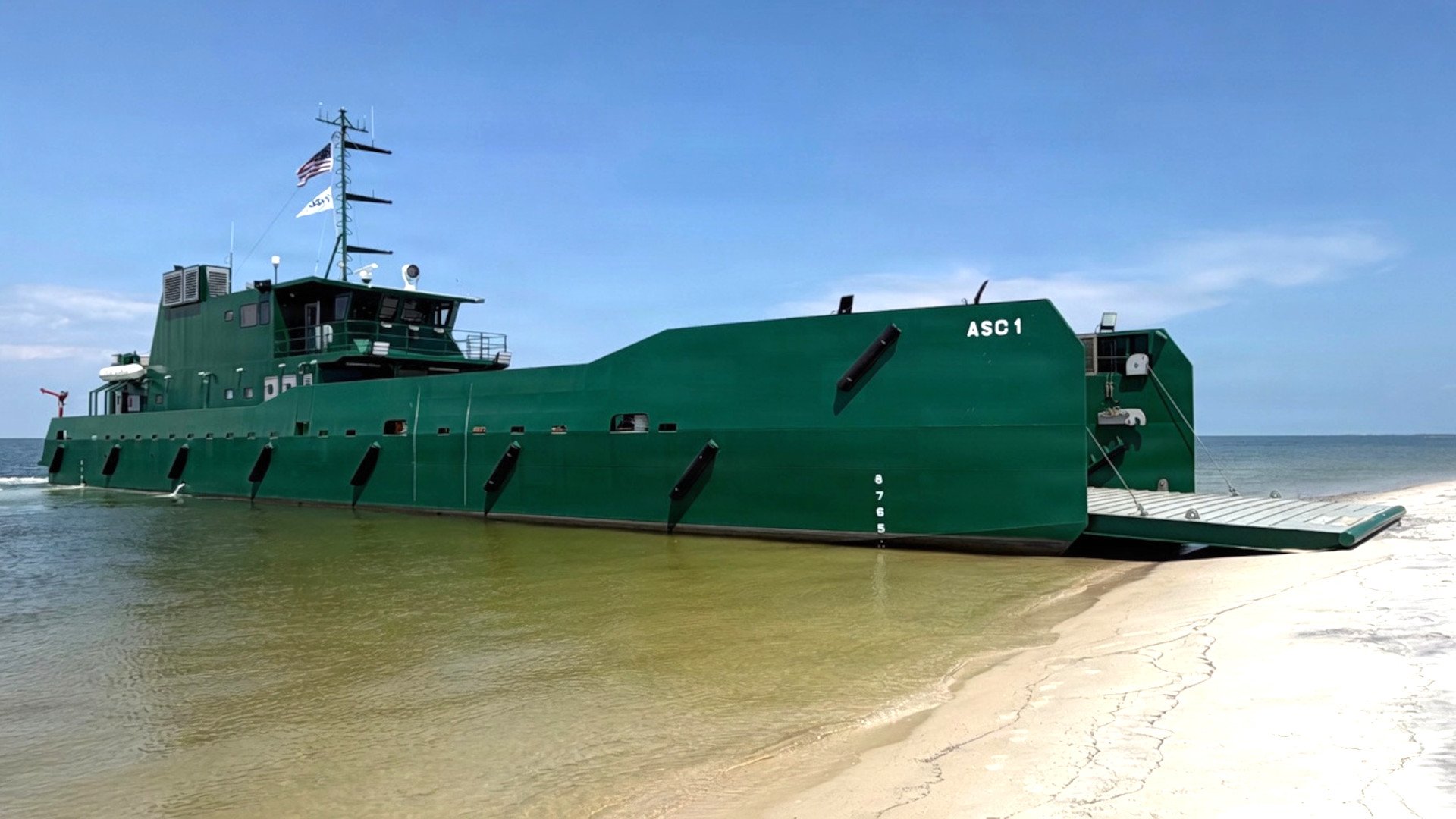
We now have our first look at the Ancillary Surface Craft (ASC), a new medium landing craft for the U.S. Marine Corps. Australia-headquartered firm Birdon announced last year that it would be supplying two of these vessels to the Marines to help the service further refine its concepts for future distributed island-hopping operations.
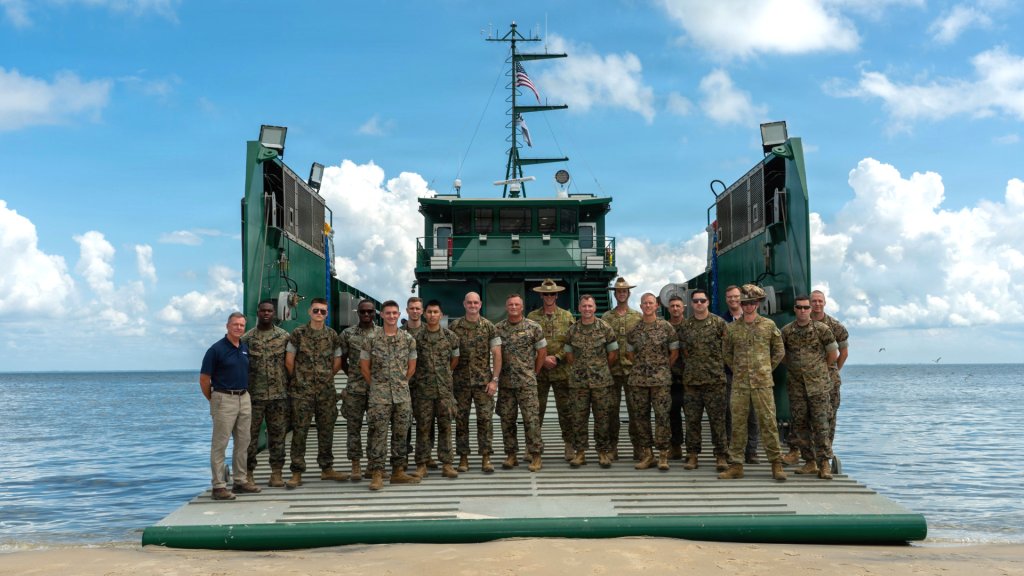
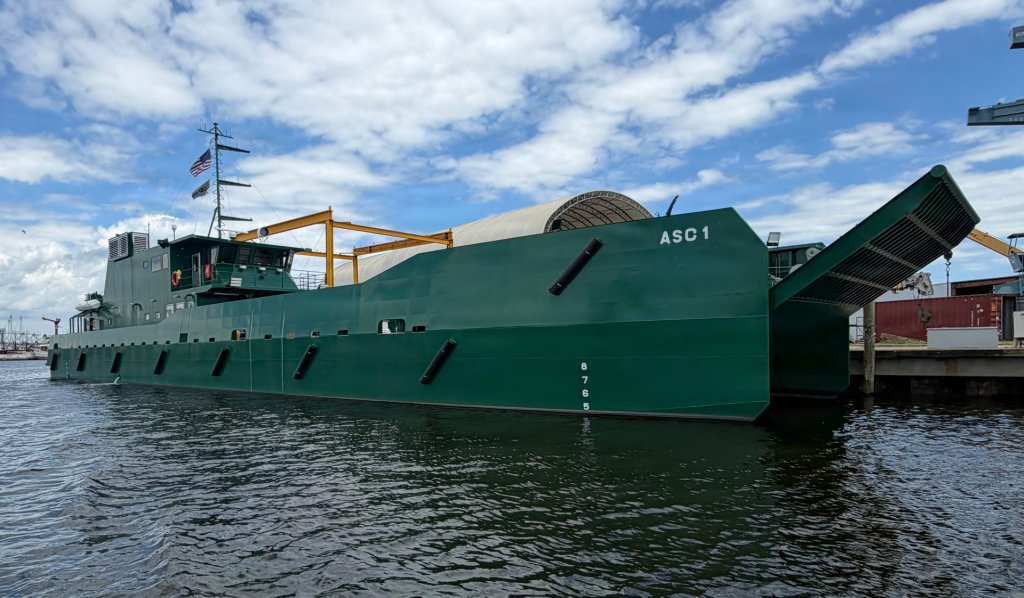
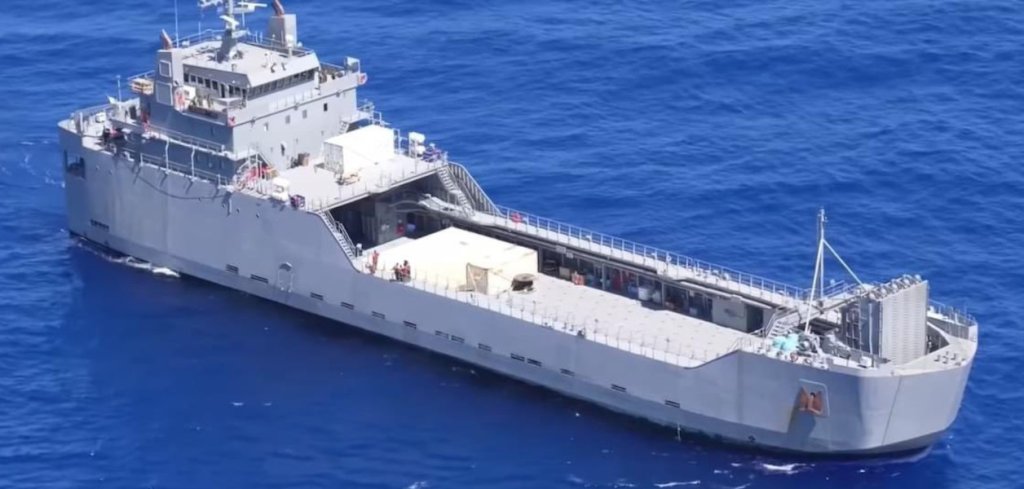
The Marine Corps Warfighting Laboratory (MCWL) released pictures yesterday of what appears to be the first ASC, based on the hull number (ASC-1), in Bayou La Batre, Alabama. The photographs of the vessel, also sometimes referred to as the Ancillary Surface Connector, were taken last week during a distinguished visitor day event. Marine Corps personnel, as well as representatives from the Australian Army and industry, were in attendance.
It is unclear whether or not the Marines have formally taken delivery of ASC-1 and when the second example might be set to arrive. TWZ has reached out to the Marines and Birdon for more information.
“The [distinguished visitor day] event provided an opportunity for senior leaders, Marines, allied partners and industry personnel to observe the ASC’s capabilities and discuss its potential to support distributed maritime operations and sustainment in contested littoral environments,” according to the caption accompanying one of the pictures. “The ASC is being developed through U.S.-Australian industry collaboration to support experimentation and inform future amphibious modernization.”
“The ASC is a significant step towards achieving a capability organic to the Marine Corps for maneuver in the littorals without reliance on large high value Naval assets,” it continues. “This craft, coupled with smaller landing craft, will demonstrate the capability needed by the Corps to maneuver medium, light, and ultra-light tactical vehicles from shore-to-shore and distribute all classes of supply to disbursed forces in archipelagic regions.”
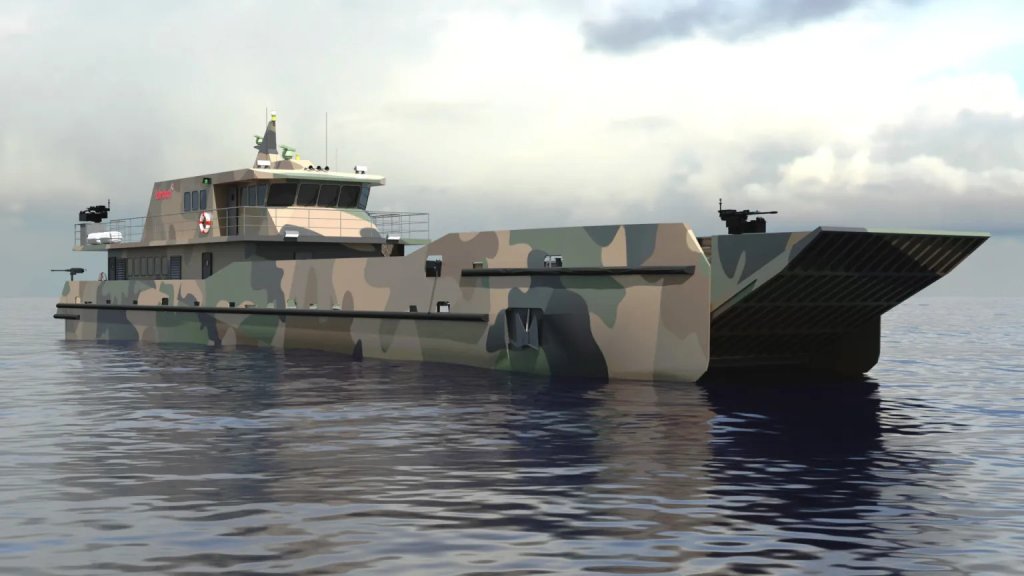
The overall design of the vessel reflects what was seen in a rendering that Birdon released last year when it first announced that it would be supplying the two ASCs to the Marines. However, that rendering did show the vessel with at least two remote weapon stations armed with 30mm automatic cannons, at least one .50 caliber M2 machine gun on a traditional deck mount, and an angular mast structure on top of the pilot house, features that are not present in the images that have now been released of ASC-1.
There is a pole-like mast, as well as rotating maritime navigation radar and what looks to be a searchlight, on top of ASC-1’s pilot house. The actual vessel also has truncated catwalks around the pilot house, as well as an additional boxy structure with ventilation slats on top, compared to what is depicted in the rendering. It is very possible that Marine ASCs could gain additional features as time goes on.
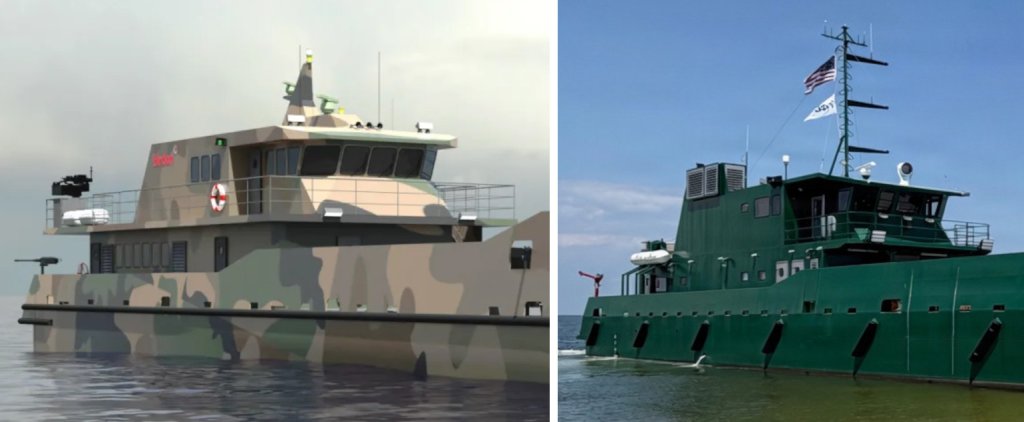
Birdon has previously said that the ASC can carry up to 40 troops and 54 tons of cargo in its open main deck area. The vessel is also reportedly 150 feet long and 30 feet across, with a bow ramp that drops down for loading and unloading right onto a beach.
“To ensure safe landings on uncharted beaches, Birdon worked with a specialist sonar company to develop and integrate an advanced forward-looking sonar system, allowing operators to detect obstacles and assess beach gradients well ahead of the vessel,” the company also said of the ASC in a press release last year. “The vessel is designed to beach and de-beach in gradients significantly shallower than existing landing craft can support, providing enhanced, safe amphibious operations capability.”
“Birdon’s ASC design also features a cutting-edge fuel delivery and transfer system that allows for efficient vessel-to-vessel or vessel-to-land fuel transfer, supporting extended operational range and flexibility in challenging environments,” the release added.
The ASC is broadly in line, at least in terms of general dimensions, with other existing medium landing craft designs on the market globally. As a point of comparison, the new Landing Craft Utility (LCU) 1700s that the Navy is in the process of acquiring from Austal are around 139 feet long and 31 feet wide, but have a higher stated payload capacity (350 combat-equipped troops or 170 tons of cargo). Birdon itself is also developing a new Landing Craft Medium (LC-M) for the Australian armed forces, renderings of which show a similar, but larger design compared to the ASC.
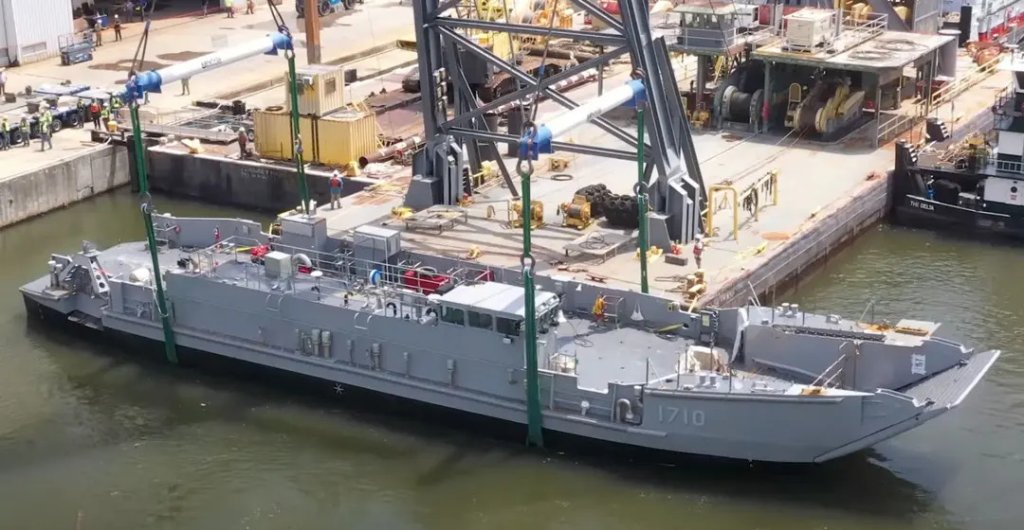
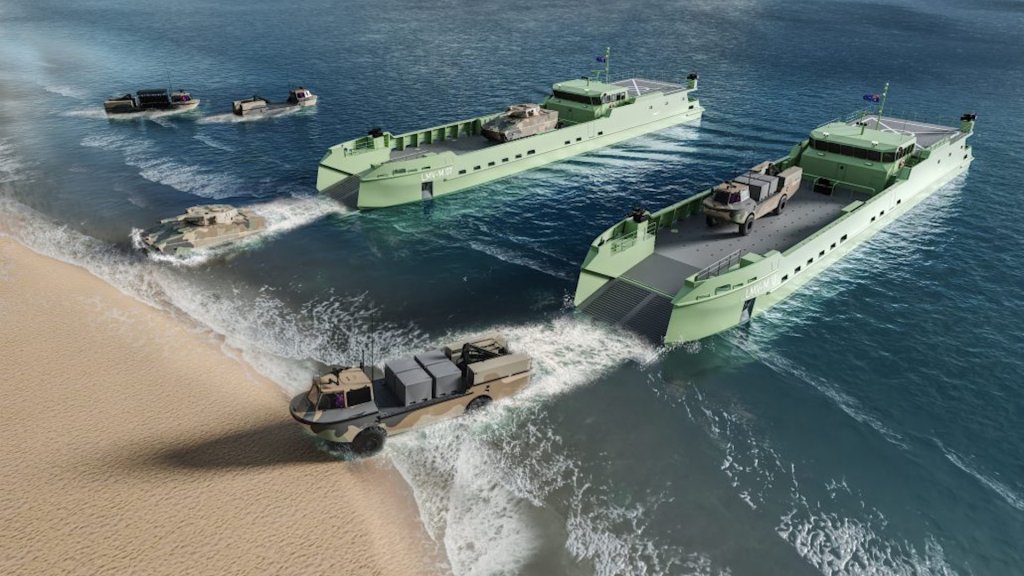
As noted, the Marines’ stated plan is to use the two ASCs to help with the development of its still-evolving expeditionary and distributed concepts of operations, collectively referred to as Expeditionary Advance Base Operations (EABO). A central aspect of EABO is to rapidly position and reposition relatively small units between what could easily be far-flung forward locations, especially small islands dotted across parts of the Pacific. These so-called ‘stand-in forces’ would be readily deployable as a deterrent ahead of a potential conflict, and then be better placed to act if needed. The distributed nature of the EABO concept would also create targeting challenges for opponents and, by extension, reduce the vulnerability of friendly forces.
As TWZ wrote after Birdon’s initial announcement about the ASC in May 2025:
“Not having to rely on large traditional Navy amphibious warfare ships to conduct these maneuvers in littoral environments, where established port facilities are also likely to be absent, is essential to the EABO concept. Depending on the exact distribution of Marine forces and the distance between operating locations in a particular area, vessels like the ASC-M could be used to move personnel and materiel between sites and/or act as ‘connectors’ between larger ships and the shore.”
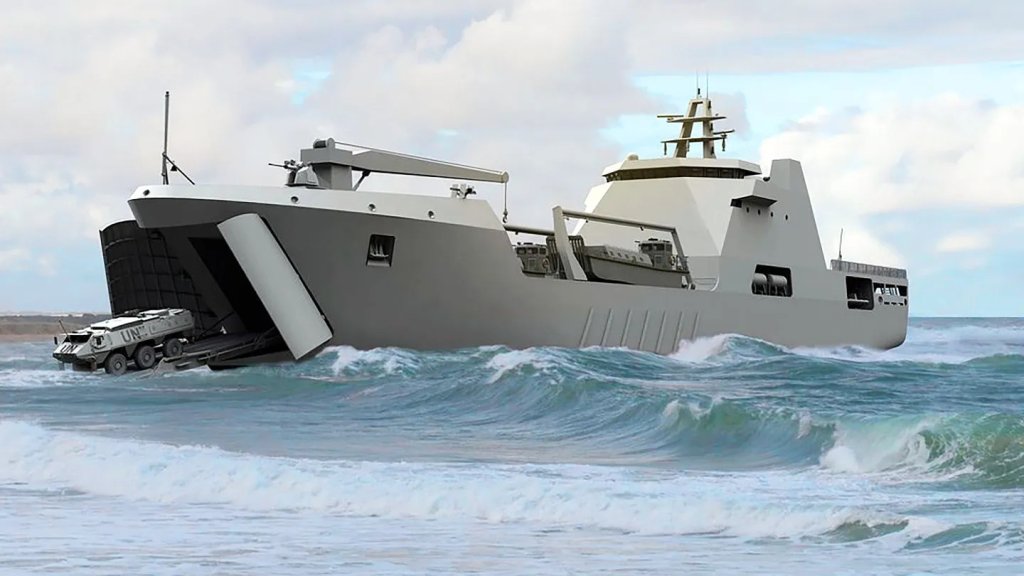
“For years now, the Marines have also been working with the Navy on plans for the latter service to acquire a fleet of at least 18 and up to 35 Medium Landing Ships, or LSMs, to support the EABO construct. However, concerns about the costs of prospective designs and other issues have continually pushed back the LSM program schedule, with the first of those vessels now not set to arrive until the end of the decade at the earliest.”
In December 2025, the Navy did announce that it had selected Dutch shipbuilder Damen’s LST-100 design to be the basis of a new class of LSMs, and that it was hoping to accelerate the delivery schedule for those ships. However, the first LSM is still only now scheduled to arrive in 2029. At that time, the Navy also told us it was planning to buy at least one LSM of a separate design from Bollinger Shipyards, which could be based on the Israeli Logistics Support Vessel (ILSV) developed for Israel. The ISLV is itself a derivative of the open-ocean-optimized subclass of the General Frank S. Besson class Logistics Support Vessel (LSV) now in service with the U.S. Army as part of its obscure watercraft fleet, which you can learn more about here.
There may be a possibility for the Marine Corps to acquire more ASCs, or a further evolution of the design, depending on how experimentation with the initial examples proceeds. The partnership with Australia on this effort also underscores the potential for that country, as well as other U.S. allies and partners, to further leverage this work.
In 2024, Birdon announced another deal to provide a heavy landing craft, called the H260, based on a design the company had already been working on for the Australian military, to the Marines, at least for testing and evaluation. The current status of that effort is unclear. The Marines have already been using chartered stern-landing ships for years now to inform the LSM program and otherwise help refine littoral logistics requirements in support of EABO.
Vessels like the ASC and the LSM are just some of the components the Marines envision as supporting the logistics ecosystem necessary to enable its future distributed operations. The service is also acquiring a new family of cargo-carrying uncrewed aerial vehicles, as well as small uncrewed surface vessels, as part of those plans.
The first new ASC for the Marines has now been built, if not formally delivered, and will only help the surface further prove out its expeditionary and distributed operations vision.
Update: 1:02 PM ET –
The U.S. Marine Corps has confirmed the “technical acceptance” of the first ASC.
“Technical specifications validated during the acceptance process highlight the craft’s exceptional ruggedness and operational utility. Engineered for demanding ocean transits, the ASC is fully operational in Sea State 5 and designed to survive extreme conditions up to Sea State 7,” according to a release from the Marine Corps Warfighting Laboratory. “To ensure safe navigation through uncharted, very shallow littoral waters, the craft is equipped with advanced forward-looking sonar that enables maneuverability across the battlespace. Furthermore, it can transport up to 46 tons of cargo and 40 combat-loaded Marines while executing vital shore-to-shore maneuver, mobility, and sustainment.”
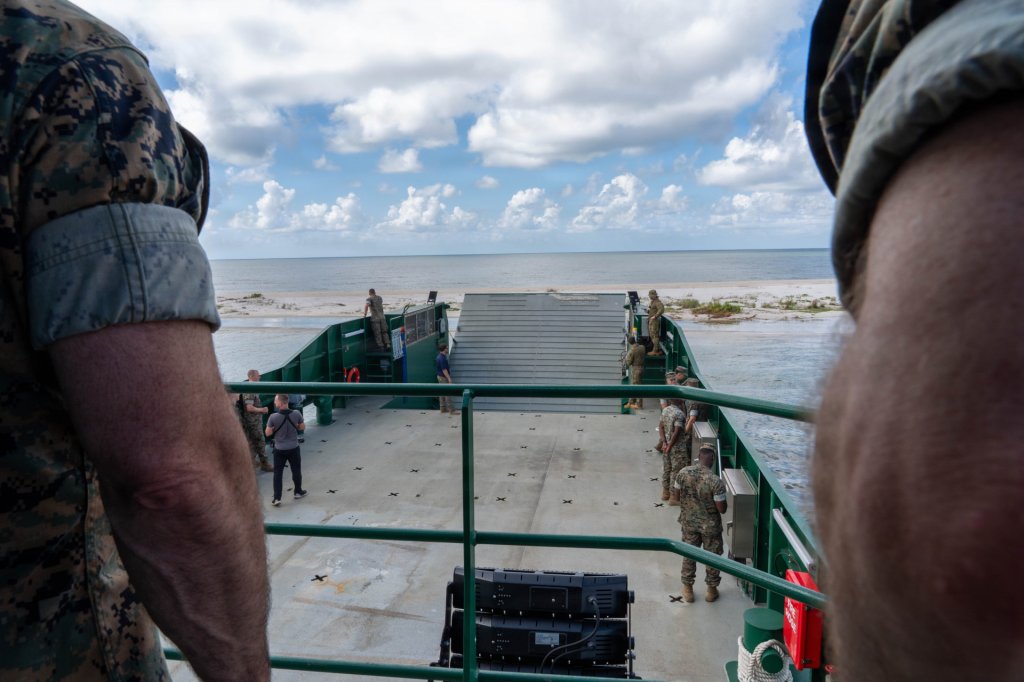
The release also reiterates that the ASC represents a capability that would be complementary to the future LSMs, using its “very shallow draft to deliver logistical support to the ‘last tactical mile’ into landing sites beyond the reach of larger vessels, including shallow-gradient, unimproved, and unsurveyed shorelines where standoff would otherwise leave cargo stranded offshore.” ASC-type vessels and LSMs together will “give a Stand-in Force a route from an intermediate staging base to the beach without dependence on a port, a pier, or a causeway.”
“To support Expeditionary Advanced Base Operations (EABO), our forces must remain highly mobile and sustained without relying on fixed, vulnerable ports,” Col. Kenny Jones, Science and Technology Division Director at the MCWL, said in a statement. “This prototype allows MCWL to immediately execute hands-on experimentation, test tactical concepts, and put real hardware in the hands of Marines. By exploring the ASC’s traditional bow-first beaching physics alongside other experimental platforms, we are actively reducing programmatic risk and perfecting the requirements for the future naval fleet.”
“Following the technical acceptance of the ASC, the craft now moves into limited technical assessments (LTA) with Birdon America craft masters and engineers partnered with Australian Army crewing support and Marine Corps Warfighting Laboratory oversight and assessments,” the MCWL release adds. “Initially, the craft will be operated by a hybrid crew pairing Marines with seasoned contracted mariners. This approach ensures that American service members are thoroughly trained as the Marine Corps prepares for an expanded role in the independent operation of small surface craft.”
Contact the author: joe@twz.com
Loading comments…
Comments couldn’t be loaded. Please refresh the page.